

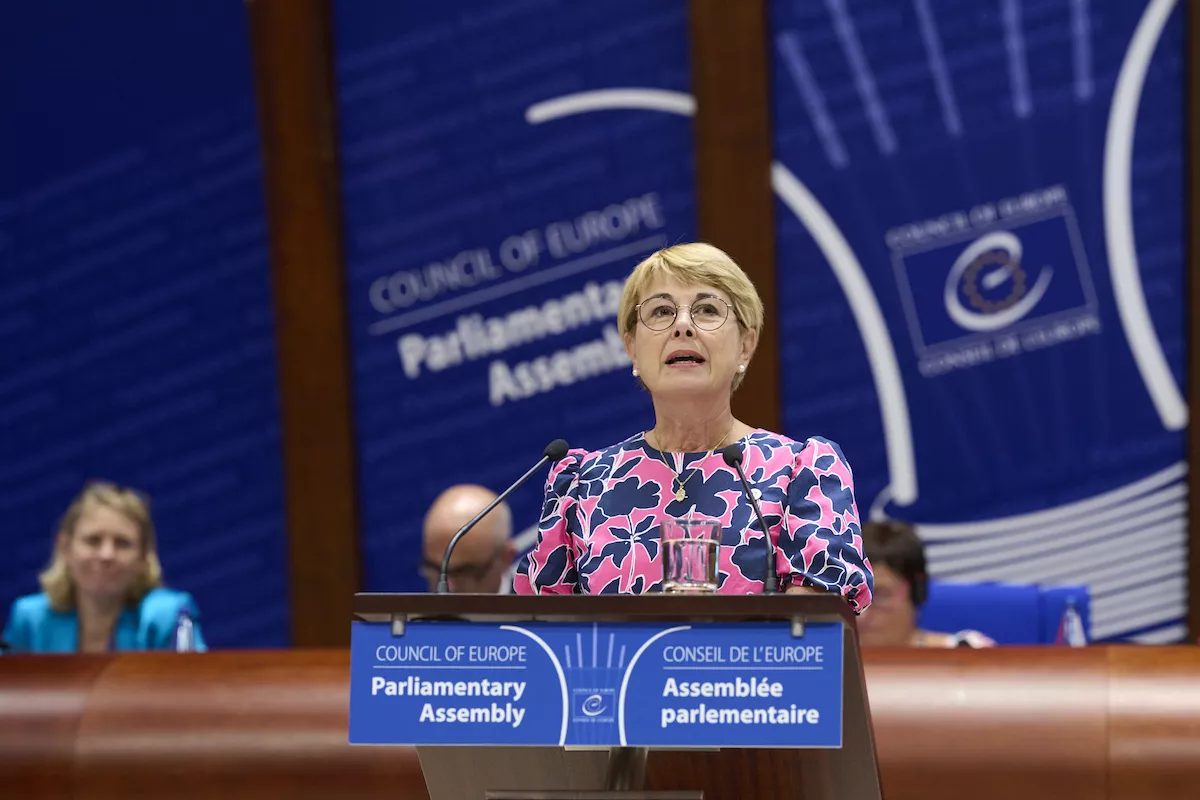
With Monaco’s six-month presidency of the Council of Europe entering its final weeks, the Principality’s Minister of External Relations and Cooperation, Isabelle Berro-Amadeï, has used an address in Strasbourg to place unwavering support for Ukraine — and the pursuit of justice for its people — at the heart of the Principality’s record.
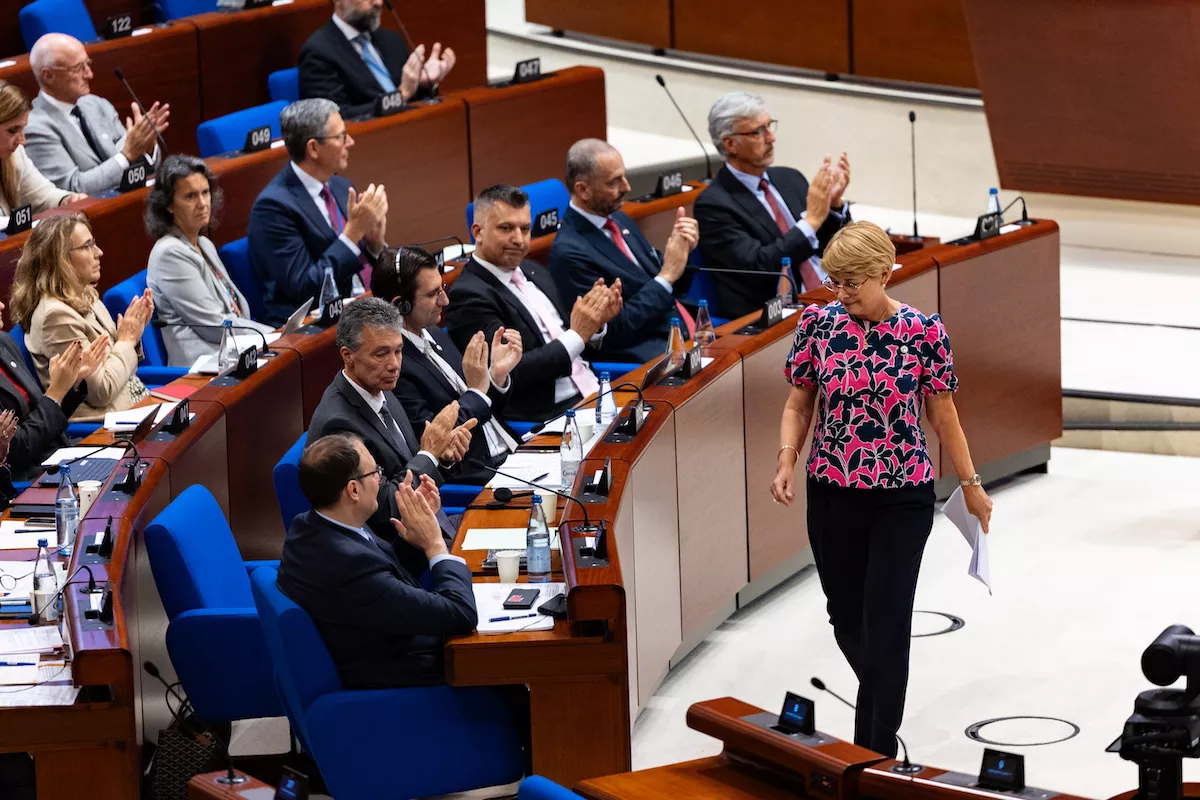
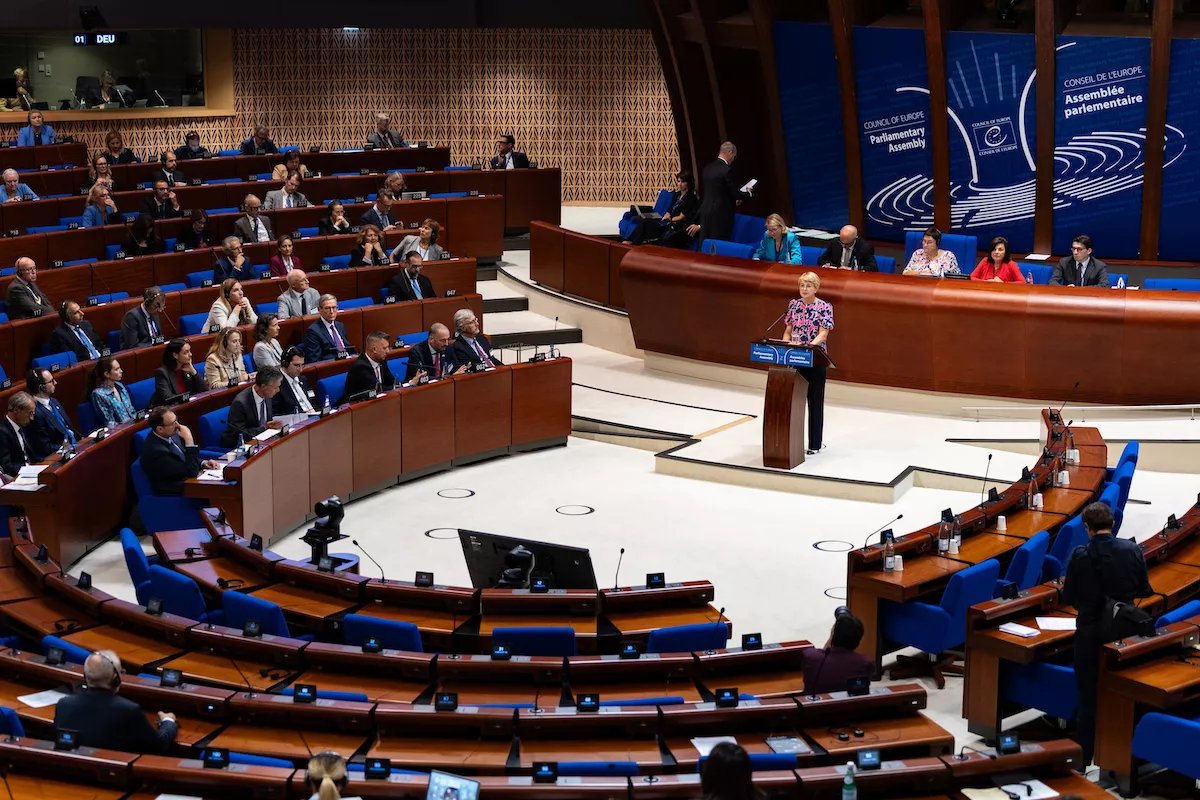
Speaking to the Parliamentary Assembly of the Council of Europe (PACE) on Wednesday 30th September, Berro-Amadeï reviewed a six-month term shaped by international instability, and returned to the theme that has defined Monaco’s presidency: protecting citizens through an organisation able to respond to the challenges of the moment.
Monaco Life is in Strasbourg this week with the Monaco delegation, covering the final stretch of the Principality’s presidency.
Accountability and support for Ukraine
Ukraine was at the centre of the address. Fresh from a visit to Kyiv in September, the minister set out the Council of Europe’s work to build a framework for responsibility and reparations, and left no doubt about where Monaco stands. “Our support for the independence, sovereignty and territorial integrity of Ukraine remains unwavering, as does our determination to make the law prevail,” she said.
She pointed to concrete progress. The Register of Damage, which records losses caused by the war, has now opened all 43 of its categories and received 195,000 claims from individuals and institutions. The International Claims Commission has gathered 41 signatures and 10 ratifications, while work continues to bring into being the special tribunal for the crime of aggression against Ukraine and, in time, a compensation fund. Behind the machinery, she insisted, lies a human urgency — the plight of children, displaced families and veterans living with trauma. “Justice cannot be sidelined,” she said.
Expanding global reach and countering digital threats
Monaco’s presidency has also looked beyond Europe. On 22nd September, a Council of Europe office opened at the United Nations in New York, intended to close institutional gaps and raise the profile of European human-rights standards on the world stage.
Closer to home, the presidency has turned to emerging digital and security risks. On 8th July, the Committee of Ministers set up an ad hoc committee, known as CAHFIMI, to draft a legal instrument against foreign information manipulation and interference. Monaco’s term has also advanced standards on AI literacy and prepared the ground for future protocols targeting transnational financial crime and terrorism.
The final weeks
Monaco hands the presidency to Montenegro on 10th November, and a run of engagements remains before then. Prince Albert II is due to address the Parliamentary Assembly, and the 19th Council of Europe Conference of Ministers Responsible for Sport will be held in Monaco on 3rd and 4th November, with child protection and safer sporting environments on the agenda. A further event in Strasbourg in November will bring young Europeans directly into the fight against misinformation and digital manipulation.
Berro-Amadeï closed with the words of Václav Havel: “Hope is not the conviction that things will end well, but the certainty that what we do has meaning, whatever the outcome.” Monaco, she said, would defend its shared values through dialogue, cooperation and the rule of law to the very end of its mandate.
Stay updated with Monaco Life: sign up for our free newsletter, listen to our podcasts on Spotify, and follow us across Facebook, Instagram, LinkedIn, and Tik Tok.
Main photo credit: Council of Europe