

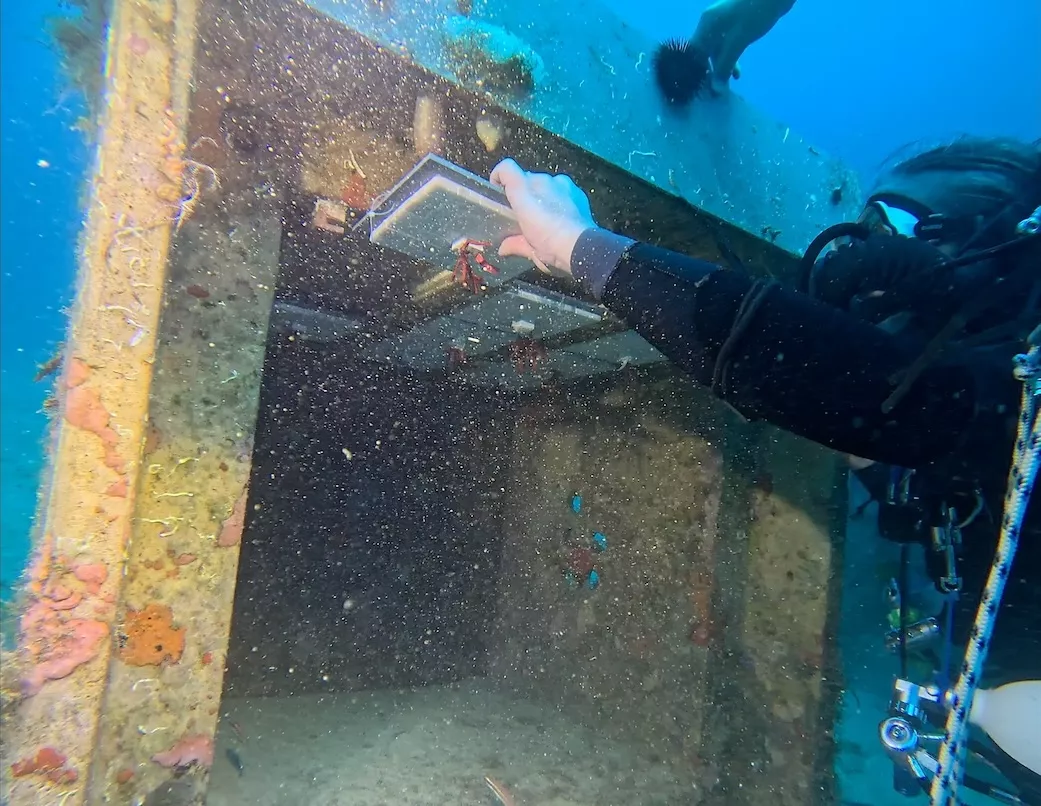
More than 800 baby red corals have been born in artificial caves 40 metres beneath Monaco’s waters since 2023, and scientists are now using underwater lights to draw plankton towards them, in a bid to give one of the Mediterranean’s most precious and slowest-growing species a better chance of survival.
The experiment, launched in mid-September by the CSM–Chanel Research Unit on the Biology of Precious Corals at the Centre Scientifique de Monaco, tackles a basic problem for Corallium rubrum: fixed to the rock and growing just 1 to 8 millimetres a year, red coral cannot go looking for food, so the scientists are bringing the food to it.
A nursery beneath the waves
The six concrete “coral caves”, each measuring one cubic metre, were placed in Monegasque waters in July 2021. Since then, CSM teams have gradually identified the best conditions for red coral to reproduce, for its larvae to settle and for the young corals to grow through their first stages of life, for a species under significant environmental pressure. Chanel and the CSM have been partners in the research since 2019.
Bringing the food to the coral
The new phase asks how improving the coral’s access to food can boost the survival and development of its larvae.
“As a sessile species, red coral does not move around in search of food,” said Dr Stéphanie Reynaud, a research scientist at the CSM. “Its nutritional intake relies in particular on capturing particles and plankton suspended in the water. The amount of food available close to the colonies, and how it is carried by water movements, are therefore essential to its diet.”
In the first phase of the project, the scientists studied how water circulated around the colonies, and rearranged the caves to bring more plankton past the coral.
This second phase targets another lever: light. Because some species of plankton are naturally drawn to it, the researchers first confirmed in a preliminary experiment that lighting could effectively increase the amount of plankton near the colonies. They will now study how this extra supply of food affects the coral’s reproduction, the settlement of new recruits and their subsequent growth.
Marble ceilings and a police escort
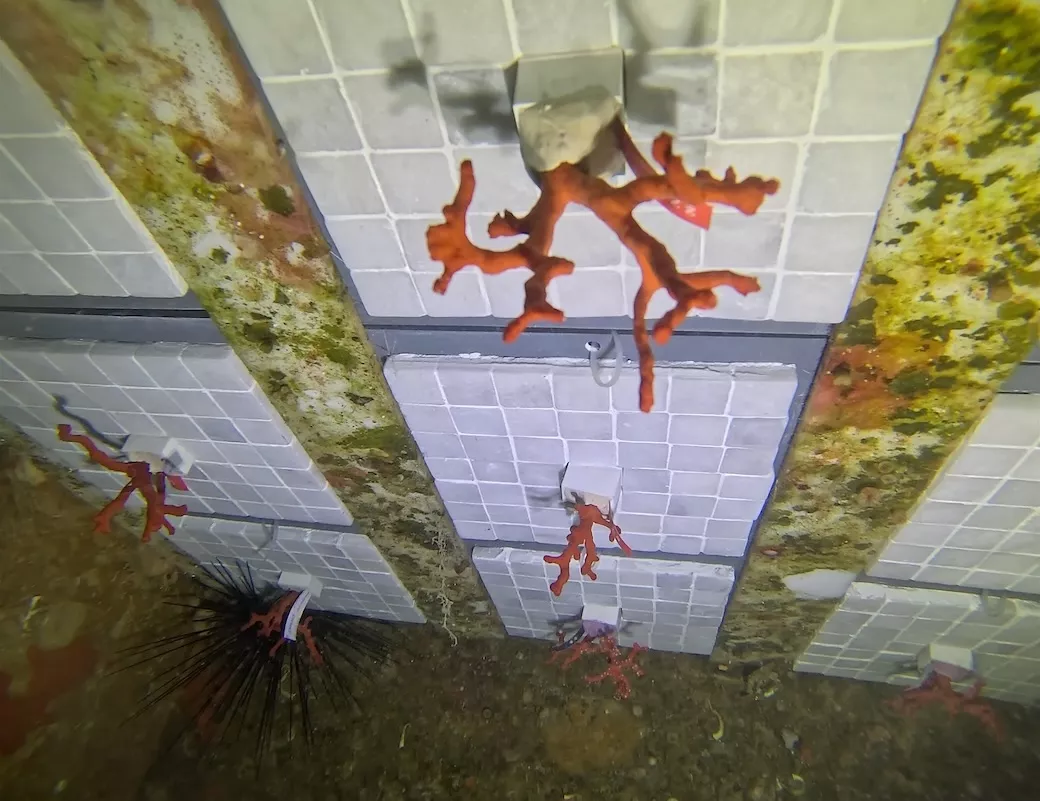
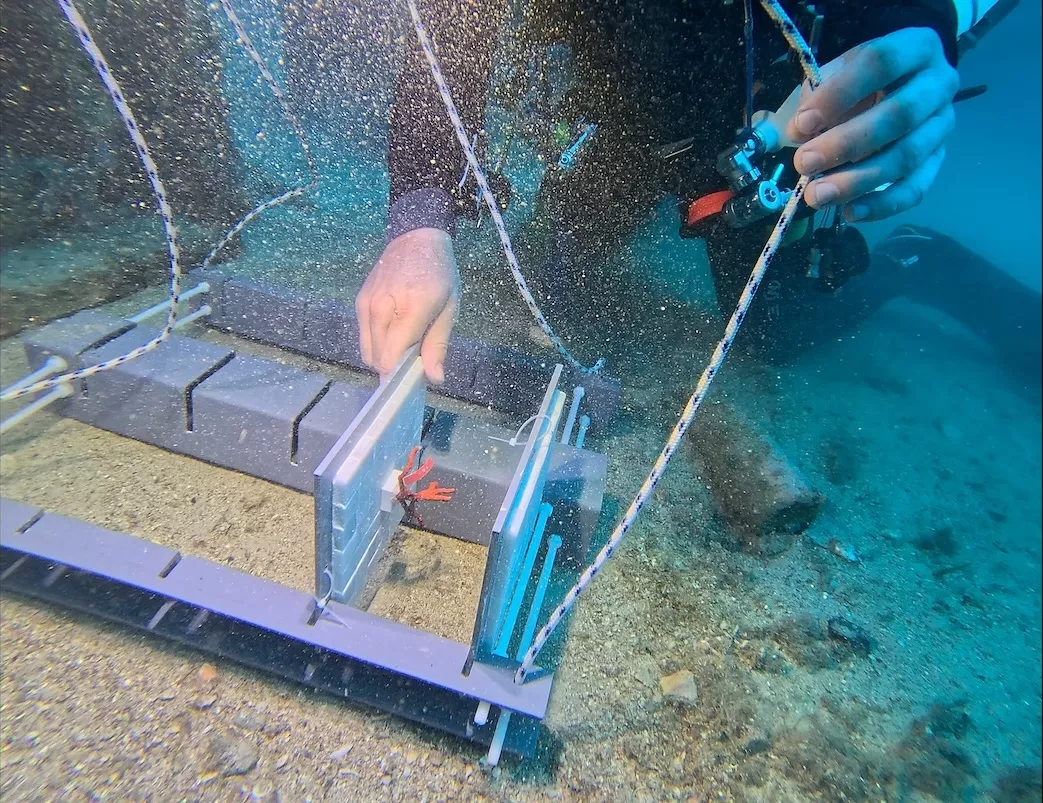
The new phase follows extensive laboratory analysis and work to improve the underwater set-up. After testing several types of surface, the researchers identified the one best suited to red coral growth, and the ceilings of the caves, where new recruits will settle, are now lined with white marble plates.
While the new plates were installed, the corals were moved temporarily to the CSM’s aquariums. They have now been returned to the caves with the help of the Maritime and Airport Police Division of Monaco’s Sûreté Publique.
“We handled the logistics of the mission, providing our patrol boat Princesse Gabriella and its crew, as well as divers to help the CSM scientists carry out their work in the caves in complete safety,” said the senior officer who led the dive.
CSM teams will now carry out checks every two weeks to monitor the programme and continue developing new methods to strengthen the scientific basis for growing red coral at sea. Laboratory work on the animal’s biology will also continue.
The research unit has already published more than 15 scientific papers on the hormonal, genetic and cellular mechanisms of Mediterranean red coral, as well as its microbiome, findings the CSM describes as major advances in understanding the species and the conditions needed to conserve it. In 2025, Chanel and the CSM renewed their partnership for a further six years, until 2031.
See also:
Saving the Med’s red coral: Chanel speaks exclusively on groundbreaking CSM partnership
Monaco Life is written by qualified journalists, writing original content. Sign up for our free newsletter, listen to our podcasts on Spotify, and follow us across Facebook, Instagram, LinkedIn, and Tik Tok.
Photo of the red coral caves in Monaco, all photos sourced from CSM