

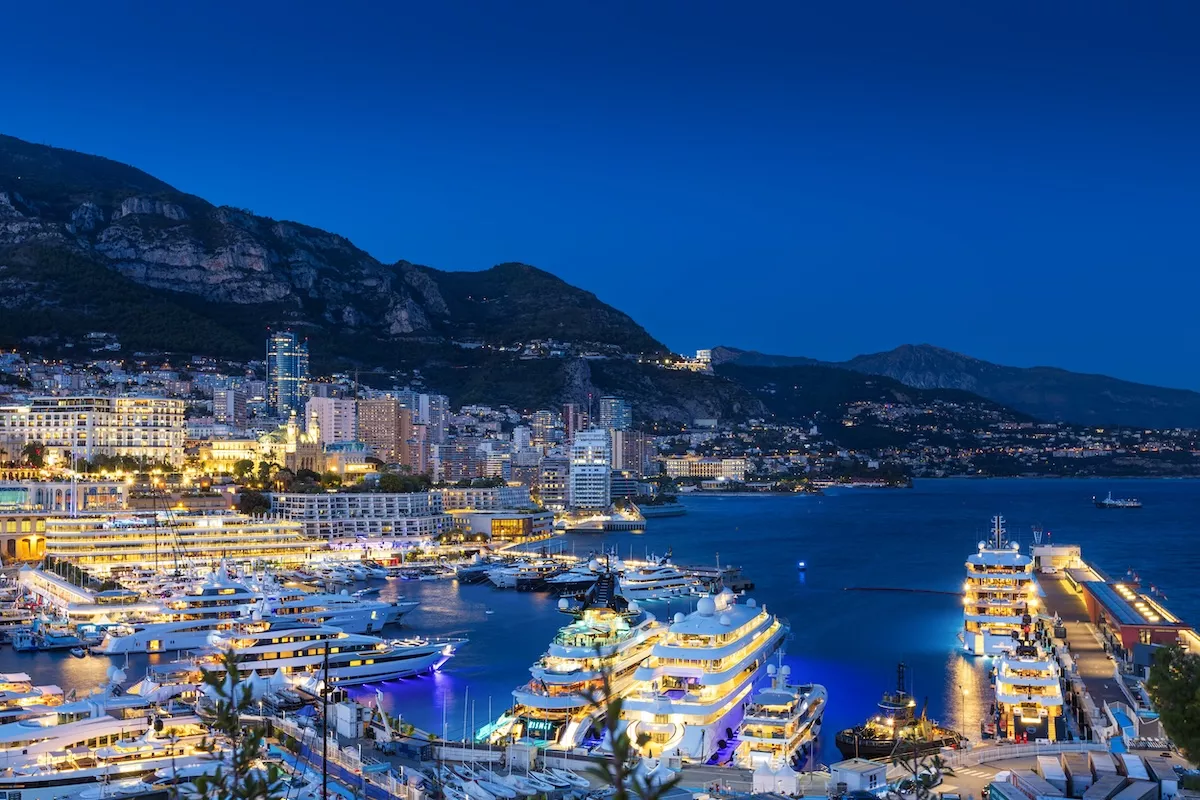
Monaco has been ranked among the world’s most competitive jurisdictions for internationally mobile wealth in the Henley Private Wealth Migration Report 2026, released this week by residence and citizenship advisory firm Henley & Partners, as global millionaire migration heads for its largest year on record.
The report assigns Monaco a Wealth Mobility Competitiveness Score of 70.0 out of 100, placing it among a group of “highly competitive” jurisdictions alongside Switzerland, Greece, Hong Kong, Portugal and Italy. A separate Henley index also identifies Monaco as a global leader in tax efficiency alongside Saudi Arabia and the UAE.
The countries classified as facing the most pressure are those closer to home: France scores 65.7, the UK 68.3, Germany 69.7 and Norway 69.0 — all described as losing ground as tax reforms, fiscal uncertainty and policy shifts prompt wealthy individuals to reassess their options.
A record year for millionaire migration
Global millionaire migration reached a new high of 142,000 relocations in 2025, and forecasts for 2026 point to another surge, with as many as 165,000 expected to move — the largest migration of wealth on record. The report defines millionaires as individuals with investable wealth of at least one million US dollars who have relocated and remained in a new country for longer than six months.
The 2026 edition introduces a new Global Wealth Mobility Framework, which evaluates jurisdictions across 12 dimensions including taxation, quality of life, rule of law, geopolitical stability and capital mobility. The framework represents a shift from the previous approach of tracking millionaire inflows and outflows toward a broader assessment of structural competitiveness.
The US and UAE paradoxes
Two wealth mobility flashpoints look set to reshape the geography of global wealth in 2026: the US, the world’s largest private wealth market, is also generating record demand for residence and citizenship optionality as affluent Americans seek international diversification in unprecedented numbers; and the Gulf, where ongoing conflict is testing the resilience of the region’s emerging wealth hubs.
The US scored just 62.3 on the new framework despite its scale — a result Henley & Partners attributes to a paradox: America generates more wealth than any other country, but it is also the firm’s single largest source market for applications. Applications from US nationals doubled in 2025 versus the prior year and have stayed elevated into 2026.
The UAE, despite regional tensions, achieved the highest score in the framework at 85.3 — though Henley & Partners also recorded a 41 per cent increase in enquiries from UAE-based individuals between the fourth quarter of 2025 and the first quarter of 2026, suggesting contingency planning is accelerating among residents of the Gulf.
What it means for Monaco
Monaco’s position in the report reflects what is already observable on the ground. The Principality has no income tax for residents, offers political stability, a high quality of life and a well-established infrastructure for wealthy families — factors that have driven consistent demand for Monegasque residency for decades. Official figures from IMSEE confirm the resident population has grown steadily in recent years, particularly from British nationals.
See also:
How Monaco’s population has changed over a decade — and who is moving in now
Stay updated with Monaco Life: sign up for our free newsletter, listen to our podcasts on Spotify, and follow us across Facebook, Instagram, LinkedIn, and Tik Tok.
Photo credit: Benjamin Vergely, Monaco Tourism Department