

Monaco’s private-sector employment reached a new first-quarter record in the first three months of 2026, but overall economic indicators pulled back from the exceptional levels of a year earlier, according to the latest quarterly bulletin from Monaco Statistics (IMSEE).
Total revenue stood at €4.2 billion at the end of March 2026, a decline of 20.3% — or more than €1 billion — compared with the same period in 2025. IMSEE attributed the fall primarily to the completion of major construction projects and the absence of the exceptional transactions that had inflated the first quarter of 2025. Despite the contraction, revenue returned to levels comparable with 2022, which IMSEE described as consistent with long-term trends.
Employment at record high
The clearest positive signal in the data came from the labour market. Private-sector employment reached 63,018 jobs at the end of March 2026 — a new all-time high for a first quarter, surpassing the previous record set in 2024, and representing an increase of 1,248 jobs, or 2.0%, year-on-year.
Accommodation and food service activities led growth in absolute terms, adding 499 jobs to exceed 9,700 for the first time. Arts, sports and recreation grew by nearly 10% in a year, approaching 3,000 jobs. Construction and temporary work continued to decline but at a slower rate than in previous quarters, losing around 250 jobs combined. The private sector logged 25.8 million hours worked between January and March, up 1.5% on the previous year.
Revenue: winners and losers
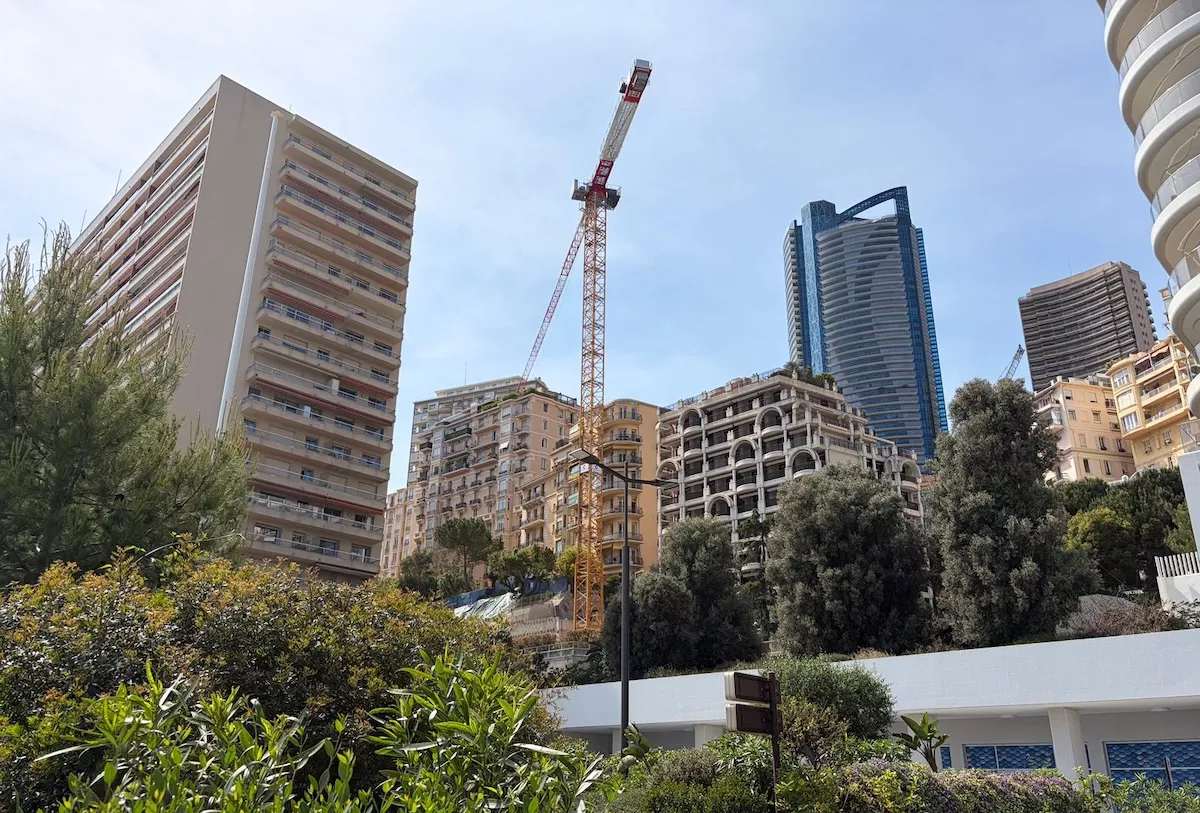
Of the 13 major economic sectors tracked by IMSEE, eight showed growth and five declined. The steepest fall came in professional, scientific and technical activities, where turnover nearly halved — down €661.3 million, or 58.3% — largely because two large operators, a quantity surveyor and a consultancy firm, had generated significant revenue in Q1 2025 but had not yet done so in 2026. Construction revenue fell by €200.3 million, or 34.5%, as major building projects across the territory reached completion. Real estate activities dropped by 49.2%, driven by a single entity.
Among the sectors showing growth, accommodation and food service activities surpassed €200 million for the first time, rising 11.2%. Retail trade grew 4.7%, driven primarily by motor vehicle sales. Administrative and support service activities exceeded €300 million, up 8.9%, boosted by rental and leasing of recreational and sports goods.
Foreign trade and finance
Monaco’s overall volume of foreign trade fell 23.7% year-on-year to €772.1 million — a level comparable to Q1 2022. Both imports and exports declined, though imports fell more sharply. The trade deficit narrowed significantly from €364.1 million to €213.9 million as a result. Taiwan emerged as Monaco’s second-largest supplier, behind Italy, following unprecedented imports of electronic components and circuit boards worth €97.1 million.
Monaco’s financial sector showed resilience. The net assets of Monegasque investment funds rose 19.5% to €4.96 billion at end of March. Total assets under management by banks rose 5.6% over twelve months to €179.6 billion, and loans granted increased by 4.6%.
Property and tourism
The property market slowed sharply. Only two new apartment sales were recorded in the first three months of 2026, totalling around €30 million, compared with 42 in Q1 2025. The resale market logged 104 transactions worth €531.2 million — a decline of 18.8% in volume and 27.7% in value on the previous year, though still above the ten-year quarterly average of 100 transactions worth €514.2 million.
Hotels recorded 68,687 guest arrivals in the first quarter, up 5.8% on the previous year, but the occupancy rate fell 5.4 percentage points to 49.0% as available room capacity expanded following renovation works at one establishment. The average length of stay fell slightly to 2.3 nights.
Helicopter traffic grew, with passenger numbers up 25.9% to 9,302 for the quarter, driven largely by sightseeing flights. New vehicle registrations fell 4.2%, and the share of fully electric vehicles among new registrations dropped nearly 10 percentage points to 18.2%, with plug-in hybrids taking the lead engine type for the first time.
Stay updated with Monaco Life: sign up for our free newsletter, listen to our podcasts on Spotify, and follow us across Facebook, Instagram, LinkedIn, and Tik Tok.
Photo credit: Cassandra Tanti