

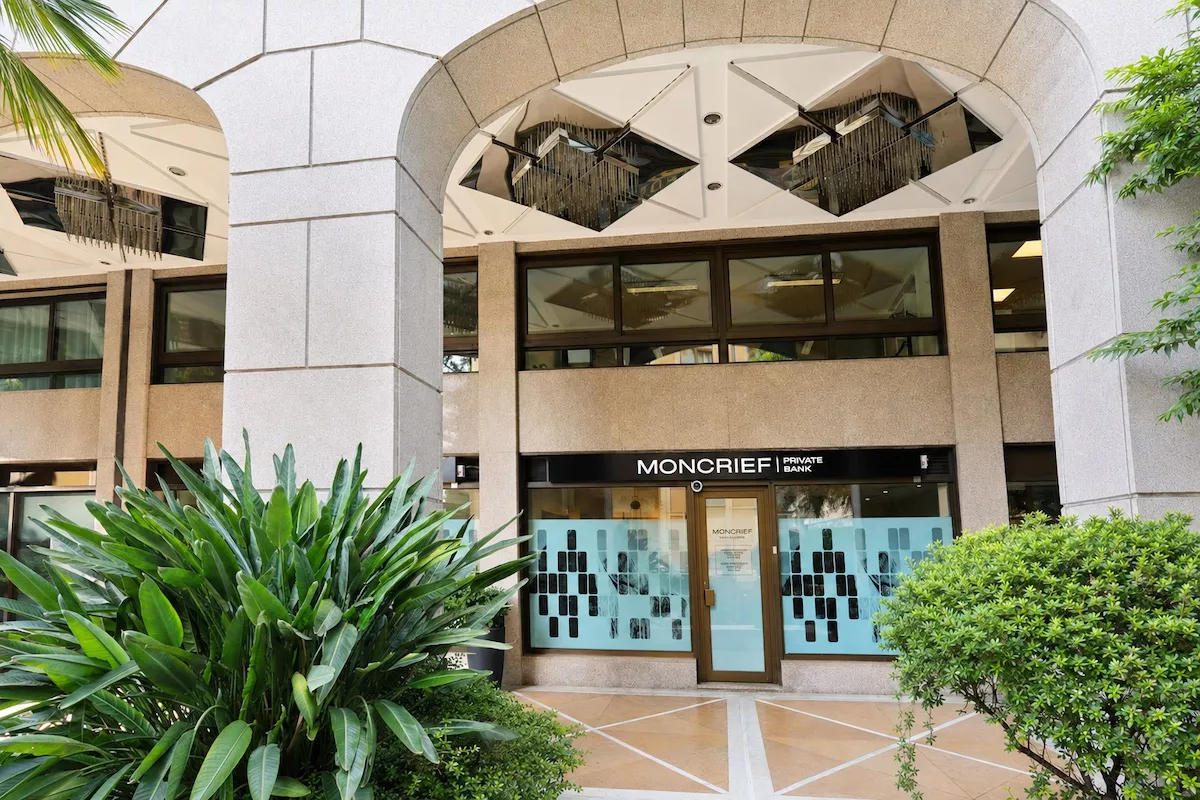
Moncrief Private Bank (Monaco), formerly Banque Havilland (Monaco), has been fined €1 million after Monaco’s financial regulator upheld seven grievances concerning deficiencies in its financial-crime compliance controls, including three that repeated failings already sanctioned in 2021.
The decision of the Autorité Monégasque de Sécurité Financière (AMSF), published in the Journal de Monaco on 10th July, followed an on-site inspection at the bank’s boulevard des Moulins premises between 9th July and 5th September 2024. The sanctions committee delivered its ruling on 30th June, and rejected the bank’s request to have the decision published anonymously, ordering that it appear in named form for three years.
Inspection coincided with parent bank’s licence withdrawal
The inspection coincided with a significant event for the wider group. On 2nd August 2024, midway through the AMSF’s on-site work, the European Central Bank withdrew the banking licence of the Luxembourg parent, Banque Havilland S.A. The Monaco subsidiary, whose capital was €27 million at the time of the inspection, subsequently changed ownership and was renamed Moncrief Private Bank (Monaco).
The bank employed 19 people at the time of the inspection. According to its 2023 regulatory data, it had 360 clients, 65 per cent of them individuals. Non-residents represented 48 per cent of the total client base, while British, Italian and Russian nationals were the largest groups among individual clients. As of 30th June 2024 it held €449 million in assets under management, while its net banking income has fallen sharply, from €8.8 million in 2023 to €5 million in 2025.
A risk map that understated the danger
The first of the seven grievances concerned the bank’s overall assessment of risk. The AMSF found that its risk mapping did not reflect its actual client base: the bank’s own data showed 29 per cent of relationships as high-risk and a further 2 per cent as very high-risk, yet its risk map recorded just 18 per cent as high-risk and applied a very-high category of zero, described in its own system as “a risk level not applied in Monaco”. The committee rejected the bank’s explanation that its clientele had simply evolved, finding it had failed to keep the mapping updated.
Source of wealth and a €1.2m loan
The most detailed findings concerned how well the bank knew where its clients’ money came from. In four high-risk files, the AMSF found that the files lacked sufficient reliable documentation establishing the clients’ economic background and the origins of their wealth. In one case, the bank’s own periodic review in May 2021 had concluded that its knowledge of the client rested on declarations and insufficient public information, and that management would have to decide whether the risk could be accepted as it stood, around eight years after the relationship began.
The committee also found the bank’s transaction monitoring inadequate. Its surveillance tool, set to flag every transfer involving high- or very-high-risk profiles from the first euro, generated more than 20,000 alerts in 2023 alone, a volume the AMSF found made genuine detection of atypical transactions effectively impossible.
Two transactions were singled out. In one, $300,000 was sent to the United States as a rent advance for a client’s daughter and returned the next day, with the bank unable to produce the lease it had itself flagged as necessary. In another, €1.2 million was transferred to a Cypriot company and then passed to a Romanian firm under a lending arrangement. The committee found that the bank had identified the structure as intended to circumvent Romanian lending rules, but the transaction was validated regardless, with legal advice obtained only afterwards. It further found that the compliance function had recorded obtaining the managing director’s agreement before approving it, evidence, the regulator concluded, that the bank’s compliance officers did not have effective autonomy.
Two relationships that should have been closed
The committee also found that the bank had failed to close two business relationships despite being unable to obtain the information required to meet its customer-identification obligations. A separate grievance concerned its failure to conduct the required specific examination of unusual transactions involving multiple risk indicators.
Repeat failings from 2021
Central to the decision was the finding that three of the breaches repeated failings already sanctioned by the Minister of State on 11th October 2021, when the bank received a formal reprimand. These concerned insufficient knowledge and corroboration of clients’ economic backgrounds, wealth and source of funds; failure to update client and beneficial-owner information; and deficiencies in transaction monitoring. The AMSF held that the corrective measures taken after that first sanction had not remedied the problems.
The committee also found the bank’s internal organisation inadequate, both in the number of compliance staff and in their autonomy, noting that an internal audit of November 2023 had itself recorded reviews conducted late or without sufficient rigour, gaps in client documentation and incorrectly assigned risk levels.
Regulator refuses anonymity
The bank had asked that any sanction be published anonymously, arguing that naming it would damage client confidence and its relationships with correspondent banks, and stressed that it had changed owners and no longer belonged to an international banking group. The AMSF was unpersuaded, finding no objective evidence that named publication would cause disproportionate harm. It noted that the change in ownership was a consequence of the ECB’s licence withdrawal rather than any choice by the bank, that there had been no change at the head of the board or general management, and that the Havilland group had already been the subject of named sanctions by regulators in Luxembourg and the United Kingdom.
In fixing the penalty at €1 million, the committee weighed the number, breadth and recurrence of the breaches against the bank’s modest size and a three-year average net banking income of €6.9 million. The decision may be appealed to the Court of First Instance within two months of its notification.
In a statement sent to Monaco Life, Moncrief said: “Since taking ownership, the bank’s new shareholders have invested in a comprehensive strengthening of its financial-crime controls and has moved away from the previous shareholder’s group-wide policies by implementing updated policies and procedures specific to The Bank, as well as mandating an experienced consulting firm to conduct a comprehensive compliance review — supported by an expanded and more experienced compliance team.”
A tougher regulator
The Moncrief ruling follows a series of recent enforcement decisions by the AMSF as Monaco works to strengthen its framework against money laundering and terrorist financing.
In a separate decision published in the Journal de Monaco on 8th May, the authority imposed a €6 million penalty on UBS (Monaco), one of the Principality’s largest banks, which held almost €17 billion under management at the end of 2023.
The AMSF upheld eight grievances in full and a ninth in part following an inspection conducted between March and June 2024. The findings included the late completion of the bank’s overall risk assessment, failures to identify and verify the ownership and control chains behind complex client structures, insufficient corroboration of the economic backgrounds of high-risk and politically exposed clients, weaknesses in transaction monitoring and delays in filing suspicious-transaction reports.
As with Moncrief, the regulator rejected UBS’s request for anonymity. It ordered the decision to be published under the bank’s name for five years, after which it will remain available in anonymised form. Both banks were represented during the respective proceedings by Monaco avocat-défenseur Thomas Giaccardi.
Stay updated with Monaco Life: sign up for our free newsletter, listen to our podcasts on Spotify, and follow us across Facebook, Instagram, LinkedIn, and Tik Tok.
Photo by Monaco Life