

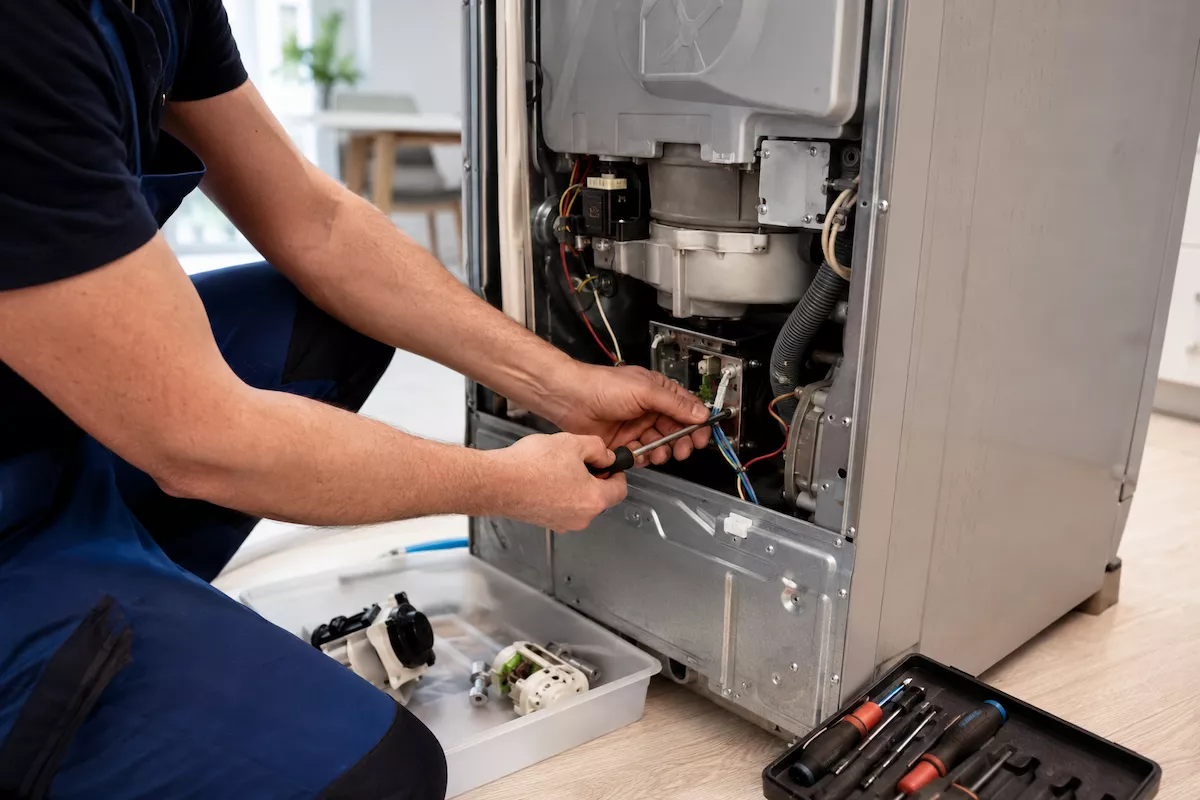
As of 31st July, new European Union rules are giving consumers a right to have many everyday products repaired rather than thrown away and replaced, in a change designed to cut waste and lower the long-term cost of household appliances and electronics.
The rules, set out in an EU directive adopted in 2024, apply to goods that already carry European repairability requirements, among them washing machines, vacuum cleaners, mobile phones and tablets. For years, it has often been cheaper and simpler to bin a faulty product and buy a new one than to have it fixed, a habit the European Commission estimates costs consumers close to €12 billion a year and generates some 35 million tonnes of waste across the bloc.
What changes
At the heart of the reform is a new obligation on manufacturers. Consumers will be able to ask a manufacturer to repair a product that is technically repairable under EU law, and the repair must be carried out within a reasonable time and, unless it is offered free, at a reasonable price, so that fixing an item becomes a genuine alternative to replacing it. This duty applies even after the standard two-year legal guarantee has expired.
Where a consumer chooses to have a product repaired rather than replaced while it is still under guarantee, that guarantee will be extended by at least a further 12 months, covering the whole product and not only the repaired part. Manufacturers will also have to make clear, accessible information about their repair services available, and to supply spare parts at a reasonable price.
What it means for consumers
For shoppers, the reforms tilt the balance between repairing and replacing. With manufacturers obliged to carry out repairs at a reasonable price and within a reasonable time, a guarantee that runs longer for those who choose to repair, and clearer access to spare parts and repair information, keeping a washing machine, a vacuum cleaner or a phone going should increasingly make more sense than buying a replacement. The intention is to move away from a throwaway habit that has long made replacement the path of least resistance, and to give everyday products a longer life.
A push for the circular economy
The Commission expects the reforms to encourage more sustainable consumption and to generate around €4.8 billion in growth and investment across the EU. To make repairs easier to arrange, a new European online platform is due to come into service from 2027, allowing consumers to find suitable repairers, with a dedicated section for each member state.
Monaco Life is produced by qualified, multi-media journalists writing original content. See more in our free newsletter, follow our Podcasts on Spotify, and check us out on Facebook, Instagram, LinkedIn and Tik Tok.
Photo: AI generated image by Monaco Life