

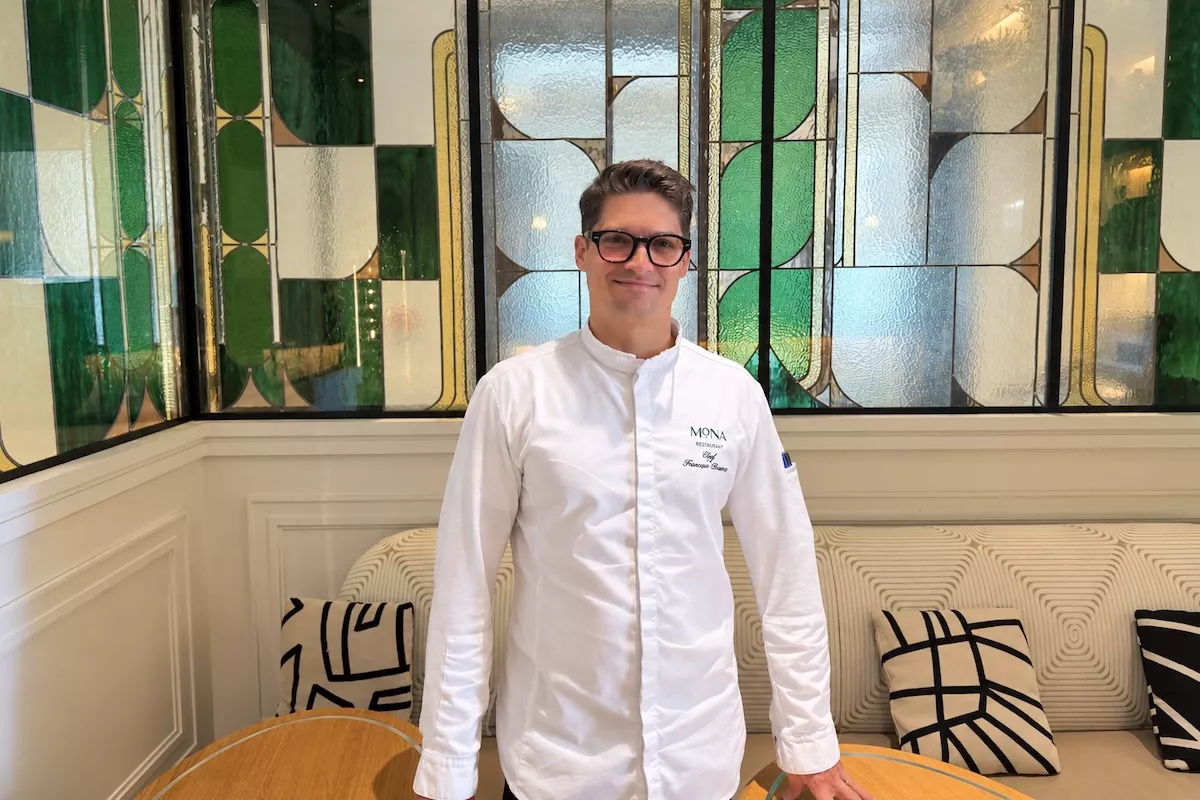
A menu of three starters, three mains and three desserts might sound like a modest proposition. Replacing them every week is anything but. At Mona, Chef Tristan Romain has taken on a challenge that gives his cooking more freedom — and his guests a reason to keep coming back.
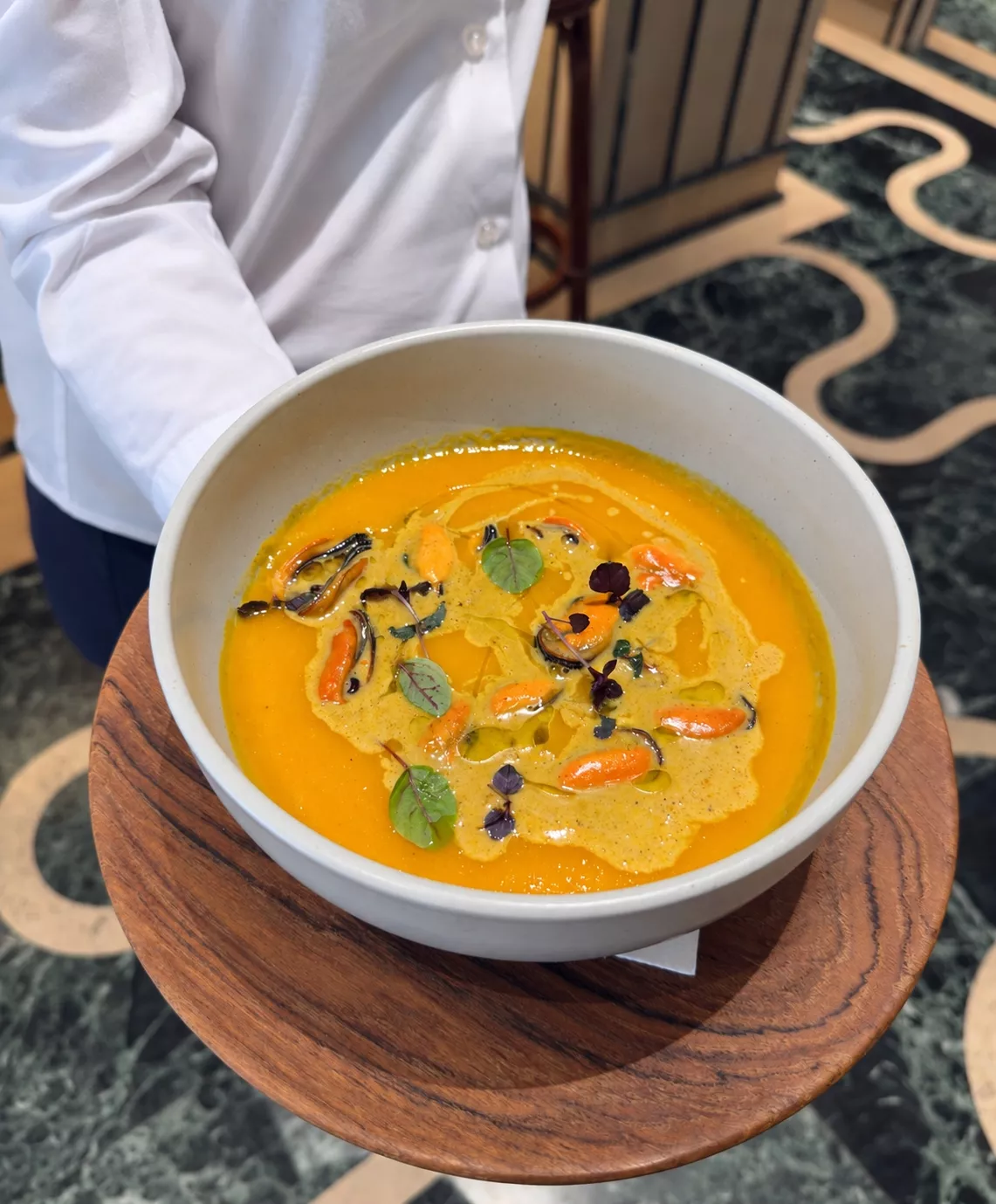
There is a moment with the butternut squash soup when I find myself trying to place the spice. A little chilli? Curry. Then there are the mussels: an unexpected addition that makes me reconsider what I thought would be a familiar bowl of autumn soup.
That ability to build flavour, to introduce something that catches your attention without overwhelming the dish, is what I particularly enjoy about Chef Tristan Romain’s cooking. His new menu gives him considerably more scope to exercise it.
Developed in discussion with the group, the concept moves Mona away from its previous Lebanese and Mediterranean focus towards a broader bistronomic approach. Rather than changing the menu at the turn of each season, Tristan now writes a new one every week.
“We choose our seasonal produce, then create our dishes, starters and desserts according to what the market offers us and what nature offers us,” he says.
The distinction is in how closely the kitchen can respond to those ingredients. The season still sets the framework; what is available that week determines what is served.
Following the chef’s instincts
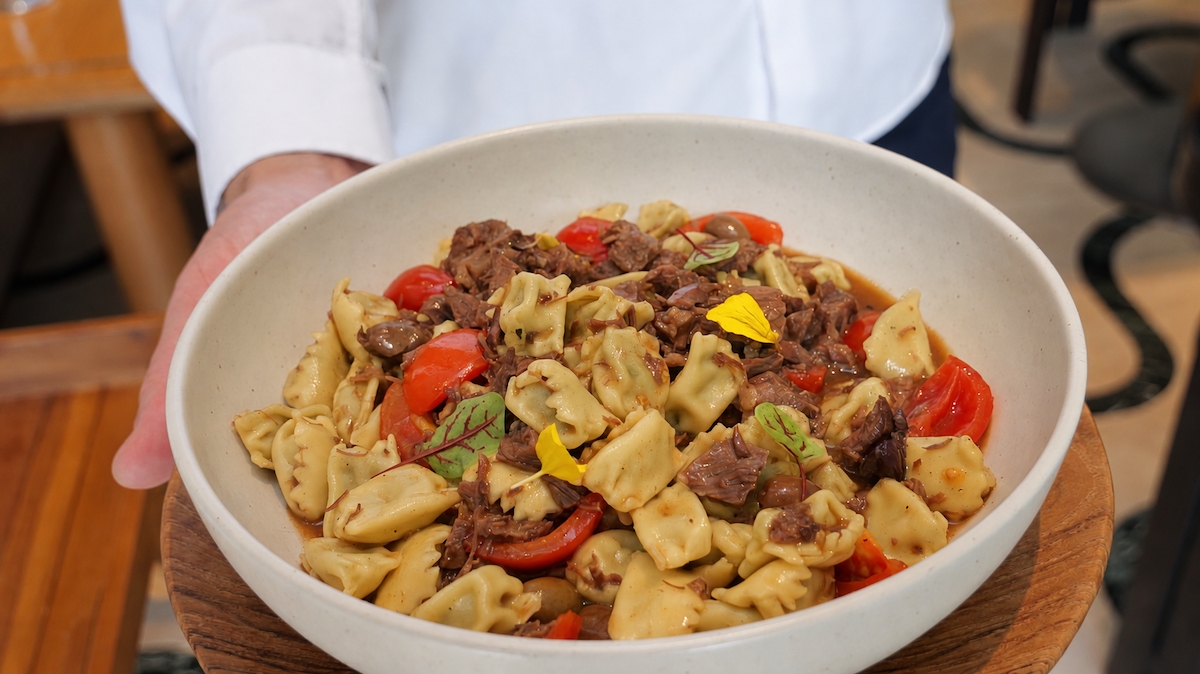
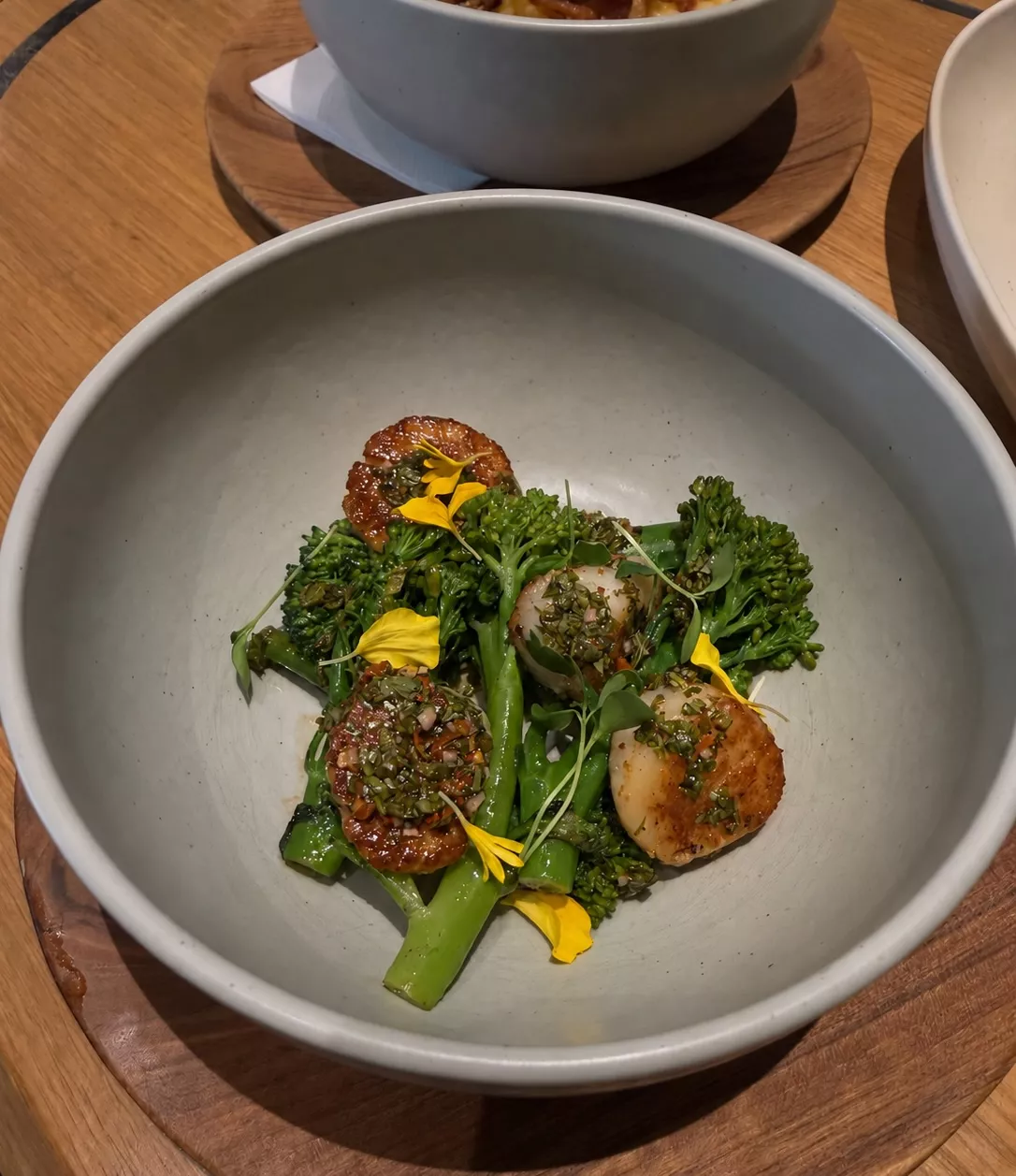
During my visit, warm goat’s cheese came with focaccia soldiers and salad leaves, while a veal chop was prepared piccata-style with heritage root vegetables. The roasted scallops, served with broccoletti and chimichurri, were a particular highlight. So were the coquillettes with crispy guanciale and a delightfully subtle use of butternut squash.
The squash appeared in both soup and pasta, but to quite different effect. That is part of Tristan’s skill: knowing how much to draw from an ingredient, and what to put alongside it.
A cheese platter has its place among the final courses, accompanied that week by vanilla-infused vegetable jam. The sweet choices were a waffle with accompaniments and a walnut tart, each offering a separate direction to finish the meal.
The wider concept releases Tristan from the expectation that every dish must belong to the same culinary tradition. Some spices and influences remain from the previous menu; others can now enter the kitchen.
“We used to really limit ourselves to Mediterranean and Middle Eastern cooking. Now we’ve broadened things a little,” he explains. “Sometimes we even have slightly Asian notes, without necessarily going into sushi or anything like that. We’re freer to do what we want, in a manner of speaking.”
He prioritises French produce and sources as locally as possible, while acknowledging that not everything can be obtained nearby. The aim, he says, is to avoid ingredients that have travelled around the world before reaching the restaurant.
The work behind a short menu
For the diner, a weekly menu offers variety. For the team, it creates a relentless deadline.
“Every month, I have to come up with twelve starters, twelve mains and eight to ten desserts,” Tristan says. “Sometimes it isn’t easy, especially making sure we don’t repeat something we did a month ago.”
There is also the work of turning each idea into a dish that can be delivered consistently, then making sure the people serving it understand what is on the plate. Familiarity has barely had time to settle before the next change arrives.
Tristan discusses ideas with maître d’hôtel Julien and asks colleagues what they like eating and what they would like to see on the menu.
“It’s always easier for them to sell something they already like and already know,” he says.
He describes the undertaking with an almost nonchalant confidence. Yet there is nothing casual about the commitment. Producing a good new menu is one task; doing it again the following week, and the week after that, is a much bigger one.
Having led the kitchen from the start, Tristan now has greater latitude to cook according to his own instincts. It is satisfying to see a chef whose ability is already apparent being given more room to use it.
For residents in the building, the changing selection makes eating downstairs a more interesting regular proposition. For the public, it offers a different kind of loyalty: returning for the chef’s judgement, rather than a particular dish.
The French have long done this with the plat du jour; Chef Romain takes the idea to another level by changing the entire menu. For me, it has the appeal of being invited into a chef’s own kitchen to taste what he really wants to cook at that moment. I would happily return for that soup, but I’m just as interested in what comes next.
Monaco Life is written by qualified journalists, writing original content. Sign up for our free newsletter, listen to our podcasts on Spotify, and follow us across Facebook, Instagram, LinkedIn, and Tik Tok.
Main photo credit: Cassandra Tanti, Monaco Life