

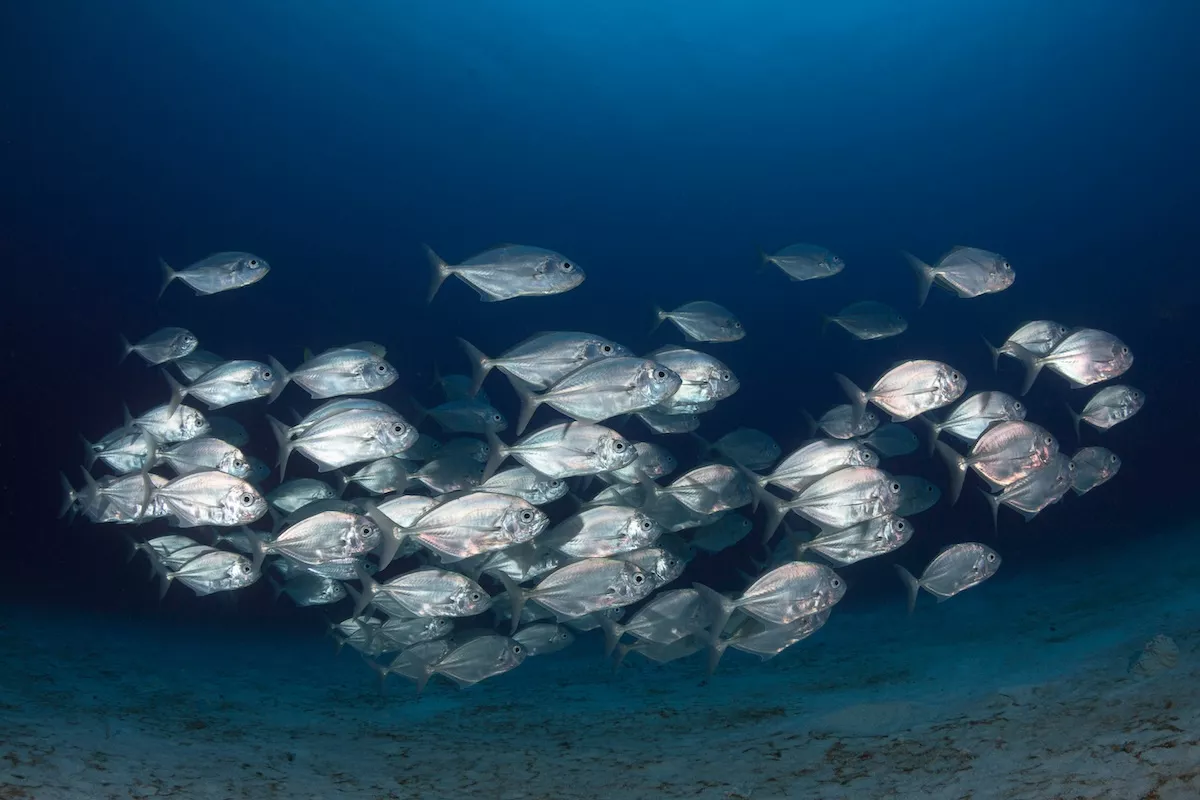
Every tenth of a degree of ocean warming per decade is enough to reduce fish populations by 7.2%. Compounded over time, across entire ocean basins, the numbers become almost impossible to absorb.
That is the central finding of a major new study published in Nature Ecology & Evolution this week, which examined year-to-year changes across 33,000 marine populations in the northern hemisphere between 1993 and 2021. The research isolated the effect of chronic, long-term seabed warming from shorter events such as marine heatwaves — and what it found was unambiguous.
“To put it simply, the faster the ocean floor warms, the faster we lose fish,” said Shahar Chaikin, a marine ecologist at the National Museum of Natural Sciences in Spain and the study’s lead author. “A 7.2% decline for every tenth of a degree per decade might sound small. But compounded over time, across entire ocean basins, it represents a staggering and deeply concerning loss of marine life.”
In the worst cases recorded, a single year saw biomass fall by as much as 19.8%.
The heatwave illusion
One of the study’s more troubling findings concerns the way marine heatwaves can mask the true scale of long-term damage. While chronic warming consistently reduces fish populations, short-term heatwaves can trigger temporary booms in certain species — particularly in colder waters where fish benefit from a sudden rise in temperature. Fish populations at the cold edge of their natural range, such as sprat in the North Sea, may surge during a heatwave even as populations at the warm edge, such as in the Mediterranean, crash.
The danger, researchers warn, is that these short-term gains create a misleading picture for policymakers. Carlos García-Soto, a scientist at the Spanish National Research Council and co-author of the UN’s world ocean assessment, called it “a concerning dynamic for ocean governance.” Overall warming reduces fish biomass, he said, while heatwaves generate temporary increases that obscure the underlying trend — introducing “a clear risk of poor interpretation when taking decisions.”
A crisis compounded
The study’s findings land against an already troubling backdrop. According to the UN Food and Agriculture Organisation, the proportion of overfished stocks globally continues to rise — and ocean warming is now accelerating a crisis that overfishing alone has driven for decades.
“The current challenge is that this overfishing crisis is being further exacerbated by ocean warming and deoxygenation,” said Guillermo Ortuño Crespo, a marine biologist who co-directs a high seas specialist group with the International Union for Conservation of Nature.
For Monaco, a Principality whose identity is inseparable from the sea and whose Prince Albert II Foundation has made ocean protection a cornerstone of its environmental mission, the implications are direct. Scientists have long warned that every fraction of a degree of warming carries a biological cost. This study puts a number on it.
“Our research proves exactly what that biological cost looks like underwater,” said Chaikin. “If we allow the pace of ocean warming to speed up by even a tenth of a degree per decade, we are expecting great losses to global fish populations that no management plan can easily fix.”
Stay updated with Monaco Life: sign up for our free newsletter, catch our podcast on Spotify, and follow us across Facebook, Instagram, LinkedIn, and Tik Tok.
Photo credit: Milos Prelevic, Unsplash