

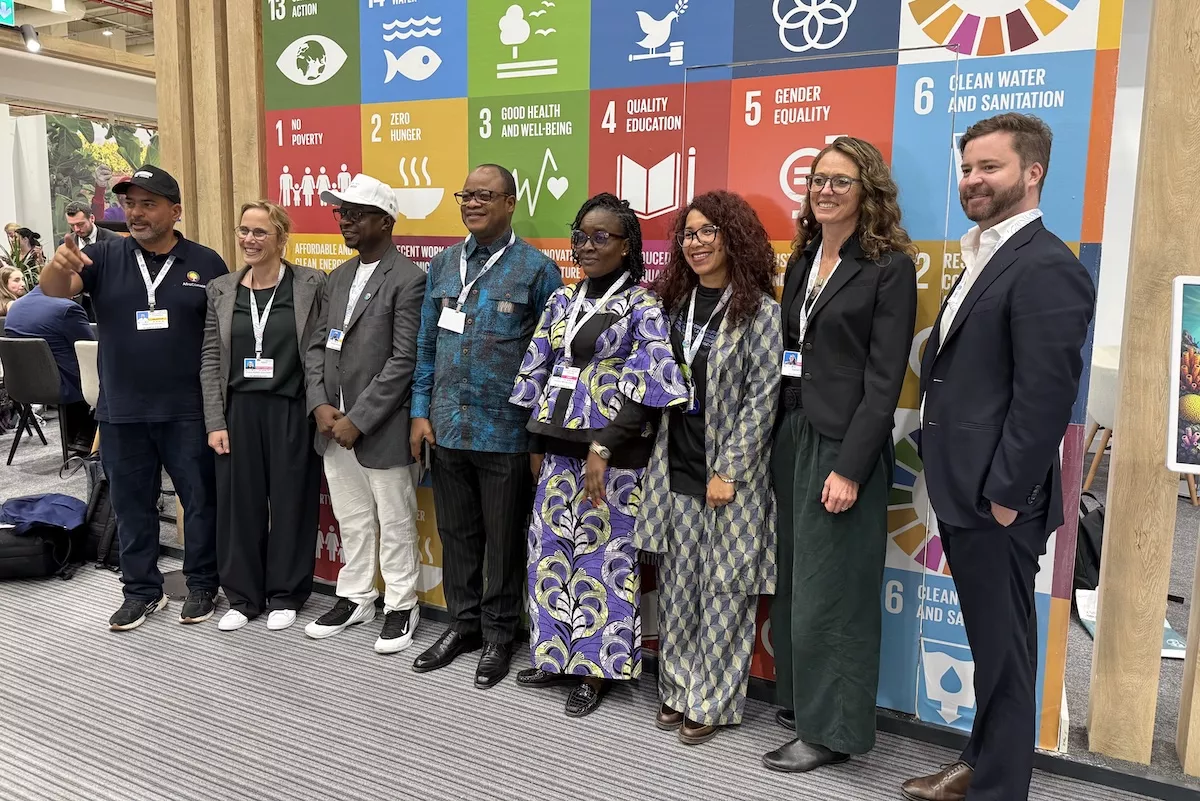
A proposed scheme to help forest communities in the Democratic Republic of Congo develop sustainable livelihoods was presented by the Prince Albert II of Monaco Foundation at COP31, alongside a call to begin international polar research programmes ahead of 2032.
The Foundation held two events in Antalya, Türkiye, on Tuesday 17th November, focusing on how environmental funding and international partnerships can better support people protecting tropical forests and scientists working in the polar regions.
A new approach to funding forest communities
Its Forests & Communities Initiative presented the emerging Community Forest Finance Lab, designed to help selected community-led projects develop livelihoods compatible with forest conservation.
The proposed first pilot would operate in Équateur Province in the Democratic Republic of Congo, covering Bolomba, Basankusu and Mbandaka. Potential activities include agroforestry, forest restoration, beekeeping and businesses based on forest products other than timber.
The model builds on a partnership with the Centre des Technologies Innovatrices pour le Développement Durable, with the AfroClimate Foundation joining as a technical assistance partner.
Discussions stressed that money alone cannot sustain these projects. Secure rights, effective local governance, technical support and access to markets are also needed. Participants argued that support should follow communities’ own priorities and development, rather than the requirements of individual funders.
“Communities are at the heart of the solution, not mere beneficiaries,” said Professor Joseph Malassi, deputy chief of staff to the Democratic Republic of Congo’s delegate minister responsible for the new climate economy.
Polar programmes should begin before 2032
At a separate session at the Cryosphere Pavilion, the Foundation’s Polar Initiative presented a call to action bringing partners together around 17 potential flagship initiatives ahead of the Fifth International Polar Year in 2032–2033.
The aim is to begin work now. A call for expressions of interest invites organisations and individuals to offer expertise, resources and capacity, while a programme development grant is intended to help turn selected proposals into coordinated international projects.
Representatives from the British Antarctic Survey, the International Cryosphere Climate Initiative and the Scientific Committee on Antarctic Research joined the discussion.
Panellists stressed that, although climate change is already affecting the poles, some consequences can still be avoided and some changes remain reversible.
“Through these two initiatives, we are addressing different environmental challenges with a shared conviction: lasting solutions depend on scientific knowledge, the involvement of the communities concerned and sustained international cooperation,” said Romain Ciarlet, the Foundation’s vice-chairman and CEO.
The Foundation also backed a statement and action plan calling for climate finance to become more accessible and better suited to the needs of small island developing states and the least developed countries.
Stay updated with Monaco Life: sign up for our free newsletter, listen to our podcasts on Spotify, and follow us across Facebook, Instagram, LinkedIn, and Tik Tok.