

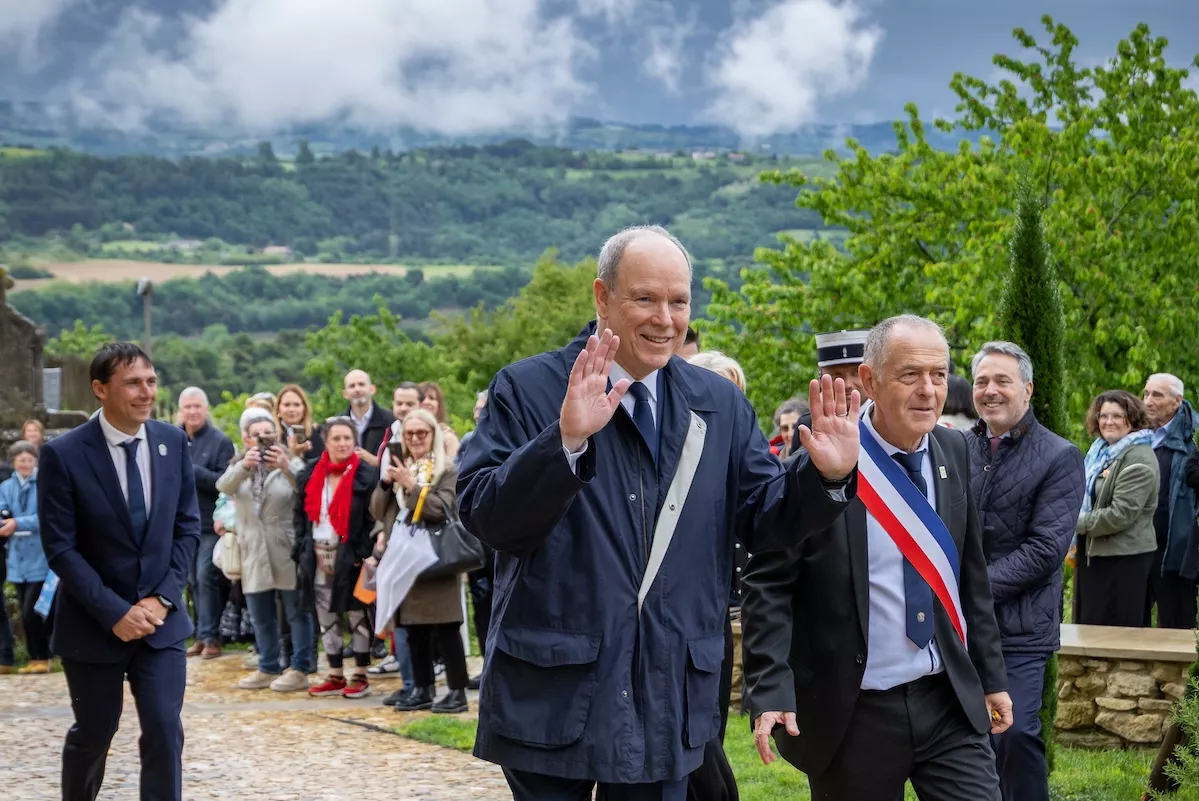
Prince Albert II spent two days this week travelling through the Drôme, Indre-et-Loire and Maine-et-Loire regions of France on a journey that was equal parts history lesson and family pilgrimage — following in the footsteps of an ancestor who served the kings of France five centuries ago.
The trip, undertaken at the invitation of local elected officials, centred on Imbert de Batarnay (1438–1523), a remarkable figure from the Dauphiné who rose to become a trusted counsellor and diplomat to several French kings during the Italian Wars of the late 15th and early 16th centuries. His effigy in the collegiate church of Montrésor remains one of the finest examples of funerary architecture from that era.
Wednesday 6th May: Bathernay and Montrésor
The Prince began in Bathernay in the Drôme, the ancestral home of Imbert de Batarnay, where he was welcomed by the Prefect of the Drôme and the town’s mayor. He visited the Romanesque church of Saint-Étienne, the former seigneurial residence, and a newly created interpretive museum space that benefited from his personal patronage.
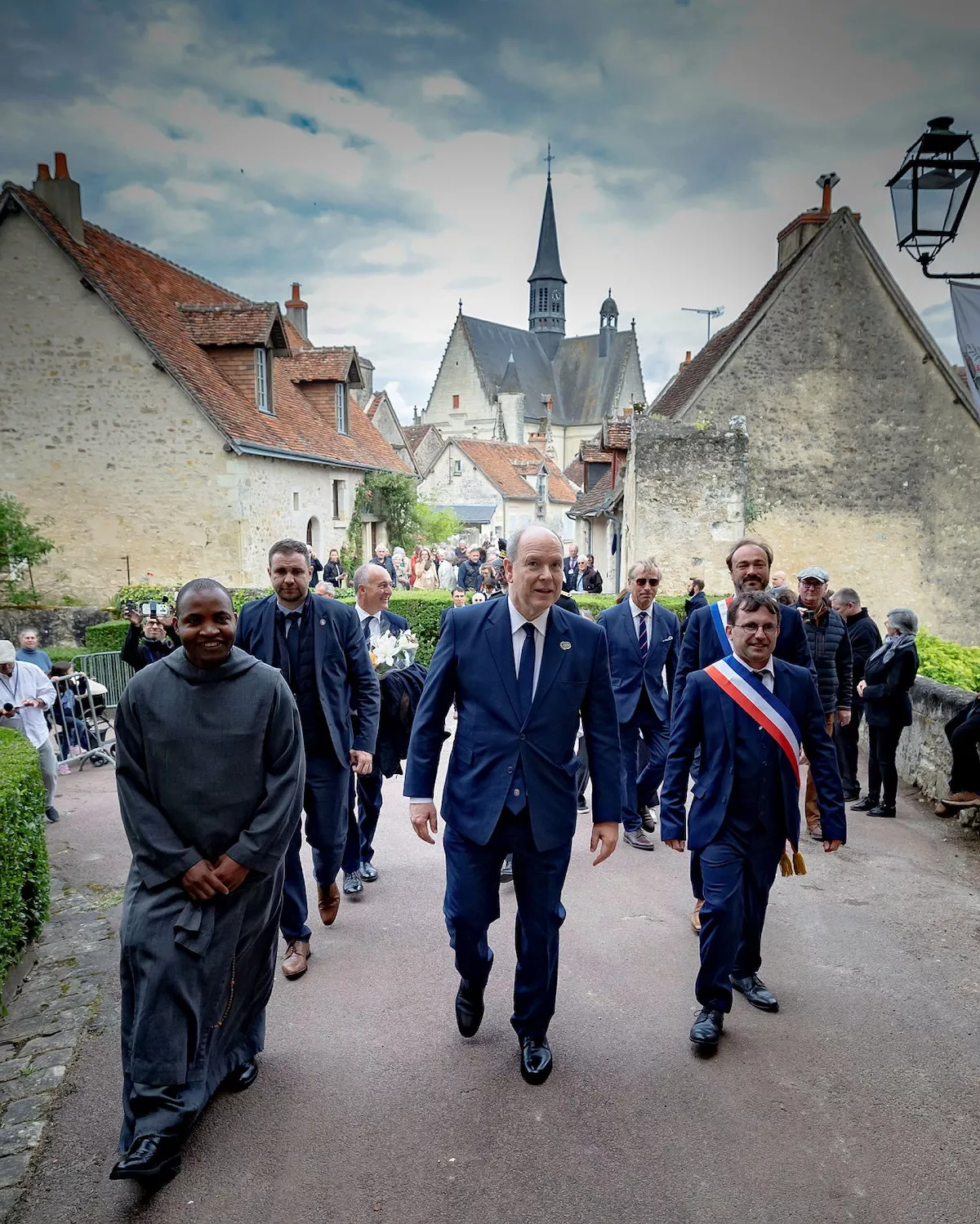
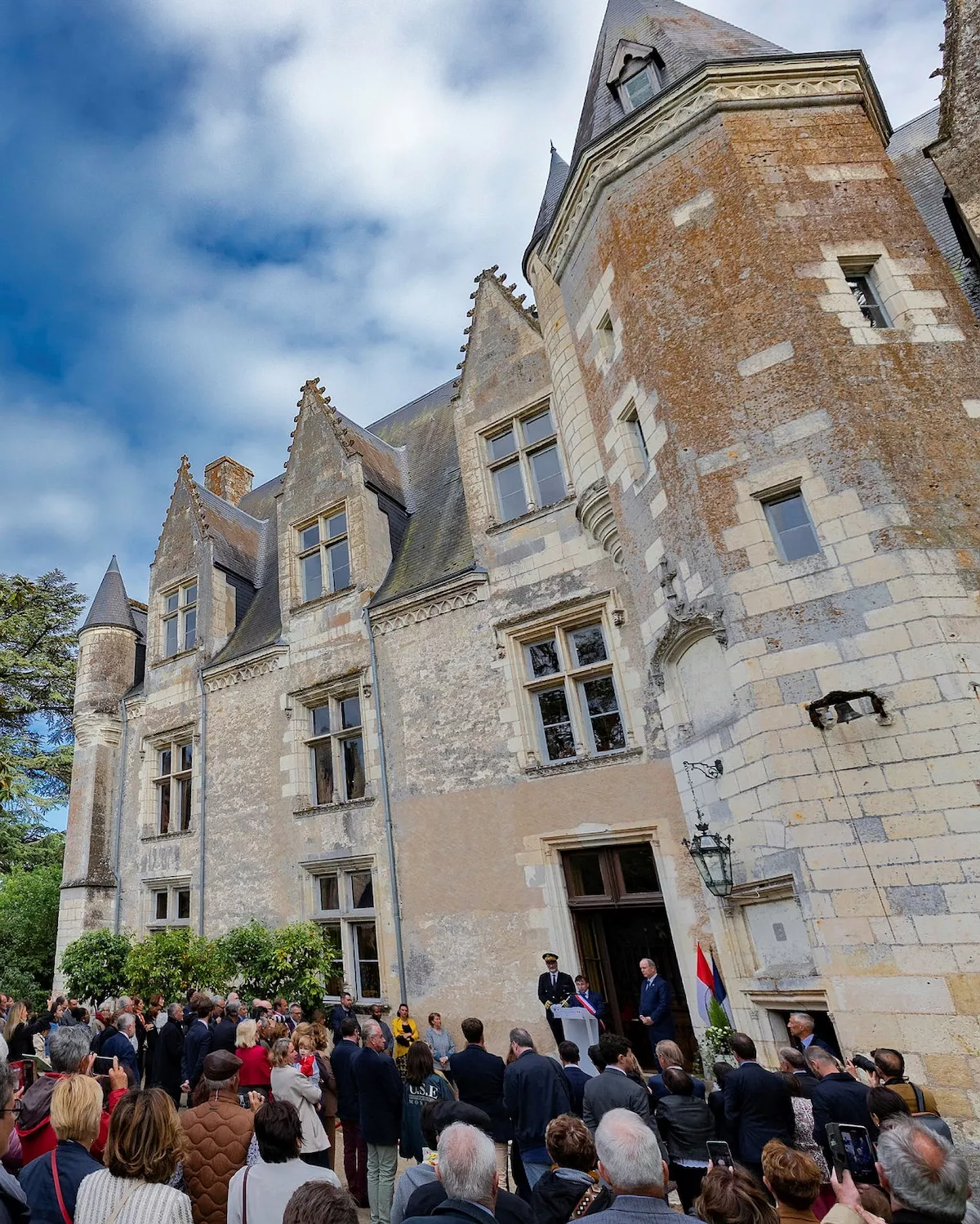
The afternoon took the Prince to Montrésor in the Indre-et-Loire, where he paused in contemplation before the tomb of Batarnay in the collegiate church before continuing on foot to the château, whose ramparts and interior rooms were presented to the visiting delegation. Both the mayor and the Prince addressed residents gathered in the château grounds.
The day concluded in Loches, where Prince Albert met privately with three business leaders from the department, each at the forefront of high-technology sectors.
Thursday 7th May: Bridoré and Saumur
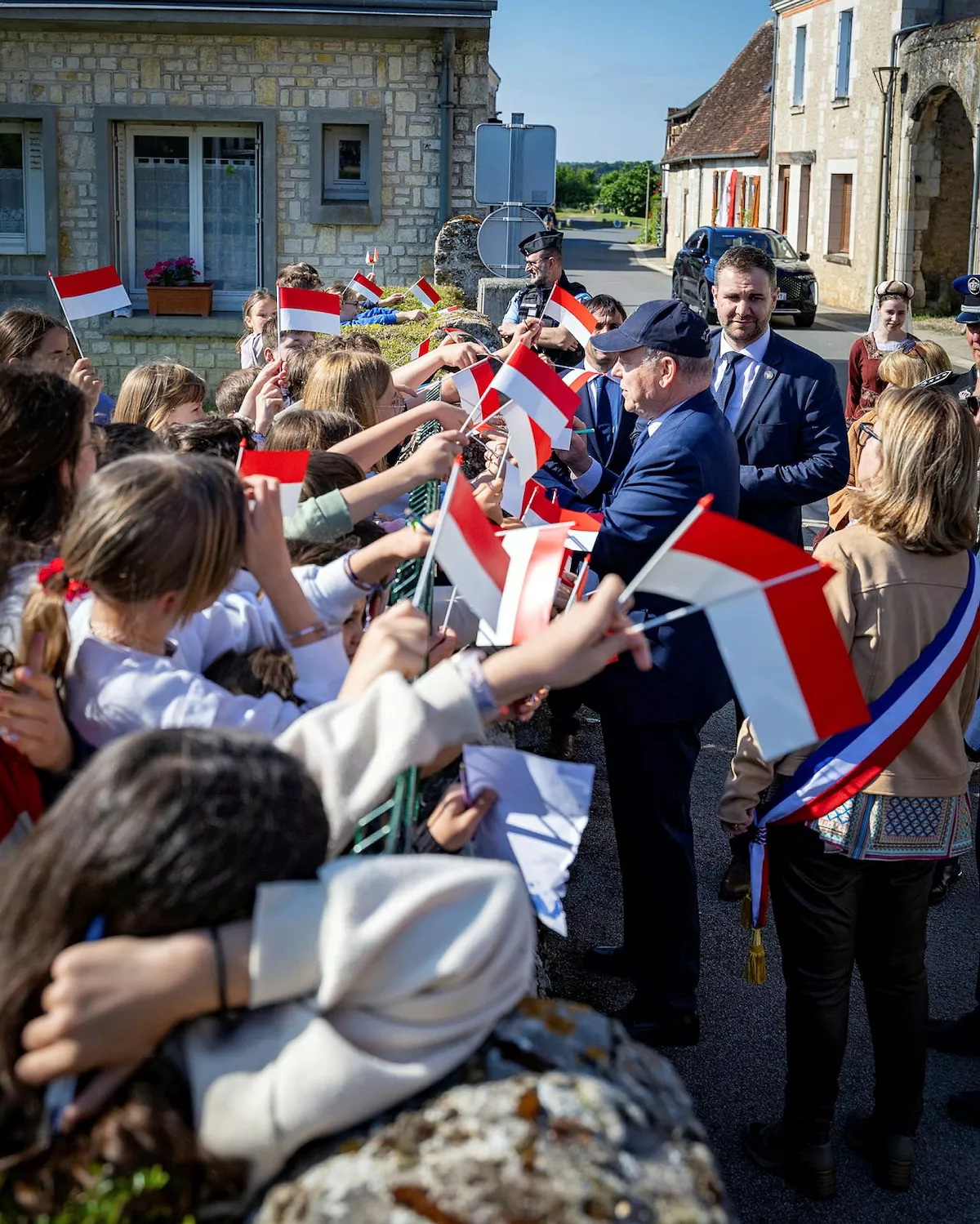
In Bridoré, another village closely associated with Batarnay, the Prince unveiled a plaque marking the site’s entry into the Grimaldi Historic Sites network — a promotional and heritage initiative connecting locations historically linked to the Grimaldi family across Europe. A visit to the village fortress and its keep followed, before an official ceremony on the steps of the town hall brought the local community together to mark the occasion.
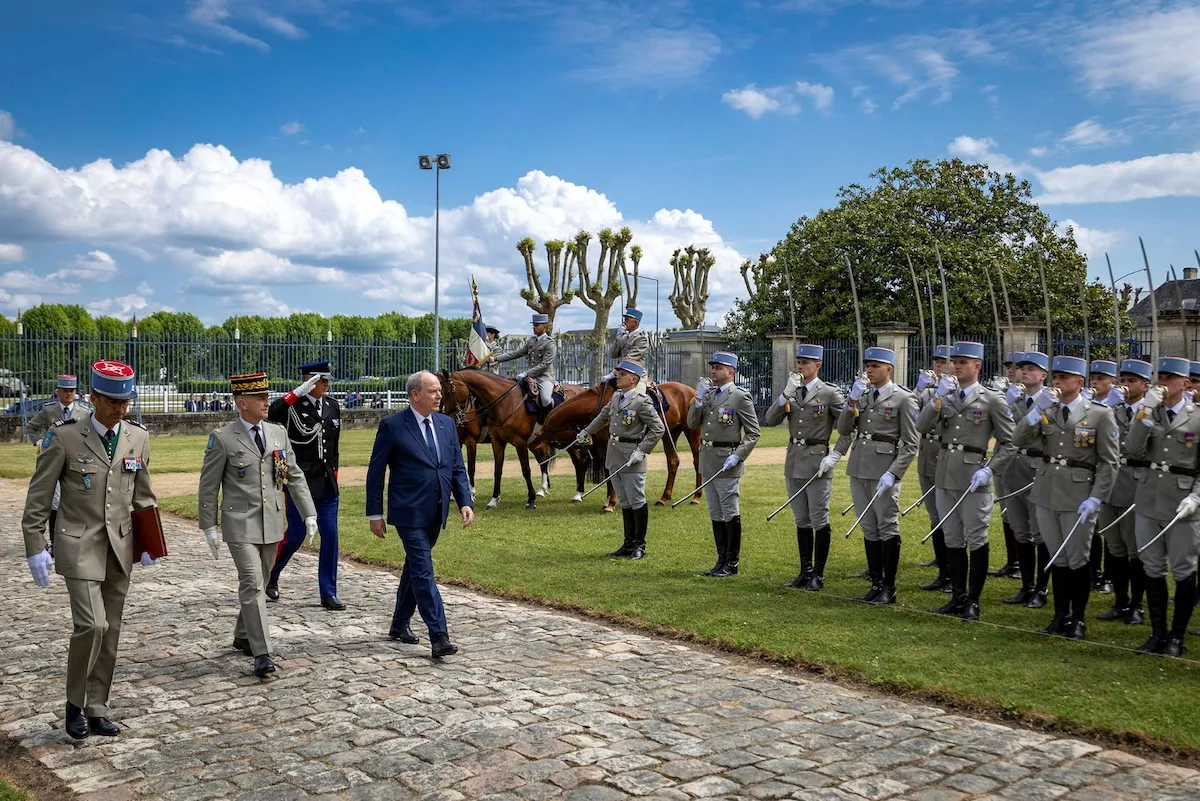
The visit concluded at the military schools of Saumur in Maine-et-Loire, under the theme ‘Lieutenants of yesterday and today: a year that educates and prepares for combat’. It was a homecoming of sorts: Prince Albert’s great-grandfather Louis II studied at the cavalry school there in 1894–1895. Military honours were rendered in the Cour Austerlitz under the command of General Olivier Baudet, followed by a review of troops and a tour of the 2nd training division, where the Prince was shown the latest advances in military instruction alongside cutting-edge equipment including the Jaguar armoured vehicle, the renovated Leclerc tank and military drones.
The visit to the Musée de la Cavalerie preceded the day’s final moment: Prince Albert gave the starting signal for the ‘Race for the Wounded’, a fraternal event mixing civilian and military participants that has become a symbol of the bond between the French armed forces and the nation they serve.
Under the 2002 Franco-Monegasque friendship treaty, France’s armed forces serve as guarantors of Monaco’s independence and sovereignty — a relationship that gave the Saumur visit a significance that extended well beyond ceremony.
Stay updated with Monaco Life: sign up for our free newsletter, catch our podcast on Spotify, and follow us across Facebook, Instagram, LinkedIn, and Tik Tok.
Main photo credit: Frédéric Nebinger, Prince’s Palace