

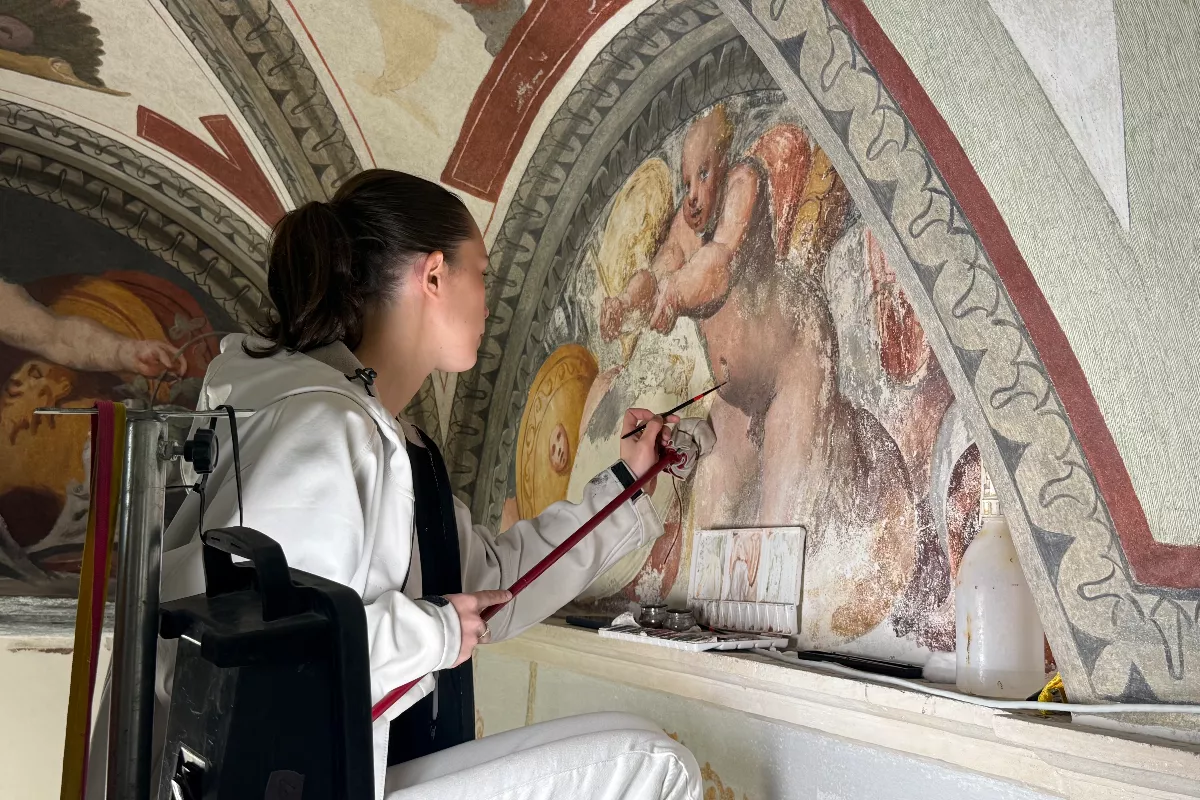
The Prince’s Place reopens its Grands Apartments to the public on March 30th, and the final room is opening with the work still very much in progress.
The former marble alcove chamber has been closed for several years while conservators uncovered and restored its 16th century Renaissance frescoes.
When visitors walk in from 30th March, they will find two conservators still on the scaffolding above them, working brush in hand, centimetre by centimetre.
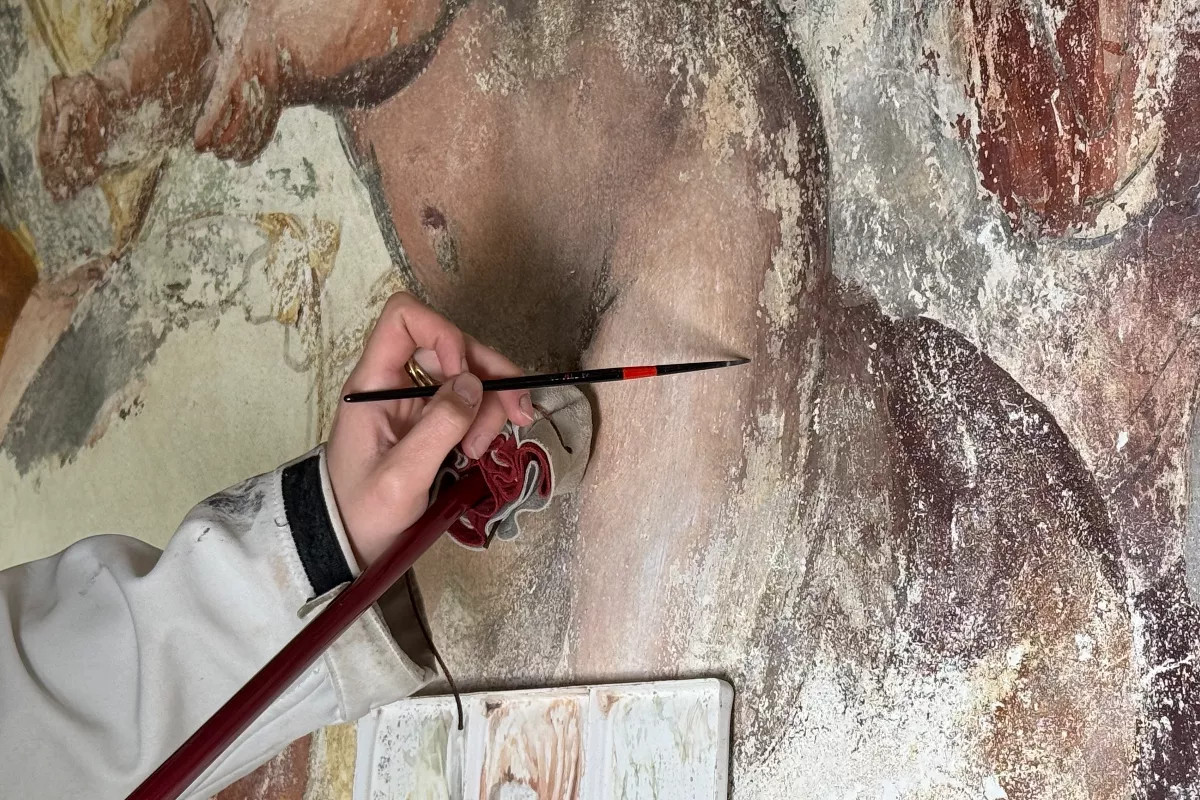
The room is expected to be complete within a few months — but the decision to open it early was deliberate as there are few experiences quite like watching a Renaissance masterpiece being brought back to life above your head.
However, the reopening room conceals a further surprise. During restoration work, conservators discovered a second ceiling sealed above the existing one, perfectly preserved and never exposed to light, humidity or human presence for centuries.
More than 3,000 photographs have been taken inside the hidden space, revealing frescoes in a remarkable state.
As the first ceiling’s own frescoes make it impossible to access, visitors will be able to discover it through a video display in the room.
The first ceiling, meanwhile, is the one visitors will see being actively restored above their heads.
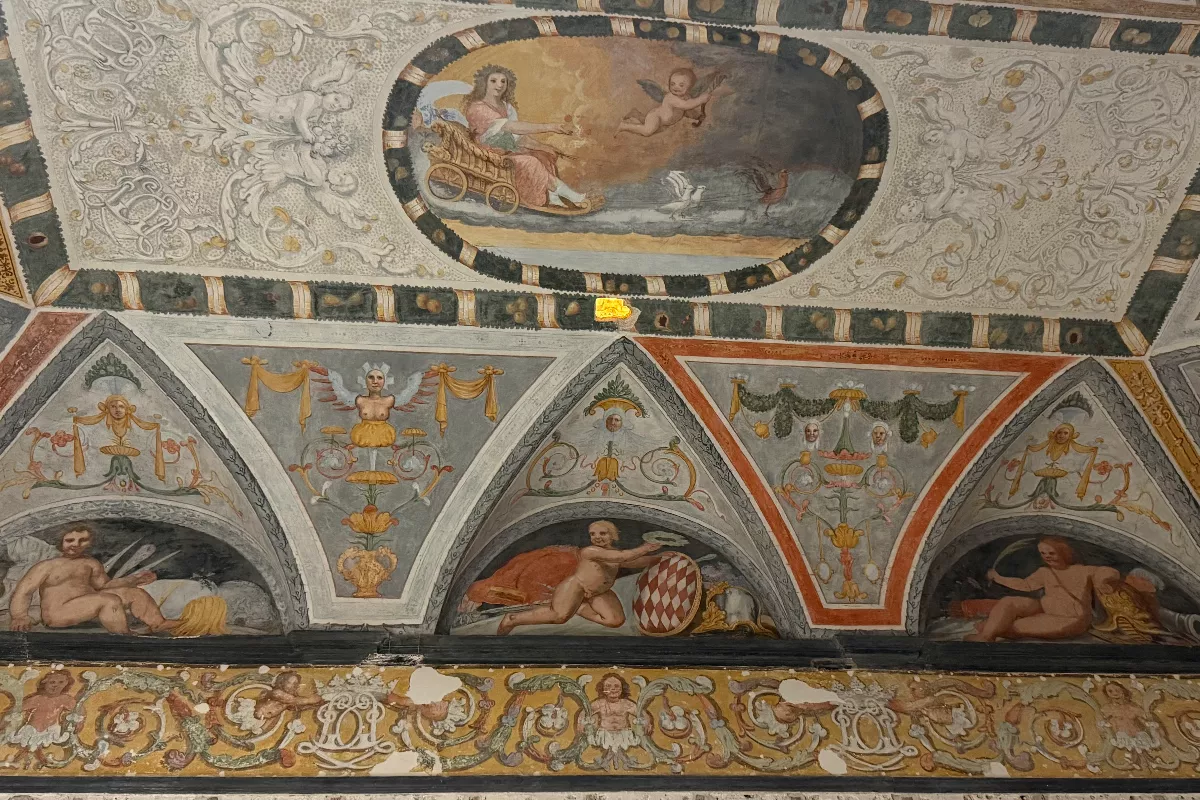
The central scene, previously uncovered, shows Bellerophon, mounted on the winged horse Pegasus, confronting Zeus and being cast down for the sin of pride.
Having slain the monstrous Chimera, Bellerophon believed himself equal to the gods… and was punished for it.
Full restoration of the room is expected within three to four months.
A journey through the underworld, on a palace ceiling
The throne room contains the project’s more incredible revelation: a ceiling covered in Renaissance frescoes that has not been definitively identified as a complete visual narrative of Homer’s Odyssey, a discovery only recently confirmed.
At its heart is is the ‘Nekuia’, the haunting scene in which Odysseus travels to the edge of the underworld, digs a pit with his sword, and waits as the souls of the dead rise to drink the blood of slaughtered animals and briefly regain their power of speech.
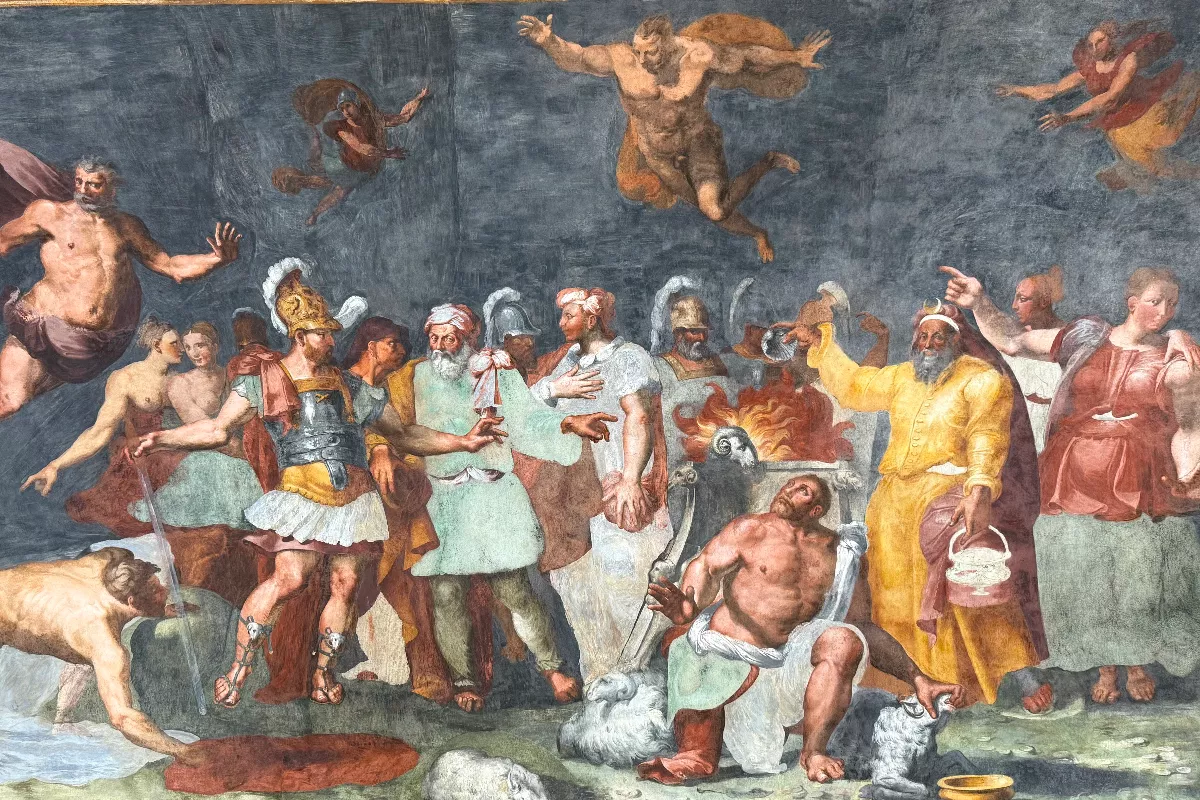
Agamemnon, Achilles and others who fell at Troy all appear. Surrounding this central scene, the wider ceiling traces the full arc of the journey, from the binding of the Cyclops to the hero’s return to Ithaca, where only his dog and old nurse recognise him.
The symbolic thread is one of identity lost and recovered. From the moment Odysseus tells the Cyclops “I am nobody”, he travels nameless until he finally stands at the table of a foreign king and declares himself the hero of Troy.
A project a decade in the making
What began in 2013 as routine maintenance on the palace exterior became, once scuffing revealed traces of 16th century Genoese painting beneath later decoration, one of the most significant heritage projects in Europe.
The broader restoration, including façade works beginning later, this year are set for completion by mid-2028, after which the focus shifts permanently to conservation
Stay updated with Monaco Life: sign up for our free newsletter, catch our podcast on Spotify, and follow us across Facebook, Instagram, LinkedIn, and Tik Tok.
Main photo credit: Monaco Life