

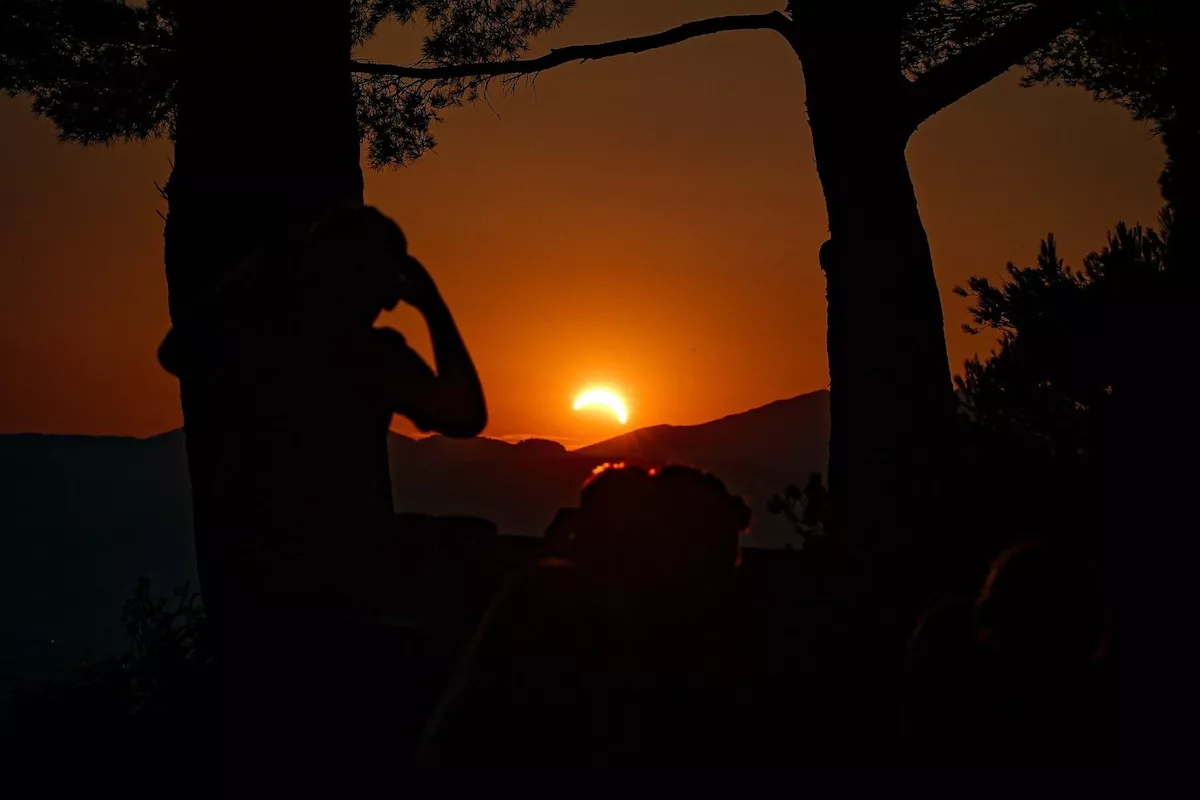
Monaco had a clear view of Wednesday evening’s deep partial solar eclipse – but only from the right vantage point. While buildings, hills and the setting sun frustrated many observers at lower elevations, those who headed higher captured remarkable scenes as the moon covered around 95% of the solar disc.
Photographs taken across the Principality show crowds gathering with protective glasses to watch the rare event, which was visible throughout France for the first time on this scale since 1999.
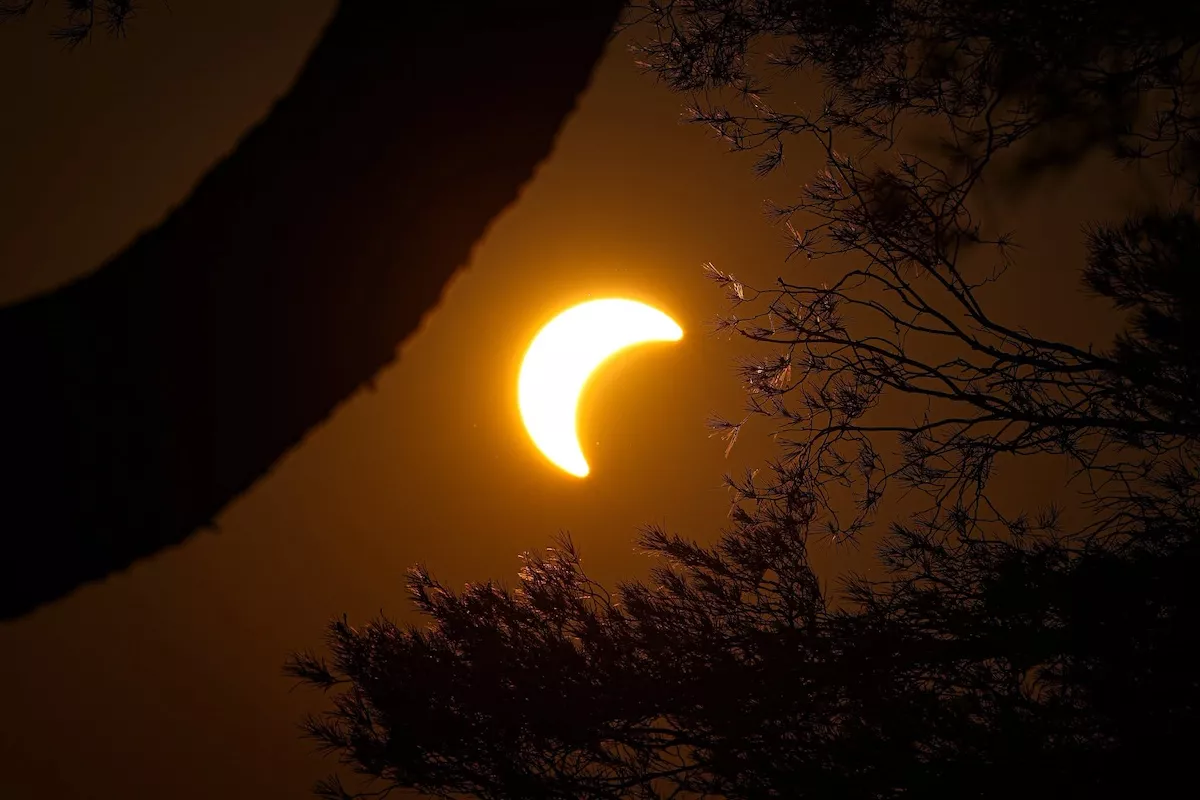
The eclipse began over Monaco at around 7.30pm on Wednesday 12th August and reached its maximum shortly before 8.25pm. By then, only a thin section of the sun remained visible.
Why elevation made such a difference
The principal obstacle was the position of the sun. At maximum eclipse, it was sitting extremely low in the west-northwest, only minutes from disappearing below Monaco’s mountainous horizon.
From locations with buildings, trees or hills blocking the western view, the eclipse was difficult or impossible to see. Higher vantage points, however, offered the clear line of sight needed to follow it as the moon moved across the sun.
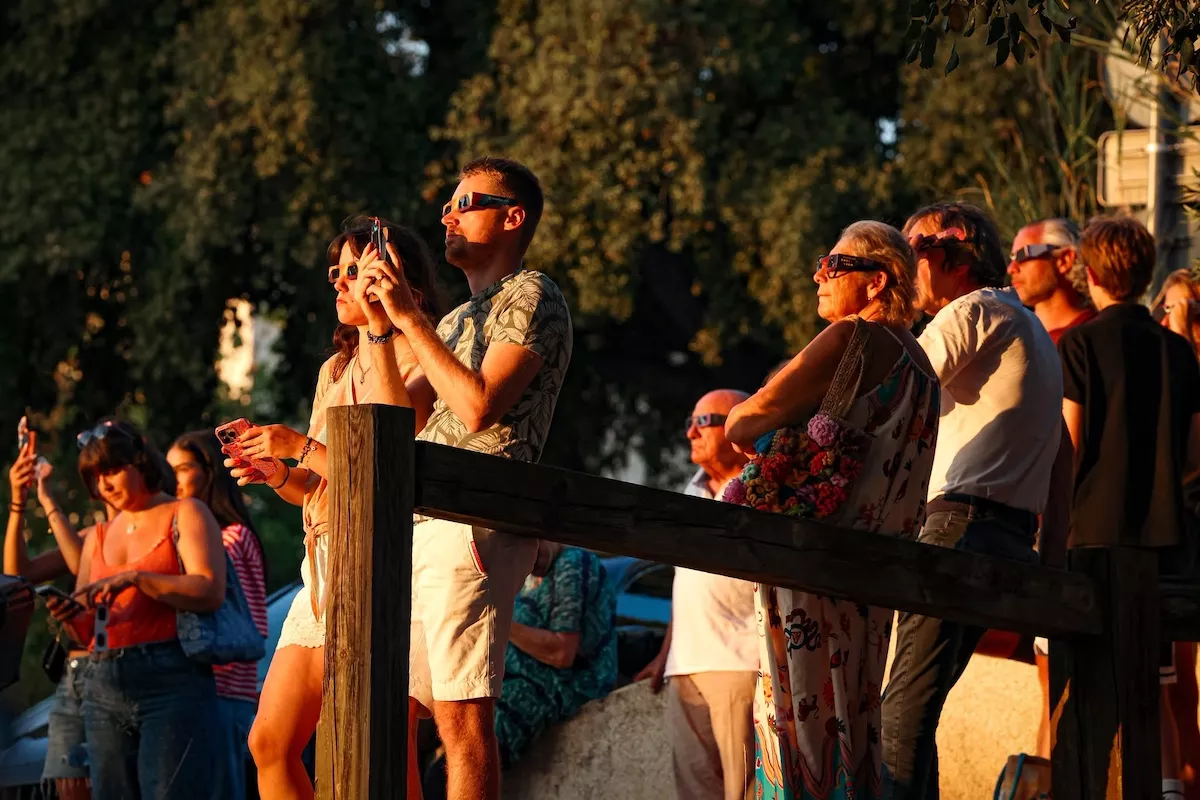
Those who found the right position were rewarded with one of the deepest partial solar eclipses visible from Monaco in decades. The remaining section of the sun was still powerful enough to require certified eclipse glasses throughout the event.
Not total in Monaco—but still remarkable
Around 95% of the sun was obscured at the eclipse’s maximum over Monaco. Despite that figure, the Principality did not experience totality.
The path of the total eclipse crossed Greenland, Iceland and northern Spain, where the Moon completely covered the Sun. Monaco remained outside that narrow zone, leaving a brilliant sliver of sunlight visible even at the peak.
Another, easier chance in 2027
Anyone who missed Wednesday’s spectacle will not have to wait until 2081 to see another solar eclipse from Monaco.
A partial solar eclipse will be visible from the Principality on 2nd August 2027, beginning at around 9.58am, reaching its maximum at 11.05am and ending at 12.17pm.
Around 70% of the sun is expected to be covered. Although that is less than Wednesday’s 95%, the late-morning timing should make the event considerably easier to watch, with the Sun high above Monaco rather than sinking behind the horizon.
Totality will be visible farther south, across parts of southern Spain and North Africa.
A “ring of fire” follows in 2028
Another solar eclipse will take place on 26th January 2028. This will be an annular eclipse, when the Moon passes in front of the Sun but appears too small to cover it fully, producing the distinctive “ring of fire”.
The complete annular effect will be visible from parts of Spain and Portugal, as well as sections of North Africa and South America. Monaco will see a partial eclipse beginning at around 4.42pm, although its position close to sunset could again make an unobstructed western view important.
On 3rd September 2081, the next total solar eclipse will be visible from mainland France. Before then, Monaco will have several opportunities to witness partial solar eclipses, including two in the next 18 months.
Monaco Life is produced by qualified, multi-media journalists writing original content. See more in our free newsletter, listen to our Podcasts on Spotify, and check us out on Facebook, Instagram, LinkedIn and Tik Tok.
Photo credit: Direction de la Communication – Stéphane Danna