

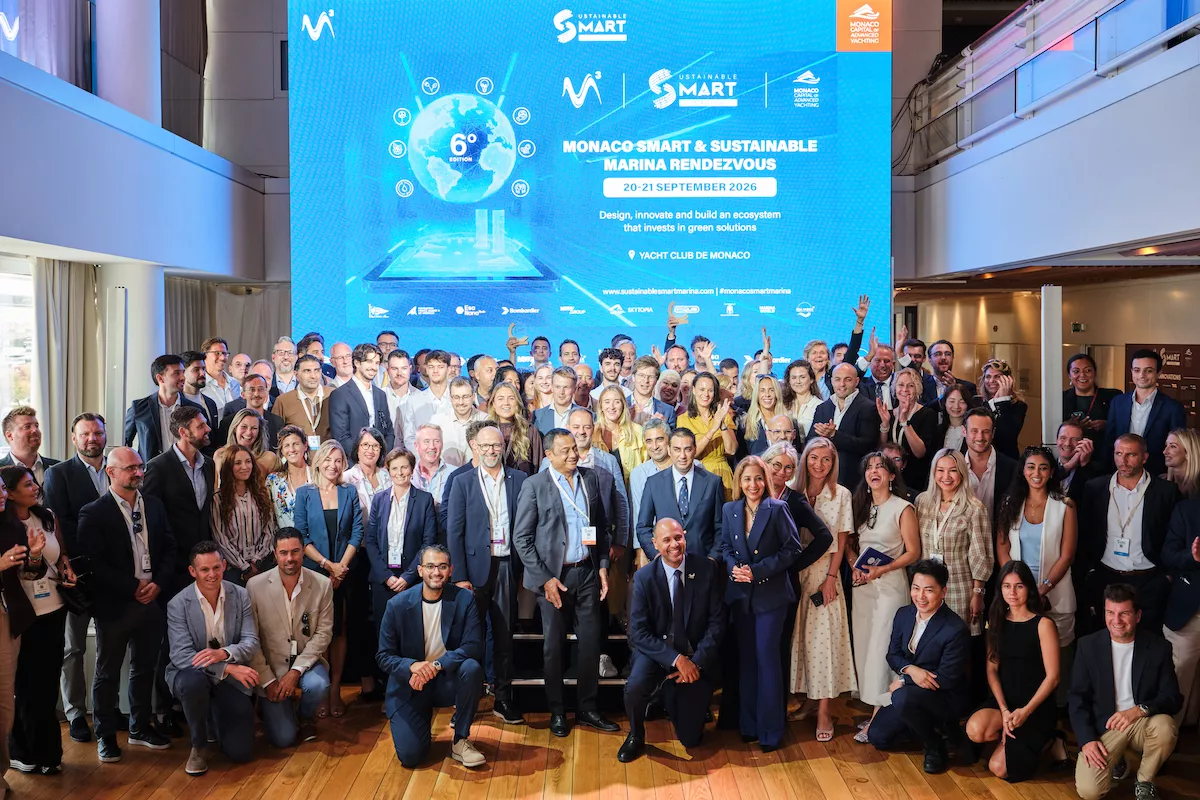
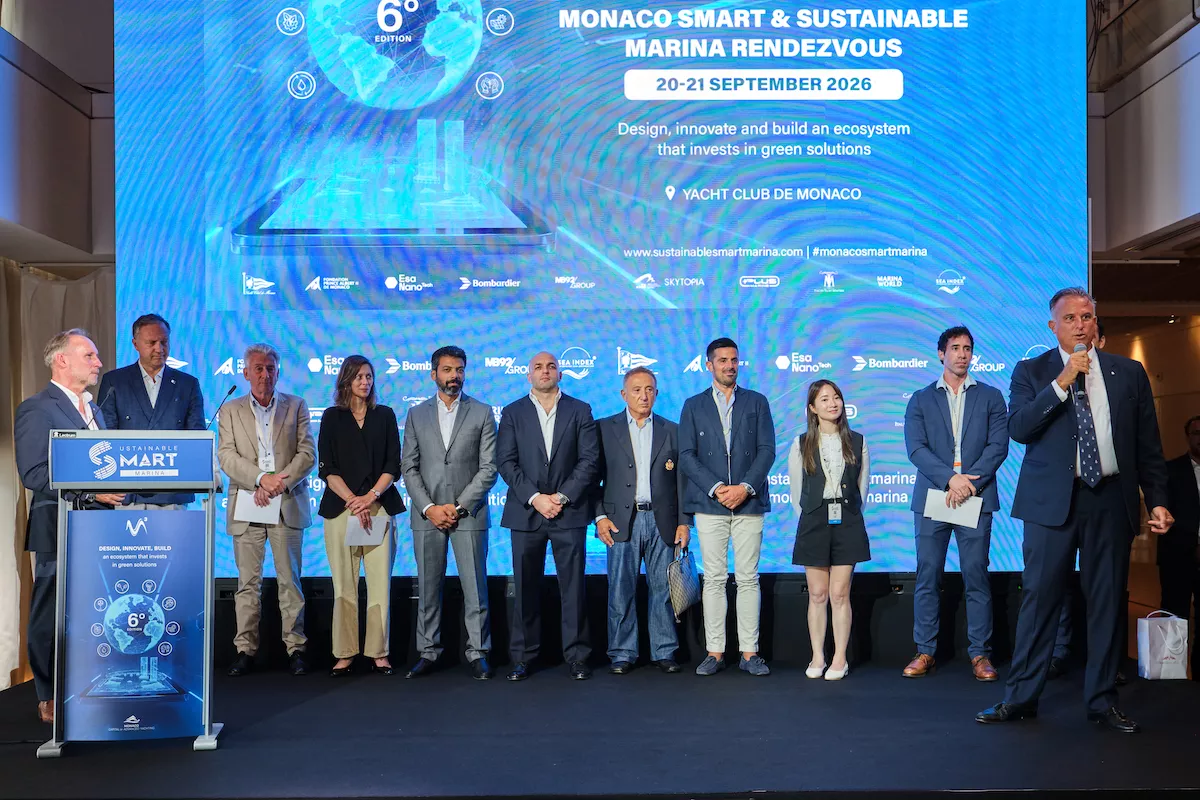
Held from 20th to 21st September at the Yacht Club de Monaco, the 6th edition of the Monaco Smart & Sustainable Marina Rendezvous brought together international industry leaders to advance sustainable maritime development.
“By uniting innovators, scientists, and green bankers right here in the capital of advanced yachting, the Yacht Club de Monaco and M3 are proving that the future of maritime business isn’t just about sailing forward – it’s about thinking completely outside the box,” Neity Maddock, moderator and yachting industry specialist, told the audience.
Nature as a partner: Ecology, engineering, and climate adaptation
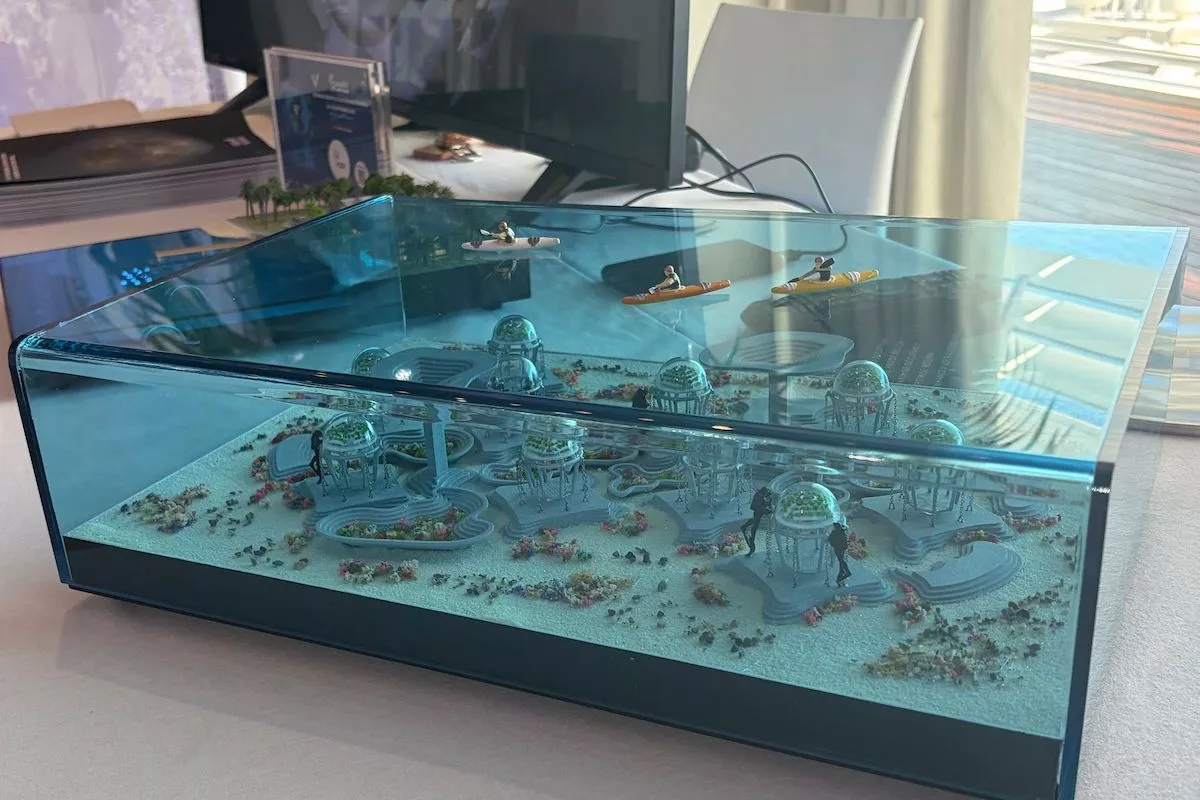
Opening with a live call connecting directly from an underwater biosphere dome, the biodiversity conference began its second day with a scientist broadcasting straight from Nemo’s Garden – an innovative experimental underwater farm located off the coast of Noli on the Italian Riviera in Liguria, Italy. Submerged 40 to 80 metres off the shoreline in the Ligurian Sea at a depth of 6 to 10 metres, the project uses transparent, air-filled biospheres anchored to the seafloor to grow terrestrial plants like basil, herbs, and strawberries using natural solar heat and water condensation.
Following the live sub-surface broadcast, Luca Gamberini, head of marketing and co-founder, took the stage to elaborate on this innovative approach, explaining: “We are doing underwater growing with terrestrial plants in the most sustainable way possible – without artificial energy, external freshwater supplies or pesticides. At the same time, we are turning this environmental innovation into an engaging experience for visitors.”
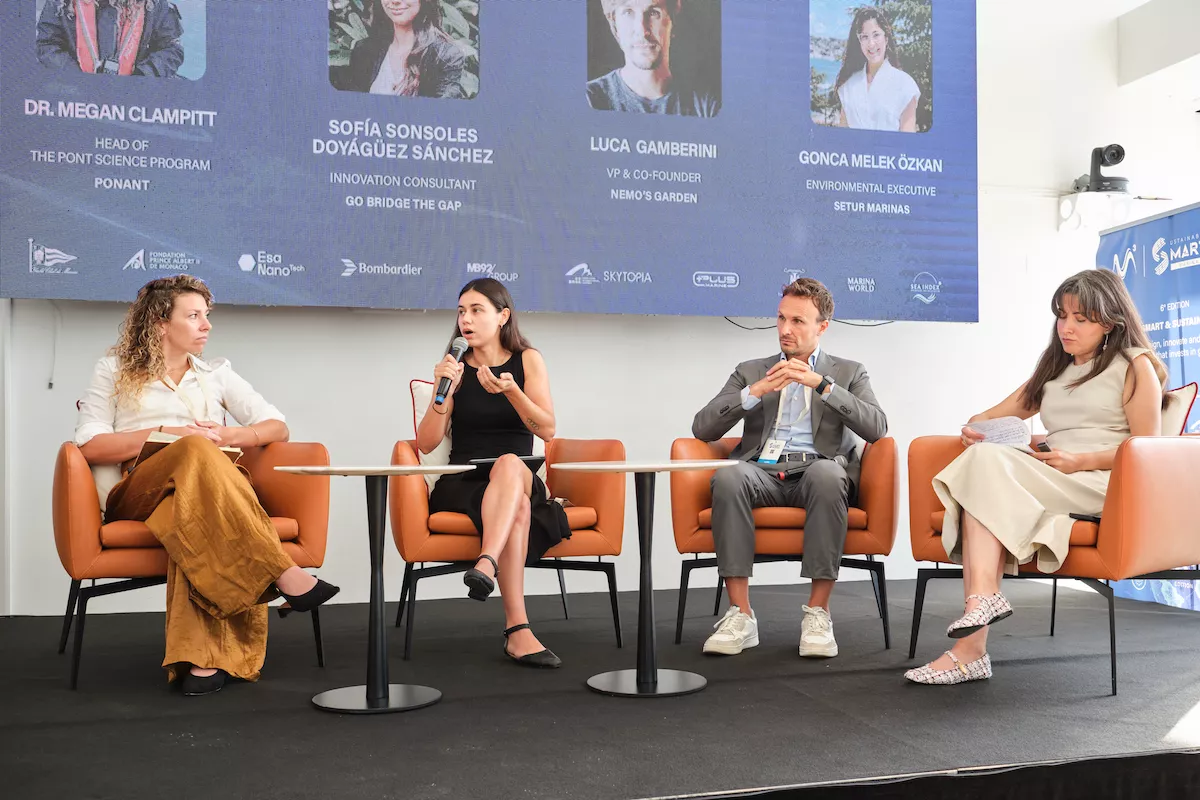
Building on this theme of immersive and sustainable environments, the session featured Dr. Megan Clampitt of Ponant, who highlighted how luxury travel and polar exploration intersect through research: “Operating polar exploration vessels allows us to reach remote areas that other ships simply cannot access. By welcoming scientists on board through rigorous committee selection and logistical planning, we turn luxury travel into a platform for vital research. Ultimately, science and tourism share a common heartbeat: discovery. Integrating scientific research into our voyages not only protects and expands our knowledge of extreme environments, but it also elevates the entire journey for our guests.”
Gonca Melek Özkan of Setur Marinas underscored the operational dependence on nature, saying: “Our business directly depends on nature, so protecting coastal ecosystems is really about protecting our own future. The golden rule is to first do no harm and then create a positive impact – replacing traditional concrete with living marine designs that actively support ocean life.”
Mastering the coast: Urban planning and climate defense
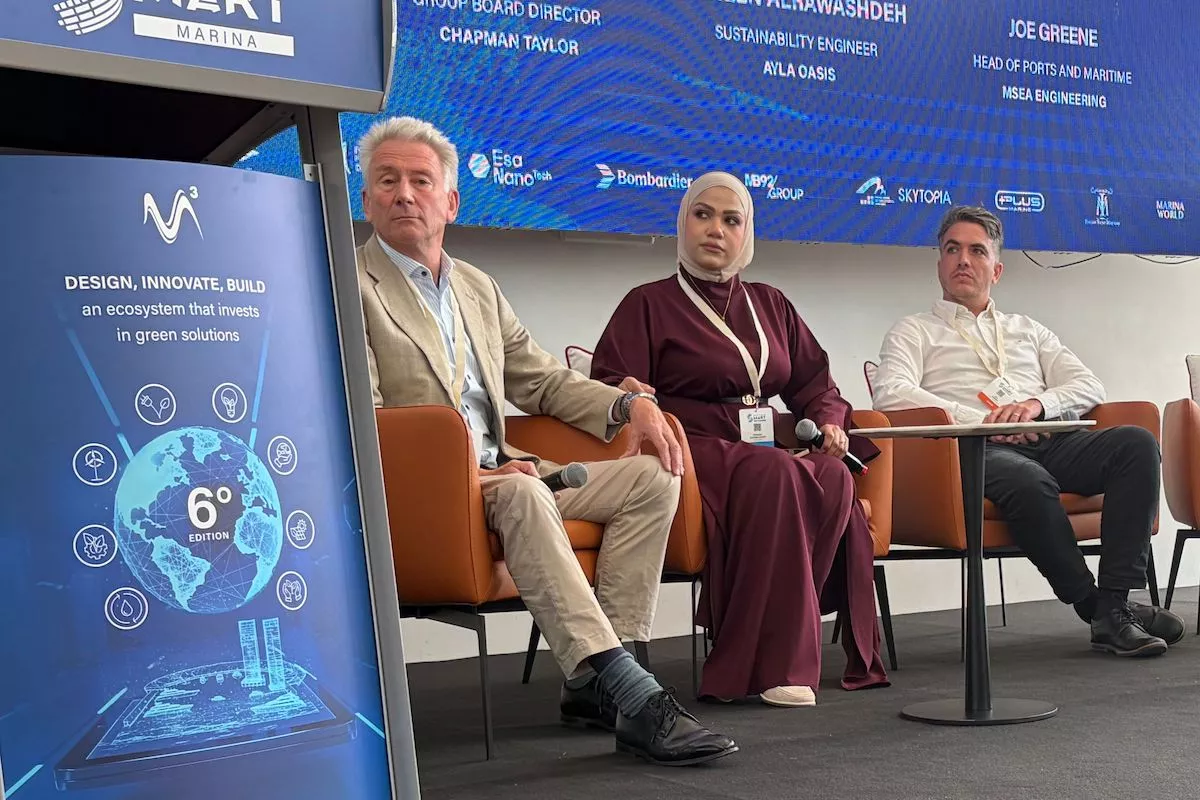
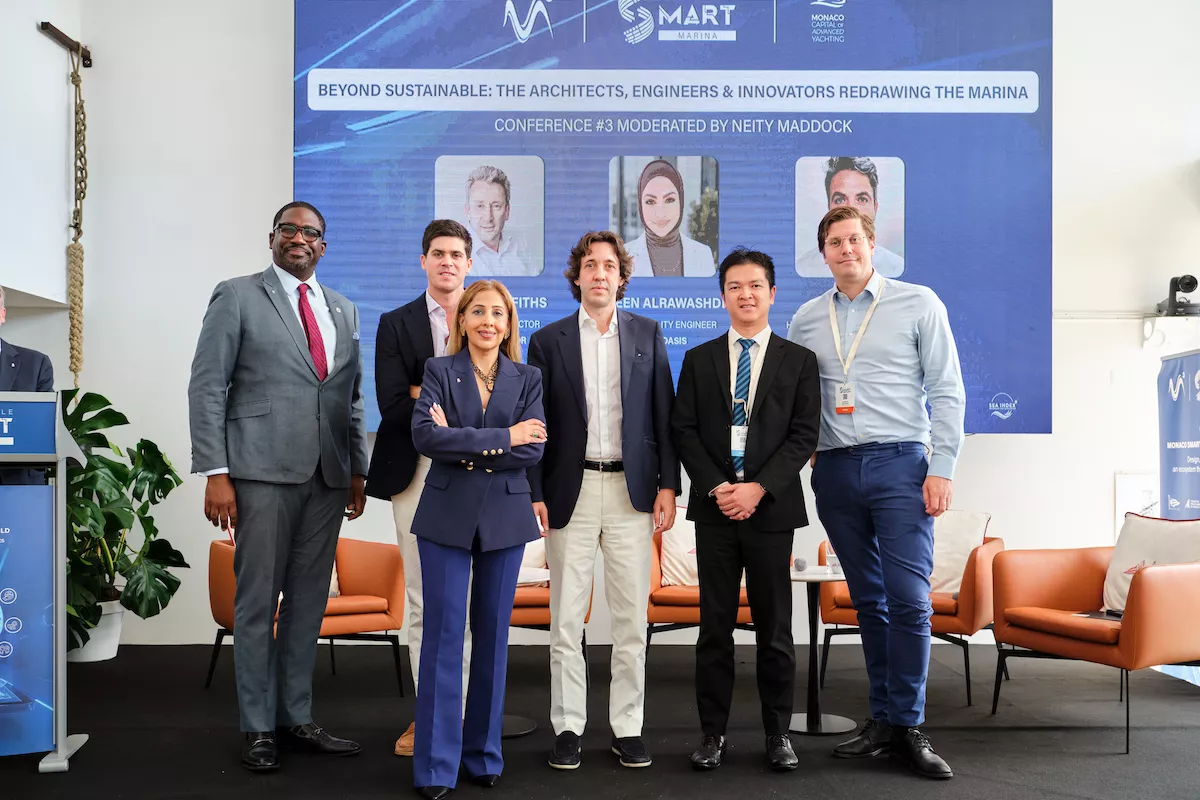
Turning to architecture and engineering in another panel, Adrien Griffiths of Chapman Taylor shared insights on waterfront master-planning in Malta, explaining how they partnered with the government to revitalise the Grand Harbour by opening up commercial access and giving the public welcoming waterfront spaces where none existed before.
Addressing the growing structural threats of climate change, Joe Greene of MSEA Engineering warned that beyond rising sea levels and stronger storms, the increasing frequency of extreme weather events poses a severe danger to coastal infrastructure.
Focusing on accountability and habitat restoration, Haneen Alrawashdeh of Ayla Oasis – a major sustainable master-planned waterfront development in Aqaba, Jordan, built around a network of man-made marine lagoons – explained that the real challenge lies in translating sustainability commitments into measurable key performance indicators and department responsibilities. Highlighting their hands-on success, Alrawashdeh said: “We turned goals into action by expanding our coral nurseries to five sites, successfully cultivating 1,850 corals ready to restore our lagoons.”
Capitalising the coast: Investment and infrastructure realities
Opening the financial discussions on how modern ports are turning into major investments, Andreas Bäckman of InfraVia Capital Partners said that big financial backers are ready, but the industry first needs to unite its smaller players: “There is already institutional capital in the sector, the real question is when it will become available at scale.” Bäckman explained that attracting this money means treating marinas more professionally: “We need data, benchmarking, and larger-scaled platforms.”
Tackling the lack of space for larger vessels, Marcos Pellejero Ibáñez of Mirazur Capital pointed out that most facilities were built decades ago for much smaller boats. By redesigning docks and deepening waterways, a marina with two hundred small berths can be converted to accommodate larger yachts. He contrasted this fixed European supply against a growing global fleet of over six thousand luxury superyachts averaging nearly fifty metres in length.
Highlighting how ports connect to local economies, Rodrick T. Miller of the Miami-Dade Beacon Council described marinas as powerful economic tools rather than simple recreational spots, stressing the need for public-private teamwork and a clear shared vision.
Pre-revenue breakthroughs: Kolbev’s autonomous charging
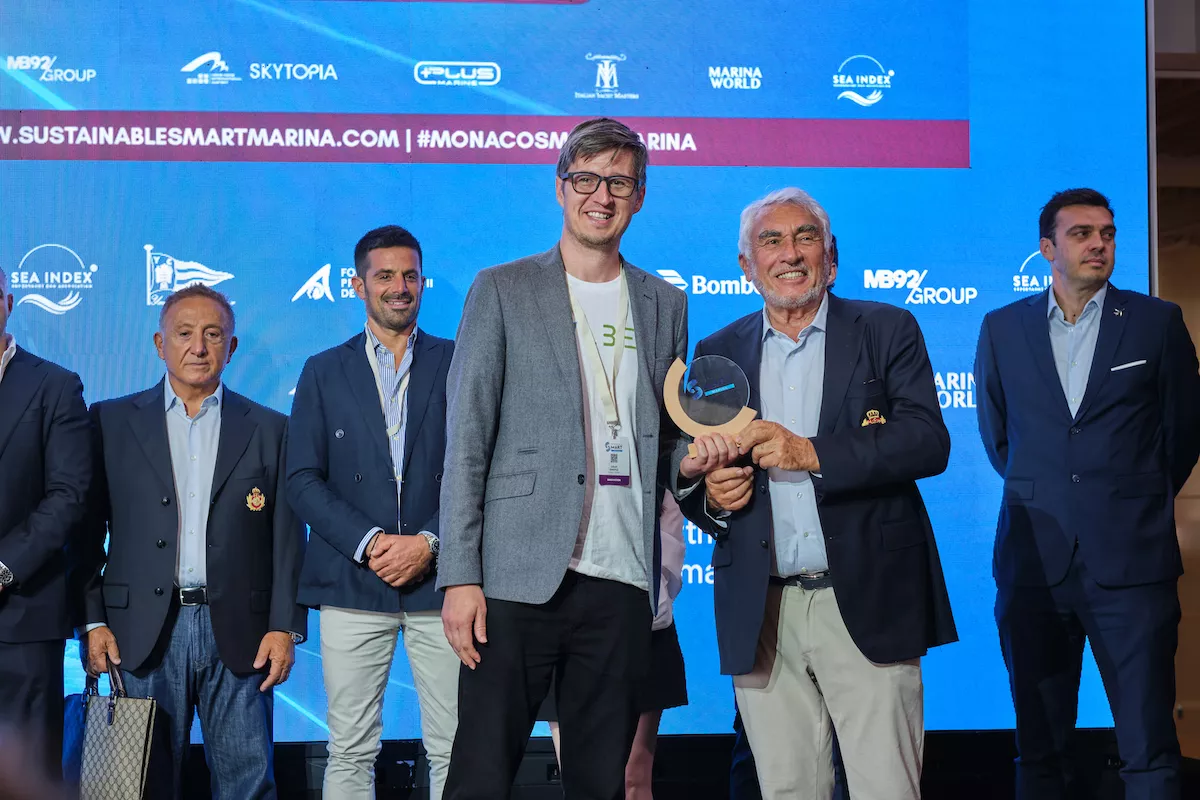
As the conference continued, pitch sessions took centre stage to showcase new startups ready to reshape the maritime industry. During one of the innovation pitching sessions, Dr. Jakub Kwapisz, CEO and co-founder of Kolbev – who ultimately won the pre-revenue pitch award – presented their winning solution to the logistical hurdles of port electrification: “It is very costly and complex to provide good electric charging or electric boats, which is why we created a B2B turnkey solution using autonomous mobile robots that travel around the marina to quickly and easily recharge any boat.”
Kwapisz explained that their mobile robots let marinas avoid the huge costs of fixing electrical grids, offering an easy way to charge new electric boats before building permanent stations.
Surface innovations and post-revenue pioneers
Among post-revenue presenters, Jani-Mikael Kuusisto, co-founder and CEO of The Warming Surfaces Company-who won the post-revenue pitch award-introduced an original thermal innovation: “We are doing for heating what LEDs did to lighting by integrating heating directly into surface structures. Backed by 20 years of research in roll-to-roll production, our technology embeds invisible heaters into everyday materials.” Kuusisto explained how their leading Halia system transforms ordinary architectural surfaces into ultra-low-voltage thermal units, offering seamless climate comfort inside marina facilities, offices, and vessel interiors without high energy costs.
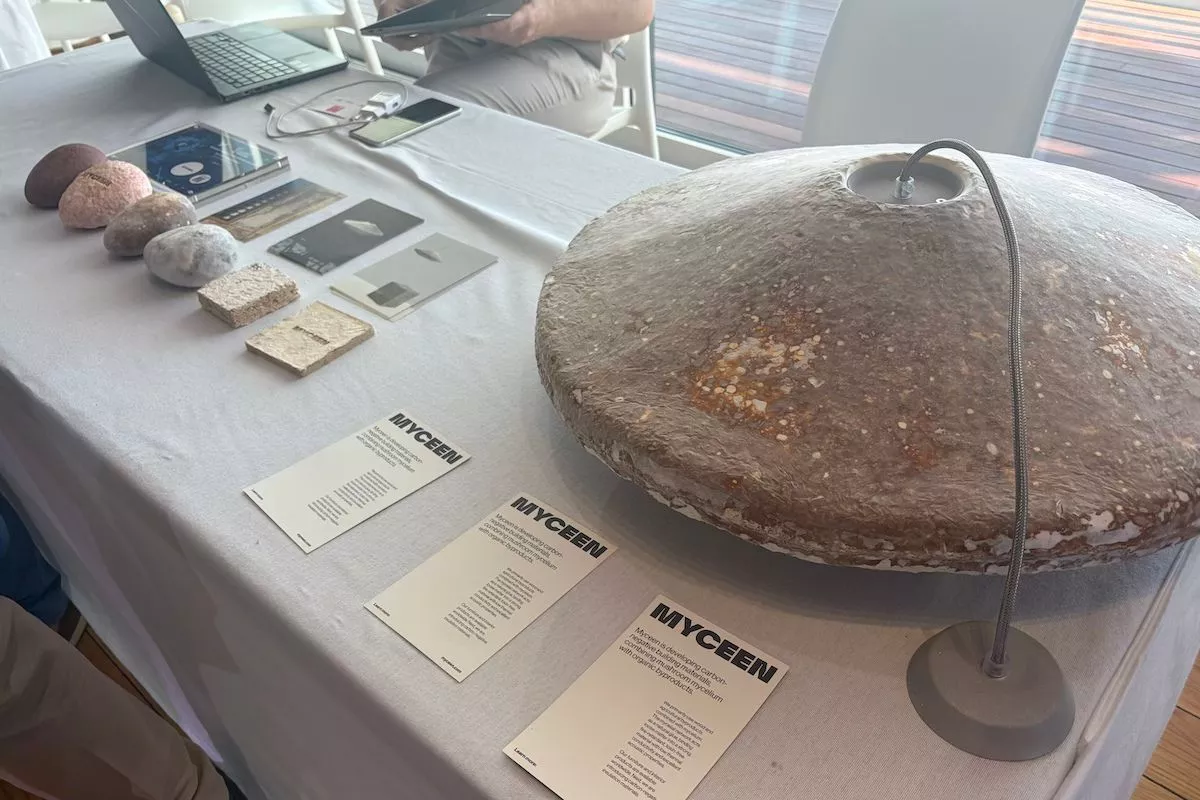
Continuing through the post-revenue showcase alongside Kuusisto, Myceen and One Concept Marine highlighted distinct approaches to sustainable infrastructure and circular materials. Killu Leet, head of science for Myceen, explained their 100% bio-based manufacturing process to Monaco Life: “We grow things with mushrooms, but we do not sell mushrooms. We grow materials—combining mushroom mycelium with abundantly available, unused wood-based residues to create lightweight, fully biodegradable solutions that offer exceptional thermal comfort and acoustic performance.” Based in Tallinn, Estonia, Myceen utilises patented AI-driven production technology to scale their modular manufacturing toward 100 cubic metres per month, helping architecture and maritime markets slash fossil-fuel reliance.
Simultaneously, Thomas Aboulinc, founder of One Concept Marine, presented their clean energy infrastructure solutions: “A marina is the sunniest place in a town, so why does it still buy all its energy?” Aboulinc detailed how they design, manufacture, and install customised solar canopies for marinas and water-bound locations—higlighting their pioneering installation of a solar canopy on an existing floating pontoon at the Yacht Club de Monaco, which generates approximately 9,000 kilowatt-hours annually. Their multi-impact innovations include the Medzen pontoon, featuring an integrated solar canopy, rainwater harvesting systems for boat-washing, and an artificial reef underneath.
Securing tomorrow’s coastlines
For the scaling revenue category, Giorgio Cucé, CEO and founder of Seares – who secured the scaling pitch award – detailed their automated mooring solution: “Ports and marinas were designed and built for yesterday’s sea, but we are making them resilient for tomorrow’s conditions. Our answer is unique: active and adaptive mooring dampers that absorb energy, measure loads, and prove results.” Cucé emphasised that as extreme weather increases, active mechanical adaptation is vital to protect both infrastructure and vessels.
Complementing these award-winning technologies, additional innovators showcased breakthrough solutions. A representative from Mediterranean Algae explained their blue biotechnology approach: “We provide patented technology to handle this problem in three layers: detection, regeneration, and supervision—using algae to clean up to 95% of the pollution in the water.”
As the 6th Monaco Smart & Sustainable Marina Rendezvous drew to a close, it became clear that the maritime industry stands at a vital turning point. Bridging the gap between ecological preservation and commercial viability, the event proved that sustainable ports are no longer a distant vision, but an actionable reality.
“As we close this chapter, we look ahead: we will return for another edition of the Monaco Smart & Sustainable Marina Rendezvous next year, take our World Yachting Summit to the Dubai Boat Show, and launch our first-ever edition in Mumbai this December. The work continues,” concluded José Marco Casellini, CEO of M3.
Stay updated with Monaco Life: sign up for our free newsletter, listen to our podcasts on Spotify, and follow us across Facebook, Instagram, LinkedIn, and Tik Tok.
The 6th edition of the Monaco Smart & Sustainable Marina Rendezvous at the Monaco Yacht Club. Photo credit: Mesi