

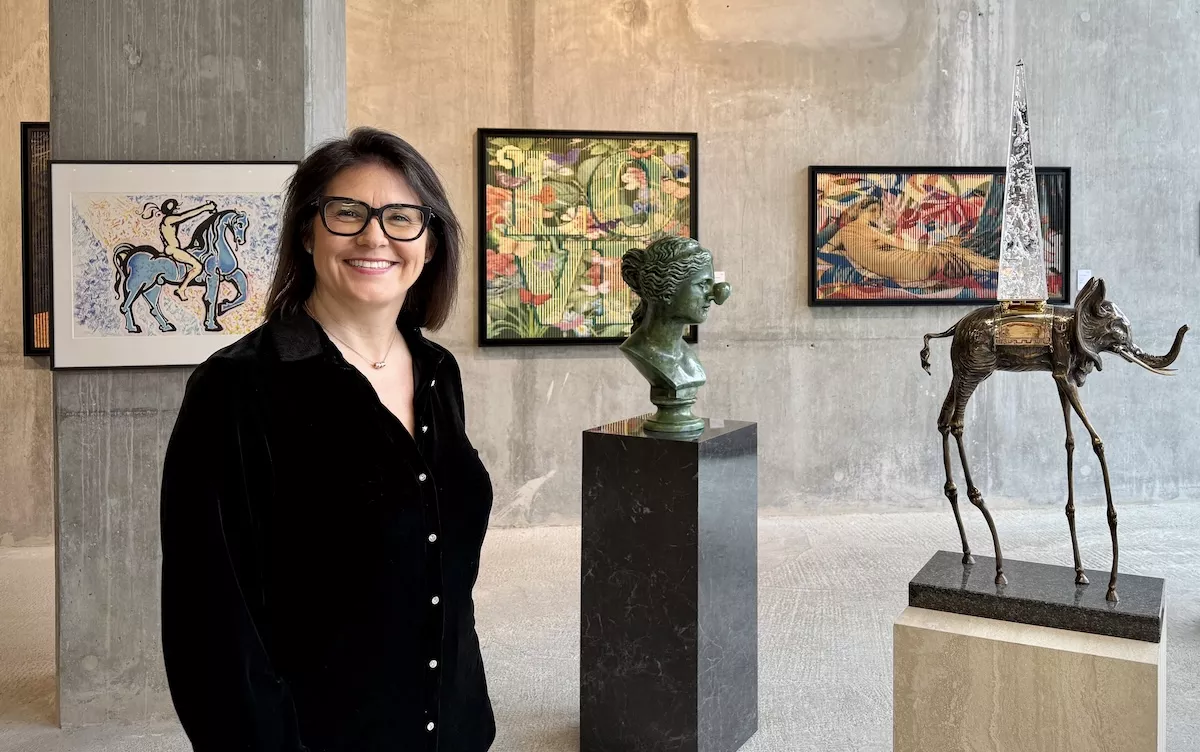
When opportunity knocked at Mareterra, Sylvie Thévenoz didn’t hesitate. Within a week of getting the green light, Dalí Universe and Lart Universe had transformed a 300-square-metre space at 12 Quai du Petit Portier into Monaco’s newest contemporary art gallery, opening just before Christmas with a collection that represents a remarkable coup for the Principality.
“When we got the green light to take this space at Mareterra, we moved quickly,” Sylvie Thévenoz, the exhibition curator, tells Monaco Life’s Cassandra Tanti. “We sent everything within a week.”
The result is an intimate encounter with one of the 20th century’s most influential artists, anchored by the world’s largest collection of Dalí sculptures – a collection with an extraordinary provenance that traces directly back to the artist himself.
A friendship forged in 1962
The story behind the collection is as surreal as Dalí’s work itself. Beniamino Levi, president and founder of both Lart Universe and Dalí Universe, was a close friend of Salvador Dalí, meeting him in 1962. That friendship gave Levi the rights to hold the sculptural works of Salvador Dalí, and he established a foundry in Switzerland where all the sculptures were made.
“He has the biggest collection of Dalí sculptures in the world,” Thévenoz explains, a fact that makes the Mareterra gallery a significant addition to Monaco’s cultural landscape.
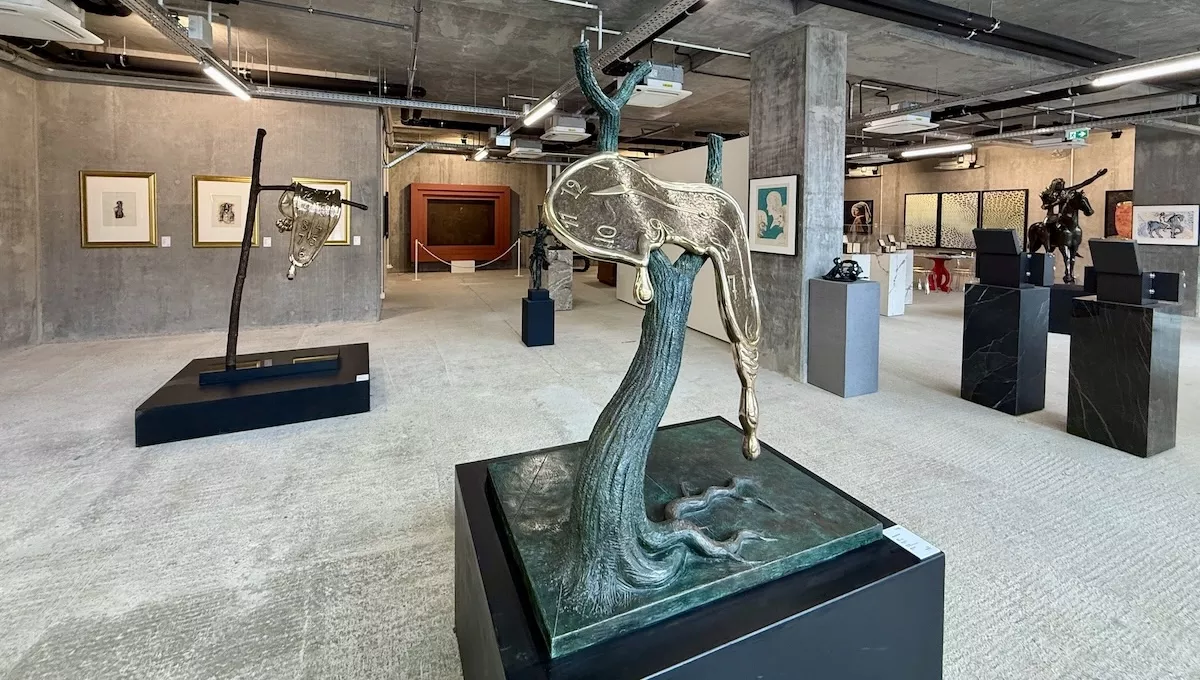
The gallery showcases original and significant works, highlighted by the important oil on canvas Twist en el studio de Velázquez (1962) alongside a substantial presentation of original sculptures. But perhaps most remarkable are the pieces many visitors won’t have seen before: Dalí’s designs for ballet, exclusive drawings on cardboard complete with his handwriting and adaptations.
“We’ve just received stunning works that Dalí created for the Labyrinthe ballet — pieces from 1941 that haven’t been widely shared,” Thévenoz says.
Art to be lived
The gallery operates under a philosophy called Art to be Lived, deliberately breaking from traditional gallery conventions. “This isn’t a place where people have to come and buy something,” Thévenoz emphasises. “Of course we’d like to sell pieces, but primarily we want people to experience the gallery, to bring their children and discover these works.”
The approach seems particularly suited to Mareterra, Monaco’s newest district, where residents and visitors are still discovering what the neighbourhood will become. The free admission and welcoming atmosphere invite casual exploration rather than intimidating reverence.
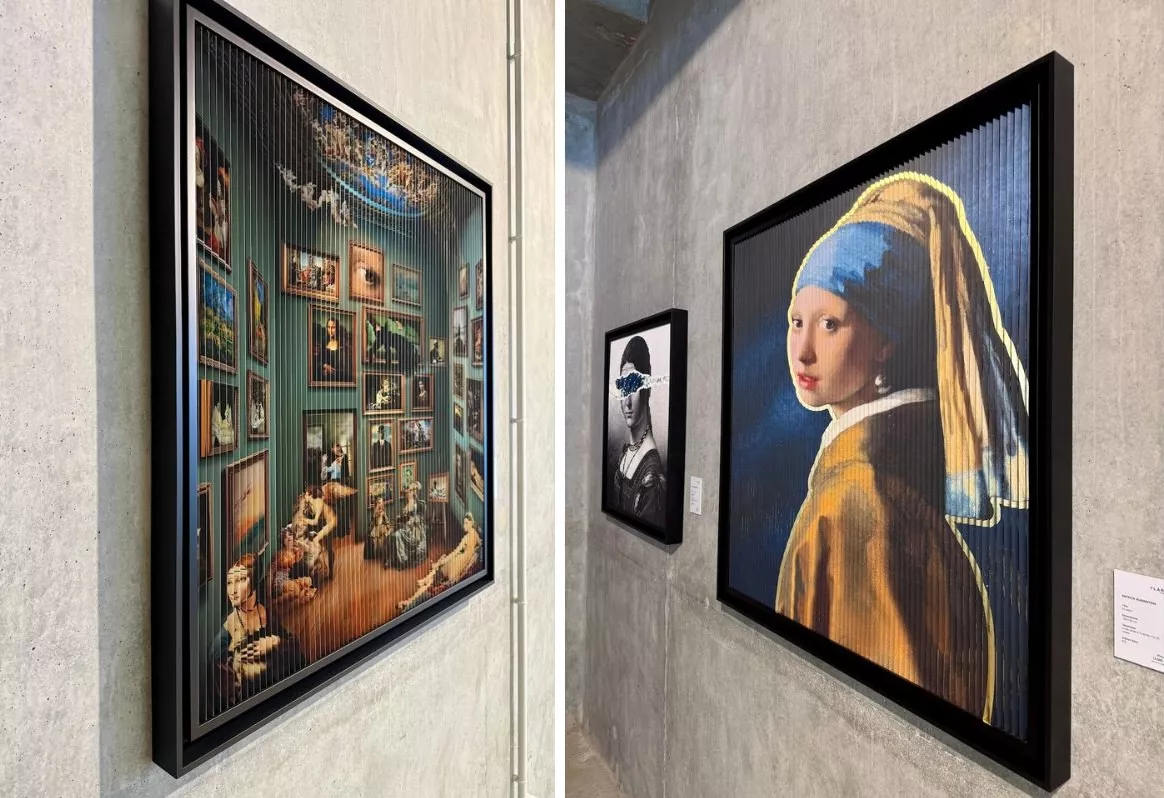
Alongside Dalí, the gallery features works by contemporary artist Patrick Rubinstein, whose pieces change depending on viewing angle — perfect for engaging younger visitors. “The Rubinstein works are remarkable, the piece transforms depending on which side you’re viewing it from,” Thévenoz notes. “These kinds of interactive pieces are wonderful for children.”
Global reach, Monaco ambitions
The Mareterra gallery is currently operating on a temporary basis, but the team is working to establish a permanent presence in Monaco. It’s one of four such galleries – others operate in Italy and Luxembourg – and runs until the end of March in its current form.
For Monaco’s newest district, still defining its identity, a permanent Dalí presence would represent a significant cultural anchor. The gallery plans to rotate works and is already expanding to accommodate additional artists and artworks from the collection. Large screens featuring Dalí are planned as the space evolves.
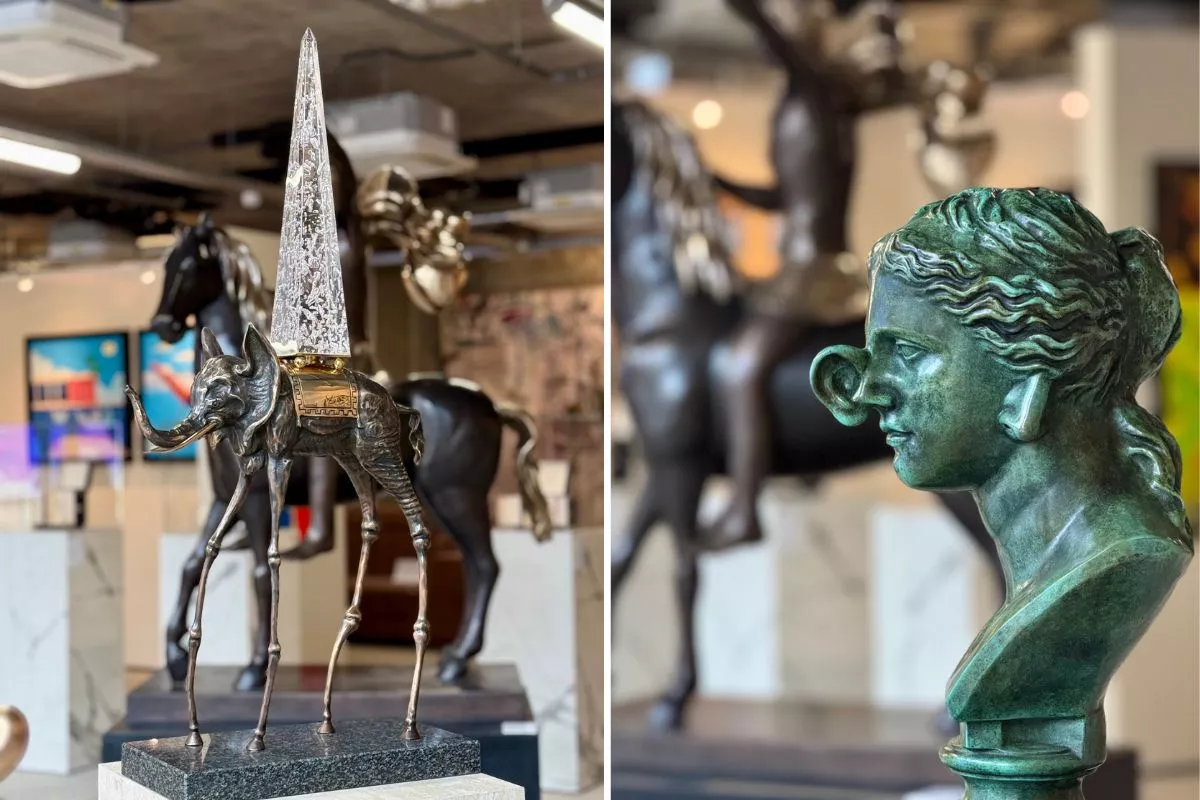
The broader Dalí Universe operation spans the globe. The organisation manages a permanent museum at Dalí Montmartre in Paris and currently has a 900-square-metre exhibition touring in Shanghai, featuring large sculptures reaching up to seven metres high. They’ve even created an immersive metaverse experience where visitors can don virtual reality goggles and enter Dalí’s universe, giving life to his sculptures like the space elephant.
Over the years, Dalí Universe has organised exhibitions and museums across Berlin, Vienna, Shanghai, Singapore, and numerous Italian cities including Matera, Montepulciano, Modena, Florence, Rome and Venice, attracting more than 12 million visitors worldwide.
Understanding the inexplicable
Dalí’s approach to his own work was famously enigmatic. Someone once asked him in New York how he would explain his work, and he replied that even he didn’t know how to explain it. He wanted people to use their imagination rather than be directed by the artist, to discover their own interpretations.
That philosophy extends to the commissions that produced some of the gallery’s most unique pieces. Dalí was asked to design Tarot cards; for ballet, he created designs for costumes that Coco Chanel herself made, bringing his surrealist imagination to the stage.
The melting clock remains one of Dalí’s most famous images, but Thévenoz hopes visitors will discover lesser-known works. “Many pieces here aren’t as well known – the ballet designs from 1941, for instance – and that’s what makes this collection special.”
When pressed for her favourite piece in the collection, Thévenoz doesn’t hesitate: “The space elephant.”
For collectors, the gallery can arrange shipping anywhere in the world. But the real ambition is broader: to make Dalí accessible, to invite curiosity, to let families wander through surrealism on a Sunday afternoon.
In the meantime, the doors are open, admission is free, and Salvador Dalí’s imagination awaits at the edge of the Mediterranean, in Monaco’s newest quarter.
View this post on Instagram
Stay updated with Monaco Life: sign up for our free newsletter, catch our podcast on Spotify, and follow us across Facebook, Instagram, LinkedIn, and Tik Tok.
Main photo by Cassandra Tanti