

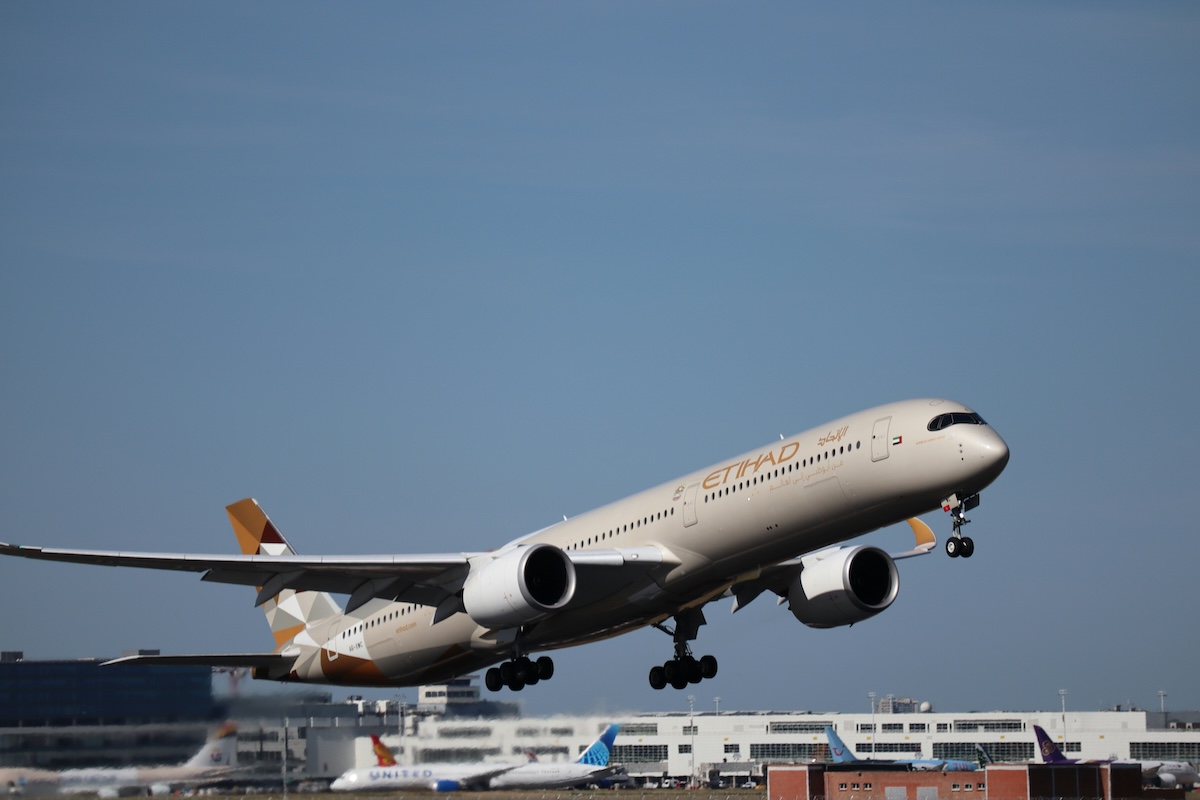
A small number of flights have departed Dubai and Abu Dhabi, offering limited relief to the hundreds of thousands of passengers caught up in the worst aviation disruption the Middle East has seen in years — but the vast majority of services remain cancelled, with no clear timeline for a full return to normal operations.
Emirates, Etihad and budget carrier Flydubai cautiously resumed select services on Monday and Tuesday, days after air traffic across the region was suspended following the outbreak of conflict between the US, Israel and Iran. Dubai’s government urged passengers not to go to the airport unless contacted directly by their airline, describing what it called a “limited resumption of operations.” The warning reflects the scale of the disruption still under way. According to flight tracking website FlightAware, more than 80% of flights to and from Dubai and more than half of those to and from Abu Dhabi remained cancelled as of Tuesday. Cancellations across seven major Middle East airports — Dubai International, Hamad International in Doha, Zayed International in Abu Dhabi, Sharjah International, Kuwait International, Bahrain International and Dubai World Central — have now exceeded 12,300 flights between 28th February and 3rd March, according to Flightradar24.
What the airlines are doing
Emirates began operating a limited number of repatriation and cargo flights from Monday, with five A380 aircraft departing Dubai on Tuesday morning bound for Jeddah, Manchester, Paris, London and Frankfurt. The airline’s first departure from Dubai International since Saturday’s closure was tracked by more than 138,000 people on Flightradar24. All scheduled commercial flights to and from Dubai remain suspended until midnight UAE time on 4th March. “We are accommodating customers with earlier bookings as a priority on these limited flights,” the airline said. “Please do not go to the airport unless you have been notified directly by Emirates, or hold a confirmed booking for these flights.”
Etihad operated at least 15 flights out of Abu Dhabi on Monday, heading to destinations including Islamabad, Paris, Amsterdam, Mumbai, Cairo and London Heathrow. Scheduled commercial services remain suspended until 2pm local time on Thursday 5th March. “Access to the airport will be restricted for those without confirmed travel documentation,” the airline said. Flydubai said it would operate four departing flights and five arriving on Monday, adding that “the situation remains dynamic.”
Doha remains shut
Qatar’s situation remains more severe. All aircraft movements at Hamad International Airport are suspended following the closure of Qatari airspace, with Qatar Airways confirming it will not resume operations until the Qatar Civil Aviation Authority declares the airspace safe. A further update was expected on Wednesday morning. Qatar’s Foreign Ministry confirmed at a press conference on Tuesday that nearly 8,000 transit passengers are currently stranded in the country.
Dubai International, Zayed International in Abu Dhabi, and Hamad International in Doha — three of the world’s most important aviation hubs for travel between Europe, Africa and Asia — were all directly struck by Iranian attacks over the weekend. Beyond those travelling to or from the region, large numbers of passengers on multi-leg journeys found themselves stranded mid-route with no immediate options.
The wider airline picture
The list of carriers with suspended or severely disrupted services spans virtually every major global airline. Turkish Airlines has cancelled flights to and from Bahrain, Iran, Iraq, Jordan, Kuwait, Lebanon, Oman, Qatar, Syria and the UAE. Air France has suspended services to Tel Aviv, Beirut, Dubai and Riyadh until 5th March. KLM is avoiding the airspace of Iran, Iraq and Israel entirely, with Tel Aviv flights suspended for the remainder of its winter season and Dubai services cancelled until 5th March.
Lufthansa Group — which includes SWISS, Austrian Airlines, Brussels Airlines, ITA Airways and Eurowings — has suspended flights to Tel Aviv, Beirut, Amman, Erbil, Dammam and Tehran until 8th March, and to Dubai until 4th March. British Airways is not flying to Tel Aviv or Bahrain until 4th March, and is offering free rebooking for passengers on affected routes up to 15th March, with full refunds available for those travelling up to 8th March.
Stay updated with Monaco Life: sign up for our free newsletter, catch our podcast on Spotify, and follow us across Facebook, Instagram, LinkedIn, and Tik Tok.
Photo credit: Stroopsniper Lenn, Unsplash