MEB brings economic powerhouse to Monaco

One of the world’s top forecasters, Christophe Barraud, has told an audience of Monaco entrepreneurs what he predicts the global economic recovery will look like in 2021.
Voted Forecaster of the Year 2020, Top Forecaster of the Eurozone Economy 2015-2019, Top Forecaster of the US Economy 2012-2020, and Top Forecaster of the Chinese Economy 2017-2020, Christophe Barraud’s presence in Monaco was always destined to be a coup for local businesses and its organiser, the Monaco Economic Board (MEB).
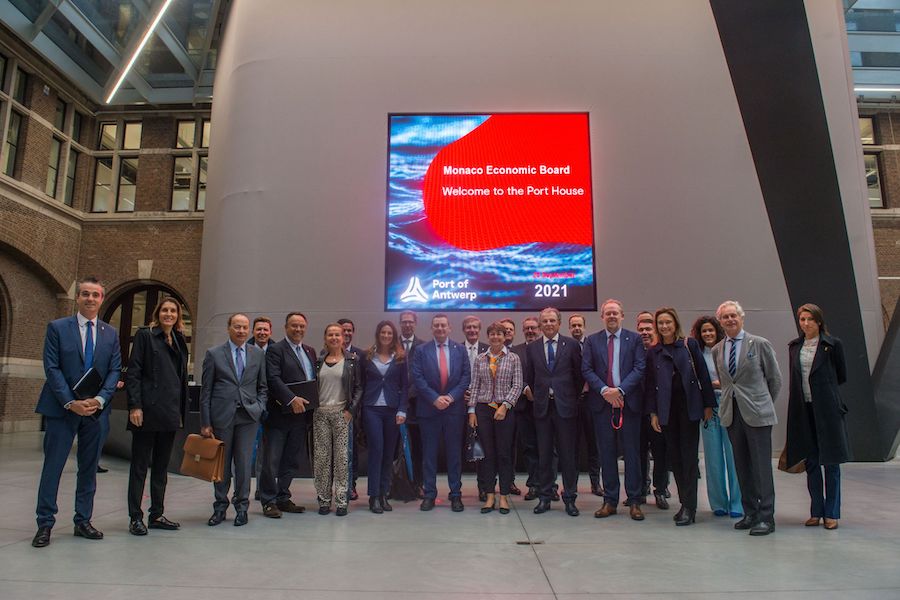
This week’s presentation was the first big “phygital” event of the year for the MEB and Christophe Barraud delivered his macroeconomic scenario for the coming months to a room of 70 local economic players and in front of cameras that broadcast the presentation, translated into English, to nearly 150 participants worldwide. His main forecast: an extremely marked recovery of global activity with growth of more than 6% for the year 2021.
This optimism, which he says can vary depending on the regions of the world, can be explained by four major factors. Firstly, the effectiveness and acceleration of the distribution of vaccines against Covid-19 have created a shock of confidence, and the latest wave of the epidemic appears to be under control in the vast majority of developed economies.
Secondly, the arrival of Joe Biden as President of the United States of America has eased trade tensions, especially with Europe, as highlighted by the truce in the Airbus-Boeing dispute. Above all, he says, the new administration has given better visibility to economic players, now freed from the threat of unpredictable tweets. As a result, Christophe Barraud says he foresees an increase of around 10% in world merchandise trade volume in 2021.
Thirdly, the excess in savings that many households have experienced as a result of the pandemic should contribute to the recovery through increased consumption.
Finally, the economist underlined the ultra-accommodating monetary policy in developed countries and the combined balance sheet of the G7 central banks, which has increased by more than 10 trillion dollars in the space of 15 months between February 2020 and May 2021.
The situation is not without risks, however. Among other threats, the forecaster points to the presence of variants that are likely to change the health situation, and the risk of social unrest, as history has shown that the end of a pandemic has always been accompanied by an increase in inequalities.
Christophe Barraud finished the evening with a question-and-answer session before joining the Monegasque entrepreneurs for a friendly Covid-compatible cocktail, ending a conference that successfully marked the return of face-to-face actions of the MEB.
Coming up on the MEB agenda is the general assembly coupled with the emblematic membership meeting.
 
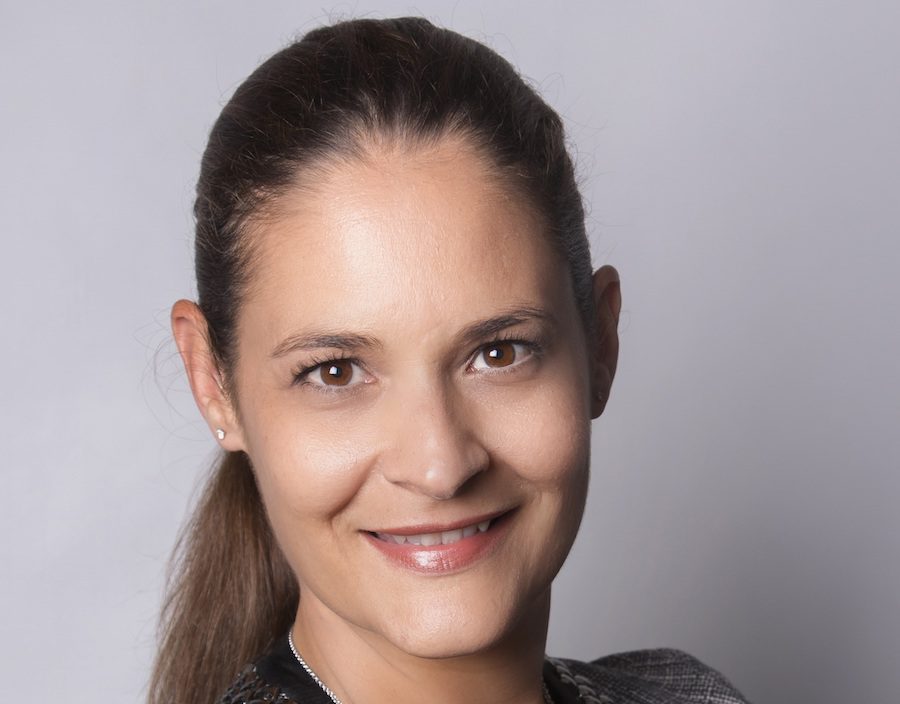
Photo of Christophe Barraud by the MEB


Prince releases rare juvenile seahorses into wild

Prince Albert has helped to release seven adolescent seahorses into the wild as part of a project to repopulate the quickly dwindling species.
It comes as the first conclusions of a new study about the seahorse population in Monegasque waters carried out by the Prince Albert II Foundation, the Oceanographic Museum and its Monegasque Centre for the Care of Marine Species (CMSEM), the BIOTOPE design office, along with expert in European seahorses Patrick Louisy have been released.
Seahorses are considered to be “near-threatened” by the International Union for the Conservation of Nature (IUCN), the global authority on the status of the natural world and the measures needed to safeguard it. This status means the natural populations are in decline and could become extinct altogether if nothing is done to rectify the situation.
The study’s aim was to gain information about Monaco’s seahorses and their habitats, to determine the best course of action to protect them and to engage in relevant conservation activities.

Volunteer divers from the Monaco Underwater Exploration Centre spent 160 hours underwater between June and September 2020 in order to acquire as much data as possible. The divers confirmed the presence of seahorses, specifically the Hippocampus guttulatus commonly known as the speckled seahorse, but were able to observe only three of the species in the wild.
The speckled seahorse, which is named for the white dots that cover their bodies, live in seagrass beds or coralligenous, of which there are many ideal spots for breeding in the waters off the Principality.
A pregnant male was captured, and the resulting babies were temporarily reared in captivity to ensure their viability. Prior to their sea release, seven of the juvenile seahorses were tested for genetic diversity. This was to ensure they wouldn’t disrupt an already fragile recipient population. The findings were interesting in that the Monegasque variety had different genetic characteristics than other seahorses in the Mediterranean.

The young speckled seahorses, which will reach 12cm to 16cm when fully grown, were released on 16th June in the late morning at Saint Nicolas rocks and the Fontvieille dike in roughly 20 metres of water with the help of Prince Albert.
These juveniles and the existing population will now be monitored for five years via a photo-identification protocol, allowing animals to be identified from their individual natural markings. The photos will serve as a visual, with complementary observations such as passive acoustics and environmental DNA being used.

Passive acoustics is a sound process that makes it possible to monitor the attendance of a site by a given species. Environmental DNA makes it possible to study the presence of a species thanks to the DNA it leaves in its environment. These tools will make it possible to track their seasonal movements and better understand their habitats.
 
Photos by E. Mathon – Palais Princier, P. Fitte – Musée Océanographique, and M. Dagnino – Musée Océanographique


"The thrills, spills, hits and speed will make Monaco a huge success"

As a former rugby sevens player for Wales, Mark Thomas gives his take on this weekend’s World Rugby Sevens Repechage and revisits Monaco’s love affair with the sport.
Monaco, for most sports fans, is associated with Formula 1 and the Rolex Tennis Masters. But many do not know that Monaco has a long-standing love affair with rugby that dates back many decades.
This weekend from 18th to 20th June, the Monaco Rugby Federation and World Rugby, in partnership with the Government, are organising the World Rugby Sevens Repechage tournament at the Louis II Stadium.
Monaco will be hosting the international men’s and women’s sevens teams competing for the final Tokyo Olympic Games qualification places. For the women, the two best teams will secure a spot in Tokyo, but only one of the men’s teams will be lucky enough to head to Japan.
The pressure will be huge. Win in Monaco and you become an Olympian, the Holy Grail for many athletes. Additionally, organisers have confirmed that 5,000 fans will be able to watch the Olympic Games Sevens on the two main days of competition at the stadium so there should be a great atmosphere and the forecast is for fine weather.

Louis II Stadium in Monaco

Where it all began
Back in 1987 and 1988, Monaco hosted their first international rugby sevens event, the Glenlivet Invitational Sevens, where superstars like Serge Blanco and Denis Charvet won with France in 1987 and then Nick Farr Jones, Murray Mexted and Will Carling won the trophy with the Bahrain Warblers in 1988.
I was fortunate to play for the Welsh team during those years and while we lost to the French in the final, I have very fond memories of the event. It is what motivated me to come to France to play rugby, and eventually to end up living in Monaco. They say sport changes the world. It certainly changed mine, and for that I shall ever be grateful to sevens rugby, which allowed me to travel as a young man and play all over the world in tournaments in 24 countries.
Rugby sevens originated in Melrose, Scotland as far back as the 1880s, and the Melrose Sevens tournament is still played annually today. The popularity of rugby sevens increased further with the development of the Hong Kong Sevens in the 1970s and was later followed by the inclusion of the sport into the Commonwealth Games for the first time in 1998 and the establishment of the annual World Rugby Sevens Series in 1999 and the World Rugby Women’s Sevens Series in 2012. In 2016, rugby sevens was contested in the Summer Olympics for the first time.
The teams hoping to make it to Tokyo
Rugby sevens is expected to be one of the most highly anticipated events of the Tokyo Games following the outstanding success of the Rugby World Cup 2019 in Japan, which captured the nation’s imagination with record-breaking broadcast audiences and huge numbers of new rugby fans across Japan and Asia. The inclusion of rugby sevens for the first time in the Olympic Games at Rio 2016 had a profound effect on the sport, attracting an estimated 30 million new fans globally.
The women’s competition will feature Argentina, Colombia, France, Hong Kong, Jamaica, Kazakhstan, Madagascar, Mexico, Papua New Guinea, Russia, Samoa and Tunisia. The men’s tournament will involve Chile, France, Hong Kong, Ireland, Jamaica, Mexico, Samoa, Tonga, Uganda and Zimbabwe.
The women’s final is expected to be a close affair, and the favourites – France v Samoa – should be a nail biter, but the Argentinians may have something to say about that.
The men’s draw saw the HSBC World Rugby Sevens Series core teams, Samoa and Ireland, paired in Pool A together with Tonga, Zimbabwe and Mexico. France were the top seeded team based on their performances in 2020 at the World Rugby Sevens Series where they finished sixth. They are drawn in Pool B along with Hong Kong, Chile, Uganda and Jamaica. France being favoured to win, they will have to overcome the speedy Samoans, the tough Tongans and the wiry Irish.
Prince Albert completed the draw for the World Rugby Sevens Repechage tournament in Monaco, photo by Monaco Rugby Sevens

As World Rugby Chief Executive Alan Gilpin said: “With Tokyo less than three months away, the rugby family is looking forward to what promises to be a special sevens tournament that personifies the togetherness, camaraderie and optimism that characterises these remarkable Olympic Games. The Monaco repechage is also symbolic in its own way – a reflection and celebration of sevens international re-emergence from the unprecedented challenges that society and sports people have faced.”
Given the Covid chaos globally, it has been extremely difficult to organise, but the drive to be in the Olympics has not deterred these teams from doing whatever it takes to get to Monaco to try to qualify. One of the potential qualifiers is Tonga. At the end of April, the Tonga Rugby Union announced that, due to quarantine rules in New Zealand, it would select a squad of European-based players to compete for the final men’s sevens spot at Tokyo. Viliami Vaki, the Tongan captain, said: “We have a playing group that are busting at the chops to get together, there’s nothing greater than playing for your country. That’s exciting because they are a level of player that have experienced different World Cups and professional competitions around the world.” Tonga could well be the dark horse in the men’s competition.
Hopeful Hong Kong Rugby coaches Paul John (winner of the RWC 7s with Wales in 2009) and Iain Monaghan, the two Celts charged with getting their respective teams to Tokyo, have been thinking outside of the box in a bid to keep things interesting. Monaghan revealed that he actually sent his players on a metaphorical journey around the world. “We shaped training around going up the seven summits of the world – Everest, Aconcagua, Denali, Kilimanjaro, Elbrus, Mount Vinson and the Carstensz Pyramid. Needless to say, I wasn’t the most liked coach at that time because they were worked, physically,” he said. “But with that it allowed us to learn about the different cultures of the teams we will play and where they come from, and the history of their sport.
“We set out tasks like passing the ball every day the equivalent distance it would take to climb one of the mountains, we camped out and learnt how to cook different national dishes, and learnt about tribes and their values and what makes them survive so long, and how we could maybe bring that into our high-performance environment… things that gave a different slant to training.”


Outsiders Uganda have been drawn alongside France, Chile, Hong Kong and Jamaica in Pool B of the men’s Olympic Repechage tournament, and have come up against Les Bleus twice at the Emirates Invitational Sevens in Dubai. The Cranes lost both matches against the French, but they have better records against the other teams they will play in Monaco. Uganda will arrive in the Principality on Sunday hoping to take the biggest step yet on the team’s journey under head coach Tolbert Onyango. Onyango is hopeful that his players are able to handle the pressure of playing in the tournament as they attempt to cause a few shocks and book their ticket to Tokyo.
“A knockout tournament normally comes with its own pressures,” said Onyango. “Pressure to perform properly throughout the tournament, so there’s no room for error — you snooze, you lose.”
Irish Rugby Football Union director of Sevens and Women’s rugby Anthony Eddy has selected an experienced group to travel to Monaco, with a dozen of the 14-man squad having featured on the HSBC World Rugby Sevens series previously for Ireland, with the uncapped duo Gavin Mullin and Ulster flyer Aaron Sextoncompleting the panel.
“A number of players have been preparing for this tournament and opportunity for a number of years and they all know exactly what is at stake,” said Anthony Eddy. “I know they will be determined to be at their best and put in a performance over the weekend that they can be proud of. All the teams participating are chasing the same outcome so we must be at our best and we are looking forward to it.”
France expect both their men’s and women’s teams to qualify and “are craving qualification”, according to France Sevens Women’s coach David Courteix. However, as the old wolf of the sevens stage that he is, David Courteix knows only too well the cost of too much confidence. “We will go to Monaco to have a performance and this will allow us, I hope, to qualify for the Games. But everyone will want it too! Nobody thinks that it will be a secured qualification.”
That will mean being very opportunistic and overly optimistic, because if they win this tournament, they will have the green lights to challenge the teams at the Olympics and will arrive in full confidence with a huge craving.


For the winning teams, it will be even more beneficial since they have played a very high-level competition a month before, they will have had the necessary preparation to be able to be ready in Tokyo. As French men’s coach Jerome Daret put it – as a good connoisseur of sevens and French gastronomy, “We can put all the ingredients in there, but what is important is to make the recipe on the day.”
Samoa have both their women’s Manusina and men’s Manu Samoa teams competing and the two teams came close to qualifying for Rio 2016, as Manu Samoa lost the repechage final to Spain on the last play of the match, while the country’s women were beaten by Kazakhstan in their quarter-final. Brian Lima is manager of the team, a legend of four Rugby World Cups and known as “The Chiroporactor” because he hit you so hard in the tackle you’d have to go see the chiropractor after the game. In one World Cup, he tackled somebody so hard he knocked himself out.
“I want Samoans to come together in Samoa to celebrate if Manusina qualify for the Olympics,” he told World Rugby. “We are confident we have the best team who wants to qualify for the Olympics. Our players have international experience and they’ve played the best sevens teams in the world like Australia, Fiji and New Zealand.”
Their plans for Olympic qualification have been affected by the ongoing Covid-19 pandemic like everybody and Samoa’s men were last in action at the HSBC Canada Sevens in March 2020 where they lost their ninth-place semi-final to France — who will arguably be their biggest rivals for qualification in Monaco. “Losing to Spain [in the Rio 2016 repechage final] was really heartbreaking, so that’s what kept most of us in, to just keep the Olympic dream alive to come back and really find any opportunity to be an Olympian.”
Careers will be made in Monaco
The spectacular thing about sevens is that anyone can have the “flyer”, the player who has such breath-taking speed no-one can stop them, and the stadium comes alive in anticipation. The entertainment and enjoyment of a sevens event is fantastic. The thrills, the spills, the hits, the speed will delight the crowd and I am sure it will be a huge success like it was four years ago.
This weekend is bound to show us some new rugby stars of the future as the sevens circuit is where many of the greats started their career – rugby legends such us Jonah Lomu, David Campese, Christian Cullen, Lawrence Dallaglio, George North and Cheslin Kobi all started on the sevens circuit. If anybody knows anything about sevens, anything can happen on the day.
As for the final, my pick is France v Samoa. The winner? We will have to wait and see.
 
 
Top photo of former Wales rugby player Mark Thomas


Princess part of new global pledge to end AIDS inequalities

As the UNAIDS International Goodwill Ambassador, Princess Stephanie has addressed a high-level meeting on HIV/AIDS, titled ‘Ending inequalities and taking action to end AIDS by 2030’.
In a video message last week, Princess Stephanie called for lessons to be learned from the concomitant epidemics of HIV and Covid-19, in order to build stronger health systems. She welcomed the new UNAIDS global strategy which focuses on inequality reduction and prevention, in particular for key populations, and recalled the financial support that Monaco has been providing to the program for almost 25 years.
Princess Stephanie also spoke about her association, Fight Aids Monaco, and its commitment made in 2018 – ‘Towards Monaco without AIDS’ (Vers Monaco sans sida).
The high-level meeting of the United Nations General Assembly on HIV/AIDS ended with the adoption of a Political Declaration, an ambitious text which sets new targets to be achieved by 2025.
World leaders agreed to reduce the annual number of new HIV infections to under 370,000 and AIDS-related deaths to 250 000, eliminate new HIV infections among children, end paediatric AIDS and eliminate all forms of HIV-related discrimination by 2025. They also committed to providing life-saving HIV treatment to 34 million people by 2025.
Monaco’s Permanent Representative to the United Nations New York Isabelle Picco chaired the meeting in her capacity as Vice-President of the current General Assembly.
 
Photo: Government Communication Department, DR


Monaco philanthropists rally behind Sir Stelios charity event

The Stelios Philanthropic Foundation has raised its largest amount yet for the Prince Albert of Monaco Foundation and the WWF, money that will go towards protecting emblematic species of the Mediterranean Sea. 
Prince Albert was joined by Marco Lambertini, Director General of WWF International, Sir Stelios Haji-Ioannou and other personalities for the charity dinner at the Stelios Philanthropic Foundation conference hall on Monday 14th June.
“I am delighted that with this exclusive seated dinner, whilst complying with the latest Covid rules, we have been able to welcome Monaco philanthropists to the new normal of giving back to society in the Principality,” Sir Stelios told Monaco Life.

Sir Stelios Haji-Ioannou during Monday night’s charity dinner

Each guest was invited to donate €1,500 for the exclusive evening, with all donations matched by the Stelios Philanthropic Foundation and equally shared between the WWF and the Prince Albert II of Monaco Foundation.
The WWF’s cause this year is to protect the Mediterranean and its emblematic pelagic species: whales, sharks, tuna and swordfish.
Prince Albert and Sir Stelios Haji-Ioannou

“This dinner is all the more important in that it offers us the opportunity to rediscover the value of an adventure which seemed to come to a halt for several months, and to make a connection between our past successes and our future challenges,” said Prince Albert in his speech on Monday night.
“Our sea, the Mediterranean, is still under severe threat. Many essential ecosystems are vulnerable. Pollution has not gone away. The coastline is deteriorating. Human activities are proliferating, often still uncontrolled. Emblematic species, such as whales, sharks and swordfish, are at risk of extinction. Consequently, more than ever before, we must continue to take action, all together.”
Every year for the past 10 years, the Stelios Philanthropic Foundation has hosted an annual fundraiser to raise money for the two foundations. Last year, when the event couldn’t go ahead due to Covid and there were no guests to contribute, the foundation still gave a donation because, as Sir Stelios says, “We believe in helping every year, forever.”
The charity dinner was attended by 50 guests

This year, however, was special. The final count at the end of Monday night’s event was €216,000 – the largest amount raised to date – and half of it will go towards a foundation which is this year celebrating its 60th anniversary and has been a main partner of the Prince’s Foundation for many years.
“The WWF was established in 1961, six years before I was born, and they have been championing the environmental cause long before it was fashionable to do so,” said Sir Stelios. “I would like to thank all the very generous donors who contributed €1,500 per person for attending the dinner and even more so to those who donated without attending.”
 
 
Photos provided by the Stelios Philanthropic Foundation 


Take a culinary journey to Italy at the Hôtel de Paris

Monaco continues to position itself as one of Europe’s leading gastronomic destinations, this time welcoming Italian Michelin-starred chef Andrea Berton for a pop-up restaurant at the Hôtel de Paris Monte-Carlo this summer.
Monte-Carlo Société des Bains de Mer is pursuing its year of gastronomy to the delight of its guests. After the launch of the restaurant Yannick Alléno at the Hermitage Hotel Monte-Carlo, the launch of the Monte-Carlo Festival of Stars and the arrival of new chef Manon Fleury at Elsa at Monte-Carlo Beach, the time has come for the Hôtel de Paris Monte-Carlo to create an event.
After the success of the 1st pop-up launched with Andrea Berton for the end of year celebrations in 2020, the Italian Michelin-starred chef is returning to the Hôtel de Paris Monte-Carlo to offer the best of his cuisine with another pop-up restaurant from 6th July to 22nd August.

The terrace restaurant at the Hôtel de Paris Monte-Carlo

One of Italy’s most decorated chefs, Andrea Berton learned his art in Milan, Florence, London, and in Monaco under Alain Ducasse at Louis XV. He has been awarded four Michelin stars throughout his 27-year career.
Chef Andrea Berton’s challenge with this second pop-up restaurant is to continue to surprise the palettes of fine diners by reinventing traditional Italian dishes with a large variety of flavours. Among the dishes on the menu this summer: squid tagliatelle with spicy tomato sauce and amaranth popcorn, and the chef’s own version of tiramisù.
His food can be enjoyed indoors amid décor designed by Pierre-Yves Rochon, or looking out to sea from the recently re-landscaped terrace garden of Hôtel de Paris Monte-Carlo.
 
READ ALSO:
Yannick Alléno at the Hermitage Hotel: What to expect from Monaco’s most anticipated new restaurant

New chef heading up Elsa at Monte-Carlo Beach

The stars are aligning in Monaco

 
Photos by SBM