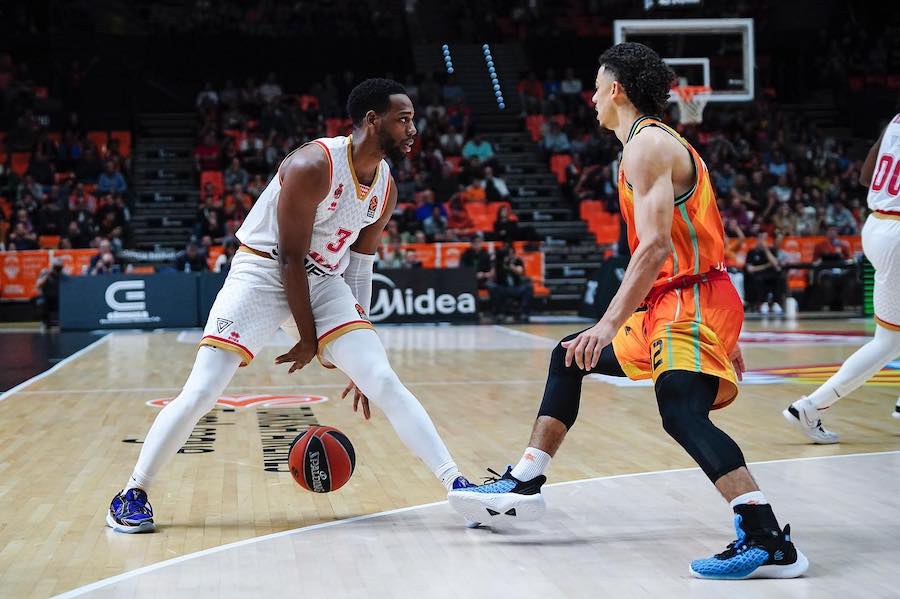
AS Monaco Basketball failed to bounce from their Betclic Elite defeat to Dijon, as they once again fell short on Friday, this time against Valencia in the Euroleague (89-84).
The Roca Team remain in a strong position in the Euroleague, but they must re-find their form in order to keep their play-off campaign on track. The Principality do, however, have home-court advantage for their next three European ties.
Former Lyon-Villeurbanne player Chris Jones did the majority of the damage for the Spanish side, with the Monégasques failing to find a way to limit his influence.
Offensively, Monaco were grateful for Jordan Loyd’s (24) efforts, but in a game dominated by free-throw efficacy, the away side couldn’t take their chances. The game slipped away after the return from the dressing rooms. Only one point separated the side’s at the break, but thanks to an unreplied six-point streak at the end of the third quarter, Monaco went into the final quarter with a 10-point deficit (64-54).
Despite outscoring their opponents in the final stages, and at multiple stages going within three points of Valencia, Sasa Obradovic’s men couldn’t restore parity.
“Valencia made some big shots. We have talent, but we have to share the ball more. We’re going to move forward,” said Loyd post-match.
The Roca Team now have the benefit of significant preparation time for their next tie against Baskonia at the Salle Gaston Médecin next Friday. A win is a must to prevent this blip from becoming a more engrained, negative trend.
Photo credit: Manuel Vitali, Communication Department
Geoffrey Kent’s apartment in Monaco is filled with exotic objects obtained from a lifetime of travel, large artworks inscribed by famous names, and young children’s toys scattered about the floor. There are also many photos – of Kent with princes and world leaders, of him posing happily in far-flung places, of a life that is almost too full to comprehend.
He has just arrived back from a big trip. Like every year, Kent has led guests for one of Abercrombie & Kent’s (A&K) luxury adventures. This time, Geoffrey, his wife Otavia, and 160 guests embarked on an extraordinary expedition through the rarely transited Northwest Passage.
“Do you follow my Instagram?” asks Geoffrey when I inquire about the trip. “Of course,” I respond. It is filled with pics from eye boggling destinations interspersed with snapshots of the past, a path twice (or more) trodden, a life lived to the absolute fullest. It is, perhaps, one of the most incredible Instagram pages out there. Not bad for someone who turned 80 in July.
The four-week voyage took them from western Greenland through the Canadian Arctic to Nome, Alaska. They followed in the footsteps of the most legendary polar explorers under the wing of A&K’s famed Expedition Team‚ including an Inuit cultural expert, while experiencing iceberg-laden shores, remote Inuit villages, historic islands and spectacular geological wonders.
“The MV Explorer, or Little Red Ship as it is affectionately known, was the first commercial ship to ever do the north in 1984, so we’ve been doing this for a long time,” laughs Kent. “They’re in the middle of nowhere. Literally in the middle of nowhere. There’s not even any cell connection at times.”
It’s not without its comforts, of course. There is a staff-to-guest ratio of 1 to 1.3, balconies in every room, full butler service, room service, hairdresser, breakfast in bed and French-inspired cuisine. It’s also a rich learning experience with daily lectures on the local culture and environment. But I suspect the environmental lectures – and the trips themselves – have changed drastically in the past decades.
The Northwest Passage: From Greenland to the Bering Sea. Photo credit: Jerome Weitzner
“When I last went to the North Pole in 1999, I was on a Russian icebreaker called Yamal, and each propeller weighed 10 tons. We crashed our way through 17 feet of ice all the way. It was an exhausting trip because the boat had to reverse and then smash its way in, you would make three feet, and it was like this all the way to the North Pole. On this trip, we were just 600 miles from the North Pole at one point and there was flat, clear, open sea. There’s no ice, we have lost it all.”
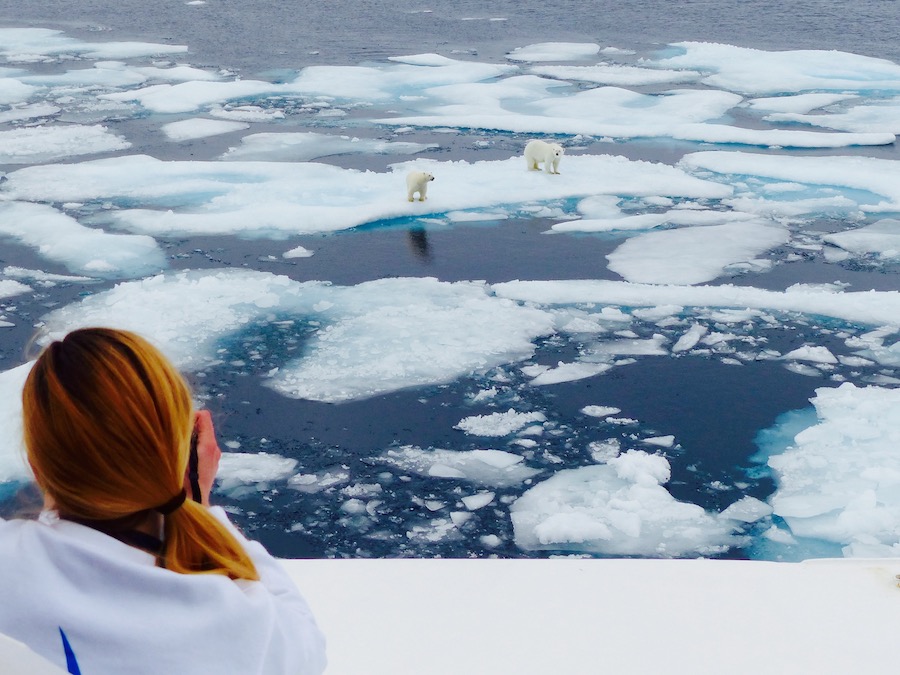
The crew had to navigate a last-minute alternate route just to find polar bears. They managed to see 15. It wasn’t like this even a few years ago, says Kent. “It used to be a complete fluke if you got through the Northwest Passage. We had a trip in 2018 which never made it through because of the ice. We also saw very few whales this time, they’ve been put off by all the mining along that route now.”
The glaciers feed the world’s river systems, and this year many cruise ships have been unable to access them; Europe’s mighty waterways like the Loire, Po and Rhine shrinking under the most severe climate-driven drought in decades.
It’s a far cry from what the world looked like when Geoffrey Kent started the safari company Abercrombie & Kent with his parents in 1962 in Africa. Of course, the world had other challenges then: A&K’s slogan was ‘shoot with a camera, not with a gun’. They pioneered experiential travel, created the first gorilla tracks in Uganda, brought adventure to luxury travel.
And Geoffrey Kent has been there for all of it. He has notched up 27 million kilometres and 161 countries. “We organise trips to all the places that I want to go to. I never like to go to a place twice. And I love it.”
So do his clients, apparently: 33% of A&K customers return every year to adventure with Geoffrey Kent and his team.
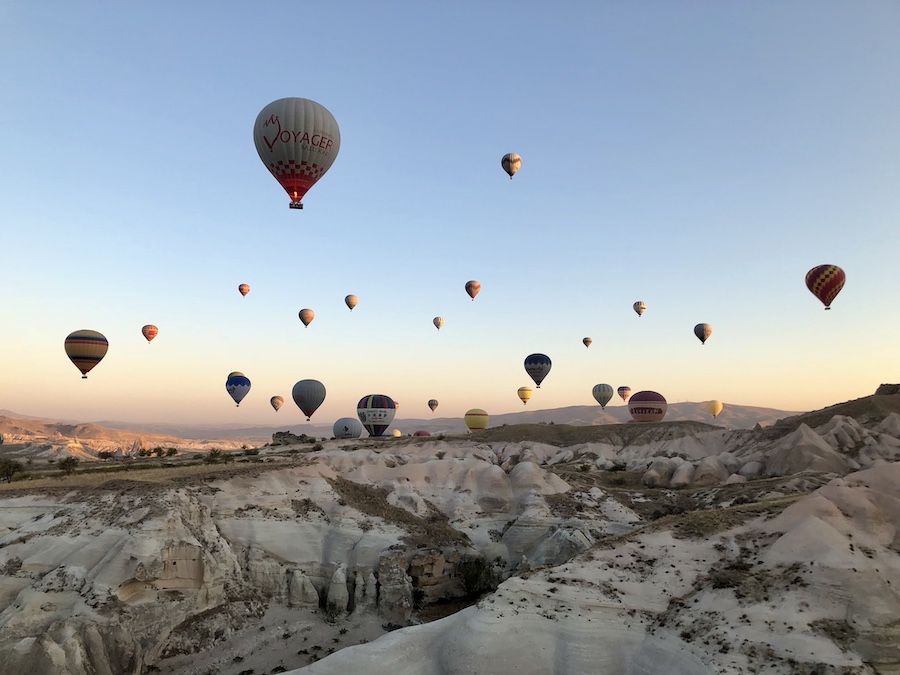
Hot Air Ballooning in Cappadocia, Turkey. Photo source: Abercrombie & Kent
Just weeks after returning from the Northwest Passage, Geoffrey, Otavia and a group of 48 people have now embarked on an Around the World by Private Jet journey, boarding in Seattle with Dom Perignon and caviar on take-off, and making their way to South Korea. They had planned to visit the demilitarised zone between North and South Korea, but there was a significant escalation in tensions recently as North Korea fired missiles and artillery shells into South Korean territorial waters, so the UN shut down all access to the DMZ. Undeterred, the team regrouped and got as close as they were allowed: crossing the Civilian Access Control line where they were able to witness the destroyed Freedom Bridge, bullet holes still visible in the remaining structure.
The adventurous group then will travel in luxury to Hanoi and Ha Long Bay in Vietnam, on to Laos, the Maldives and Turkey where they will go hot-air ballooning over Cappadocia. “I actually took King Charles to Ephesus many years ago, when he was the Prince of Wales,” remembers Kent.
The tour also takes in Benin, West Africa, because Kent is “very excited about learning all about voodoo”, as well as north west Brazil – an area that can only be accessed by private plane. It will end with a huge party in New Orleans after 21 incredible days.
No wonder Abercrombie & Kent was named Europe’s Leading Luxury Tour Operator 2022 at the 29th annual World Travel Awards in Mallorca, Spain.
The privilege of travelling with this veteran is the access that it affords you – VIP entry into some of the most exclusive locations in the world, like castles. On his 2023 Spring trip to the United Kingdom, guests will tour Windsor Castle in London, race BMWs at the Goodwood race track, and learn polo at the Cowdray Park Polo Club, the former stomping ground of Kent and Prince Charles. They will then helicopter to Scotland, because “no expense is spared on these trips”, where they will visit Floors Castle, the home of his “old friend” the Duke of Roxburghe, and do a spot of fly fishing.
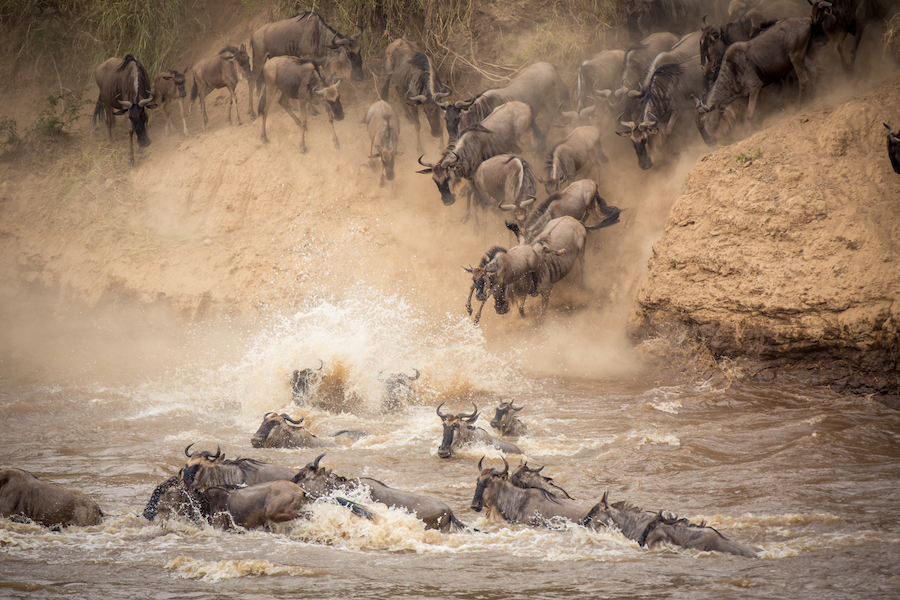
The great migration at the Sanctuary Olonana in Kenya, Africa. Photo source: Abercrombie & Kent
Geoffrey Kent and the new King of England have a long history; they have known each other since they were in their 20s. “I was captain of his polo team for 10 years,” says Kent. “I went to Africa with him, I did all the trips with him, everywhere: the Himalayas, Kenya, South Africa, India… everywhere.”
He considers King Charles a “very good friend”, so much so that the head of the British Monarchy sent Kent a congratulatory video message on his 80th birthday.
“He’ll be a great king. He’s very qualified. Terrific guy. Hopefully I will be able to go to the coronation next year,” he says nonchalantly.
It is just another remarkable tale in what has been, and continues to be, a remarkable life for Geoffrey Kent.
Though the countries he is yet to travel “are running few”, Pakistan is still on the bucket list. He would also like to see more of West Africa – Guinea and Timbuktu – and more of Iran.
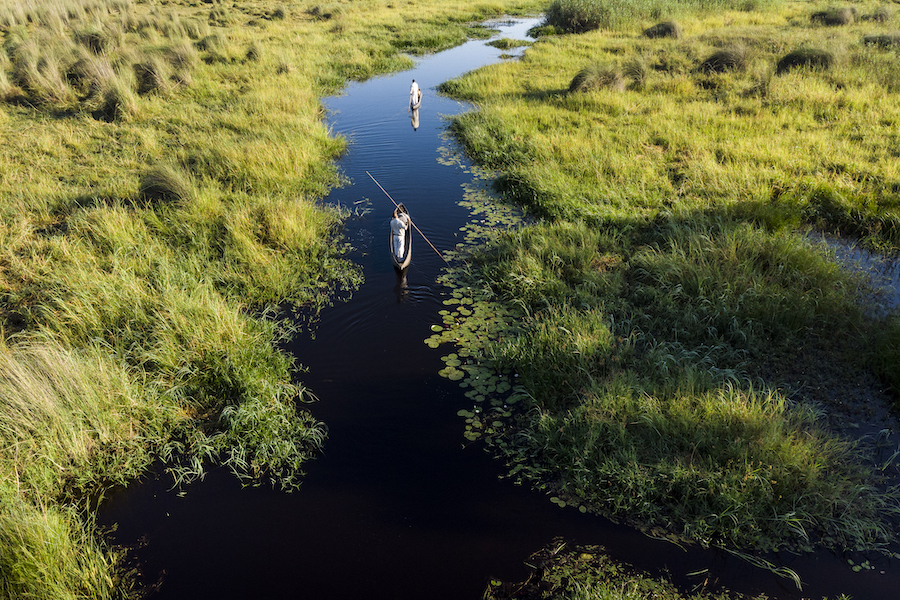
But unlike a parent who is reluctant to choose a favourite child, Geoffrey Kent has no hesitation in revealing his most favourite place in the world. “Hands down Botswana,” he says. “Kenya is still amazing, east Africa, Tanzania, Uganda, we bought another two new camps in Namibia… it’s a whole new circuit, and it is something we do very well. I love the adventure.”
Before his trip to the South Pole, the savvy traveller sought the advice of Prince Albert II of Monaco, who is “a bit ahead of me in the number of countries he’s travelled to”. “But I took him some years ago to India, and I knew more maharajas than him because I used to play all the polo tournaments there with the Prince of Wales, so they knew me well.”
With great adventure comes great risk, and Kent says that he has had his fair share of near-death experiences: he was jailed for a week in southern Sudan during the explosive civil war, he was thrown out of a boat and chased by hippos, the landing gear failed on his small plane coming into an airport in Egypt, a pilot once ran off the runway to avoid an animal… and that’s all after surviving years of playing polo – one of the most dangerous sports on the planet, and fighting wars in Yemen, Libya, and Cyprus with the British Army.
“By the time I was 25 I had done a lot, which led me on to taking risks with travel,” reveals Kent. “So, I set up the company, but I would always try everything first.”
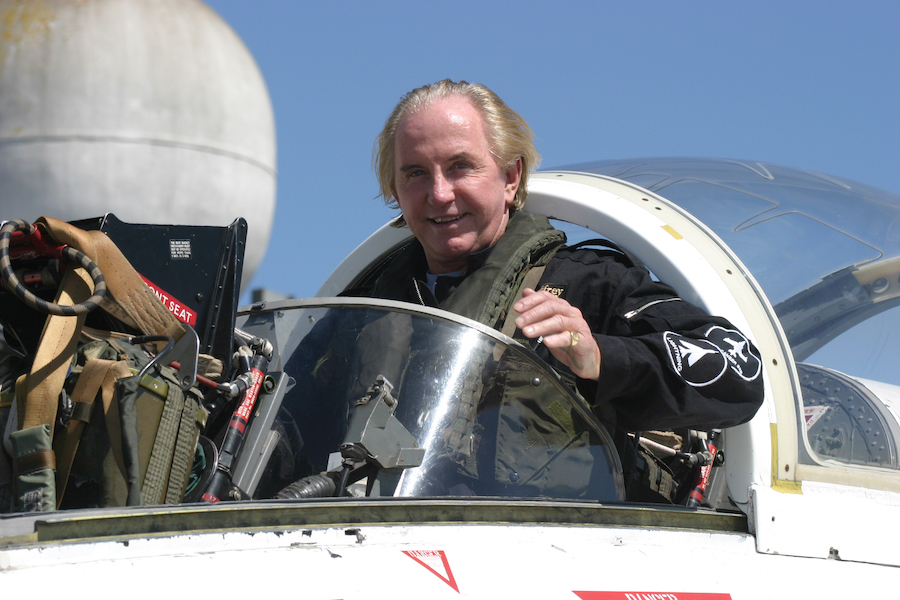
And that includes space. Having explored and designed trips on every continent of the globe, Kent set his sights higher and established A&K Space. But if he was to provide trips to the next frontier, he had to try it out himself. So, he flew in an English Electric Lightning plane to the edge of space at twice the speed of sound; it went from 0 to 40,000 feet vertically in a minute, his body hammered by 5.5Gs. The travel pioneer was 62 years old at the time.
Extreme adventurer Geoffrey Kent. Photo source: Abercrombie & Kent
“I thought it was a pretty hairy experience, and I remember calling my chief scientist afterwards to ask what the chances were of our space project having an accident. He said 100%. I said, ‘you are telling me there is a 100% chance of killing a client on this trip?’, and he said ‘yes’. So, I thought about it for a night and I shut it down, I let 20 people go. I shut down space long before everyone else started piling into it.”
That was 2004, and six months later his pilot was killed after the plane’s hydraulics failed during the same flight.
“A quote that I often refer to is ‘Life is not a dress rehearsal’, but my whole point is that I want clients to have fun, I don’t want them to die.”
I wonder what Richard Branson would say to that (Virgin Galactic has continually delayed the start of its commercial flights to the edge of space for various reasons).
Geoffrey Kent has documented his extraordinary life in a book he authored, titled Safari: A Memoire of a Worldwide Travel Pioneer. But the adventures continue – perhaps not to space, but still to all corners of the globe, where his team of experts design the most spectacular, once-in-a-lifetime journeys, imagined by the very man himself, travel pioneer Geoffrey Kent.
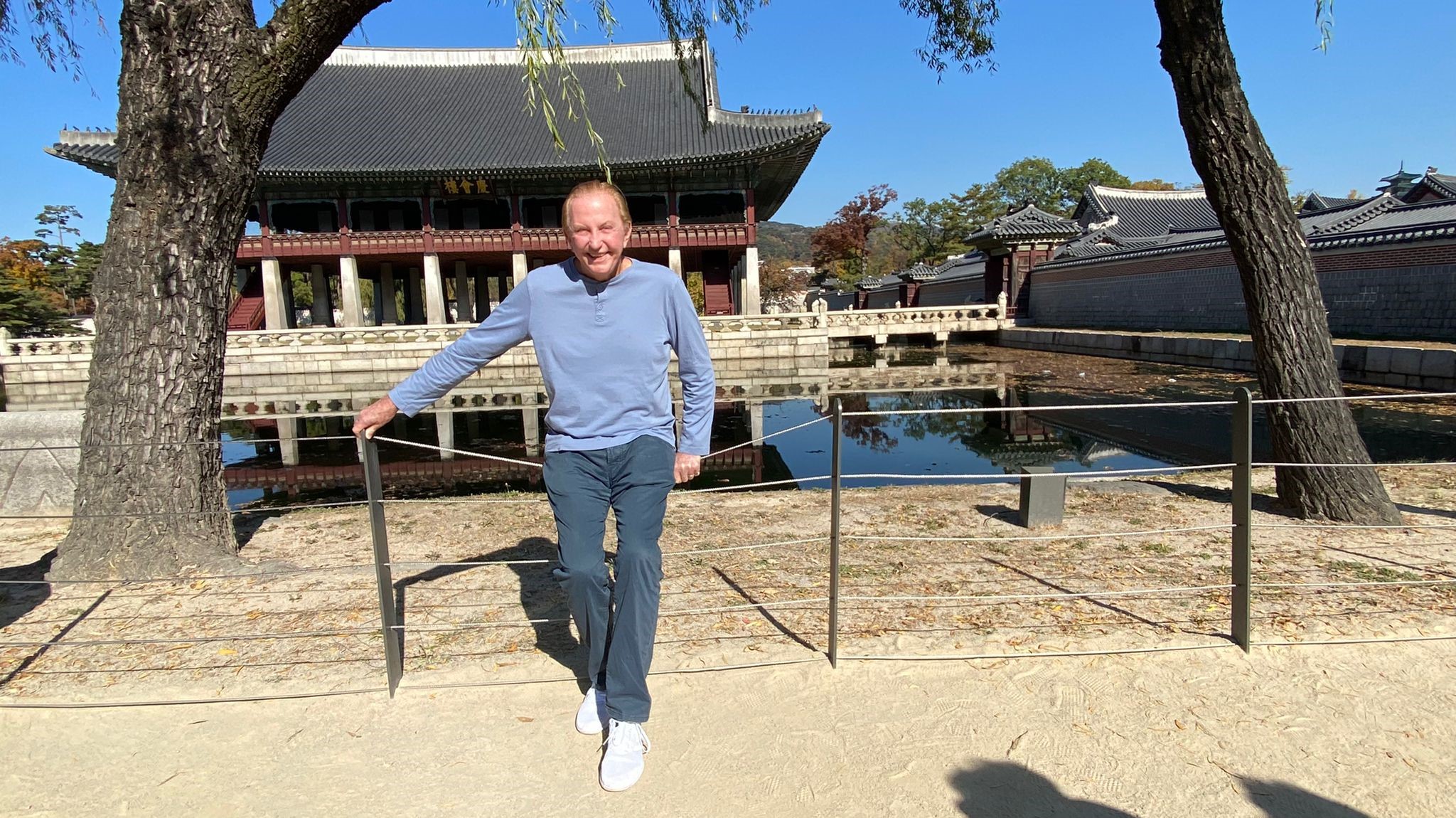
Photo above of Geoffrey Kent on his recent visit to South Korea, source Abercrombie & Kent
Daniela Boutsen wins prestigious women’s business award
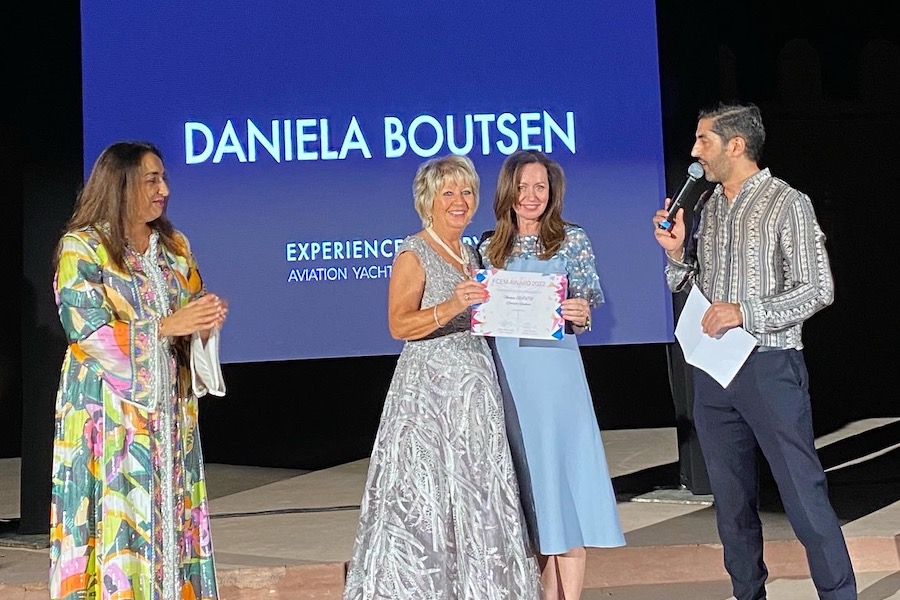
Monaco-based businesswoman Daniela Boutsen has been awarded first prize at the 69th FCEM World Summit in Morocco for her innovative international interior design business.
The founder and director of the Daniela Boutsen brand was named as winner of the prestigious Export Prize at the annual networking event for leading businesswomen on Saturday 5th November.
The Export Prize recognises businesses set up and run by women, which have successfully been exported to international markets. Daniela Boutsen is specialised in interior decoration of VIP business jets, yachts, and residences with clients spanning the globe.
“The year 2022 marks a turning point for my company as it celebratesits 10th anniversary: a decade of working together with my team to continually meet new challenges,” said Daniela Boutsen on receiving the award. “I am proud of this journey and extremely honoured to have received this award tonight.”
Daniela was one of around 400 businesswomen from more than 35 countries to attend the FCEM World Summit in Marrakesh.
FCEM, or Les Femmes Chefs d’Entreprises Mondiales, is an association which unites women business owners from across the world. Globally, more than five million female entrepreneurs from 120 different countries are connected via the non-profit, non-governmental organisation which was founded in France in 1945.
The aim of the association is to promote women’s businesses through initiatives which facilitate business development, partnerships and trade as well as promote solidarity, friendship, and cultural understanding.
Daniela Boutsen attended the 69th FCEM World Summit as a member of AFCEM, the Association des Femmes Chefs d’Enterprises de Monaco, a group created in 2004 that brings together women involved in business in the Principality.
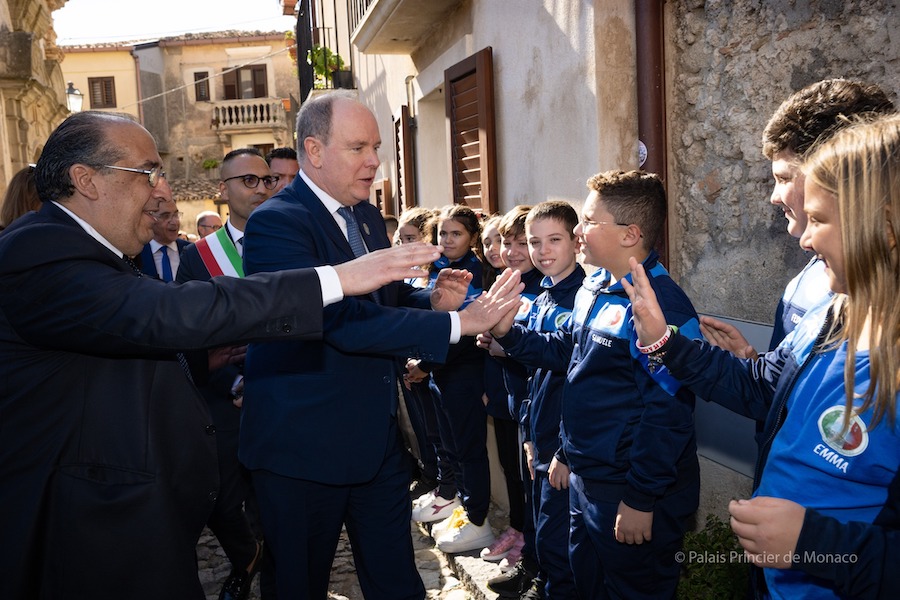
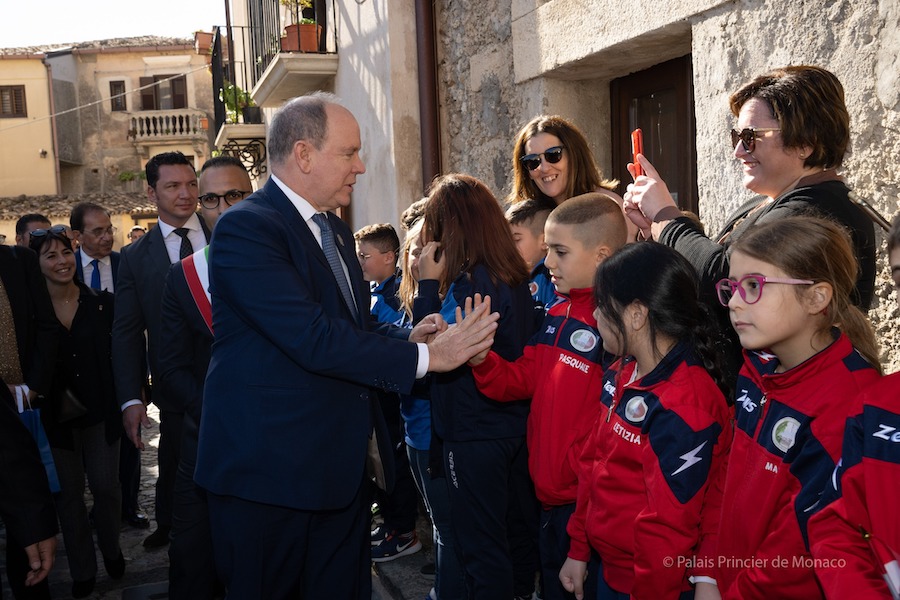
Prince Albert II continued his trip to Calabria on Tuesday with visits to many different sites bearing the Grimaldi name.
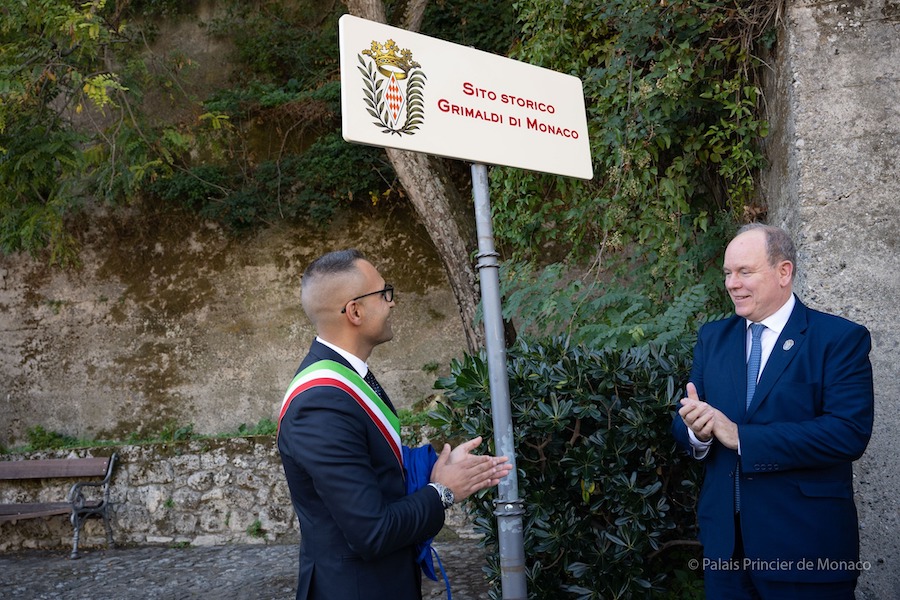
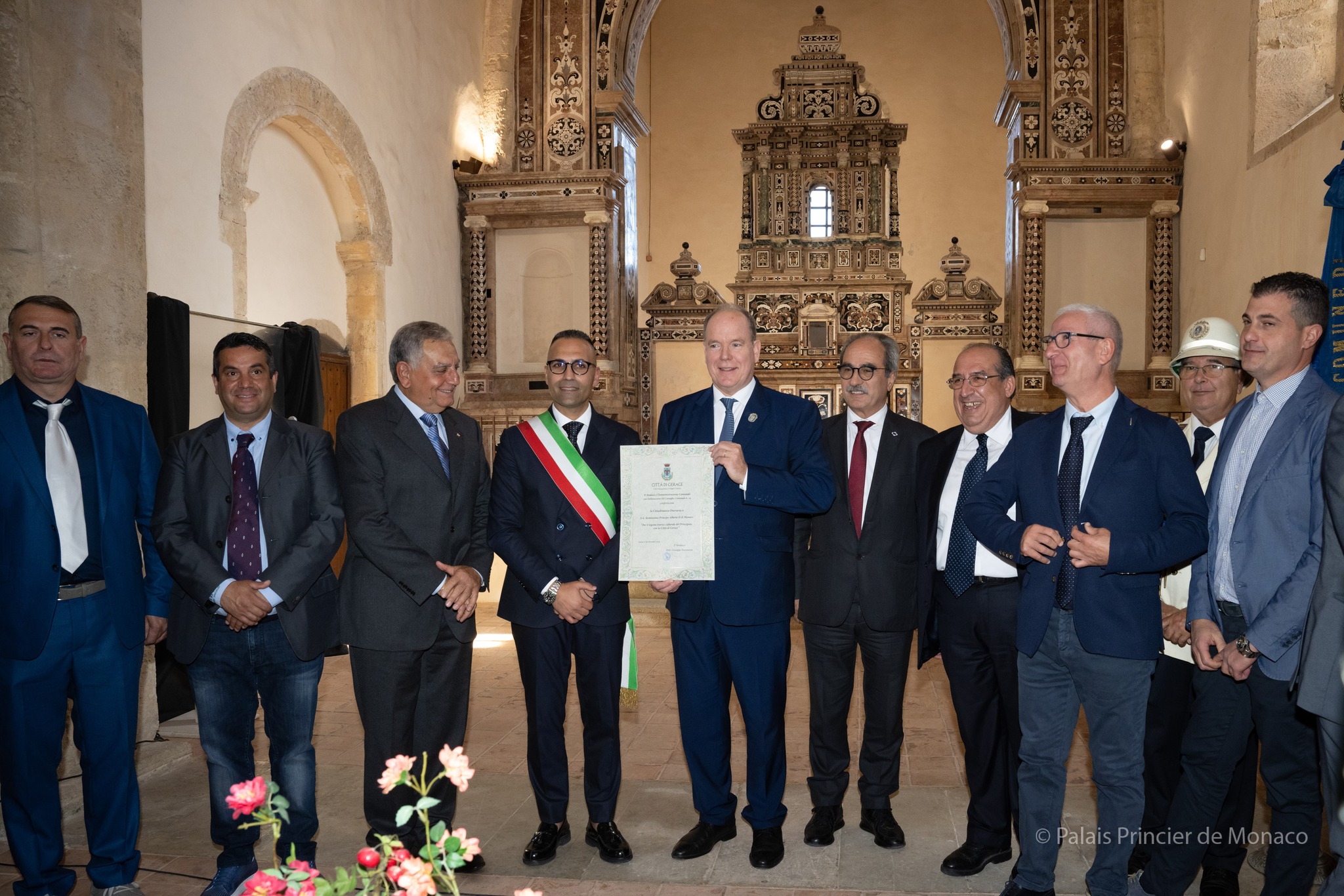
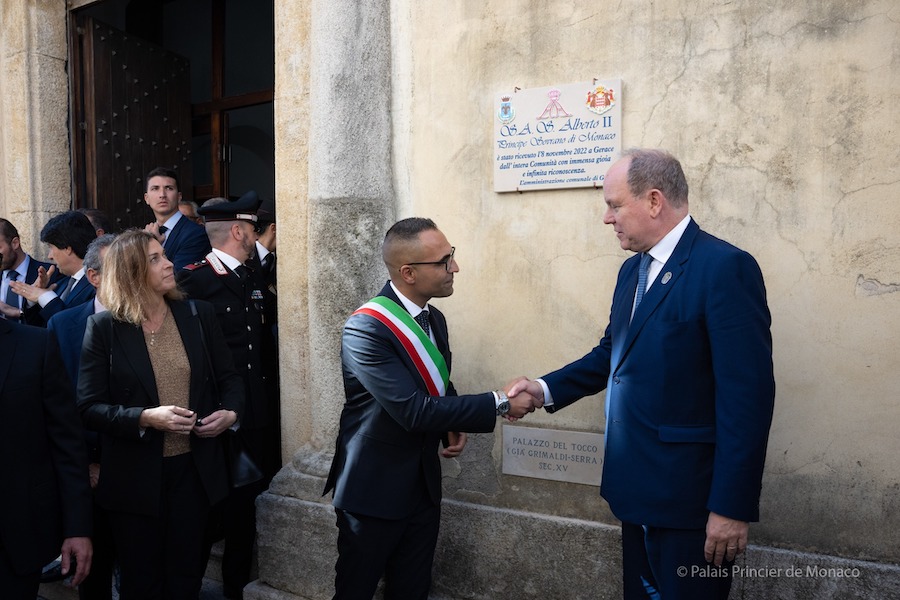
The Prince was welcomed to the town by Deputy Mayor Rudi Lizzi, where he unveiled a sign showing the town’s membership to the Grimaldi Historic Sites of Monaco network. He then went to the Town Hall where he met with elected officials before presiding over the laying of a plaque commemorating his visit.
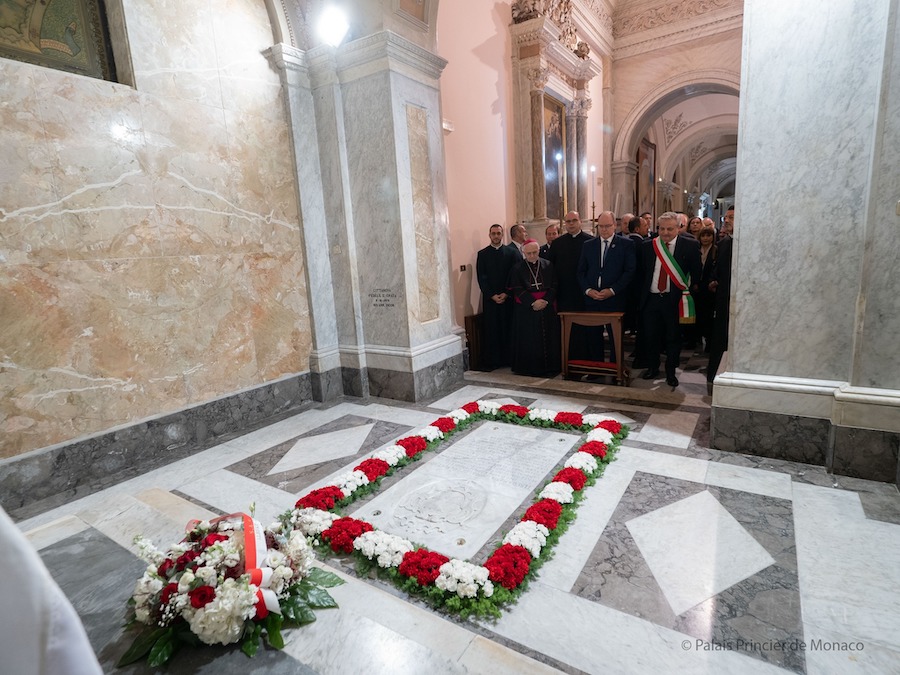
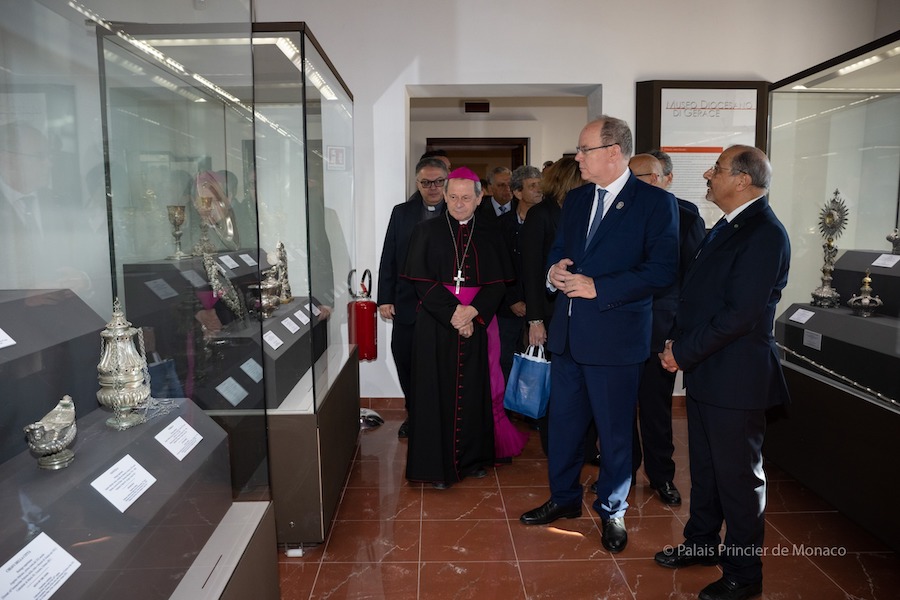
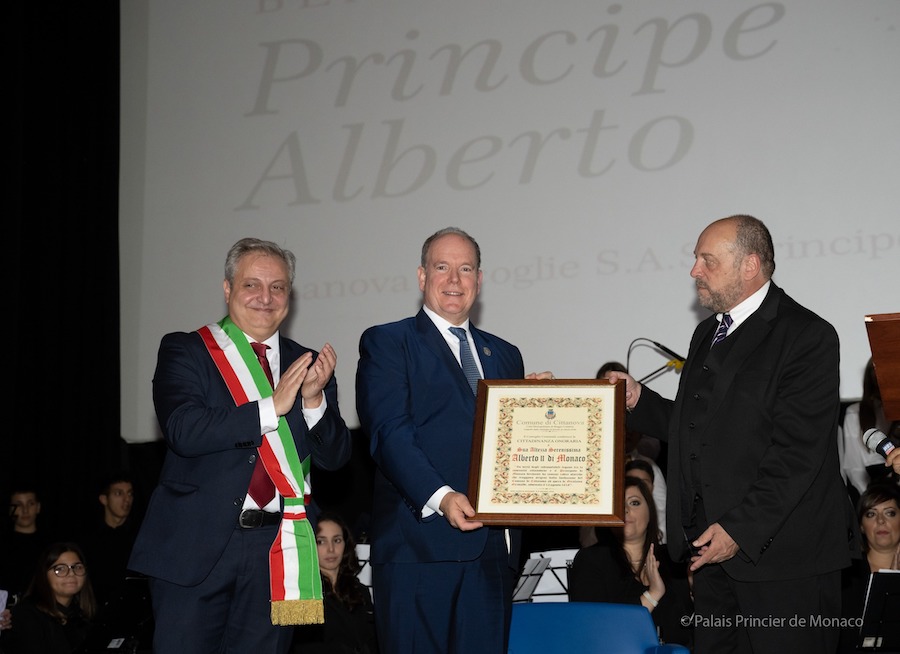
Prince Albert continued his journey on foot to the Greco-Byzantine crypt of Gerace Cathedral and then the diocesan museum. He also received honorary citizenship at the Chiesa di San Francisco in Assisi.
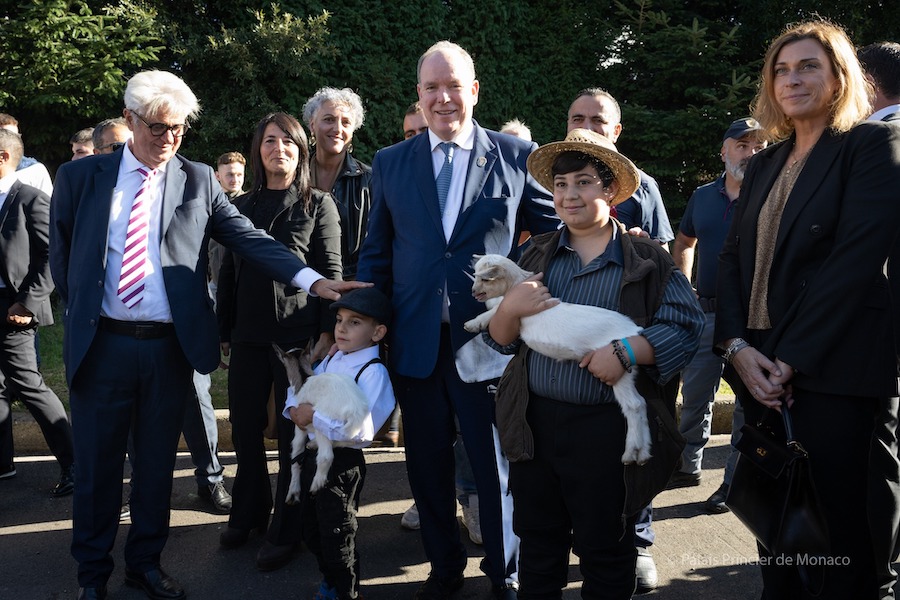
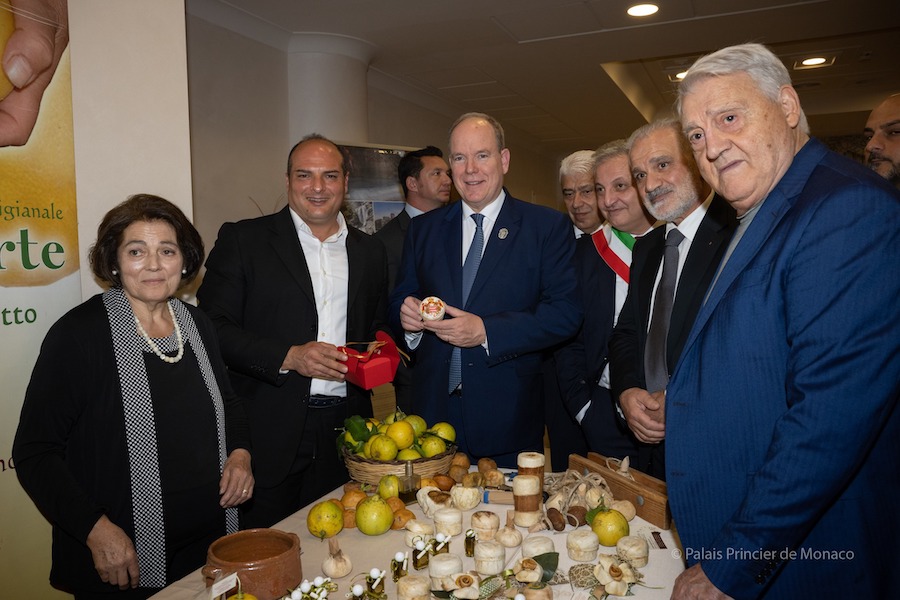
In Canolo Nuova, a small town of 700 inhabitants, the Prince, Mayor Francesco Larosa, and President of the Aspromonte National Park Leo Autelitano took part in a traditional lunch prepared by the shepherds of the park. Guests enjoyed regional specialities and listened to the sounds of the zampogna, antique bagpipes that are still widely used in Italy.
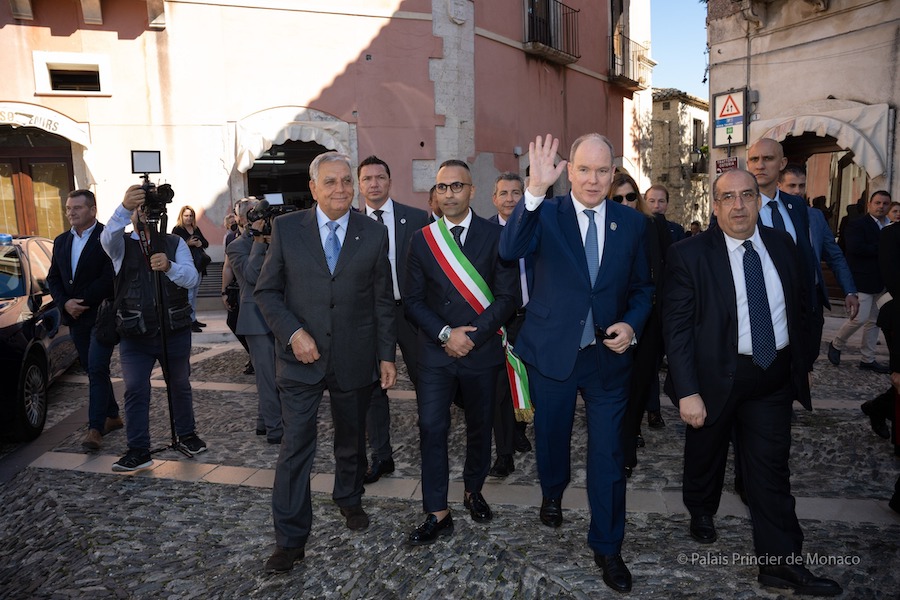
The afternoon was spent visiting Cittanova, a town in the province of Reggio Calabria. There, the Prince unveiled a plaque at the entrance of the village marking it as a Grimaldi Historic Site of Monaco. Another plaque, this time at City Hall, was unveiled in commemoration of his visit. The procession then took to the streets and alleys to meet the large population who had turned out for Prince Albert’s visit, before he was invited to discover the Chiesa Madre di Cittanova, built in 1785 at the request of Maria Antonia Grimaldi Serra, daughter of the Princess of Gerace Maria Teresa Grimaldi, who died in the earthquake of 1783.
Photo credit: Gaetan Luci / Prince’s Palace
After paying his respects at the tomb of Princess Maria Teresa Grimaldi, the Prince continued his journey on foot to the former Grimaldi Palace via Strada Grimaldi. He then visited the Villa Comunale Carlo Ruggiero park before joining the Teatro Rocco Gentile where he received honorary citizenship of the municipality.
The municipalities of Gerace, Cittanova and Molochio were part of the ancient Principality of Gerace, which, between the 16th and 18th centuries, belonged to the Grimaldis of Genoa from a collateral branch of the Monegasque branch.
The day ended with a dinner offered by the Prince to the mayors of Gerace, Cittanova and Molochio as well as to the regional and local authorities in order to thank them for the extremely warm and friendly welcome reserved for him at each stage.
Photos credit: Gaetan Luci / Prince’s Palace
Festival of the Stars: Pop Cuisine’s Davide Oldani joins Dominique Lory at Le Grill
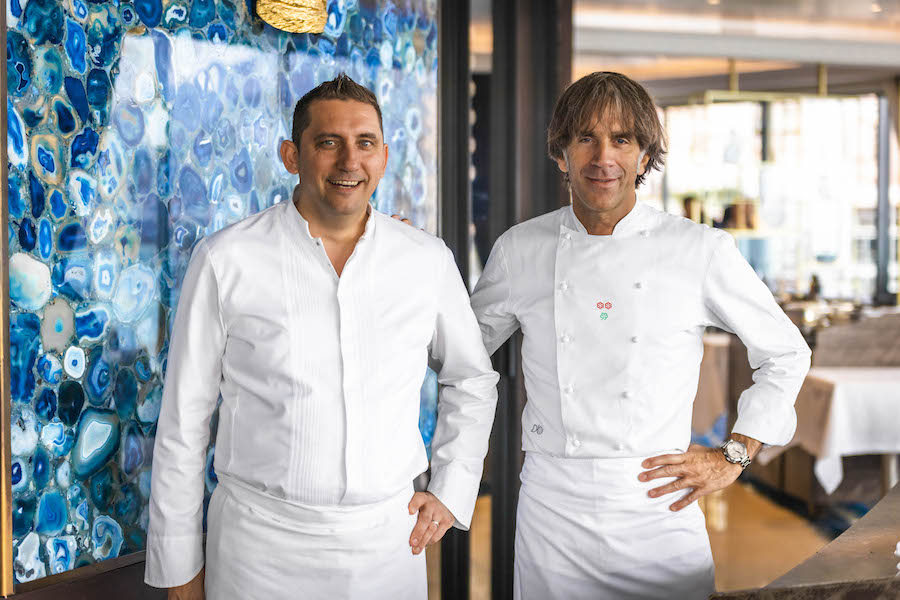
With the Festival of the Stars grand finale looming, we take you back to Le Grill for the final “Four Hands” event, where one of Italy’s best chefs Davide Oldani joined Hôtel de Paris Executive Chef Dominique Lory for a never-before-seen fusion of Riviera flavours and mouth-watering cucina pop.
Amidst an incredible second edition of Festival of the Stars Monte-Carlo, it was Le Grill’s turn to shine at the end of October.
On the eighth floor of the Hôtel de Paris, newly appointed Executive Chef Dominique Lory was joined by two Michelin star Italian chef Davide Oldani for an seven-course fusion of fresh Riviera flavours and exciting Pop Cuisine (cucina pop).
Oldani’s philosophy of high quality and accessibility at his restaurant D’O in Cornaredo, near Milan, has positioned him amongst the greatest chefs of contemporary Italian cuisine.
Having worked under Alain Ducasse at Louis XV, Oldani knows Monaco – and Dominique Lory – very well. After 11 years as the executive chef of the three-starred Louis XV, Lory recently took over from Franck Cerutti and now oversees the Hôtel de Paris Monte-Carlo in its entirety.
Davide Oldani, a former soccer player, also sharpened his skills right here at Le Grill, as well as working under the likes of Gualtiero Marchesi, Albert Roux, and Pierre Hermé in London.
As part of his mission to popularise gastronomy, Oldani also designs tables, chairs, plates, tableware, and glassware – inspired by the Pop Cuisine philosophy of simple, functional and elegant.
“Pop cuisine was born 19 years ago when we opened our restaurant D’O in my home town of Cornaredo,” Chef Oldani tells us after a spectacular lunch. “I was 36 and I had travelled a lot working with many great chefs. I learned the methods, the products, the rules that we have in the kitchen. But I didn’t want to be the Hôtel de Paris. D’O was a small trattoria with an 11.50€ menu that included a glass of good wine, bottled water, and coffee. It became so popular that we had to stop taking reservations on the phone. It was completely crazy.”
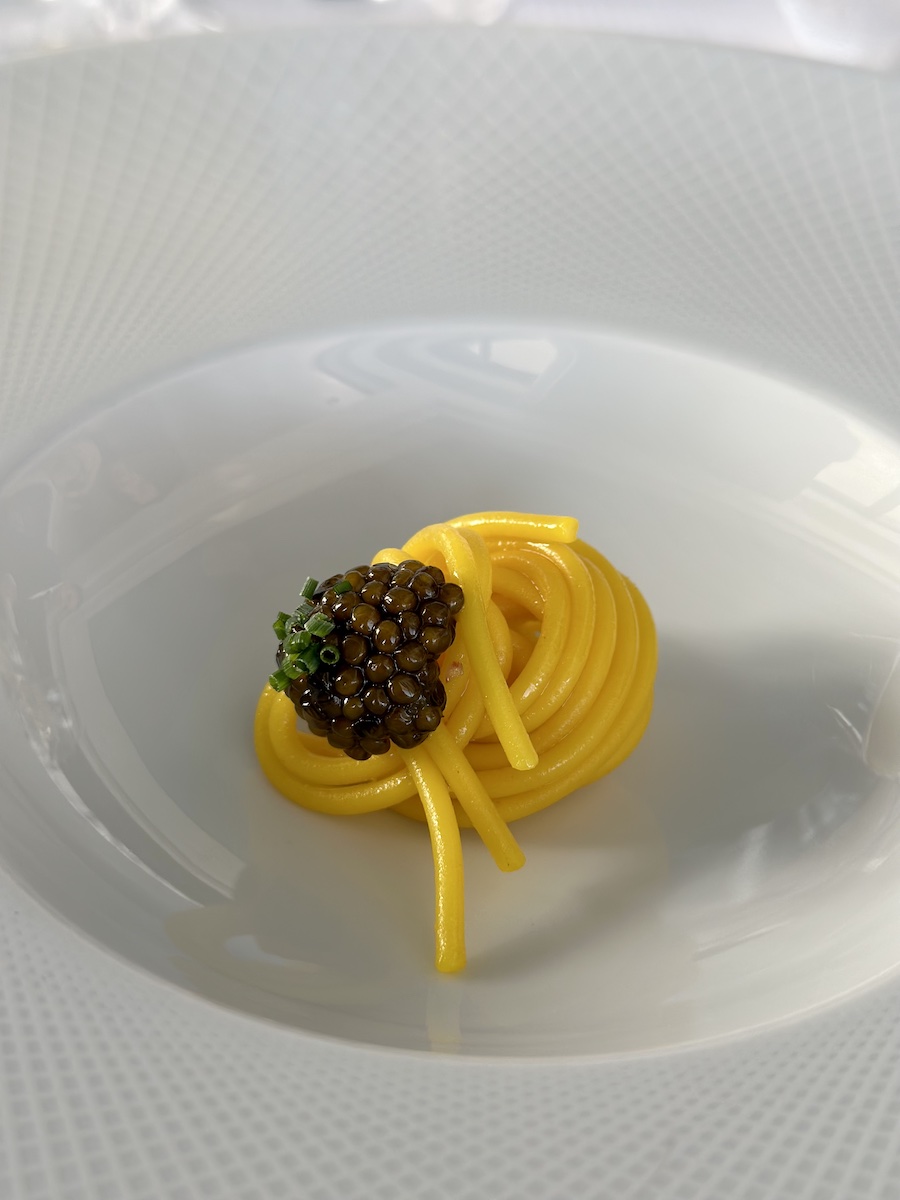
Saffron spaghetti and caviar by Davide Oldani, photo by Monaco Life
Oldani’s passion to deliver quality cuisine for all became a huge success and, one year after opening, the world’s most authoritative food guides counted him amongst the greatest chefs of contemporary Italian cuisine.
“I was doing an interview with an Italian journalist and I was explaining what I was doing, and he said to me, ‘So, you’re making a popular kitchen’?” I didn’t really like the word ‘popular’, but I took on the idea and changed it to pop – Cucina Pop, or Pop Cuisine in English.”
In 2013, Davide Oldani was invited to Harvard Business School to share his concept and experience as an entrepreneur. His case study was published in the Harvard Business School Review.
Oldani says his recipe for success is democracy and sustainability.
“Respect people, above all, and respect the seasons. Every chef in our kitchen shares their ideas: human relationships and sustainability are the seeds.”
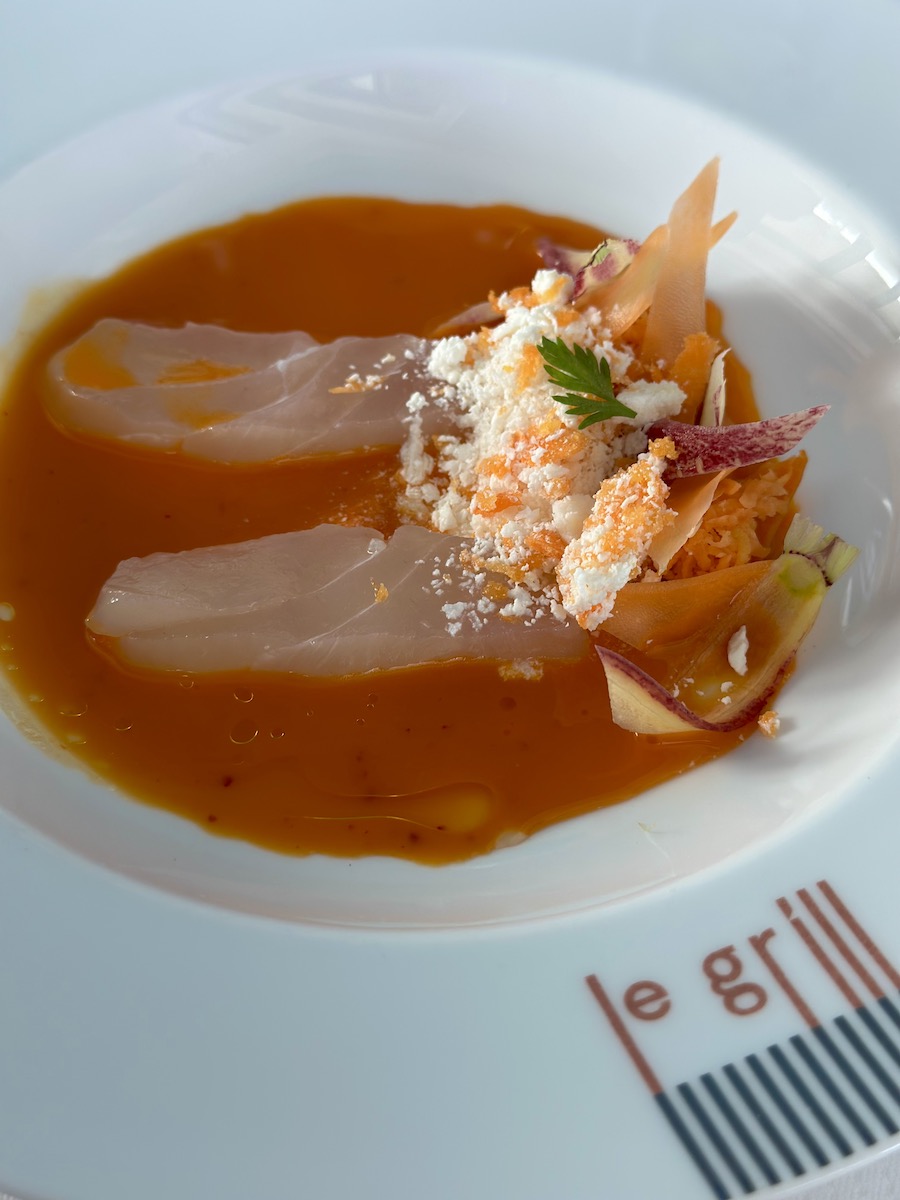
Dominique Lory’s sea bream with granita, carrot and ginger, photo by Monaco Life
In addition to its two Michelin stars, D’O has also been awarded a Green Michelin star for its focus on local ingredients and simple preparation.
We saw this in the first dish of the festival menu at Le Grill – a simple spaghetti salad (pictured earlier in the article), made with saffron and topped with Kristal Caviar. It paired beautifully with a crisp 2018 Pouilly-Fuissé La Croix from Domaine R. Denogent.
Chef Lory says it was a “no-brainer” to pick Davide Oldani to join him for the Festival of the Stars Monte-Carlo. “The discussions were very interesting. He made dishes of his DNA, and we made dishes from the DNA of Le Grill.”
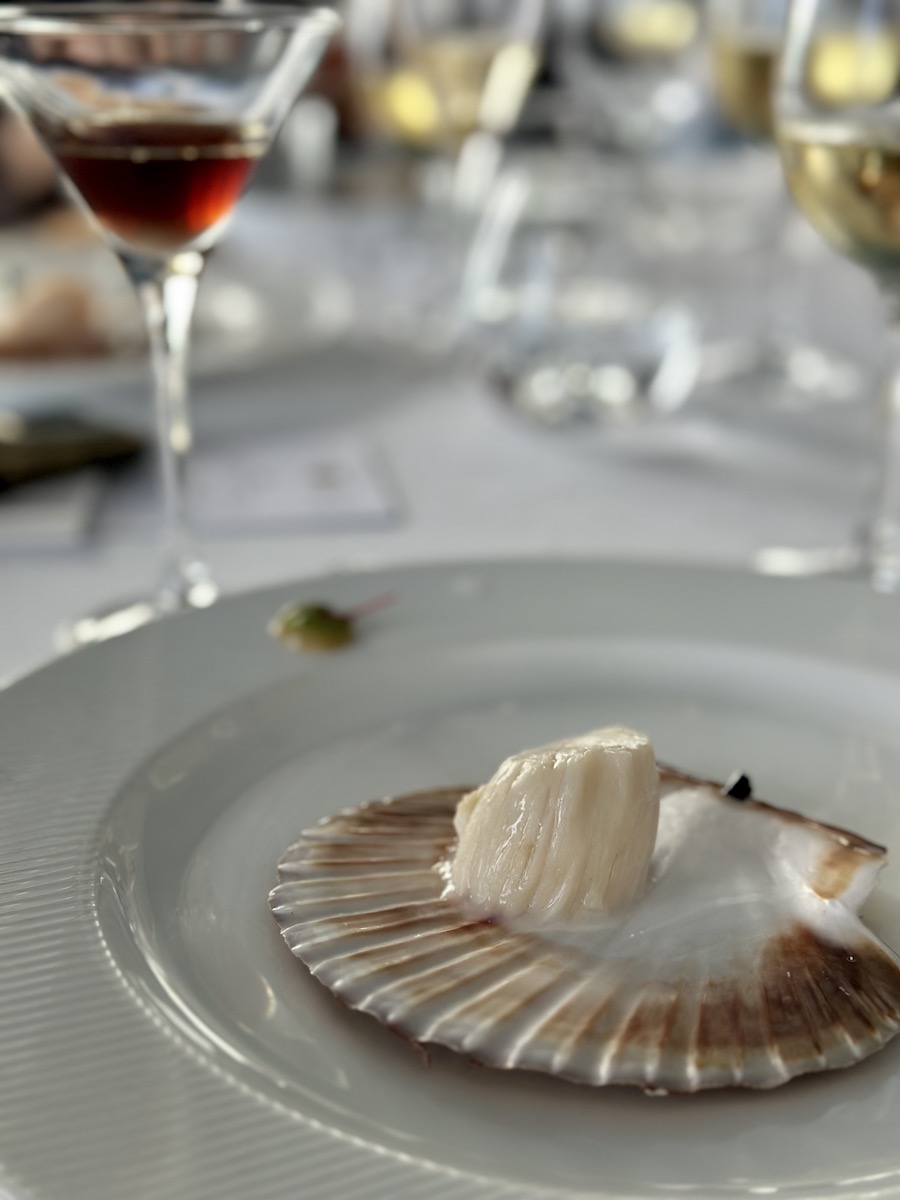
Act II in this seven-act gastronomic show was sea bream crudo topped with a beautifully light granita and finished with a cold carrot and ginger extraction (see image above). It prepped the palate for Davide’s scallop, which was served theatrically alongside a tamarind consommé in a martini glass, to be dipped in a drop of apple and celery puree.
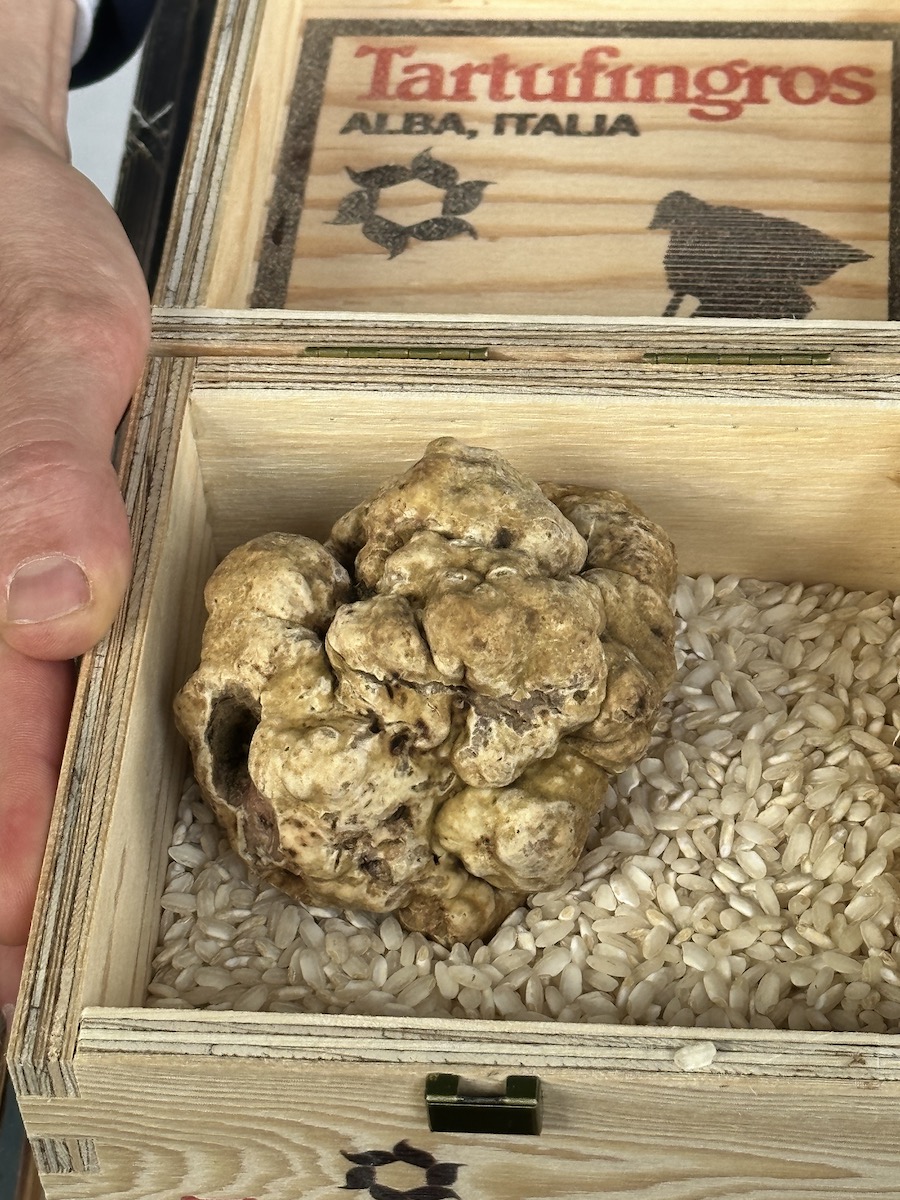
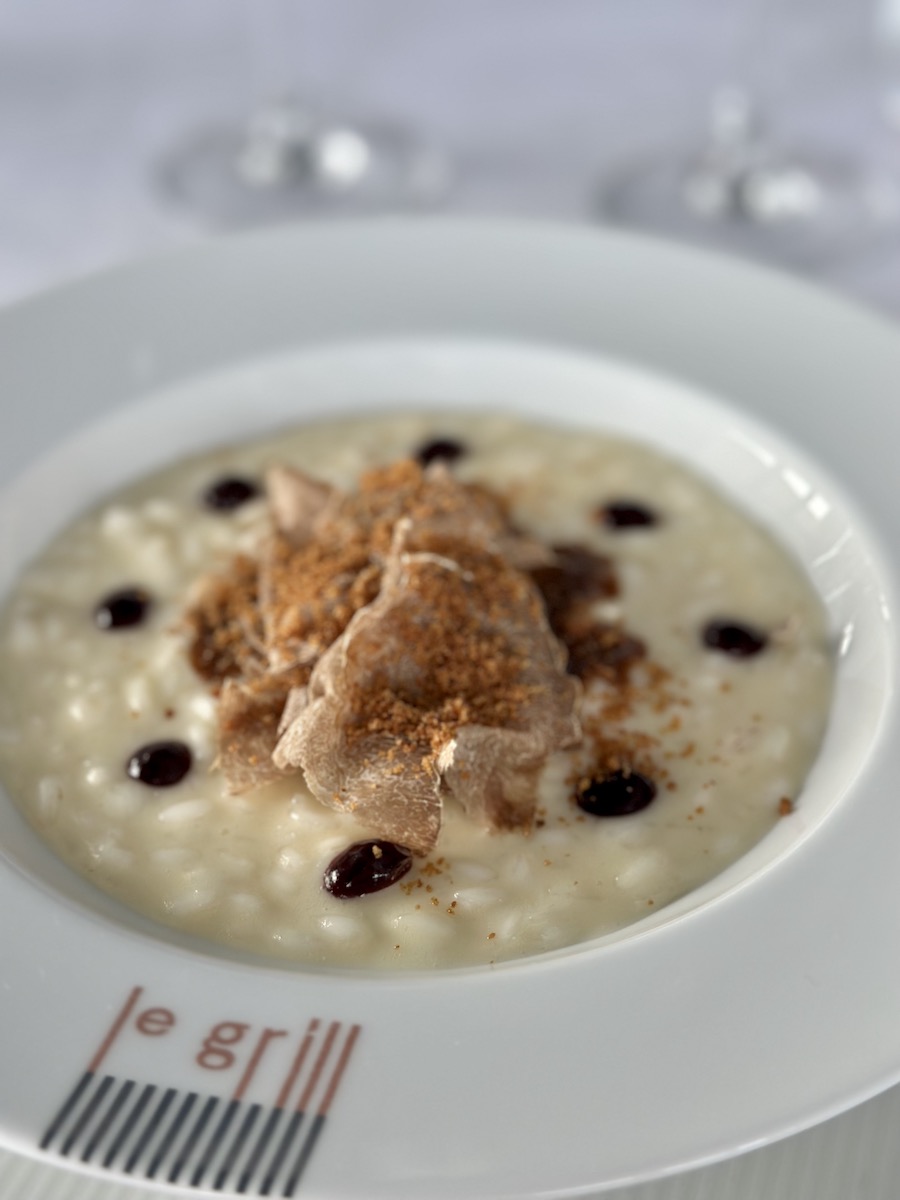
Then came another grand show – a giant Alba white truffle, the rarest and most coveted of all truffles, presented by the chefs at the table, before being shaved lavishly all over our morel mushroom risotto. As if the meal couldn’t get extravagant enough, the dish was served with a spectacular Château Mazeyres Pomerol.
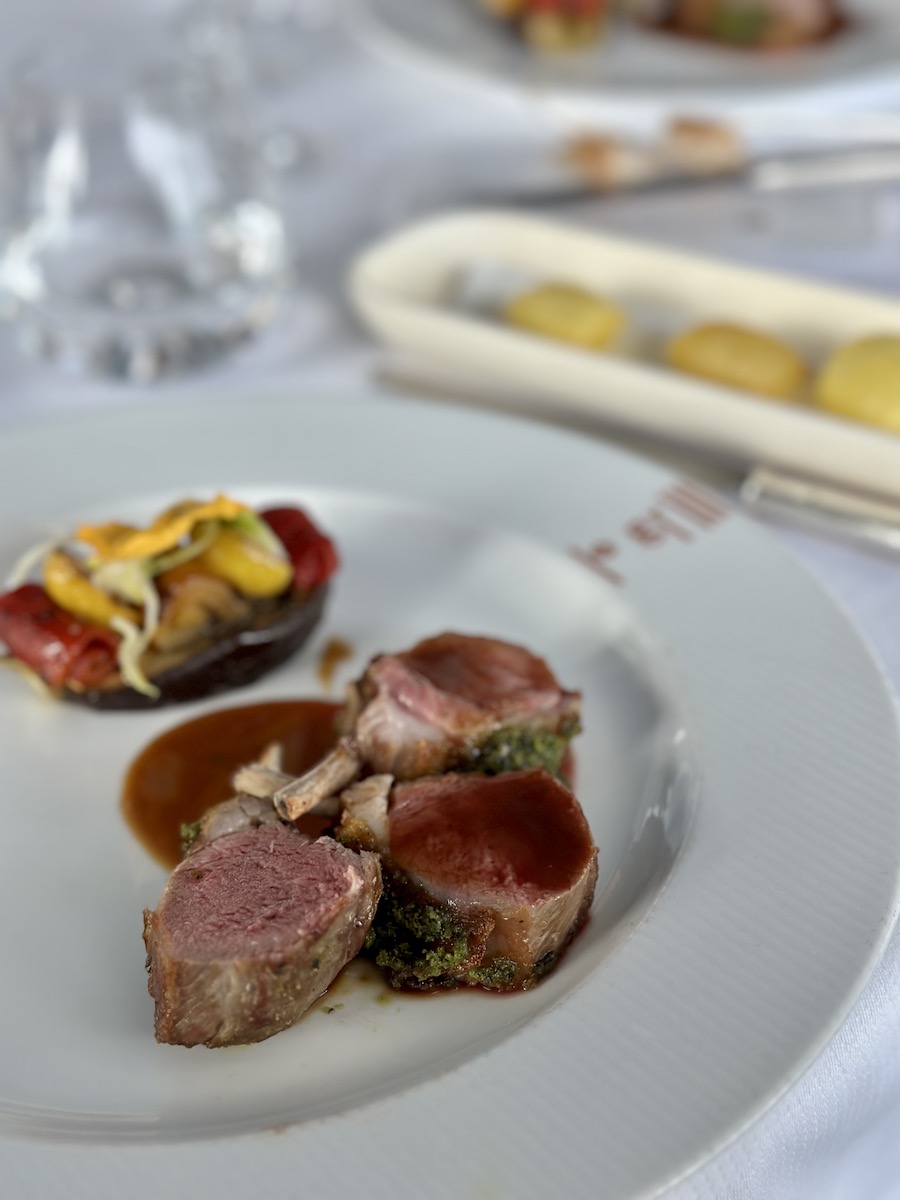
Le Grill’s signature carré d’agneau came next. The lamb from Provence was cooked before our eyes on the open grill, carved and served tableside with the restaurant’s famous potato ‘puffs’ and grilled vegetables.
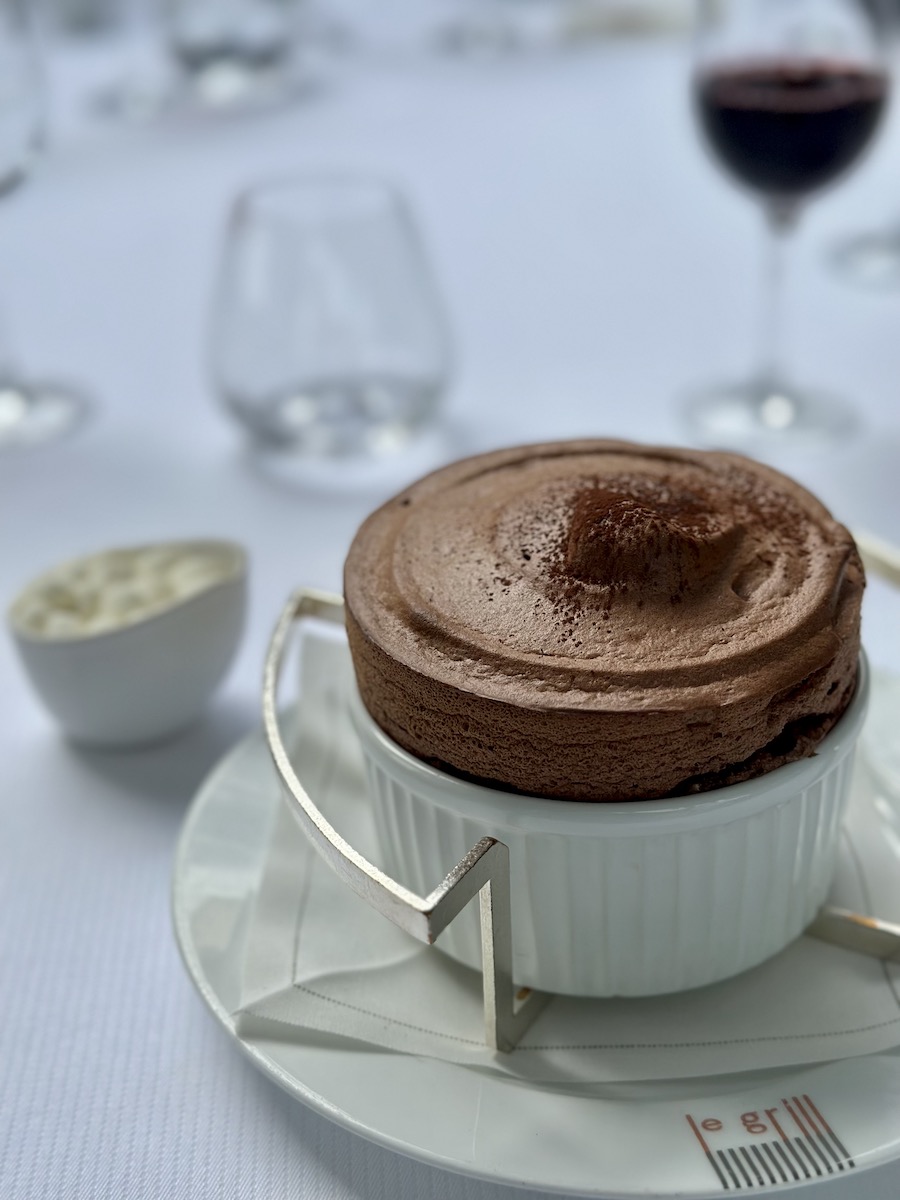
To finish, we had D’O’s refreshing green tea and Menton lemon granita, but it was the famous Alain Ducasse chocolate soufflé that stole the show.
The famous Alain Ducasse chocolate soufflé, photo by Monaco Life
It was then that the roof above us parted and the bright blue autumn sky shone down into the dining room, a spectacular finale to another “only in Monaco” experience.
While the Lory-Oldani pairing marked the end of the “Four Hands” element of the Festival of the Stars, there is one more chance to see Monaco’s starred chefs together in action. On Saturday 26th November, SBM will host the Festival of the Stars Closing Gala at One Monte-Carlo, bringing together Alain Ducasse, Marcel Ravin, Yannick Alleno and Dominique Lory. Among the signature dishes will be Chef Alain Ducasse’s marinated San Remo gamberoni and Chef Yannick Alléno’s incredible Wagyu beef millefeuille.
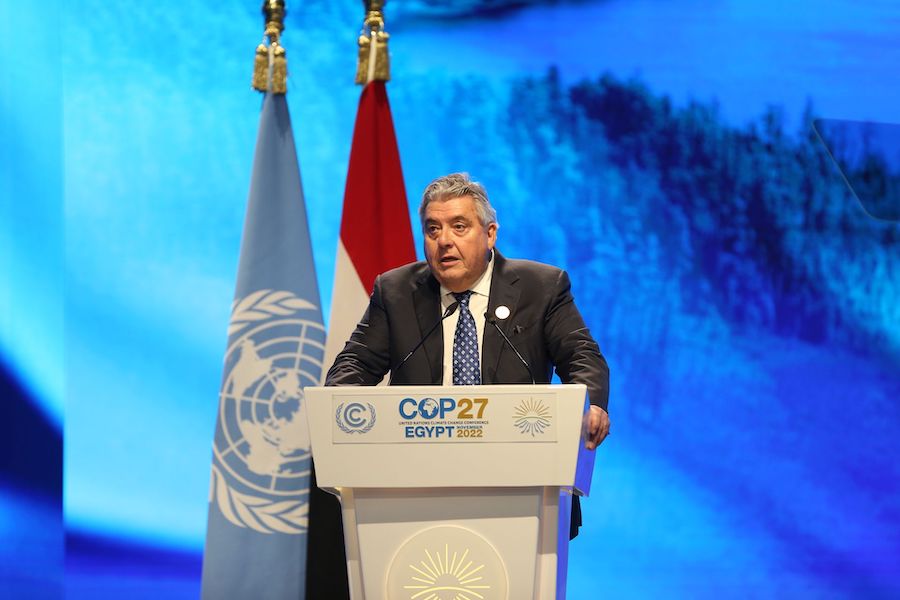
Monaco’s Minister of State Pierre Dartout has represented the Principality at COP27 in Egypt.
He was joined by Minister for Equipment, the Environment and Town Planning Céline Caron-Dagioni at the opening conference on Monday 7th and Tuesday 8th November for the Summit of the Heads of State.
Dartout participated in two high-level round tables: ‘Innovative finance for climate and development’ and ‘Climate change and the sustainability of vulnerable communities’, during which certain actions by the Principality were highlighted. The financing of climate action in developing countries is at the heart of discussions related to the implementation of the Paris Agreement.
Monaco’s Minister of State spoke about the Prince’s Government’s commitment to achieve carbon neutrality by 2050 in accordance with the objectives set by HSH Prince Albert II.
Several bilateral meetings were also organised on the sidelines of the summit, in particular with the Head of the Andorran Government, Xavier Espot Zamora.
The 27th Conference of the Parties to the United Nations Framework Convention on Climate Change (COP27) kicked off on Sunday 6th November in Sharm el-Sheikh, Egypt. After a decade of intense negotiations culminating in Glasgow (COP 26) with the adoption of the latest rules for the application of the Paris Agreement, the debates are now entering the era of implementation.
Photo source: Government Communication Department
All the headlines and highlights from Monaco, direct to you every morning