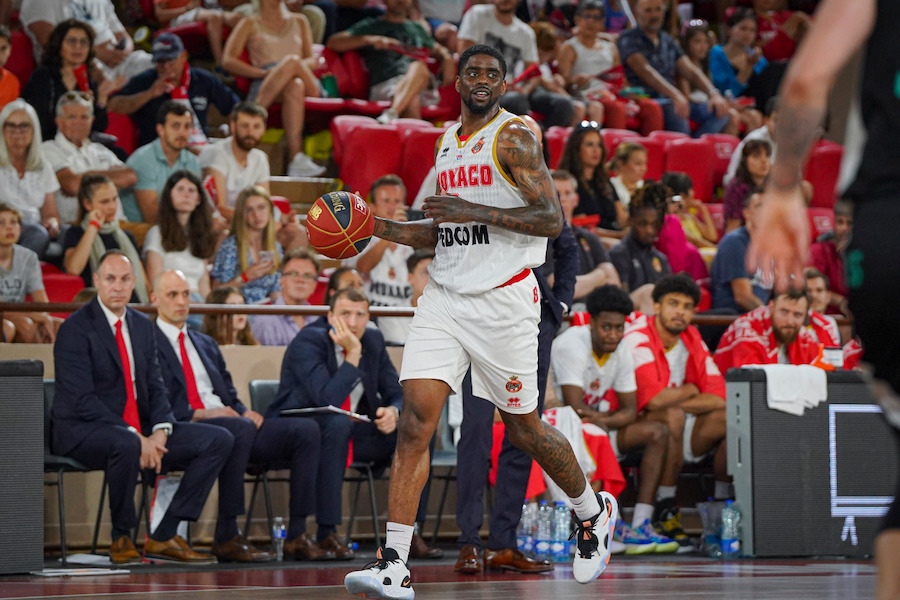
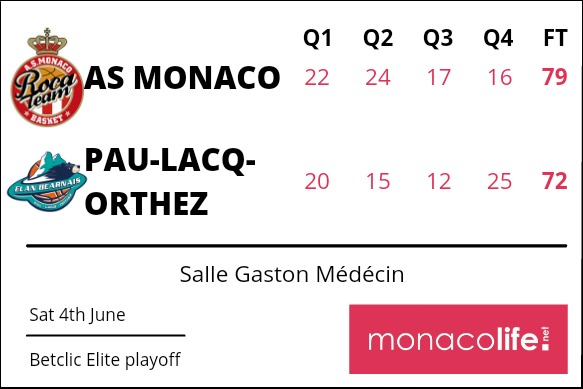
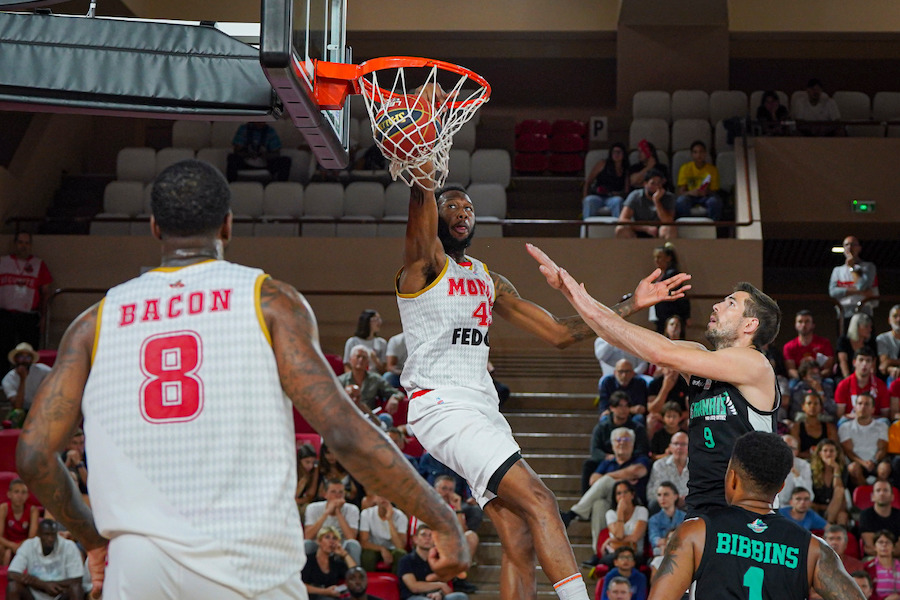
AS Monaco Basketball were made to work for the victory in the dying stages of their Betclic Elite semi-final second-leg against Pau-Lacq-Orthez (79-72), but in triumph, they moved to within a victory of the final.
Yakouba Outtara said after victory in the first-leg that he expected a “reaction” from Pau, but Monaco didn’t allow them to react as they maintained the high levels of intensity and concentration that saw them finish second in the regular season.
Any “reaction” from the away-side on Saturday was a delayed one, as their fourth-quarter comeback was a case of too little too late. 2-0 down in the series Pau now have to win both ties on their home court just to take the series to a decider at the Salle Gaston Médécin.
Based on what has been seen thus far, that is an unlikely scenario. The underdogs haven’t been given a sniff, and Sasa Obradovic’s men will be looking to finish the job in efficient professional style in the third-leg on Tuesday.
Outtara picked up where he left off, as he got the Roca Team off to a scoring start. Nonetheless, Pau managed to stay within touching distance during the first-quarter as some slick passing worked good openings on the edge of the key.
But they simply couldn’t shut Monaco out. Dwayne Bacon, top scorer on the day with 20 points, was unstoppable within the key, whilst Donta Hall was an ever-present menace in the attacking phases.
By the end of the third-quarter, Obradovic’s men had worked a 16-point lead, and although that gap proved too large to breach, Pau did give Monaco a scare by getting within seven-points. Ultimately, however, Monaco finished the job (79-72) and should they approach the third tie with the same level of professionalism, they will surely book their place in the Betclic Elite final.
Obradovic knows that in order to do so, they will likely have to avoid repeating their fourth-quarter collapse. “The most important thing is the victory, but we certainly made the task difficult for ourselves. When we have such a big lead, we can’t let hope creep into the opponent’s game. We have to kill the game as soon as possible,” said the Serbian coach. “We want to finish this series as quickly as possible and give ourselves the maximum resting time before the final.”
Victory on Tuesday will give Monaco the perfect conditions to allow them to finish their incredible season with silverware.
Photo source: AS Monaco Basketball
Princess Charlene in isolation after testing positive for Covid
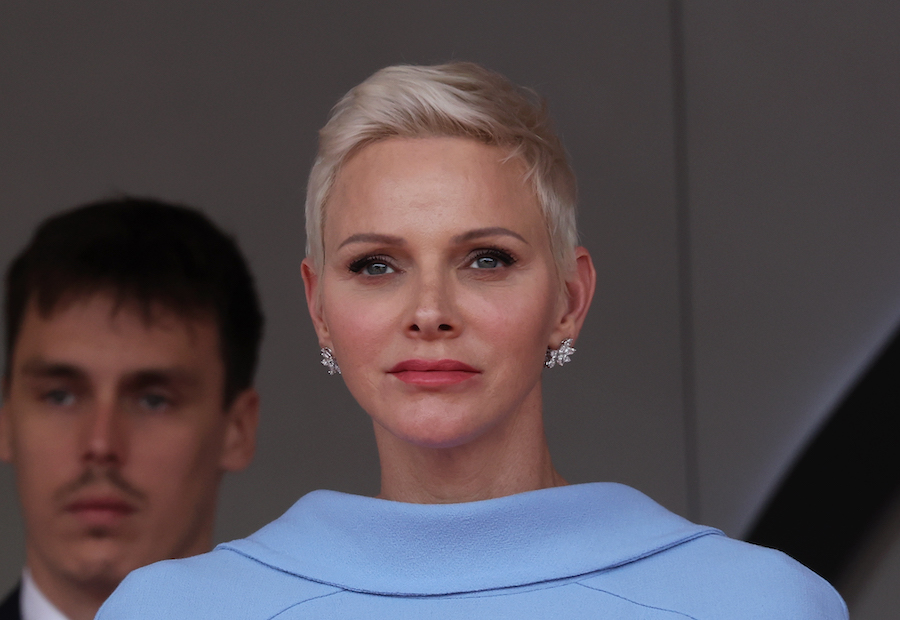
Princess Charlene has tested positive for Covid-19 after “showing a few symptoms”, the Palace has said in a press release, forcing her to miss out on her Foundation’s Riviera Water Bike Challenge on Sunday.
According to the Palace, Princess Charlene’s health “does not present any concern”, however, in compliance with Covid rules, the wife of Prince Albert must isolate for a few days after testing positive.
It meant that the mother of two was unable to attend the Princess Charlene of Monaco Foundation’s biggest sporting charity event of the year, the Riviera Water Bike Challenge, on Sunday. In her place, Prince Albert and twins Prince Jacques and Princess Gabriella were at the Monaco Yacht Club to cheer home the competitors (see our upcoming article).
The last official public engagement for the Princess was on Sunday 29th May during the Monaco Grand Prix.
Photo by Claudia G. Albuquerque
Skip the Use to headline busy Fête de la Musique schedule
Fête de la Musique is returning later this month to celebrate the first official day of summer with an evening of music, dance and serious fun. Here’s what you can expect.
After two years of dreary pandemic, the world can use a bit more music and it will find it at this year’s Fête de la Musique being held throughout Monaco on 21st June.
During the day, starting from 10am in the Condamine, music will fill the air with a concert by Dixeland jazz group Golden Jazz Band on Rue Princesse Caroline. Next up, on Place des Moulins, are pop rockers Princesse de Nuit, followed by Reds at 3pm in the Condamine on Place Gastaud, comprised of players from Monaco’s fire brigade who will be performing a rock and pop playlist.
From 5pm, there are several choices, including ‘The Where’ and ‘Dedicate’ in Fontvieille on Place du Canton and a concert by the Wind Ensemble of the Rainier III Academy, under the direction of Ludovic Tallarico, on Place Gastaud, while the band Highwood will be performing at Apero Pizza on Allee Lazare Sauvigo in the Condamine.
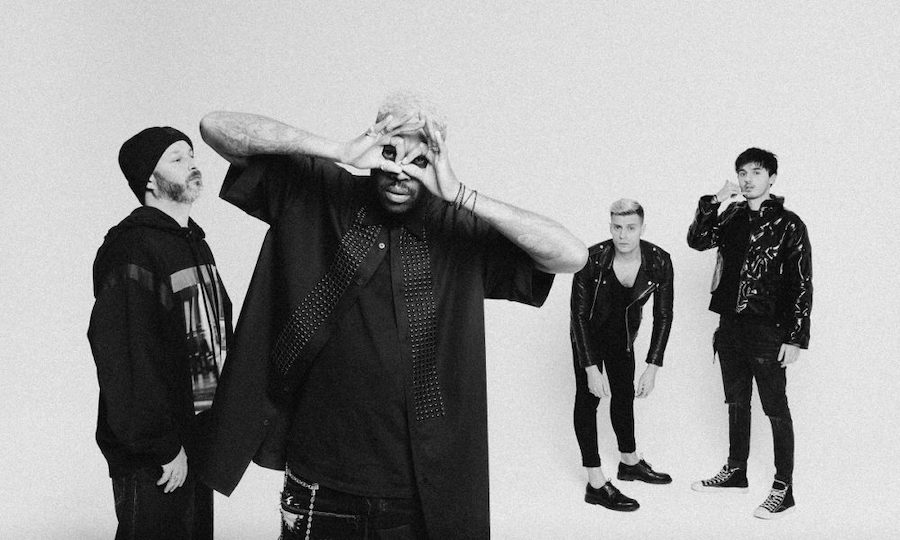
This celebration of summer will feature many artists playing around the Principality throughout the day, culminating in an 8:30pm concert on the Quai Albert 1er with the Lille-based rock group Skip the Use, who will play songs from their new album ‘Human Disorder’. Performed exclusively in English, this new album is described as “intense and paradoxical”.
The opener will be with the DJ Afroman Radio, who will take the public on a journey through a universe of funk, deep house, break beat and soul.
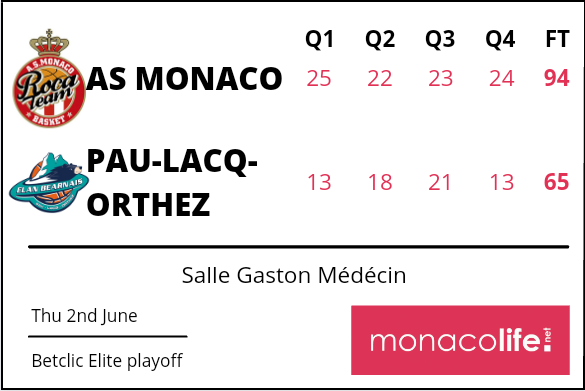
AS Monaco Basketball “learnt their lessons” from their poor start in the quarter-final against Strasbourg, as they dominated from start to finish against Pau-Lacq-Orthez (94-65) on Thursday.
The Roca Team’s Yakuba Outtara told Monaco Life after their overtime victory against Strasbourg that in order to avoid falling into the same trap as they did in their quarter-final tie, they had “to impose their rhythm on the game”.
There can be no doubt that they did that from the offset. Pau didn’t spend one second of the match in the lead, as they failed to match the intensity and precision of their adversary. Although Pau undoubtedly came into the tie as the underdog, Monaco must be wary. The side have already pulled off the shock of the season, beating first-place finishers Boulogne-Levallois 2-0 in their quarter-final tie.
But unlike against Strasbourg, Monaco approached the game with a better attitude and their will and desire was evident during a first-quarter in which the tone was set, as everyone chipped in with their own point contribution.
Often relying on big moments from big players, this was instead a side where the collective triumphed. Outtara, whose contract situation beyond the end of the season is very unclear, backed up his man-of-the-match performance against Strasbourg with another convincing display.
It was thanks to his efforts, and the efforts of his team-mates, that this was a match in which there was never any peril. That will serve them well. Decreasing the levels of mental and physical exhaustion was an important part of the task with the second-leg coming up on Saturday.
Donta Hall and Mike James were pulling off their respective signature moves, the return of the former was particularly welcome as his dunks punctuated the tie with moments that got the fans on their feet.
At a canter, the match finished 94-65, as Monaco won each quarter on their way to a rout, which not only puts them 1-0 up in the series, but will likely deal a psychological blow to their opponents.
Post-match, coach Sasa Obradovic said, “It was a very good match on our part. Everyone put in the performance that they had to and I hope my players will be equally as serious in the next match.”
Outtara added, “We were serious from start to finish. We have learnt lessons from the last match against Strasbourg. We mustn’t ease up; we need to quickly turn the page for this second match in two days’ time. There will be a reaction from them on Saturday that’s for sure, and they’ll play harder.”
Although the tie has got off to a dream start for the Roca Team, maintaining that focus and intensity will be key in a series that is yet young.
Photo source: AS Monaco Basketball
Gareth Wittstock: “There will be plenty of competitive spirit on the day”
This Sunday, athletes and celebrities will race in teams across the port of Monaco on water bikes. Gareth Wittstock, Secretary General of the Princess Charlene of Monaco Foundation, tells us more about this exciting fundraising event, and how the public can get involved.
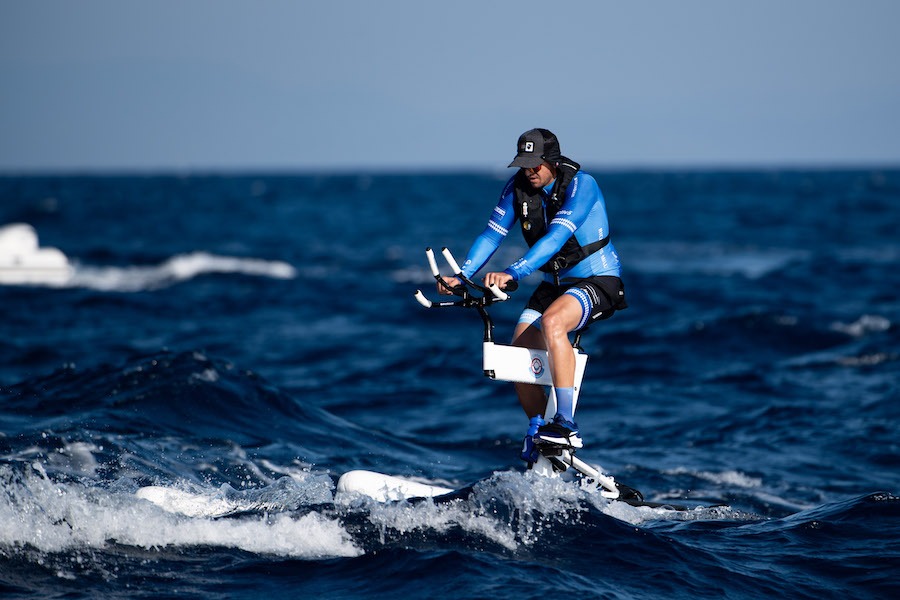
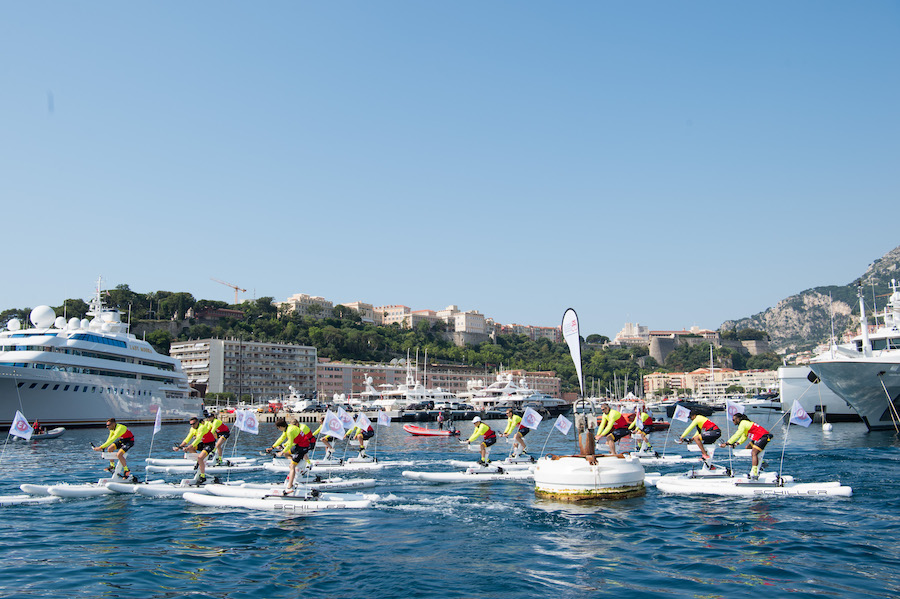
After weeks of training, 10 athletes and two celebrities will form teams of five on Sunday 5th June for the Foundation’s biggest sporting event of the year. The line-up in 2022 is unprecedented, with everyone from former F1 driver Mika Häkkinen, to footballer Cesc Fabregas, MMA fighter Sofiane Boukichou, and model Victoria Silvstedt battling it out over a 25 kilometres relay course in the port, before racing to the finish line at the Yacht Club of Monaco.
And this year the public are invited to come and cheer on their favourite team from the Solarium – Digue Rainier III at the YCM.
Monaco Life: Where did the idea for the Riviera Water Bike Challenge come from?
Gareth Wittstock: This was originally HSH Princess Charlene’s idea: to create a sports event that would raise funds for the Foundation and raise awareness of what the Foundation does internationally. We saw the water bikes as a new way to bring people together for a fun and competitive challenge around the Foundation’s values. To use water sports for this cause felt relevant, as drowning prevention and water safety are the main themes of the educational projects supported by the Foundation.
It has changed format a few times over the years, will this relay in the port of Monaco be the permanent format?
The concept was to gather sports celebrities in Monaco for an original challenge that combines solidarity and competitive spirit. Having a large number of participants is great, as it helps us scale our impact and communication. This was the initial format of the Riviera Water Bike Challenge: in 2017, the participants raced from Nice to Monaco and in 2018 they raced in relay in the Port of Monaco, with more or less the same course as this year. It was only in 2020 that, due to the pandemic, we could not bring together many competitors like we had done the previous years, and we decided to go through with an old idea: crossing the Mediterranean on water bikes, from Calvi to Monaco!
You have a diverse array of participants – mostly athletes, from bodybuilder Ulisses Jr, to 16-year-old BMX rider Kayden Keyser, and then model Victoria Silvstedt and singer Terence James. You must be thrilled with the line-up. Why do you think so many were keen to support the Princess Charlene Foundation?
The celebrities are a big part of the Water Bike Challenge’s conviviality, and we are truly thankful to them for answering favourably to participate this year. We know that it is a very busy season, but these celebrities are all convinced by what the Foundation does and by the projects supported by our fundraising. Also, I do believe that the water bikes offer the promise of a unique sports event in Monaco.
Would you agree that there’s going to be some competitive spirit on the day?
Yes, most definitely. We know that Sunday will be about friendship and sharing throughout the day, but once the athletes are on the water bikes they will forget about that and focus on one thing: winning. I know some of them who do not take kindly to losing!
Teams competing in the 2018 RWBC by Eric Mathon, Prince’s Palace
The forecast is for 26°C, so it will be a scorcher of a day. How do you think that will impact the relay?
The weather can be unpredictable, but we’ll be happy if it’s a sunny day. Of course, the heat makes it harder on the nerves and the relay strategy will need to be adapted accordingly by each team. The organising team, the volunteers as well as our partners will be there to make sure that all the participants always stay hydrated and energised.
You raced in the previous bike challenge from Corsica to Monaco. What are some of the challenges that the riders will be facing this year?
The Crossing: Calvi – Monaco Water Bike Challenge was an amazing journey, and we were joined by a wonderful team. My sister HSH Princess Charlene was really dedicated to this challenge, and we did it through gruelling conditions. The water bike feels different in open seas, and when we left Calvi there was a lot of swell and waves. The swell is what makes riding a water bike very difficult anywhere, as it is not as stable as you would like and it increases the resistance on the propeller. Hopefully, the sea will be calmer on Sunday in Monaco.
How much has the charity event raised to date and where have the funds been directed to?
Both the 2017 and 2018 editions of the Riviera Water Bike Challenge raised funds for the multi-purpose training centre in Loumbila, Burkina Faso. This project was co-funded with the Government of Monaco and the Red Cross, and the Princess Charlene of Monaco Foundation still finances aquatic rescue and swimming lessons in the pool that was built there. It was a massive success, as more than 1.2 million euros were raised in total. In 2020, we raised more than 600.000 euros for different drowning prevention projects through an online donation page, as our supporters were following the Crossing live.
Where will the money raised from this year go and why?
This year, we support a new project: ‘Swim for Safety’ in Sri Lanka, to teach swimming and water safety to disadvantaged children. Drowning is a major health issue in that country, and they will host the next World Conference on Drowning Prevention in 2023. We chose to highlight this project because there is a real need and an impact behind the help that we bring to these communities, and it symbolises the reach of the Foundation worldwide.
In addition to watching the relay, how can people get involved this year?
There are two ways that people can get involved this year, whether present physically or not. They can watch the race and have access to the ranking online through the tracking app that we put in place, as each water bike will be equipped with a GPS device (www.fpcm.mc/live). Additionally, leading up to the race, they can vote for their favourite team while supporting the Foundation and the ‘Swim for Safety’ project, by donating through our page (www.fpcm.mc/donate). The team with the most donations in the end will receive a special award!
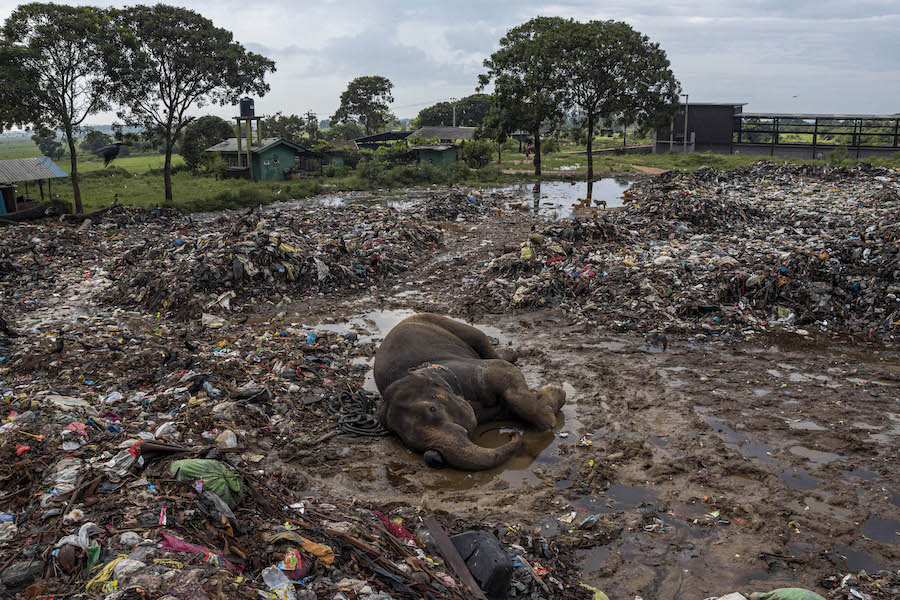
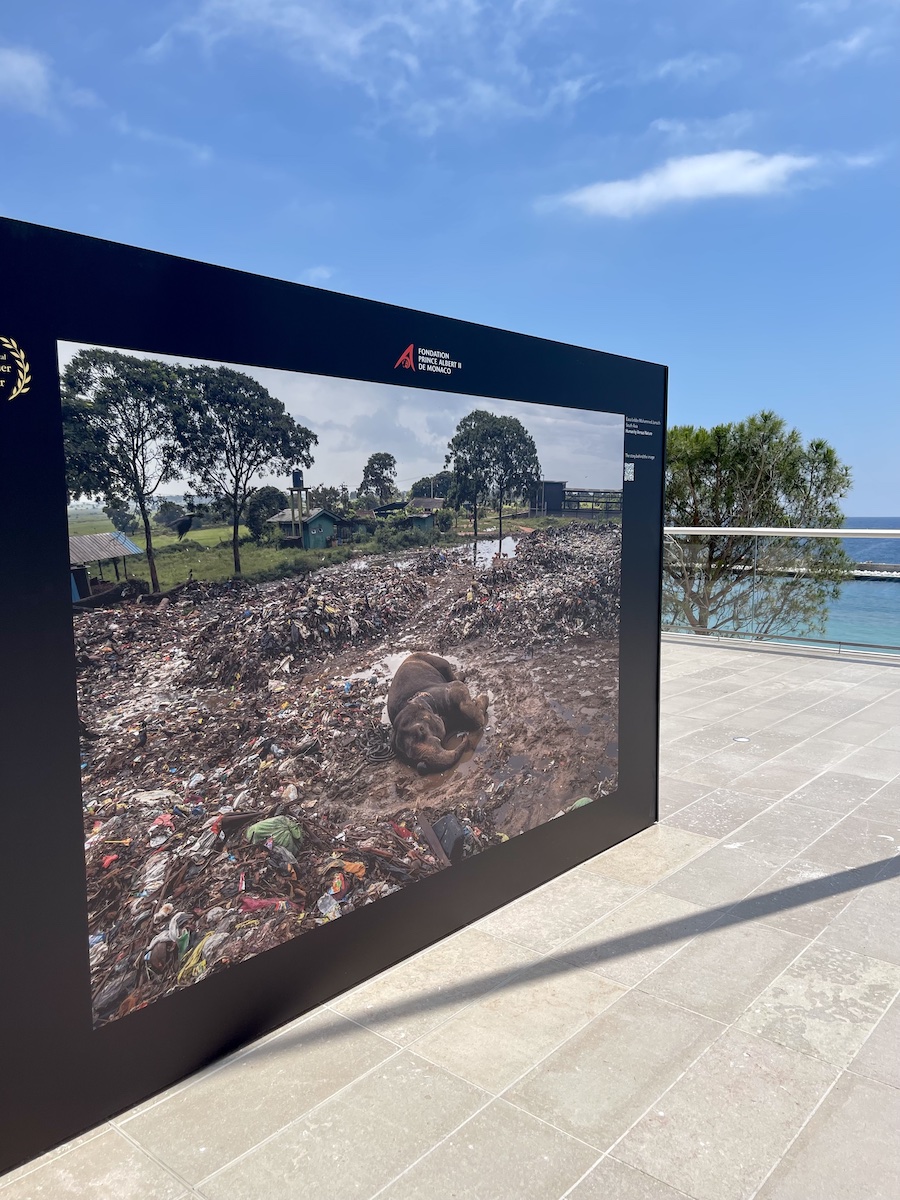
An elephant that lay dying amongst a pile of plastic waste in Sri Lanka is a heart-wrenching image that is hard to ignore on the Larvotto Promenade. It has also just been awarded top prize in the Environmental Photography Awards 2022, organised annually by the Prince Albert II of Monaco Foundation.
It may be only the second edition of the Environmental Photography Awards, but the impact of this awareness raising initiative by the Prince Albert II of Monaco Foundation is incredibly forceful.
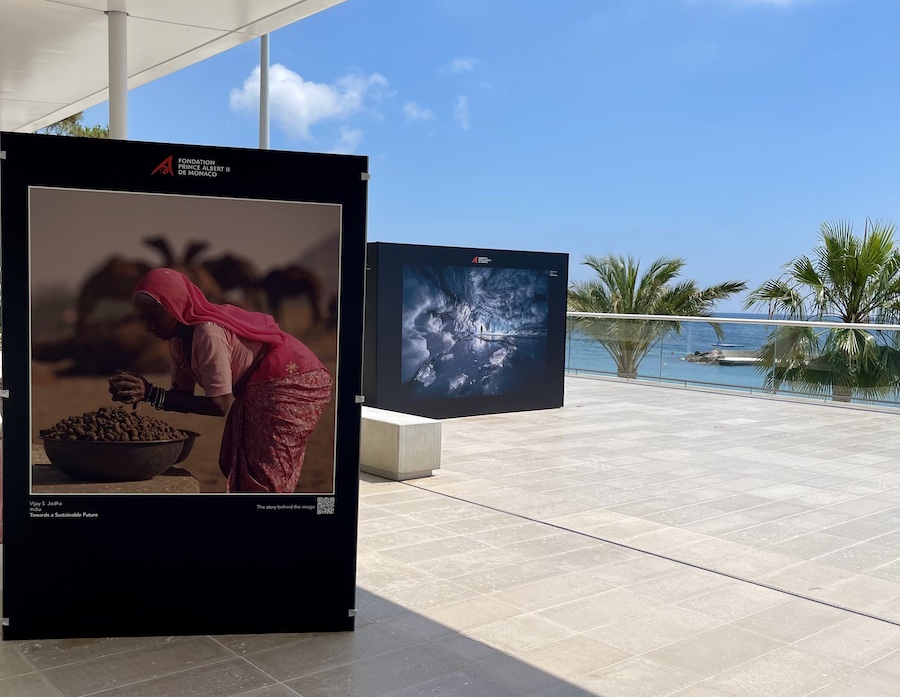
Displayed along the sun-drenched Promenade at Larvotto Beach are large prints of the most beautiful photographs of this year’s competition; the best of 8,000 images submitted by 2,000 photographers from across the globe.
The Foundation’s idea is to relay the connection between humans and nature, both positive and negative, and it was up to a jury of professional photographers to select the overall winner of the Environmental Photography Awards 2022, as well as five categories: Humanity versus Nature, Towards a Sustainable Future, Polar Wonders, Life Under the Surface and Beneath the Canopy.
On Wednesday 1st June it was revealed that Easa Lebbe Muhammed Jamsith had won the Environmental Photographer of the Year Award for his heartbreaking photograph Tears.
Tears by Easa Lebbe Muhammed Jamsith, photo by Monaco Life
“In Sri Lanka, there is a garbage dump near the forest in Oluvil,” explains Easa Lebbe Muhammed Jamsith. “It was a tragedy to learn on the morning of 5th January 2022 that an elephant was about to die in this landfill. I immediately alerted the wildlife authorities and rushed to the scene. As soon as I arrived, I saw the Himalayan creature cowering in pain, so much so that it could not even stand up and had lost its strength. I approached to take the picture and she looked at me with tears in her eyes. Wildlife officers accompanied by a doctor examined the elephant and reported that it was suffering from a sudden blockage of the oesophagus due to the daily ingestion of polyethylene waste (food packaging), a phenomenon that has already taken place six times in this landfill and which testifies to the relationship that men have with nature.”
Easa Lebbe Muhammed Jamsith has made it his mission to raise public awareness about the crisis facing the environment. Tears is part of that mission.
“Photography competitions are essential because they allow us to give a voice to creatures and habitats in danger,” says Daisy Gilardini, President of the 2022 jury. “Through their ability to reach a very large audience, they help raise awareness among as many people as possible. This year’s award-winning photograph vividly illustrates the devastating anthropogenic consequences of our consumer society. The stillness of the image, achieved by framing the dying elephant in the centre of the photo, is both poignant and gruesome. The duty of committed photographers is to stimulate audience’s emotions in order to move them from apathy to action. This year’s winning photo does just that.”
Alongside each photograph displayed on the Larvotto Promenade is a QR code that the public can scan to understand more about the story behind each image.
The open air exhibition at the Larvotto Promenade, photo by Cassandra Tanti, Monaco Life
In the Humanity versus Nature category, Tran Van Hong won for his photograph entitled Disaster. In this scene, the photographer captures the moment when two children are fleeing a forest devastated by fire and waste, a testament to the negative impact of man on nature, exposing the most vulnerable populations to the risks linked to pollution and climate change.
Far less traumatic is Simone Tramonte’s Net Zero Transition (II), which was awarded top prize in the Towards a Sustainable Future category. It shows the largest hydroponic greenhouse in southern Europe, located in Italy, which is based on the principles of a circular economy. The image is a spotlight on the innovations and solutions that are emerging in the face of an uncertain future and which gives us hope for a more conscious and sustainable life.
Indeed, with this latest edition, the Prince Albert II of Monaco Foundation wanted to deliver a message of hope, “that together we can still act in a meaningful way, if we join forces to limit the effects of climate change and promote the resilience of ecosystems.”
In the Life Under the Surface category, Yung Sen Wu was awarded for his photograph Pacific Red Sockeye, his “remarkable execution” being highlighted by the jury. Glowworm by Haikun Liang won top honour in the Beneath the Canopy category. In this exceptional scene, glow worms dance in the middle of a forest in Guandong, China.
Kirstin Jones took top stop in the Polar Wonders category for The Great Trek, a photograph taken during an expedition to Antarctica. The photographer was able to capture three Gentoo penguins – a species considered to be “near threatened” – crossing the mountains to reach their colony.
Two hears, one love by Sultan Ahmed Niloy, photo by Monaco Life
Meanwhile, the general public were invited to vote online for their favourite and chose Mathieué Courdesses for his photograph Black and Wild, featuring a silverback gorilla encountered during an expedition to Rwanda.
“Exhibiting these large format prints is a precious opportunity to bring the environmental values dear to the Sovereign and the Principality to the general public while inviting us to rethink our relationship with Nature,” says the Foundation.
The open-air exhibition will run until 29th June on the Promenade du Larvotto, in Monaco. The exhibition is also available to view online here.
Top photo by Easa-Lebbe-Muhammed-Jamsith
All the headlines and highlights from Monaco, direct to you every morning