Applications are now open for the fourth edition of the Monaco Ocean Protection Challenge in June, giving young entrepreneurial environmentalists a chance to create a business tackling the problems faced by the oceans.
The Monaco Ocean Protection Challenge is a business concept pitching competition organised by the Oceanographic Institute of Monaco, the International University of Monaco, Monaco Impact and the Prince Albert II of Monaco Foundation. It began in 2018 as a way to involve young people in creating sustainable businesses centred on ocean protection and awareness.
This year’s competition takes the theme ‘When Circular Economy Saves the Ocean’ and is open to university undergraduates, post-bachelor students and young entrepreneurs who are five years or less out of school, and who have or will have a company created after January 2020. Competitors must be English speakers who have ideas that will positively impact the seas and are willing to participate in the implementation of their ideas if selected by the jury.
To be considered, the applicant submits a business plan, a timeline of milestones in project development and a one minute video presenting the concept by 7th May.
Jurists are looking for plans that have been well-researched and relevant to today’s markets, as well as projects that can be globally implemented and that have a “measurable impact” on the oceans.
The prize and awards include a yearly induction and networking programme for the student’s category, and a check of €15,000 for the start-up’s category.
In May, jurists will choose three finalist teams from each category. The six finalist teams will be invited to Monaco for the finals on 16th June where they will be asked to present their plans intended to make the world a better place to live.
Previous winners include Elynn Yaoting Liu, who found a way to address inflatable balloon pollution, and Juan Felipe del Campo Guerreo and Julien Piveteau who created a phone case made of recycled ocean waste.
Prince Albert will join an exceptional line up of speakers, including teenage activist Greta Thunberg and Pope Francis, for a digital Earth Day summit on Thursday. Here is how you can stream the event live.
To celebrate and raise awareness for the 51st Earth Day on Thursday 22nd April, earthday.org has gathered a diverse lineup of activists, global leaders, musicians, educators, industry leaders, influencers and artists from around the world for the second annual digital livestream event. Discussions, performances, presentations and films will explore the innovative and powerful solutions to ‘Restore Our Earth’.
‘Earth Day Live: Restore Our Earth’ will be streamed live at 12pm ET (6pm Monaco time) on Thursday via earthday.org, Facebook, Twitter, Twitch, YouTube, and GEM-TV, a streaming platform founded in Monaco.
The virtual event will be hosted by Founder of Earth Uprising and Youth Climate Activist Alexandria Villaseñor, and Milana Vayntrub, Actress, Comedian, Writer and Director.
As a part of Earthday.org’s partnership with TED Countdown, the digital event will include three original TED Countdown Talks by John Marshall, Cory Combs and Rumaitha Al Busaidi. The program will also feature segments from Education International’s Teach for the Planet: Global Education Summit, Hip Hop Caucus’ We Shall Breathe virtual summit, as well as Earth Uprising’s Youth Speaks Summit.
“For over half a century, hundreds of millions of people from around the globe have taken political and volunteer action on Earth Day, yet multiple accelerating environmental and health crises continue to envelop our planet, impacting everyone but particularly the poor and vulnerable who live among us,” said Kathleen Rogers, President of Earthday.org. “On behalf of the one billion people who will take part in Earth Day this year, even in the midst of a second year of the pandemic, we demand that the talking stop and that governments and corporations commit to net-zero emissions by 2040 with an interim goal of cutting emissions in half by 2030. Anything less will deprive our children of their right to inherit a habitable planet.”
Among this year’s powerful lineup are Prince Albert II of Monaco, United States Special Presidential Envoy for Climate John Kerry, Actress and Producer Kristen Bell, Award-Winning Conservationist, Photographer and Author Chris Packham, Executive Secretary of the United Nations Convention to Combat Desertification Ibrahim Thiaw, White House National Climate Advisor Gina McCarthy, Youth Climate Activist Greta Thunberg, and Pope Francis.
For more information on Earth Day Live and Earth Day 2021, visit: https://www.earthday.org/earth-day-2021/
TV Festival screening to launch debate on lion farming
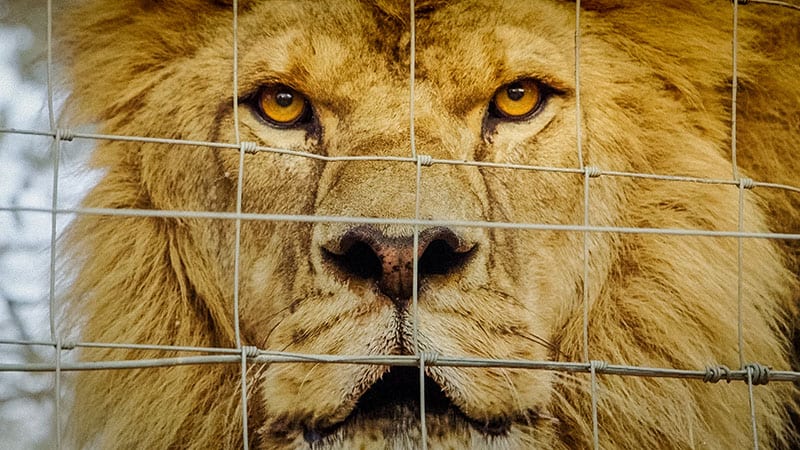
This year’s Monte-Carlo Television Festival will host the premiere screening of Lion’s, Bones and Bullets, a hard-hitting animal rights documentary that reveals the underbelly of what the world thinks is ‘lion trophy hunting’ but, in reality, is the mass production, commercialisation and domestication of Africa’s wildlife for “traditional Chinese medicine”.
The Monte-Carlo Television Festival is known for being a showcase for talented entertainment-industry professionals who have, over the past 60 years, created some of history’s most successful TV programmes.
But it also puts the spotlight on more serious, environmental topics. This year it is animal rights, namely, the exploitation of lions on the African subcontinent that are being cruelly raised for slaughter to make traditional Chinese “medicines” and potions.
A documentary entitled Lions, Bones and Bullets, produced by Jagged Peak Films, will be premiered in June at the Monte Carlo Television Festival through a collaboration between the Prince Albert II of Monaco Foundation and the Festival organisers. It will be screened at the Grimaldi Forum.
Told through an adventure story, producer and investigator Richard Pierce travels from lion farms in South Africa to dealers in Southeast Asia “to uncover the elaborate wildlife con”. After presenting the problem, the film explores realistic alternatives.
“Lion farming and the increasing sale of lion bones to Asia involve exploitation, cruelty, injustice, misconception, fraud and corruption and is a threat to wild lion populations,” says Richard Pierce. “It is mind-blowing in terms of the huge negativity involved and it has no redeeming aspects. Lions are a flagship species. What happens to lion populations will be a major factor in determining the future of wild animals in Africa.”
The investigative documentary claims to uncover an elaborate international wildlife industry worth nearly US$100 million a year. Producers say it reveals, for the first time, the link between lion farming on an industrial scale in South Africa, and the growing demand and utilisation of lion bones in Southeast Asia.
“Lions, Bones and Bullets is a story that needed to be told,” says Executive Producer Anton Leach. “I realised not enough people know that lion farming is not just an emerging industry, it is a booming industry.
“We are honoured to have the world festival premier at the 60th Monte-Carlo Television Festival and believe this is the best forum to start a global debate about lion farming and the future of wildlife conservation.” Lions, Bones and Bullets has benefited from support by the Prince Albert II of Monaco Foundation.
“By denouncing the lion bones trade hidden behind hunting, it is a clear and vital wake-up call that is sent to the world, inviting us to open our eyes and rethink our relationship with nature in the respect of wildlife,” says Olivier Wenden, Vice-President and CEO of the Prince Albert II Foundation. Lions, Bones and Bullets will premiere on Monday 21st June at 7pm at the Grimaldi Forum during the Television Festival.
“Our Festival has always put environmental issues at the forefront, notably through the Prince Rainier III Special Prize, awarded to the best documentary dealing with these topics,” says Laurent Puons, CEO of the Monte-Carlo Television Festival. “We are convinced that this important screening will expose the secrets of the multi-million-dollar industry of lion farming to the world and open up a wide-scale ethical debate on the issue.”
Photo from the documentary Lions, Bones and Bullets
AS Monaco Basketball brought home the bacon on Monday night crushing Châlons-Reims 94 to 76 in Jeep Elite action, and also were given word they are qualified for the first time in the team’s history in the Euroleague, the giant of European basketball leagues.
It was a big night for the Roca team. Hot off the heels of their qualification for the EuroCup 7 finals, they took on Châlons-Reims in a Jeep Elite match at Gaston Médecin where they dominated from start to finish.
Despite Rob Gray and Damien Inglis being out due to injury, the team played like the pros they are and took full advantage of their talents. Notably, Branden Frasier was on fire during the first half, pulling in 17 points on his own and going six for six on shots, including three for three in the three-point range.
The team from Champagne didn’t know what hit them.
The first half was a wash out for Châlons-Reims. They found themselves 19 points down at the half with the score sitting at 55-36.
After the break, things didn’t improve much for them, as Monaco was everywhere. At one point in the third, the score was an incredible 72 to 45 for the Roca boys. The game tightened up a bit in the last quarter, but Monaco was never in much danger of falling behind. In the end, they held on and finished with a 94-76 victory.
“After all the excitement of qualifying for the final in Gran Canaria, my team was very professional and kept the pressure on,” said Coach Zvezdan Mitrovic. “I congratulate my players. Rob (Gray) and Damien (Inglis) were a bit injured, but they could play the next game.”
Meanwhile, far to the north in Saint-Peterburg, the team waited news on a decisive game. The Russian Zenit team beat Greek powerhouses Panathinaikos 112 to 83, thus securing the eighth place spot and catapulting Monaco into the Euroleague for the first time ever. The Euroleague is a top-tier competition that has run since 2000, replacing the previous FIBA EuroLeague.
When asked about the securing a place in the Euroleague, Coach Zvezdan Mitrovic proudly commended his team. “It’s a very big moment for the club, the result of a lot of work. We don’t have the biggest budget, nor the biggest squad, but my players showed huge heart to reach this Eurocup final. The club was in Pro B when I arrived and were climbing from N1 (3rd Division). Today, they find themselves in the Euroleague, there is an incredible side to all that.”
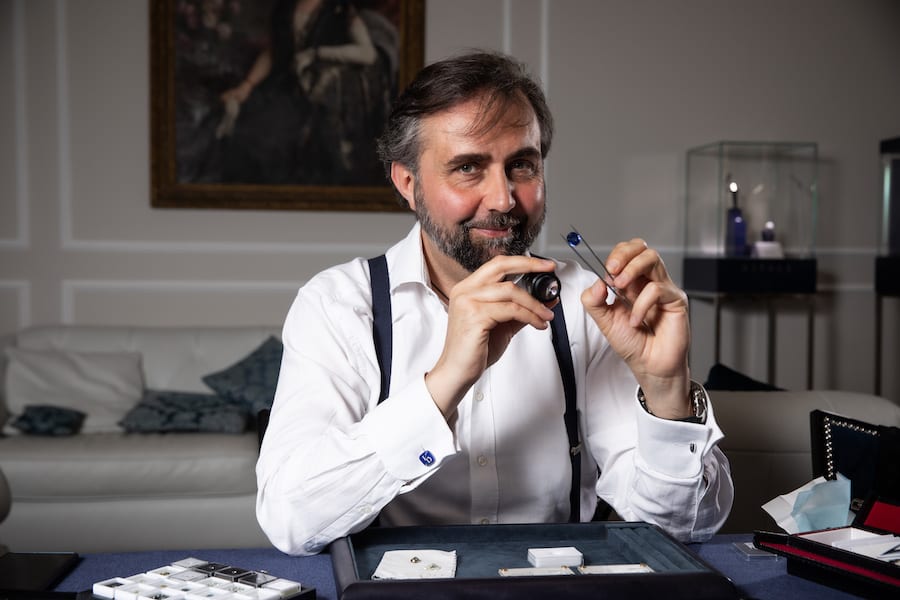
Monaco Life speaks to diamond expert Alberto Vitale, founder of Monaco’s Vitale 1913, about Covid’s impact on the industry, how it historically sent down diamond prices, and the rise of transparency thanks to blockchain.
Like many diamond traders throughout the world, Alberto Vitale follows the Rapaport Diamond Report. Created in the late 1970s by controversial figure Martin Rapaport, the list has become the de facto pricing baseline for wholesale polished diamonds.
Despite backlash from some heavy hitters within the industry, Rapaport believes that diamonds are a commodity as they are bought and sold for cash. His critics say diamonds are unique and valued by subtle idiosyncratic characteristics like colour, clarity and cut, and that Rapaport is driving down diamond prices with his price guide. Monaco Life: When did you see the effect that Covid was having on the pricing of diamonds?
Alberto Vitale: For the first time in his life, Martin Rapaport sent an email last year to around 7,000 significant diamond traders across the world asking if we wanted to do something different. He explained that a lot of rough diamonds had arrived in the market, which is normal because of Christmas, Chinese New Year and Diwali celebrations, without potential clients due to Covid.
After reducing prices in his 20th March price list, he asked if we would agree to the short-term suspension of the price list until 1st May.
He downsized the diamond price list to reflect their true value, by between 5% and 8%, which has never happened before.
In reality, the price in the market actually went down between 10% and 15%, and we were able to buy diamonds at that reduced price for the first time ever. By the end of the year, diamond prices returned to the same pre-crisis level.
But a lot of things changed that year. Many of us agreed with Martin Rapaport that diamond trading needed to be more fair and accurate, more transparent and socially responsible. How exactly did the crisis force the diamond trading industry to be more transparent and why is this important?
We saw that companies who were not providing customers with certificates and reliable information about the legitimate source of their diamonds were beginning to suffer. Companies that were more open, like my small company who are used to giving information about diamonds, had positive feedback because people were more confident about investing in our diamonds as a store of value.
Eventually, most companies began to understand that they have to be more transparent and provide information and certificates to their clients, to the point where practically all of the diamonds that arrive in the market now have a certificate.
There is also now the possibility to transcribe the certificate number inside the diamond. This creates a clear and reliable relationship between the stone and the certificate, and between the certificate and the market value.
It makes the resale process much easier for us. If we had diamonds here, I could make you an offer right now. This easy way to work made it possible for a lot of diamonds to be sold last year, even during the crisis.
I often use this as an example: When my father was selling diamonds, he would say: “You can trust me, I am a third-generation diamond trader. I am honest, I have a large, respected company, etc.”
Today, I prefer to say to my clients: “Don’t trust me, trust the information and the certificates that I am giving you.” Of course, I too have a reputation, but I don’t want to rely on that; I want my clients to be reassured by the reliable information that I can provide about their diamonds. Blockchain is able to safeguard this transparency by storing information in such a way that it can’t be altered without those changes being recorded as well. Where do you see blockchain in the future of diamond trading?
We are currently in the process of creating a system where information about each diamond is stored on the blockchain. It is not only small company’s like myself doing this; big companies are also working in this direction, such as Tiffany & Co.
By 2021, I believe people will be able to buy diamonds with a code inside them, and all the information about that diamond – where it came from, who cut it, the certificate number, who set the stone, etc. – will be available on the blockchain. What will this mean for the diamond industry?
The small companies who want to remain “closed” and not transparent will not survive. There is no space for them in the market anymore. Now, the attitude is to open the door and be truthful and transparent, because everyone benefits. How are diamond traders such as yourself looking to become more socially responsible?
Firstly, there is the need for transparency about the origin of a diamond. Rapaport says that we should ask ourselves, ‘Is our diamond dream someone else’s nightmare?’. ‘Do we care if people are killed or hurt so we can sell jewellery?’. ‘Are we responsible for what we buy and sell?’. He points to the ‘shameful’ trade in Zimbabwean diamonds and blood diamonds from the Congo, and says that social responsibility is not just a consumer matter, it is a ‘defining aspect of our humanity and who we are as a trade’.
There is also the trend towards a circular economy. New age consumers across the world are creating demand for unique one-of-a-kind jewellery that is environmentally positive and socially responsible. According to Rapaport, branded estate jewellery is particularly strong. ‘Recycled jewellery’ is now ‘Upcycled jewellery’. Did Covid illustrate that diamonds are a good investment as a store of value, particularly during times of crisis?
Yes, because between March and June the price of diamonds was 10% to 15% less than today. I brought, and I suggested to my clients and friends to buy, and it was a good investment.
Today, the prices for some diamond categories are increasing significantly, particularly for blue, pink, and some yellow diamonds because they are quite rare. The fact that there were a lot of diamond sales at auction last year shows that it is a good investment. More people are interested in diamonds than before, so the crisis has helped in that way.
It has definitely shown that diamonds as a store of value are an opportunity in a volatile, uncertain world.
But like the rest of the world, the crisis has challenged the industry to implement solutions in order to survive. And I think the future of smart companies in the diamond industry looks much brighter as a result.
The long-awaited shuttle boat service between Nice and Cap d’Ail will begin this summer, transporting cross-border workers wishing to avoid heavy traffic jams and crowded trains during their daily commute.
The National Council on Tuesday welcomed a move by the Nice Côte d’Azur Metropolis, in conjunction with Monaco, to offer the shuttle boat service between Nice Port and Cap d’Ail, starting in August.
With thousands of French inhabitants travelling to Monaco every day to work, the new transport service will provide vital relief to a saturated train network and heavily congested roads. It will also help reduce CO2 emissions in the region.
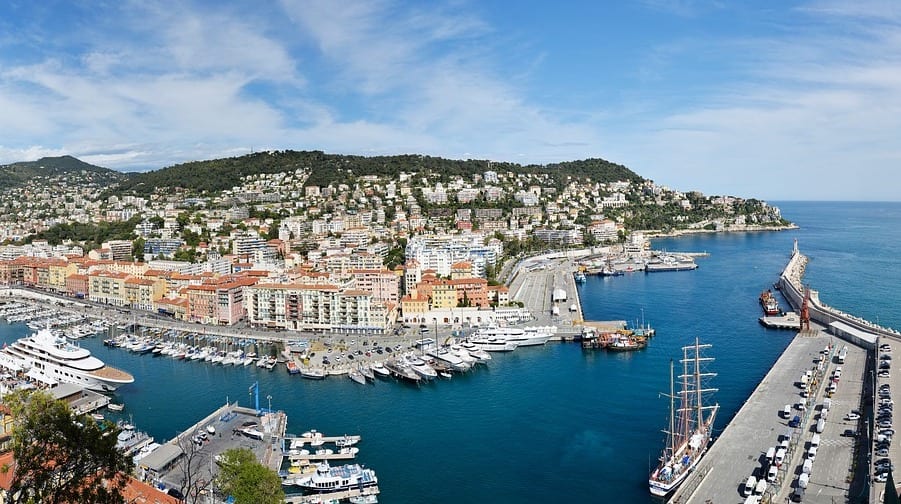
The shuttle will run every half hour during peak hours, making 34 rotations each day between the Port of Nice and Cap d’Ail, about 15 kilometres apart.
The boats will be powered by hybrid engines, making them both practical and environmentally friendly.
Once in Cap d’Ail, passengers will be able to make the short trip in to the Principality using the CAM bus service.
While welcoming the new service, the National Council repeated its call for the government to boost sustainable public transport services in Monaco, saying: “The National Council wants the government to diversify its offer of alternative transport, making it sufficiently attractive for motorists. This is why elected officials reiterate their request to increase the frequency and to introduce free busses in the Principality in order to eventually make it the mode of preferred travel for residents.”
The shuttle boat service between Nice and Cap d’Ail will be trialled for two years.
Photo of Nice Port via Pixabay
All the headlines and highlights from Monaco, direct to you every morning