

By 2030, millennials will be up to five times richer than they are today, representing the biggest transfer of wealth in history. However, according to new research unveiled in Monaco last week, what that generation chooses to do with it may look very different from what the sustainability world is hoping for.
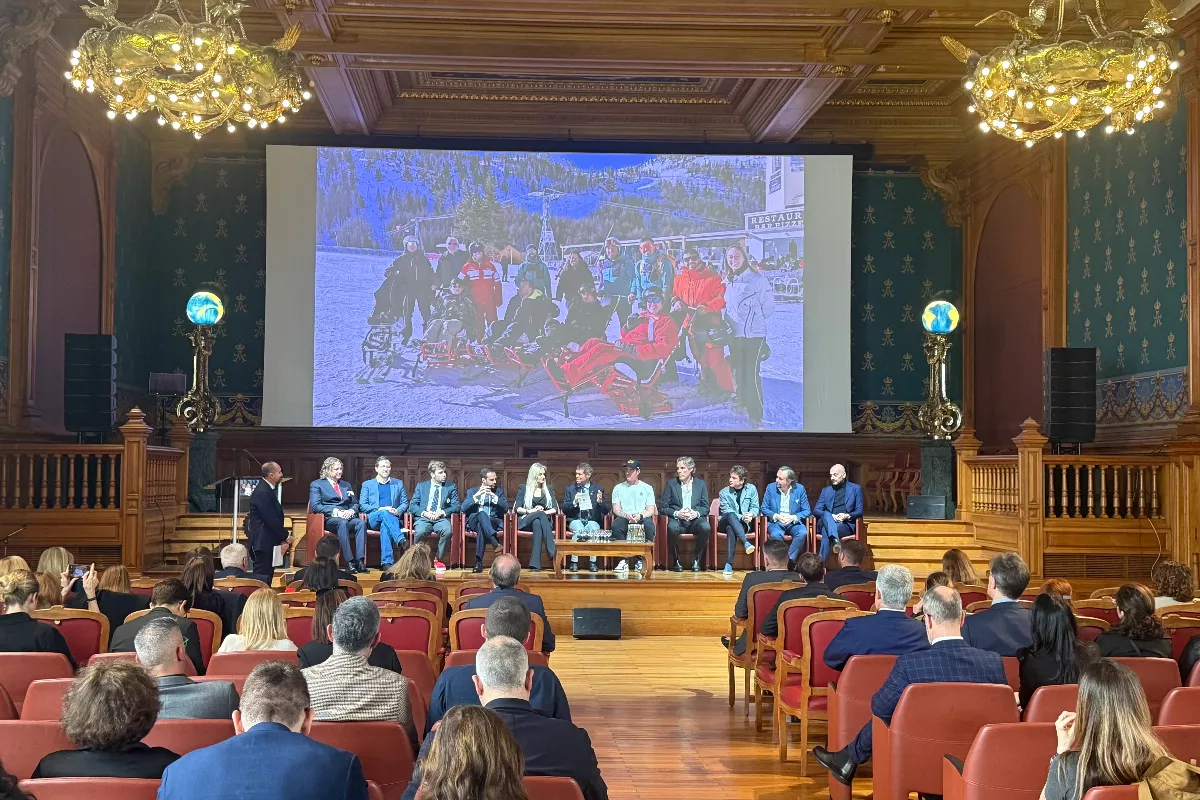
That was the central concern of the conference organised by the Offroad Club Monaco on 11th March at the Oceanographic Museum. Academics, athletes, entrepreneurs and officials united by the club’s concept ‘The Wake of Monaco’, tracing new routes powered by sport and human connection.
Among those present at the conference were Mayor Georges Marsan, National Council President Thomas Brezzo, and Romain Ciarlet, Vice-President of the Prince Albert II of Monaco Foundation.
What the research says
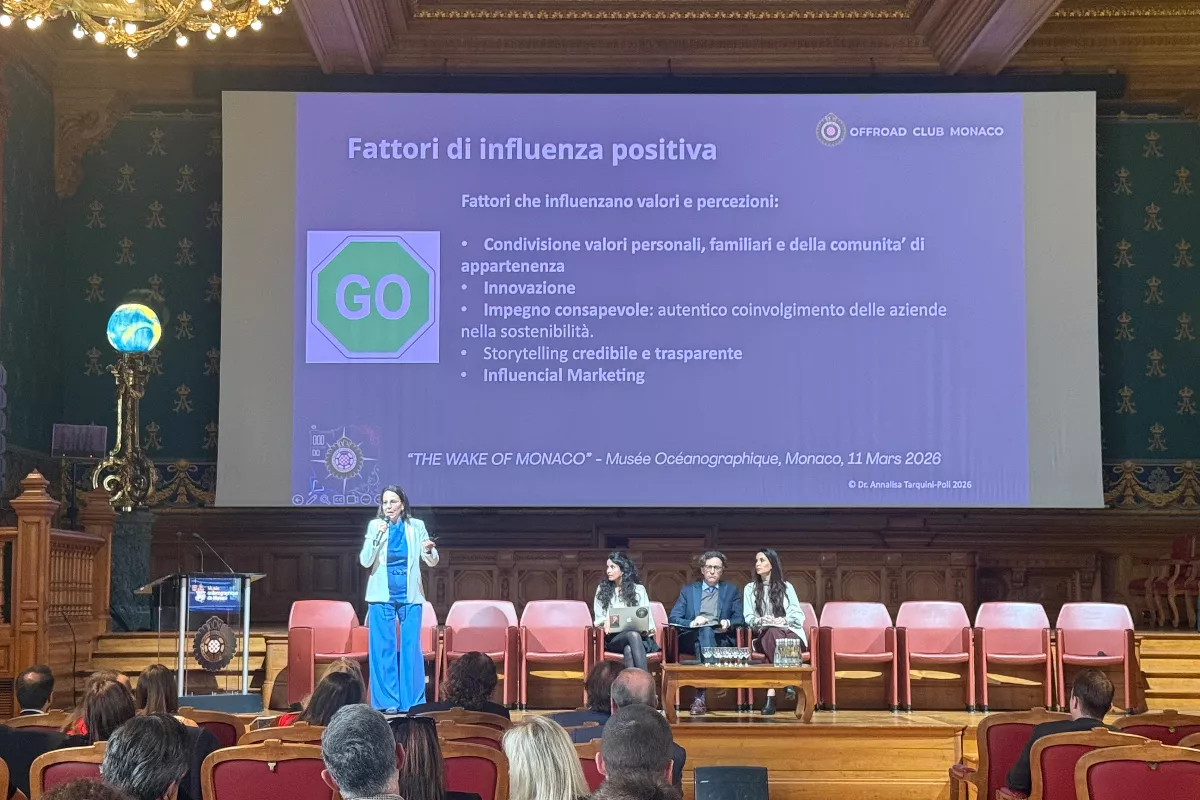
Professor Annalisa Tarquini of the International University of Monaco has spent years studying ultra-high-net-worth individuals. Her latest work now focuses on the next generation: young people aged 20 to 30, born into significant wealth.
Her findings are shocking. Even though these young consumers are better informed about sustainability than their parents, this awareness doesn’t automatically mean action. When choosing between a heritage luxury brand and a sustainable alternative at the same time, they choose heritage.
On the contrary, it’s social impact, effects on communities and people less fortunate, that moves them the most, not environmental causes.
“We excepted sustainability to be their priority,” Tarquini told the audience. “What we found was that they talk much more about the effect of their choices on people than about protecting nature.”
Additionally, they are sceptical about greenwashing, allergic to technical language, and hungry for authenticity. So, her conclusion is that, if we want this generation to engage with sustainability, we need to meet they where they are. “We need to communicate sustainability in a way that speaks to their values,” Tarquini said. “Not in a technical way, but rather an attractive one.”
Monaco already using luxury as the message
Monaco, it turns out, has already been doing just that. The principality is already one of the world’s greatest symbols of wealth and one of the most committed advocates for ocean conversation.
Now, rather than this being a contradicting paradox, Monaco leans into it, using the language of adventure, performance and spectacle to carry the environmental message.
For example, the Princess Charlène Foundation, led by Gareth Wittstock, organised a 24-hour water bike crossing from Corsica to Monaco — an extreme physical challenge to promote water safety. FIA World Endurance Championship driver Francesco Castellacci was among the athletes who took part. Not a campaign, not a report but a kind of challenge that speaks to the young generation.
Maxime Nocher, 12 times kitefoil world champion, had his career cut short by an accident. Rather than stepping away though, he channelled his energy into Team Monaco, developing camera technology to detect debris and abandoned fishing nets at sea, and competing in hydrogen-powered buggy racing to push clean energy into motorsport. His approach combines spectacle, sport, and performance with an environmental message.
Alberto Domenico Vitale, Chairman and CEO of Vitale 1913, turned a documentary about ocean plastic into a jewellery collection. Ethically sourced coral, developed in partnership with Monaco’s Scientific Centre, worn by people for whom jewellery is a language. In this way, he turned a lecture into a luxury object.
Offroad Club Monaco Massimiliano Mordenti went even further by setting a world record for long distance travel on bioethanol-powered jet ski, combining sport and adventure with sustainability.
All of these are not conventional green campaigns, but they communicate sustainability through the language that the next generation understands. As Tarquini’s research suggests, this may in fact be the only language that works.
“Find the values,” she said. “Communicate authentically. And do it in a way that is attractive.”
Stay updated with Monaco Life: sign up for our free newsletter, catch our podcast on Spotify, and follow us across Facebook, Instagram, LinkedIn, and Tik Tok.
Main photo credit: Monaco Life