

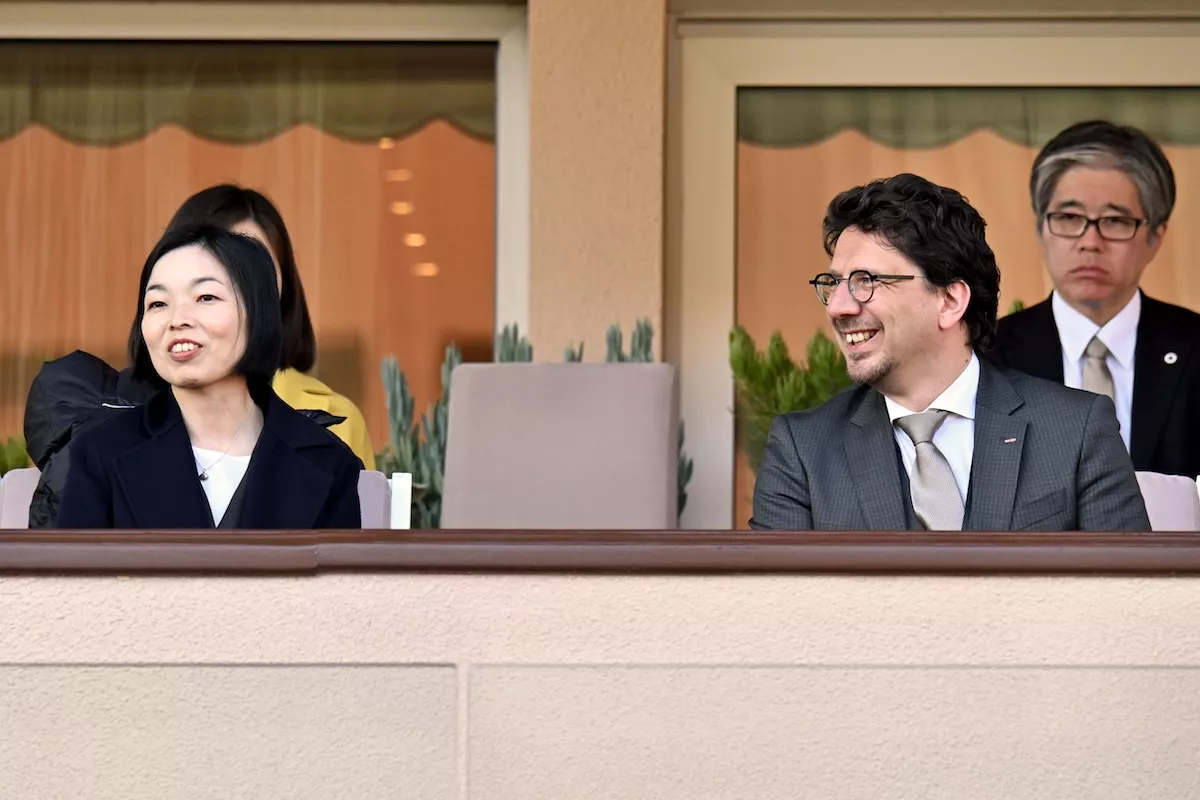
When Princess Akiko of Mikasa kissed Cédric Biscay goodbye on the cheeks as he escorted her to her car after the Rose Ball, it was a moment that stopped him in his tracks. In Japanese culture, such physical gestures of farewell are rare — almost unheard of in formal settings. For Biscay, a Monaco-based producer, writer and cultural entrepreneur, it was the culmination of years of quiet, persistent work to deepen the relationship between the Principality and Japan.
“This gesture, very common in Europe to say goodbye but extremely rare in Japanese culture, touched me deeply and constitutes, in my view, a particularly strong token of appreciation for the work accomplished,” he says. “It was a moment that was well worth a year of intense effort to bring this project to fruition, and which demonstrates the full appeal of Monaco’s soft power, which I am constantly striving to develop in various fields.”
That soft power, in Biscay’s hands, takes several forms — manga being perhaps the most prominent.
A relationship built over years
Cedric Biscay first met Princess Akiko in November 2019 in Kyoto, during an official audience at his Magic Kyoto event. William Simpson, storyboard artist for Game of Thrones, drew a live portrait of the Princess at the gala dinner that followed, to her evident delight. The dinner was attended by the Mayor and Governor of Kyoto.
Their second meeting came in September 2023, at an official reception at the Villa Masséna in Nice. That same evening, Prince Albert II had invited Biscay to the England v Japan rugby match — an occasion that gave him time alongside the Princess to discover a shared passion for the sport. She is Honorary President of the Japan Rugby Football Union.
The thread connecting rugby, Japan and Monaco would take on new significance the following year. In 2025, Prince Albert II appointed Biscay as a special adviser for the Osaka World Expo. Discussions with Princess Charlene and her brother Gareth Wittstock led to the idea of bringing a Japanese under-12 rugby team to Monaco for the Sainte-Dévote Tournament. Charlene also asked Biscay to explore the possibility of meeting a Japanese team during Monaco Day at the Expo.
His third encounter with Princess Akiko came in April 2025 during one of his Japan visits in his advisory capacity. It was there that he first raised the idea of both a Japanese team’s participation in the Sainte-Dévote Tournament and a potential visit to Monaco. “Princess Akiko was immediately enthusiastic and put me in touch with the president of the Japanese Rugby Federation,” he says.
Princess Charlene was ultimately unable to attend Monaco Day at the Expo due to other commitments, but Prince Albert stepped in — meeting the young Japanese players on 28th June 2025, Monaco’s designated National Day at the expo.
Rugby, the Rose Ball and a historic visit
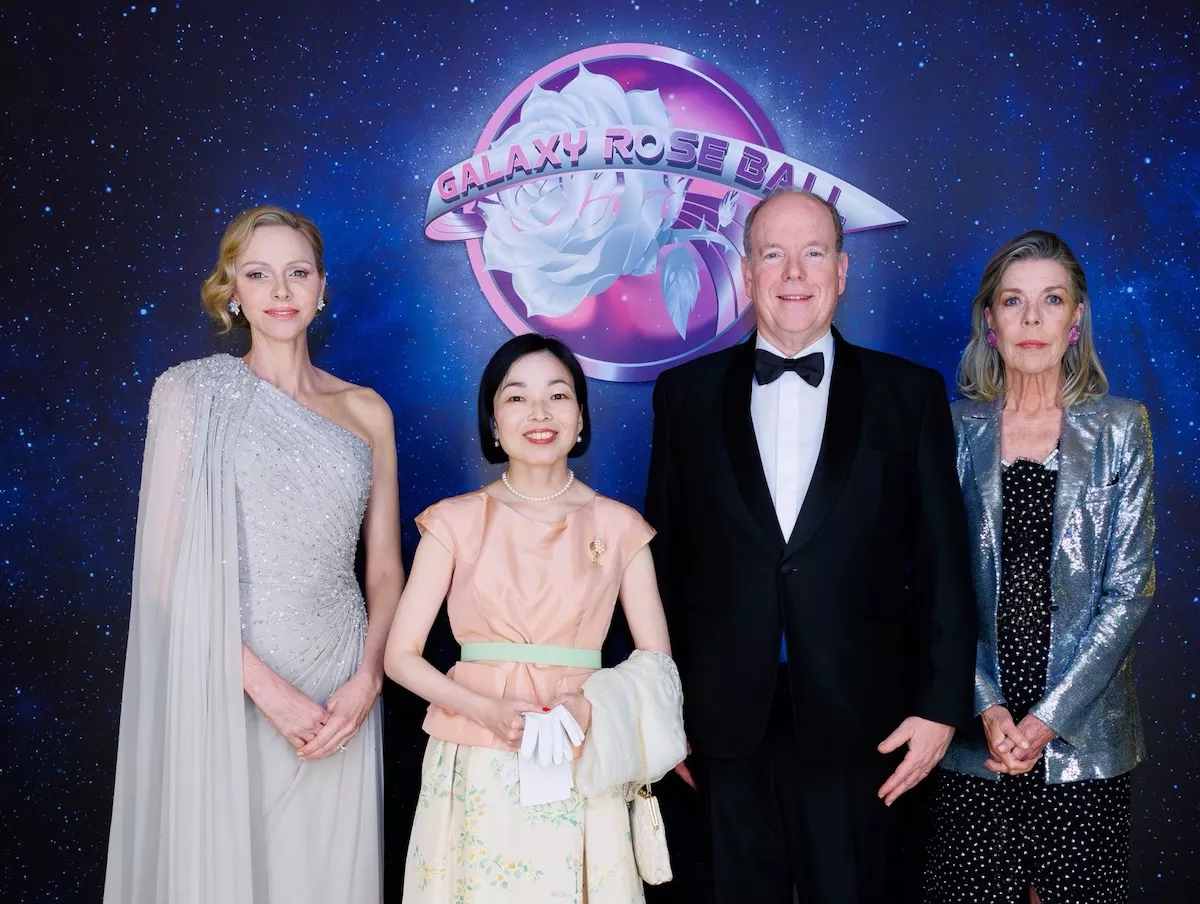
What followed confirmed the depth of the relationship Biscay had helped build. Princess Akiko confirmed her attendance at the 2026 Sainte-Dévote Tournament, and the Japanese Rugby Federation decided, for the first time in its history, to send a team — the Osaka Rugby School — to the competition. Her visit to Monaco coincided with the Rose Ball, and Prince Albert officially invited her to attend.
The Monegasque authorities used the visit to invite the Princess to the celebrations marking 20 years of diplomatic relations between Monaco and Japan. Biscay also introduced her to Romain Ciarlet, Vice-President and CEO of the Prince Albert II Foundation, with a view to future collaborations between Monaco and Japan.
“These few days were extraordinary for me,” he says, singling out two moments in particular. The first was being present “in the front row of the Prince’s box at the Stade Louis-II, alongside the Imperial Princess — a gesture of kindness from Her Serene Highness Princess Charlene that I had not expected at all.” The second was the farewell outside the Rose Ball. “As I was escorting Her Imperial Highness Princess Akiko of Mikasa to her car, accompanied by her staff, the Chamberlain and the Ambassador, she kissed me on the cheeks.”
The manga at the heart of it all
To understand Biscay’s role in Monaco’s cultural diplomacy, it helps to understand Blitz — the manga series he created in 2020 with Japanese illustrator Daitarō Nishihara, who previously worked on Pokémon, and chess legend Garry Kasparov as both adviser and recurring character.
Now in its 11th volume, the series has sold more than 200,000 copies in France alone and is published in French, English, Japanese and Italian. Volume 11 is set almost entirely in Monaco — the Casino, the Hôtel de Paris, Alain Ducasse and Formula 1 driver Valtteri Bottas all appearing as characters.
“I’ve always believed Monaco is undervalued globally,” Biscay told Monaco Life in an earlier interview. “It’s famous for the Grand Prix and yachts — but there’s so much more here. I wanted to show that Monaco can also be a place of culture, creativity and inspiration. A lot of people think Monaco is inaccessible or too expensive. But now I get messages from parents saying their kids are asking to visit Monaco because of Blitz. If the manga can help bring new people here, especially young people, I’m very proud of that.”
The series has also moved beyond entertainment. A special edition produced in collaboration with Monaco’s Women’s Rights Committee addressed school bullying. “This kind of storytelling reaches kids in a way that flyers or conferences never could,” he says.
Biscay is also in the final stages of producing the long-awaited Astro Boy reboot with Mediawan and TF1, a project more than a decade in the making.
That soft power, as Biscay has come to define it, is less about spectacle and more about connection — the careful weaving together of people, ideas and cultures in ways that feel both natural and lasting. From manga panels to moments of shared sport, from formal meetings to spontaneous gestures, his work reveals a quieter, more human dimension of Monaco’s international presence. The farewell outside the Rose Ball did not just mark the end of a visit, but captured something more enduring: a relationship built on mutual respect, and a vision of cultural exchange that continues to unfold well beyond a single evening.
See also:
Interview: Monaco manga creator Cédric Biscay talks chess, storytelling and soft power
Stay updated with Monaco Life: sign up for our free newsletter, catch our podcast on Spotify, and follow us across Facebook, Instagram, LinkedIn, and Tik Tok.
Main photo credit: Bruno Bebert