

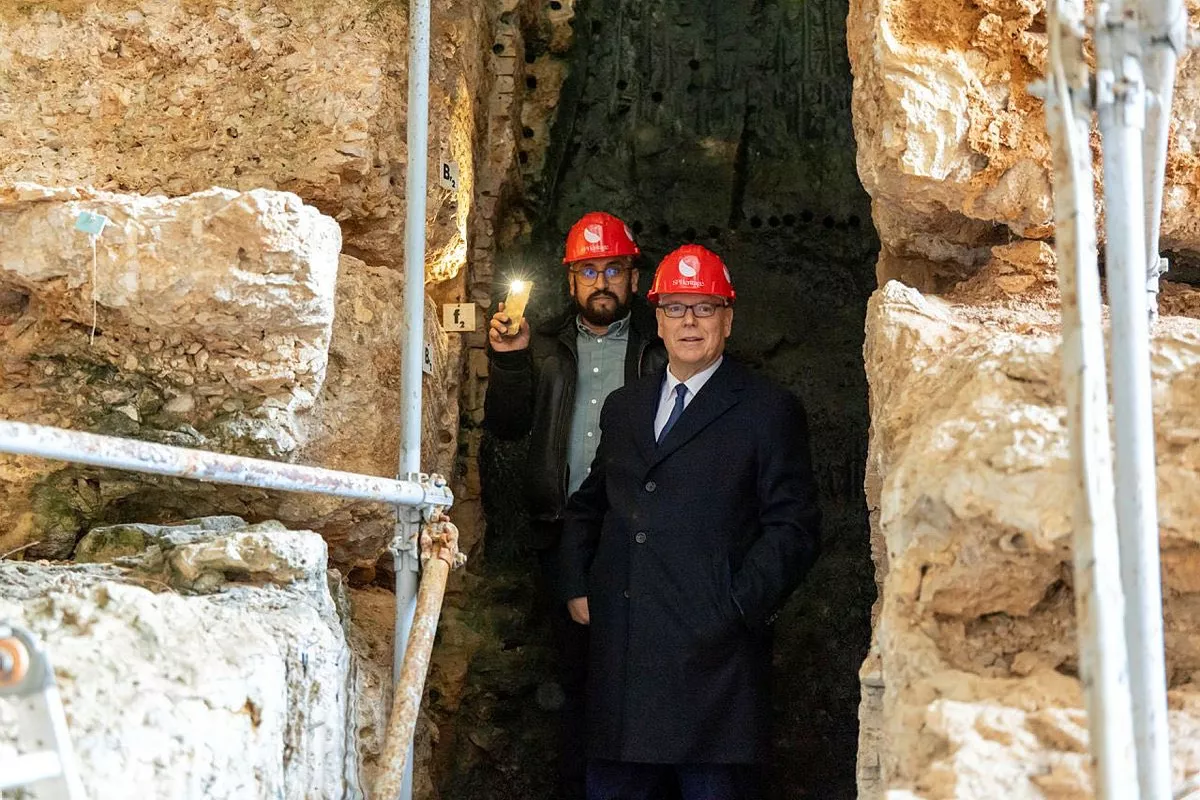
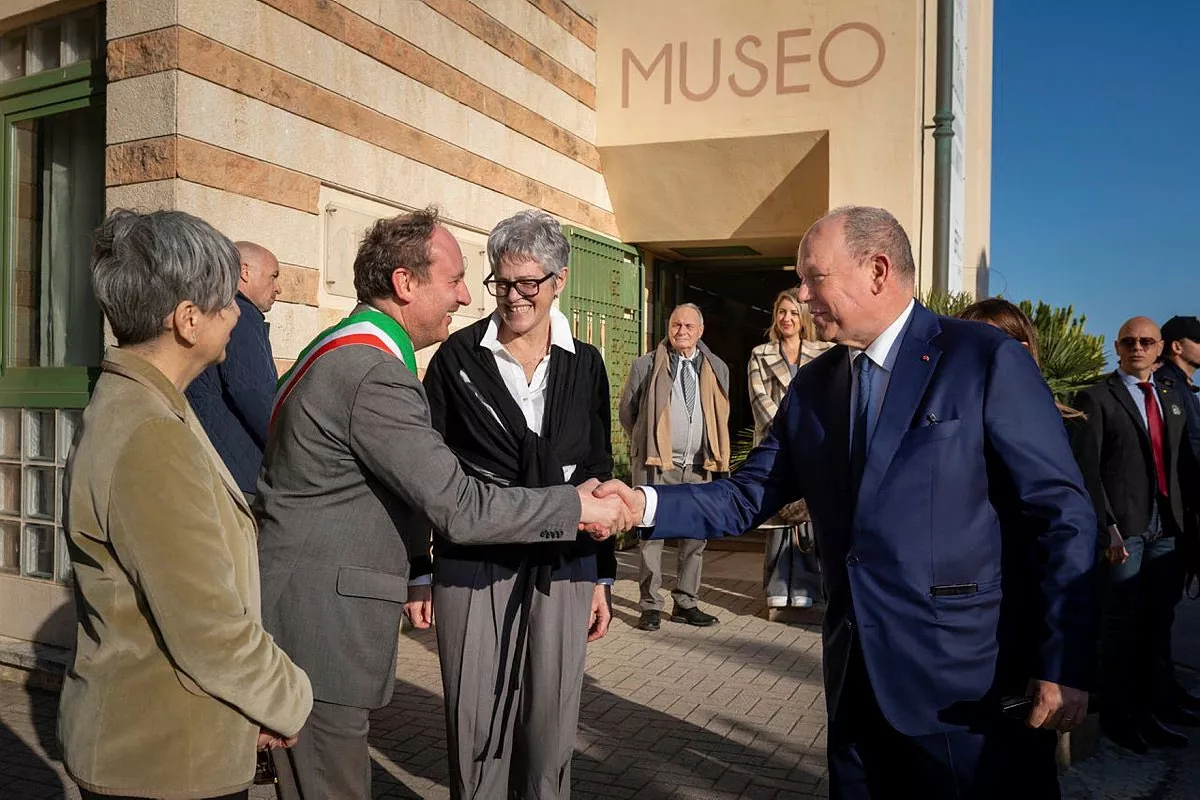
Prince Albert II paid a visit on Monday to the Balzi Rossi museum, a prehistoric site on the Italian Riviera just a short distance from the French border, near Ventimiglia.
The Prince was welcomed by the town’s mayor, Flavio Di Muro, and the museum’s director, Antonella Traverso. He toured the museum’s two main exhibition spaces, which cover Upper Palaeolithic burials, the history of early excavation campaigns, and artefacts recovered from the Grotte du Prince, the deepest cave in the complex at 34 metres, with 23 metres of archaeological deposits. The cave, which sits to the west of Cap de Garavan, remains the property of the Grimaldi family.
The connection between Monaco and the site dates back to 1882, when, Prince Albert I struck an agreement with the then-owner of the land specifically to prevent quarry works from destroying the prehistoric deposits. At the time, the museum didn’t exist yet.
He later founded both Monaco’s Museum of Prehistoric Anthropology and the Institut de Paléontologie Humaine in Paris to study and preserve the findings.
Layers of history stretching back 400,000 years
The Grotte du Prince has yielded extraordinary discoveries over the decades. The site’s first museum director, Léonce de Villeneuve, uncovered evidence of Neanderthal occupation: tools, hunted animals and Mousterian remains dating from roughly 90,000 to 40,000 years ago.
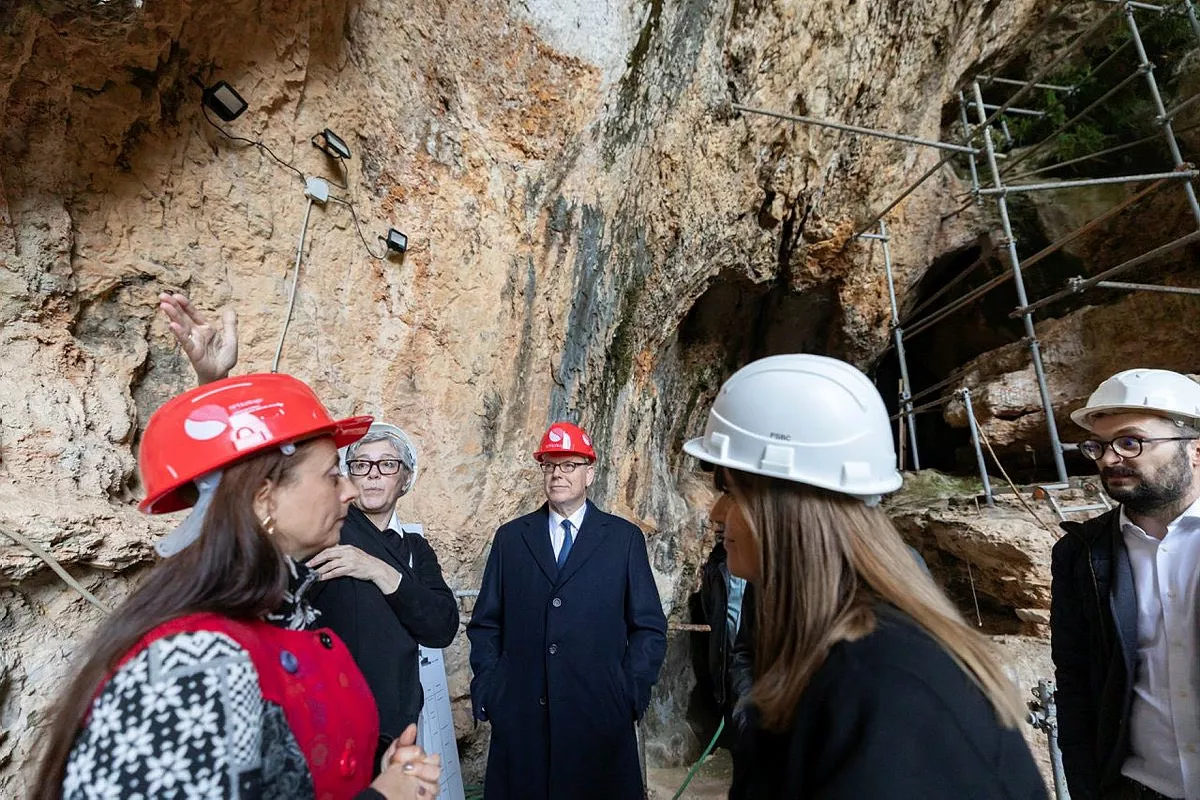
Later, researchers Louis Barral and Suzanne Simone pushed the timeline back further still, identifying human occupation dating to 220,000 years, as well as a remarkably ancient female human remain, a fragment of pelvis, recently 3D-modelled in collaboration with Italian colleagues.
The cave also serves as a long-term reference point for climate change, with its layers recording environmental shifts spanning more than 400,000 years. Research teams from Monaco’s Museum of Prehistoric Anthropology continue to work on the site regularly, combining archaeology with environmental science. However, the cave remains little known to the public.
Those wishing to explore the subject further can visit the exhibition De Toumaï à Sapiens at Monaco’s Museum of Prehistoric Anthropology, running until 16th October 2026
Stay updated with Monaco Life: sign up for our free newsletter, catch our podcast on Spotify, and follow us across Facebook, Instagram, LinkedIn, and Tik Tok.
Main photo credit: Frédéric Nebinger, Prince’s Palace