

By the end of the 1960s, Castelfalfi was almost empty. Families had left for work in the cities, the fields fell quiet, and a hilltop village first recorded in the year 754 was down to just five residents. Today the lights are back on in the borgo, the boutiques are open again, and the castle where a Medici bride once made her home sits at the centre of one of Tuscany’s finest resorts, now holding two Michelin Keys and a Forbes Travel Guide Five-Star award.
The estate stretches across some 1,100 hectares of vineyards, olive groves, woodland, lakes and a golf course in the hills of Montaione, roughly halfway between Florence, Pisa and Siena.
A hotel that thinks of everything
Step through the revolving doors into the lobby and the first impression is one of exquisite quality, with the warmth of a private house.
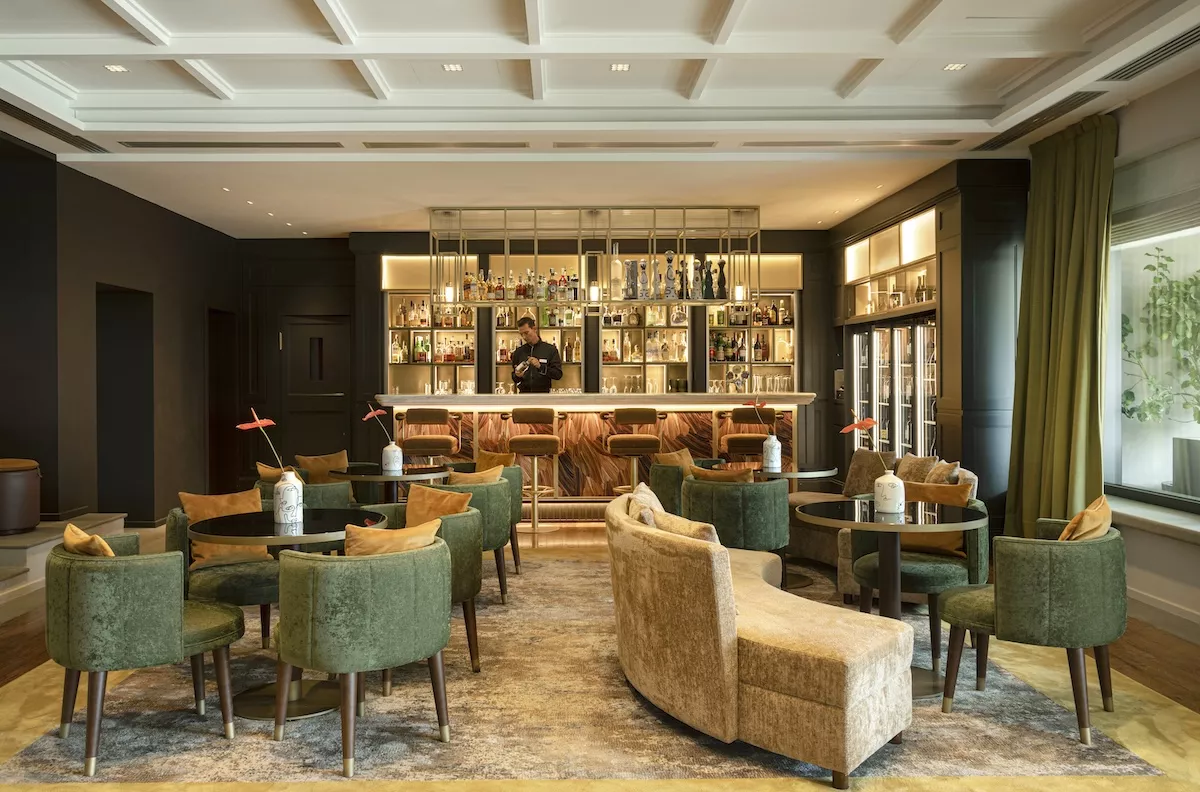
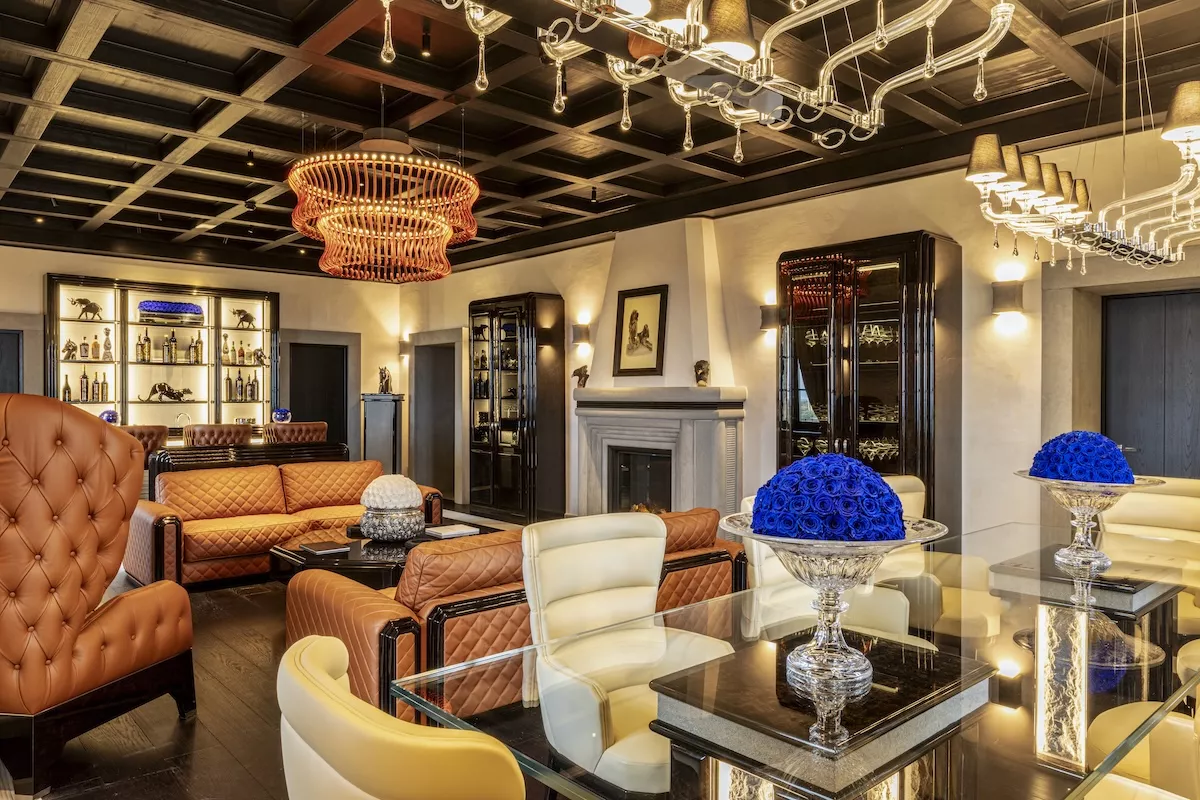
Much of that warmth comes from the personal collection of Sri Prakash Lohia, whose family owns the resort. Rare hand-coloured books sit behind glass in the lobby, and the bar and lounge hold treasures from across Asia: butterflies, statues and carved pieces so absorbing you briefly forget you are in the Tuscan countryside.
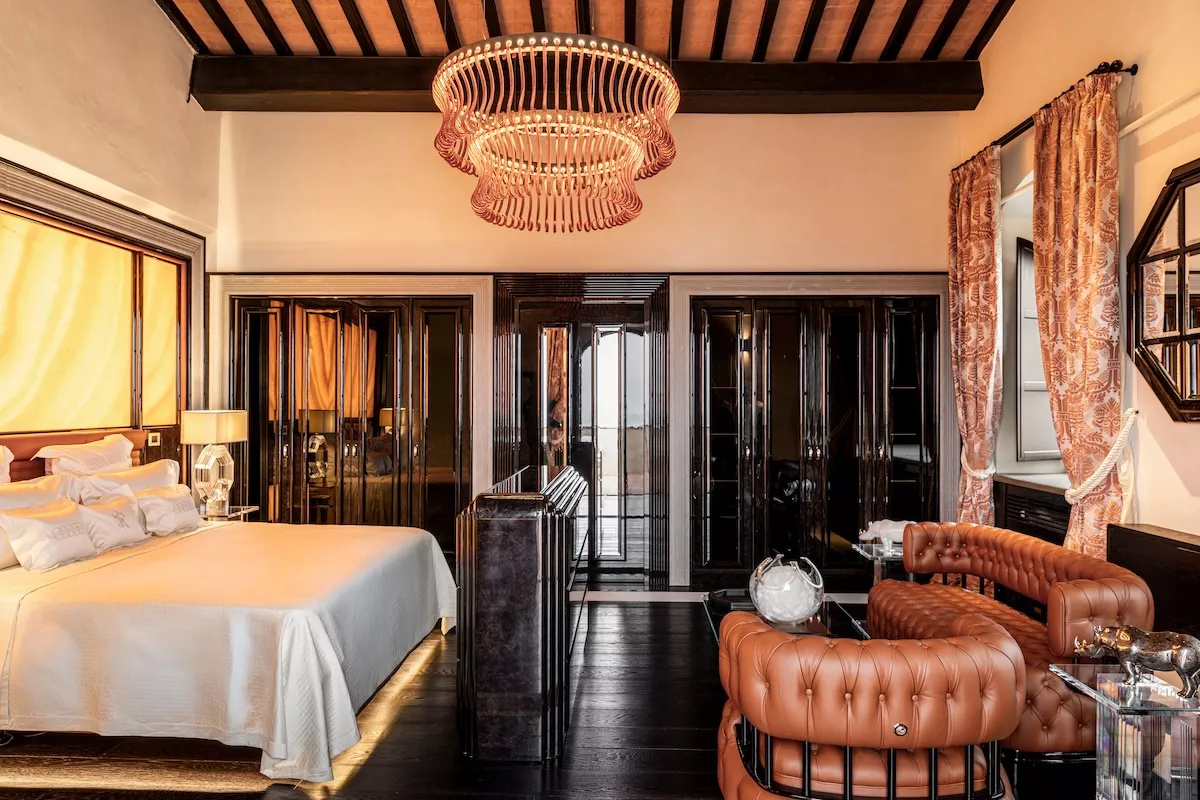
Upstairs, before you’ve even put your bags down, a bottle of Bollinger is chilling, your name glows on the television screen, and treats from the estate await. The room is quietly refreshed several times a day, and it feels as though someone has thought about you specifically — a rare thing even at this level.
Then you draw back the curtains.
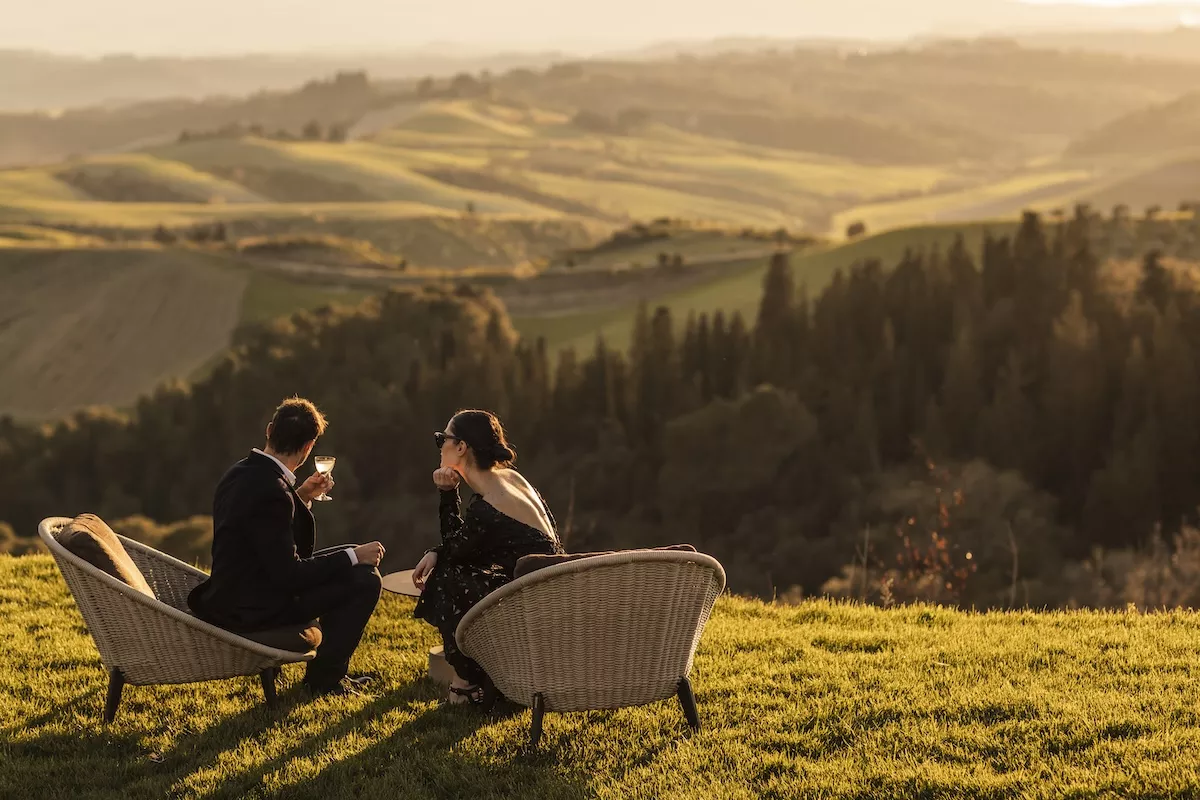
The estate rolls away for miles in every direction, hill after hill of vineyards and olive groves, and in early November the whole landscape turns rust and gold. It is hard not to picture the same view in July: aperitifs on warm summer evenings at the outdoor bar and lounge, and long, lazy days by the pool.
Old stone, new design
The design is the work of some of Europe’s most respected studios. Milan-based CaberlonCaroppi reimagined the main hotel’s public spaces and rooms, linking the interiors to the landscape outside through materials and colour. The centrepiece is a vast light sculpture between the lobby and bar, created with lighting designer Chiara Tabellini.
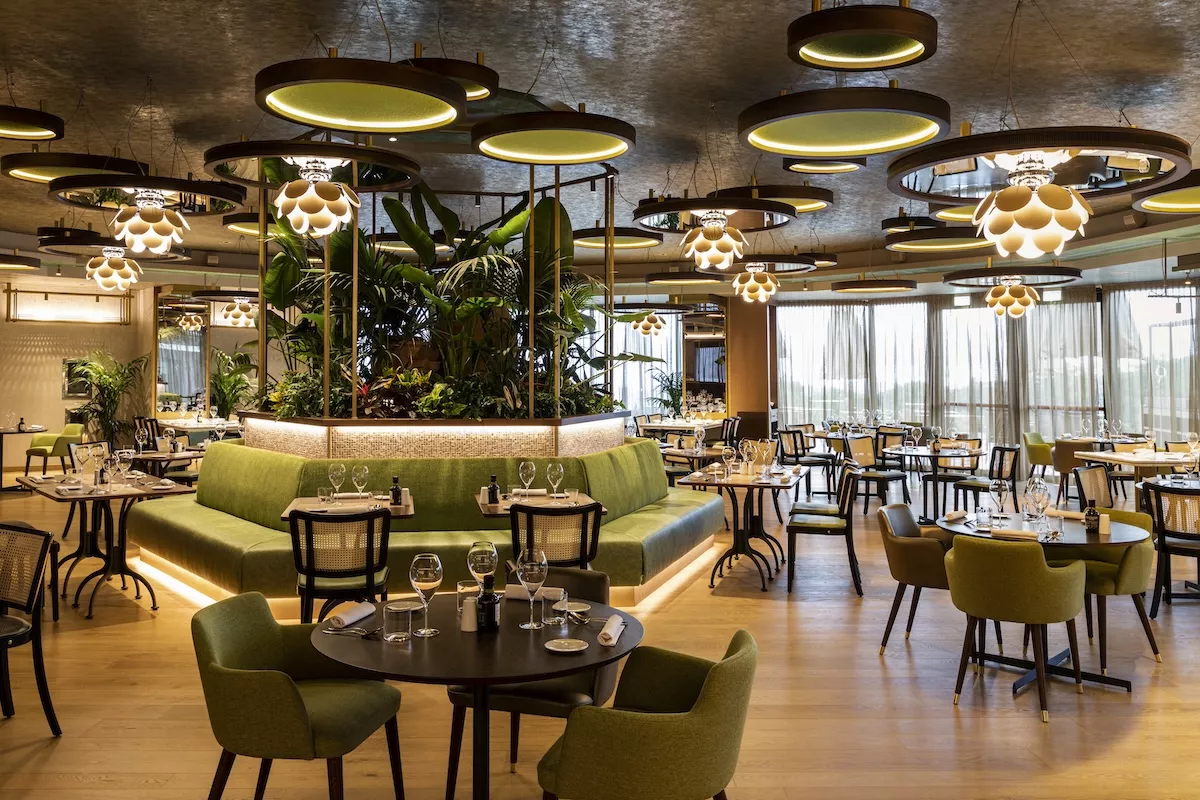
Paris-based Affine Design created the signature suites and the spa, and Florentine furniture maker Paolo Castelli crafted bespoke pieces for Olivina, the main restaurant, inspired by the green ‘sun gem’ stone the Etruscans prized.
In the borgo, stone houses have been restored with exposed beams and terracotta floors, and carved stone furniture is set into the gardens, making them places to sit rather than simply walk through.
The approach is consistent across the estate: new design never shouts over the old stone.
But it wasn’t always like this.
From Lombard fortress to Medici residence
Castelfalfi takes its name from Castrum Faolfi, the fortress of Faolfo, a Lombard noble believed to have fortified this hilltop as a lookout over the valley in the 8th century. In 1139 the castle was sold to the Bishop of Volterra for 100 lire. Its golden age came in 1489, when Giovanfrancesco Caetani married Costanza de’ Medici, of Florence’s most powerful dynasty.
The couple turned the medieval fortress into a stately residence and made it their home, and their coat of arms still hangs on its façade.
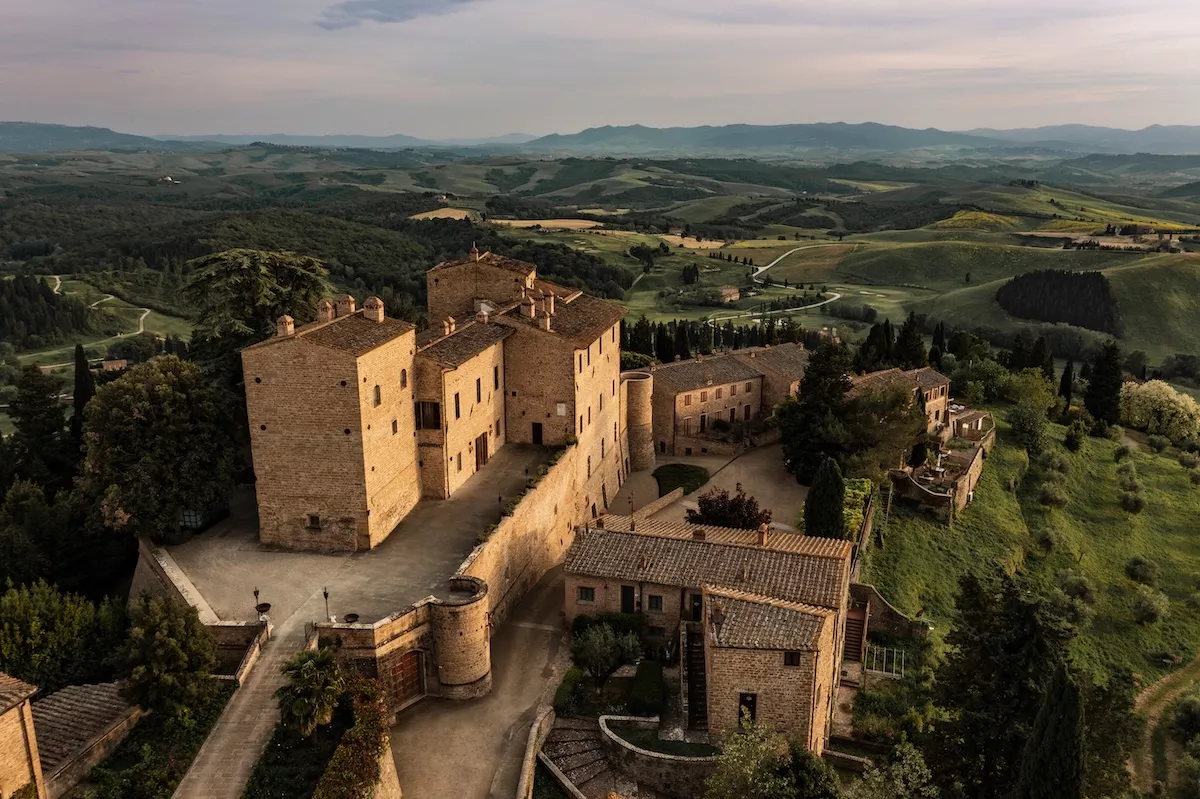
Centuries of slow decline followed, until the rural exodus of the 1960s all but emptied the village. Its revival began in 2007, when German travel group TUI bought the estate and restored the medieval borgo. In 2021 Castelfalfi passed to the Lohia family, who commissioned a further renovation before the hotel reopened in 2024.
The castle still stands guard at the end of the borgo, and it is very much alive. It houses a restaurant and a private event space popular for weddings, and at the top sits the resort’s crown jewel: the Stefano Ricci La Rocca Penthouse, 307 square metres over two floors, designed by the Florentine fashion house with furniture made exclusively for Castelfalfi.
At the other end of the lane, the 13th-century church of San Floriano has been restored and is open to the public, and it is still used for weddings and special occasions.
A village brought back to life
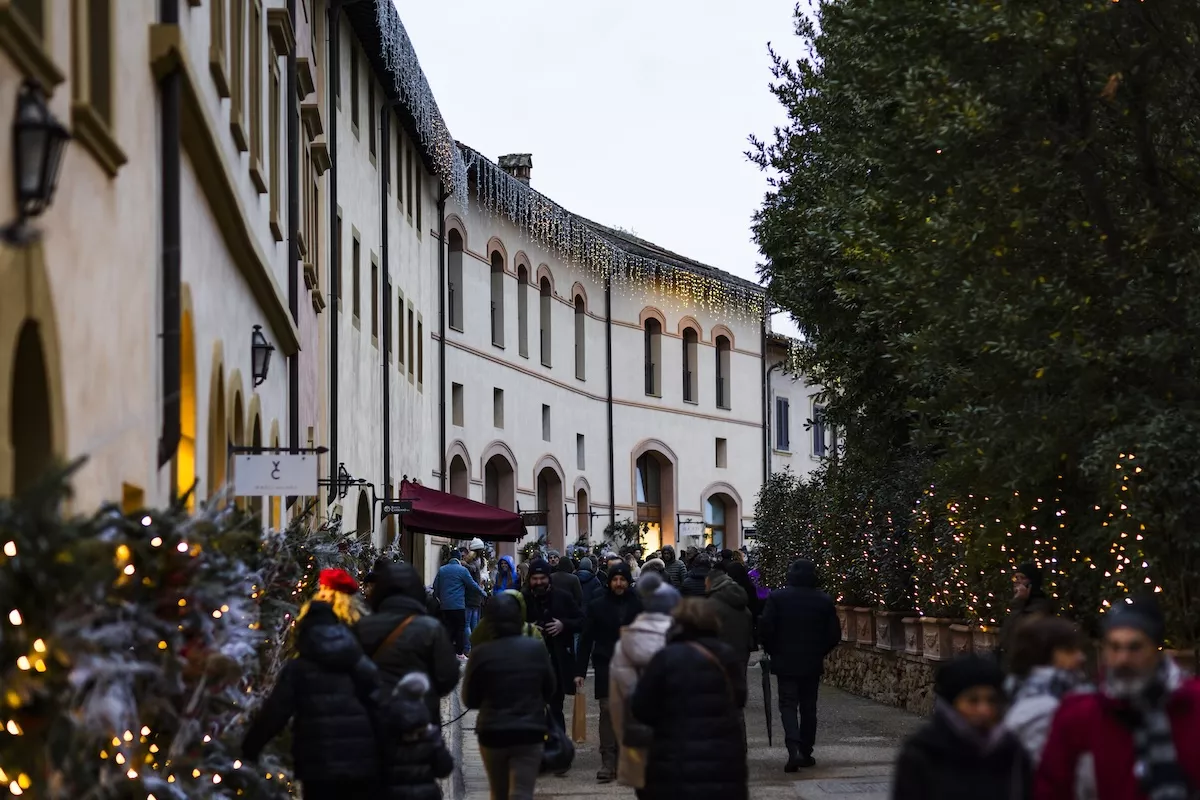
What makes Castelfalfi special is that it never became just a luxury hotel. The owners saw the value in reviving the entire village, and everything was restored. The borgo has artisan, fashion and art boutiques, along with a pastry and coffee shop that is full of locals every day. Cinema nights, stargazing evenings and concerts are open to everyone, not only guests.
With thousands of olive trees on the estate, the owners also invested heavily in a state-of-the-art mill. It produces some of the finest olive oil I have ever tasted, and it has made Castelfalfi a significant local employer once more.
For all its international ownership, Castelfalfi is Italian to its core, and its sense of community runs deep. On the day of my departure, the resort was welcoming the village’s surviving former residents, some of them now in their nineties, back for lunch to share memories of the old days. It happens every year. Who cares enough to do that nowadays?
Lobster pasta, and a Lebanese surprise
Every restaurant on the estate delivers on that Italian promise of generosity, flavour and personality, and for all the finesse on the plate, none of them takes itself too seriously. When I sat down with general manager Roberto Protezione on the afternoon I arrived, he summed up the range.
“We are in Tuscany, so we have a great trattoria where you can eat bistecca, and an Italian restaurant using our own produce from the estate. We also have an Asian restaurant, and something a little disruptive: a Lebanese restaurant in the castle, where you dine on a terrace overlooking the estate,” said Protezione.
That restaurant is Ummi, on the castle’s Medici Terrace, where chef Hussein Hadid pairs za’atar with Tuscan olive oil. The link is historical: Lebanese prince Fakhr al-Din II spent five years in Tuscany under the protection of the Medici in the early 17th century.
“Many centuries ago, an emir from Lebanon came here to learn the Medici family’s agricultural techniques. With this restaurant, we are bringing back something from the Medici era,” he said.
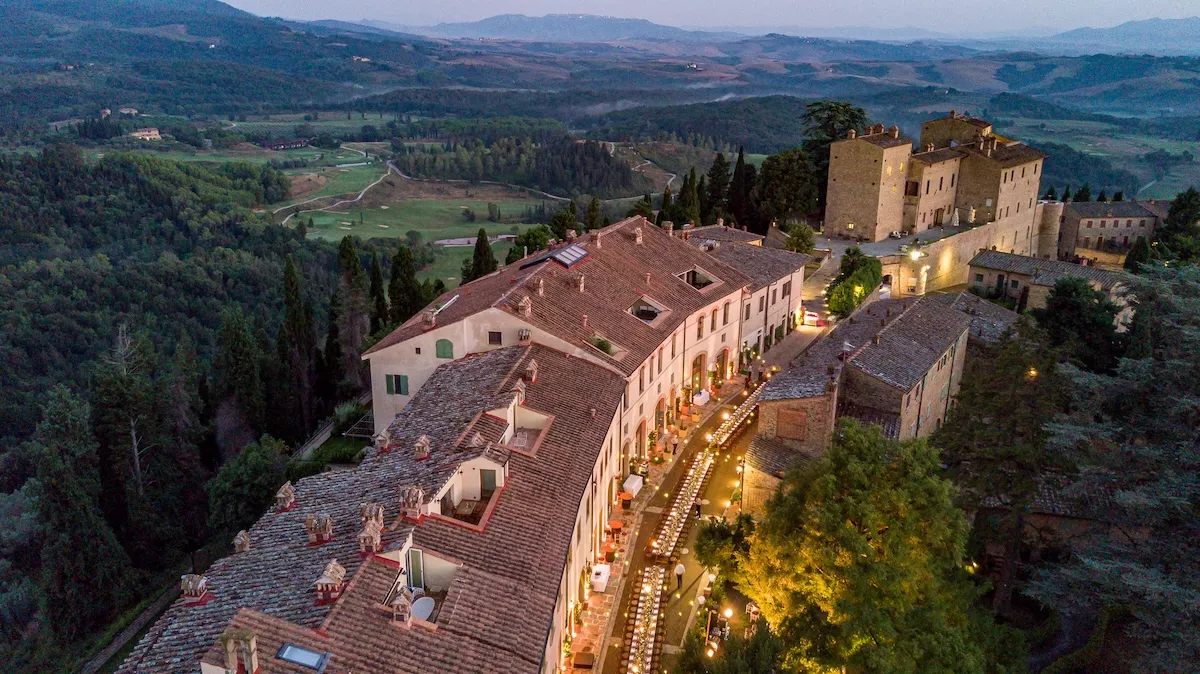
Il Rosmarino is the estate’s trattoria, while Olivina is the main restaurant, serving a lavish breakfast buffet, sun-filled lunches and impeccable dinners. Honestly, the lobster pasta was the best I have ever tasted.
In the evenings, Bar Ecrù & Lounge turns to Asian cooking. Can an Italian resort pull off teriyaki chicken and wagyu from the robata grill? Without question. The secret to great Japanese cooking lies in the ingredients, and Castelfalfi spares no expense.
And through it all, there is always that sweeping view of the Tuscan hills that made this part of the world so famous.
Sunset from the infinity pool
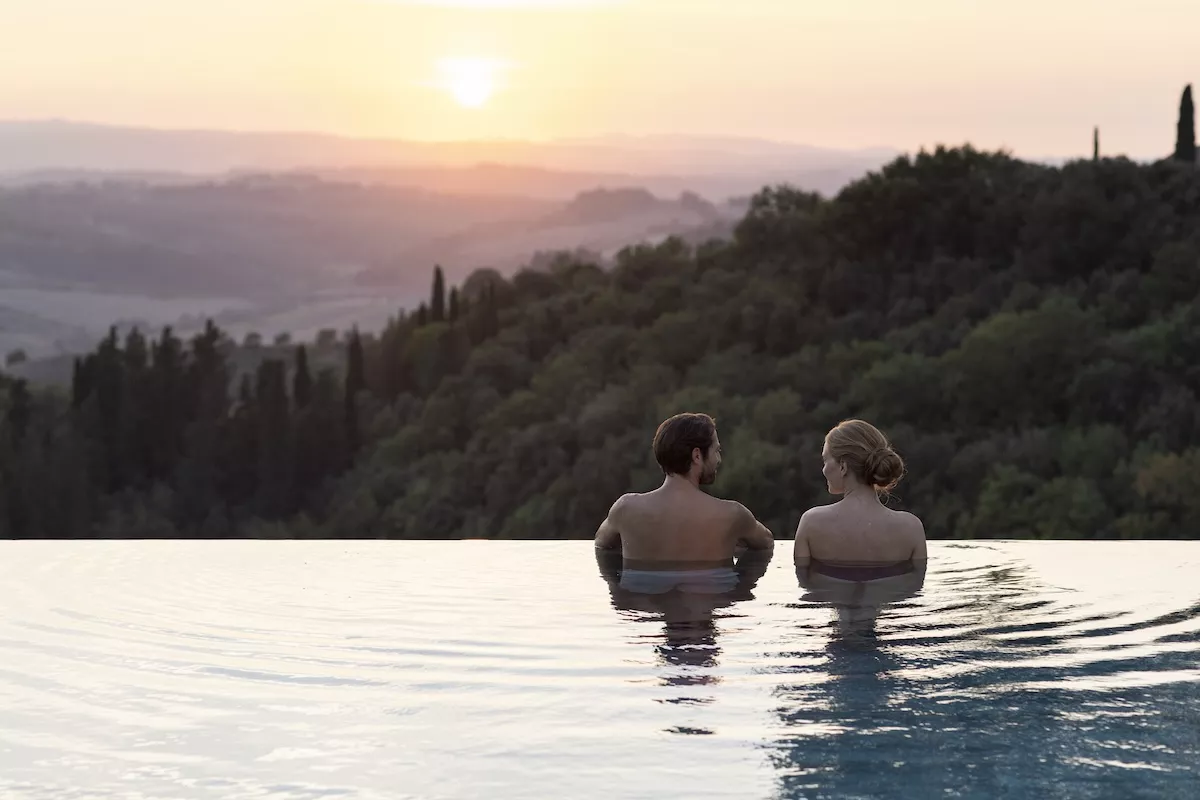
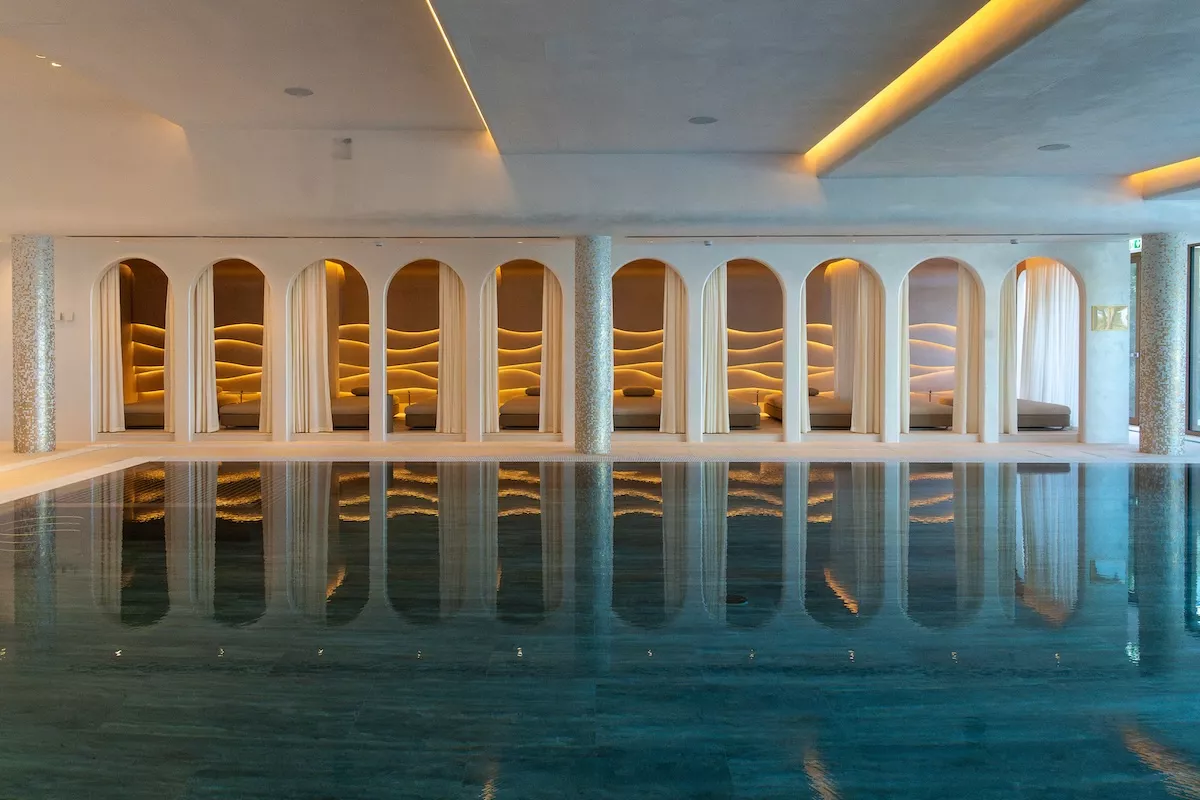
Late afternoon belongs to the RAKxa spa, run by the Thai wellness brand of the same name. The vast indoor pool opens through glass doors onto a steaming outdoor infinity pool, and there are few better ways to end a day in Tuscany than swimming out to its edge as the sun drops behind the hills.
The spa is spacious, but cleverly divided so that it always feels private, with hammams and an ice-cold plunge pool completing the circuit. The therapists are exceptional.
A resort for every kind of stay
Castelfalfi works as well for families as it does for couples, and its guests change with the seasons.
“We have a lot of activities for families, but also very romantic getaways for honeymooners,” said Protezione. “In summer it’s much more family-oriented, around the pools. At other times we welcome older couples, and at the start of the season we have a lot of multi-generational families in our villas, spending quality time together across two or three generations,”
Those villas are a big part of the appeal. Several restored houses in the village and across the estate are rented as part of the resort, each with access to the hotel’s services. Casa Medici is an 18th-century villa on the Medici Park, restored by Beirut-based Raed Abillama Architects. La Pergola has its own pool inside the borgo. Casale I Bianchi, the largest, has five bedrooms over 550 square metres.
“It’s a trend we have seen in the last few years. The grandparents bring the whole family here. They don’t see each other for months, and here they spend one or two weeks just getting to know each other again,” he added.
Groups are well catered for too. The old tobacco warehouse, where local women once worked the leaves, is now La Tabaccaia, with 31 rooms and suites that keep their original beams and terracotta tiles. It is a natural base for conferences and retreats, and a large function room hosts weddings and events for up to 450 guests.
Truffle dogs and falcons
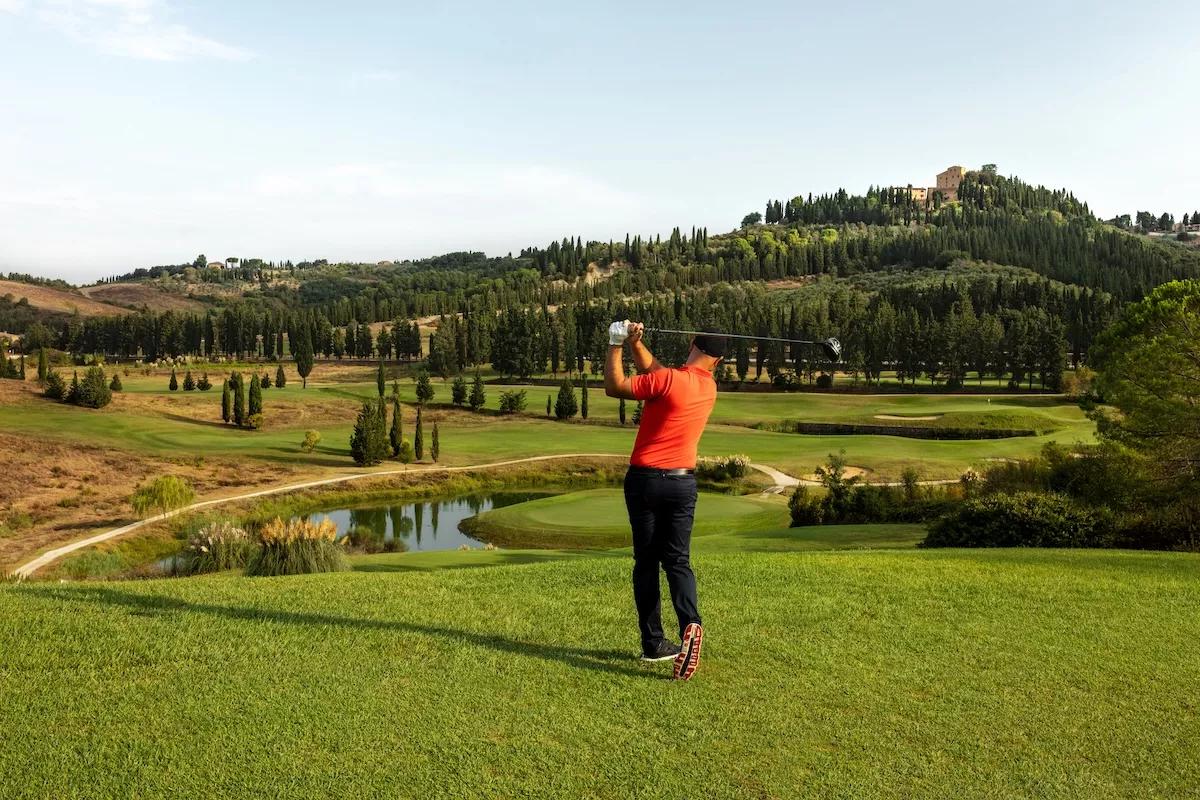
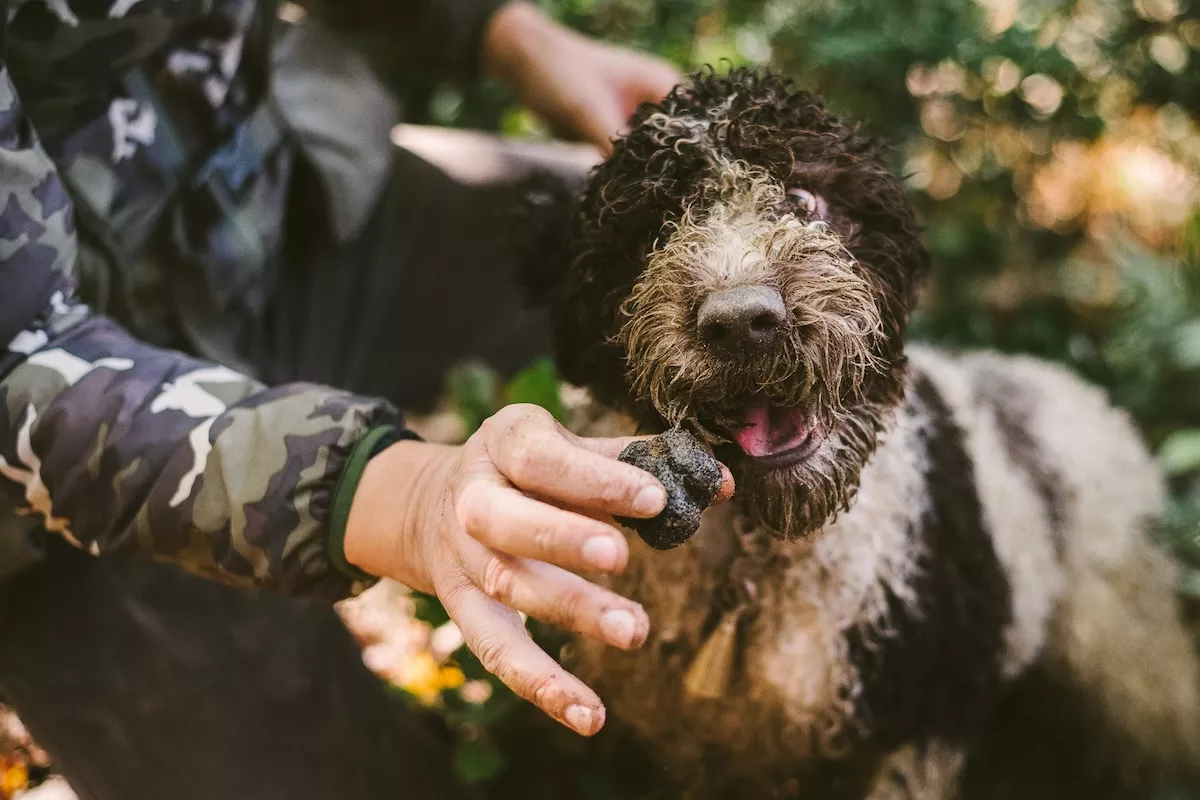
Days at Castelfalfi can be as full or as idle as you like. There are more than 50 activities, from cooking and pizza classes to golf on the 27-hole course, falconry, hikes across the estate and an adventure park strung with zip lines. In autumn, one experience outshines the rest: hunting for white truffles on the estate with the dogs.
Castelfalfi is also a natural base for exploring the region. “You can stay in the resort and live it as a complete experience, from the pool to the spa, or use Castelfalfi as a base to discover Tuscany, because we are right in the heart of it,” said Protezione. “And we are only an hour from the sea, so if you want to go shopping in Forte dei Marmi, it’s right there.”
A winter makeover
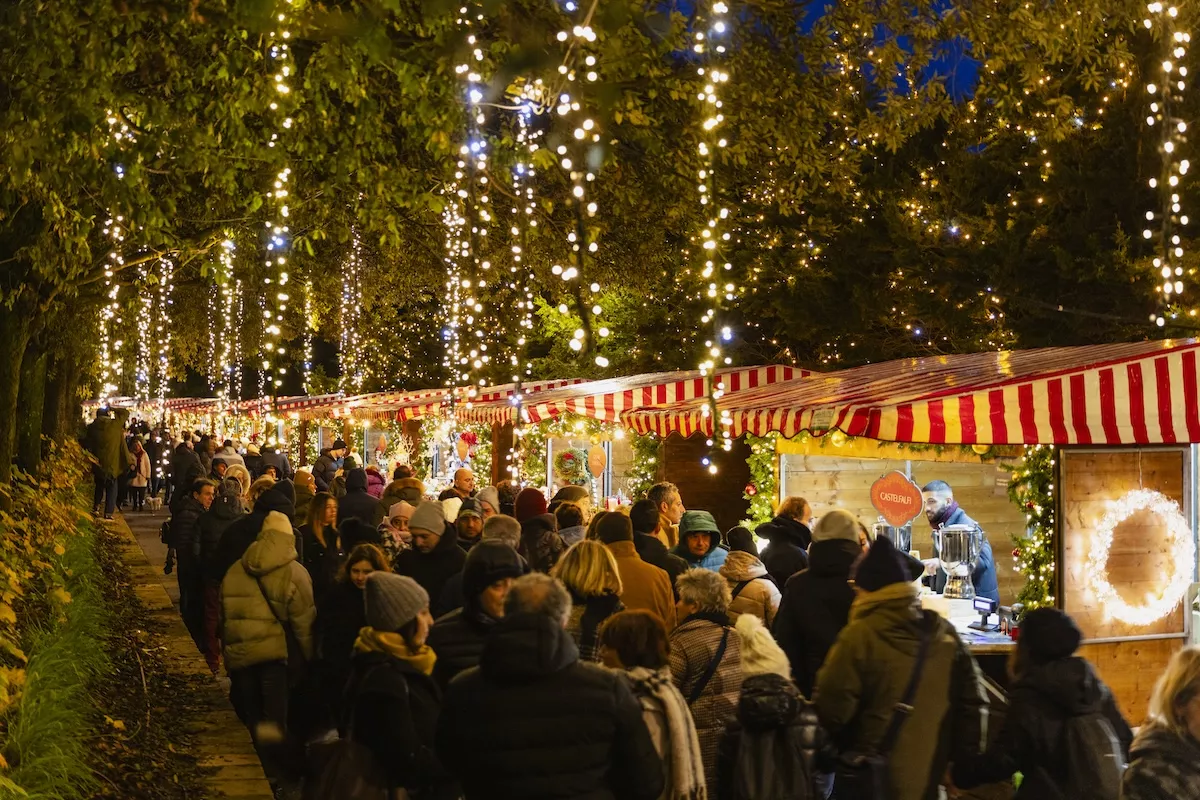
Castelfalfi closes in mid-December for work on its exteriors. Over the winter the hotel’s façade will be redone in Tuscan marble and the adults’ pool will be resurfaced, ready for reopening in March. Until then, festive decorations and seasonal activities will see out the year.
“Every winter do something new,” revealed Protezione. It’s like a lady: we have to keep everything well maintained.”
Few places manage to be this luxurious and this rooted in where they are. Castelfalfi shows that ultra luxury and community can do more than coexist. Here they thrive together, bringing life, jobs and pride back to a corner of Tuscany that was almost lost.
It is proof of what can happen when money is no object, and the object becomes something bigger than profit.
Stay updated with Monaco Life: sign up for our free newsletter, listen to our podcasts on Spotify, and follow us across Facebook, Instagram, LinkedIn, and Tik Tok.
All photos courtesy of Castelfalfi