

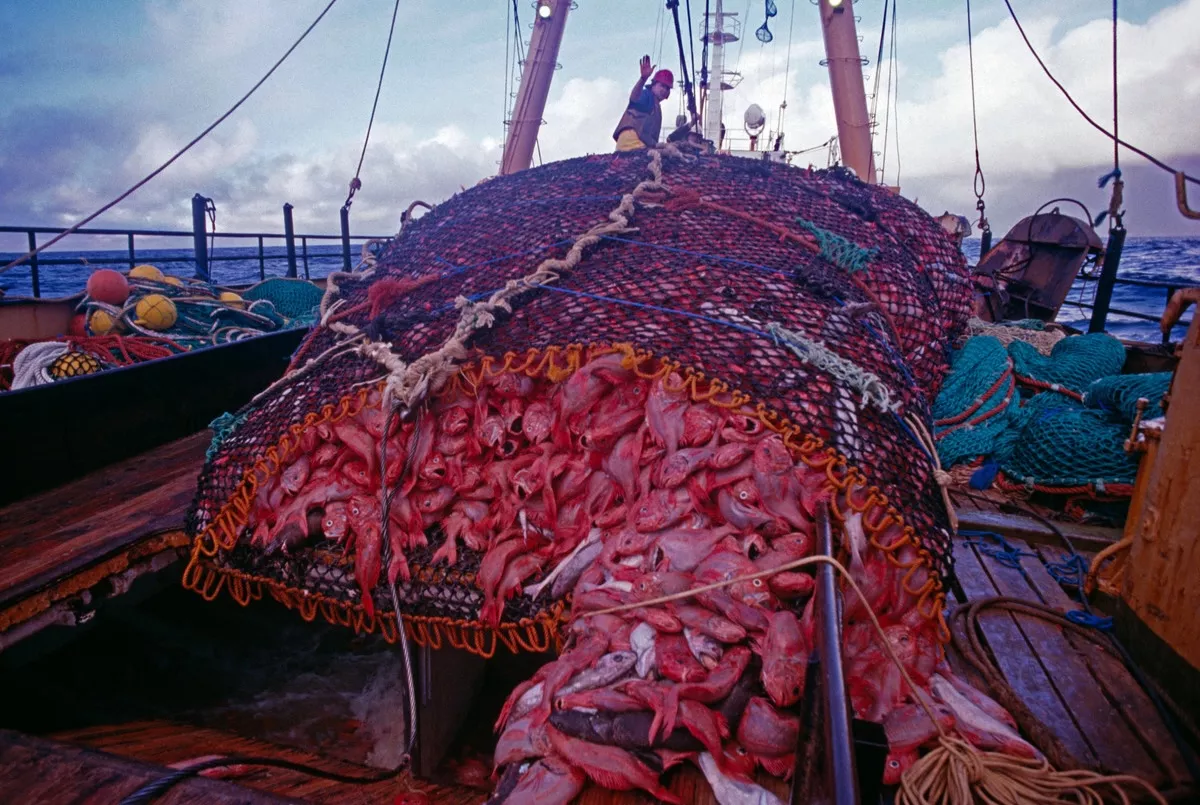
The United Nations’ Third World Ocean Assessment, released on World Ocean Day, has delivered one of its starkest warnings yet about the state of the deep ocean — and placed commercial fishing, specifically bottom trawling, at the centre of the crisis.
The assessment describes bottom trawling as “the most significant human activity on continental margins and in canyons,” warning that the practice leads to the permanent and irreversible destruction of the natural seafloor. The finding builds on the Second World Ocean Assessment, which had already identified bottom trawling as the “greatest current threat to seamount ecosystems”. The report also highlights that the Northwest Atlantic Fisheries Organisation remains the only regional fisheries management body to have banned bottom-contact fishing on seamounts across its regulatory area.
Ancient ecosystems at risk
Seamounts — underwater mountains that rise from the ocean floor — are among the ocean’s most biodiverse environments, home to ancient corals, sponges and species found nowhere else on Earth. The Deep Sea Conservation Coalition (DSCC), which has been campaigning for their protection, called the UN findings a mandate for urgent policy action.
Bronwen Golder, DSCC Global Seamounts Campaign Director, said the science was no longer ambiguous. “The reality is that we are discovering more about these ecosystems every day, and with every piece of new knowledge we gain, the case against bottom trawling on seamounts becomes more damning. Governments must now commit to phasing out bottom trawling on seamounts — a destructive, antiquated practice that has no place in our ocean in 2026.”
A closing window for action
An upcoming UN review of high-seas bottom fisheries is being framed by the DSCC as a critical and time-limited opportunity. The coalition is pushing governments to use the review to establish a binding deadline to protect seamounts and end bottom trawling on seamounts and other vulnerable deep-sea ecosystems by the end of 2027.
Sian Owen, DSCC Executive Director, said the wider implications of inaction were hard to overstate. “This new report confirms that the deep ocean is an essential life-support system for our planet, yet remains a major knowledge gap. Erasing ancient, vulnerable ecosystems that sustain the health of our global ocean before we’ve even had the chance to explore them would represent a catastrophic failure of global governance. We can do better.”
Stay updated with Monaco Life: sign up for our free newsletter, listen to our podcasts on Spotify, and follow us across Facebook, Instagram, LinkedIn, and Tik Tok.
Photo source: Greenpeace