

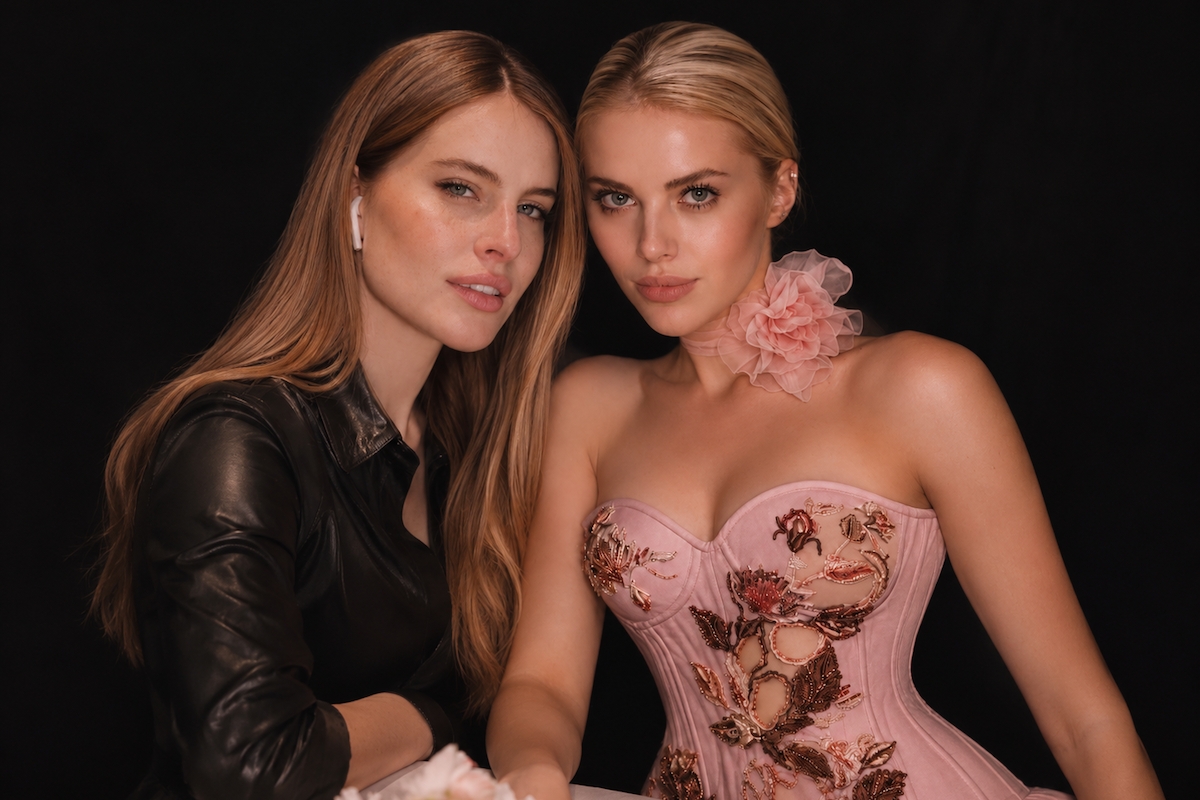
A single corset can take three months to create, command a five-figure price and incorporate embroidery techniques once used to dress royalty. Yet for Anastasia Celvene, co-founder of the luxury corsetry house Celvene, these intricately crafted garments are not necessarily destined for a red carpet. Some of her clients simply wear them underneath a jacket.
Together with her twin sister, Anastasia is building an international fashion business around the centuries-old art of corsetry, attracting a wealthy clientele looking for something beyond the established luxury labels. Among her most important markets is Monaco.
“We didn’t really plan to go into fashion, but what always impressed us was something that was difficult to make,” Anastasia tells Monaco Life. “We wanted to create something that didn’t already exist on the market.”
From handmade jewellery to sculptural couture
Originally from Russia, the sisters began their entrepreneurial journey in Germany, creating handmade jewellery incorporating Japanese sakura leaves. But their fascination with complex craftsmanship eventually led them towards a more technically demanding discipline.
Corsetry presented a particular challenge: how to combine elaborate embroidery with a sculptural structure that complements the female body without compromising wearability.
The sisters spent more than two years perfecting the shape of the bust alone, developing a form capable of accommodating different body shapes. Today, Celvene produces made-to-measure pieces ranging from contemporary designs intended for everyday wear to elaborate bridal and private couture commissions.
“We don’t say that our corsets are only for special occasions,” explains Anastasia. “We have many clients around the world who simply wear them underneath a jacket.”
But these are no ordinary corsets.
Centuries-old craftsmanship in a modern Armenian atelier
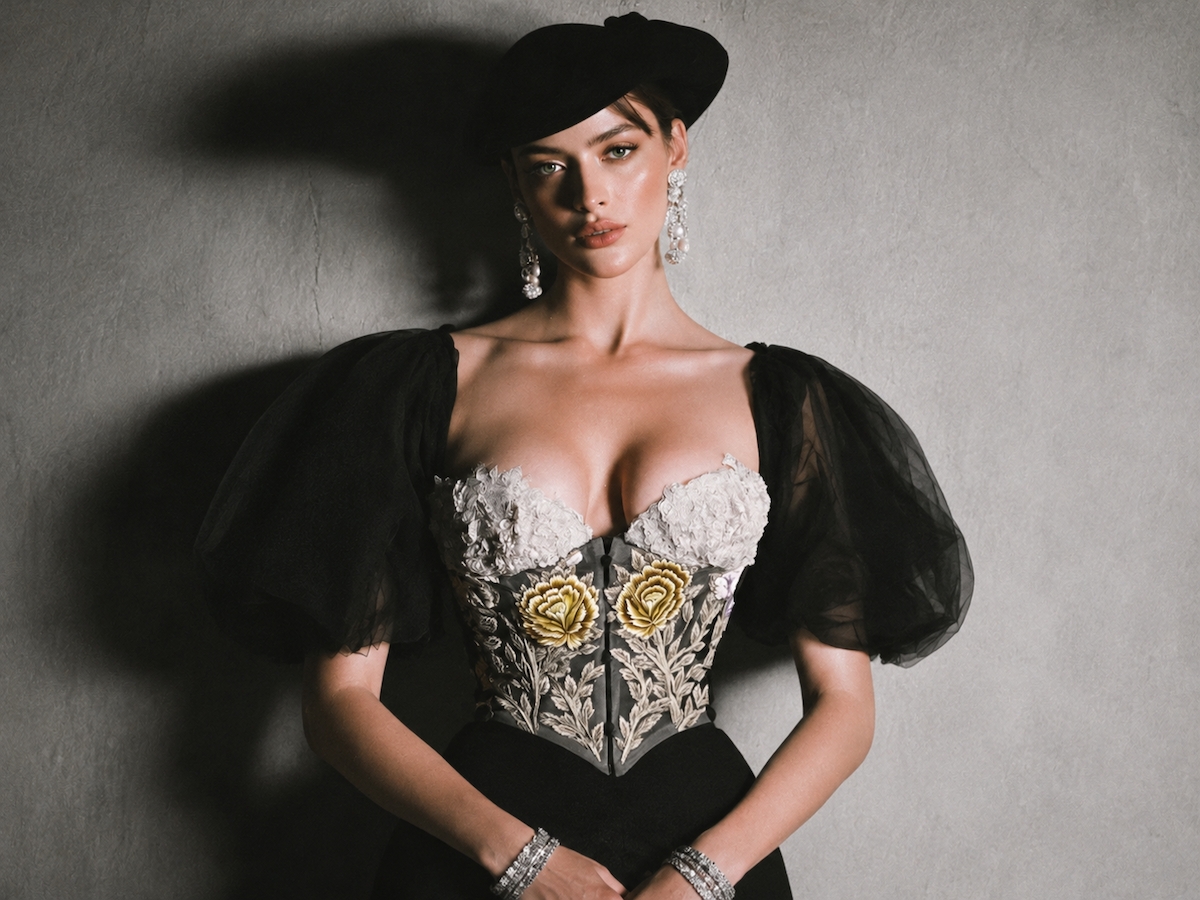
At the heart of the business is an atelier in the Armenian capital of Yerevan, where around 20 embroiderers work under the direction of the designers. The company trains its artisans in specialist techniques, building on Armenia’s own centuries-old tradition of needlework.
Among the techniques employed is English goldwork, a form of embroidery using metallic threads historically associated with military uniforms and royal ceremonial garments.
One of Anastasia’s favourite commissions was a deceptively simple khaki corset, unadorned at the front but decorated across the back with three-dimensional golden butterflies inspired by embroidery from the Napoleonic era.
“The client wanted something traditionally royal, but in a hidden way,” she recalls. “You could see that the butterflies had all been made by hand. They looked like real butterflies.”
The time involved in producing a Celvene corset varies considerably. A piece constructed from previously embroidered fabric can be completed in four days, while a corset entirely embellished with crystals can take up to six weeks. For particularly intricate silk-thread embroidery, the company works with specialist artisans in China, with commissions taking around three months.
For Anastasia, however, the real beauty of the craftsmanship is sometimes found where nobody else is looking.
“We get very excited ourselves in the atelier when we look at the inside of the fabric, see the curves of the threads and immediately understand that it has been made by hand,” she says. “It’s something you can give to your daughter, and your daughter can give to her daughter. It’s like a gift for future generations.”
What luxury clients really want
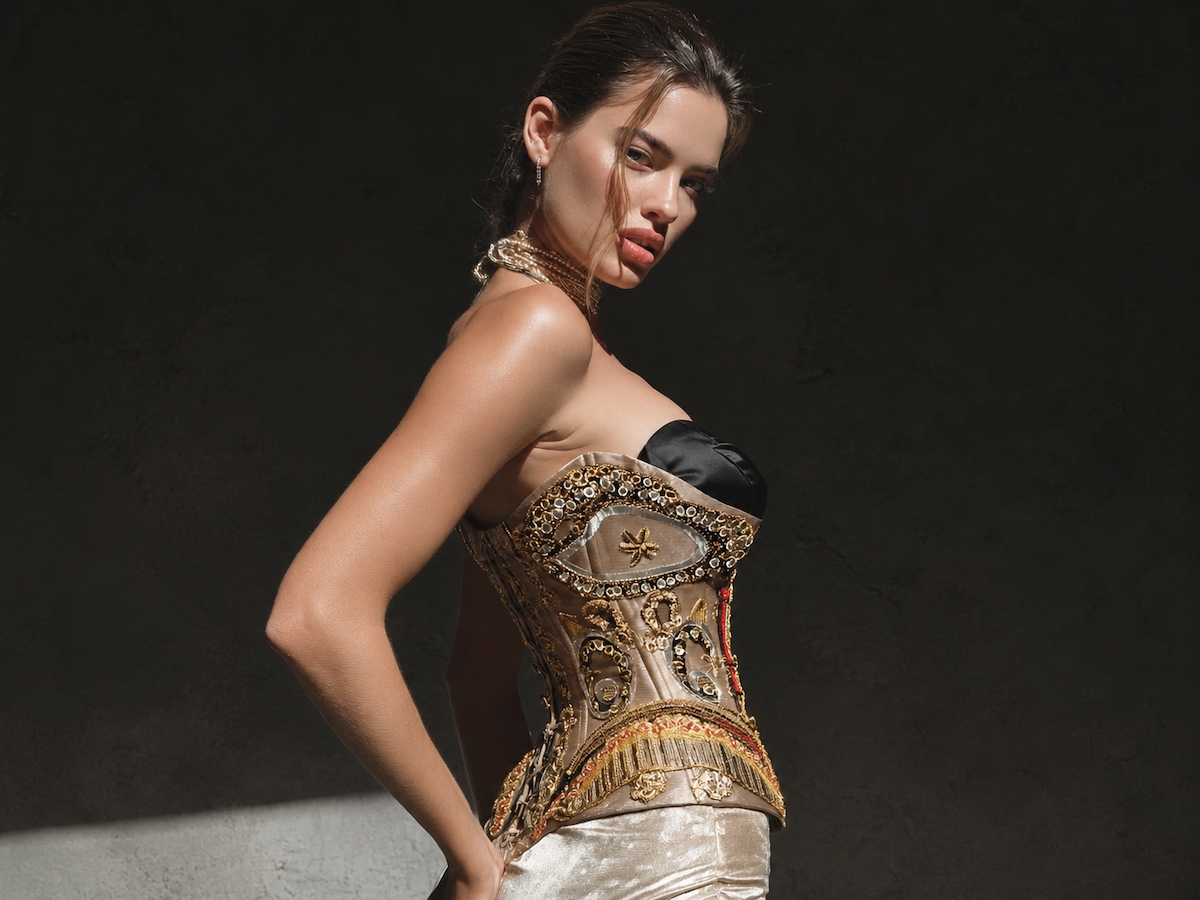
With catalogue designs starting at €900 and private commissions reaching €10,000 to €12,000 — including Swarovski crystal-encrusted pieces created for clients in Riyadh — Celvene occupies an increasingly interesting corner of the luxury fashion market.
Rather than competing with established fashion houses through brand recognition or volume, the sisters are concentrating on individuality, discretion and the ability to translate a client’s imagination into a garment.
Many of their most elaborate creations are never seen publicly because of confidentiality agreements, including, Anastasia says, pieces commissioned for members of Indian royalty.
She believes that wealthy consumers, with access to virtually every major luxury brand, are increasingly searching for something more personal.
“Our clients are people who have money, but they want to stand out from the crowd. And that is not so easy,” she says.
Anastasia is also critical of what she sees as a declining attention to detail among some established fashion houses, from the quality of fabrics to the finishing of a garment’s interior.
“We don’t have the ambition to produce massive quantities. Our focus is on quality and something very specific.”
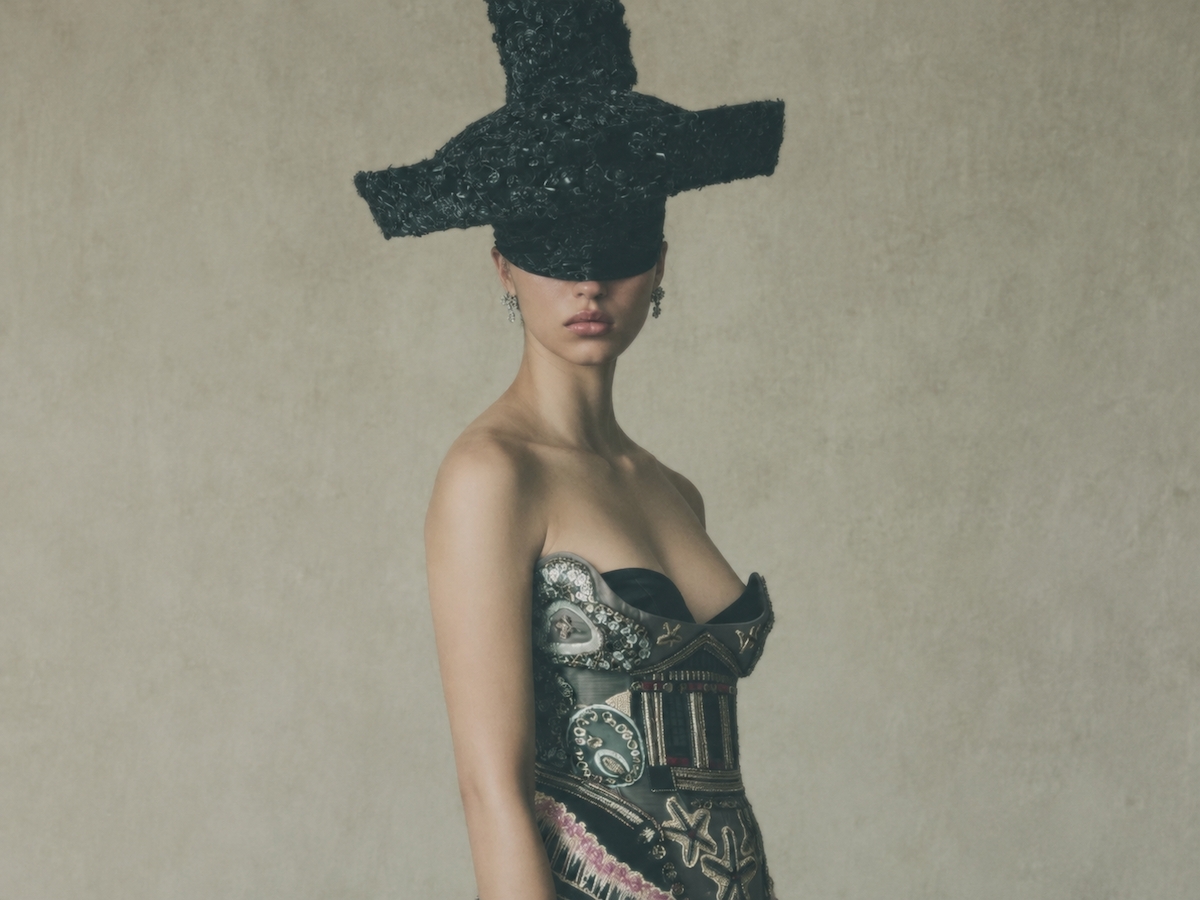
That does not mean the sisters are unwilling to experiment. At the request of clients, they have begun developing a line of sculptural headwear, starting with an extraordinary crystal-embellished piece in the shape of a Catholic cross, commissioned by a French bride.
The new creations are intended for everything from unconventional weddings and theatrical productions to red-carpet appearances.
From Yerevan to Monaco
The Principality’s importance to Celvene developed organically. When the sisters launched the business around three years ago, relying almost entirely on word-of-mouth recommendations, many of their earliest clients came from Milan and Monaco.
The company has since established a partnership with a representative in Cannes, allowing prospective clients on the Riviera to experience the garments in person, while Anastasia regularly divides her time between Yerevan, Milan and Monaco.
Her ambitions for the next five years include opening a flagship boutique where clients can immerse themselves in the collections and work directly with the designers on bespoke commissions.
She looks to Indian couturier Manish Malhotra for inspiration — a designer who built an internationally recognised fashion house from a speciality in traditional garments, developing an increasingly elaborate aesthetic without losing his distinctive identity.
For Celvene, the objective is similarly clear: to become internationally recognised for mastering one particular discipline, rather than attempting to conquer the entire fashion industry.
“We want to be number one in corsetry and, I would say, number one in wearable art,” says Anastasia.