

With less than two weeks to go until the Michelin Guide France and Monaco 2026 ceremony at the Grimaldi Forum, anticipation across the restaurant community is quietly building. But behind every star awarded, every Bib Gourmand granted, and every new entry added to the guide, stands a figure most diners will never spot: the Michelin inspector.
Since 1933, inspectors have formed the backbone of the Michelin Guide. Without them, there is no selection. Here is a closer look at who they are, how they work, and what they are looking for when they sit down at the table.
Who exactly is a Michelin inspector?
Becoming a Michelin inspector is not straightforward. Candidates must bring at least 10 years of professional experience in the hotel and restaurant industry, combined with a finely calibrated palate and — crucially — the ability to set aside personal taste and assess a kitchen as objectively as possible. A broad knowledge of ingredients, regional produce, and culinary cultures from around the world is equally essential.
Far from the austere, notebook-clutching caricature the role might conjure, inspectors are, above all, genuinely passionate about food. They are curious, enthusiastic, and committed to seeking out quality wherever it exists — from a street food stall in Taipei to a palace dining room in Paris.
How do inspectors operate?
Anonymity is the inspector’s most important tool. Every reservation is made under an assumed name. Every meal is ordered, eaten, and paid for in full, just as any ordinary diner would. There is no special treatment, no tasting menu prepared in their honour, and no prior warning given to the kitchen. The experience a Michelin inspector has must be the same experience any reader of the guide could expect to have.
Each inspector carries out more than 250 anonymous meals — known as table trials — every year, across the 50 or so international destinations covered by the guide. These visits are meticulously documented in detailed reports that form the basis of each selection.
What are they looking for?
Five criteria guide every assessment. The quality of ingredients comes first. Inspectors then consider the mastery of cooking techniques, the harmony of flavours, and the personality and emotion a chef has sought to express through their dishes. Finally, and perhaps most tellingly, consistency is assessed — across the menu and across multiple visits.
These five criteria apply universally, whichever country the inspector is in. That consistency of standard is what allows the guide to carry the same weight in Tokyo as it does in San Francisco, Copenhagen, or Monaco.
How are the stars decided?
Inspectors do not work alone. Selections are updated collectively, with decisions made on a collegiate basis drawing on multiple visits to each restaurant over the course of the year. The famous stars themselves are reserved for special deliberations — known as Étoiles Sessions — which bring together the International Director of the Michelin Guides, the local editor-in-chief, and all inspectors involved in a given selection. A star is only awarded unanimously. If disagreement persists, further visits are arranged until a consensus is reached.
A guide born on the road
It is worth remembering that the Michelin Guide began not as a fine dining bible, but as a practical motoring handbook. In 1900, the Michelin tyre company — keen to encourage more people to drive, and therefore wear out more tyres — began distributing a free guide to help motorists navigate France’s roads, find petrol stations, and locate a decent meal along the way. The logic was straightforward: more driving meant more tyres. It was not until decades later that the guide’s restaurant recommendations took on a life of their own, eventually eclipsing the original publication entirely and becoming one of the most influential voices in world gastronomy. That a handbook conceived to sell rubber should become the ultimate arbiter of culinary excellence remains one of the more unlikely origin stories in the history of food.
Stay updated with Monaco Life: sign up for our free newsletter, catch our podcast on Spotify, and follow us across Facebook, Instagram, LinkedIn, and Tik Tok.
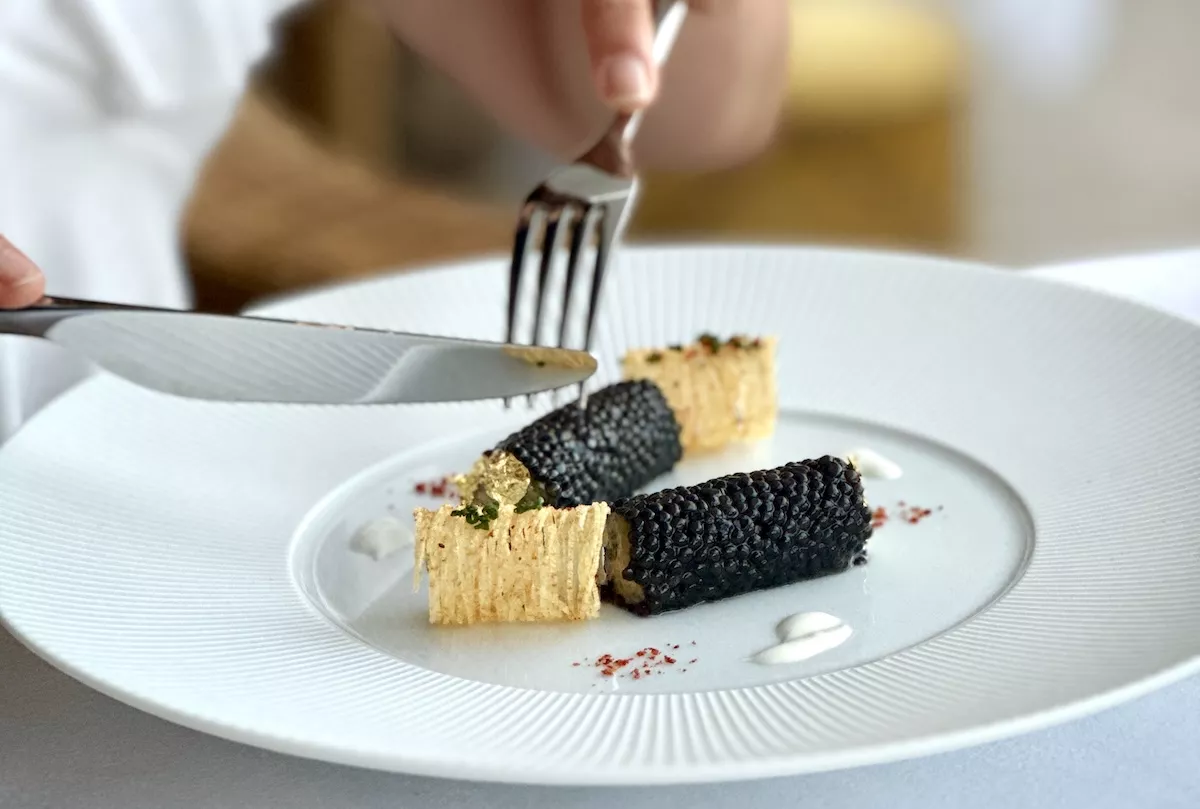
Photo: Dish from Les Ambassadeurs by Christophe Cussac, photo credit: Cassandra Tanti