

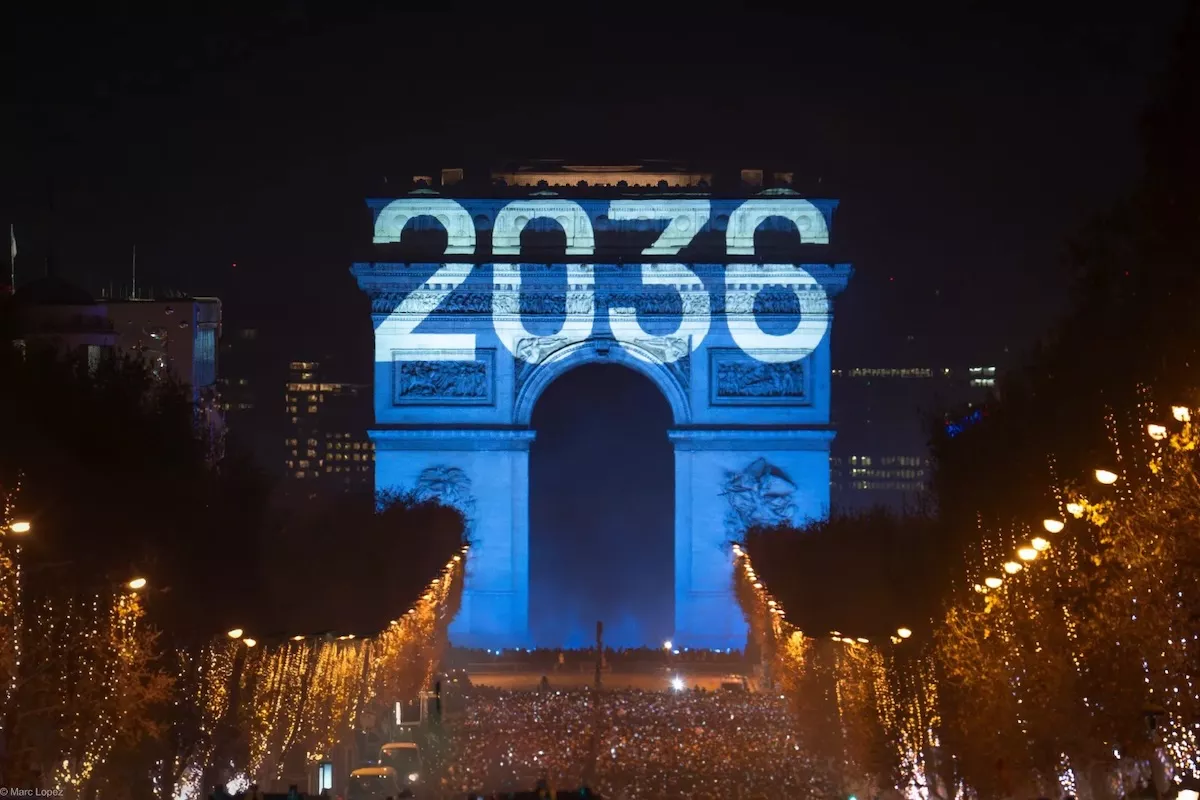
At 11:30pm on New Year’s Eve, viewers watching Paris’s traditional celebrations noticed something unusual. Instead of the expected countdown to 2026, the Arc de Triomphe displayed a different number: 2036.
The cryptic projection remained for 30 minutes as confusion spread across social media. What did 2036 mean? Was it an error? Only as midnight approached did the full message become clear: “2036. Don’t wait 10 years to celebrate your next New Year. Tonight, no alcohol or drugs behind the wheel. Take care of yourself and others.”
The number represented 2026 plus ten years—the maximum prison sentence under France’s new vehicular homicide law. The stark message, broadcast to millions watching worldwide, was the work of the Association Antoine Alléno, an organisation founded by the Michelin-starred chef behind Monaco’s Pavyllon Monte-Carlo restaurant.
A father’s three-year fight
Yannick Alléno knows intimately the cost of impaired driving. His son Antoine, 24, was killed in May 2022 by a driver under the influence of drugs and alcohol whilst riding a scooter in Paris’s 7th arrondissement. The young chef had been working alongside his father when his life was cut short.
Rather than retreat into private grief, Alléno mobilised. He established an association bearing his son’s name and began a three-year campaign to change French law. Until July 2025, vehicular homicide whilst impaired fell under the general category of involuntary manslaughter.
“This law, we fought for it tooth and nail after three years of mobilisation,” Alléno said. “Getting behind the wheel when you’re not fit to drive is a choice that costs lives.”
On 9th July 2025, France enacted new legislation recognising “homicide routier” as a distinct criminal offence carrying sentences up to 10 years imprisonment. According to Stéphanie Prunier, partner at advertising agency Havas Paris which developed the campaign, average prison sentences for similar offences jumped from 22 months to five years.
“It’s the communication that helped evolve the jurisprudence,” she said.
Hijacking the world’s attention
The Arc de Triomphe projection represented an ambitious gamble: could a prevention message break through the noise of New Year’s celebrations without dampening the festive mood?
Stéphane Gaubert, creative director at Havas Paris, defended the timing. “December 31st is a night of celebration. This wasn’t meant to ruin the party but to be a moment of prevention before the evening,” he explained.
The choice of the Arc de Triomphe was deliberate. Paris’s New Year’s Eve celebrations attract global television coverage, offering what Gaubert called “the biggest possible medium” for a campaign that couldn’t afford traditional advertising.
The timing—11:30pm rather than midnight—was carefully calibrated to deliver the warning at a moment of high emotion without disrupting the countdown itself.
Gaubert argued that rarity creates impact. “Surprise creates strength. This kind of communication stunt must remain a rare act,” he said.
For one night, France’s monument to military glory became a memorial to road traffic victims, a warning to revellers, and a bereaved father’s tribute to his son.
Stay updated with Monaco Life: sign up for our free newsletter, catch our podcast on Spotify, and follow us across Facebook, Instagram, LinkedIn, and Tik Tok.
Photo source: Association Antoine Alléno