

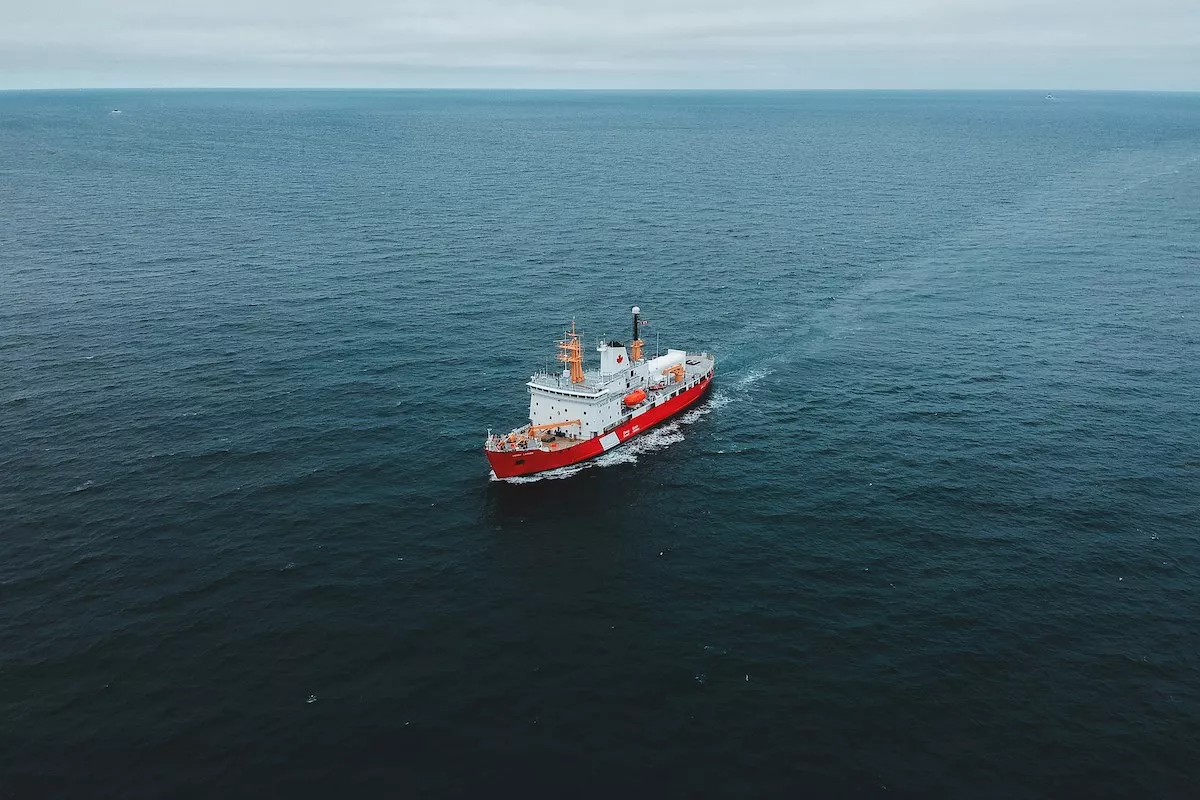
While the ocean covers 70% of our planet’s surface, a staggering 95% remains unexplored. Through the newly adopted ‘OceanEye’ initiative, the European Union intends to bridge this knowledge gap, providing essential data for climate forecasting, blue economy activities, maritime security, and the long-term protection of marine ecosystems.
The European Commission has officially adopted this ambitious strategy to position the European Union as the global authority in ocean observation and intelligence. As the world faces mounting climate and maritime challenges, the initiative aims to secure 35% of the global market for ocean observation technology and contribute to more than one-third of the global ocean observing system by 2035.
A strategic shift in maritime governance
For years, Europe’s efforts to monitor its seas have been hampered by coordination challenges between research bodies, national agencies, and industry players. ‘OceanEye’ aims to dismantle these silos through a structured governance framework that will align regional investment and data standards. This move is expected to culminate later this year in a landmark ‘Ocean Act’, which will define the EU’s long-term legislative approach to maritime health.
Central to this vision is the European Digital Ocean System. By 2030, this platform will provide a single, sophisticated interface for marine intelligence, integrating existing services like the Copernicus Marine Service and EMODnet. The centrepiece of this project is a fully operational ‘Digital Twin’ of the ocean—a virtual representation that will allow scientists and policymakers to run real-time predictive models on everything from shifting current patterns to the impact of offshore energy developments.
Innovation as an economic engine
The European Commission is positioning the initiative not merely as a conservation tool, but as a catalyst for economic growth. By mobilising €92 million through the Horizon Europe programme, the EU is betting that a robust ocean observation industry is a geopolitical imperative. A significant portion of this funding, including €30 million directed through the European Innovation Council, will support startups and public-private partnerships focused on next-generation sensor technology, autonomous underwater systems, and artificial intelligence.
“With ‘OceanEye’, Europe will lead the race to understand our ocean, to protect it, and to sustainably harness its potential,” said Ursula von der Leyen, President of the European Commission. “This is about using science and good governance to understand our ocean and secure our future.”
Beyond this vision, the EU is looking to significantly increase its contribution to the Global Ocean Observing System (GOOS). The strategy involves addressing critical surveillance gaps in the Arctic, the deep sea, and the Southern Hemisphere, where data has historically been sparse, ensuring that the bloc’s technological reach matches its environmental ambitions.
Bringing the ocean to the public
The initiative also seeks to demystify the complexities of marine science for the average citizen. Through the ‘New European Bauhaus Ocean, Coastal and Island Communities Lab’, the Commission is partnering with artists and designers to translate raw data into public installations and museum exhibits. This effort to humanise ocean observation aims to make the health of the sea a visible, tangible concern for the 40% of Europeans who reside in coastal communities.
The initiative represents a logical evolution of the European Ocean Pact adopted in 2025. With a blue economy that currently generates €250 billion in added value and supports 5 million jobs, the EU is now betting that the next decade of maritime success will belong to those who can best harness, interpret, and protect the data swirling beneath the waves.
Stay updated with Monaco Life: sign up for our free newsletter, listen to our podcasts on Spotify, and follow us across Facebook, Instagram, LinkedIn, and Tik Tok.
Photo credit: Erik McLean, Unsplash