

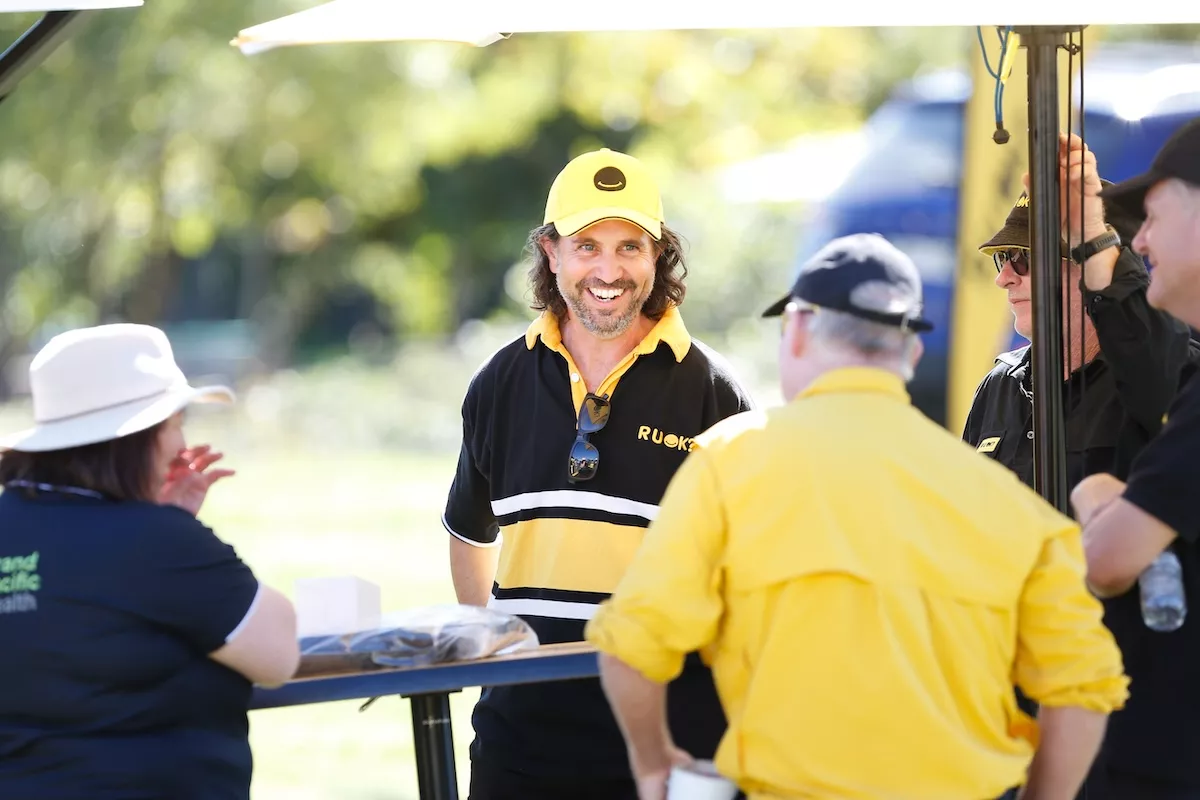
As World Mental Health Day is marked on Saturday 10th October, Monaco Life looks at the particular pressures facing people who have built their lives far from home. Editor in Chief Cassandra Tanti spoke to Lachlan Searle, chief executive of Australia’s R U OK? suicide prevention charity, about why a simple check-in matters even more when family and old friends are hundreds – or thousands – of kilometres away.
For expatriates, the support networks many people take for granted, including parents, siblings and childhood friends, are often replaced by newer relationships built in a constantly shifting community. Monaco is an extreme example. According to the Monegasque Institute of Statistics and Economic Studies (IMSEE), the Principality had 38,857 residents at the end of 2025, representing 144 nationalities. Most of the 65,000-plus people employed in Monaco live outside the country, meaning many of the friendships formed at work do not extend to the neighbourhoods where people go home at night.
The wider expat picture reflects the same strain. InterNations’ Expat Insider 2026 survey of 7,786 expats found that 40% find it hard to make local friends and 37% say their friends are mostly other expats.
Searle, who has lived in the UK and, most recently, Abu Dhabi, knows the terrain. “I have had a couple of stints doing the expat thing, and it is tricky. You can be whoever you want to be in a sense, because you are new,” he said. “But it is also a transient world: you build connections and then people move on. Sometimes you do not necessarily want to invest in those relationships.”
“Part of the challenge anywhere is building real connections and authentic relationships. It is probably a little more challenging in an environment where you are not going down to the shops and bumping into someone you went to school with, with that history where you can pick up a conversation from 10 years ago,” he added.
One approach that has stayed with him came from a young R U OK? ambassador. “He told me that he starts relationships with vulnerability now. He goes straight to vulnerability because he thinks it is a strong way of testing whether a relationship is worth investing in,” said Searle.
Lessons from Australia
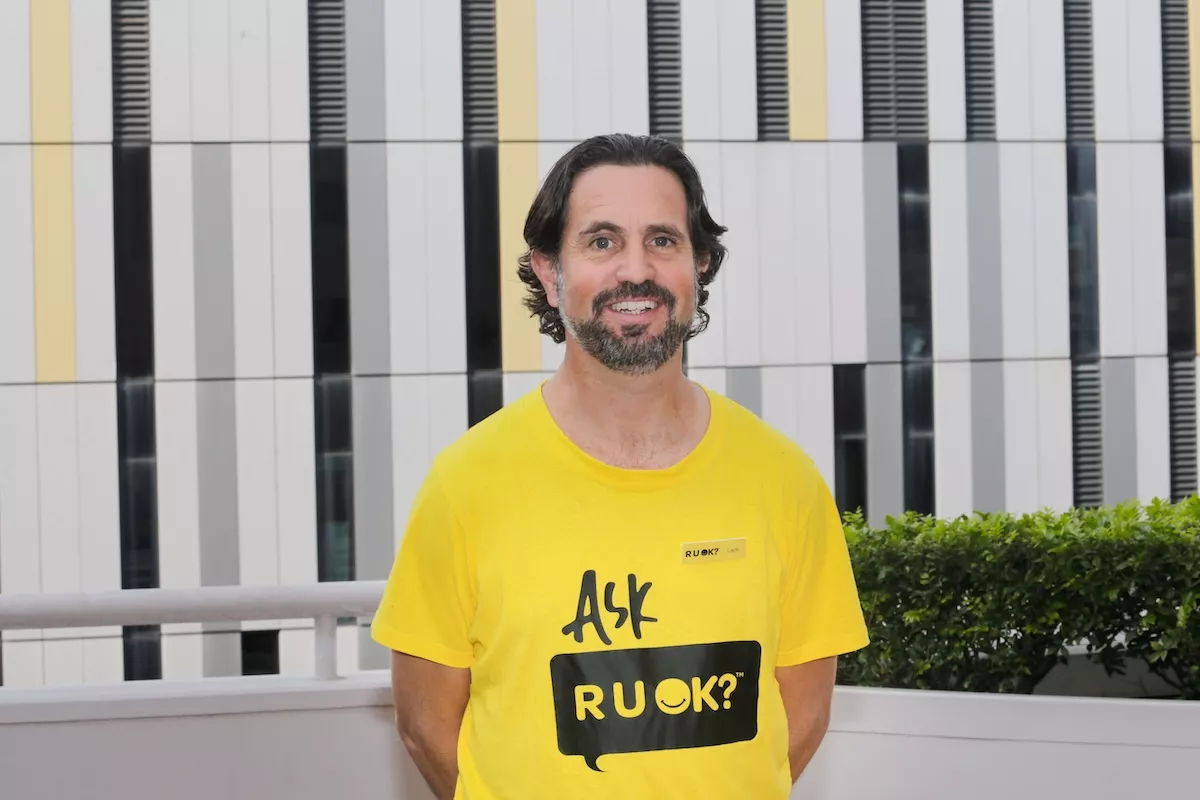
Lachlan Searle became chief executive of R U OK? in December and led his first R U OK? Day at the helm across Australia on Thursday 10th September. The charity was founded in 2009 by Sydney advertising executive Gavin Larkin, whose father, Barry, died by suicide in 1995. Larkin developed the campaign with Janina Nearn and died of cancer in 2011, weeks after the third R U OK? Day. His family remains involved in the organisation today.
“He was at a leadership conference where they were given the task of coming up with an idea that would resonate with all Australians. This had been gnawing away at him for a while, and he eventually wrote on a Post-it note: ‘Are you OK? A conversation could change a life,'” said Searle.
Research conducted by Verian for the charity in 2026 found that nine in ten people who had been asked whether they were OK felt grateful, cared about and supported, yet one in four people might still hesitate to ask, even when they suspect someone is struggling.
The stakes remain high. In Australia, there are around nine suicides a day, and seven of those are men. Internationally, the World Health Organisation estimates that 727,000 people died by suicide worldwide in 2021, with men dying at more than twice the rate of women, a gap that widens to more than three to one in high-income countries.
In the European Union, figures published by Eurostat last month show 48,370 deaths by suicide in 2023, of which 76.4% were men. In France, the health statistics agency Drees recorded around 9,200 suicides in 2022, with the rate three times higher among men than among women.
Ask, listen, encourage action, check in
Searle is clear that R U OK? does not replace professional care but focusses on equipping ordinary people to notice when someone close to them is not themselves. “You spot the signs, trust your gut that you need to check in with someone, and ask the question. We have a framework called ALEC: Ask, Listen, Encourage action and Check in. That is how you have the conversation,” said Searle.
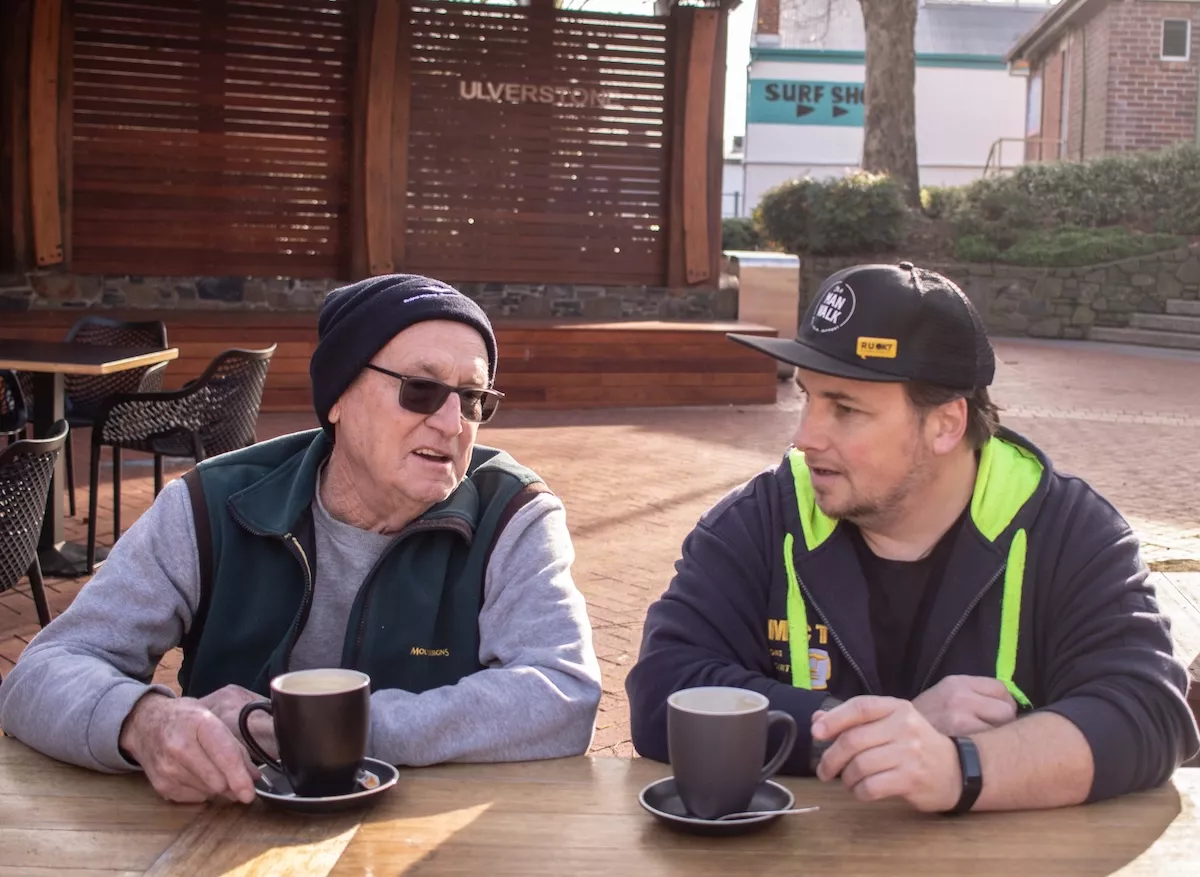
Of those four steps, he places the greatest weight on the second. “Ultimately, an R U OK? conversation comes down to about 90% listening. If you have noticed signs that someone is struggling and ask the question in a nice environment where they feel you are listening without judgement, you will often start to hear things that will really help that person. You might be able to reflect some of that back to encourage action,” he said.
The most common mistake, he said, is turning the conversation inward. “The worst thing you can do is make it about yourself: ‘The same thing happened to me. I’ve had that experience before, and I did this, this and this.’ They can feel you are not listening – because it is not about you.”
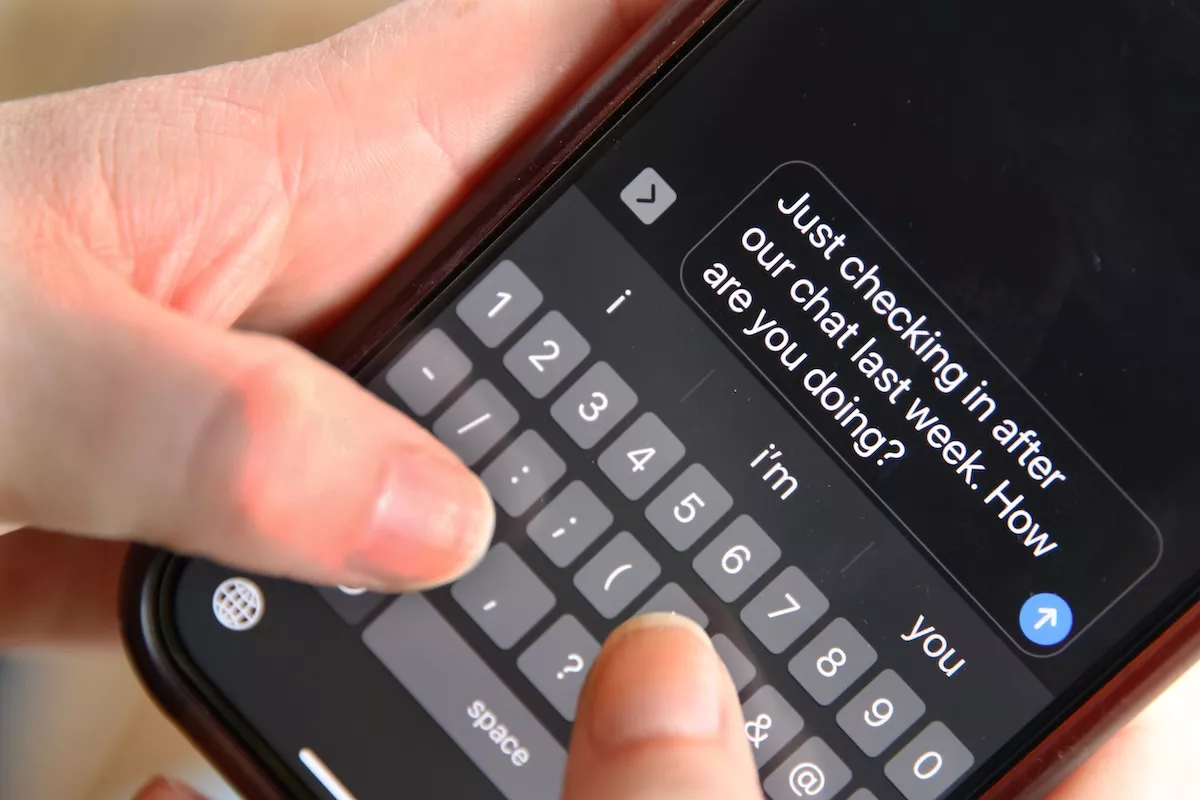
The final step is the one most easily forgotten. “Ultimately, it is about checking back in. If it was an intense, heavy conversation that morning over coffee, you might say, ‘I’m going to give you a call this afternoon and see how you’re going’. If it was less severe, it might be, ‘I’ll call you tomorrow’ or ‘I’ll call you on Monday’,” said Searle.
Where someone is in genuine danger, the priority changes. “If someone is in crisis, ultimately you need to stay with them until they are safe, whatever action you have taken to help, whether that is an ambulance or booking an appointment with a professional,” he said.
Reading the signs behind the screen
In a place where social media can project a polished version of life in Monaco and the Riviera, Searle believes knowing someone’s normal rhythm matters more than any single message. “However that connection works, there is a cadence and regularity to the communication. If it is weekly and you have not heard from them for three weeks, that is when you pick up the phone and ring them, or pop around for a cup of tea,” he said.
“If you have a connection with someone and know when they are in a positive frame of mind, excited and looking forward to something, you should be able to recognise when it is the opposite. That is when you need to have the conversation.”
He argues that the rise of digital communication and shift away from face-to-face contact since the charity was founded has only made its message more urgent. “The value of R U OK? and genuinely engaging conversations has probably increased as a result of the reduced importance placed on face-to-face and personal conversations,” he said.
That extends to artificial intelligence, which some people now turn to as a sort of therapy session when no one else is around. “It is definitely a tool that is being used and will be used,” acknowledged Searle, “but the reality is that human care, empathy, face-to-face contact and reading the signs — not just the words, but emotional signs — and an arm over the shoulder if required are what humans need in times of struggle. They need someone to listen and empathise.”
Lived experience and the men who speak up
This year’s World Mental Health Day theme, set by the World Federation for Mental Health, is ‘Lived experiences heard: real voices, real change’, an idea that echoes the way R U OK? has worked since its founding, with people sharing their own stories to encourage others.
For Searle, the numbers make men a priority wherever they live. “The statistics are the reality: three-quarters of suicides are male,” he said.
What shifts the culture, he has found, is seeing the person at the top go first. “We see it when we speak to male-dominated industries, particularly heavy industries such as mining, construction and rail. When the leaders of those organisations, who are often men, stand up and show vulnerability themselves, it really helps,” he said.
He has watched that change happen. “I was at a golf day in a mining community last weekend. It was predominantly men, and there were some pretty heavy conversations and men in tears. I do not think that would have happened 10 or 15 years ago.”
Side by side, not face to face
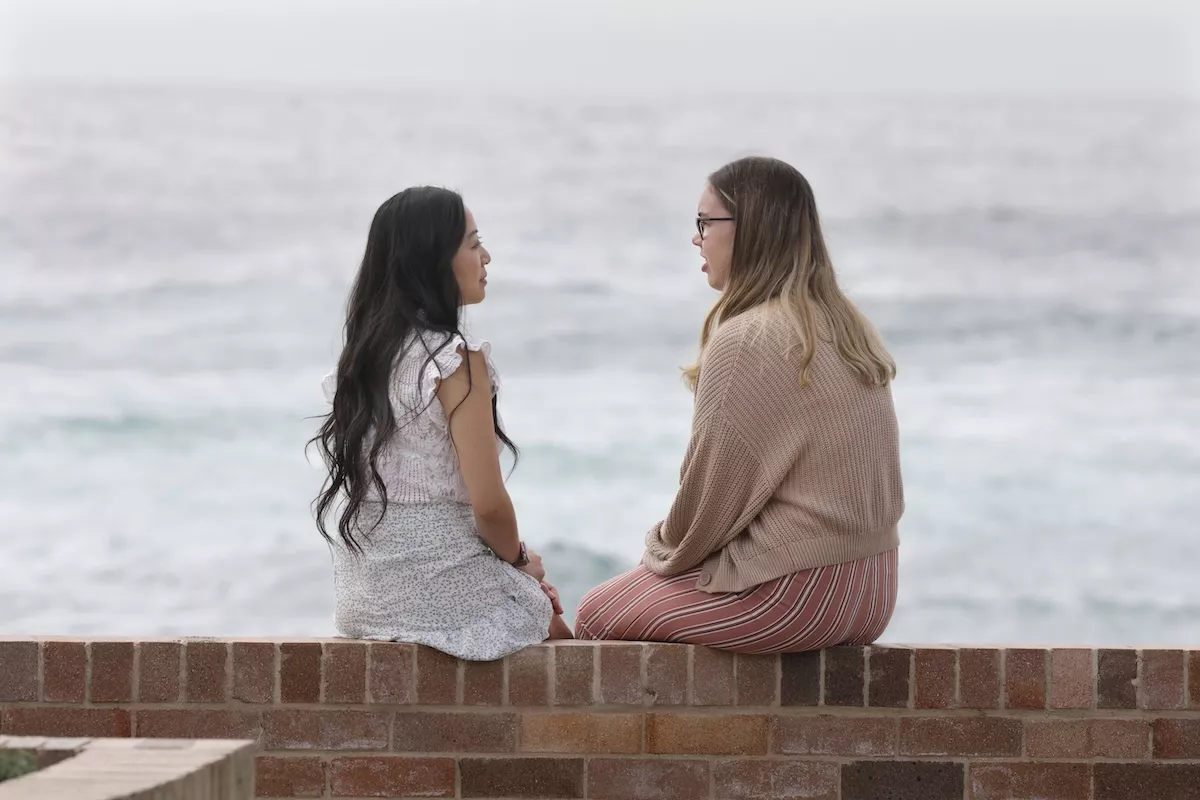
Where those conversations happen matters too. Searle’s most practical advice for reaching men and teenagers, who often find it hardest to talk about how they feel, is to sit beside them rather than opposite.
“There is a lot of evidence, particularly with teenage boys, that side-by-side conversation is really effective – in the car, out for a walk – without the pressure of making eye contact,” he said.
Australia’s Men’s Shed movement is built on the same idea, summed up in its motto: “Men don’t talk face to face, they talk shoulder to shoulder.”
Ask it and mean it
In Monaco and on the French Riviera, “ça va?” is exchanged dozens of times a day, in cafés, at the school gate and in office lifts, usually with little expectation of a real answer. The R U OK? approach asks for more: to mean the question, and to stay long enough to hear the reply.
The people most likely to notice when an expat is struggling are the friends, colleagues and neighbours who have become their family abroad. “When an R U OK? conversation is real and authentic, not just a throwaway line, and there is deep listening and care, it works for the person receiving the help. The help-giver finds strength in it too,” said Searle.
World Mental Health Day falls on a single Saturday this year, but asking ‘are you OK?’ is something for every day of the year.
Anyone in immediate danger in Monaco or France should call 112. SOS Help offers confidential emotional support in English on +33 1 46 21 46 46 from 3pm to 11pm daily. The 3114 suicide prevention line is free, operates 24 hours a day and is accessible (in French) from Monaco.
Monaco Life is written by qualified journalists, writing original content. Sign up for our free newsletter, listen to our podcasts on Spotify, and follow us across Facebook, Instagram, LinkedIn, and Tik Tok.
Main photo: Lachlan Searle, chief executive of Australia’s R U OK? association. Photo source: R U OK?