Monaco Diamond Exchange founder launches diamond investment club

Antonio Cecere - Monaco Diamond Exchange

The rough diamond sector is always rich in opportunities, yet it has proven to be difficult to penetrate for investors who are not proficient with the industry regulations.

If historically polished diamonds helped private investors to diversify their portfolios in order to retain, relocate and pass on wealth, the trade of rough diamonds is a much more elusive and exclusive domain of traders, cutters, institutional investors and sovereigns that stockpile as part of their investment regimes.

Monaco Life interviews Antonio Cecere, founder of Monaco Diamond Exchange, who formed Diamond Investment Club with the aim to bridge the gap between rough diamonds and investors.
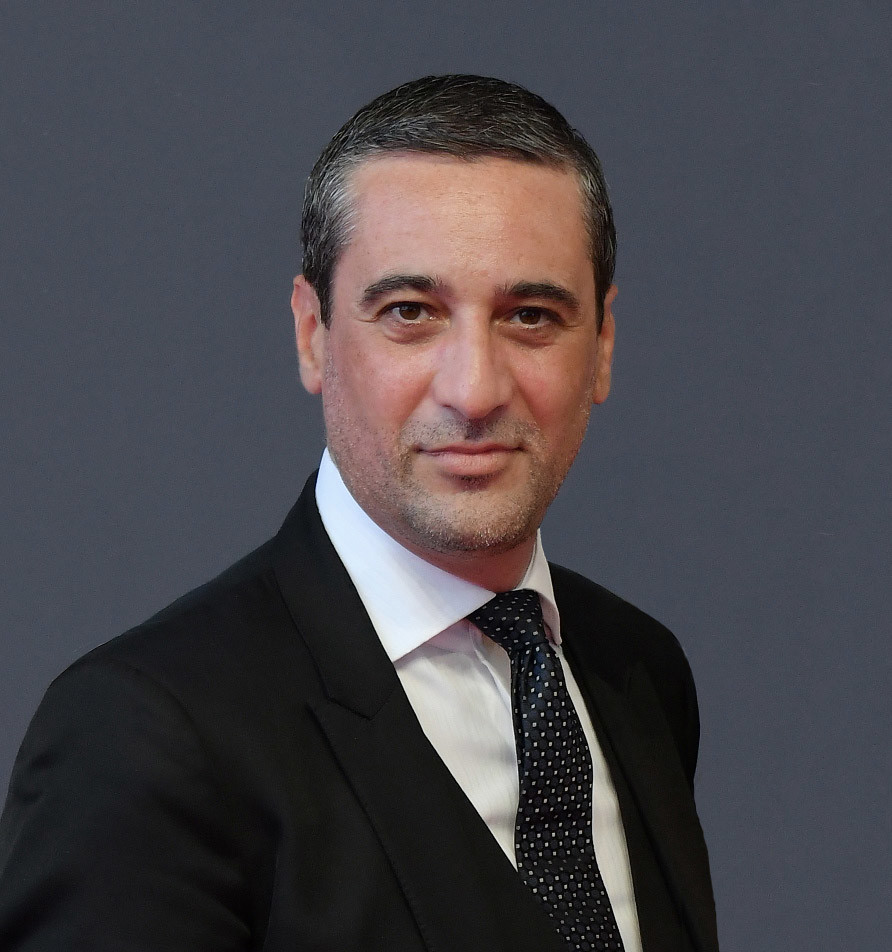
Antonio Cecere - Monaco Diamond Exchange

ML: What is the Diamond Investment Club?

AC: It is an investment club by invitation only that has as sole focus that to offer its members the opportunity to finance spot trades in rough diamonds. It is the first investment club of its kind that is exclusively dedicated to rough diamonds; it enables investors to yield from single transactions in a secure and controlled environment.

ML: What prompted you to create Diamond Investment Club?

AC: I am the Chief Executive Officer of MC.EXCHANGE, operator in the rough diamond sector that procures parcels of rough diamonds and facilitates trades across the globe; this is achieved in full compliance with Kimberley Process Certification Scheme under the vigilance of Monaco Diamond Exchange. We were asked by members of Monaco Diamond Exchange and by some private banks to generate investment opportunities and bridge the gap between investors and the highly lucrative rough diamonds trades; a regulated fund was the obvious choice, however it presented a greater level of commitment from the investors. Therefore, I decided to create something that could offer returns on individual trades with trade-cycles that are objectively short.

ML: How does Diamond Investment Club work?

AC: Diamond Investment Club generates a trade periodically and circulates it amongst its members; as first step we select a licensed and registered diamond seller with export licence from MC.EXCHANGE portfolio of secured sellers; we then set the total value of the trade and the parameters of the parcel to mirror the requirements of a pre-selected buyer provided by MC.EXCHANGE that is ready, willing and able to purchase. Monaco Diamond Exchange supervises every step of the process to ensure conformity with industry regulations.

ML: In other words, are you saying that you line up a buyer before the asset is acquired?

AC: Correct. We do this to reassure the investors strong of a market scenario where demand is greater than supply. This enables us to enter the trade knowing already that the asset is sold to the end-buyer and at what price prior to the asset being purchased. We need to bear in mind that in the immediate future we will see rough diamond supply decrease by 1-2% a year and demand continue its historical growth trajectory of 3-4% a year. In the next couple of decades the widening gap between supply and demand will be significant and this physical asset will be fully commoditized; in this view some global banks already started stockpiling rough diamonds.
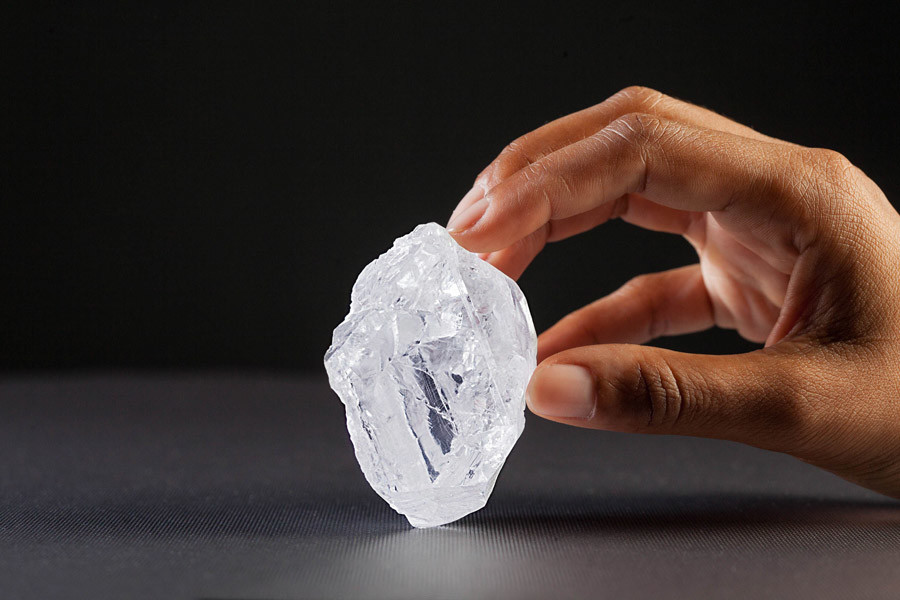
Lesedi La Rona diamond

ML: How are the funds received and managed?

AC: In order to add a layer of protection for the investors, we decided to employ a European asset management company that is licenced, insured and regulated; the asset manager is responsible for the auditing of all investment activities, for the due diligence on the receivables to meet banking compliance as well as hold the capital. Further, it enables the Club to accept investments in a number of cryptocurrencies including Bitcoins, Ripple and Ethereum. The banks used have a physical presence in all continents which allows the Diamond Investment Club to receive deposits in a number of currencies, from US Dollar to Russian Ruble, and transfer funds internally to local branches to complete the trades in a timely manner.

ML: What returns on investment can be expected by the investors and how long does a single trade last?

AC: Set administrative costs per trade are less than 3.50% of the turnover and operational costs include transport, insurance, export taxes and Kimberley Process Certification. Returns on investment for the investor range from 3% to 6% on each trade depending on the size of the investment; risk is very moderate with funds being protected by the asset manager and then converted into a physical collateral that is insured for the duration of the trade; each trade is completed within 3 weeks and the investors can comfortably achieve ten trades a year.

ML: Where do the diamonds come from and where are they sold to?

AC: We look at the trading conditions of a country and the ability of its diamond producers to export the mineral; we have established relationships with presidential cabinets and their ministers of natural resources across African countries; this enabled us to build working relationships with governmental mines, artisanal mines and exporters in Angola, Botswana, Namibia, Guinea, Sierra Leone, South Africa, Zimbabwe and Democratic Republic of Congo. For the resale of the diamonds we select either cutters and polishers from Surat and Tel Aviv, traders from Antwerp and Dubai or focus on institutional investors in New York, Geneva and Hong Kong.
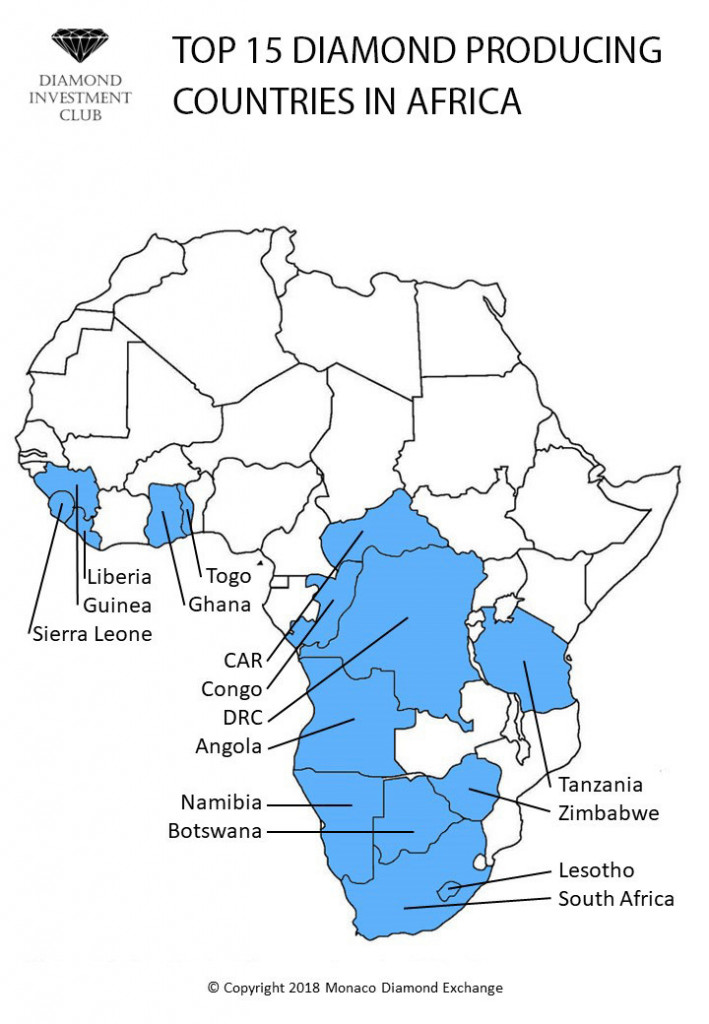
Top 15 diamond-producing countries

ML: Do you think you bridged the gap between investors and rough diamonds with Diamond Investment Club?

AC: I believe we have. We transformed a rough diamond trade into a financial product for investors that in turn benefit from high returns with a thoroughly managed risk. We delivered what we were asked for by Monaco Diamond Exchange members and by the private banks for their clients and, in the process, we created something truly exceptional.
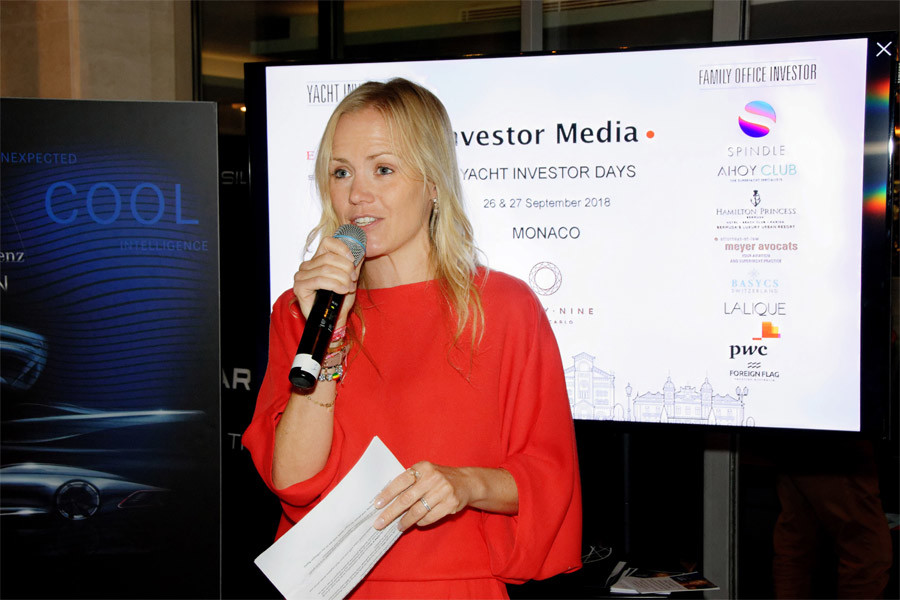
Monaco joins in International Day of the Girl

Vibeke Brask-Thomsen - SheCanHeCan

On 11 October, the International Day of the Girl, #Girl2Leader campaign events will welcome over 1,500 girls in events taking place in Albania, Bolivia, Canada, Guinea, Ireland, Kenya, Liberia, Malaysia, Malta, Monaco, Poland, Romania, Rwanda, Ukraine, the United Kingdom and the USA.

In Monaco, Ms. Nathalie Amoratti-Blanc, MP and President of the Women and Family Commission in the Conseil National, will host 16 girls as a part of a global campaign, taking place on five continents and aimed to encouraging teenage girls to consider a future in leadership.

This campaign represents a special opportunity for girls to hear inspiring personal stories from women politicians, to learn how they got involved in politics and to have the chance to ask them questions. The Monaco-based non-profit organization She Can He Can is a proud partner in this initiative and will speak about its activities on promoting girls’ leadership.

Vibeke Brask-Thomsen - SheCanHeCan
Vibeke Brask-Thomsen (Director SheCanHeCan). Pic: Pat Denton

The event will also be attended by M. Stephane Valeri, President of the Conseil National, Ms. Isabelle Bonnal, Director of the Department of Youth, Education and Sports, M. Marc Mourou, President of the Education and Youth Commission in the Conseil National and several female MPs. The students will have the chance to meet and discuss with the participating MPs.

#Girl2Leader is a global initiative which aims to empower girls from all over the world, encouraging them to consider leadership roles in their communities and to get involved in politics by connecting them with female politicians. To mark the International Day of the Girl, the Conseil National will be lit in purple on the evening of 11 October.

National partners include Women for Election, National Democracy Institute, International Republican Institute, House Democracy Partnership, Running Start, G(irls)20, Albanian National Youth Network, She Can He Can, and Luton Lights.

New energy regulations for buildings in the Principality

New building regulations

The Monaco government has announced a list of new energy regulations for buildings – part of the Principality’s sustainability drive.

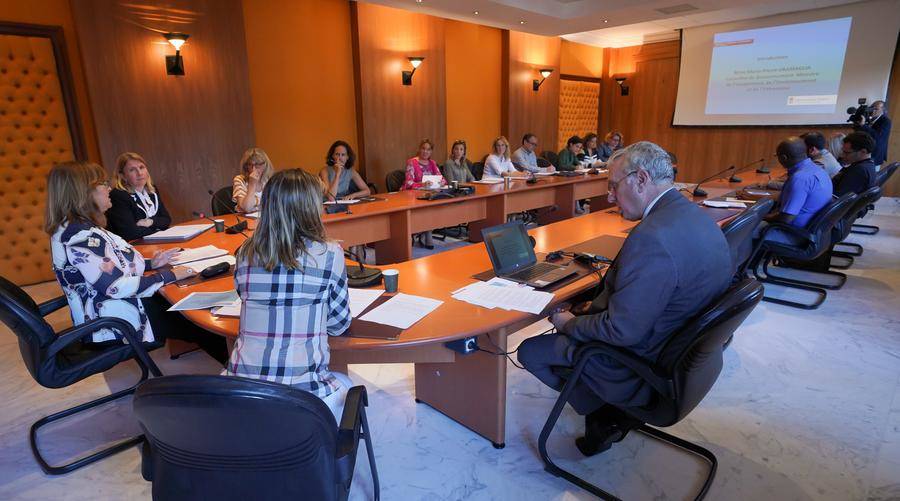
Surrounded by its teams of the Mission for the Energy Transition (MTE), the Direction of the Prospective, the Town Planning and the Mobility (DPUM) and the Direction of the Environment, Marie-Pierre Gramaglia, Councilor of Government -Minister of Equipment, Environment and Urbanism, yesterday presented to the media the new energy regulations for buildings in the Principality.

New building regulations
Marie-Pierre Gramaglia Government Advisor – Minister of Equipment, Environment and Urban Planning and her teams during the presentation to the media of the new energy regulations © Michael Alesi – Direction of Communication

This new text completes the list of the many tools put in place by the Prince’s Government to support the actors of Monaco’s energy transition.

Marie-Pierre Gramaglia recalled the purpose of this new regulation: to achieve the Principality’s greenhouse gas (GHG) reduction objectives. “This regulation is part of the Government’s action in the fight against climate change.The Principality’s ambitious commitment to reduce its GHG emissions requires, to be held, an acceleration of the collective effort” .

Séverine Canis-Froidefond, Director of the DPUM, then made a general presentation of the text (see technical sheet attached), which states in particular:

the ban on fuel oil in 2022 in old buildings
the obligation to carry out energy audits as early as 2022 for buildings built between 1930 and 1990
the obligation to carry out thermal insulation work during certain building rehabilitation works.

Virginie Hache-Vincenot, MTE, closed the press conference by presenting the energy auditing of buildings and the implementation of a subsidy allocated by the Government. Encouraging the anticipation of the statutory audit requirement (2022), the latter can cover up to 75% of the cost of the audit.

An event to follow on our social networks and from tonight on Monaco Info.

More information : technical sheet attached – transition-energetique.gouv.mc

Monaco at the 35th Ministerial Conference of La Francophonie

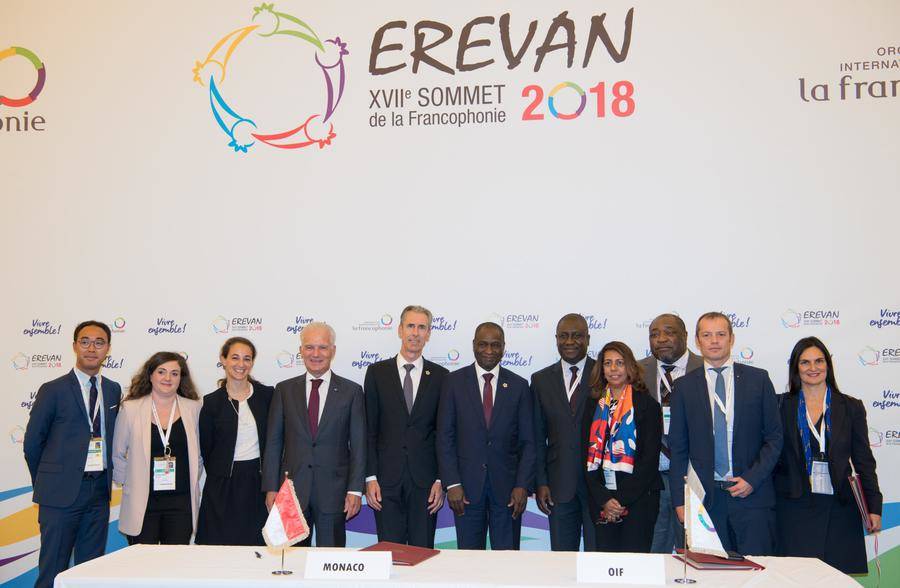
Gilles Tonelli, Government Counselor-Minister of External Relations and Cooperation, and Adama Ouane, Director of OIF, with their respective delegations © Palais Princier / Gaétan Luci

Gilles Tonelli, Government Counselor-Minister of External Relations and Cooperation, led the Monegasque delegation at the 35th session of the Ministerial Conference of la Francophonie, held on 8th and 9th October 2018 in Yerevan (Armenia).

The theme of this conference was: “Living together in solidarity, sharing humanistic values ​​and respect for diversity: a source of peace and prosperity for the Francophone world.”

Gilles Tonelli, Government Counselor-Minister of External Relations and Cooperation, and Adama Ouane, Director of OIF, with their respective delegations © Palais Princier / Gaétan Luci

During his speech, Mr Tonelli recalled that belonging to the French-speaking family underlies adherence to the fundamental values ​​of respect for cultural diversity, cooperation between member states and member governments and the promotion of of the rule of law.

He concluded his remarks by announcing the reception, in October 2019, of the 36th Conference, whose theme will be “Reconciling Humanity and the Planet: Perspectives in the Francophone Space on the eve of the 50th anniversary of the OIF.”

On the occasion of his presence in Yerevan, Gilles Tonelli signed two financing agreements that cover the duration of the next quadrennium (2019-2022), underlining the constant commitment of the Government of Monaco to the Francophonie.

  • A convention with the OIF to fix the amount of the voluntary contributions of the Principality of Monaco, by updating the commitments made previously. It focuses on themes that are dear to the Principality, namely learning the French language (especially for the benefit of migrant and refugee populations), education (especially that of girls), youth (through its volunteer program), the preservation of the environment and the energy transition.
  • A Convention with the Institute of La Francophonie for Sustainable Development (IFDD) for sustainable tourism in small island developing States and the fight against climate change.

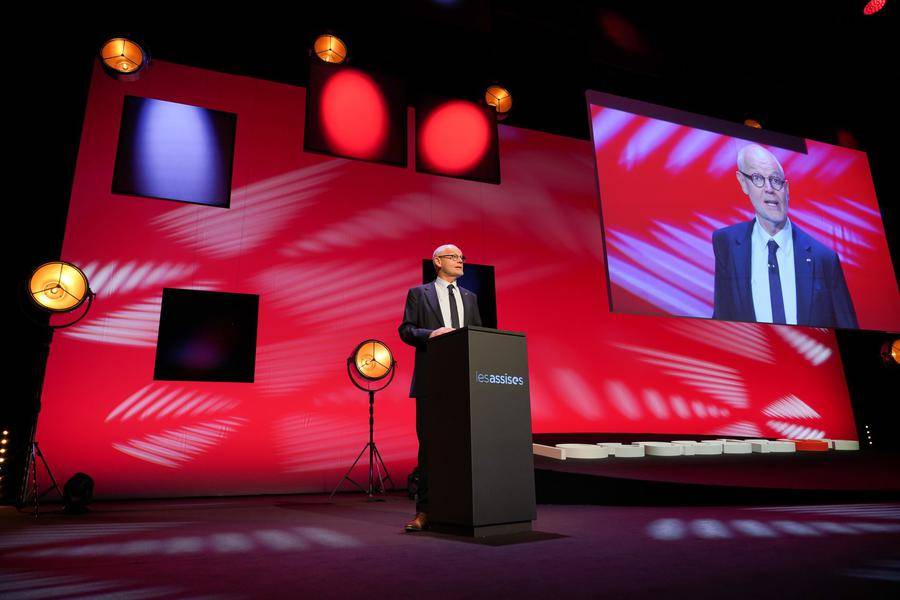
Opening of the 18th edition of the Assises of Security and Information Systems

Picture © Directorate of Communication / Michael Alési

The State Minister opened the 18th edition of the European Security and Information Systems, which runs until 13th October at the Grimaldi Forum.

This event is the essential rendezvous for cybersecurity in France. It aims to explore the major technological topics of the moment.

Picture © Directorate of Communication / Michael Alési

This year, for the first time, a VIP area within the workshops’ “Monaco Cybersecurity Initiative” brings together Monegasque entities dedicated to digital security in the Principality, including the Monegasque Agency for Digital Security (AMSN).

This is a unique opportunity to engage multiple partners who have a stake in digital media and security, from various industrial sectors.

The Minister of State insisted on Monaco’s three cybersecurity requirements: “attention, mobilization and adaptation”. Indeed, cybersecurity is one of the priorities of the Princely Government. The AMSN is the national authority in charge of the security of information systems in the Principality.

The minister added, “These meetings are now important, for Monaco of course, but also beyond, for all those who are passionate and concerned about security and digital transition issues – and there are many of them.”