Football: Monaco and Nice see out entertaining draw in Côte d’Azur derby

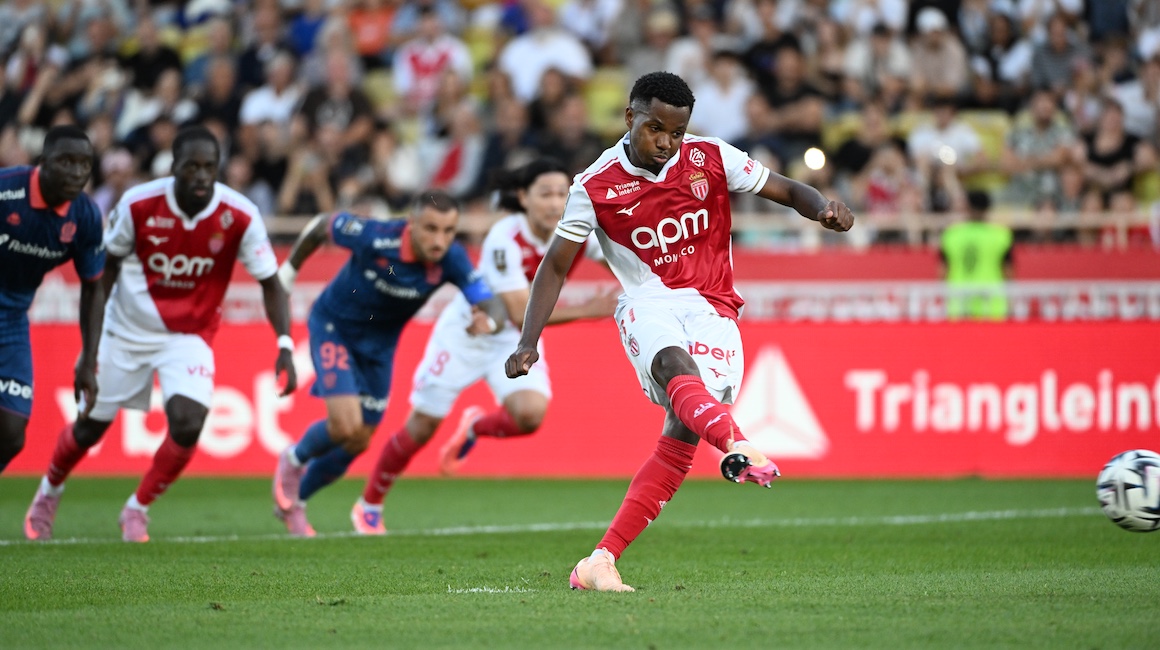
Monaco's Fati strikes his penalty against Nice.

Neither side will have left the Stade Louis II entirely satisfied after AS Monaco and OGC Nice saw out a 2-2 draw in the Côte d’Azur derby on Sunday evening.

Neither side were going particularly well going into this game, and the fiercely contested 90 minutes failed to kick-start either’s season. A draw against Manchester City in midweek somewhat papers over the cracks at Monaco, who are yet to have a convincing 90-minute display in Ligue 1; Nice, meanwhile, came into the game with just two wins in 10 games in all competitions. Out of the Champions League at the qualifying rounds, without a point in the Europa League, and languishing in mid-table, it was Le Gym who were perhaps in more urgent need of a win.

“We’ll take it, under the circumstances,” said Nice manager Franck Haise post-match. Monaco are grateful for the circumstances, which allowed them to come back and salvage a point. It was a slow, lethargic start in what was an underwhelming derby-day atmosphere due to the Nice ultras’ strike, which meant the away end was uncharacteristically sparse for such an encounter between two such close neighbours.

It was Nice who started the game the better of the two sides. Antoine Mendy had the ball in the net in the 16th minute, only to see it ruled out for offside, but a former Monégasque, Sofiane Diop, did get the away side ahead on the half-hour mark. It was a vague, floating effort towards the back-post that beat everyone, including Mohammed Salisu, who misread the trajectory of the strike, and Philipp Kohn, seemingly unaware that it was heading into his far corner.

Monaco receive contentious penalty decision

However, just minutes later came the lifeline. Ali Abdi, already on a yellow card, put his studs down Mika Biereth’s thigh and was given his marching orders. But just as they did against AJ Auxerre earlier this season, Monaco conceded in spite of their numerical advantage, and it was Diop again, striking from the spot after Krépin Diatta was adjudged to have handled the ball.

And it was another handball, this time from Nice’s Mendy, that brought the game back to line in first-half injury-time. The Nice defender’s stray arm was punished, and Ansu Fati stepped up to net his first of the day and continue his excellent start to life in Red and White. Then came the second moment of contention – Monaco’s second penalty and the third of the encounter.

Put in behind, Folarin Balogun got in front of Moise Bombito, felt a nudge in the back and fell. “Balogun was in front of him…” said Hutter, evoking the incident, highlighting that he felt hard done by for the penalty awarded against his side earlier in the encounter. Bombito looked to be seriously injured in the incident, but despite the lengthy delay, Fati kept his calm to double his account on the day.

But it was a Monaco side struggling for inspiration, for ideas, for incision, who then played in front of Nice for much of the rest of the half. There were few chances for Les Monégasques, but one did come the way of George Ilenikhena, so often the danger-man off the bench, but he directed his free header wide of Yehvann Diouf’s goal.

Hutter expects returning players against Angers

A late push on the Nice goal could not unblock the encounter, as both sides were forced to settle for a draw. “I am not 100% satisfied,” said Hutter post-match. When have we heard that before?

“From the two draws this week, I have different feelings. The 2-2 versus Manchester City, with the final goal at the end, felt like a win. This 2-2, from 2-0 down, I am not satisfied […]  At the moment, we are not 100% happy, but when all of the players are back on board, we will be more competitive,” added the Monaco manager. 

Hutter believes that Aleksandr Golovin, Aladji Bamba, and Paul Pogba could all be back on for the next match, against SCO Angers, upon the return from the international break. Whilst it still leaves a lengthy injury list, improvements will now be expected from a diminished Monaco side yet to hit their stride.

Stay updated with Monaco Life: sign up for our free newsletter, catch our podcast on Spotify, and follow us across Facebook,  InstagramLinkedIn, and Tik Tok.

Photo source: AS Monaco
Monaco’s Justice Secretary: “We need to come out of the shadows”

When Samuel Vuelta Simon arrived in Monaco as Secretary of State for Justice just over a year ago, he made a shocking discovery: the Principality’s Wikipedia page didn’t even mention its justice system. 

“I thought, this isn’t possible,” he told the press, including Monaco Life, during a meeting on October 2nd. “How can people not know about a justice system that works well, works quickly, and is independent?”

That moment shaped his mission to modernise Monaco’s court while helping understand how justice actually works.

“Justice must be accountable to the community that employs it,” Vuelta Simon said. “It’s not some shadow arm of the state. It needs to explain what it does for people every day.”

It’s an ambitious goal for a small operation. Monaco’s entire justice administration runs on 30 people, with about 10 senior officials managing everything from courtrooms to international treaties.

Addressing independence questions

One of the first things Vuelta Simon confronted were the claims that Monaco’s judiciary lacks independence. Critics site article 88 of the Constitution, which states judicial power “belongs to the Prince”. But he argues that they are reading selectively.

“The following articles make clear that power is fully delegated to the courts,” he explained. “In a year here, I’ve never given a single instruction in an individual case.”

His role is administrative, which means ensuring judges can work independently, not directing their decisions. The only area where he can intervene is speed. “I can ask where they are on a case, whether they can move faster. People deserve prompt justice. But the substance of cases isn’t my call.”

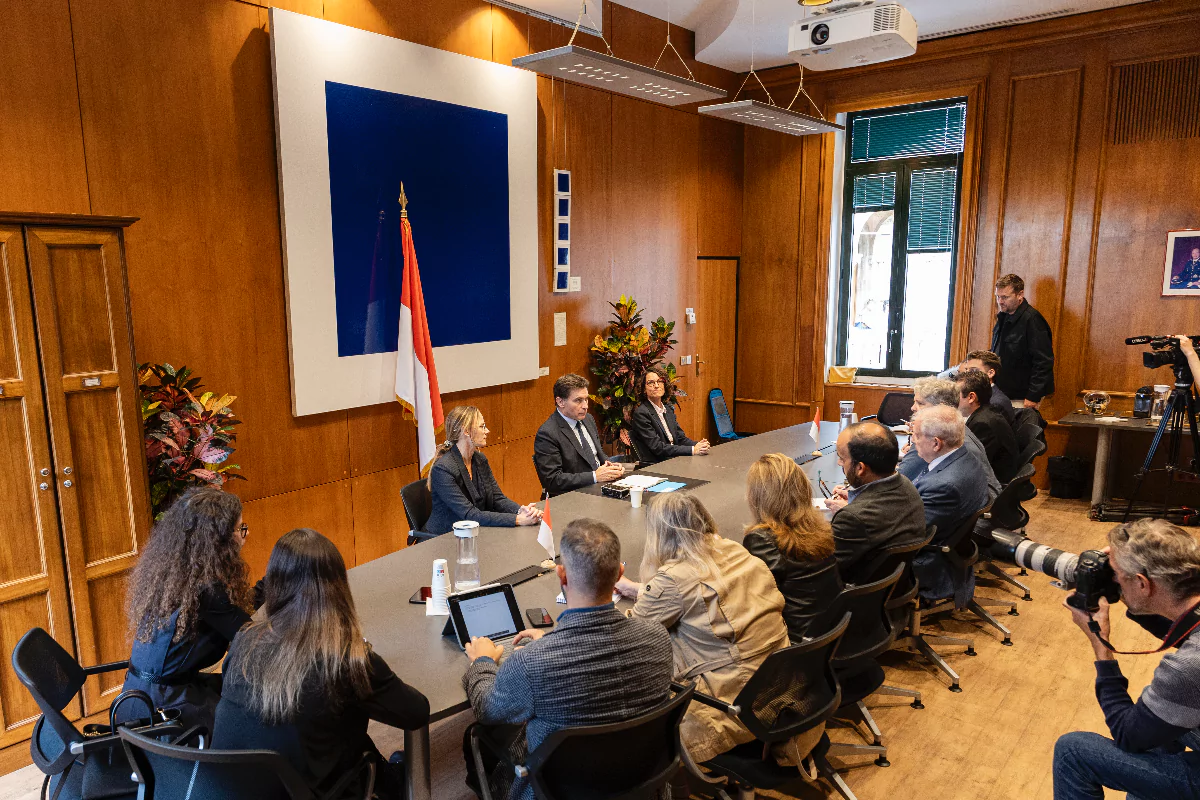
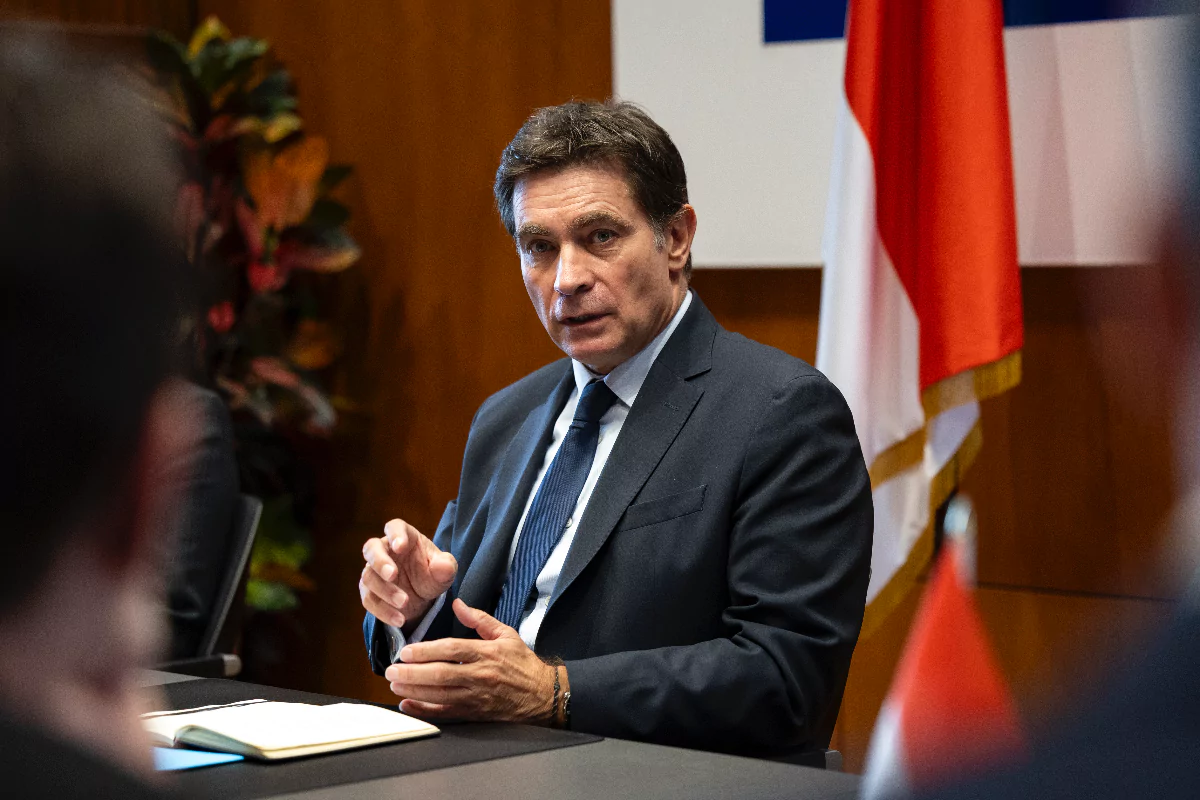
Vuelta Simon during the press conference, photo credit: Manuel Vitali, Direction de la Communication 

Recruiting Monegasque judges

For years, young Monegasques have shown little to no interest in becoming judges. Last year, Monaco cancelled a magistrate recruitment competition when candidates withdrew.

This year brought a breakthrough though – 11 people enrolled in preparation courses, five registered for the magistracy exam, and three applied exclusively for judge positions. “This has never happened,” Vuelta explained.

His aim is for at least half of Monaco’s magistrates to be national. Currently, most are French.

The Monegasque Institute for Judicial Training, in an attempt to make justice more accessible, offered 700 training places this year, up from 340 three years ago. New programmes now serve government workers and students, not just legal professionals.

Monaco has also launched its first journal in June and began a book series on Monegasque law. These initiative address practical gaps like bailiff’s fees that hadn’t been updated in 25 years, while notaries operate under 1886 regulations.

“When we forget to update these texts, our justice system eventually grinds to a halt,” Vuelta Simon said.

International standing

Next year, Monaco will chair the Council of Europe’s Committee of Ministers from May to November 2026, an opportunity that won’t recur for over two decades.

“It’s a chance to show what we do here and prove we’re at the level of major states,” Vuelta Simon said. Monaco is also negotiating judicial cooperation treaties with China, Panama, and Brazil.

“We’re a small team achieving important things quickly with limited resources,” he said, wrapping up the conference. Whether updating Wikipedia, training judges, or exiting grey lists, his main objective remains consistent, and that is bringing Monaco’s justice system into clearer view.

Stay updated with Monaco Life: sign up for our free newsletter, catch our podcast on Spotify, and follow us across Facebook,  InstagramLinkedIn, and Tik Tok.

Main photo of Vuelta Simon credit: Manuel Vitali, Direction de la Communication

Shein picks France for first physical stores as Galeries Lafayette pushes back

Fast fashion giant Shein has announced plans to open its first permanent shops in France this November, but the move has sparked opposition from Galeries Lafayette, which denounced the brand’s practices as incompatible with its values.

The Chinese-founded, Singapore-based platform will open its debut store in the BHV Marais in Paris, followed by five more “gradually” in Dijon, Reims, Grenoble, Angers and Limoges. The shops will operate within Galeries Lafayette-branded department stores owned by the Société des Grands Magasins (SGM).

However, Galeries Lafayette issued a statement distancing itself from the deal, insisting that it no longer operates these locations. “Galeries Lafayette would like to express their deep disagreement with this decision [of SGM] with regard to the positioning and practices of this ultra fast fashion brand, which is in contradiction with their offer and values,” the group said.

Criticism from the European textile sector

Shein, founded in 2012, has become one of the most recognisable names in online fashion, known for its extremely low prices, vast product range and aggressive marketing. In 2022, the company reported revenues of $23 billion (€20 billion) and employs more than 16,000 people worldwide.

But its rise has drawn sharp criticism from Europe’s textile and clothing industry, which accuses Shein of undercutting domestic brands through unfair competition. Industry groups say the firm skirts EU environmental and social standards and exploits customs duty exemptions on small parcels, allowing it to flood the market at rock-bottom prices.

A promise of jobs and urban renewal

SGM defended its partnership with Shein, saying the project was about “revitalising city centres throughout France, restoring department stores and developing opportunities for French ready-to-wear.” The group claims the alliance will create 200 direct and indirect jobs in France.

For now, Shein insists that its French stores will represent a “sustainable” model and mark a new phase in the company’s global strategy. But with resistance from established retailers and growing scrutiny from regulators, the fast fashion giant faces a contentious debut on Europe’s high streets.

Stay updated with Monaco Life: sign up for our free newsletter, catch our podcast on Spotify, and follow us across Facebook,  InstagramLinkedIn, and Tik Tok.

Photo credit: Raysonho @ Open Grid Scheduler / Scalable Grid Engine, CC BY-SA 4.0