Court blocks Valbonne shopping centre project in blow to developer

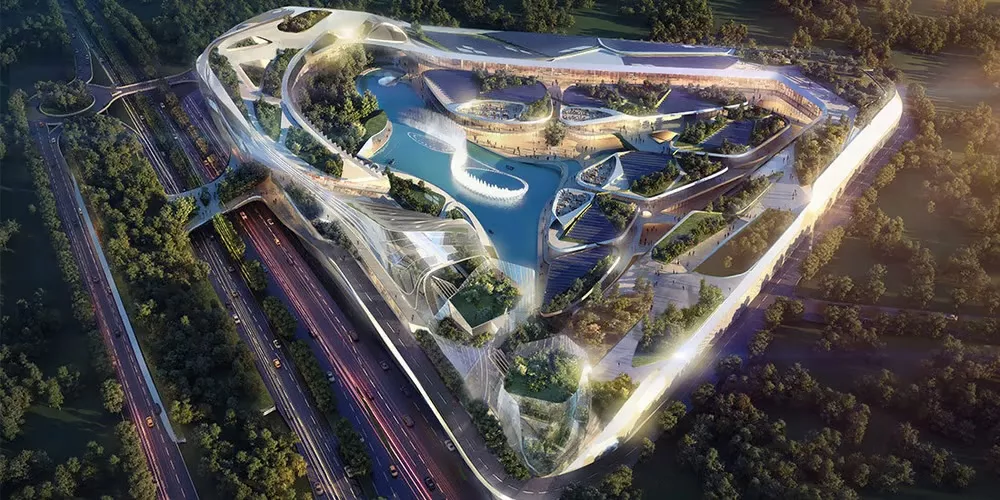
A French appeals court has rejected the building permit for the long-contested Sophia Village shopping centre in Valbonne, effectively bringing the troubled project to a standstill and delivering a significant legal setback to its developer, the Compagnie de Phalsbourg.

The Marseille Administrative Court of Appeal ruled on Tuesday to uphold the unfavourable opinion issued by France’s National Commission for Commercial Planning in June 2024, dismissing the developer’s appeal point by point. The decision means construction cannot proceed on the site formerly known as Open Sky — a project that has been mired in controversy, legal challenges and repeated delays since it was first announced more than a decade ago.

For the association En Toute Franchise, which has led opposition to the project on behalf of small independent retailers, the ruling was an unambiguous win. The mayor of Cannes, David Lisnard, also welcomed the decision, saying it represented “a victory for downtown shops, local shops, which contribute to the future and vitality of the neighbourhoods, create social ties and reflect a certain art of living essential to the quality of life.”

A complicated victory

The mayor of Valbonne, Joseph CĂ©saro, was more measured. Describing the outcome as a “Pyrrhic victory” — one obtained at a cost almost equivalent to defeat — he acknowledged the significant uncertainties the ruling now creates. “The real difficulty is going to be to know what we are going to do next,” he said. “The town hall alone does not have the means to buy back the entire land to carry out the project of its choice. It will be necessary to call on the public land institution and propose an economically viable project.”

The site, located in the heart of the Valmasque area and earmarked for development since the early 2010s, was originally scheduled to open in 2020. The project has been the subject of multiple legal challenges, including from En Toute Franchise, which describes its mission as defending small retailers and their quality of life.

The court found that the National Commission for Commercial Planning had acted within its rights in issuing an unfavourable opinion, rejecting the developer’s claims that the process had been irregular or that the commission had misapplied commercial planning law. Judges ruled that the project risked creating negative impacts on existing town centres, including Valbonne, and that traffic in the area was already saturated at peak times.

What happens next

Several options remain open to the Compagnie de Phalsbourg. The developer could appeal to the Council of State, France’s highest administrative court, though opponents of the project believe this is unlikely. Alternatively, a revised project with a significantly smaller footprint could be submitted — something the association En Toute Franchise indicated it would not oppose outright, provided the new scheme was substantially reduced and placed greater emphasis on environmental considerations.

For now, however, the site remains blocked — and after twelve years of setbacks, legal battles and broken deadlines, the future of the Sophia Village project is more uncertain than it has ever been.

Stay updated with Monaco Life: sign up for our free newsletter, catch our podcast on Spotify, and follow us across Facebook,  Instagram, LinkedIn, and Tik Tok.

Main image: the original design for the Open Sky shopping centre
Monaco’s GirlBoss mentoring event returns

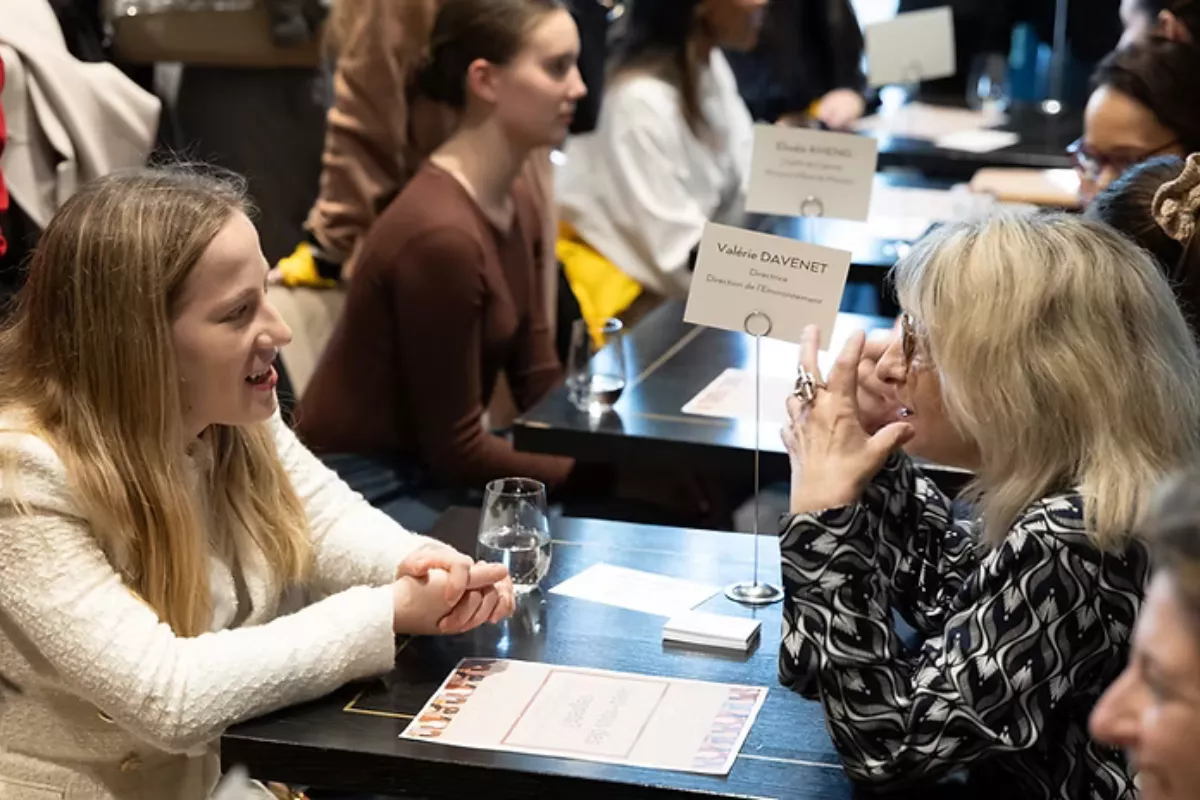
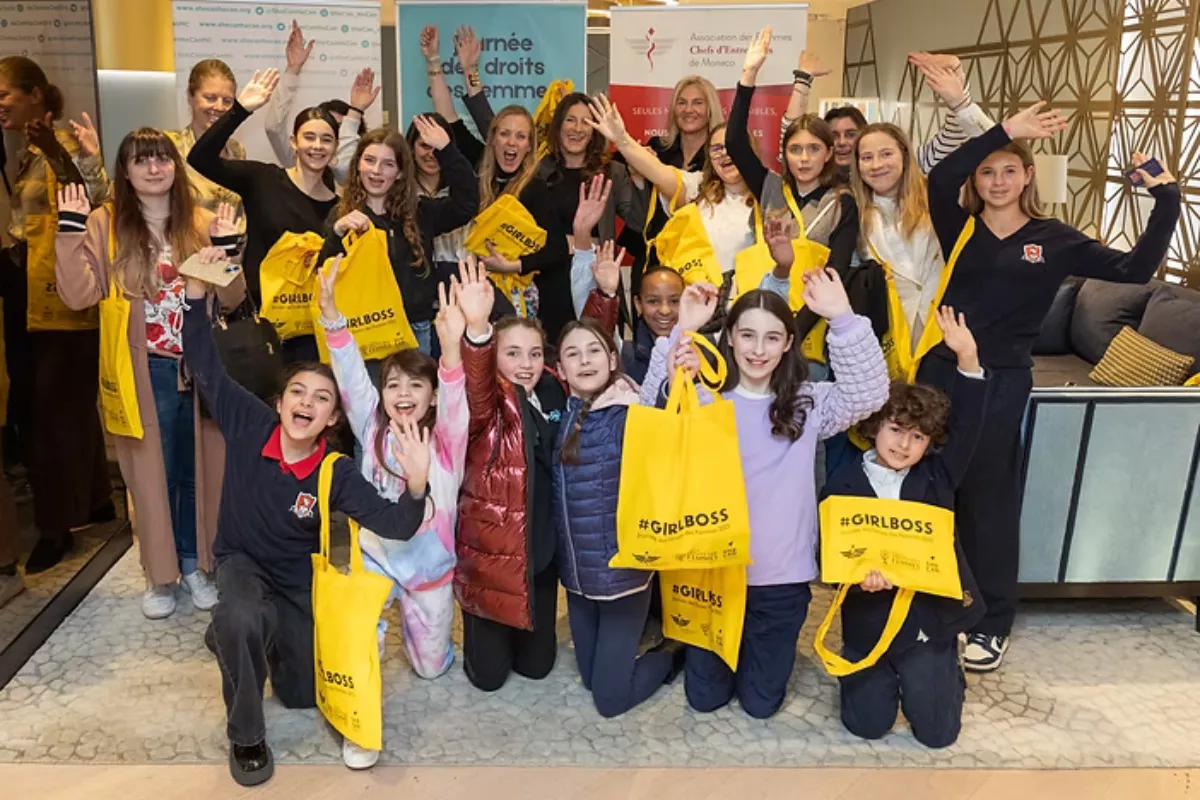
Girls and young women aged 11 to 25 are invited to meet some of Monaco’s most accomplished female leaders in an afternoon of open, small group mentoring sessions designed to inspire the next generation. 

The Speed Mentoring GirlBoss event, now in its fifth year, is organised by SheCanHeCan and the Association des Femmes Chefs d’Entreprises de Monaco (AFCEM), with the support of the ComitĂ© for the Promotion and Protection of Women’s Rights.

It is set to take place on 4th March, coinciding with International Women’s Rights Day, at Le MĂ©ridien Beach Plaza, starting at 3pm.

Participants will move through a series of small-group session with the chance to ask mentors about their career paths, the obstacles they have faced and how they got where they are. The goal is for young women to see that it’s possible. Then, they will be more likely to believe it possible for themselves.

During the previous edition of the GirlBoss event, photo credit: SheCanHeCan

More than 20 mentors will be present, spanning fields including finance, architecture, logistics, pharmaceuticals and haute couture.

Among the confirmed names are internationally acclaimed Monegasque pianistStella Almondo, founder of Little Wonders and member of the Grimaldi family Marie Ducruet, Monaco’s Interministerial Delegate for Women’s Rights CĂ©line Cottalorda, Director of the CHPG BenoĂ®te Rousseau de Sevelinges, and BĂ©atrice Fresko-Rolfo, member of the National Council.

Those wishing to register can do so by visiting: shecanhecan.org/speedmentoring

Stay updated with Monaco Life: sign up for our free newsletter, catch our podcast on Spotify, and follow us across Facebook,  Instagram, LinkedIn, and Tik Tok.

Main photo credit: SheCanHeCan.

Sharing, the Robuchon way: redefining fine dining on the Esplanade du Portier

Robuchon Monaco has introduced a new Sharing Menu — a refined yet relaxed way to experience the house’s precision-led French cuisine, without sacrificing the standards that defines the Robuchon name.

There is a particular weight that comes with the name Robuchon. It evokes discipline, butter-laden potato purée and a near-mythical devotion to craft. So when Robuchon Monaco announced this February that it was expanding its offering with a new Sharing Menu, the question was not whether it would be good — but whether it could balance looseness with the exacting standards that have long defined the house. The answer, reassuringly, is yes.

The concept, described by the restaurant as “a fresh, convivial and dynamic way to enjoy culinary experience”, is positioned as a natural evolution rather than a reinvention. In practical terms, it means that instead of moving sequentially through a rigid tasting format, the table becomes the stage. Starters and mains arrive in a considered rhythm, designed to be passed, discussed and experienced together. It is interactive and relaxed, without ever feeling casual. The à la carte menu and the six- and seven-course tasting journeys remain available, preserving the formal architecture of the Robuchon experience for those who want it.

A Parisian dining room on the Mediterranean

The dining room feels unmistakably Parisian — elegant but not austere — washed in soft, light green pastel tones and vertical lines that temper the formality. Service unfolds with quiet choreography. There is a sense that someone is always watching, but never hovering. The staff guide you through the menu with fluency and warmth; they are polished yet approachable, confident enough to laugh, perceptive enough to know when not to. Within minutes, you feel less like a first-time guest and more like a returning regular.

The food reflects the same balance of discipline and ease. Joël Robuchon, who held the record for the most Michelin stars in the world — more than 30 across his global restaurants — built his reputation on elevating simplicity to luxury. His pommes purée, whipped with astonishing amounts of butter, became shorthand for indulgent precision. His philosophy remains embedded in the kitchen here. As he once said, “Perfection is a lot of little things done well.” At Robuchon Monaco, those little things are everywhere.

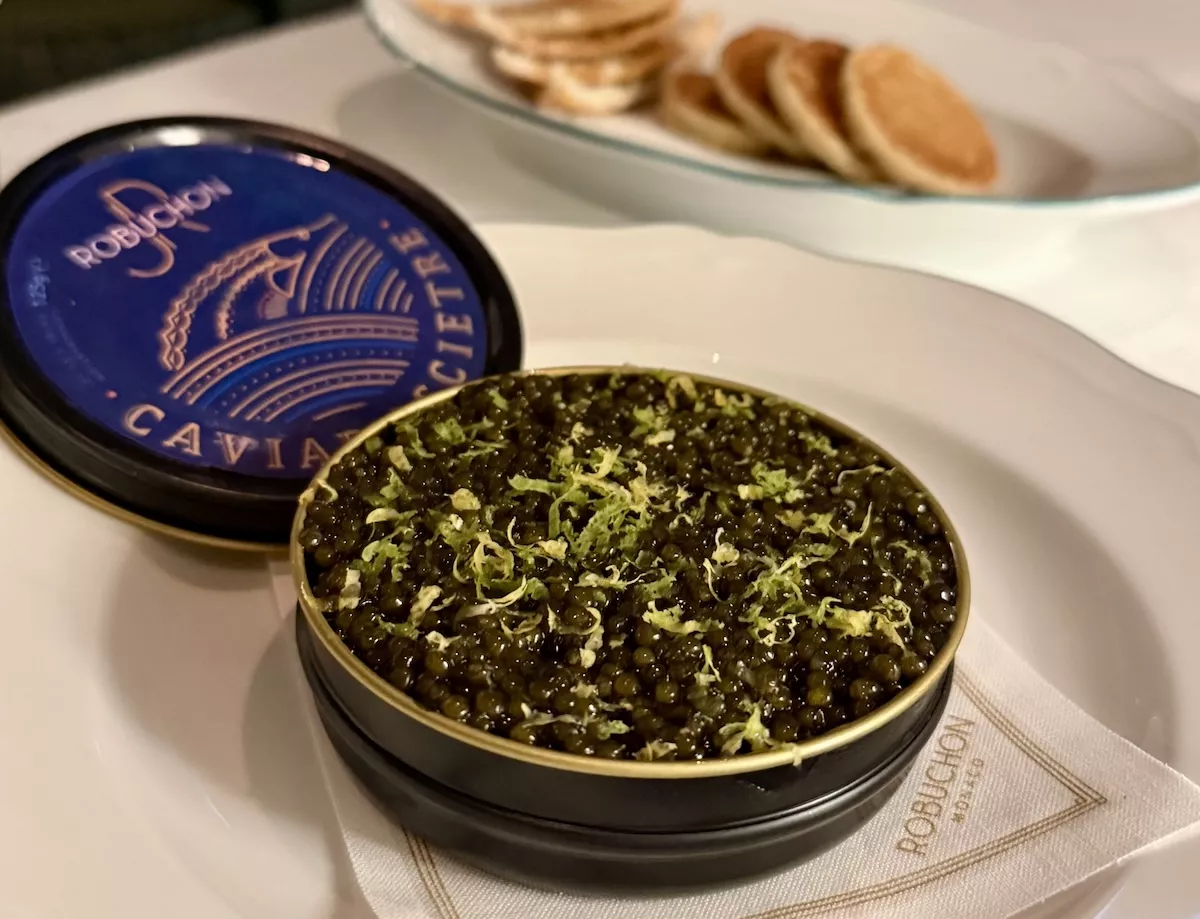
Robuchon’s signature favourite – caviar and king crab. Photo credit: Cassandra Tanti

Then the food arrives

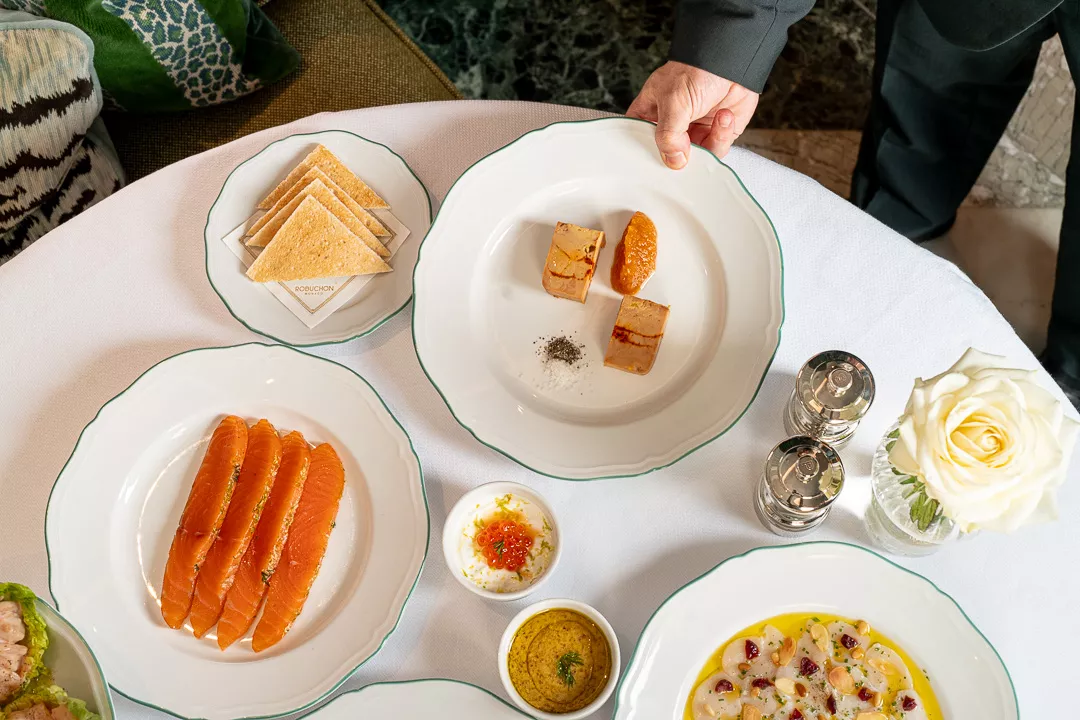
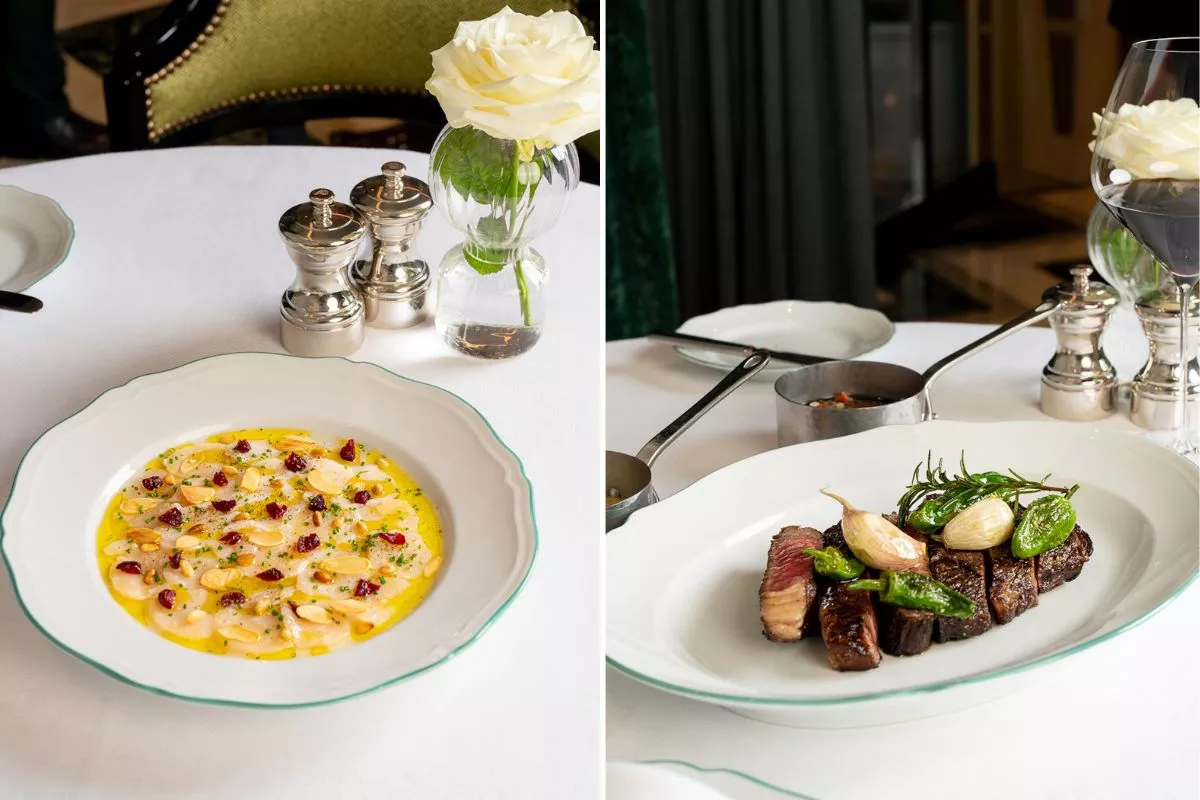
Our Sharing Menu begins with a procession of starters. The whitetail carpaccio arrives first — translucent slices lifted by a precise, flavour-packed garnish that transforms the dish into something quietly extraordinary. It is the finest carpaccio I have eaten. The salmon gravlax, served with homemade wholegrain mustard, is textbook in its balance of salt, sweetness and texture.

Then arrives what I am told is Robuchon Monaco’s most sought-after dish: King crab and Oscietra caviar, served in its tin. Beneath a lavish layer of Robuchon caviar rests sweet, generous chunks of king crab. Using a mother-of-pearl spoon, you delve through the layers, spooning the delicate mixture onto warm homemade blinis and petite toasts — or savouring it neat. The combination is as indulgent as it promises to be, and I find myself thinking I would gladly return for this alone, accompanied by a chilled glass of champagne.

The main courses sustain the momentum. The grilled wagyu entrecôte is seared to a dark, caramelised crust while remaining supple within, served simply with grilled asparagus and fresh spinach. The gigot d’agneau de lait au feu de bois — milk-fed lamb cooked over wood fire — is perfectly flavoursome and tender. As someone raised in Australia, where lamb is both commonplace and fiercely judged, I can say this was exceptional: delicate, deeply flavoured, unforced. And the potato purée? It is every bit as silken and indulgent as legend suggests. One suspects the butter content is formidable. One also decides not to ask.

Even with little room to spare, the crème caramel proves irresistible — trembling, bittersweet, immaculate.

Flavourful whitetail carpaccio and perfectly seared, decadently luscious wagyu

A legacy unfolding in Monaco

Robuchon Monaco does not exist in isolation. The brand’s journey in the Principality has been gradual and deliberate. Robuchon Le Deli opened first on Avenue Saint-Laurent, followed by Le Petit Café on Rue du Portier — a more intimate, café-style expression of the house. After the closure of its former address at the Hôtel Métropole Monte-Carlo, the opening of Robuchon Monaco on the Esplanade du Portier marked a confident return, conceived as the gastronomic flagship in Monaco. The new Sharing Menu feels like the next logical step in that progression: a loosening of structure without loosening standards.

Positioned at the far end of Monaco’s evolving food and bar strip, the restaurant sits slightly removed from the tourist current. When the terrace opens for the season, it will add another dimension to an address that already feels poised to anchor this growing neighbourhood. There is pleasure in stepping outside after dinner into the low hum of the surrounding establishments, aware that you have just experienced something memorable inside.

Credit is due to the team who bring that experience to life: assistant manager Salvatore Strangio, Chef Jonathan Larrieu, server Sophia and sommelier Nicolas Baan. Their assurance and attention to detail shape the evening as much as the kitchen does.

Robuchon once built an empire on the idea that greatness lies in the accumulation of small, disciplined acts. At Robuchon Monaco, that philosophy remains intact. The difference now is that it can be passed across the table.

See also: 

Brunch 2.0: Why Monaco’s weekend ritual just got a Robuchon upgrade


Main photo courtesy of Robuchon Monaco

Winter Olympics 2030: France’s Prime Minister silences doubters as Olympic flag arrives in the Alps

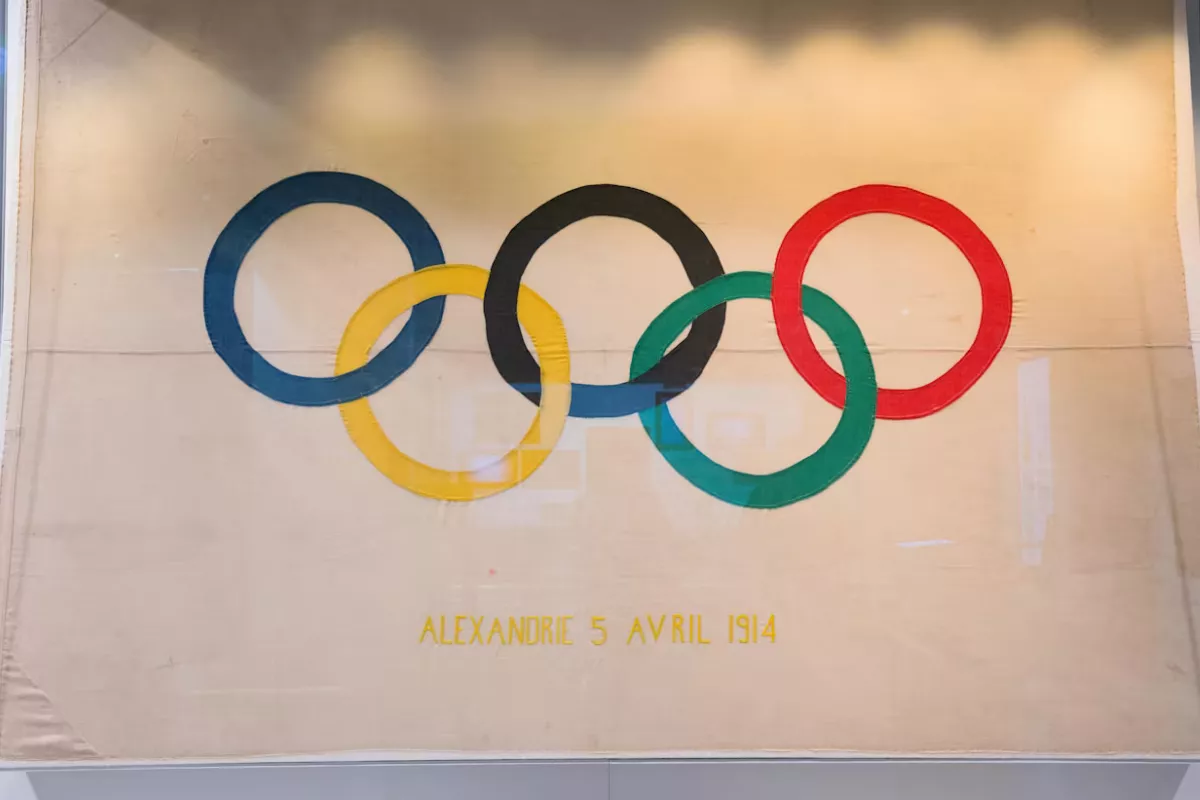
With the Milano Cortina 2026 Winter Games now wrapped up, the Olympic flag officially arrived in the French Alps on Monday, marking a new milestone for France, one of the most frequent hosts of the Games in history. 

France has previously hosted both the Winter and Summer Games three times, with the most recent edition dating back to Paris 2024. The arrival of the flag now transfers the responsibility of the 2030 Winter Games to the French Alps.

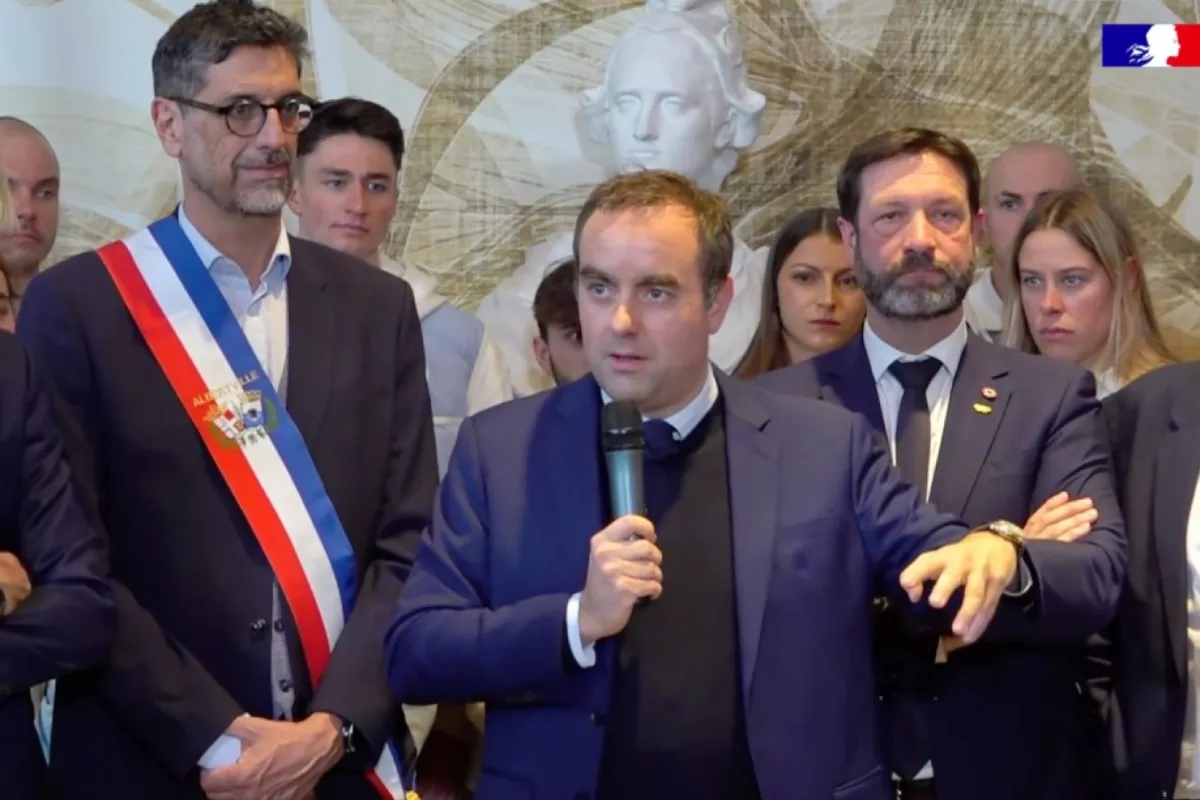
Upon arrival, Prime Minister Sébastien Lecornu seized the opportunity to express his pride and address frequent criticism made during the organisation of such major sporting events.

The Olympic flag, photo credit: IOC

Starting his speech, he stated proudly that France now has “something completely unexpected, completely singular in our history, with this frequency of hosting the Games, the ability to look for effectively sporting results that are out of the standard.”

Following, he made particular mention of France’s team at this year’s Winter Games, praising “an absolutely formidable, hyper motivated, hyper prepared team.”

He also welcomed the mobilisation of local authorities, regional presents, parliaments and mayors, united behind a shared ambition: “not to make subtractions and divisions, but to make additions”, in the service of sporting values.

Addressing criticism

However, the Prime Minister did not shy away from addressing criticism, responding to those who repeatedly question France’s ability to deliver, pointing out the country’s savoir-faire (know-how) in successfully organising such events. “Every time, we have the same ones who come to reintroduce doubt,” he said, “And this is poison for the country.”

He used the 2024 edition as a prime example, where – despite geopolitical and security challenges – France was able to showcase its ability to organise a large-scale international competition.

In fact, being a former minister of the Armed Forces himself, he noted that security operations for 2024 were far more complex than anything seen in the early 1990s – and yet, France delivered.

With further changes of government expected before 2030, Lecornu was also keen to stress the continuity of the state’s commitment. “The teams change, they will change, there will be other governments by 2030, but there is a continuity of the state, a continuity of the word given, and simply a continuity of the desire to succeed and properly organise these Games in 2030.”

He then closed with a rallying call to silence the doubters once and for all: “Let’s leave the bad sleepers aside – everyone has their own role to play, and let’s all shoot in the same direction to get there in 2030.”

Stay updated with Monaco Life: sign up for our free newsletter, catch our podcast on Spotify, and follow us across Facebook,  Instagram, LinkedIn, and Tik Tok.

Sébastien Lecornu during this address, photo credit: Government Information Service