

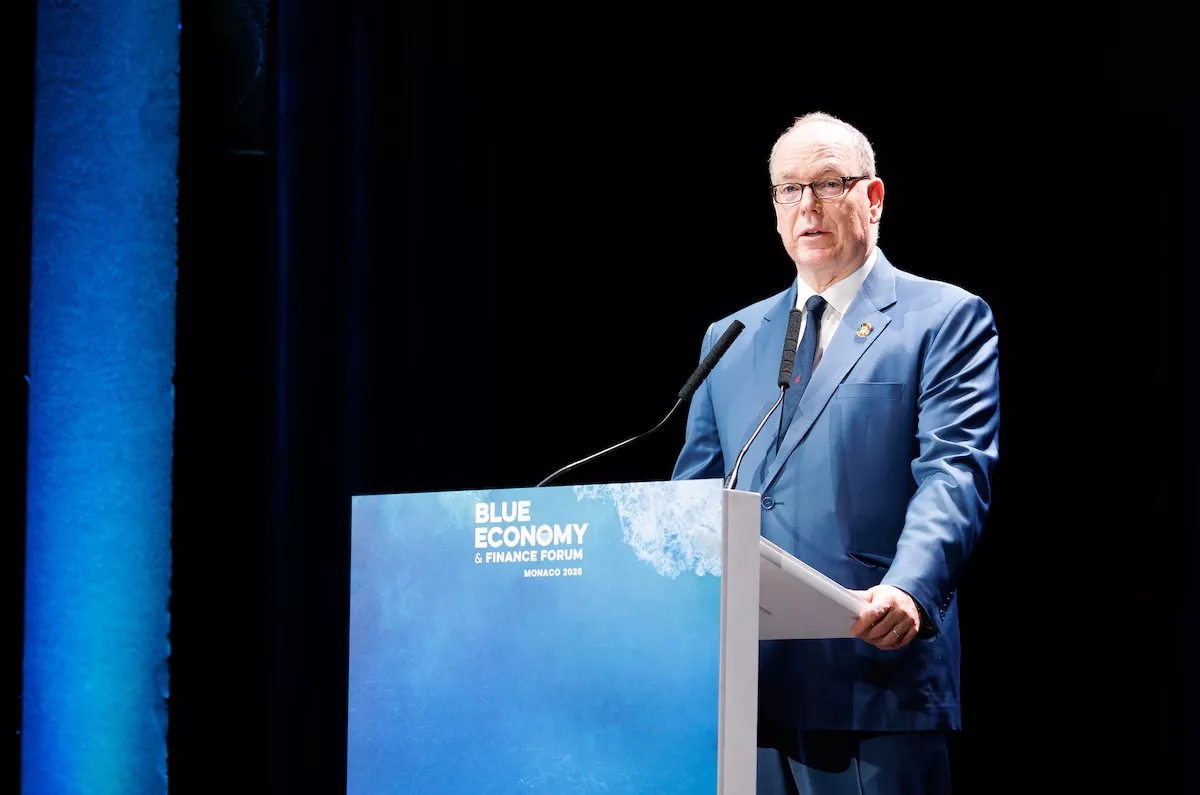
High-profile world leaders and top-tier venture capitalists gathered in Monaco on 28th and 29th May for the second edition of the Blue Economy and Finance Forum (BEFF) to declare that the multi-trillion-dollar ocean economy is no longer a niche for philanthropists—it is officially the defining investment opportunity of our time.
Opening the forum with a sharp directive, Prince Albert II made Monaco’s stance unequivocally clear. “Let me be plain: I will not ask whether the ocean is investable. We have left that question behind us. I ask something harder: invest in the ocean now. Invest in it at scale, and invest in what it truly is—not a risk to be managed, but the defining opportunity of our time.”
The Prince emphasised that whilst the global blue economy generates a staggering $2.5 trillion annually, it currently receives only a minute fraction of worldwide sustainability capital. In his view, the foundational debate over whether the ocean belongs on a financial balance sheet has been decisively settled; the pressing challenge now is determining how quickly and boldly institutions will deploy their reserves. The Prince also highlighted that Monaco is actively leading by example through the ReOcean Fund, urging private equity, venture capital, and institutional investors to stop viewing the high seas as a risk to be managed, but rather as the defining economic and civilisational opportunity of the era.
This sentiment of urgent, high-stakes stewardship was closely echoed by UAE royal and sustainability advocate, Sheikha Shamma Al Nahyan. Drawing a parallel between Abu Dhabi and the Principality, Al Nahyan underlined the profound historic and economic bonds that both coastal states share with the sea. Moving far past the outdated concept of the ocean as a mere resource to be plundered, she framed marine conservation as an absolute multi-generational, civilisational responsibility.

To demonstrate how this vision translates into scalable, state-level action, Sheikha Shamma spotlighted, among others, the UAE’s push into mangrove and blue carbon expansion. Honouring the ecological legacy of UAE founder Sheikh Zayed, the nation has already planted 30 million mangroves using advanced drone planting and tissue culture, pacing rapidly toward an ambitious target of 100 million mangroves by 2030.
“If we don’t give back, we will pay a higher price,” Sheikha Shamma warned, delivering a powerful closing call to unify scientific knowledge, human curiosity, and institutional capital. Ultimately, she reminded delegates that the long-term health of the blue economy remains fundamentally tethered to the very survival of the global biosphere.
The $700 Million West African breakthrough
This demand for rapid, scalable action found its first major practical expression in a historic milestone for the Global South: a Memorandum of Understanding signed between the West African Development Bank and the French Development Agency. Facilitated by Catherine Jadot of the West Africa Sustainable Ocean Partnership (WASOP), this agreement unlocks $700 million to scale West Africa’s blue economy by engineering the common impact standards and regulatory frameworks required to absorb this capital. Ultimately, this breakthrough underscores the overarching thesis of the Monaco forum: the financial architecture for a sustainable ocean is no longer a theoretical exercise, but an actively assembled, multi-billion-dollar capital market.
From ‘unicorns’ to ‘narwhals’: The high-sea escape velocity
For decades, the standard playbook for Silicon Valley tech investors was simple: find a software loophole, back an app, and hope for a multi-billion-dollar ‘unicorn’ exit. But a major structural shift is happening in global finance. The world’s smartest capital is moving away from the cloud and diving straight into the deep ocean.
“At the ocean’s edge, we don’t look for ‘unicorns’,” says Steven Fox, Managing Partner at ocean venture firm Propeller. “We look for ‘narwhal’ outcomes—companies with asymmetric upside return possibilities that can cross billion-dollar valuations.”
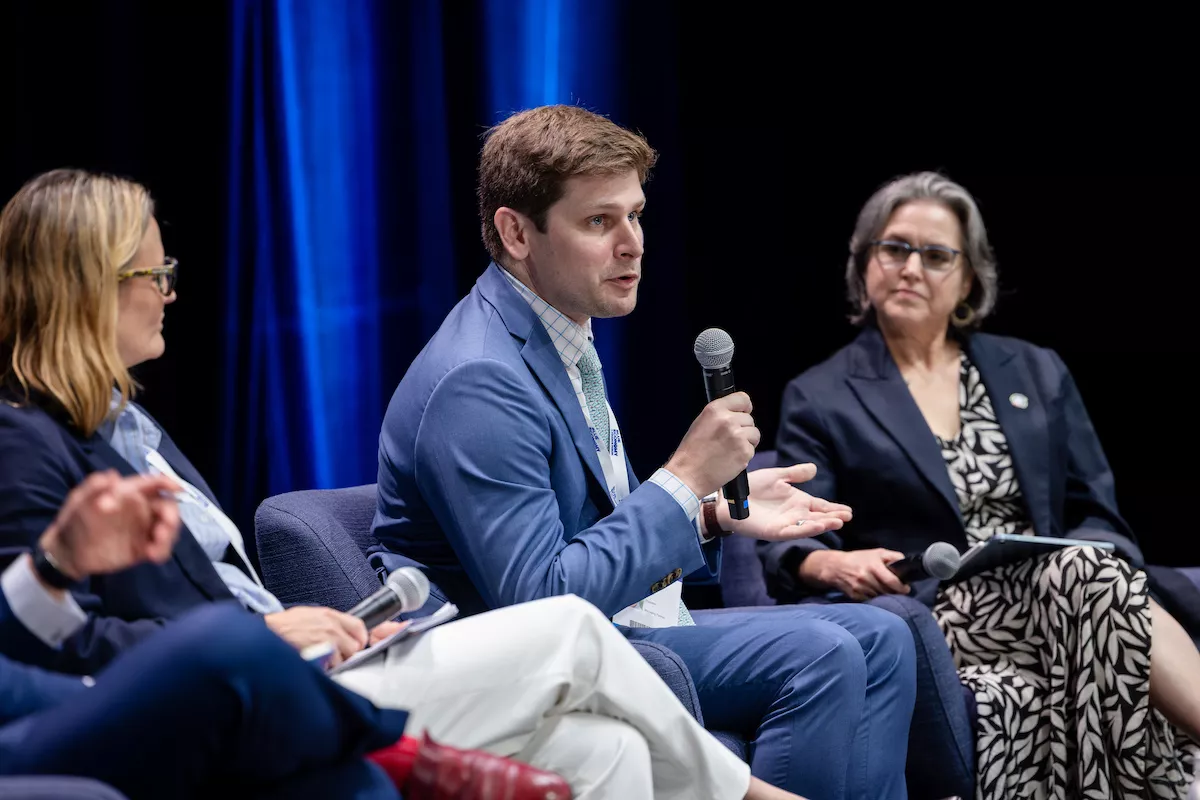
According to Fox, the sectors hitting true “escape velocity” right now are ocean data and marine energy. This rapid scaling is fuelled by two lucrative, ultra-wealthy customer bases: governments and tech hyperscalers. By marrying cutting-edge ocean tech to urgent geopolitical mandates like energy sovereignty and national security, early-stage blue tech startups are securing massive institutional checks.
The numbers back up the hype. Financial modelling suggests that upwards of $550 billion could be deployed into sustainable ocean sectors by 2030, with a massive portion concentrated in the Asia-Pacific region and Small Island Developing States.
Why deep-sea tech is the new frontier for elite venture capital
At the side event ‘Ocean capital decoded: Mapping the blue finance landscape’, Cyril Gomez, Chief Operating Officer of the Oceanographic Institute of Monaco, unveiled a sweeping international audit co-organised with the Ocean Risk and Resilience Action Alliance (ORRAA) and July Advisory. By screening over 200 initiatives launched between late 2024 and mid-2026, the partners established a “living observatory of ocean capital” to map flows and identify structural deficits. Gomez noted that while the ocean economy yields $2.5 trillion annually, sustainable financing is capped at $150 billion, a gap driven by an absence of market structure—such as common standards and de-risking mechanisms—rather than a lack of investor interest.
To bridge this divide, the BEFF is championing a systemic, data-driven approach. Through this same analysis, July Advisory’s Marianne Carpenter and Lucy Galinon identified three waves of blue finance, with the emerging ‘Wave 3’ shifting the focus toward an ‘economics of absolute necessity.’ This paradigm evaluates true ocean wealth by combining produced infrastructure—such as ports—with non-produced environmental capital like seagrass meadows and coral reefs.
To accelerate this maturation, the BEFF is leveraging tools like the Ocean Impact Navigator for startup standardisation, the #BackBlue coalition’s $3.45 trillion in committed assets, and a $5 billion annual pledge from the Finance in Common Summit (FiCS) Ocean Coalition. As ORRAA’s Senior Director Chip Cunliffe noted: “The industry’s focus has shifted from questioning what works to how fast it can deliver.”

From scalable fish farming to biodegradable nappies: How practical innovation is anchoring the architecture of blue finance
Ultimately, the forum’s thematic shift toward operational market maturity proved that ecological regeneration is no longer a philanthropic ideal, but the foundational architecture upon which the future capital market is being built. The pitch session spotlighted a curated pipeline of high-impact blue economy ventures through a dynamic dual-pitch format, bringing together senior company leaders and their investment partners to showcase innovative solutions, scalable business models, and compelling growth trajectories.
Spearheading the ‘blue food’ mission, Bastien Riera, Managing Director of Gloria Maris, alongside Chris Gorell Barnes, Founding Partner at Ocean 14 Capital, presented their integrated white fish aquaculture platform as the ‘gold standard’ in sustainable protein production. Gloria Maris has successfully scaled premium, antibiotic-free seafood by pairing its operations with industrial circular-economy models—such as blending cold North Sea water with warm industrial bypass currents to establish optimised, ASC-certified ecosystems. This marriage of deep-tech innovation and immediate commercial scalability was mirrored in the material science sector by Oxford University spin-off A&B Smart Materials.
Co-founder and CEO Amaury Van Trappen showcased a fully bio-based, programmable superabsorbent polymer capable of disrupting the global hygiene market ahead of the European Union’s 2028 synthetic plastic ban. Backed by Archipelago Ventures through an oversubscribed $2 million pre-seed round, A&B’s direct ‘drop-in’ technology offers a vital solution to the global nappy crisis, which currently accounts for 21% of marine plastic waste recovered in regions like Indonesia.
By grounding high-level financial theory in these tangible, highly profitable market solutions—and serving as a direct gateway between innovation and capital—the Blue Economy and Finance Forum delivered its most resounding takeaway: bridging the global ocean funding gap will not be achieved by waiting for regulatory consensus, but by deploying institutional assets into the bankable pipelines and disruptive enterprises that are actively rewriting the rules of global commerce.
See also:
Turning the blue economy mainstream: Monaco Blue Initiative 2026 maps the future of ocean finance
Stay updated with Monaco Life: sign up for our free newsletter, listen to our podcasts on Spotify, and follow us across Facebook, Instagram, LinkedIn, and Tik Tok.
Main photo of Prince Albert II credit: Michaël Alesi, Prince’s Palace