

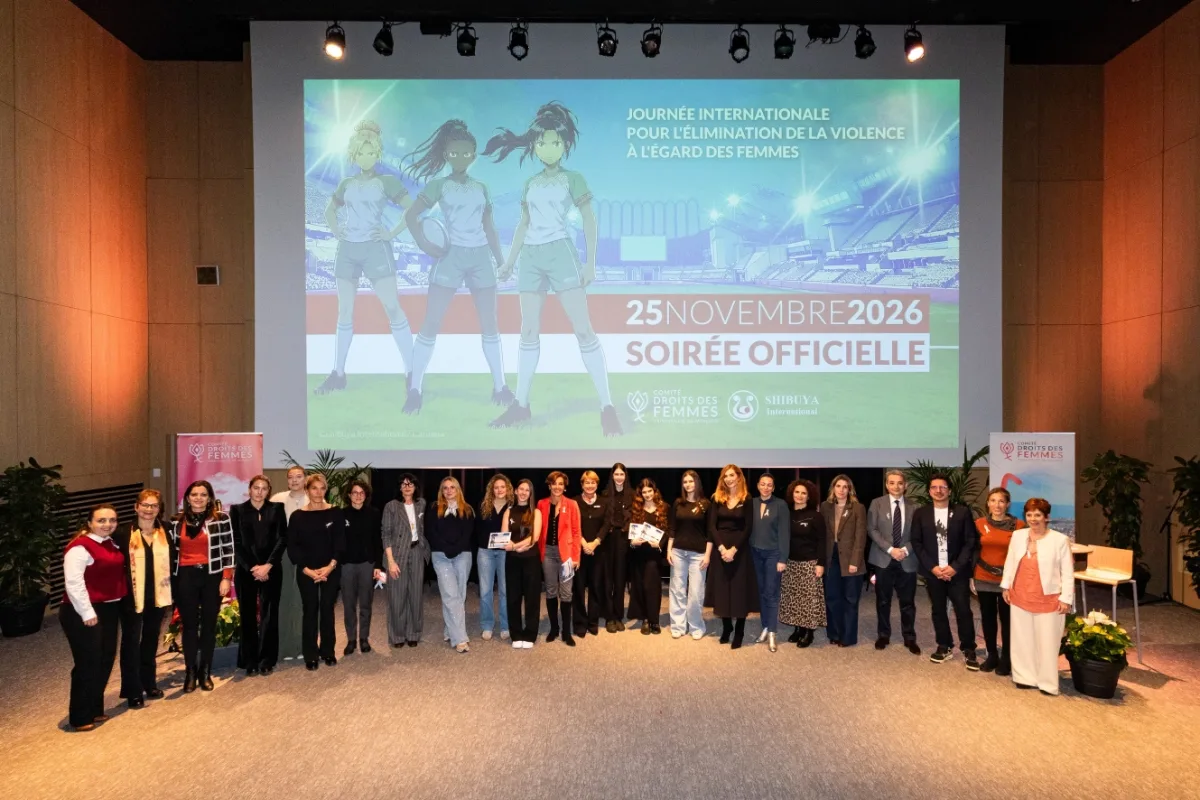
The anonymous accounts of two women who suffered violence in Monaco were heard publicly on Wednesday evening, alongside extracts from Gisèle Pelicot’s memoir and the testimony of a local survivor, as the Principality marked the International Day for the Elimination of Violence against Women.
The evening at the Collège Charles III auditorium on 25th November was organised by the Committee for the Promotion and Protection of Women’s Rights around its ‘Survivre aux violences’ (Surviving Violence) campaign, which this year shifts the focus from victimhood to recovery.
Committee president Isabelle Berro-Amadeï was joined by Government Councillors-Ministers, senior Monegasque figures, the Committee’s institutional and associative members, and the secondary school pupils who took part in its annual video competition.
“Our responsibility is to allow every woman and every girl to live free, safe and without violence,” said Berro-Amadeï in her address.
Survivors’ voices
The testimonies of survivors formed the centrepiece of the evening. Actresses from Compagnie Florestan opened with readings from ‘Et la joie de vivre’, the memoir Gisèle Pelicot published in February with journalist Judith Perrignon, which recounts her ordeal, the Mazan rape trial and her slow rebuilding afterwards.
The director of the victim support association AVIP (Aide aux Victimes d’Infractions Pénales) then shared the anonymous accounts of two victims from Monaco, before Chani Crovetto took the floor to speak about her own journey and recovery as a victim of violence.
Victoria Campana, Deputy Director of the Department of Social Welfare and Services, closed the segment by explaining how victims are supported in the Principality.
The campaign follows last year’s focus on coercive control, which won two prizes at French communications awards in July.
Young filmmakers tackle ‘red flags’
The evening ended with the prize-giving for the Committee’s youth video competition, run with the Department of Education, Youth and Sport. This year’s entries focused on ‘red flags’, the early warning signs of manipulation, disrespect and controlling behaviour in relationships.
Inès Lahoud, Flavia Albertazzi and Nina Shubitidze won the public prize, decided by votes on Instagram. The jury prize was split, with the same trio sharing it with Olympe de Tayrac and Éléonore Francart.
Where to find help
Victims of violence in Monaco can call 39 19, a free and confidential helpline that redirects calls from the Principality to AVIP. In cases of immediate danger, residents should call 17 or 112.
Stay updated with Monaco Life: sign up for our free newsletter, listen to our podcasts on Spotify, and follow us across Facebook, Instagram, LinkedIn, and Tik Tok.
Photo credit: Manuel Vitali, Direction de la Communication