As part of Monaco Art week, Monaco start-up ArtPeople has launched a digital platform for connecting collectors and buyers in a whole new way.
The ArtPeople digital platform is giving art lovers an online alternative to viewing and buying pieces, highlighting the extraordinary growth of this once-niche market of the art sales world.
Founder Jeremy Biermann, architect and art enthusiast, started ArtPeople after designing numerous exhibition stands for galleries at international fairs such as Design Miami/Basel, Masterpiece London, and PAD London, collaborating with his wife Deborah who worked for a prestigious auction house and ran a gallery in Monaco.
Jeremy saw a gap in the art world that was expounded by the restrictions the pandemic imposed on face-to-face meetings and travel, and created ArtPeople to fill in that blank spot.
“In the digital age, our professional experience has allowed us to understand the most important element in this market: trust, in particular between collectors, dealers, specialists and service providers,” says Jeremy Biermann. “Our mission was to make the art world prosper in a new digital reality where Internet users do not limit themselves to consulting information but actively contribute to its creation.”
Member collectors have access to a directory of services in addition to the pieces themselves that include finding framers, insurers, experts and transport companies, whilst art world professionals now have the ability to reach out to collectors and service providers at an unprecedented level to increase visibility and expand their markets.
Based on the LinkedIn model, users of the platform can also share their experiences and opinions, complete with rating systems, and can create and schedule online or real-time events, make appointments, and create their own profile.
Monegasque company Fintech KeeSystem, which specialises in digital tools dedicated to wealth management for independent companies and family offices around the world, is extending its shareholding with Ebene, the Luxembourg-based holding company of the Dalmaz family.
Pierre Dalmaz’s family holding company Ebene has just acquired 75% of the shares of Monaco-based Fintech KeeSystem from Chairman and Founder Pierre-Alexandre Rousselot. Rousselot will continue to manage and develop KeeSystem with their new partner’s support.
Founded in 2009, fintech KeeSystem was a pioneer start-up of MonacoTech, the incubator created by Xavier Niel, Monaco Telecom and the Prince’s government, to meet the needs of wealth managers while preparing the expanded digital world of the future.
Since its inception, KeeSystem, Monaco’s first wealthtech, has continued to expand to other major financial centres in Switzerland, France, Luxembourg, Belgium, Russia and Brazil, and today boasts an annual turnover of roughly €2 million.
The company seat remains Monaco-based while operations are carried out in Switzerland, where they digitise the daily management of independent wealth management companies and family offices to streamline operations.
Their software is said to improve management efficiency in terms of services provided, profitability and development of user activities. It is a digital asset management solution known for its qualities and ease of integration and allows users to consolidate and analyse in real time all the securities portfolios deposited in client’s banks. This gives them a visualisation of the cash flow and the exposure of their portfolios.
“KeeSystem’s mission is to empower each user quickly, in order to capitalise on the investment as quickly as possible,” says Pierre-Alexandre Rousselot, founder of KeeSystem. “To do this, we ensure the transfer of skills through various educational supports, such as training, workshops and tutorials.”
The wealthtech industry is a fast-grower, with the sector more than tripling since 2016 from $2.8 billion to $9.3 billion at the end of 2020.
Ebene, for its part, operates in four areas of activity in France and internationally, which are IT consulting, IT publishing, expertise in industrial and real estate assets and hotels.
“I am very satisfied to welcome KeeSystem to the Ebene Group,” Pierre Dalmaz, President of Ebene, said of the merger. “It has a successful financial solution benefiting from the latest innovative technologies which will enable wealth managers and family offices to be more efficient thanks to the management of their assets, provided by KeeSense. This technology fills a proven need to bring these structures directly into the digital world. Prospects will be reassured about the longevity of Kee System, which backs on to the Ebene family group, which achieves a booming turnover of €100 million.”
The feeling is clearly mutual, with Rousselot adding: “I am happy to join the Ebene Group to be able to accelerate the development of KeeSystem with its team which already has extensive experience in this field. KeeSystem already has a solid foundation of about 30 customers and KeeSense meets their needs very well. Our desire for growth should be driven by the potential of the wealth management market. Our goal is to triple our turnover and the number of clients internationally over the next five years in countries where wealth management is most active. I look forward to this new challenge.”
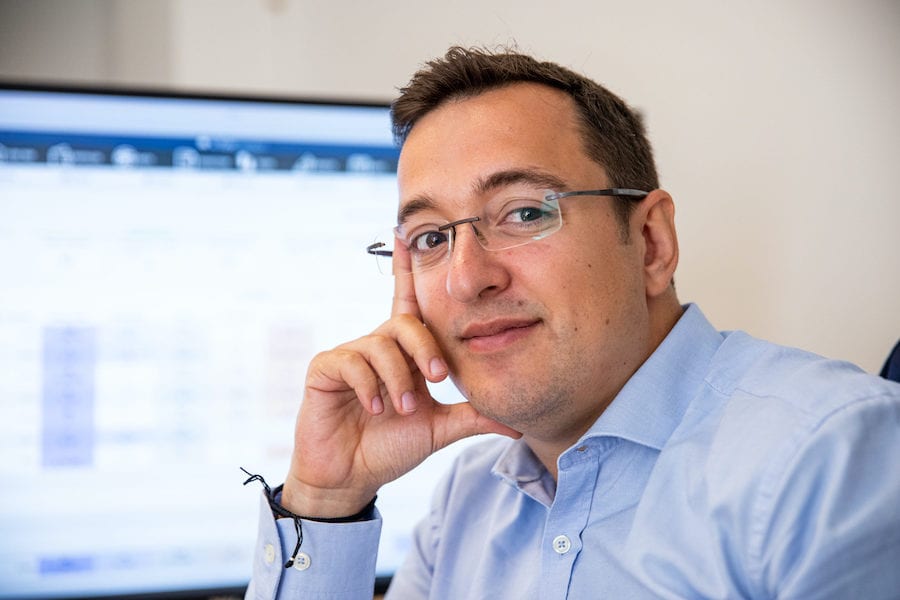
Photo of KeeSystem Chairman and Founder Pierre-Alexandre Rousselot
More than 150 entrepreneurs have joined the Monaco Economic Board for its General Assembly and Rendez-vous des Members,where past successes and future plans were shared.
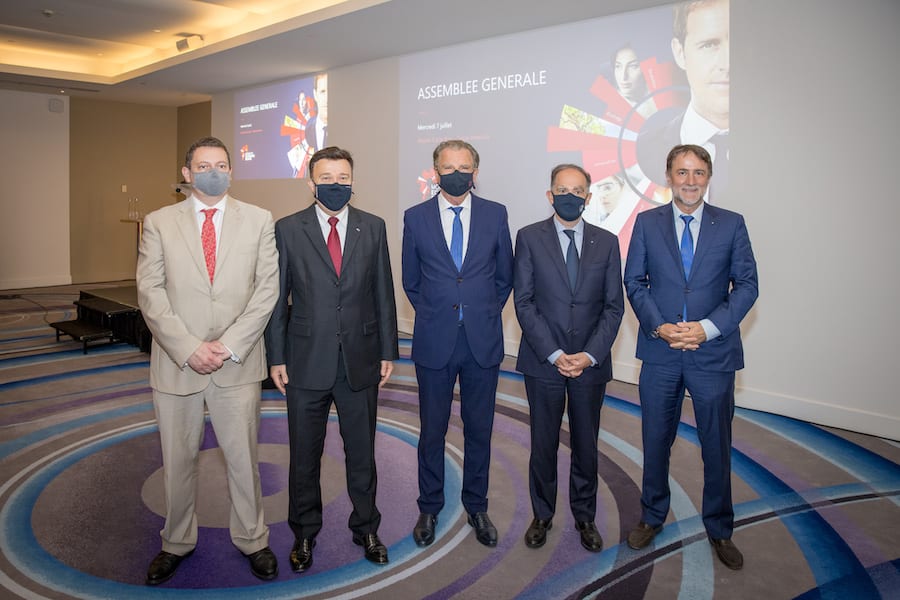
Monaco Economic Board (MEB) members, institutional partners and local personalities including Minister of State Pierre Dartout and Minister of Finance and the Economy Jean Castellini came together on 7th July for the Ordinary General Assembly of the Monaco Economic Board and a meeting of members that followed, marking “the great reunion” after a year marked by the Covid-19 pandemic.
“In this context of health crisis, the MEB has been able to adapt, with the desire to support its members in their activities, especially those who have been most affected, and to continue its mission of promoting the Principality,” said MEB president Michel Dotta.
While the year 2020 started out with a bang with a mission to Russia and the signing of a cooperation agreement between the MEB and the CCI of the Novosibirsk Region, several trips were canceled due to health restrictions in Paris, Rome, Salzburg, Barcelona and London, as well as promotional operations organised with Monaco’s ambassadors and consuls abroad.
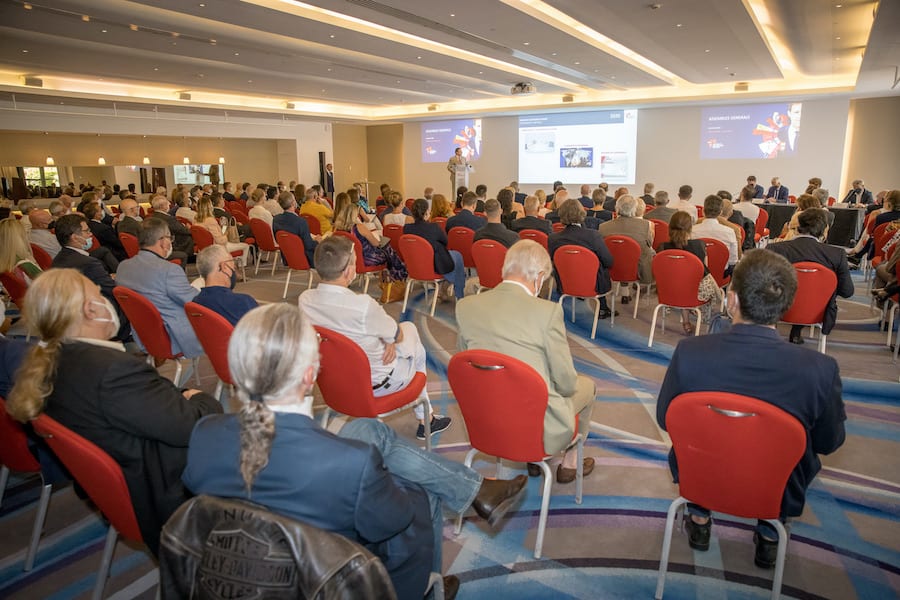
The MEB did manage to get in some missions to Lisbon, Mexico City and London before the pandemic hit, as well as in Serbia for the signing of a memorandum of understanding between the MEB and the ICC of Serbia, as part of the official visit of HSH Prince Albert II. Photo of MEB General Assembly 2021
In local operations, the MEB has tested new formulas such as business breakfasts organised around the accreditation of Ambassadors in the Principality, small gatherings which will be repeated in the coming months. Meanwhile, the MEB’s traditional conferences brought to the Principality the expertise of the “stars of the economy” – Chief economist of Coface Julien Marcily, President of the Cahiers verte de l’Economie Jean-Pierre Petit, Chief economist of the Groupe Allianz Ludovic Subran, and Sophie Vincent, Director of IMSEE.
In presenting the year’s events, Guillaume Rose said that the MEB had adapted quickly during the pandemic and utilised digital technology to offer various “MEBinaries” to its members, covering topics such as finance, international trade, energy transition, real estate, tourism and yachting, or business destinations like Kazakhstan and Italy. The MEB also joined forces with Extended Monaco, the Principality’s digital transition program, and the FEDEM to organise digital workshops. 2021: New horizons
According to the MEB, the year 2021 started at the same sustained digital tempo, but it was marked by the return of face-to-face events with star forecaster Christophe Barraud. The MEB will soon participate in several major events, including the Monaco Yacht Show, and Monaco Business during which a partnership agreement with the Italian CCI in Nice will be signed.
December will see the Ambassadors of Destination Monaco forum and gala in Italy which will welcome many delegations from countries including Quebec, Austria and South Korea. 2021 will also mark the 10th edition of the Eco Trophies, which celebrates the talents of local entrepreneurs.
For its next missions, the MEB has given priority to Europe. Upcoming trips will be organised in Florence, Antwerp, Milan, Saint Petersburg, and Amsterdam.
Meanwhile, Dubai will be given extra attention. “During the six months of the Dubai World Expo, several sector missions and at least one generalist will be organised in partnership with the Monaco Pavilion and the Dubai Chamber of Commerce,” said Guillaume Rose.
At the end of the General Assembly, marked by the appointment of a new female steering committee, Finance and Economy Minister Jean Castellini recalled in his speech how the crisis has revolutionised the way people work and communicate in the public and private sectors, saying: “We had to innovate and adapt constantly. We must learn from the consequences. We must continue to act together, as we did in an emergency and in the interest of the country, and not fall back into old habits. ” 38th Rendez-vous des Members 38th Meeting of Members
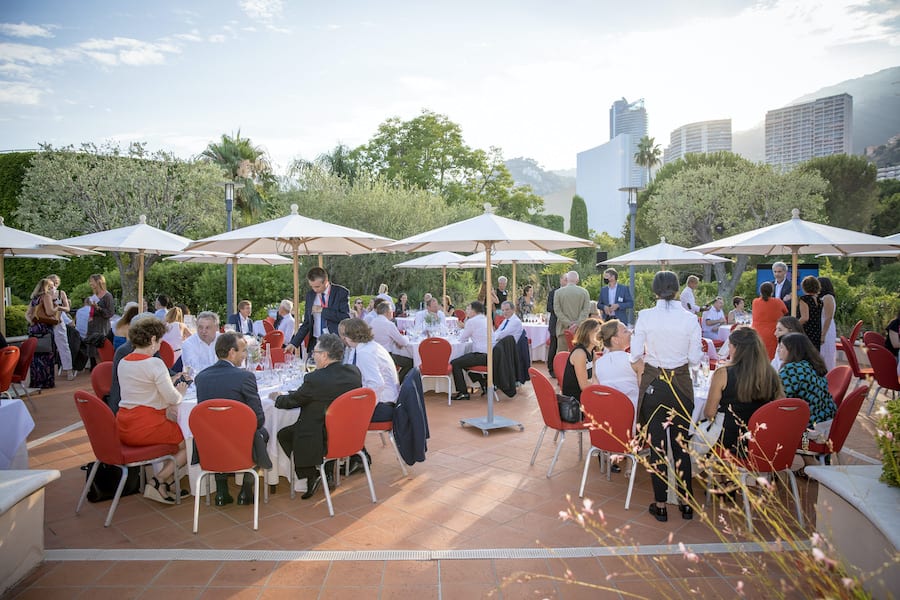
MEB members then headed to the Mediterranean Gardens of Monte-Carlo Bay where the 38th Rendez-vous des Members took place – for the first time since January 2020. More than 250 economic players in the Principality were able to network during the evening, while several dozen contacts or appointments were made by the MEB team. During this meeting, Michel Dotta and Guillaume Rose also highlighted the Green Fund, which aims to finance the energy transition of local businesses. Finally, they paid tribute to Stéphane Giaccardi, who has departed the steering committee after 16 years as secretary general.
Monaco Life with MEB press release, photos by MEB
Clean Equity conference to focus on sustainable tech
Clean Equity Monaco, an invitation-only conference showcasing the best new sustainable technology companies, is returning to the Principality this month to wow investors and get the word out on what they’re doing to change the world.
Hosted by Innovator Capital Bank and the Principality of Monaco, Clean Equity is back on 22nd and 23rd July and opening its doors to 30 up-and-coming sustainable technology companies who will be presenting their ideas and products to financiers who may be able to make their dreams realities.
The chosen companies are given the opportunity to present to and meet with prominent corporate, financial, strategic, sovereign and family investors, as well as government officials, end users, trade media outlets and known industry representatives in a bid to raise funds to take their visions to the next level.
Companies send two representatives and are each allotted a 20-minute presentation as well as a question-and-answer period to expose their projects to the right investors. This is further strengthened by networking sessions, lunches, workshops and a gala dinner that ends with the best of the best be chosen for the Clean Equity Awards.
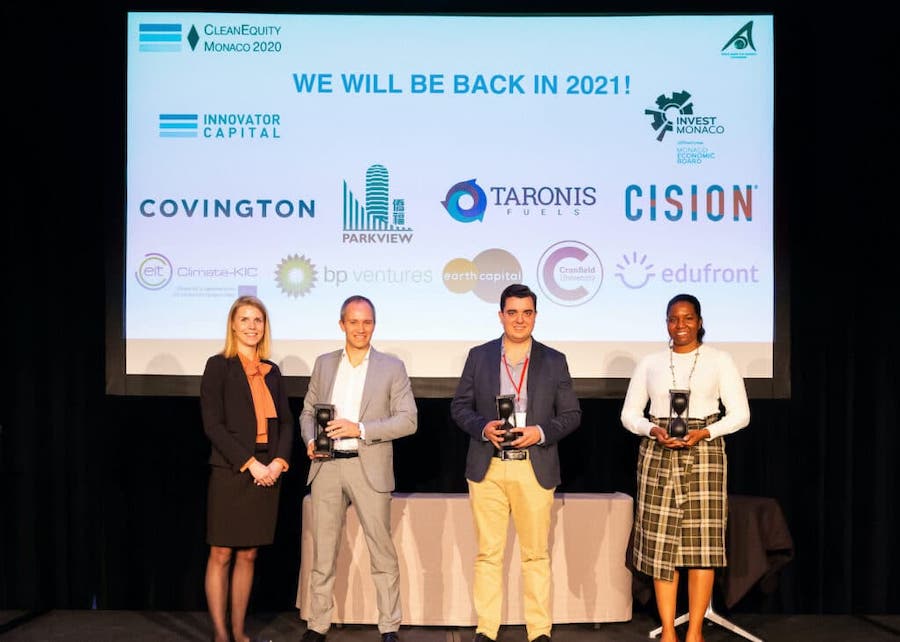
The awards, which are created by renowned artists, are presented by Prince Albert II and are given for excellence in three areas, namely research, development and commercialisation.
This year’s event will expand on last year’s with a vast audience joining the conference via live streaming brought by partner EarthX. They are looking to top last year’s online attendance, which hit 25,000 people.
Since the expo was founded 13 years ago, they have been able to introduce and nurture more than 350 companies who have gone on to raise more than $2 billion in capital.
A unique display of fine jewellery created by world-famous artists and passionately collected by Diane Venet is being exhibited at the Grimaldi Forum from Sunday 11th July.
Diane Venet, wife of artist Bernar Venet, began her unique collection of jewellery made by artists in 1967 when she purchased a brooch created by painter Roy Lichtenstein in New York. Her collection began in earnest though after meeting her husband in 1985, when she decided to dedicate all her purchases to commissions from artists.
For over 30 years, she has amassed an extraordinary selection of more than 230 pieces made exclusively by artists, 180 of which will be presented at the Grimaldi Forum.
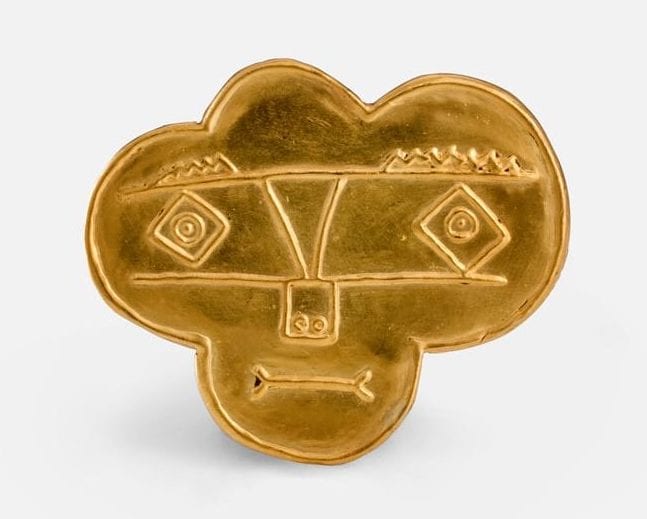
Well-known artists such as Pablo Picasso, Jeff Koons, Niki de Saint-Phalle, Keith Haring and Roy Lichtenstein all created pieces either bought or made for Venet’s collection.
“These creations are always the result of an encounter, whether with the artists themselves or with other collectors,” says Venet. “Both groups have encouraged me. They have given me no small amount of support in my discovery of this new world where art, seemingly at play, surpasses itself.”
Diane Venet came from a family of art collectors and her father, Jacques Segard, was chairman of the Friends of the Musée National d’Art Moderne in Paris. She met and married Bernar Venet in the mid-1980’s in New York, where she helped him organise his exhibits and became an avid collector of art herself.
Her idea for exhibiting her jewellery came in 2008, when it received such acclaim that she took her show on the road presenting at the Museum of Arts and Design in New York, the Benaki Museum in Athens, Miami’s Bass Museum, and the Seoul Art Centre in South Korea, to name a few. Picasso to Koons: Jewellery by Artists will run from 11th July to 19th August at the Grimaldi Forum.
Searching for something fun for the kids to do during summer break? Take a look at these Giacometti-themed youth workshops coming up at the Grimaldi Forum.
From 12th to 23rd July, the Grimaldi Forum will be hosting a series of creative summer workshops for children aged seven to 11, teaching the art of making art using the Alberto Giacometti exposition as inspiration.
Themes change each day of the week and include some amazing offerings such as model drawing, where children use a classmate as a model and try their hand at sketching them in different poses, as well as portrait drawing, where participants work from a painted portrait of Anette and reproduce the sketch using black pen before shading in the surfaces with dry pastels.
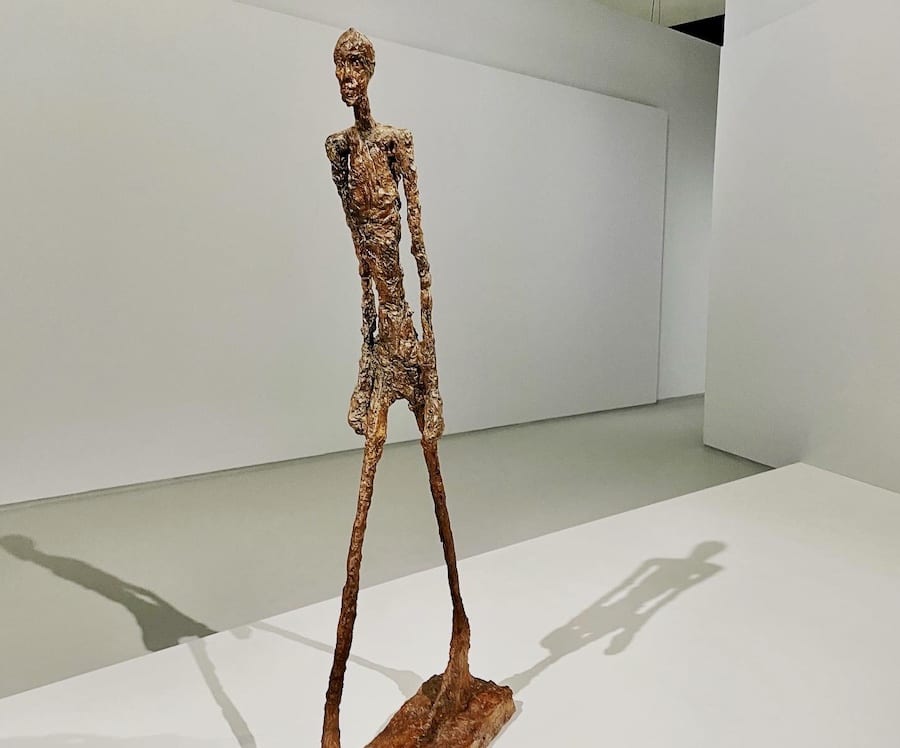
Other offerings see kids getting their hands dirty whilst having fun creating a Giacometti-style bust from a block of clay, or reproducing a Giacometti Walking Man sculpture using a metal wire frame encased in clay, a favourite method of the artist.
Finally, kids can create still life drawings, replicating an apple as true to life as possible using shadow play and volumes with dry pastels.
Whilst on-site, children and parents will also be able to enjoy the Giacometti exhibition currently underway highlighting 230 works from the artist that include sculpture, paintings, prints and drawings accompanied by photos.
The classes run Monday through Friday from 10am to 12pm, or from 2pm to 4pm, with a maximum of 20 students per workshop. For reservations and more information, call the Grimaldi Forum ticket office at +377 99 99 30 00.