Prince Albert will join an exceptional line up of speakers, including teenage activist Greta Thunberg and Pope Francis, for a digital Earth Day summit on Thursday. Here is how you can stream the event live.
To celebrate and raise awareness for the 51st Earth Day on Thursday 22nd April, earthday.org has gathered a diverse lineup of activists, global leaders, musicians, educators, industry leaders, influencers and artists from around the world for the second annual digital livestream event. Discussions, performances, presentations and films will explore the innovative and powerful solutions to ‘Restore Our Earth’.
‘Earth Day Live: Restore Our Earth’ will be streamed live at 12pm ET (6pm Monaco time) on Thursday via earthday.org, Facebook, Twitter, Twitch, YouTube, and GEM-TV, a streaming platform founded in Monaco.
The virtual event will be hosted by Founder of Earth Uprising and Youth Climate Activist Alexandria Villaseñor, and Milana Vayntrub, Actress, Comedian, Writer and Director.
As a part of Earthday.org’s partnership with TED Countdown, the digital event will include three original TED Countdown Talks by John Marshall, Cory Combs and Rumaitha Al Busaidi. The program will also feature segments from Education International’s Teach for the Planet: Global Education Summit, Hip Hop Caucus’ We Shall Breathe virtual summit, as well as Earth Uprising’s Youth Speaks Summit.
“For over half a century, hundreds of millions of people from around the globe have taken political and volunteer action on Earth Day, yet multiple accelerating environmental and health crises continue to envelop our planet, impacting everyone but particularly the poor and vulnerable who live among us,” said Kathleen Rogers, President of Earthday.org. “On behalf of the one billion people who will take part in Earth Day this year, even in the midst of a second year of the pandemic, we demand that the talking stop and that governments and corporations commit to net-zero emissions by 2040 with an interim goal of cutting emissions in half by 2030. Anything less will deprive our children of their right to inherit a habitable planet.”
Among this year’s powerful lineup are Prince Albert II of Monaco, United States Special Presidential Envoy for Climate John Kerry, Actress and Producer Kristen Bell, Award-Winning Conservationist, Photographer and Author Chris Packham, Executive Secretary of the United Nations Convention to Combat Desertification Ibrahim Thiaw, White House National Climate Advisor Gina McCarthy, Youth Climate Activist Greta Thunberg, and Pope Francis.
For more information on Earth Day Live and Earth Day 2021, visit: https://www.earthday.org/earth-day-2021/
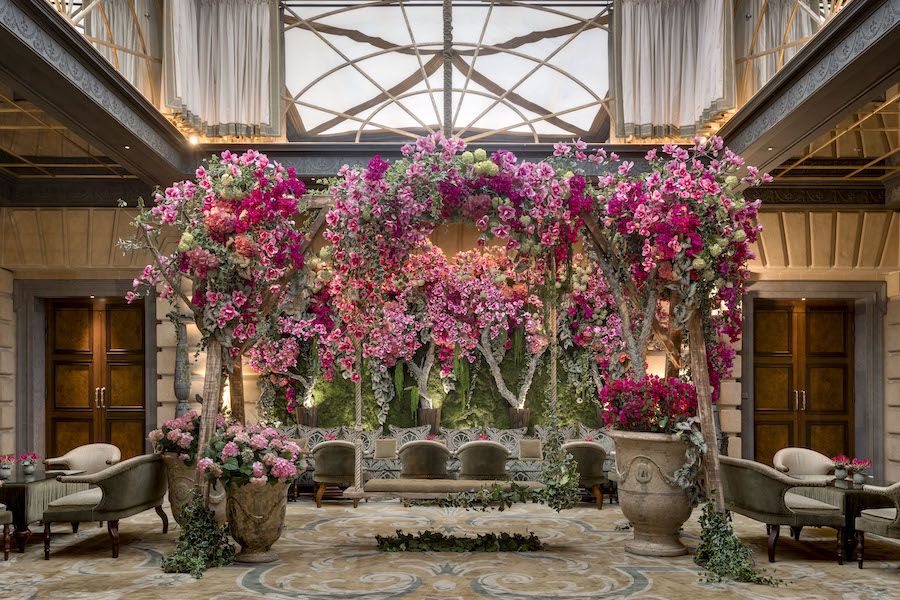
The Metropole Hotel has swung open its doors in spectacular style with a picture-perfect floral installation that immerses guests in the vibrance and beauty of spring. Monaco Life was there for a sneak peak of the lobby’s new showpiece ahead of the hotel reopening on Wednesday.
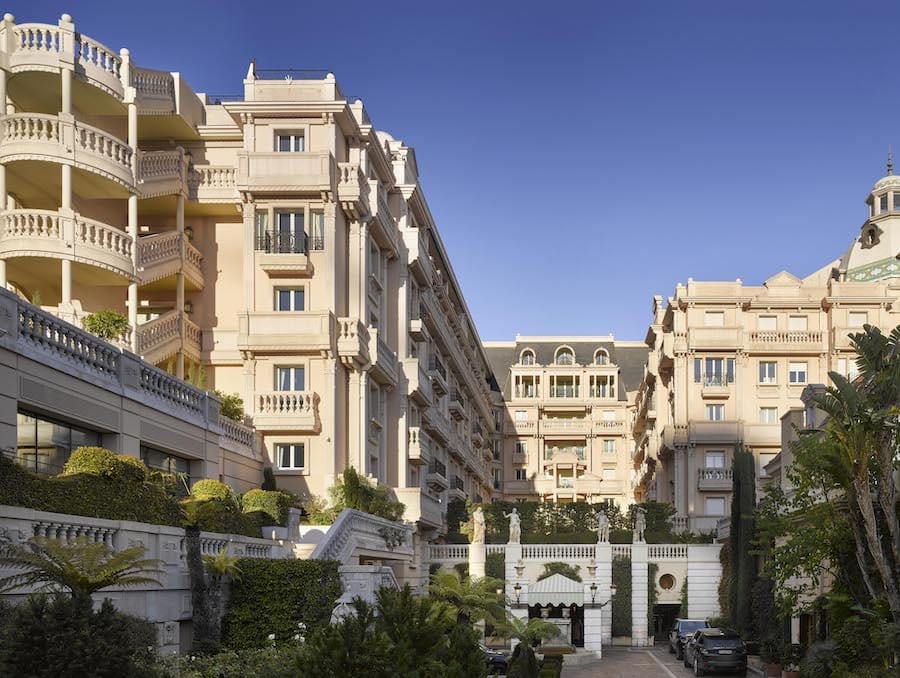
After closing for a major backhouse renovation in late 2020, the Metropole Hotel reopened its revolving doors on Wednesday with a stunning celebration of the season – a floral scene that is designed to mesmerise guests but which also, perhaps unwittingly, represents the new life that is being breathed into the 135-year-old hotel.
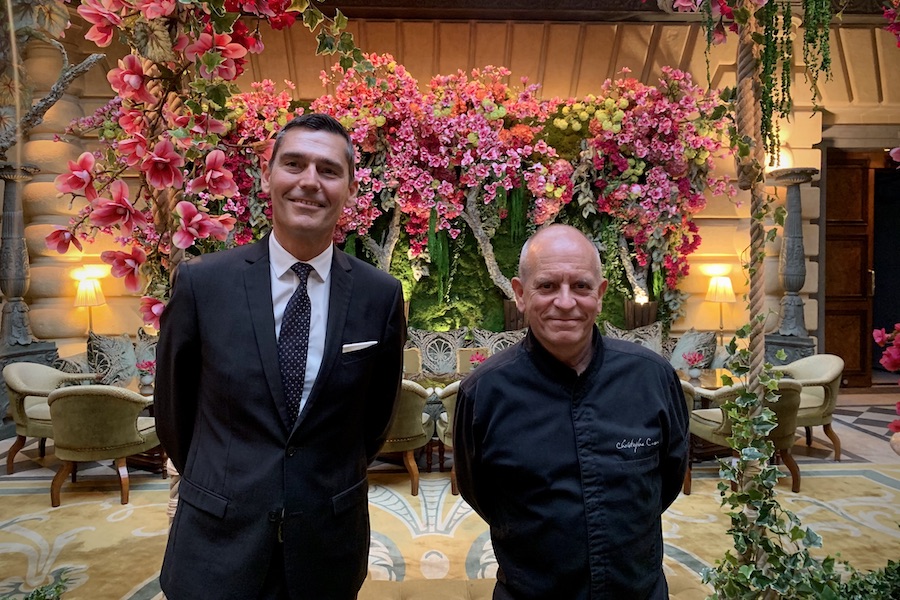
“We have just reopened the hotel after the first of three renovations, which took place completely in the back of house,” Managing Director Serge Ethuin told Monaco Life. “There is nothing new to show our guests who have been anxiously awaiting our reopening, so it was incredibly important that our artistic directors create something very strong, where our guests can feel part of the mood we are trying to evoke, that they become immersed in the decoration. And I think we have reached our objective.”
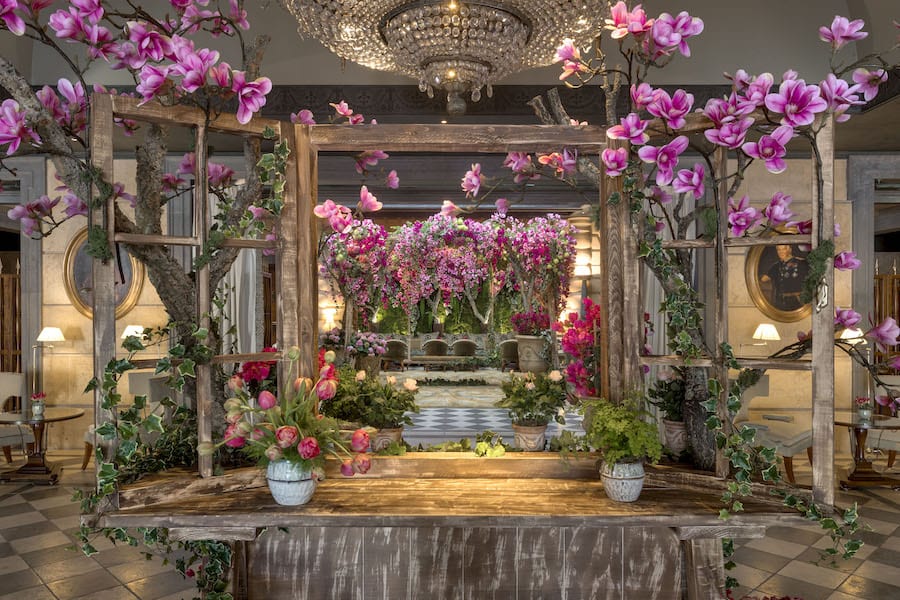
Photo of the entrance floral display at the Hotel Metropole, by Studio Phenix
The display begins in the entrance hall where, below the hotel’s elegant chandelier, a flower-laden wooden window frames the lobby like a scene straight out of a Disney fairy tale.
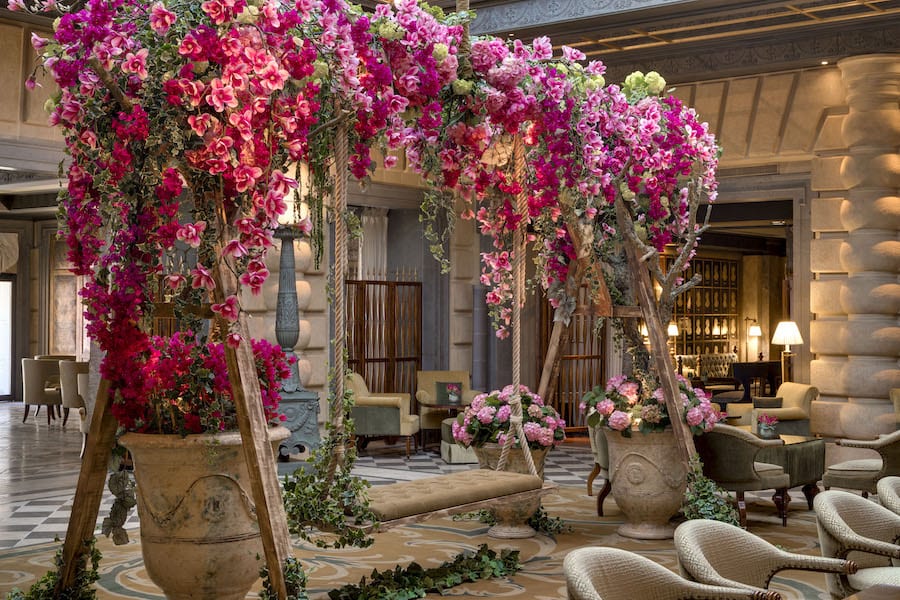
The lobby itself is an explosion of colour, with cherry blossoms, orchids and hydrangeas delicately embracing a wooden swing upon which guests can sit and snap their perfect Instagram pic.
The story continues on the backwall, with a forest of green and pink. It is an oasis of tranquillity and is, arguably, the hotel’s finest floral installation to date.
A family passion
The display was created by Monegasque company Roni, a family business of four generations whose works are commissioned for celebrity events, luxury hotels and exclusive restaurants throughout the world.
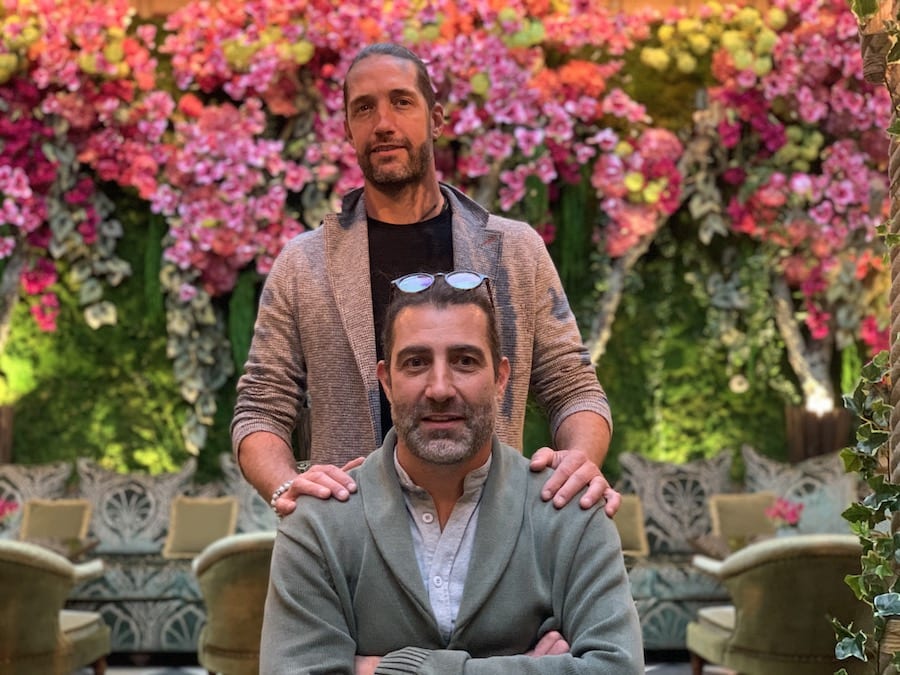
Passion, creativity and an eye for detail have been handed down the generations to Nicolas Barelier, who serves as Artistic Director, alongside his siblings Emmanuel, Jean-Marie and Audrey.
The installation at the Metropole Hotel is a seamless blend of fresh and silk flowers, which were handmade especially for this project. Remarkably, it took just three days to complete the display.
“We are honoured to return to the Metropole Hotel,” Nicolas Barelier told Monaco Life. “They are the only ones who really let us imagine what we want, which is very important. The concept this year is clearly spring, but we want it to say: ‘Welcome to the Hotel Metropole. Take a seat, and have your picture taken.”
Nicolas (top) and Emmanuel Barelier (bottom) of Roni, photo by Monaco Life
The extravagant display will not only be admired by hotel guests but also customers who have eagerly awaited the reopening of Michelin-starred restaurant Yoshi.
“I have guests who love Yoshi so much they have booked the restaurant three times for the next week or so,” revealed Serge Ethuin. “We are delighted, because in these first days, when our international and French customers cannot come to eat in Monegasque restaurants, we can welcome our regulars, our locals… so we are reopening almost for the family. It’s fantastic.”
In addition to the award-winning Japanese restaurant, the hotel’s bar and its terrace have also reopened, as well as room service for hotel guests. However, the French restaurant and the Odyssey restaurant surrounding the pool will remain closed because of health restrictions.
Behind closed doors
The five-month renovation has completely revamped the kitchens of the hotel, reinvigorating Chef Christophe Cussac and his team.
“People do not see what has been done in the back of house, but it is a revolution for our teams, it is so exciting,” Chef Cussac told Monaco Life, adding that guests can expect some new dishes among the tried-and-tested signature plates of the restaurant because, “our customers who come regularly will have missed our dishes.”
After securing their dream kitchens, Chef Cussac and his team are now anxiously awaiting the second phase of renovation which will reconceptualise all of the restaurants.
“We know that there are still two phases coming, especially in the restaurants and guest rooms, and I am already projecting myself there,” said the chef. “Then we will do something different, a completely different concept with the restaurant itself.”
Metropole Hotel Managing Director Serge Ethuin and Executive Chef Christophe Cussac, by Monaco Life
Opening at half capacity
As one of only a handful of palaces in Monaco, the intimate Metropole Hotel should be reopening to a full list of bookings during the event-heavy month of May. However, with travel restrictions still in place and audience numbers heavily reduced, the hotel’s figures have been drastically reduced.
“We are more than 60% behind the number of bookings of the last Historic Grand Prix of Monaco, which was three years ago,” said the hotel managing director. “But we are happy because our opening is good for the destination, for the image of Monaco, and it is good for us.”
For the fast-approaching Monaco Grand Prix in late May, Mr Ethuin says the hotel is 40% booked. “We have adjusted our strategy to allow people to stay for a shorter period as opposed to the four-day minimum. So, we may be full on the Saturday and Sunday, and at least that is good news.”
Hôtel Métropole Monte-Carlo
Phase two
The original plan was to close the hotel again in October 2021 for phase two of the renovation, the largest stage that would tackle all of the bedrooms, the creation of new exceptional suites, and the refurbishment of restaurants, the lobby bar and banqueting rooms over a period of six months.
However, because of the Covid epidemic, the strategy has changed.
“We will not close at all this year anymore,” revealed Mr Ethuin. “We are reducing the second closure as much as possible to perhaps only the month of January or February. As a result, we might have to close for a third time, but again it will be for a very short period of time with as few disruptions to our guests as possible. Our strategy is changing, but fundamentally we want to stay in business as much as possible for our local and international market.”
This year’s Monte-Carlo Television Festival will host the premiere screening of Lion’s, Bones and Bullets, a hard-hitting animal rights documentary that reveals the underbelly of what the world thinks is ‘lion trophy hunting’ but, in reality, is the mass production, commercialisation and domestication of Africa’s wildlife for “traditional Chinese medicine”.
The Monte-Carlo Television Festival is known for being a showcase for talented entertainment-industry professionals who have, over the past 60 years, created some of history’s most successful TV programmes.
But it also puts the spotlight on more serious, environmental topics. This year it is animal rights, namely, the exploitation of lions on the African subcontinent that are being cruelly raised for slaughter to make traditional Chinese “medicines” and potions.
A documentary entitled Lions, Bones and Bullets, produced by Jagged Peak Films, will be premiered in June at the Monte Carlo Television Festival through a collaboration between the Prince Albert II of Monaco Foundation and the Festival organisers. It will be screened at the Grimaldi Forum.
Told through an adventure story, producer and investigator Richard Pierce travels from lion farms in South Africa to dealers in Southeast Asia “to uncover the elaborate wildlife con”. After presenting the problem, the film explores realistic alternatives.
“Lion farming and the increasing sale of lion bones to Asia involve exploitation, cruelty, injustice, misconception, fraud and corruption and is a threat to wild lion populations,” says Richard Pierce. “It is mind-blowing in terms of the huge negativity involved and it has no redeeming aspects. Lions are a flagship species. What happens to lion populations will be a major factor in determining the future of wild animals in Africa.”
The investigative documentary claims to uncover an elaborate international wildlife industry worth nearly US$100 million a year. Producers say it reveals, for the first time, the link between lion farming on an industrial scale in South Africa, and the growing demand and utilisation of lion bones in Southeast Asia.
“Lions, Bones and Bullets is a story that needed to be told,” says Executive Producer Anton Leach. “I realised not enough people know that lion farming is not just an emerging industry, it is a booming industry.
“We are honoured to have the world festival premier at the 60th Monte-Carlo Television Festival and believe this is the best forum to start a global debate about lion farming and the future of wildlife conservation.” Lions, Bones and Bullets has benefited from support by the Prince Albert II of Monaco Foundation.
“By denouncing the lion bones trade hidden behind hunting, it is a clear and vital wake-up call that is sent to the world, inviting us to open our eyes and rethink our relationship with nature in the respect of wildlife,” says Olivier Wenden, Vice-President and CEO of the Prince Albert II Foundation. Lions, Bones and Bullets will premiere on Monday 21st June at 7pm at the Grimaldi Forum during the Television Festival.
“Our Festival has always put environmental issues at the forefront, notably through the Prince Rainier III Special Prize, awarded to the best documentary dealing with these topics,” says Laurent Puons, CEO of the Monte-Carlo Television Festival. “We are convinced that this important screening will expose the secrets of the multi-million-dollar industry of lion farming to the world and open up a wide-scale ethical debate on the issue.”
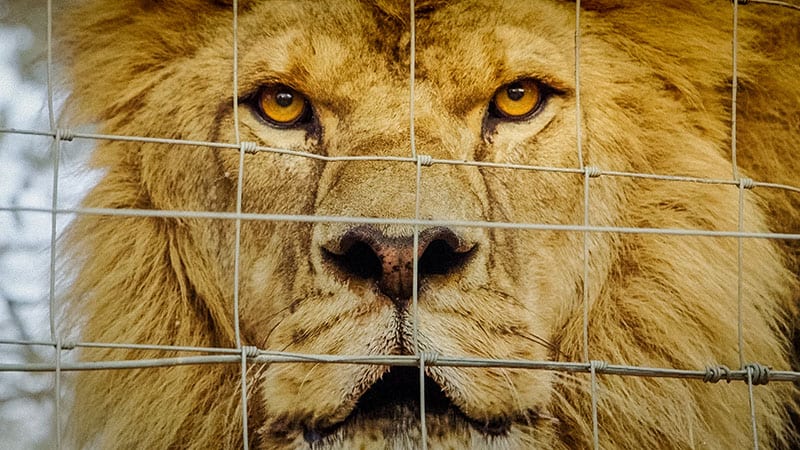
Photo from the documentary Lions, Bones and Bullets
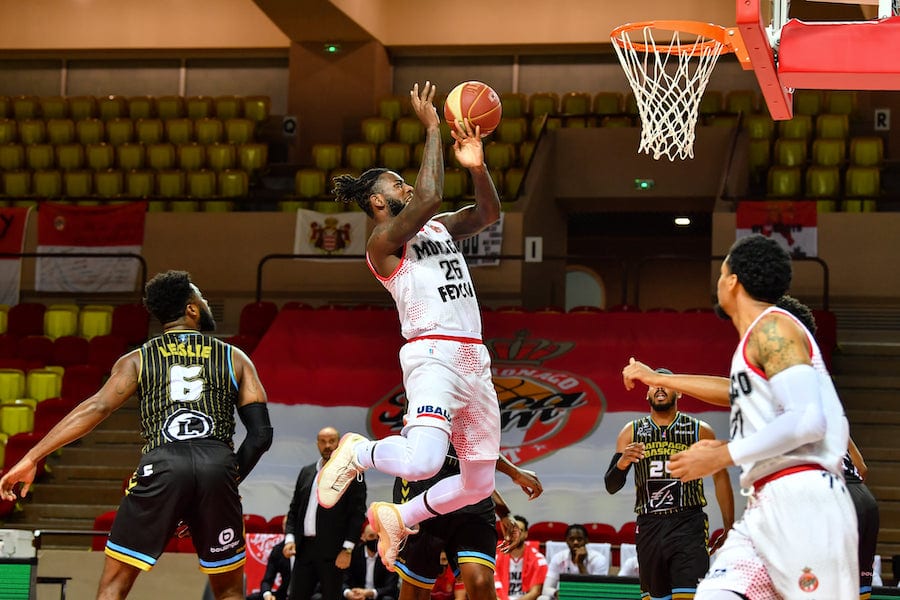
AS Monaco Basketball brought home the bacon on Monday night crushing Châlons-Reims 94 to 76 in Jeep Elite action, and also were given word they are qualified for the first time in the team’s history in the Euroleague, the giant of European basketball leagues.
It was a big night for the Roca team. Hot off the heels of their qualification for the EuroCup 7 finals, they took on Châlons-Reims in a Jeep Elite match at Gaston Médecin where they dominated from start to finish.
Despite Rob Gray and Damien Inglis being out due to injury, the team played like the pros they are and took full advantage of their talents. Notably, Branden Frasier was on fire during the first half, pulling in 17 points on his own and going six for six on shots, including three for three in the three-point range.
The team from Champagne didn’t know what hit them.
The first half was a wash out for Châlons-Reims. They found themselves 19 points down at the half with the score sitting at 55-36.
After the break, things didn’t improve much for them, as Monaco was everywhere. At one point in the third, the score was an incredible 72 to 45 for the Roca boys. The game tightened up a bit in the last quarter, but Monaco was never in much danger of falling behind. In the end, they held on and finished with a 94-76 victory.
“After all the excitement of qualifying for the final in Gran Canaria, my team was very professional and kept the pressure on,” said Coach Zvezdan Mitrovic. “I congratulate my players. Rob (Gray) and Damien (Inglis) were a bit injured, but they could play the next game.”
Meanwhile, far to the north in Saint-Peterburg, the team waited news on a decisive game. The Russian Zenit team beat Greek powerhouses Panathinaikos 112 to 83, thus securing the eighth place spot and catapulting Monaco into the Euroleague for the first time ever. The Euroleague is a top-tier competition that has run since 2000, replacing the previous FIBA EuroLeague.
When asked about the securing a place in the Euroleague, Coach Zvezdan Mitrovic proudly commended his team. “It’s a very big moment for the club, the result of a lot of work. We don’t have the biggest budget, nor the biggest squad, but my players showed huge heart to reach this Eurocup final. The club was in Pro B when I arrived and were climbing from N1 (3rd Division). Today, they find themselves in the Euroleague, there is an incredible side to all that.”
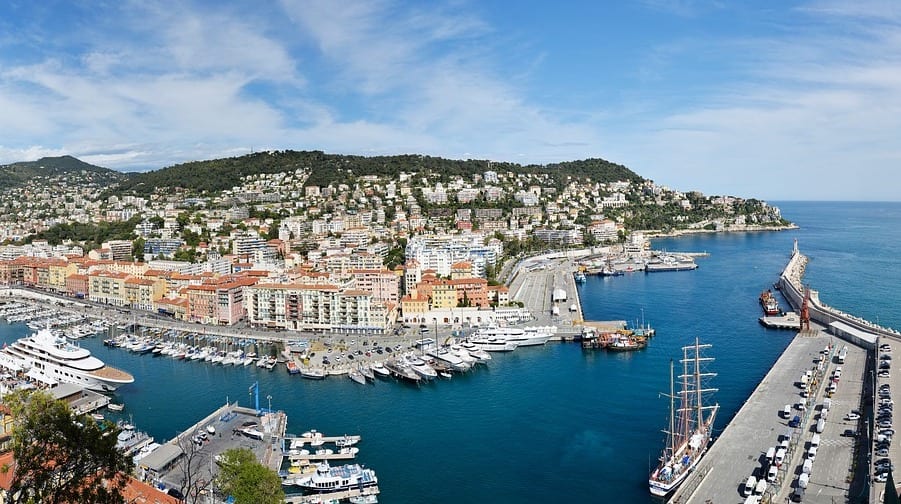
The long-awaited shuttle boat service between Nice and Cap d’Ail will begin this summer, transporting cross-border workers wishing to avoid heavy traffic jams and crowded trains during their daily commute.
The National Council on Tuesday welcomed a move by the Nice Côte d’Azur Metropolis, in conjunction with Monaco, to offer the shuttle boat service between Nice Port and Cap d’Ail, starting in August.
With thousands of French inhabitants travelling to Monaco every day to work, the new transport service will provide vital relief to a saturated train network and heavily congested roads. It will also help reduce CO2 emissions in the region.
The shuttle will run every half hour during peak hours, making 34 rotations each day between the Port of Nice and Cap d’Ail, about 15 kilometres apart.
The boats will be powered by hybrid engines, making them both practical and environmentally friendly.
Once in Cap d’Ail, passengers will be able to make the short trip in to the Principality using the CAM bus service.
While welcoming the new service, the National Council repeated its call for the government to boost sustainable public transport services in Monaco, saying: “The National Council wants the government to diversify its offer of alternative transport, making it sufficiently attractive for motorists. This is why elected officials reiterate their request to increase the frequency and to introduce free busses in the Principality in order to eventually make it the mode of preferred travel for residents.”
The shuttle boat service between Nice and Cap d’Ail will be trialled for two years.
Photo of Nice Port via Pixabay
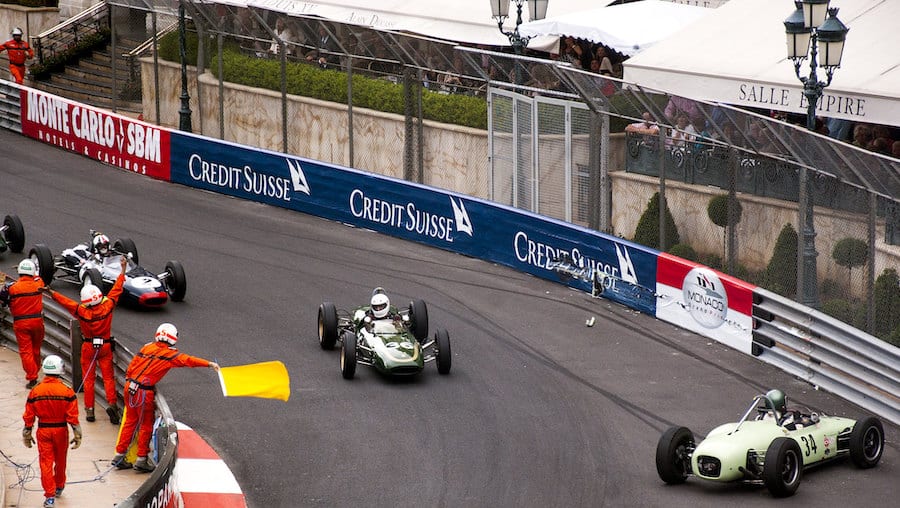
Excitement set to return to Monaco with Historic GP
Monaco is revving up to host its first major public event since the onset of the Covid pandemic, the Historic Grand Prix. Tickets are selling out fast for the late April race amid uncertain health guidelines and ongoing travel restrictions in France.
After it was forced to cancel the 12th Historic Grand Prix of Monaco in 2020, the Automobile Club of Monaco (ACM) is in full swing for this year’s event, with 170 competitors primed to compete and stands throughout the Principality ready to welcome fans.
It marks a major milestone for both the ACM and Monaco, with thousands of spectators set to fill the Principality, injecting some much needed energy into a country that thrives on hosting events.
But with less than 10 days to go, the government is yet to provide any specific health guidelines for spectators.
Meanwhile, France’s “light lockdown”, which includes a 10-kilometre travel restriction, is not due to be lifted until the first week of May. Therefore, it remains to be seen whether Monegasque authorities will actually prohibit French citizens from entering the Principality for the event.
It hasn’t stopped tickets from going on sale though and, according to the ACM ticketing website, there are on average only 10% of seats still up for grabs. Stands at Quai Albert 1er and Piscine Plongeur are close to sold out.
While it remains uncertain what health documentation spectators will be asked to provide, the ACM, when contacted by Monaco Life, suggested that negative PCR tests would likely be required, particularly for foreign visitors.
The Historic Grand Prix of Monaco will serve as a precursor to the Principality’s most famous and highly-anticipated event, the Monaco Grand Prix, which is set to take place less than a month later.
The 2020 edition of the Historic Grand Prix of Monaco was meant to celebrate the 70th anniversary of the creation of the World Formula 1 Championship. This year, the club will still pay homage and commemorate the first win for Ferrari in Formula 1.
For two and a half days, competitors will share their passion for competition at the highest level of motorsport, in real races, surrounded by the sounds and smells that characterise their cars.
Fans can expect a fight between “voiturettes” in the A Series; four iconic Maserati 250F models facing a diverse range of single-seaters with front engines in the B Series; a rich C Series with sports cars; and F1s from the 1960s in the D Series.
One third of the E Series will consist of cars powered by 12-cylinder engines, Ferrari, Matra and BRM, in addition to the F Series with three former Grand Prix drivers and a multiple winner of Le Mans 24 Hours.
Last but not least, the G Series will host more recent F1s in a large variety of colours.
There will be seven races in total on a street circuit that is 80% the same as it was in 1929.
The 12th Historic Grand Prix of Monaco will take place from 23rd to 25th April. Tickets can be purchased online here.
Photo by The Development of Birmingham on Flickr
All the headlines and highlights from Monaco, direct to you every morning