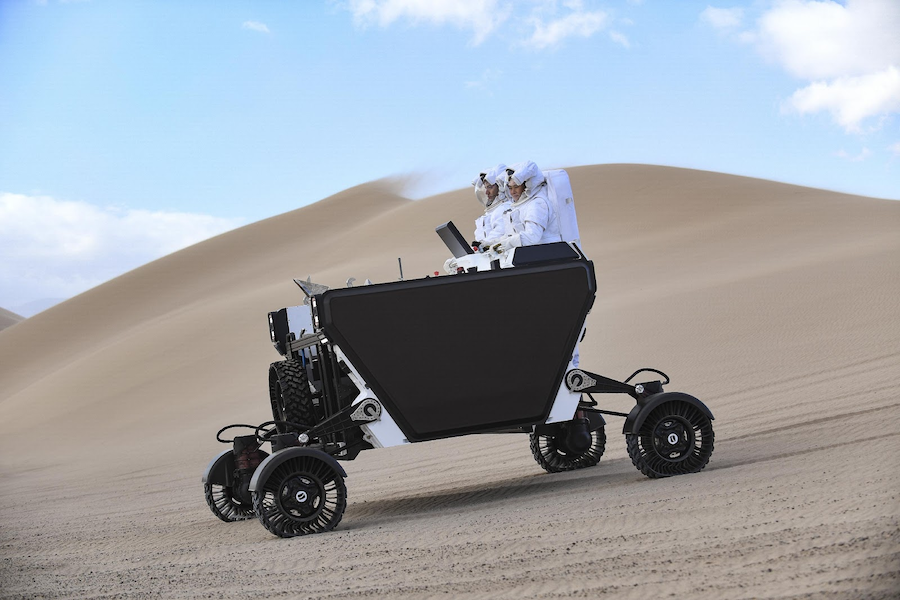
Venturi Astrolab, a strategic partner of Monaco-based Venturi, has created a space vehicle called FLEX, designed for humans to comfortably explore the moon, Mars and beyond.
Venturi has made a name for itself crafting high-performance electric vehicles for Earth, but it’s also set its sights on the celestial.
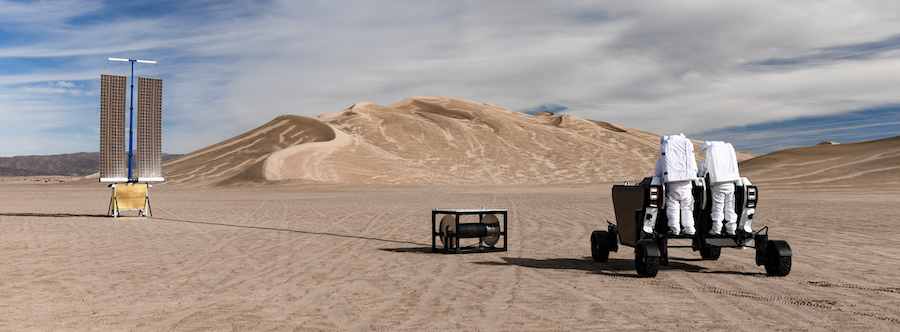
Venturi Astrolab, based in California US, is applying its know-how to build a vehicle that can withstand the challenges of space. The new space rover, called Flexible Logistics and Exploration (FLEX), is currently being tested in the desert near Death Valley. This fully functional and full-scale prototype has been tested using both crewed and telerobotic operations using a variety of payloads in extreme terrain.
Even more incredible is the fact the vehicle is being designed for prolonged use in space with an eye to a time when people may live full-time on the moon or another planet.
“As we transition from the Apollo era, which was focused on pure exploration, to now, when people will be living for longer periods on the Moon, the equipment needs to change,” said Chris Hadfield, Astrolab Advisory Board Member, in a press -statement. “When we settle somewhere, we don’t just need to get people from one place to another, but we need to move hardware, cargo, life support equipment and more. And it’s all dependent on mobility. It was not only a joy to drive FLEX but also see its size, capability and get an intuitive sense of what this rover can do.”
Photo source: Venturi Astrolab
Until now, rovers of this kind have been designated for specific uses and cost billions to design and build. This approach is clearly not cost-effective nor compatible with NASA’s end goal of supporting a sustained presence on the moon or Mars. The old rovers were one-time wonders.
FLEX, on the other hand, is being designed to go from lander to rover and back using a modular payload interface that supports intermodal transportation.
“For humanity to truly live and operate in a sustainable way off Earth, there needs to exist an efficient and economical transportation network all the way from the launch pad to the ultimate outpost,” said Jaret Matthews, Founder and CEO of Astrolab. “Currently, there is a gap in the last mile and Astrolab exists to fill it.”
FLEX’s commercial potential comes from its architecture, which gives it the ability to pick up and drop off modular payloads. This can be of use for robotic science, exploration, logistics, construction, resource utilisation, site preparation or virtually any other use that may come into play, as well as transporting two astronauts.
“We’ve designed a mobility platform that is payload agnostic so it can work within an ecosystem of transportation systems, vehicles and tools,” said Matthews. “FLEX achieves a wide range of utility by being able to collect, transport, and deposit any payload that conforms to what will be a standard and open interface.”
In June 2021, Venturi unveiled the world’s first ever zero emission polar exploration vehicle, which went into operation at the Belgian Princess Elisabeth research station in December.
Princess Charlene has made her long-awaited return to the Principality of Monaco where she will continue the final stage of her recovery with her family, the Palace has announced.
In a statement released late Saturday, the Princely couple said: “In agreement with her doctors and while her recovery is on the right track, Their Serene Highnesses have jointly agreed that Princess Charlene can now continue her convalescence in the Principality, with her husband and children.”
The Palace revealed that the princess had just returned to Monaco where “She is happy to have found her family and loved ones.”
Princess Charlene is expected to soon resume official duties.
“As soon as her health allows, it will be with joy that the Princess will again share privileged moments of conviviality with the Monegasques who have missed her so much. In order to facilitate her full recovery, Princess Charlene is still in need of calm and serenity, the Princely couple therefore asks that we continue to respect their privacy and their family environment.”
It’s been almost a year since Princess Charlene departed for South Africa to attend the funeral of Zulu monarch King Goodwill Zwelithini and launch an awareness campaign on the plight of rhinos as part of the Princess Charlene of Monaco Foundation.
Complications from a severe ear, throat and nose infection grounded the princess in her native country for eight months where she underwent a number of medical procedures. Intermittent social media posts showed a very frail woman, far from the healthy, muscular former Olympic swimmer that Monaco and its citizens had known.
Prince Albert and their children Prince Jacques and Princess Gabriella visited Princess Charlene on two occasions, and throughout his wife’s time in Africa, Prince Albert was forced to publicly dispel rumours that there was a rift in his marriage.
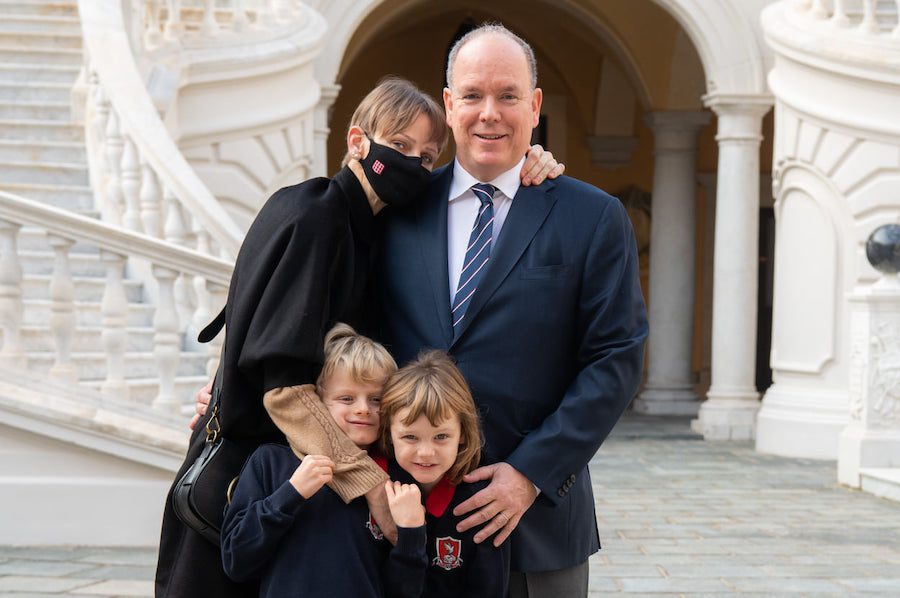
On 8th November 2021, Princess Charlene made her return to the Principality of Monaco, her frail figure evident even from behind a mask as she posed for photographers with her family in the Palace courtyard.
Within a week, the Palace announced that Princess Charlene would be suspending public duties and had entered a treatment facility for “deep general fatigue”.
Prince Albert’s sisters, Princess Stephanie and Caroline Princess of Hanover, have both stepped in to fill the official void left in Princess Charlene’s absence, often appearing alongside her children, Prince Jacques and Princess Gabriella during public engagements.
Monaco Life joins the people of the Principality in welcoming Princess Charlene home.
Photo of Princess Charlene’s return to Monaco in November 2021, by Eric Mathon, Prince’s Palace
The face of the ever-transforming Casino Square will be altered once more as the iconic Café de Paris gets a substantial makeover, with work set to finish by June 2023.
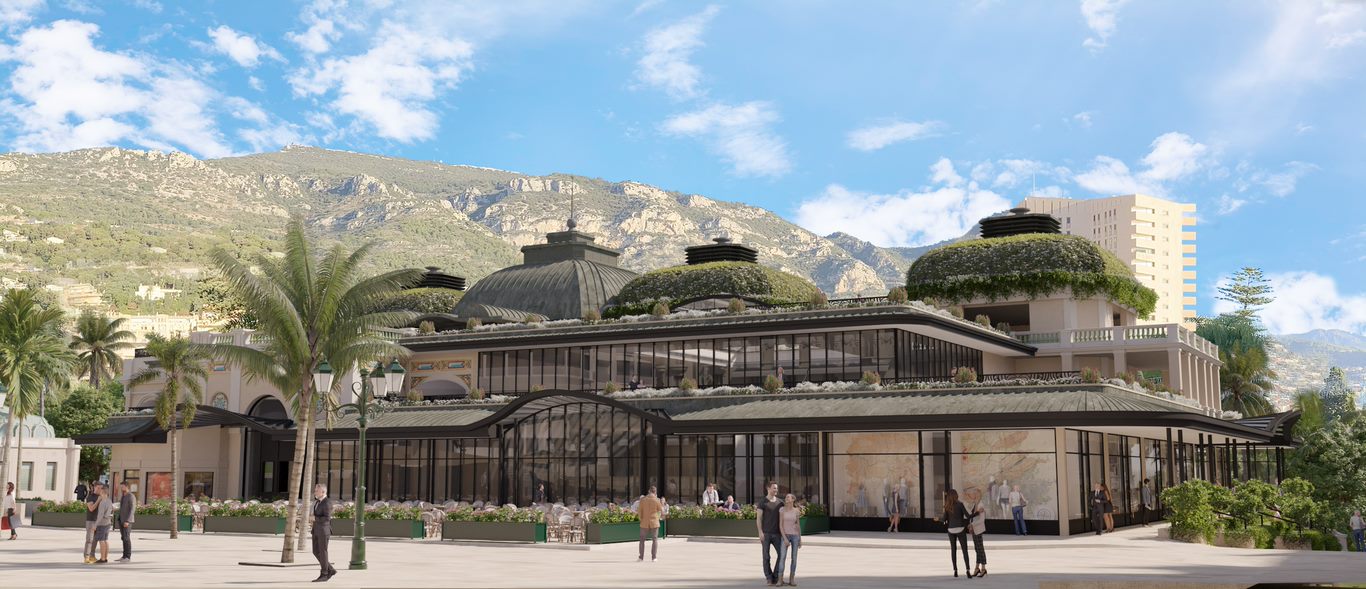
The Monte-Carlo Société des Bains de Mer (SBM) revealed plans for the Café de Paris in an exclusive gathering of local press including Monaco Life on Friday. The renovation plans have been approved and the works, which are thought to total €40 million, will be completed at the end of June next year.
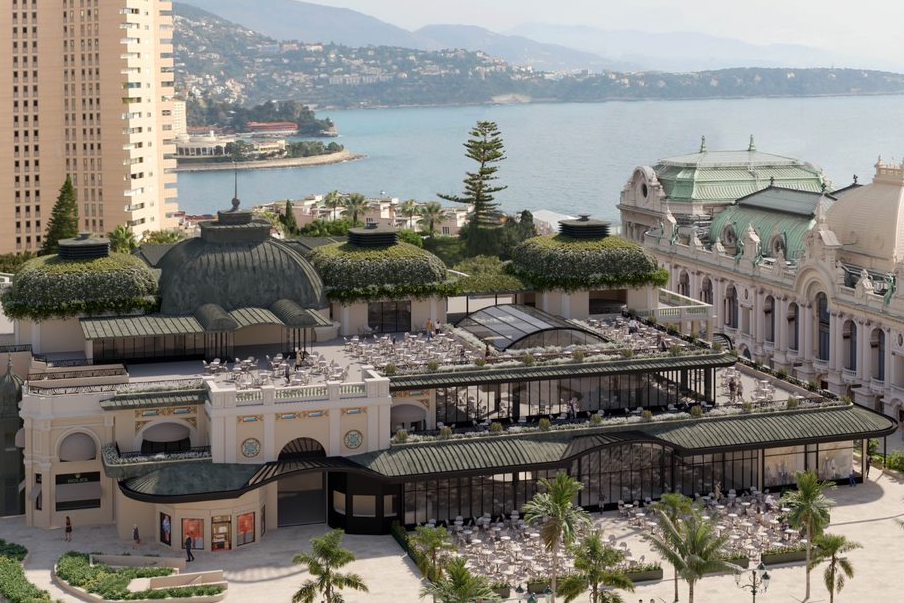
Architects Alexandre Giraldi and Alain-Charles Perrot were charged with modernising the Café de Paris. The aim is to maximise the potential of an iconic building, which occupies what SBM CEO Jean-Luc Biamonti described as “the most beautiful square metreage in the world”. The difficulty comes in doing this whilst keeping the building true to the Belle Epoque era.
The result of the work has yielded an incredible, modern design, which is in fitting with the modernisation of the rest of Casino Square whilst also respecting and conserving its architectural heritage.
Design plans for the new Café de Paris
Most notably, the brasserie of the Café de Paris will be getting two additional floors, including a unique rooftop and a variety of boutiques. The Brasserie will extend onto two floors, whilst a partially glassed roof will create a naturally lit ground floor bar.
The building will also welcome an ‘Amazonico’ restaurant, a concept from Madrid that combines tropical and Latin American cuisines. The restaurant, which also has a presence in London and Dubai, will be placed in the Salle Bellevue, which will be enlarged, and will also open onto a large rooftop. This will also be complemented by a speakeasy-style bar.
Although the details have not yet been finalised, there will be an additional 800㎡ dedicated to boutiques, and this will run down from Casino Square to Jardin des Spelugues.
Despite the enormity of the task, it will only take just over a year to complete and will also be largely undisruptive. As no demolition is needed to take place, there will be minimal noise pollution.
The Brasserie has moved to the Salle Empire for the duration of the work, whilst the lemonade terrace is undisturbed. The Café de Paris casino and the boutiques will also remain in place, although the SBM boutique has been moved to the Avenue de Monte-Carlo.
How do I talk to my children about the war in Ukraine?
After years of disruption and fear brought about by the Covid-19 pandemic, war has now broken out in Ukraine and is making the news all day, every day. For most kids, this will be their first experience with war and the media surrounding it. Clinical psychologist and children’s author Dr. Regine Muradian has this advice for parents.
Monaco Life: How much should we be telling our kids about the war?
Dr. Regine Muradian: Kids nowadays have access to so much information, so they probably know more than we think. Even if they are not bringing up the topic, they most surely have heard it at school or from a teacher. Asking them directly what they have heard, or how they feel is a good way to broach the conversation. As a parent or caregiver, you want to first see how much they are already aware of and then take it from there.
Is it ok to feel that they need to be protected/shielded from it?
Kids need to feel safe and that’s where we come in as parents, reassuring them that we are here. We can’t completely shield them from the information as most likely they will hear about it. I would recommend avoiding having the news on in the home when kids are around as the images can be very traumatic.
The conversations we have with children under five will obviously be different than the ones we have with school age kids or adolescents. How do we tackle this?
Kids under five may certainly have questions but may not know how to express them. Sitting down with your child and using drawings as a way for them to express their emotions and feelings can be very helpful. Children are smart and can pick up on our energy, tone, and mood. Talking openly and ensuring they feel their questions have been answered is an important role modeling opportunity. For school age children and teens, they can look up the information and see a lot of content. As a parent, listening and validating their feelings is a good way to help them express their emotions and answer their questions. Allowing a safe talking space can help them and decrease any insecurities or fears they may be experiencing.
What kind of things should we be asking them?
Most likely your child by now has heard of what is occurring or they are noticing donation stations. This may elicit a lot of questions such as “What is that for?”, “What is happening in that country?”, “Will it happen here?”, and “Are we safe?”. Being honest as a parent and reassuring them that they are safe, and you are there as a parent, is the most helpful.
What do we say when we don’t know the answer?
As a parent, we don’t always have all the answers and it is okay to say you don’t know or are not sure about something.
Do you think this will add to the kids/teenager’s feelings of vulnerability, considering everything that has happened these past two years? And how can we help them overcome that?
Certainly, these past two years have been challenging, it was a time of uncertainty, and to now have a war breakout keeps the cycle of fear. As a parent, don’t wait to bring up the topic as most likely they have already seen or heard it from social media platforms and at school from friends. You can help them overcome feelings of vulnerability by starting the conversation and talking through their insecurities and fears. You can ask questions such as, “How are you feeling? Are you scared?”. Make sure that you are monitoring their sleep. Are they sleeping more or less than they used to? How are they eating? Have you noticed any changes in their eating patterns?
What other signs of concern should we be looking for in their behavior that could signal they are having trouble with grappling the issue?
In addition to keeping an eye on their eating and sleeping habits, some signs to look out for are stomachaches, feelings of tension, refusing to go to school, feeling withdrawn and not doing activities they used to enjoy.
How important is it to use age-appropriate language and depth for topics such as this, and why?
With the younger ones, communicating via drawings and pictures can be a good way to have them express their feelings. For the older ones, using open-ended questions can help them express their emotions around any topic in general.
Should we be watching or talking about the war in front of certain age groups of kids?
Refraining from watching the news in front of our kids is best as kids are constantly watching our behaviors. If we are feeling scared or anxious, they will as well. This doesn’t mean you should refrain from expressing emotion as an adult, but be mindful that kids tend to emulate parent behaviors. We can express how we feel in a healthy way such as saying, “Yes, it is scary what is happening but we are safe and we are here to support eachother”. We can practice compassion, kindness, and helping in our own way, encouraging them to write a letter or donate a toy, however one can help.
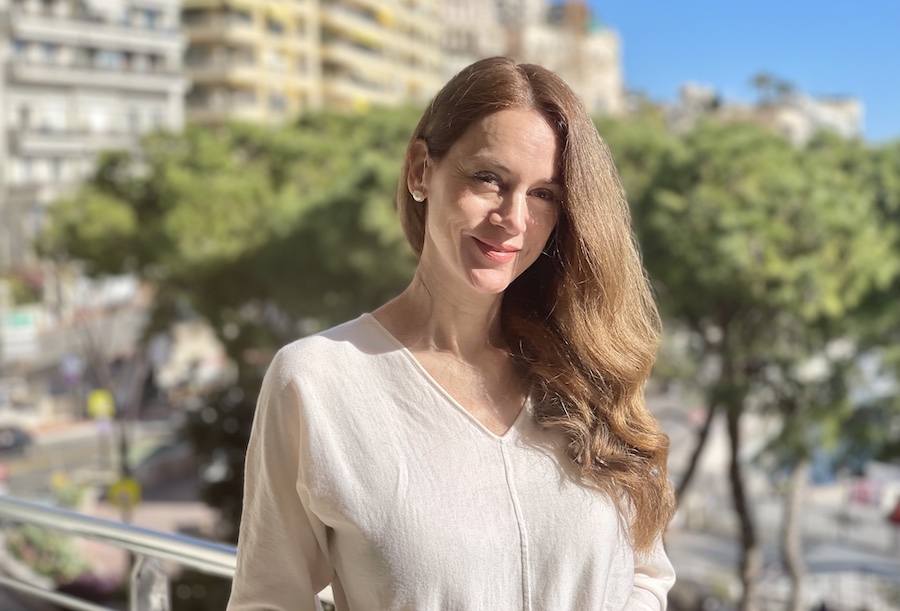
Dr. Regine Muradian, a former Monaco resident and regular visitor to the Principality, is a licensed clinical psychologist, children’s author, speaker, consultant and mental health advocate. In her clinical practice, Dr. Muradian works with children, adolescents, and adults who present with a wide range of emotional stressors. The thoughts and opinions expressed in this article are her own, and not necessarily those of Monaco Life.
“The window to a liveable future is closing rapidly”
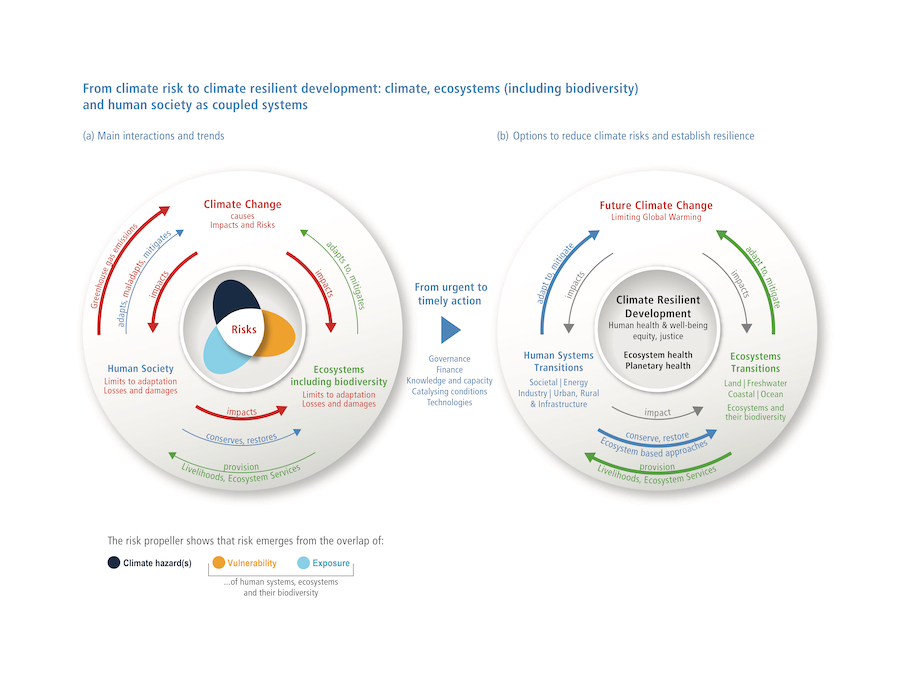
It is not too late to change the future of our planet if we speed up our measures to act and adapt, say the authors of a new IPCC report on climate change released Monday. We speak to one of the authors, Nathalie Hilmi at the Scientific Centre of Monaco.
The Intergovernmental Panel on Climate Change (IPCC) released its latest large-scale report at midday on 28th February. Titled ‘Climate Change 2022: Impacts, Adaptation and Vulnerability’, it is the second part of the Sixth Assessment Report and the IPCC’s first since November’s COP26 summit.
Nathalie Hilmi contributed to the 6th Assessment Report, mainly in chapter 18: ‘Climate resilient development pathways’, and the CCP4 on the Mediterranean region.
“This report shows that the scientific evidence is unequivocal, climate change is a threat to human wellbeing and the health of the planet. Any further delay in concerted global action will miss a brief and rapidly closing window to secure a liveable future,” Nathalie Hilmi told Monaco Life.
The report, for which the authors have analysed thousands of published scientific papers, shows that increased heatwaves, droughts and floods are already exceeding the tolerance thresholds of plants and animals, driving mass mortalities in species such as trees and corals. These weather extremes are occurring simultaneously, making the impacts increasingly difficult to manage. They have exposed 3.3 to 3.6 billion people to acute food and water insecurity, especially in Africa, Asia, Central and South America, on small Islands and in the Arctic.
The report says that, in order to avoid mounting loss of life, biodiversity and infrastructure, “ambitious, accelerated action is required to adapt to climate change, at the same time as making rapid, deep cuts in greenhouse gas emissions”.
The report finds that so far, progress is uneven, and there are increasing gaps between action taken and what is needed to deal with the increasing risks. These gaps are largest among lower-income populations.
“In the Paris Agreement, developed countries committed to mobilising $100 billion US a year to 2020 to reverse the climate change needs of developing countries, but this doesn’t cover all of the impacts that we are observing,” says Hilmi. “The estimated cost of adaptation for developing countries varies widely, but it is around $127 billion per year until 2030, and almost $300 billion US per year until 2050.”
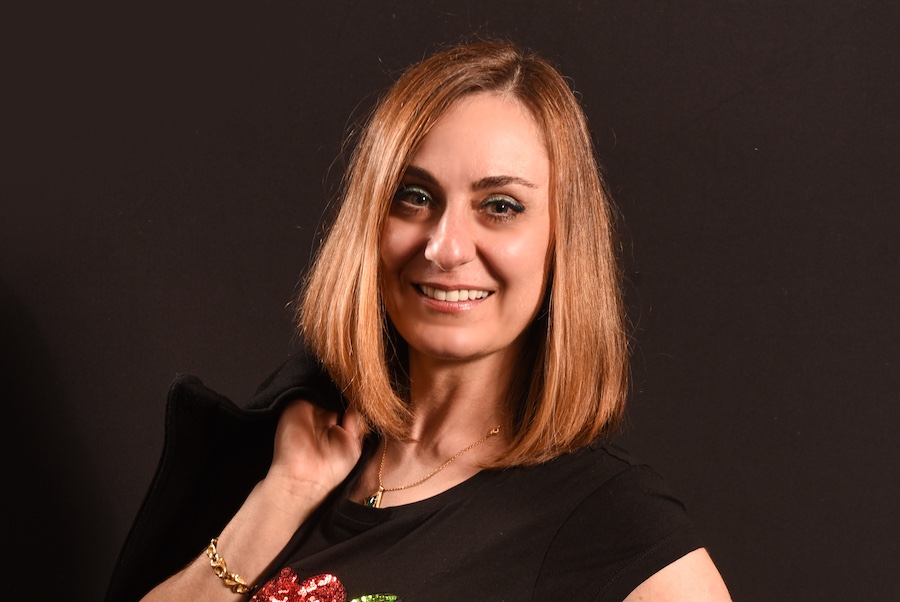
Nathalie Hilmi heads the Environmental Economics department of the Scientific Centre of Monaco
It is a lot of money, acknowledges Hilmi – an economist specialising in macro-economics and international finance, “but if we don’t act now, the cost of inaction will be even higher in the future. And we must not forget the wider benefits such as saving lives, improving people’s health and preserving cultural identity, things that have no price.”
If humans can limit global warming to close to 1.5°C in the near-term, it would substantially reduce projected losses and damages in human systems and ecosystems, the report finds.
“The idea of climate resilient development is already challenging at the current warming levels, but it will become more limited if global warming exceeds 1.5°C, because in some regions, it will simply be impossible if global warming exceeds 2°C,” says Hilmi.
In her chapter, ‘Climate resilient development pathways’, Hilmi and a team of experts explore what can happen when governments, civil society and the private sector make development choices that prioritise risk reduction, equity and justice. International cooperation is needed, says Hilmi, as well as governments working at all levels with scientific and other institutions, media, investors, businesses, civil society, educational bodies, and communities – including ethnic minorities and Indigenous Peoples.
“Global change is a global threat, but actions can be local and individual,” says Hilmi reassuringly. “We need actions from international institutions and governments, but also from local decision makers and everyone in the civil society like you and me. We just have to transform our way of living. For example, our diets – eat less meat and it will have less impact on the environment, don’t let the water run unnecessarily when you wash your hands… these are small things that can be impactful on a global scale.”
The report also provides new insights into nature’s potential not only to reduce climate risks but also to improve people’s lives.
“This report is really interdisciplinary,” says Hilmi. “We have natural scientists and social scientists working together to examine the impact of climate change on nature and people around the globe. It shows that biodiversity loss and climate change are interlinked; that nature is capable of protecting the climate. When we have trees and our ocean is healthy, for example, they capture and store C02. If we conserve, restore or protect the mangroves, they will not only capture carbon, they will also filter the water for healthy fisheries and protect the coast from flooding and erosion. So, nature needs to be part of the solution.”
In order to maintain the resilience of biodiversity and ecosystems, the report states that 30% to 50% of Earth’s land, freshwater and ocean areas must be conserved.
In summary, Nathalie Hilmi says it is important to stay positive.
“It is not too late. But if we wait any longer, we will reduce our options of action.”
The new IPCC report will form part of discussions at the upcoming Monaco Ocean Week, a high-level summit organised by the Prince Albert II of Monaco Foundation, as well as two United Nations events this year.
“I will be involved in several events for Monaco Ocean Week in which I will talk about the new IPCC report,” reveals Hilmi. “It will also be used for the UN Biodiversity Conference (COP15) in China in April, and the UN Climate Change Conference (COP 27) that will be held in Egypt in November.”
Beefbar founder Riccardo Giraudi talks about his exciting new vegan venture, the Leafbar, one of four new restaurant openings in Monaco this year, while revealing what it takes to make it in an industry that is not for the faint of heart… or stomach.
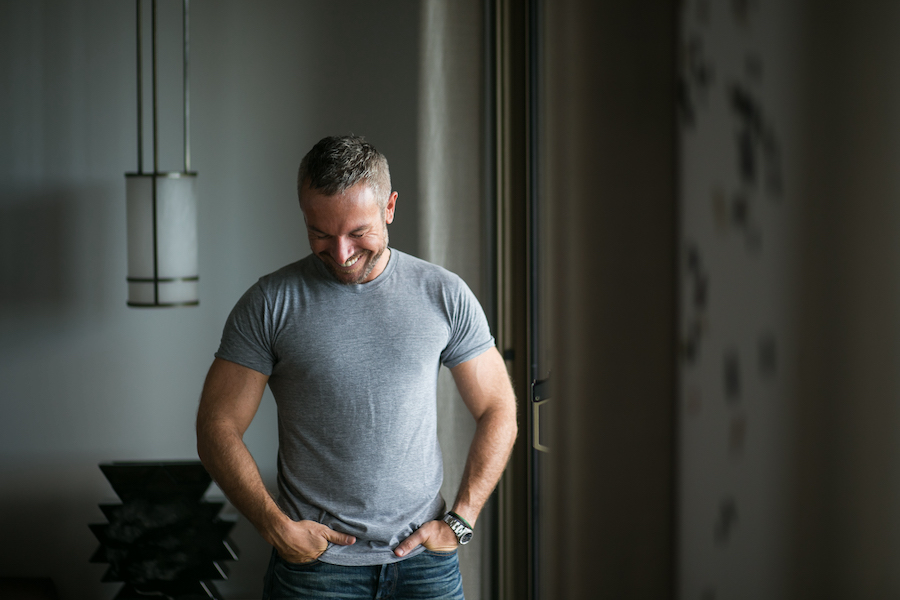
Riccardo Giraudi is one of Monaco’s most popular exports. Born in Genoa, Switzerland, and raised in Monaco, the 46-year-old is CEO of the Giraudi Group, a Principality-based meat import/export business created by his father Erminio Giraudi in the 1960s that now employs over 700 people worldwide.
The younger Giraudi was educated at the European Business School in London and later took an internship at a pioneering restaurant PR company working with brands like Hakkasan, Chinawhite and Nobu.
“London really changed my philosophy on a lot of things,” Riccardo Giraudi tells me from his home in Monaco. “PR companies were only for fashion at the time, but it was at the start of the internet boom, it was the millennium, and restaurant brands were becoming lifestyle.”
When Giraudi was called back to Monaco at age 22 to take over the management of the family business, he was less than enthused.
“I told my father I would only do it if I could have another business to motivate me and allow me to be creative. That’s when I started doing restaurants here in Monaco,” Giraudi remembers. “At the time, there were only Michelin star ‘Frenchies’ and Italian trattorias. But the customers here were very cosmopolitan, well-travelled and wealthy. They thought of Monaco as this exciting capital, but in reality, there was nothing.”
So, Giraudi opened his first restaurant, the Beefbar, to huge success. Then another, and another. It was then that he realised he could in fact combine the family business of trading meat with his passion for creating restaurants.
“The restaurant taught me about the beef, not vice versa,” he reveals. “I started importing hormone free Black Angus from America and Australia, and Kobe beef from Japan. I began branding beef, which didn’t exist at the time, and so both companies grew hand in hand.”
The new chapter in the Giraudi legacy was being written.
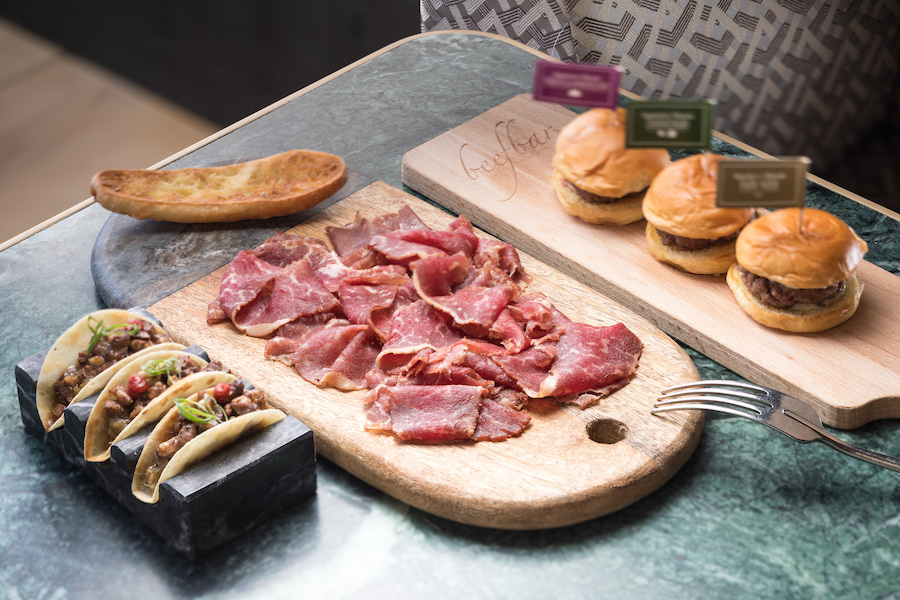
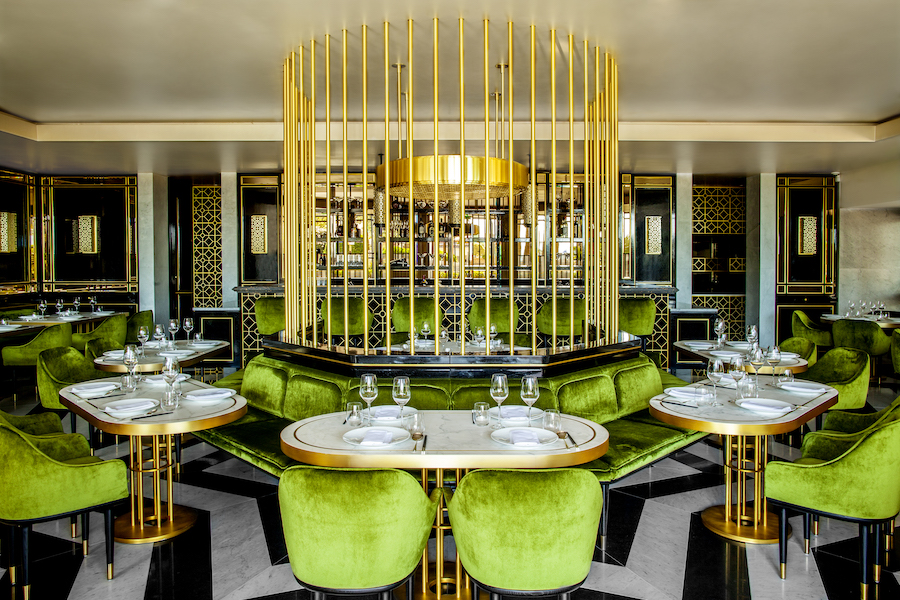
Beefbar Monaco
Anyone who has dined in Monaco will have likely eaten in a Giraudi restaurant: Beefbar, Pizz’aria, Song Qi, Mozza, Izakaya Cozza, Mezze Kitchen, Moshi Moshi, Cantinetta Antinori, Tiny Thai, Grubers… in the teeny two-square kilometre Principality, Riccardo Giraudi has established no less than 10 restaurants, and many more are in the making.
“I keep saying ‘enough’, but I live here so I have to test it, Monaco is my lab,” he smiles.
The next big concept that this meat connoisseur will be testing is unlike anything he has tried before… a 100% vegan restaurant called Leafbar. It will sit, in complete antithesis, beside the most meatiest of restaurants and his biggest success, the Beefbar, in Fontvielle.
“In the beginning I didn’t really understand it (veganism). I thought it was mostly left-wing skinny girls that don’t want vaccines, but I was totally wrong of course,” acknowledges Giraudi. “I realised that there are a lot of people who just want to eat better meat, and sometimes they want an alternative to protein, so that’s the vision behind Leafbar. And what better place to open it than in Monaco, where it all started, and right next door to the Beefbar?”
Veganism’s radical image overhaul is largely thanks to endorsements from celebrity chefs and Instagram influencers, new cookbooks and headline-grabbing vegan restaurants that are flourishing around the world.
Last year, the World Health Organisation recommended a plant-based diet for a healthy life. That backing, along with growing concerns about the impact of farming on the environment and animal cruelty, have helped fuel a plant-based gastronomic revolution.
Estimates now put the total number of vegans in the world at 79 million. By 2026, the global vegan food market is expected to reach $24.3 billion.
To a business-minded creative like Riccardo Giraudi, creating a top-quality vegan restaurant in Monaco is the obvious next step.
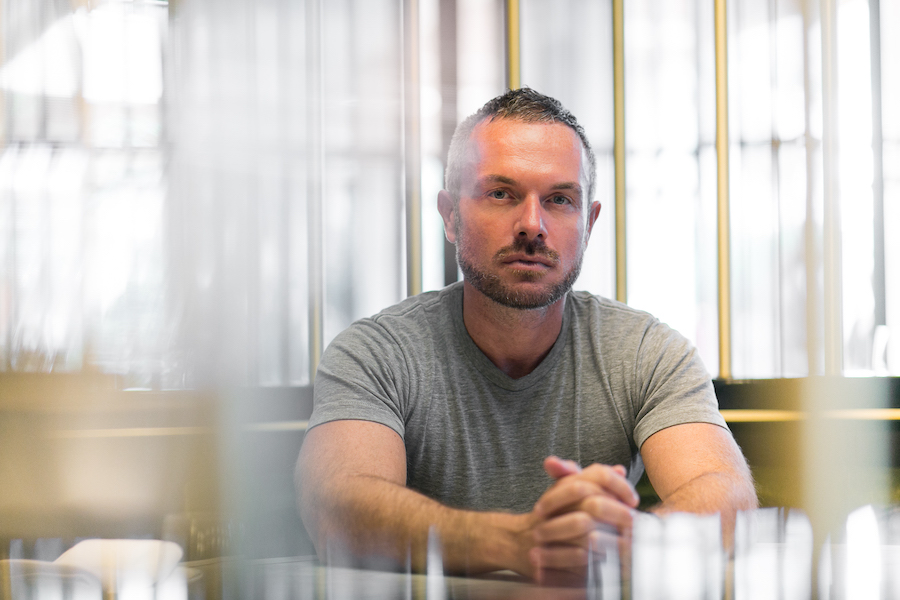
Riccardo Giraudi
“Luxury meats and alternative meats are both niche products, they go through the same distribution channel, more or less,” he reveals. “The legislation for bringing in these alternative meats is actually much simpler because they’re not animal proteins, most of them are jackfruit, soy, peas and mushrooms, so it is much easier for me to bring them in and cook with them.”
The Leafbar will be a “plant-loving Beefbar”, says Giraudi, featuring all the favourite street food classics – tacos, bao buns, pizza, sushi rolls… but with plant-based proteins. Guests can also expect flavour explosions in Asian stir fries and Indian curries when the restaurant opens in June.
“It’s hard work creating the recipes and making sure the menu makes sense. I can’t mess up because we have Beefbar right next to it, and it’s very successful, so we want to surprise guests more than have them say ‘what the hell is on about now?’”
To ensure he’s covering all bases and appetites, Giraudi is also introducing a Reefbar inside the Beefbar. Leaf, Beef and Reef. How could it go wrong?
Well, it would be intimidating for perhaps anyone who isn’t Riccardo Giraudi.
Song Qi, a Riccardo Giraudi restaurant, in Monaco
In addition to the Leafbar, Giraudi will this year be bringing the legacy of famed French chef Joël Robuchon back to Monaco with a new Mediterranean restaurant on Avenue du Portier. He’s also opening a Comptoir de Nicole in the Principality featuring the eccentric Nicole herself from La Petite Maison in Nice. There’s also another Italian restaurant in the works, and all this on top of the 39 restaurants that this entrepreneur has opened, franchised, or is on the verge of opening in locations such as Rome, Malta, London, Athens, Luxembourg, New York, Mykonos, Africa and the Middle East.
But it doesn’t always work out as planned, Giraudi acknowledges. Take Beefbar Dubai for example.
“Our problem was that we thought the Beefbar brand was so strong, we could put it anywhere and people would come. And yes, they come for three months, but then they don’t return. It was a bad location in Dubai, period.”
Location accounts for about 70% of the success of a restaurant, says Giraudi. So, he made the tough decision to close Beefbar Dubai in 2019 after only 15 months of operation. “It wasn’t a complete disaster, but it wasn’t exactly what I wanted it to be, it wasn’t wow.”
Now, he and his business partners, which include billionaire Monaco resident Flavio Briatore, have reopened the restaurant in a new location along the famous Turtle Lagoon, and Giraudi is far more confident of its success.
“It took me 15 years to understand the recipe for screwing up less. You open some, you close some, you open some, you close less, then eventually you are opening many more than you are closing, so you can finally tell yourself, ‘Ok, I am getting the gist of this’,” he laughs. “Everybody notices all the successes you have, but they forget the failures, and I have had quite a few. There is no one single recipe for success in a restaurant, it is a combination of everything that ends up creating this sort of energy inside that restaurant. That’s why, when I walk into a new restaurant, I can usually tell the first day, the first week, if there are red flags, green lights or orange warning signals.”
By six months, Riccardo Giraudi generally knows whether his new venture will make it. That’s enough time for people to test the restaurant and satisfy their curiosity. The question is always: will they return?
Giraudi says the other key elements to making it in the restaurant industry is having a clear concept and selecting the right people for your staff. It’s also important to know where your strengths lie and to have the courage to say ‘no’ sometimes.
“I get proposals every day, but I make restaurants that are there for the long term and that I would want to go to every day,” says the father of two.
So, what does the year 2022 look like for restaurant guru Riccardo Giraudi?
“Firstly, I hope this will be the year that we can finally say goodbye to the pandemic. I hope this year will be the bright light at the end of the tunnel. I will be keeping my ambition high, and my head down to earth.”
Photos provided, portraits by Adrien Daste
All the headlines and highlights from Monaco, direct to you every morning