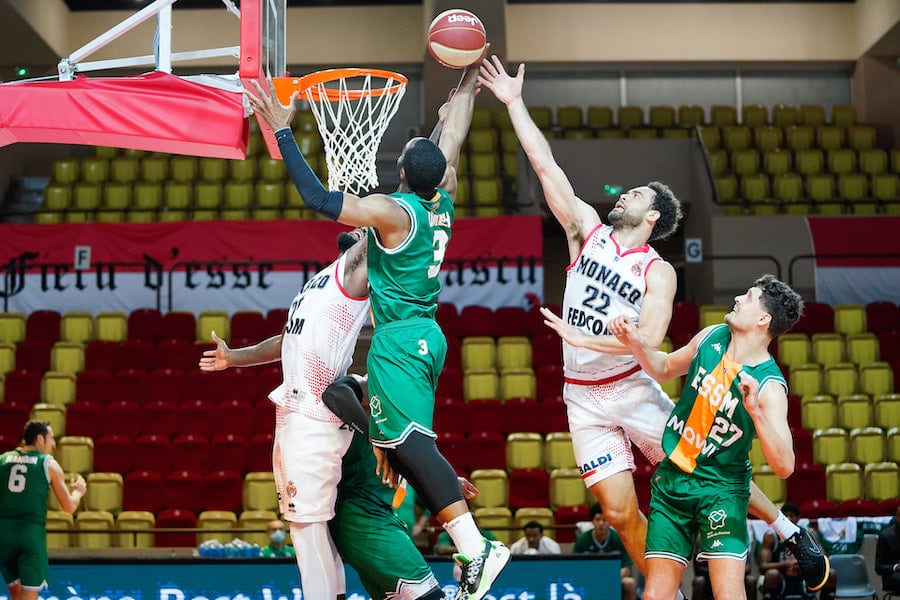
AS Monaco Basketball won a solid victory in their Jeep Elite match against ESSM Le Portel on Saturday night, a much-needed confidence boost after their defeat last week against Badalone.
The Roca Team had a solid 82-60 win at home at Gaston Médecin in their match against Le Portel. It’s not a huge surprise they came out swinging after their disappointing defeat in their last match, a Euro Cup 7 game, against Spanish team Badalone.
This game was a far cry from that nail biter. Team Captain Dee Bost scored eight points in four minutes and the team started the match with an impressive 14 to two lead. They didn’t let up throughout the rest of the match, only trailing behind once in the second quarter.
Whilst all games are important to some degree, the general feeling was that this match was a practice run for the big Euro Cup 7 rematch against Badalone on Tuesday, where the Roca boys hope to pay them back after their devastating loss last week.
“The result was satisfactory, as is the manner. Le Portel is a good team. We kept first place and we are ready for Tuesday against Badalone,” said Coach Zvezdan Mitrovic, rarely one to gush, after the game.
“Tuesday will be a great European match (against Badalone),” added Monaco rear Rob Gray. “We prepared well tonight, Le Portel had energy, they had not played for two weeks. We were solid collectively, we had to defend our first place.”
Monaco made 27 shots out of 64 on the night with 12 out of 34 points made on three-pointers. They captured 38 rebounds, with Damien Inglis having seven on his own, 14 assists and 12 steals.
Rob Gray was high scorer with 18 points, Dee Bost came in just behind him with 16 followed by Mathias Lessort and Abdoulaye Ndoye with eight each.
Monaco will host their new nemesis, Badalone, at home on 2nd February at 7pm.
(Monaco Life with ASM Basketball press release, photo by AS Monaco Basketball)
Much has been achieved by RAMOGE over the past two years in its fight against marine pollution in the Mediterranean. Now, Monegasque, French and Italian delegates have come together to set the projects for the years ahead, which include the creation of a new label to promote eco-responsible yachting.
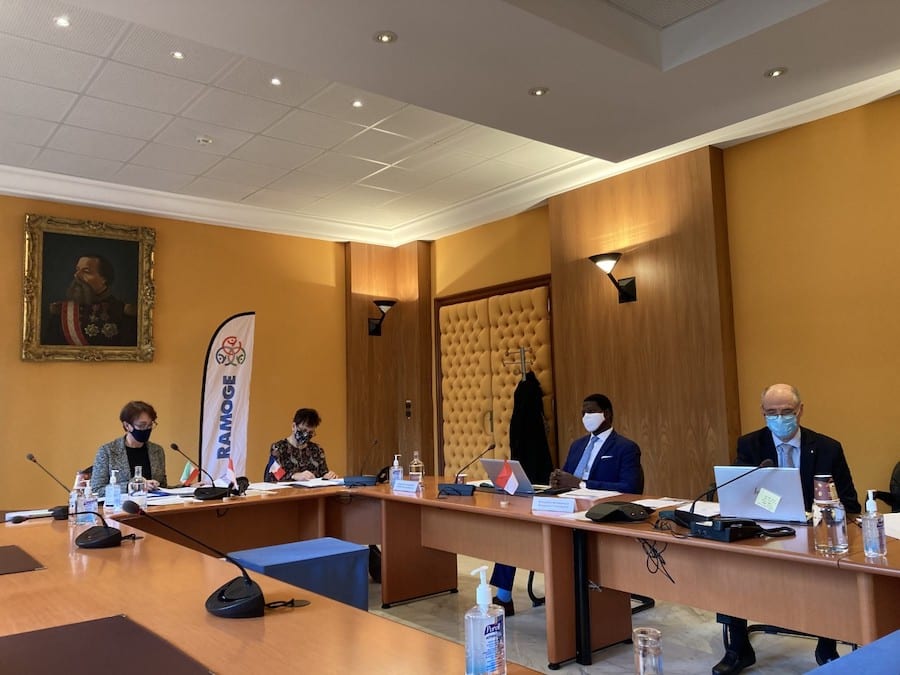
The 53rd meeting of the RAMOGE Commission was held on Tuesday 19th January in a hybrid format, with face-to-face and virtual participation.
It was an opportunity for delegates from the three countries that encompass RAMOGE – Monaco, France and Italy – to assess anti-pollution activities that have been undertaken over the past two years.
Despite the difficulties surrounding the Covid pandemic, RAMOGE was able to pursue a large number of important projects for the preservation of the marine environment.
They were listed as follows: the conservation of emblematic Mediterranean species such corb, grouper, large mother-of-pearl, ferruginous limpet, and cystoseire; monitoring the problems posed by the microscopic algae Ostreopsis; promoting the results of RAMOGE exploration campaigns in deep areas; launching a study for the sustainable management of large-scale leisure and cruising; the creation of a guide for the prevention of marine litter intended for local communities in the RAMOGE zone; maintaning RAMOGEPOL antipollution exercises and OSCAR-MED operations of surveillance against illegal discharges in the Mediterranean; the referral of a proposed ban on paraffin discharges in the Mediterranean to the International Maritime Organisation; and the organisation of the ‘RAMOGE – Man and the Sea’ photographic competition.
After assessing the achievements of the past two years, members of the commission then set the work program for the 2021-2022 biennium.
In addition to the renewal of a large number of the activities already underway, RAMOGE’s new actions are: the creation of a RAMOGE label aimed at promoting eco-responsible yachting; the development of synergies with other sub-regional agreements to fight against marine pollution; and the production of educational kits to raise awareness among high school students about the preservation of deep environments using data and resources collected during RAMOGE exploration campaigns.
The RAMOGE agreement is an environmental protection treaty signed in 1976 between France, Monaco and Italy for the maritime areas of the Provence-Alpes-Côte d’Azur region, the Principality of Monaco and Liguria, designed to prevent and fight against marine pollution.
The geographical area of the agreement initially extended from Saint Raphael to Monaco and Genoa, hence the name RaMoGe – representing the first syllables of the names of these three cities. This area has been enlarged and now extends from Marseille to La Spezia.
At the end of Tuesday’s meeting, President of the Commission Giuseppe Italiano handed over the presidency to Isabelle Rosabrunetto, Director General of the Department of External Relations and Cooperation, and head of the Monegasque delegation, for the new biennium.
Meanwhile, Tiziana Chieruzzi of the Italian delegation took over the Presidency of the Technical Committee, succeeding Benoît Rodrigues of the French delegation.
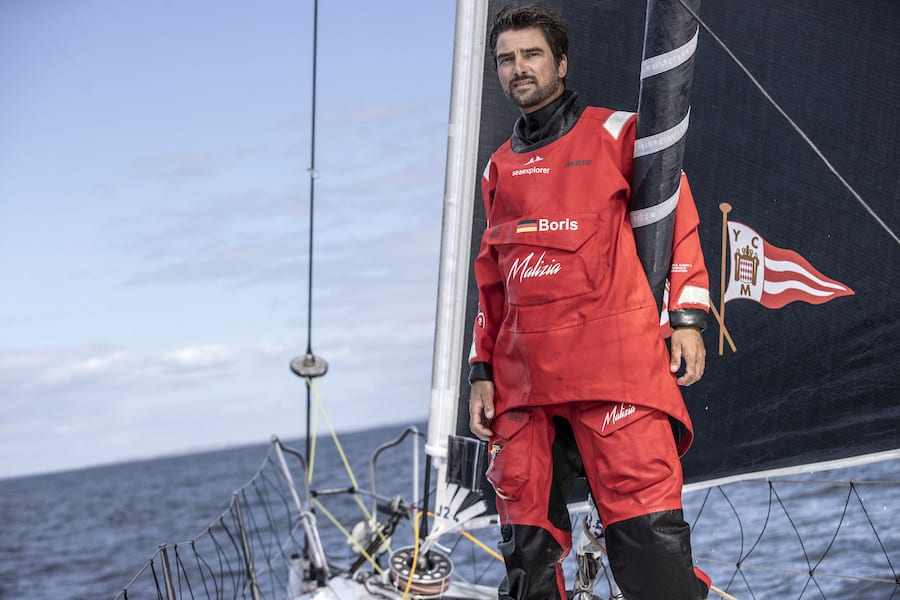
Boris Herrmann, skipper of the Seaexplorer-Yacht Club de Monaco, is heading into the final day of the Vendée Globe in second place and it’s going to be a thrilling race to the finish line.
After 80 days of sailing solo around the world, the skippers competing in this year’s Vendée Globe are due to start crossing the finish line on Wednesday afternoon. Computer modelling from the current weather predictions suggest three solo skippers could finish within four hours of each other.
The Principality is holding its breath for Boris Herrmann who, earlier this week, revealed his end game strategy.
“My choice of route for the next few days is a mixture of the results of the calculated routings and the precise moment of the wind shift here on site. I think the last day will be super exciting and the finish itself as well, as we will all be following the same route coming from the northwest – it will certainly be pure speed racing on the 450-mile home stretch.”
Since Sunday, the leaders have opted for two separate routes.
“There were two main options, north or east,” said Louis Burton (Bureau Vallée 2), who conceded first place to Charlie Dalin (Apivia) on Sunday and now sits in third.
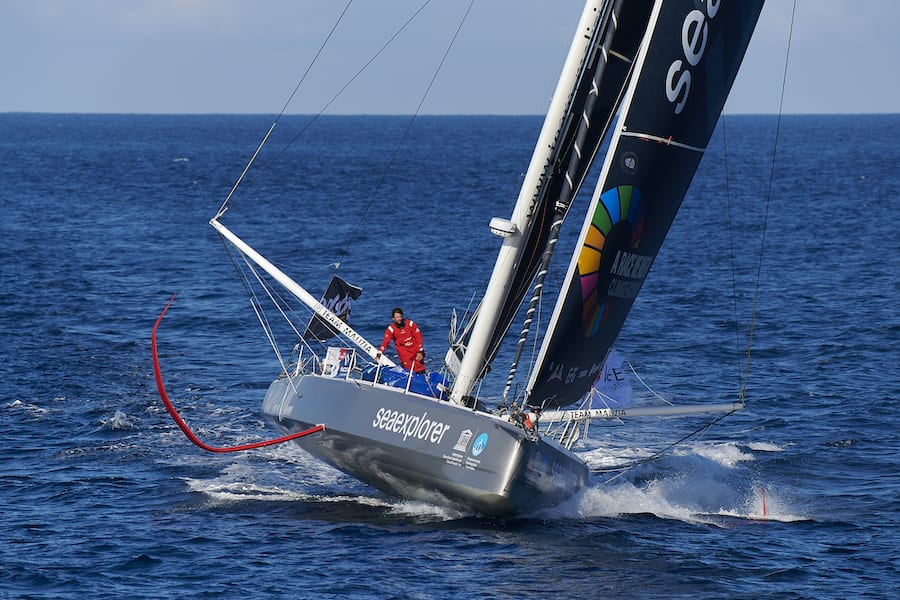
Burton, Herrmann and Dalin were on the eastern option at the latitude of Portugal and over 200 miles west of the trio at the northern group were Thomas Ruyant, Yannick Bestaven and Damien Seguin. Between these two options, the choices were almost infinite with more than 200 possible routes to be run. AU large de Lorient, entrainement en naviguation de Boris Herrmann sur le monocoque 60 pieds IMOCA SEAEXPLORER-Yacht Club de Monaco
Herrmann says he will enter the Bay of Biscay at full speed, just before the strong low approaches from the west.
“It will be incredibly exciting and tight. Positions may still change at that point, and the compensation time of over 10 hours for Yannick Bestaven is of course enormous. If we are sailing at a speed of 20 knots, that means 80 nautical miles covered in four hours. So, Yannick can be 80 miles behind me and still fight.”
With the wind on the Bay of Biscay due to strengthen for those chasing the leaders in on Wednesday into Thursday morning, it is still possible that fifth placed Yannick Bestaven can arrive and steal a podium position, even victory, because of his 10hrs and 15 minutes of time recompense given for his role in helping search for Kevin Escoffier after the French skipper had to abandon his boat.
Herrmann says he’s now hit the boat speed sweet spot for his VPLP Verdier design onto which he added new, bigger foils last spring.
“We are liking the flatter water for sure. Strategy-wise we are on another page. This race will be to the finish line and maybe a few seconds after that until we make the calculations as to who actually will compose the podium.”
To see the yacht tracker, visit the Boris Herrmann racing website here: https://www.borisherrmannracing.com
Watch the race ending live on the Vendee Globe Facebook page: https://www.facebook.com/VendeeGlobe/posts/10164715936440187
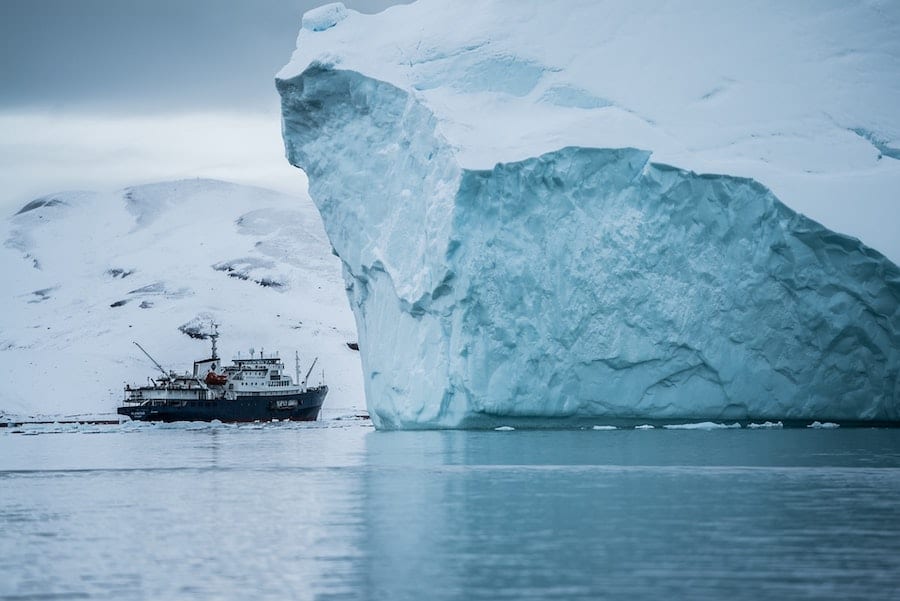
The Prince Albert II of Monaco Foundation has signed the Arctic Commitment and pledged its support for a ban on the use and carriage of heavy fuel oil in Arctic shipping.
The Prince’s Foundation joins more than 165 companies, explorers, politicians and NGOs who have committed their support for the ban.
The Arctic Commitment was launched in 2017 and calls on the global governing body for shipping, the International Maritime Organisation (IMO), to eliminate the use and carriage of heavy fuel oil (HFO) in Arctic shipping.
An effective ban would protect Arctic communities and ecosystems – already under pressure from climate change – from the risks posed by a spill of HFO – a viscous and polluting fossil fuel that accounts for 80% of marine fuel used worldwide, along with black carbon pollution emitted from burning HFO as fuel.
“The Clean Arctic Alliance is honoured to welcome the Prince Albert II of Monaco Foundation as a signatory to the Arctic Commitment,” said Dr Sian Prior, Lead Advisor. “The gracious support of the Prince Albert II of Monaco Foundation for the Arctic Commitment demonstrates the increasing groundswell of support for a rapid phase-out of the use and carriage of HFO as fuel by ships operating in the Arctic. With sea ice receding due to the climate crisis, and ships making greater and earlier use of the Arctic Ocean for transporting goods, Arctic nations should put in place bans on HFO use and carriage in their own waters that will prove more ambitious than the ban recently approved by the IMO.”
“The Polar Regions are the first to witness global warming and are among the first territories to suffer from its negative consequences and from the impact of human activities, especially in the North Pole,” added Olivier Wenden, Vice-President and CEO of the Prince Albert II of Monaco Foundation. “Since the creation of the Prince Albert II of Monaco Foundation in 2006, they are one of our top priority areas of action. We are proud to have been able to support more than 90 various projects in almost 15 years in these regions, whose issues are both local and global.
“Today we are pleased to stand with the Clean Arctic Alliance and support their initiative that aims to limit human pollution in an area that must be preserved more than ever,” added Mr Wenden. “New maritime routes open because of global warming making the way to the North Pole easier. Freight and tourism activities, and the use of heavy fuel oil in particular, are today a real risk for the balance of the North Pole that requires our collective action”.
In November 2020, during a virtual meeting of the IMO’s Marine Environment Protection Committee (MEPC 75), a ban on the use and carriage of heavy fuel oil was approved by member states, and if adopted at MEPC 76 in June 2021, will come into effect in 2024.
However, according to recent analysis by the International Council on Clean Transportation, the regulation approved today will only reduce the use of HFO by 16% and the carriage of HFO as fuel by 30% when it takes effect in July 2024, and will allow 74% of Arctic shipping to continue with business as usual, until the ban comes fully into effect in 2029.
Between July 2024 and July 2029, the amount of HFO used and carried in the Arctic is likely to increase as shipping in the Arctic increases, and as newer ships replace older vessels and are able to take advantage of the exemption or change flag and seek a waiver from the ban.
“With the current ban, it will be nearly a decade before the proposed Arctic HFO ban takes full effect, and 20 years after the Arctic Council first identified that the greatest risk to the Arctic from shipping is from oil spills,” said Dr Prior. “In the meantime, Arctic ecosystems wildlife and its people will continue to be at risk of an HFO spill and the impacts of black carbon emissions. The IMO must act quickly to reduce black carbon emissions that are already having drastic impacts on the Arctic, and this action should be the immediate switching from HFO to distillate or cleaner fuels. Arctic nations could also support rapid action by banning HFO use and carriage in their own waters ahead of the IMO’s ban – Norway is already leading the way and consulting on an extension to an existing ban on HFO in the waters surrounding the island archipelago of Svalbard”.
It’s been one year since we caught up with Georges Gambarini to talk about Monaco’s roadmap to becoming a Smart City.
In this interview, the programme manager shares with us the impact that Covid had on Monaco’s digital strategy and whether it derailed any projects. We also look at what 2021 holds for the ambitious Smart City plan. Monaco Life: When we first spoke in January 2020, you outlined some bold plans that the government had for the year ahead in Monaco. Then Covid hit. So how successful were those plans?
Georges Gambarini: Thanks to the government’s consistency, we achieved almost 80% of our objectives last year. In fact, our roadmap grew out of the situation we were in.
Some projects were postponed because of confinement, such as experiments in the city, but we’ve picked them up again and they are still ongoing. Let’s start with transport. What advances have been made in this area?
We are still experimenting with light synchronisation for No. 5 buses on Boulevard Princesse Charlotte. The ‘smart’ lights detect an approaching bus and give a green signal, allowing the bus to pass through and complete its route faster, improving the quality of service. Our aim is to create a modern public transport system and encourage as many people as possible to take the bus. We think they would do that if the service was faster than it is today.
But it is a complicated experiment, because if you give a green light to the bus, you have to give a red light to everybody else, so it has a ‘butterfly effect’ and we must analyse that. Our aim is to deploy the system in 2021/2022 and perhaps go wider and apply it to all the buses, police cars, taxis, etc.
One of the most ambitious projects of the year was the launch of carpooling in Monaco. We work with Klaxit, one of the best providers in France, and focus on home-to-business and business-to-home. In order for this to work, we needed a community of a minimum size, so we went to the 24biggest companies in Monaco and said: “We will cover the deployment costs, we just need you to help us bring your employees on board”. Everyone was very motivated and we launched the programme in September. How does it work?
You either nominate yourself as a driver or a passenger, and identify what days and times you are available or need to travel.
The first 30 kilometres are paid for by the government – that’s equal to travelling from Nice West to Monaco, for example – and for the passenger it is free.
It’s been a great success despite the complicated period in which we chose to launch the initiative. Again, the consistency of the government was important because it would have been easy to say it is too complicated and we should wait until 2021 for the rollout. But we achieved 900 journeys in December and, when compared with other cities using Klaxit, we are in the top tier.
There are 50,000 cars entering Monaco each day and we hope this initiative will help reduce both carbon and traffic. This year we are aiming to get more employees onboard. City monitoring is also a major focus of any Smart City programme. How did that go in 2020?
We deployed 20 censors in the city last year and have been testing them for six months now. We are able to count air quality, buses, pedestrians, cars; we are able to identify what type of vehicles are entering Monaco, and which car parking spaces have become available.
In the future, we will be able to see, for example, if someone parks in a disabled car space and doesn’t put the authorisation card in the window.
The cameras are not manned. The technology works through digital analysis – one picture is analysed every second.
Some projects have been postponed, but not for long. Those that would normally be finished in November/December will come to an end in February/March. What digital initiative you are particularly proud of?
We launched the Your Monaco website and app in July to provide useful information about the city. There is everything on there from maps to find car parks and air quality levels, to travel times for motorists and easy-to-read editorials.
The objective was to create a collaborative website for the government to provide citizens with a very simple way of explaining what is happening in their city on a daily basis.
This year, we want to expand it to include more real time information – whether the lift I take every morning is working today, for example.
All of this information is available to us and we want to find the best way to inform people through only one hub of information.
Your Monaco is also linked to Twitter and is automatically updated with traffic information, including road accidents and closures. If you create an account on Your Monaco, you are also able to receive SMS traffic alerts, specific to your travel times. This is all available in French, English and Italian. What changes can we expect with Your Monaco in 2021?
We want to relay more real time information through Your Monaco. We want to develop the SMS alert system for people to personalise the information they receive, whether it is traffic, culture, events, new initiatives, new online services etc.
And we want to streamline all the information portals so Your Monaco becomes the only hub of information for everyone. You were also set to launch the Urban Report when we last spoke. How did this rollout go?
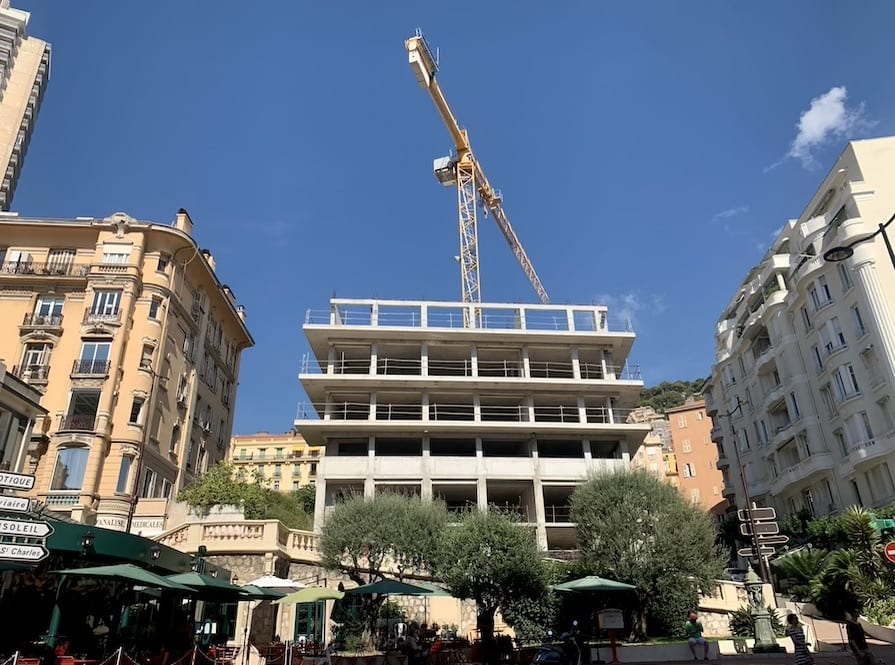
The sole purpose of the Urban Report, which is a downloadable app, is to listen to the people in the city. We wanted to create a simple way for people to communicate their concerns with the right government official with regards to construction noise, transport, or garbage, for example. We need people to help us better manage the city. The objective is to listen, answer and react. Noise generated from construction sites is a regular problem in Monaco. Photo by Monaco Life How does it work exactly?
If you are reporting a noise problem related to building works, for example, your complaint will be directed to the correct person in the government who will be able to respond. If we have a number of noise complaints in that area, we can send people out to test, monitor and locate the problem. Then we can try to resolve the issue.
We always say Monaco is like one big family, and the aim of this application is to ease people’s frustration by being able to communicate with the government, with one click, one message, or one photo. Feedback is very important. How is Smart City integrated into the National Pact for the Energy Transition?
We are about to launch a communication campaign about the Carbon Coach, which allows people to sign the National Pact online, provides tools for people to measure their carbon impact, and tips on how to reduce their carbon footprint. We call it Carbon Coach because the government will give advice on good practices and some challenges to help people reduce their carbon impact. What can residents look forward to in terms of tech in 2021?
We will launch a new app called ‘Monapass’ by the end of the first quarter. Monapass will be an all-in-one and free ticketing application that allows residents and visitors to access different services via a single solution. In other words, in Monapass, users will able to buy their tickets and subscriptions in just few clicks, and use these tickets in place of multiple apps, cards, tickets, etc. They will also be able to receive information that is relevant to their interests and real time data.
We will start with three mobility services: CAM Buses, Monabike and street parking. Then, we will gradually add more services requiring tickets such as theatres, swimming pools and the stadium.