

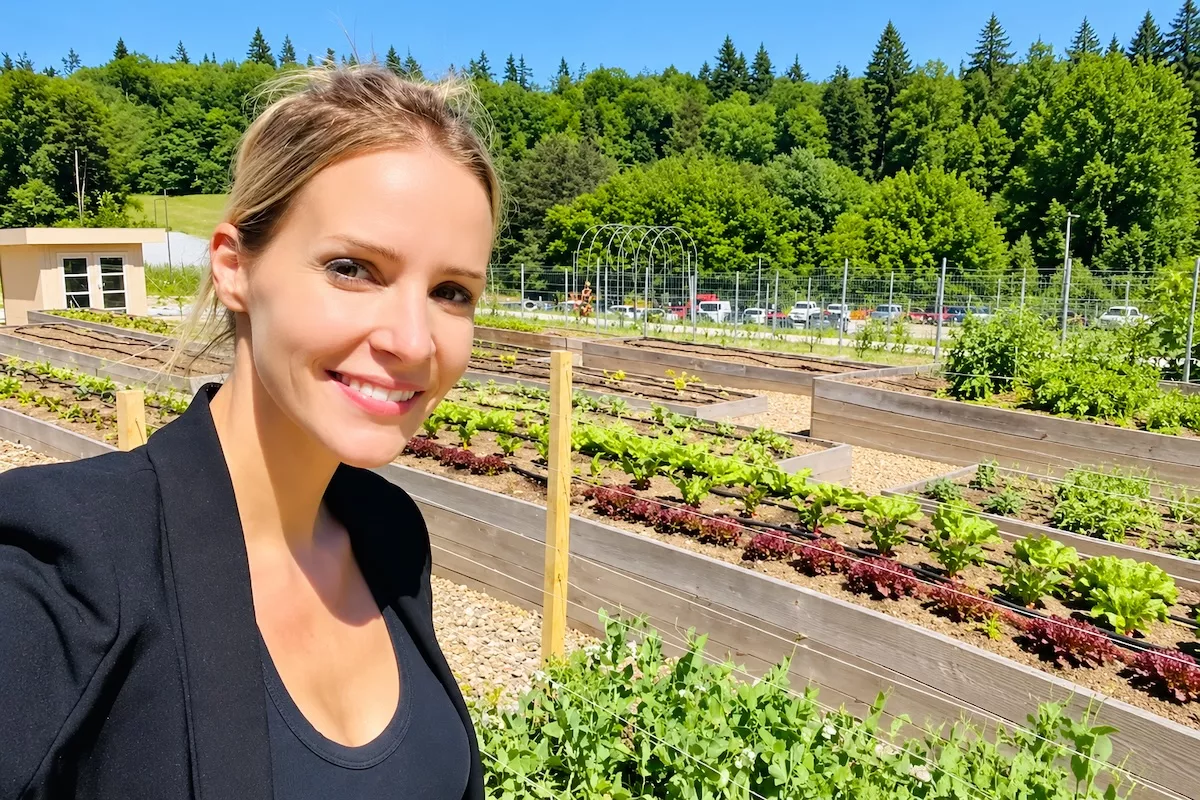
For a decade, Jessica Sbaraglia showed that vegetables could grow in the middle of Monaco: on a hotel rooftop, beside one of the Principality’s tallest towers and in gardens created for schools, hospital patients and businesses. Now Terrae, the company behind those projects, has been placed in liquidation. Its vegetable production has now ended, but Sbaraglia says she will continue the educational and therapeutic work that became central to its mission.
SARL Terrae was placed into liquidation on 10th September 2026. Speaking to Monaco Life, Sbaraglia said the decision followed difficulty replacing a departing market gardener, rising costs and a desire to spend more time with her young daughter.
“After ten years of activity, I had to face the fact that I could no longer continue,” she said. “It was not a decision I took lightly. It was the result of several difficulties that accumulated over time.”
Why Terrae’s vegetable production stopped
The immediate turning point, Sbaraglia said, was the departure of her market gardener in June. He had decided to leave the region for a new project, and she knew replacing him would be difficult. In a small farming operation, she said, each departure left the business exposed.
At the same time, the costs of running the company had continued to rise. Sbaraglia described the rent for its premises as “exorbitant” and its accounting fees as disproportionate for a business of its size. Those fixed costs became increasingly difficult to carry against the narrow margins of vegetable growing.
The birth of her daughter also made her reconsider a schedule of long working days and few holidays. “Today, I also want to be there for her,” she said. “That pace is no longer compatible with the family life I want to give her.”
According to Sbaraglia, all vegetable production stopped on 30th June. She listed the garden at the Monte-Carlo Bay Hotel & Resort, a garden for Monte-Carlo Société des Bains de Mer in Beausoleil, several corporate gardens and the garden at the Princess Grace Hospital Centre, or CHPG, among the operations brought to an end. Terrae had been producing around 3.5 tonnes of vegetables a year, she said.
A decade of growing food in Monaco
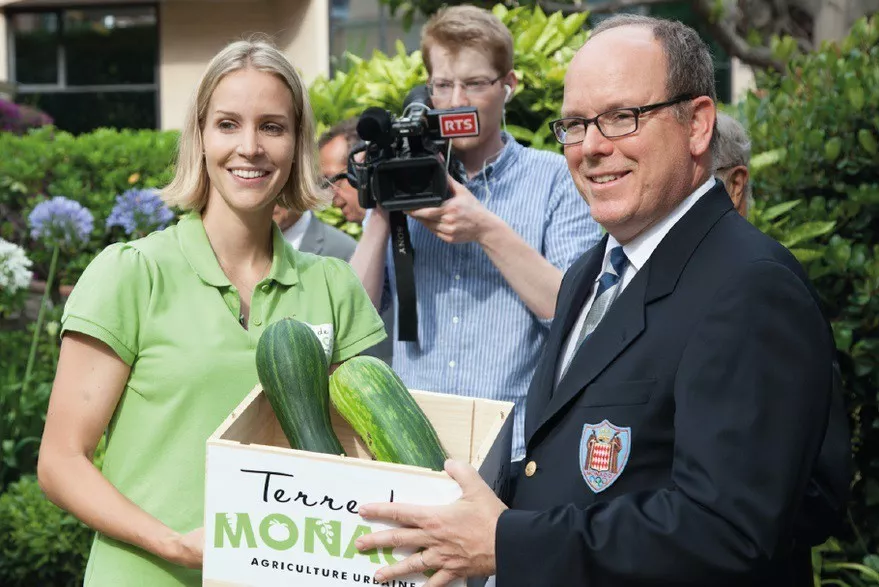
Jessica Sbaraglia founded Terre de Monaco in 2016, later renaming it Terrae. The business brought vegetable gardens, beehives and chicken coops into spaces that few would have associated with farming. By 2021, it had developed some 1,600 square metres of urban growing space across sites including the CHPG, the Prince Albert II of Monaco Foundation, Tour Odéon and Monte-Carlo Bay. Its work won the Sustainable Development Award at the 2021 Monaco-Matin Club Eco awards.
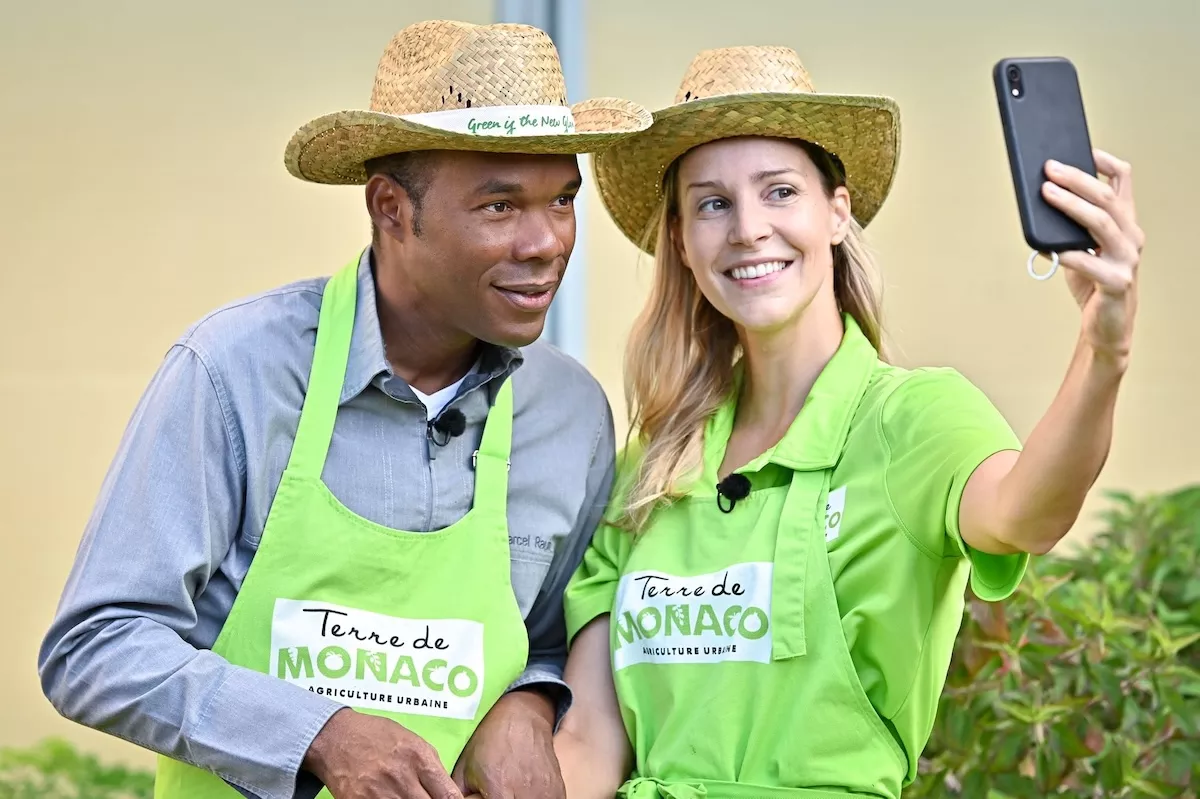
Some of those gardens supplied prominent kitchens. At Monte-Carlo Bay, Terrae worked with Michelin star chef Marcel Ravin on a 360-square-metre organic garden. In Beausoleil, it collaborated on a 400-square-metre kitchen garden associated with the Hôtel Hermitage Monte-Carlo, whose produce was used in the hotel’s restaurant.
Its work reached beyond hotels. Terrae helped AS Monaco establish a garden at the club’s Performance Centre in 2021, growing herbs, vegetables and fruit selected with the players’ nutrition in mind. The club later worked with Terrae on its Ruches Rouges & Blanches beekeeping initiative and brought Academy players to the urban farm at the foot of Tour Odéon. Those projects help explain why Sbaraglia became such a recognisable advocate for urban agriculture in Monaco.
The school gardens and therapeutic workshops will continue
The company’s closure does not mean Sbaraglia is leaving urban agriculture. She said she has set up a simpler business in her own name, without employees, to focus on lessons, workshops and consulting.
She intends to continue working with children in Monaco’s schools, as well as running therapeutic workshops and activities for children and adults at the mini-farm beside Tour Odéon. At the CHPG, she has kept four planting beds specifically for workshops with the psychiatry department.
“These workshops bring a great deal to the patients, and stopping them was out of the question for me,” she said.
The school programme is among Terrae’s best-known projects. In March this year, the Prince Albert II of Monaco Foundation and Monaco Telecom renewed their support for the initiative run with the Department of Education, Youth and Sports. According to the Foundation, it had reached six schools and nearly 600 children, teaching them about growing food and the cycle of the seasons. That announcement was made less than four months before Terrae ended its vegetable production.
For Sbaraglia, the encounters in those gardens remain the reason to carry on. She spoke of children and adults learning that a tomato grows on a plant, laughing at the sight of an earthworm or discovering how to care for insects and animals. She also thanked the Prince Albert II of Monaco Foundation, the education department and the people who had encouraged her work over the years.
“I have invested so much time and energy in Terrae that I have no regrets,” she said. “Closing Terrae is not an end for me, but a transformation.”
The harvests may have stopped, but Sbaraglia says she will keep working with schoolchildren, patients and older residents, including through new intergenerational classes. The business that grew Monaco’s vegetables has closed; the lessons she built around those gardens are continuing.
See also:
Monaco Telecom and Prince Albert II Foundation renew school sustainability programme
Monaco Life is written by qualified journalists, writing original content. Sign up for our free newsletter, listen to our podcasts on Spotify, and follow us across Facebook, Instagram, LinkedIn, and Tik Tok.