

The world is on course for 2.8°C of warming this century under current policies, the United Nations said on Wednesday, a projection that comes after the Mediterranean recorded its hottest summer on record. For scientists in Monaco studying the sea’s most fragile species, the warning reflects what they are already seeing: marine life pushed beyond the temperatures it can tolerate, and fewer and fewer years in which to recover.
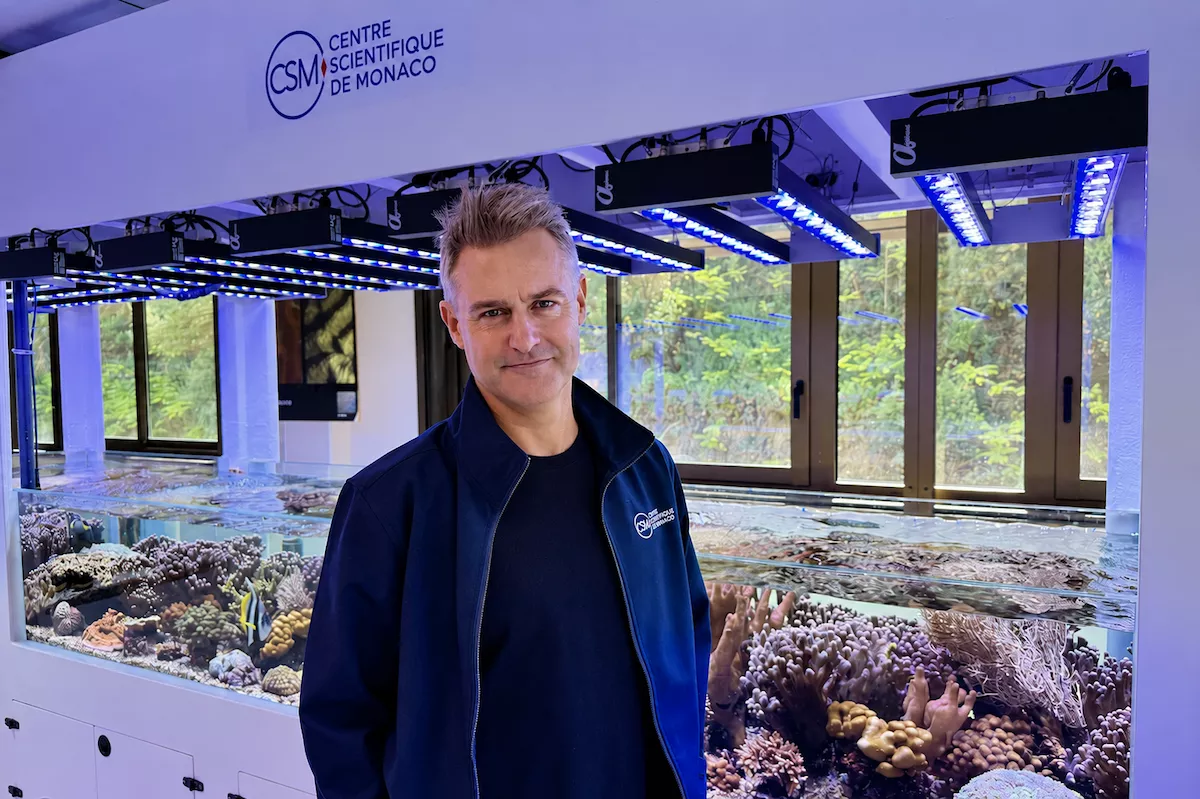
Alexander Venn, co-head of the Coral Physiology Team at the Centre Scientifique de Monaco (CSM), began studying coral reefs more than two decades ago, when the threat posed by climate change was already well understood.
“When I was doing my PhD in 2003, we were already very worried about climate change impacts on coral reefs,” he tells Monaco Life. “But as a young PhD student, I said to myself: it’ll be all right, the grown-ups will sort it out. We’re now in 2026, and the grown-ups haven’t sorted it out.”
‘Dangerously short’
The UN Environment Programme’s annual Emissions Gap Report, published on 21st October, suggests little has changed. Even if every country delivered its latest climate pledges in full, the planet would warm by around 2.6°C by 2100, rising to 2.8°C under the policies actually in place. Global temperatures are already around 1.4°C above pre-industrial levels.
“Emissions remain at record levels. And national climate plans and current policies fall dangerously short,” said UN Secretary-General António Guterres. “The world can no longer avoid overshooting the 1.5 degree limit, and the consequences are already devastating.”
A sea already under strain
Those consequences have been felt in the Mediterranean this year. The sea had its warmest summer on record, according to Mercator Ocean International, with 95% of its surface affected by strong marine heatwaves and parts of the western basin running 2–3°C above average. Researchers at World Weather Attribution concluded that such temperatures would have been virtually impossible without human-caused climate change, and that in a world 2.8°C warmer, heatwaves like this summer’s would be up to a further 1.9°C hotter.
The reason that matters so much for marine life, Venn explains, lies in its biology. Every plant and animal, from seagrass and sponges to fish, depends on proteins and enzymes that work best within a narrow temperature range.
“With the higher temperatures we’re now seeing in the oceans and in the Mediterranean, we’re pushing animals towards the upper limits of their thermal performance. Their growth, their breathing, even their ability to reproduce, all start to fall outside the range in which they function best,” he said.
For the most sensitive species, corals among them, the consequences can be fatal. “There is a point where the temperature becomes too much for them. They simply stop functioning and die,” he explains. Warmer water also allows bacteria and viruses to multiply more quickly, increasing the risk of disease.
No time to recover
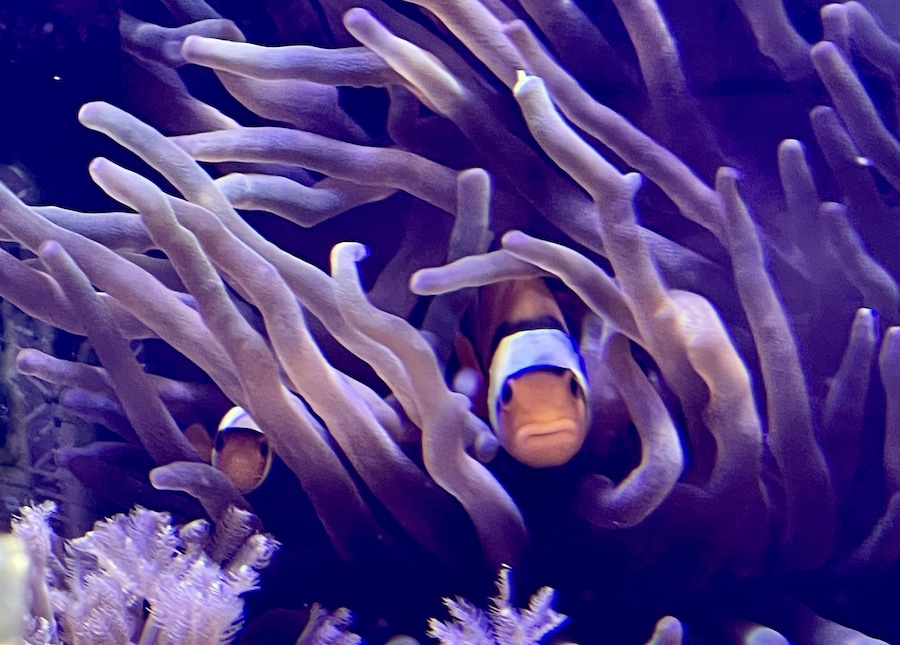
Corals can bleach within days or weeks of a heatwave, and die in the months that follow. Some survive and recover, but Venn says the growing problem is that hot years now come one after another, leaving little chance to rebuild.
“When corals bleach, they either recover or they die. The ones that die are gone, smothered by seaweed, and that’s the end of them. The ones that survive have still been weakened, and a year or two later they’re hit by high temperatures all over again,” he says.
Sea temperature records show 2026 above every previous year, with 2025 and 2024 close behind. “Over the last ten years, we’ve had one extreme temperature event after another. That means ecosystems can’t recover, and that is the worry for the future,” Venn says.
Climate scientists have warned that, on the current trajectory, summers as hot as 2026 will soon be considered normal.
Resilience at a cost
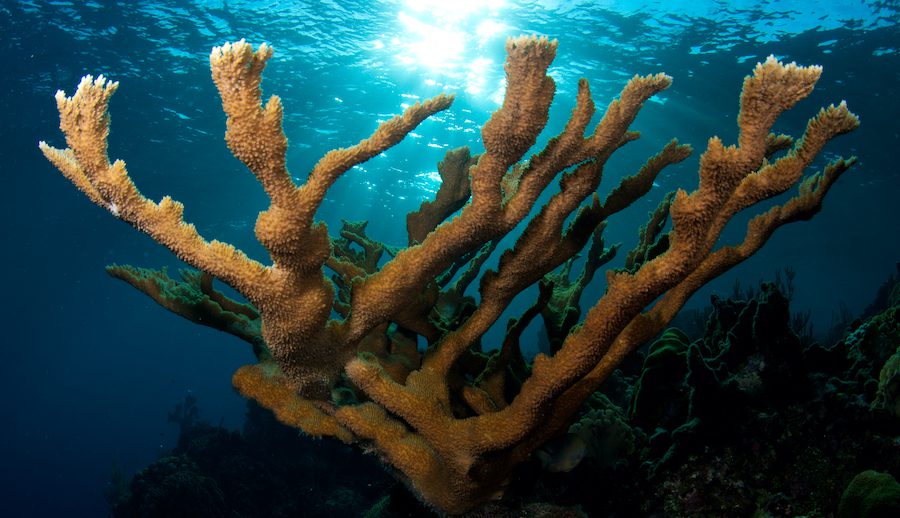
Corals have existed for some 250 million years, and their resilience is often cited as a reason for optimism. Venn points out that during that time, reefs have repeatedly been wiped out by climate-driven mass extinctions before slowly returning.
“We can say that life is resilient, but the raw material of adaptation is death and destruction,” he says.
The species that survive do so at the expense of those that die out, much like a forest regrowing after a fire. “Life will bounce back eventually, but only after enormous loss, and not in our lifetime. Our generation, our children and our grandchildren’s grandchildren will all live through that before nature recovers. We have to accept that reality, because it should push us to change our ways. Otherwise, we won’t do anything.”
Grief and determination
That sense of reckoning was shared by scientists at this summer’s International Coral Reef Symposium in Auckland, the world’s largest gathering of coral reef researchers, held every four years. Venn reveals that he had not seen it at this level before.
“There was a real mixture of urgency, grief for everything that’s being lost, and determination to do our very best for reefs despite what’s happening, and to communicate our science so that action can be taken,” he says.
“Coral reefs will change. We know that much. They have already changed over the last 20 years, and over the next 20 those changes will happen much faster. The question is what we can do to safeguard them as best we can.”
What science can still do
At the CSM, that question is being approached from several directions. The most immediate, Venn says, is to reduce the other pressures on the sea that leave marine life less able to cope with heat.
“Environmental protection is vital. Minimising pollution, overfishing and all the other pressures we put on the marine environment will give life the best possible chance,” he explains.
His team is also examining whether better nutrition, including micronutrients, can give corals the energy reserves to withstand heat stress, and what happens to coral health when seawater chemistry is altered to help the ocean absorb more carbon dioxide, a technique known as ocean alkalinity enhancement. Venn stresses that such approaches could never replace cutting emissions.
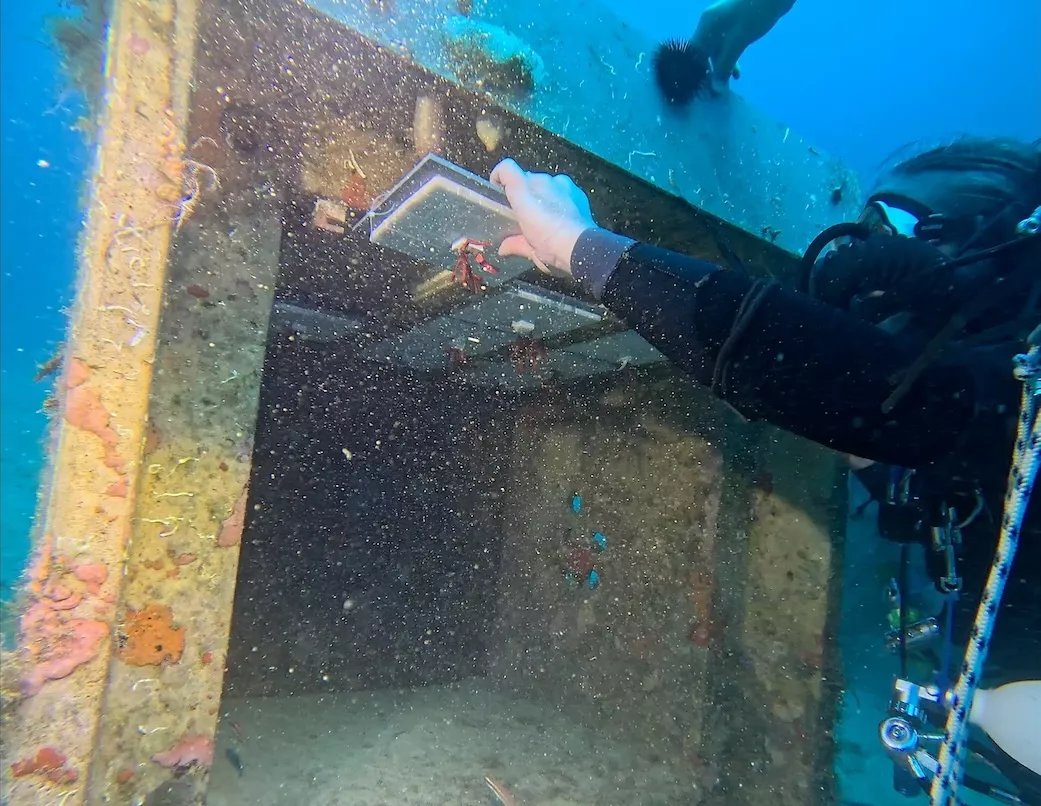
In the artificial coral caves off Monaco, researchers are also studying how Mediterranean red coral reproduces and grows, work that could help restore populations damaged by disease, overfishing or heatwaves. “If we can help red coral reproduce more efficiently when restoring populations, that’s a good thing,” he says.
Whether any of these solutions are used, he adds, is not for scientists to decide. “It’s up to policymakers, politicians and community leaders to decide whether these approaches are taken forward. Our role is to provide the solid scientific facts on which those decisions can be made.”
‘The climate emergency is now’
The UN report comes ahead of the COP31 climate summit in Antalya, Turkey, next month, where governments will again be urged to close the gap between their promises and what the science requires. Venn believes part of the difficulty is that the threat does not yet feel immediate enough.
“As a species, we tend to respond to immediate emergencies, and that’s a problem. We need to look beyond that to avoid a catastrophe, one that has already begun. We all felt it this summer,” he says.
“I very much hope people realise that the climate emergency is now. It’s happening right now, and it’s affecting the sea, the land and our lives. We have to make some very brave decisions and some compromises. As scientists, we’ll carry on reporting the facts as best we can and do our very best to find solutions that protect coral reefs and the marine environment. But there’s only so much we can do when the pace of change is this rapid.”
See also:
Monaco scientists light up the deep as red coral nursery passes 800 births
Monaco Life is written by qualified journalists, writing original content. Sign up for our free newsletter, listen to our podcasts on Spotify, and follow us across Facebook, Instagram, LinkedIn, and Tik Tok.
Main photo: Alexander Venn, co-head of the Coral Physiology Team at the Centre Scientifique de Monaco (CSM), credit: Cassandra Tanti