Prince Albert II urges arctic cooperation at Rome’s Arctic Circle Forum

Prince Albert II called for scientific cooperation and respect for international law to remain at the centre of Arctic policy, warning that geopolitical tensions must not undermine long-term collaboration in the region. 

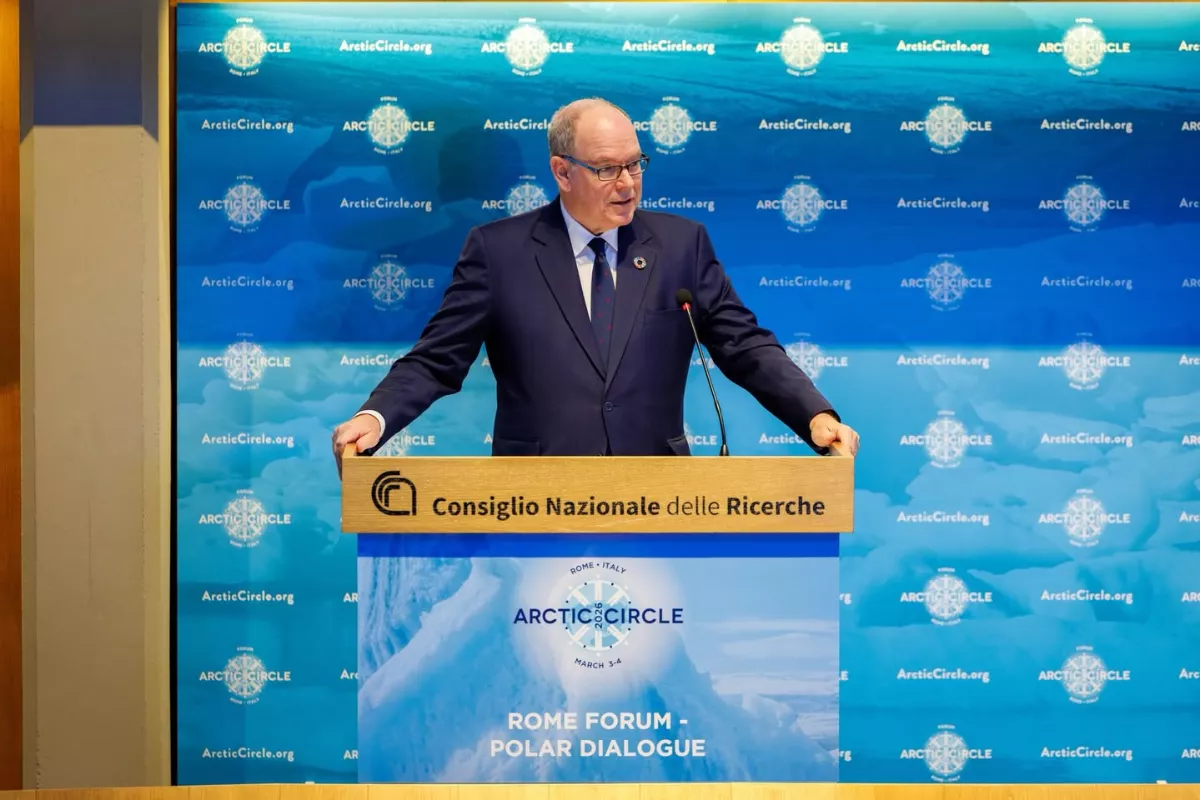
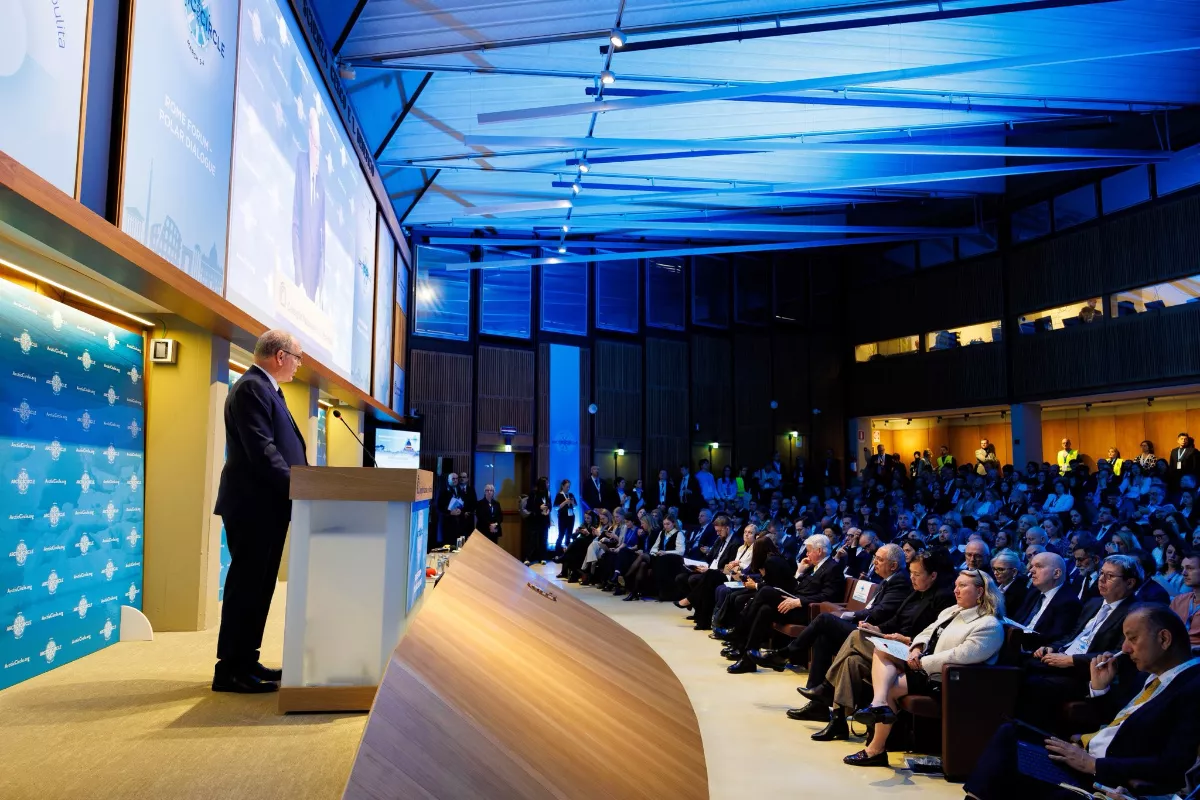
The Prince delivered his speech in person at the Arctic Circle Forum in Rome on 3rd March, where discussions focused on the accelerating challenges facing the Arctic.

His appearance came just days after he addressed the Monaco Polar Symposium via video call, where similar themes of deteriorating international collaboration and underfunding in polar research had dominated the three-day event.

In Rome, Prince Albert stressed that Indigenous communities must be central to any decisions shaping the Arctic’s future, stating: “The Arctic is a crucial issue for humanity. Its climate and resources concern us all, and its Indigenous peoples must be respected, listened to, and fully integrated into any decision-making process regarding the future of their lands.”

The Prince during his address, photo credit: Michaël Alesi, Prince’s Palace

Collaboration under pressure

The Rome forum gave the Prince an opportunity to reinforce in person what he had urged remotely days earlier in Monaco: that the international community must not let the current moment pass.

With the Fifth International Polar Year due in 2032–33, the window to build lasting frameworks for polar cooperation is narrowing, and the consequences of inaction, extend well beyond the Arctic itself.

Stay updated with Monaco Life: sign up for our free newsletter, catch our podcast on Spotify, and follow us across Facebook,  InstagramLinkedIn, and Tik Tok.

Main photo credit: Michaël Alesi, Prince’s Palace

Social media addiction is the theme of Monaco’s first digital lecture

Monaco is launching a new series of public talks on digital life, with the first event taking place on 26th March at 6:30pm, under the theme: social media and digital addiction, and what we can do about it. 

The evening is organised by Monaco’s Interministerial Delegation for Digital Transition (DITN) and will bring together experts to explore why social media is so hard to put down, how it shapes our attention and behaviour, and what practical steps people can take to find a healthier balance.

The average person now spends more than three hours a day on their phone. It is this figure that has prompted growing concern about the effects on mental health, relationships and focus, and led to the launch of this new series.

The event is in French and is set to run until 8pm and will be followed by a drink reception, giving attendees the chance to carry on the conversation informally.

Those who can’t make it in person can join online via Microsoft Teams. The venue will be in Monaco, however, the exact address will be shared with registered attendees closer to the date. Attendance is free, but registrations are required in advance and can be made through this link.

The talks form part of Extended Monaco, a digital transformation programme launched by Prince Albert II in April 2019. Built around a collaboration between the DITN, government departments, public institutions and private partners, its aim is to use technology to improve public services and quality of life in the Principality

Stay updated with Monaco Life: sign up for our free newsletter, catch our podcast on Spotify, and follow us across Facebook,  InstagramLinkedIn, and Tik Tok.

Main photo credit: Cottonbro studio, Pexels

The French Riviera is hosting its first major longevity summit this month

A two-day summit bringing together some of the world’s leading researchers and practitioners in longevity science, biohacking and preventive health will take place across Monaco and Nice on 11th and 12th March, making it one of the first events of its kind on the French Riviera.

The Hololife Longevity Côte d’Azur Summit opens on Wednesday 11th March with an exclusive Diamond VIP dinner in Monaco, limited to 50 guests and held alongside keynote speakers from the longevity field. The main conference day follows on Thursday 12th March at Le Méridien Nice on the Promenade des Anglais, with a full programme of talks, workshops and exhibition sessions expected to draw more than 300 attendees.

The speaker lineup spans a broad range of disciplines. Teemu Arina, Finnish biohacker and author of The Biohacker’s Handbook, will open proceedings with an overview of the longevity market and the most effective current interventions. Siim Land — ranked fourth slowest ager in the world on the Rejuvenation Olympics leaderboard — will deliver the closing keynote on the science of extending human lifespan beyond 120 years. Other confirmed speakers include Dr Harry F. König, a specialist in integrative and regenerative medicine with more than 30 years of clinical experience; Dr Axel Bouchon, co-founder of Matter Neuroscience and author of Capitalism of Happiness; and Marina Matkova-Jahlan, founder of Anima Corpus Monaco and a Harvard neuroscience alumna.

The programme is divided across three tracks — Longevity Lifestyle, Performance and Recovery, and Preventive Health — covering topics from cryotherapy and photobiomodulation to hormonal balance, metabolic flexibility and hydrogen inhalation therapy. Sessions are designed to be evidence-based rather than aspirational, with a stated emphasis on actionable protocols that attendees can apply immediately.

The choice of the Côte d’Azur as a setting is deliberate. The region has a well-documented association with healthy ageing, access to specialist medical facilities and an established conference infrastructure that has made the Nice-Cannes corridor one of Europe’s most active destinations for international congresses. A VIP networking cocktail takes place in Nice on the evening of 11th March ahead of the dinner in Monaco.

Tickets are available at longevitymc.hololifesummit.com, with general, VIP and Diamond VIP options. A live stream package is also available for those unable to attend in person. All sessions are conducted in English.

Monaco Life readers will receive a 5% discount on tickets. To obtain the reward, use the promocode MonacoLife5 when booking online.

Stay updated with Monaco Life: sign up for our free newsletter, catch our podcast on Spotify, and follow us across Facebook,  InstagramLinkedIn, and Tik Tok.

Photo credit: MJH SHIKDER, Unsplash


The remarkable story behind the prehistoric museum Prince Albert II visited on Italian border

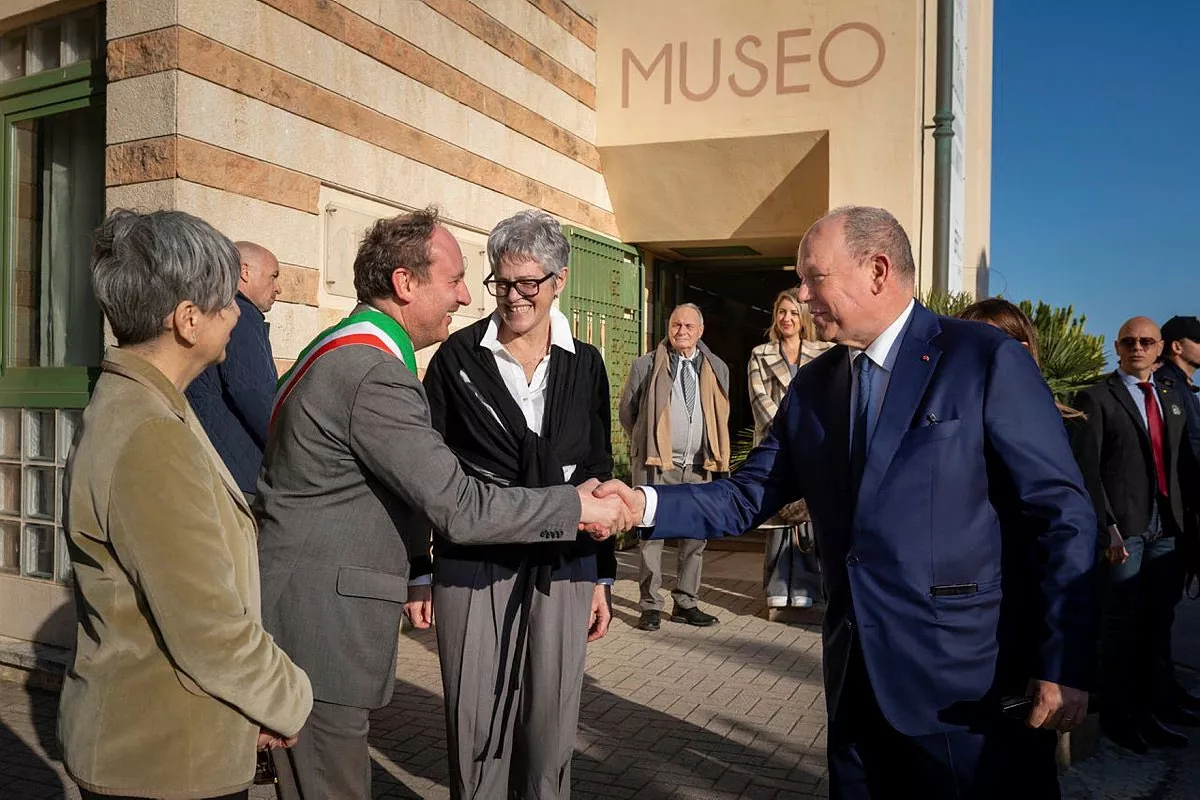
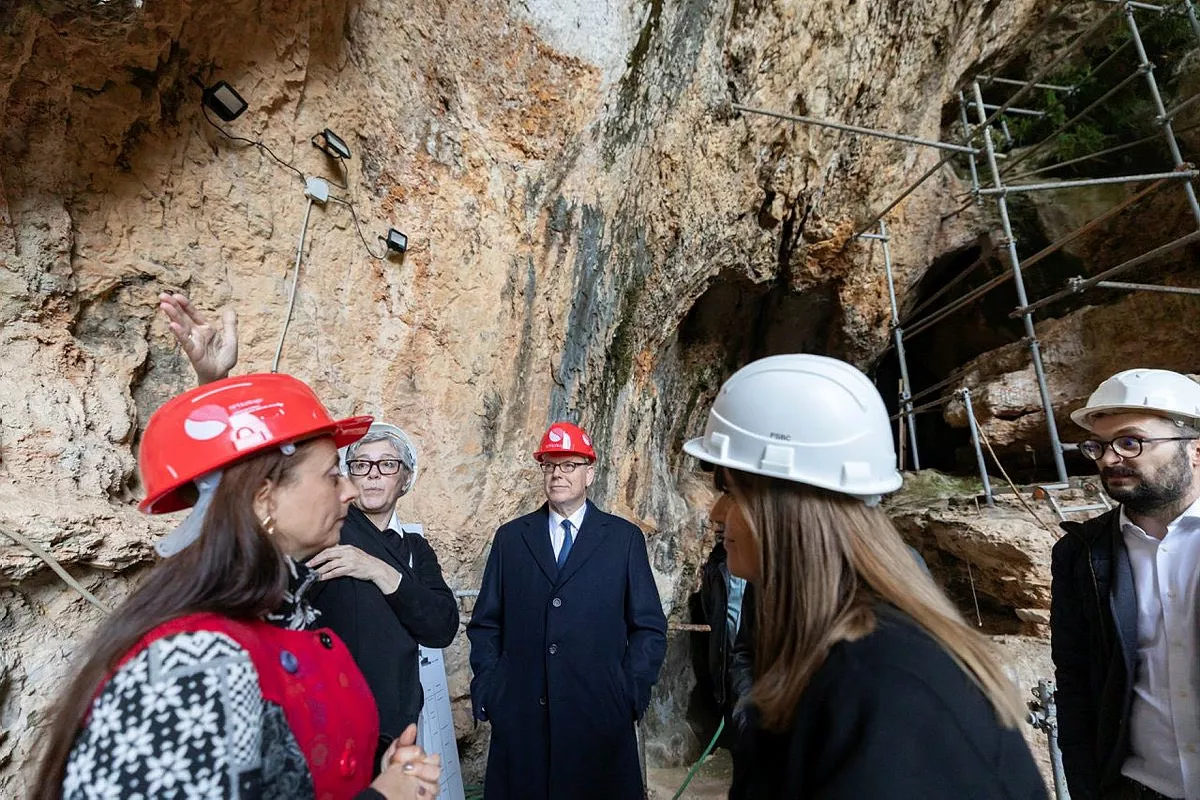
Prince Albert II paid a visit on Monday to the Balzi Rossi museum, a prehistoric site on the Italian Riviera just a short distance from the French border, near Ventimiglia.

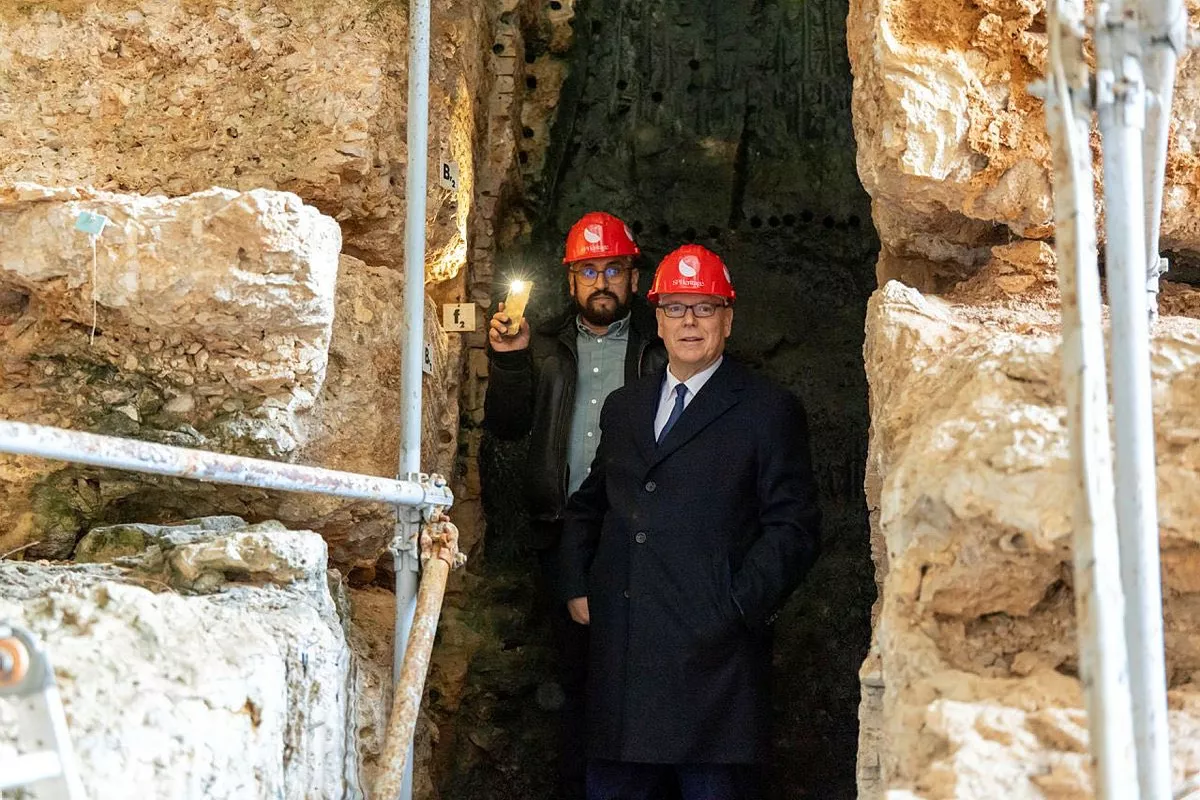
The Prince was welcomed by the town’s mayor, Flavio Di Muro, and the museum’s director, Antonella Traverso. He toured the museum’s two main exhibition spaces, which cover Upper Palaeolithic burials, the history of early excavation campaigns, and artefacts recovered from the Grotte du Prince, the deepest cave in the complex at 34 metres, with 23 metres of archaeological deposits. The cave, which sits to the west of Cap de Garavan, remains the property of the Grimaldi family.

The Prince welcomed at the museum, photo credit: Frédéric Nebinger, Prince’s Palace

The connection between Monaco and the site dates back to 1882, when, Prince Albert I struck an agreement with the then-owner of the land specifically to prevent quarry works from destroying the prehistoric deposits. At the time, the museum didn’t exist yet.

He later founded both Monaco’s Museum of Prehistoric Anthropology and the Institut de Paléontologie Humaine in Paris to study and preserve the findings.

Layers of history stretching back 400,000 years

The Grotte du Prince has yielded extraordinary discoveries over the decades. The site’s first museum director, Léonce de Villeneuve, uncovered evidence of Neanderthal occupation: tools, hunted animals and Mousterian remains dating from roughly 90,000 to 40,000 years ago.

Prince Albert II in the cave, photo credit: Frédéric Nebinger, Prince’s Palace

Later, researchers Louis Barral and Suzanne Simone pushed the timeline back further still, identifying human occupation dating to 220,000 years, as well as a remarkably ancient female human remain, a fragment of pelvis, recently 3D-modelled in collaboration with Italian colleagues.

The cave also serves as a long-term reference point for climate change, with its layers recording environmental shifts spanning more than 400,000 years. Research teams from Monaco’s Museum of Prehistoric Anthropology continue to work on the site regularly, combining archaeology with environmental science. However, the cave remains little known to the public.

Those wishing to explore the subject further can visit the exhibition De Toumaï à Sapiens at Monaco’s Museum of Prehistoric Anthropology, running until 16th October 2026

Stay updated with Monaco Life: sign up for our free newsletter, catch our podcast on Spotify, and follow us across Facebook,  InstagramLinkedIn, and Tik Tok.

Main photo credit: Frédéric Nebinger, Prince’s Palace

Interview Dr Raha Didevar: there’s a new psychologist in town, and she’s not just here to listen

Monaco has no shortage of excellence: top schools, world-class healthcare, safety that residents don’t take for granted. But when it comes to emotional health – especially within high-pressure families, international marriages, and globally mobile childhoods – support can be harder to find than it should be.

That’s why the arrival of Dr Raha Didevar is significant.

She’s the kind of psychologist who doesn’t hide behind clichés. In conversation, she’s warm, quick to laugh, and very clear about what she believes: therapy should do something. Not just validate feelings, but help people move – towards clarity, structure, boundaries, and better decisions.

And in a place like Monaco, where appearances can be immaculate while family life is anything but, that approach may be exactly what many households have been missing.

“It’s taboo to say there’s a problem”

Dr Didevar’s work focuses on couples, families, children and adolescents, particularly within the expat community, where identity is layered and life feels like constant adaptation.

She’s frank about what she’s observed: plenty of families struggle, but few admit it. “There are so many families with problems, but it’s still very much taboo. Nobody wants to say there’s an issue.”

Her view is the opposite. Therapy isn’t a last resort. It’s maintenance.

“You don’t need to have a mental disorder to be in therapy. I think everyone should be in therapy. There’s no person in this world who doesn’t have problems. What happens is you store everything inside, and then it overloads. As you age, it affects you physically. The mind is powerful. If your mind isn’t at peace, your body struggles too.”

From Kenya to Monaco

Born in Tehran, Dr Didevar moved to London at age two after her father’s death when she was six. She began boarding school in England at eight, learning independence early.

Her path to psychology was unconventional. After studying at the University of Texas, she worked as an NBC news reporter and NBA sportscaster. But her direction changed after volunteering in Kenya in 2005, where she founded a humanitarian organisation supporting girls escaping female genital mutilation.

She later taught high school in Los Angeles, working with gang-involved teenagers, before earning two master’s degrees and a doctorate in Depth Clinical Psychology at the Carl Jung Institute in Santa Barbara.

In 2011, while two months pregnant, she lost her fiancé Prince Ali-Reza Pahlavi, younger son of Iran’s last Shah. She gave birth to their daughter, Princess Iryana Pahlavi.

For Dr Didevar, that legacy isn’t about status. She raised her daughter emphasising humility over privilege, choosing environments like Bali that reflected spirituality and grounded values.

“I tried to raise her to be humble – not ‘I come from royalty, I’m a princess’. For me, we are all human. We all came from the same place and we’re going to the same place.”

Until her daughter turned six, birthday parties meant bringing secondhand toys to orphanages the next day. “I wanted her to interact with the kids and give the toys. When she turned six, she asked, ‘Do you think this year I can have a birthday present?’ I said yes—because you’ve earned it. Everything is about earning and knowing the value.”

Solutions, not endless sessions

Ask Dr Didevar what makes her different, and she says frustration with traditional therapeutic models.

“By law in the U.S., psychologists aren’t allowed to give advice. You sit there and let clients find their way. For me, that was frustrating. I don’t like taking people’s money without getting to the point. That cliché – ‘So tell me, how does that make you feel?’ – it’s frustrating.”

In contrast, her approach blends psychoanalysis with life coaching. “You tell me what’s wrong, and we come up with solutions together. I give you ideas, because when you’re in the problem, you don’t know which direction to go.”

Her message is: if therapy is endless, it becomes expensive avoidance. If it is practical, it becomes life-changing.

Working with children: when resistance drops

Dr Didevar tailors her approach based on age and emotional development. Under six, formal therapy rarely works, she says. Between six and nine, she uses art therapy to help children express what they can’t yet articulate. Around nine to 11, she shifts to role play, a technique that flips the power dynamic entirely.

The method is deceptively simple: let the child become the authority figure. A nine-year-old struggling at school becomes the teacher. A child dealing with bullying becomes the bully. Suddenly, advice they would never accept from an adult pours out of their own mouths.

Her broader philosophy is about balance: children need structure, but they also need agency. Saying “no” without explanation breeds resistance. But offering choice – “Here are the options, here are the outcomes, what do you think is best?” – creates buy-in. They feel in control, which is exactly what they need at that age.

The hidden cost of constant adaptation

Monaco’s international families produce remarkably adaptable children, until they’re not.

Dr Didevar has watched this pattern repeatedly: children who’ve moved countries, switched schools, learned new languages, all without visible complaint. Then one day, something shifts. The child who seemed endlessly flexible suddenly refuses. No more moves. No more fresh starts.

Her own daughter experienced this. After attending schools across continents, she arrived in Monaco and drew a line. “She said, ‘I don’t want to change schools anymore. This is the last move.’ She wanted to stay in one space and be herself.”

For parents navigating Monaco’s transient expat culture, the lesson is clear: just because a child is coping doesn’t mean they’re fine. Adaptability has limits. Watch for the signs – withdrawal, irritability, sudden anxiety – that signal they’ve reached them.

When couples become roommates

With couples, Dr Didevar sees the same pattern: erosion disguised as stability.

“Couples drift away when they don’t talk. It becomes so big they explode, then divorce. Once the curtain of respect is torn, even if you sew it up, the tear still shows.”

She recently worked with a couple divorcing after 21 years. When she asked what they enjoyed doing together, he said jogging – which his wife never wants to do. She named activities he refuses to partake in. After two decades of marriage, they’d never noticed they had nothing in common.

“It’s the mental connection that keeps a couple strong.”

The problem isn’t lack of love, it’s lack of commonality. Couples get bored. They stop doing things together. They become co-managers of a household rather than partners. Her prescription is communication, date nights focused on actual conversation, finding shared interests, and getting help before resentment calcifies into contempt.

Phones at the table

On screen time, Dr Didevar is pro-boundary and realistic about the struggle.

“Parents get fed up and stop controlling it because they have their own distractions and stress. But ultimately, this is your responsibility.”

Her advice isn’t about being stricter, it’s about being consistent. She sets a 30-minutes per day limit for her own daughter. She admits she’s not always perfect at enforcement, but that’s the point. The goal isn’t perfection. It’s showing up repeatedly with the same boundary.

The deeper issue, she suggests, lies in the example set by adults. Children cannot reasonably be asked to disconnect if the grown-ups around them remain constantly absorbed in their own screens. The message is simple but often overlooked: put the phone down and be present. Not only at the dinner table, but in the car, after school, during a walk home — at any moment when a child reaches out to talk. Devices can wait; conversations cannot. Creating screen-free spaces, whether at home or in restaurants, helps restore attention to where it matters most: the relationship between parent and child.

Beyond boundaries, she pushes for uncomfortable conversations about the realities online: predators, deepfakes, coercion, how quickly an innocent interaction becomes threatening. “It’s terrifying because we don’t know how to navigate it. We didn’t grow up with these kinds of threats. But they are absolutely the kinds of conversations we need to be having with our kids.”

The privilege problem

One uncomfortable truth Dr Didevar offers Monaco parents: giving children everything often leaves them with nothing that matters.

“When we give too much, children have nothing to look forward to. They want more and more, and nothing makes them happy.”

The solution isn’t deprivation, it’s teaching value. Get children involved in donation. Educate them about the world beyond their bubble: history, suffering, how children in other countries live. “They need to see the other side. The story isn’t always glamour.”

Make money something earned, not automatically given. “Money doesn’t grow on trees even if you have it. It’s not about punishment, it’s setting them up to succeed in the future.”

Raha’s lived both extremes herself. “People see me and can’t imagine I slept on the ground in Africa – showered in rivers, made food on fire. I’m a chameleon. I can stay in a nice hotel, but I can also sleep on dirt.”

At 14, her daughter will experience the same. She’s taking her to Africa. “Material things – you can’t take them with you. Experiences are what really make the person.”

Open for business

Dr Didevar has worked with clients worldwide online for years, but recently received approval to open her Monaco office – a complicated process requiring clearance from the Department of Economy, Department of Health, and ultimately Prince Albert II himself.

For Monaco residents, this means access to a psychologist who understands international family dynamics, doesn’t waste time, and addresses the real problem families face: children overwhelmed by privilege, couples drifting into emotional silence, teenagers navigating pressures their parents never encountered.

If she had legislative power, she’d mandate two things: therapy for all children aged 12 to 18, and one year of therapy before marriage. “That would solve a lot of problems,” she says convincingly.

If Monaco is where everything is expected to work beautifully, Dr Raha Didevar is making a different promise: Sometimes it doesn’t. And that’s where the work begins.

Stay updated with Monaco Life: sign up for our free newsletter, catch our podcast on Spotify, and follow us across Facebook,  InstagramLinkedIn, and Tik Tok.


Dr. Raha Didevar, Depth and Clinical Psychologist, can be contacted at Drdidevar@bigheartstherapy.com.

 

Monaco startup Sea Further wins prestigious European research grant

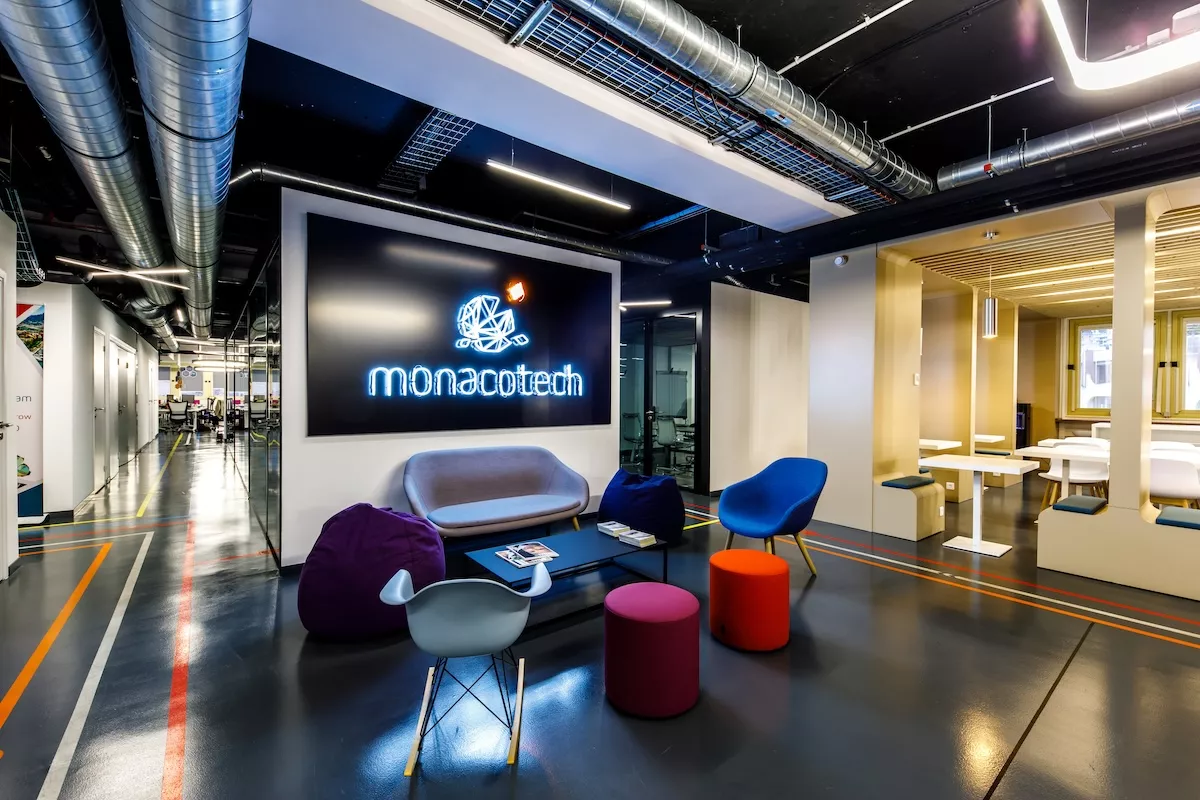
A Monaco-based startup has become the first company incubated at MonacoTech to be selected for funding under Horizon Europe, the European Union’s principal research and innovation programme.

Sea Further, founded by Valentino Iakimov and supported by MonacoTech since its early stages, was chosen from several hundred applicants across EU member states for an industrialisation project backed by the European Institute of Innovation and Technology.

The company develops bio-optimised carbon derived from a patented biological process, including graphene modified by marine micro-organisms. The technology improves the performance of hydrogen fuel cells, batteries and energy storage and conversion systems, while significantly reducing dependence on rare earth metals — a growing concern for the clean energy sector globally.

Support for the grant came directly from the Monaco Government, with the Department of Finance and Economy and the Directorate of Economic Development providing personalised support during the application process and contributing to the financing of the research project — two factors the company credits as instrumental to its success.

MonacoTech, which incubates and supports startups across a range of sectors in the Principality, described the selection as a major achievement. For Sea Further, it represents the validation of several years of research and development, and opens the door to scaling a technology with significant implications for the future of clean energy.

Stay updated with Monaco Life: sign up for our free newsletter, catch our podcast on Spotify, and follow us across Facebook,  InstagramLinkedIn, and Tik Tok.