Don’t check your phone first thing in the morning. Start your meal with protein, not bread. And take the stairs.
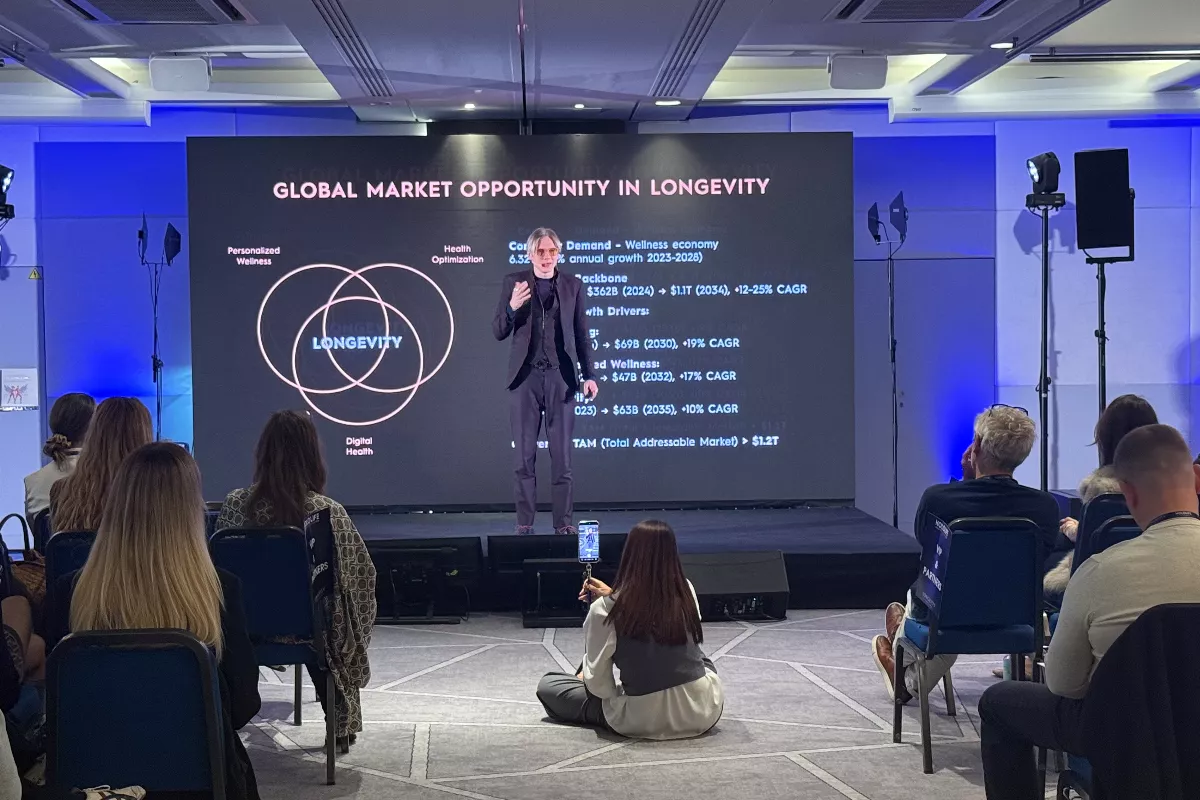
These were among the surprisingly simple prescriptions from Teemu Arina, Finnish biohacker, bestselling author and one of the world’s most prominent voices in longevity science, speaking at the Hololife Longevity Côte d’Azur Summit in Nice on March 12th.
“You can’t outsource your health and say something is going to fix me when I’m broken,” he told an audience of more than 300 at Le Méridien Nice. “No one else is going to be as interested in your health as you are.”
Arina, co-author of The Biohacker’s Handbook, has spent over 15 years optimising his own biology. At 43, he says his hormone profile looks more like that of a man in his thirties, or even 20s, than when he first started tracking his health at 30.
His message, however, is less about elite self-optimisation and more about a simple shift in mindset: prevention over cure.
“We have a system focused on immediate medical care,” he said. “But it has absolutely, utterly failed with treating things that might happen in ten, twenty, thirty years.” Only 0.57 per cent of GDP in Europe, he noted, is currently spent on preventive healthcare.
Teemu Arina during his presentation, photo credit: Monaco Life
Start small: the three habits with adopting now
After his presentation, Monaco Life sat down with Teemu Arina to figure out what someone could start doing today. Arina kept it quite simple:
First: align with your circadian rhythm. “Wake up with the sun, reduce blue light in the evening (devices). That supports your hormones, your blood sugar regulation, all of it.”
Second: change the order in which you eat. “When you go to a restaurant and they give you bread, start with the protein and salad first. The bread will have much less of an effect afterwards. It’s not about eating less, it’s about timing.”
Third: move more, in the most ordinary ways possible. “Take the stairs. Walk. That’s the Mediterranean lifestyle our ancestors were having.”
On his own morning routine, he was equally strict. “I don’t take my phone out of airplane mode until I’ve done my exercise, sauna, ice bath, some supplements. And yeah, I can have a croissant occasionally, but it’s not my common thing.”
He also highlighted contrast therapy, alternating between heat and cold, as one of the most underused tools available. “We don’t get that temperature variation naturally anymore. Do it every day if you can. Learn to deal with uncomfortable things like cold.”
The broader argument running through his talk was one of personal accountability. “If your body was a company and your energy levels were a stock price – would you invest in yourself right now?”
Arina was speaking at the first major longevity summit to take place on the French Riviera, bringing together researches and practitioners across fields from regenerative medicine to metabolic health and neuroscience.
From its vantage point overlooking the Mediterranean, Le Schuylkill has stood as silent witness to Monaco’s evolution for more than half a century. Now, as it reaches a pivotal milestone in its transformation, the tower is being reborn – marrying its pioneering history with cutting-edge sustainable technology and a striking new architectural crown that will redefine Monte-Carlo’s skyline.
Le Schuylkill tower rose from Monaco’s coastline in 1963, developed by Gildo Pastor of the influential Pastor family that shaped much of the Principality’s luxury real estate landscape. As Monaco’s first modern high-rise residential building, the tower represented a bold architectural statement for its era, establishing a new vertical dimension to Monte-Carlo’s urban fabric. Its distinctive blue mosaic facade, once emblematic of Monaco’s architectural advances and modernist ambitions, became an icon of the Principality’s post-war transformation.
For decades, the building stood as testament to the Pastor family’s vision, passing from Gildo to Hélène Pastor and eventually to her daughter Sylvia Ratkowski Pastor, who inherited not just property but a piece of Monaco’s architectural heritage.
Named after the Schuylkill River that runs through Philadelphia, the city where Princess Grace was born, the building carried a symbolic nod to the American roots of Monaco’s beloved princess and to the Principality that Gildo Pastor had come to call home. By the 2020s, however, the building was no longer fit for purpose, its ageing structure unable to meet the demands and standards of modern Monaco.
A family legacy worth saving
Rather than demolish the building her grandfather constructed, Sylvia Pastor made a surprising choice. She commissioned Zaha Hadid Architects to reimagine the 60-year-old structure, and Monaco’s Municipal Council approved the ambitious €185 million transformation plan in 2023.
“The client was keen on maintaining and restoring the existing architectural aspects of the original building,” explains Stéphane Vollotton, Director at Zaha Hadid Architects and lead on the project. “This is a legacy project for the client. It was built by her grandfather and she intends to pass it on to her children and subsequently her grandchildren.”
But what seemed like a straightforward renovation quickly became something far more complex. When Zaha Hadid Architects took on the project, they discovered the building came with virtually no documentation. No original plans. No structural drawings. No record of what materials had been used or how the building had been constructed.
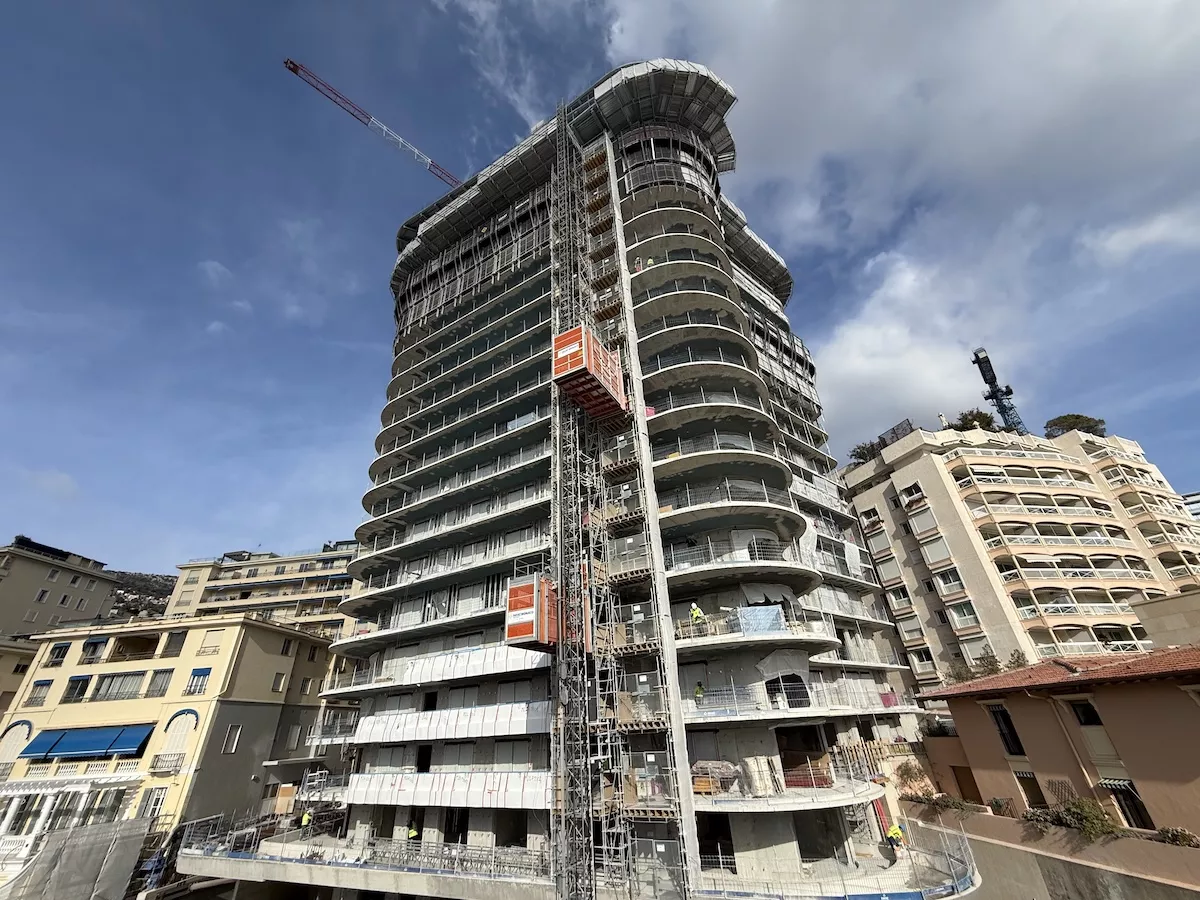
Le Schuylkill is currently in construction phase. Photo credit: Cassandra Tanti
Rebuilding without a blueprint
“The initial challenge was that the building was occupied and we had very little information about the existing structure,” Vollotton explains. “So whilst the client had developed her brief and had a clear idea of the programme – new amenities and penthouses – when it came to the actual fabric of the existing structure, it required a lot of testing and then a bit of guesswork on the precise location of all the structural elements.”
The team essentially had to conduct an archaeological investigation of a building that people were still living in. They didn’t even know what the concrete was made of. Laboratory samples had to be taken and analyzed. The condition of steel reinforcements had to be assessed. The entire project became a research exercise before any renovation work could begin.
“There were no original plans, so it became quite a research project for us as architects to figure out the layouts, and for the structural engineers to understand the behaviour of the existing building,” Vollotton says. “It meant we had to move ahead based on a certain number of assumptions.”
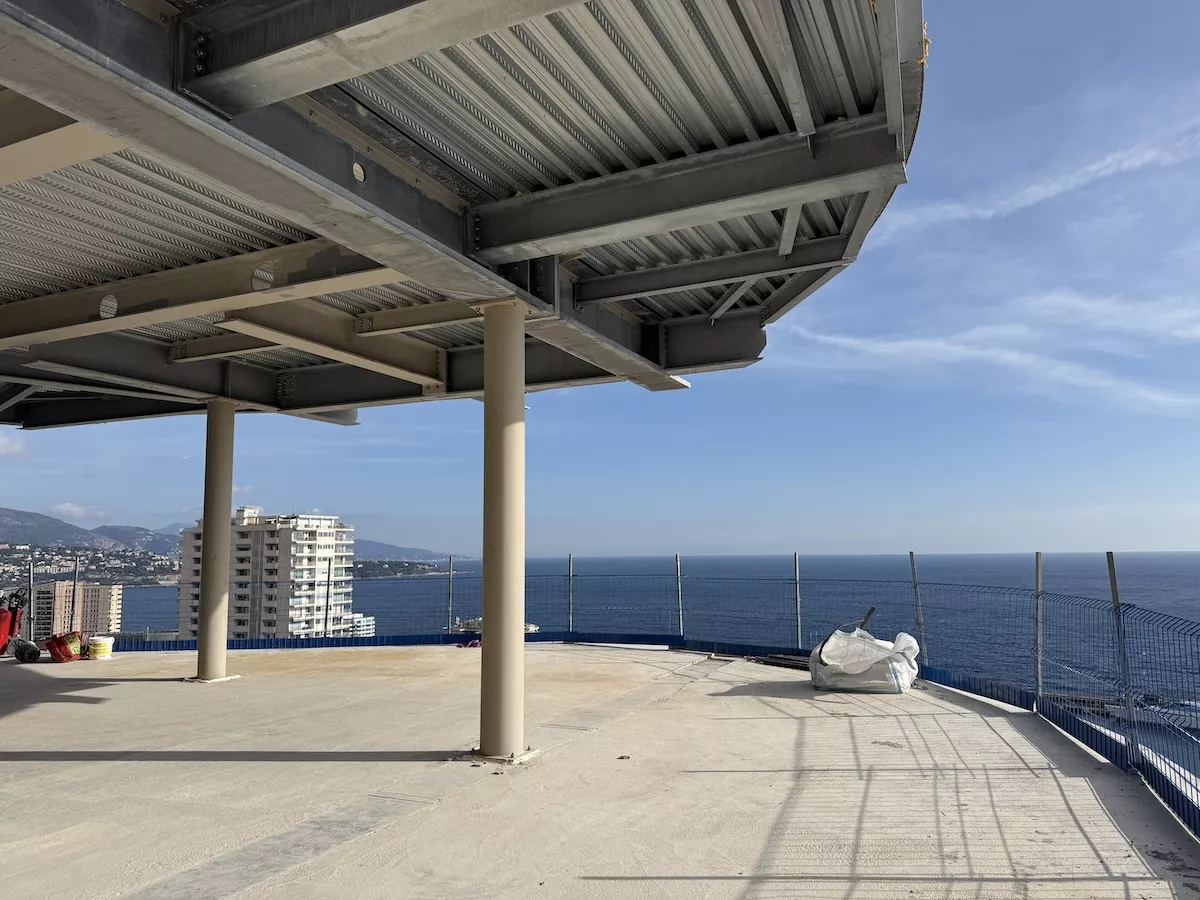
The penthouses serve as both the crowning jewels of the tower, but also as supports pinning the three towers together. Photo credit: Cassandra Tanti
A building that moves
The renovation scope was so extensive that authorities classified it as effectively a new build, meaning everything had to be brought up to current standards – seismic, fire, environmental. Understanding how the existing structure behaved became critical, particularly because the Schuylkill Tower isn’t a single monolithic structure. It’s actually three semi-independent towers sitting on a shared base, and they each move slightly differently in response to wind coming off the Mediterranean.
“We had to undergo rigorous testing to understand the seismic behaviour of the original structure — analysing the composition of the existing concrete, the condition of the rebar reinforcements, and how the building moves as a whole,” Vollotton explains. “We brought in specialists to install sensors and monitor the building over days and weeks. Essentially, we needed to understand how it was swaying.”
The sensors revealed exactly how the tower responds to wind gusts, how the three separate vertical elements move independently, and what forces the structure experiences in its exposed coastal position. Armed with that data, the architects could develop a strategy to reinforce the building and bring it up to modern seismic standards.
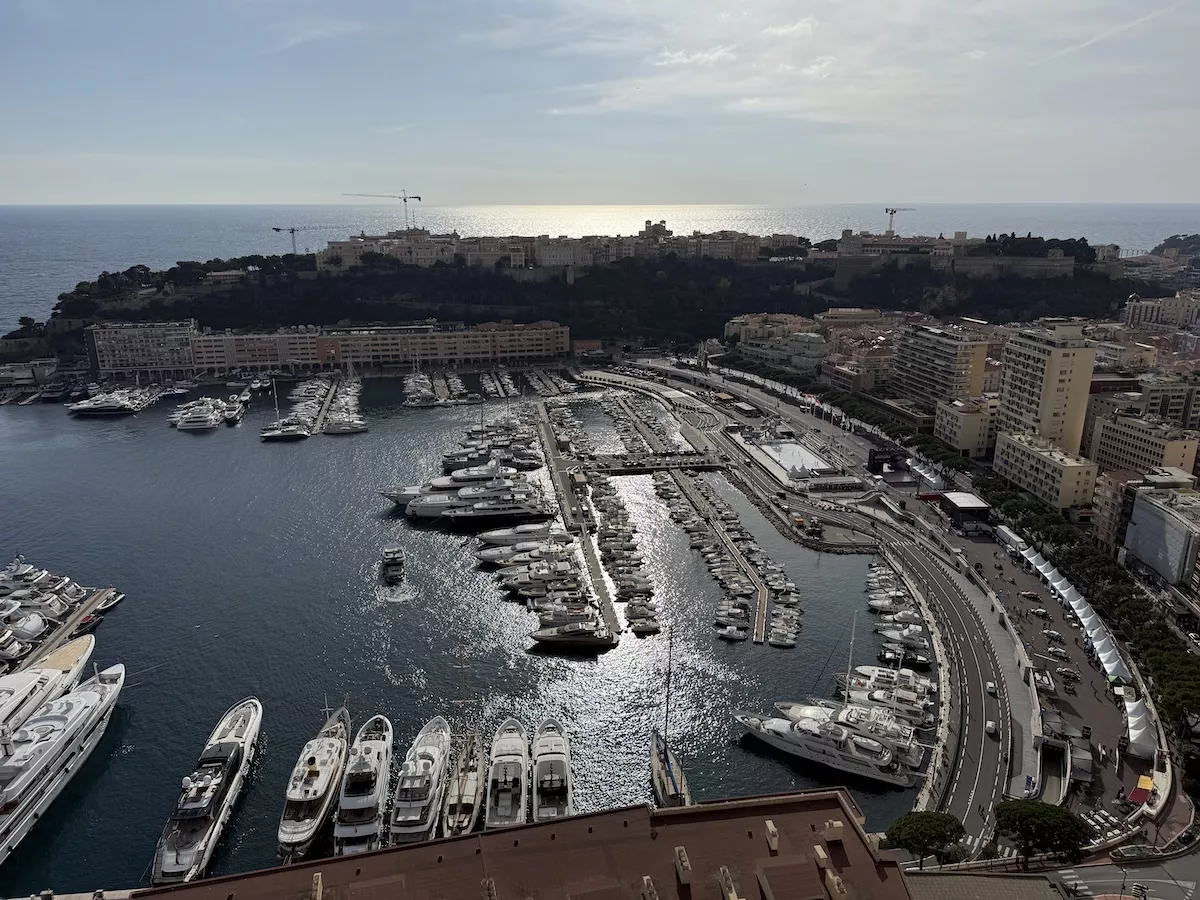
The view from the penthouses. Photo credit: Cassandra Tanti
450 tonnes of architectural solution
The answer came partly from the new penthouses themselves. Those organic, flowing forms that will crown floors 15 to 17 aren’t just aesthetic statements – they’re structural solutions.
“For the new penthouses, there are 450 tonnes of steelwork sitting on top of the existing concrete structure,” Vollotton reveals. “Then on top of that you have to add the additional concrete, the facade and the architectural finishes, so it’s a substantial amount of weight.”
But that weight serves a purpose. “What this new structure on top of the building does is pin together those three buildings to stiffen the whole lot.”
Additional columns and concrete supports now thread through the existing structure. Thermal layers wrap the entire building, creating the airtight envelope that just didn’t exist in 1963. The transformation addresses fundamental habitability issues that residents had simply accepted for decades.
Now, the building will have everything expected in a contemporary luxury residence: heating, cooling, ventilation, solar protection, fire safety, acoustic insulation between apartments. “It is going to be very comfortable,” says Vollotton with a smile.
A projection of the finished penthouse apartments. Render by Talcik Demovicova
A new crown for contemporary living
Perched dramatically on the steep terrain between Boulevard de Suisse and Avenue de la Costa, the Schuylkill Tower has always commanded attention through sheer positioning as much as presence. Its distinctive U-shaped footprint was conceived to ensure every one of its original 188 apartments captures Mediterranean vistas while navigating the challenging topography. The 24-storey structure cleverly embeds its lower segment within the rock face itself, housing technical rooms and services, while its residential floors rise above to claim sweeping sea views.
When the transformation is complete, the most striking change will be those penthouses replacing the original top floors. Their organic, wavy forms provide a sculptural finale that reimagines the building’s relationship with sky and sea. These flowing additions signal Monaco’s evolution from rigid modernism to fluid contemporary design, their floor-to-ceiling double-glazed facades framing panoramic views so spectacular that opaque surfaces have been minimised. A major milestone was recently reached with the completion of the top level floor – a significant achievement for a tower simultaneously being rebuilt, reinforced and crowned with an entirely new architectural statement.
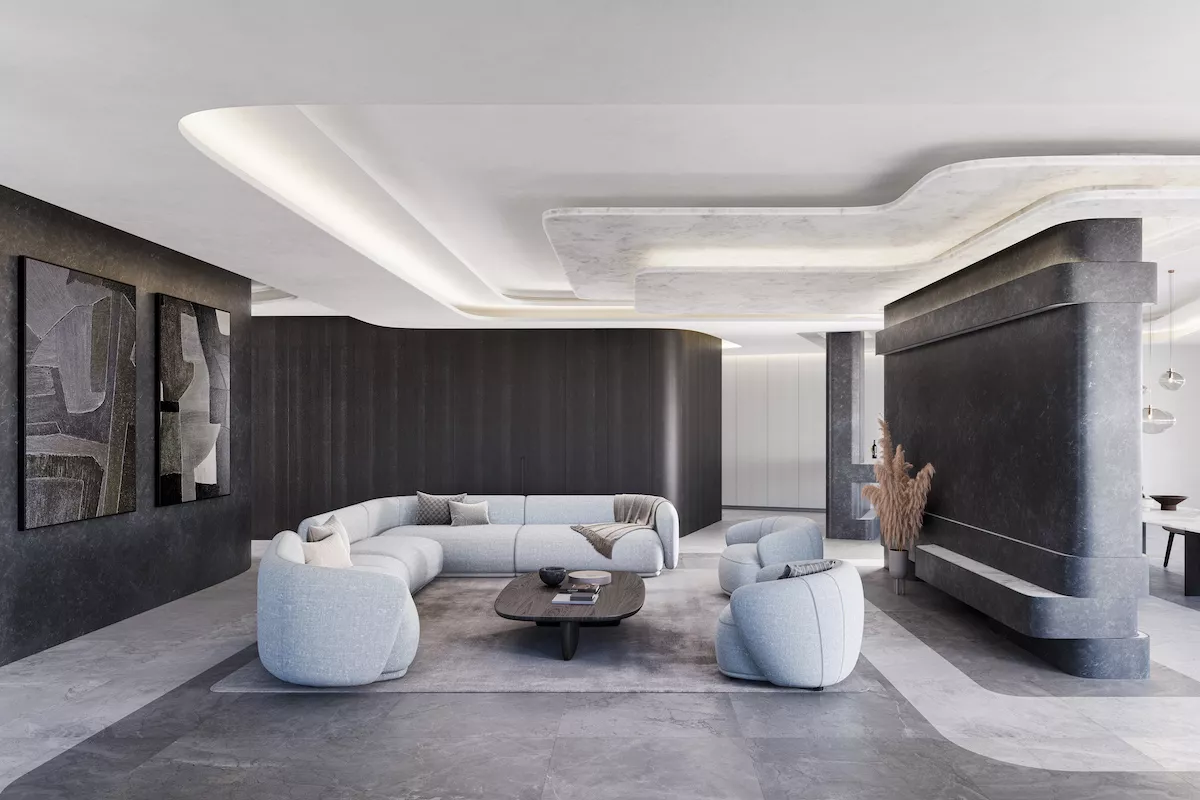
The new penthouse living. Render by Talcik Demovicova
Reimagined spaces for contemporary living
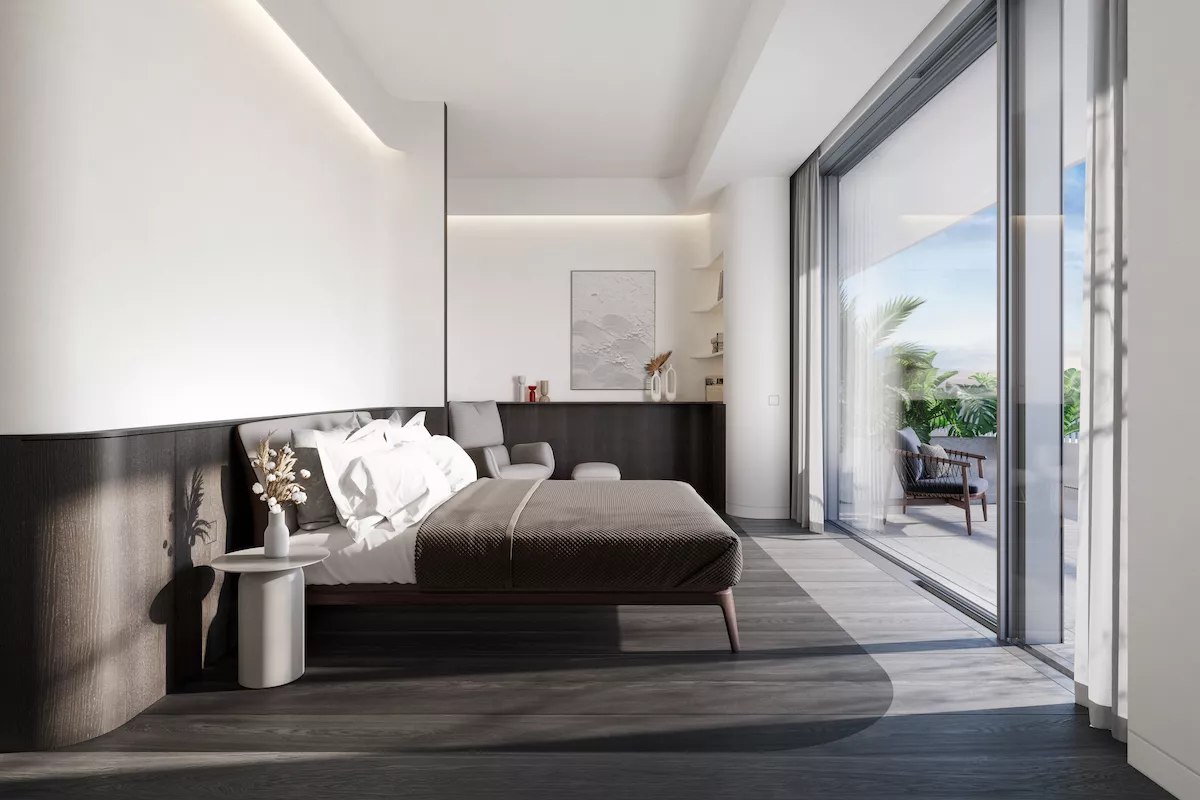
The consolidation from 188 to 142 apartments reflects Monaco’s recalibration toward spaciousness and contemporary living standards. Studios through to four-bedroom apartments occupy the lower floors, adapted to Monaco’s diverse residential needs, while the building’s true architectural drama unfolds in its upper reaches. The new penthouses represent the pièce de résistance: rare duplex configurations spanning four to six rooms, a housing typology seldom encountered in space-constrained Monaco. These exceptional residences include two four-room duplexes, one five-room duplex with panoramic views stretched across two levels, and the building’s ultimate statement: a 1,100-square-metre duplex offering five bedrooms, expansive reception rooms with open kitchen, multiple bathrooms and 360-degree panoramic views over Monaco and the Mediterranean.
A penthouse bedroom. Render by Talcik Demovicova
A rental strategy redefining luxury living
The Schuylkill Tower will operate exclusively as a rental property, with homes available for long-term rental – addressing Monaco’s scarcity of quality rental accommodation.
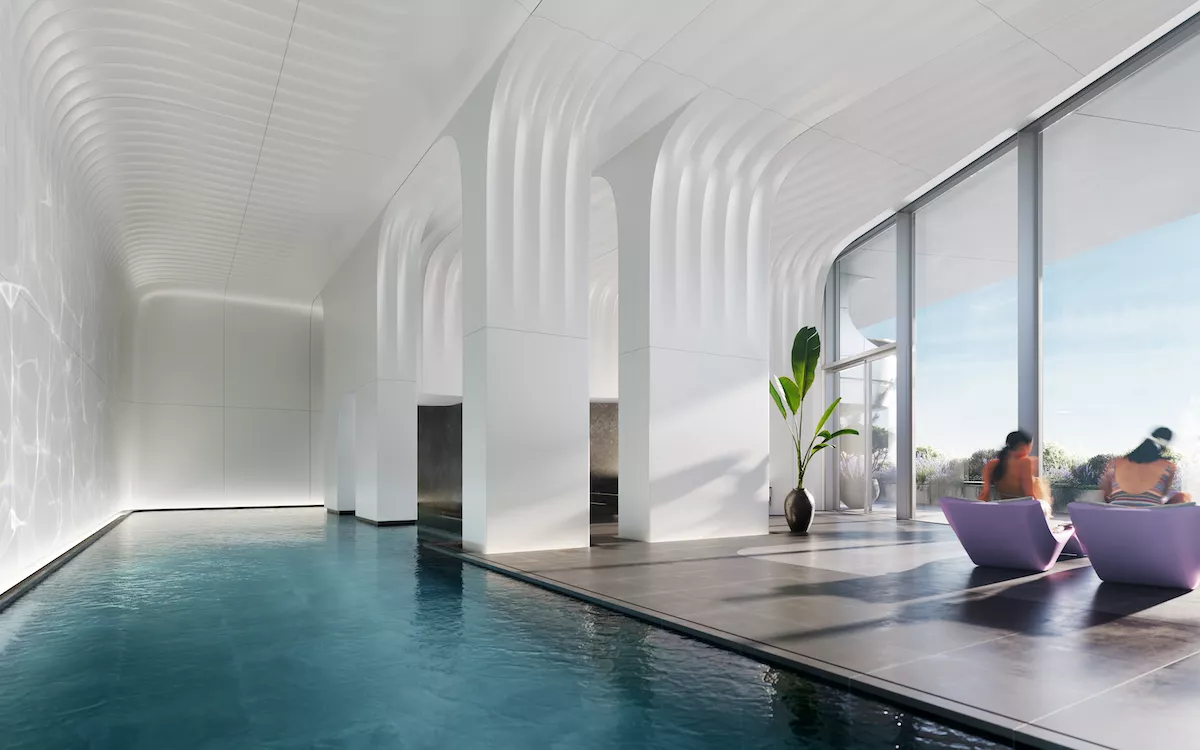
Beyond the apartments themselves, residents will have access to a clubhouse, gym, spa with indoor pool, lounges, and a co-working space.
Handovers begin in 2026, with the full programme expected to complete in spring 2027.
“This is going to be stunning,” Vollotton says. “This is a very fortunate location within Monaco to be building and I think we made the most of it.”
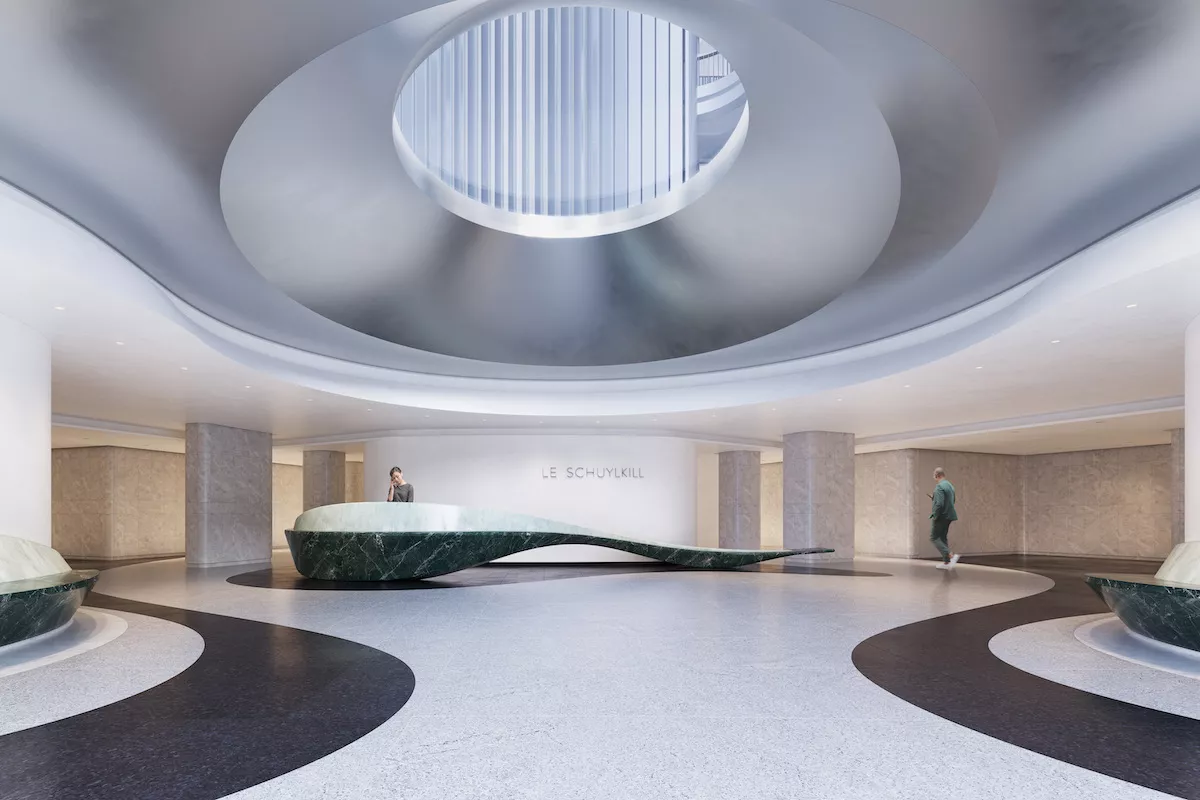
Le Schuylkill tower lobby. Render by Talcik Demovicova
Sustainability woven into stone and steel
The €185 million renovation represents far more than aesthetic renewal. By eliminating all fossil-based energy supplies and replacing them with renewable sources, Le Schuylkill qualifies as a genuinely decarbonised building. The project’s whole life carbon assessment – which measures emissions from construction, materials, operation and eventual demolition – totals 623 kgCO2e/m², just meeting the 2030 RIBA Climate Challenge threshold of 625 kgCO2e/m².
This achievement stems from preserving 75% of the existing concrete structure rather than demolishing and rebuilding, recycling existing building components, and meticulously selecting materials that minimise carbon impact across decades of use. The transformation earned 75 out of 80 points across all seven categories of the BD2M environmental accreditation scheme, which evaluates projects specifically for Mediterranean conditions.
At the renovation’s technical heart lies connection to Monaco’s district seawater cooling network, which will dramatically reduce the tower’s overall energy demand while providing hot and cold water to all 142 apartments. The real game-changer, Vollotton argues, is energy performance: a 58% drop in consumption achieved through decarbonisation. Rain and greywater recycling systems address water scarcity, while improved thermal performance, enhanced solar protection, and on-site waste management make the case that luxury and environmental responsibility are not mutually exclusive.
The swimming pool. Render by Talcik Demovicova
Blueprint for Monaco’s future
Asked whether the Schuylkill could serve as a template for other Monaco buildings facing similar obsolescence, Vollotton doesn’t hesitate. “Absolutely. Given the scarcity of land in Monaco, I suspect this is the first of many.”
From research project to architectural statement, from aging relic to sustainable landmark, the Schuylkill Tower’s transformation proves that Monaco’s mid-century buildings need not be demolished to meet contemporary standards. They simply need architects willing to understand how they breathe, sway and endure – then strengthen those qualities while addressing their failings.
More critically, the project delivers the calibre of high-end housing Monaco requires to compete in an increasingly crowded global luxury market. The spectacular penthouses – among the Principality’s largest and most architecturally distinguished apartments – alongside meticulously reimagined residences throughout the tower demonstrate that even with severely constrained land, what had become an eyesore can be transformed into a genuine architectural achievement.
The Schuylkill Tower’s rebirth suggests Monaco’s competitive edge may lie not in constant demolition and replacement, but in the sophisticated evolution of what already exists – transforming liabilities into landmarks that meet the exacting standards of the world’s most discerning residents.
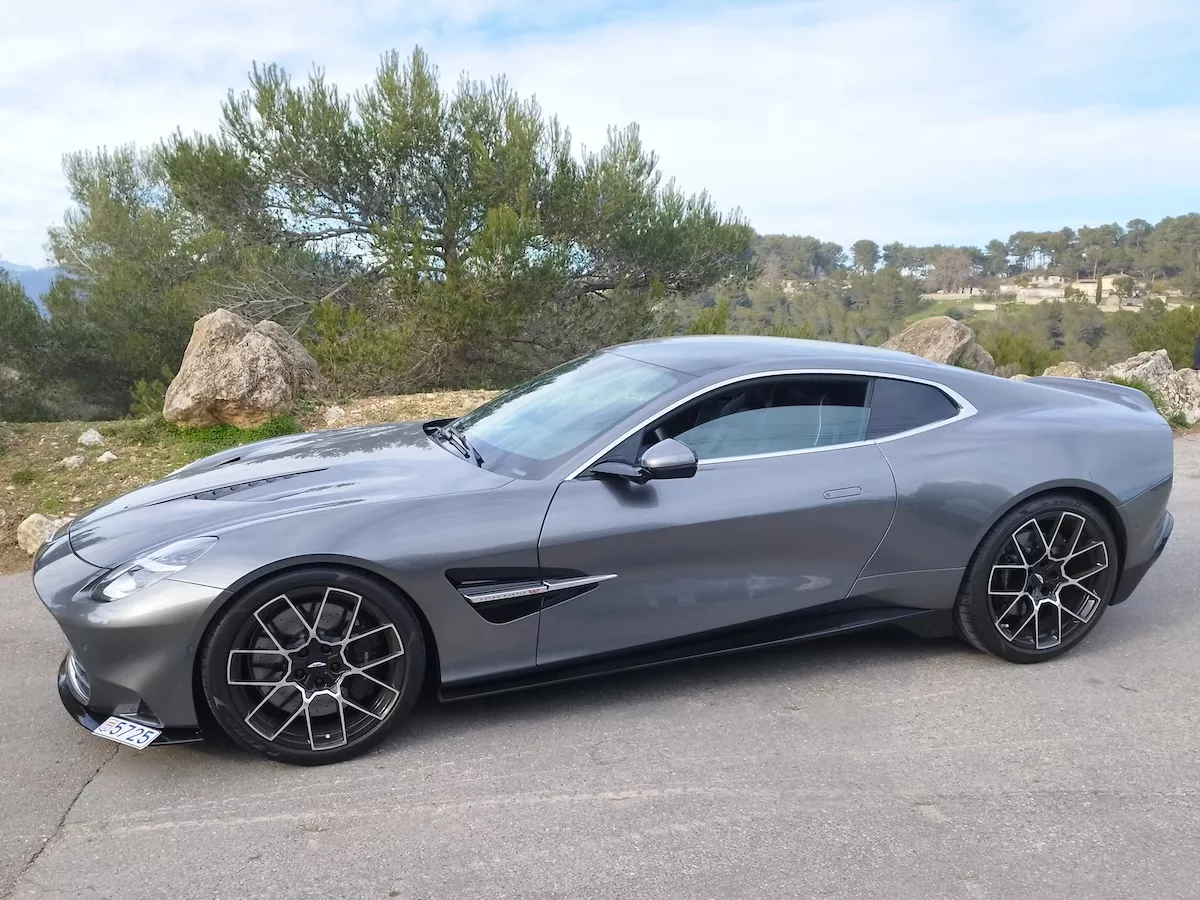
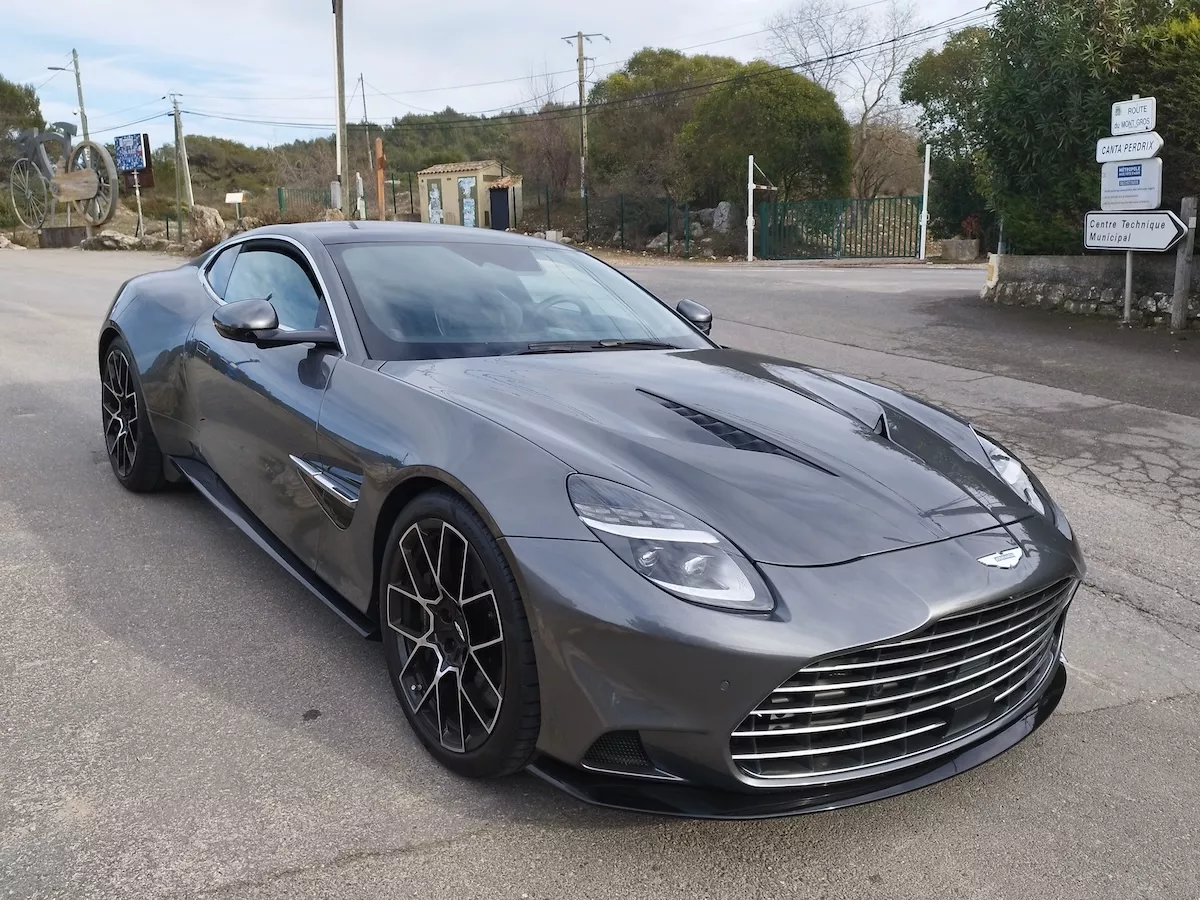
The dictionary says that the word vanquish means ‘to defeat thoroughly’. Whilst the car that bears this name has some tough competition to beat, it seems appropriate when you discover the latest version of Aston Martin’s range-topping coupe in the flesh for the first time. Its looks will conquer your heart instantly, the sound of the motor on startup will make the hairs on the back of your neck stand up, and then you realise how fast it is. Any doubts about whether this car can live up to expectations have been completely ‘vanquished’.
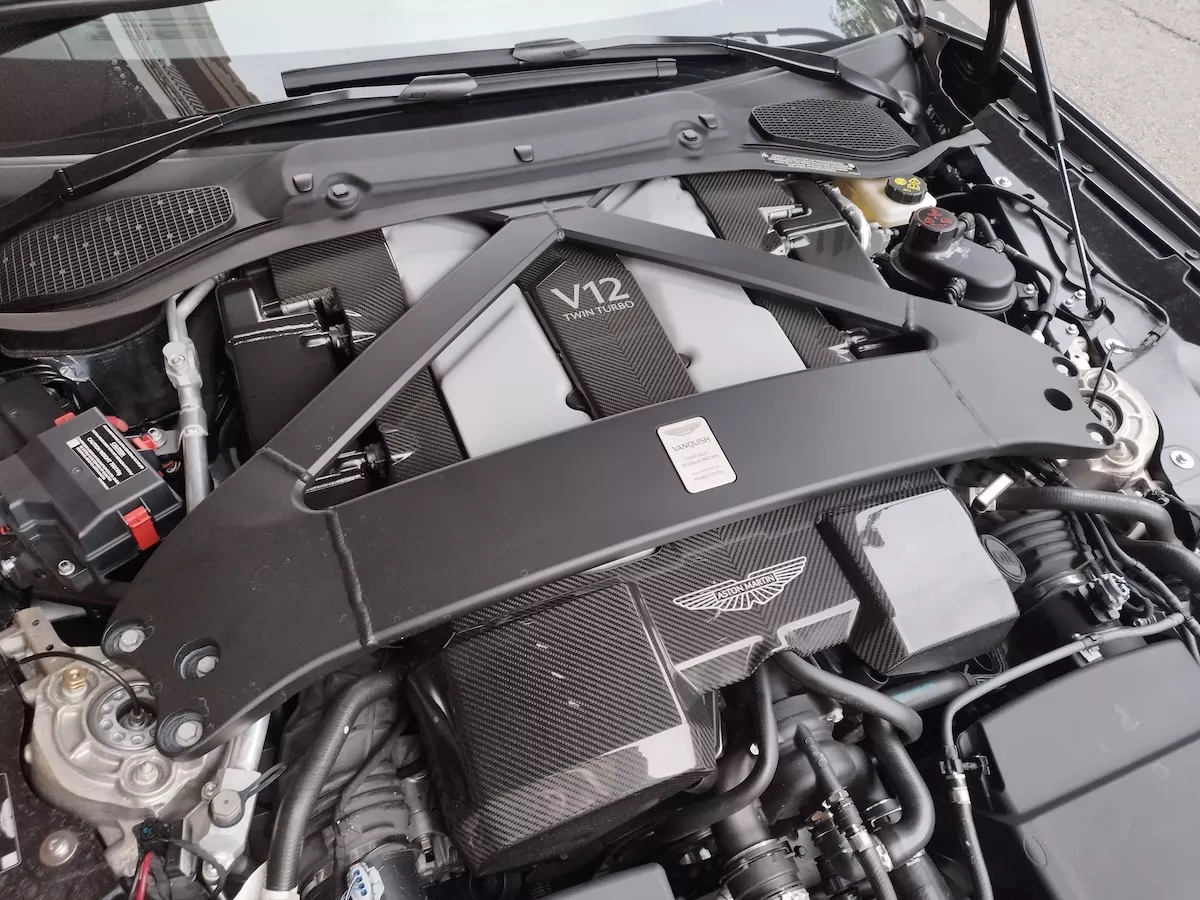
In fact, whilst Aston Martin does make low volume hypercars that are an even rarer sight on the road, and even faster, the Vanquish is also a member of its own exclusive club now that there are very few front-engined V12s on the market. Ever-increasing emissions regulations have forced manufacturers to downsize or switch to hybrid power, sometimes strangling the character of the car in the process. This particular engine is a 5.2 litre twin turbo V12 producing 835 horsepower and a massive 1000Nm of torque. If you can imagine what 835 real horses would sound like galloping past you, that gives you some idea of the engine noise the Vanquish produces – deep, thunderous and signalling the kind of power that will take it to 345 km/hr, if you have the nerve and a spare runway.
Photo credit: Richard McCreery
That is considerably faster than the speed at which a commercial airliner takes off, which emphasises the effort needed just to keep it on the ground, especially as everything has been done to reduce weight. Carbon fibre bodywork is draped over an aluminium chassis and when you lift the bonnet the amount of carbon fibre componentry on display is impressive. A car such as the Vanquish, with this level of performance, is always fighting contrasting forces – it needs to be structurally solid in order to handle well at speeds, yet it also needs to perform its traditional role as a grand tourer that can convey its passengers over long distances in comfort. A front-engined GT is a different car from a mid-engined supercar but the Aston manages to work well in all its guises, even if it feels a little firm at times.
Its considerable length (4.85m) helps improve the ride though, and in the twisty bits the long bonnet leads the way with great poise. Handling is aided by a new electronic differential and, whilst 835hp is a lot of power to have under your right foot, it translates to speed on the road with greater ease than you might expect. A 0-100km/h time of 3.3 seconds is closer to hypercar performance than grand tourer, so you have to be careful about how quickly the view through the windscreen rushes towards you when you stomp on the loud pedal. Fortunately, carbon ceramic brakes are standard and the whole car feels dependable, as though it really was designed to do this rather than just glide around Monaco looking gorgeous. It will sell on its looks alone, but it can also walk the walk.
Photo credit: Richard McCreery
The Vanquish is a tactile and visual ownership experience. Aston Martin’s Q division offers thousands of ways to personalise your car inside and out, and most customers will happily spend thousands at this stage of the buying process. The exterior lines of the Vanquish provides a great starting palette on which to make your mark (Supernova Red paint with gold wheels is a favourite of mine) so you may never see another car just like yours.
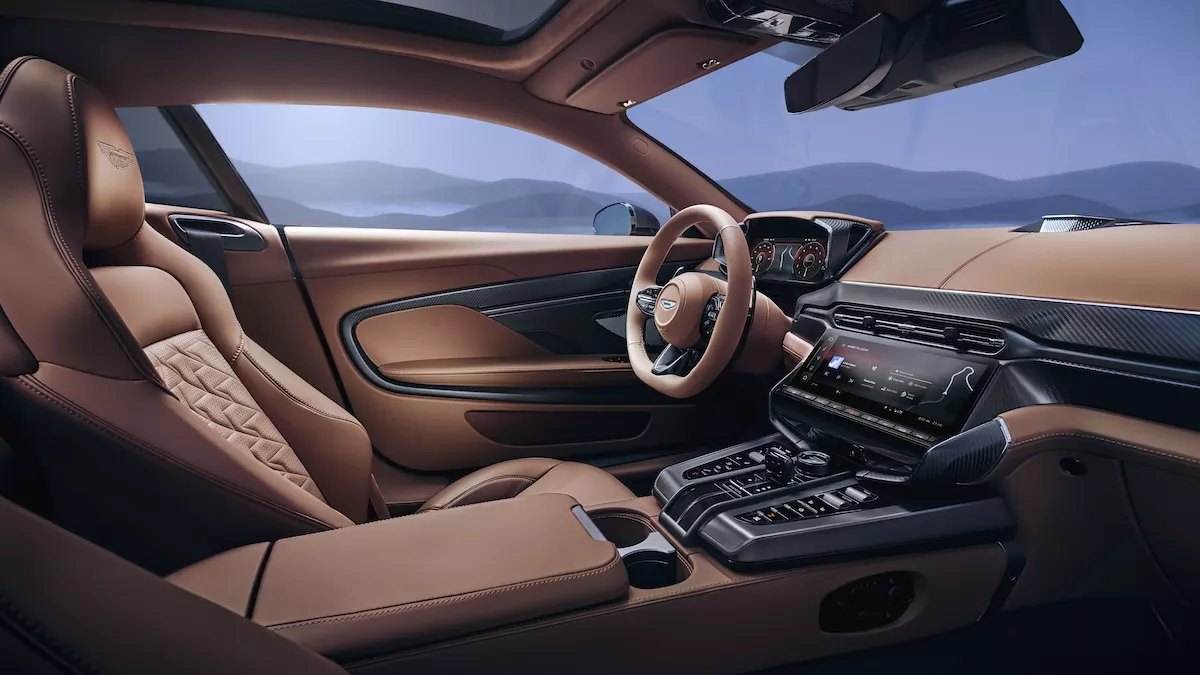
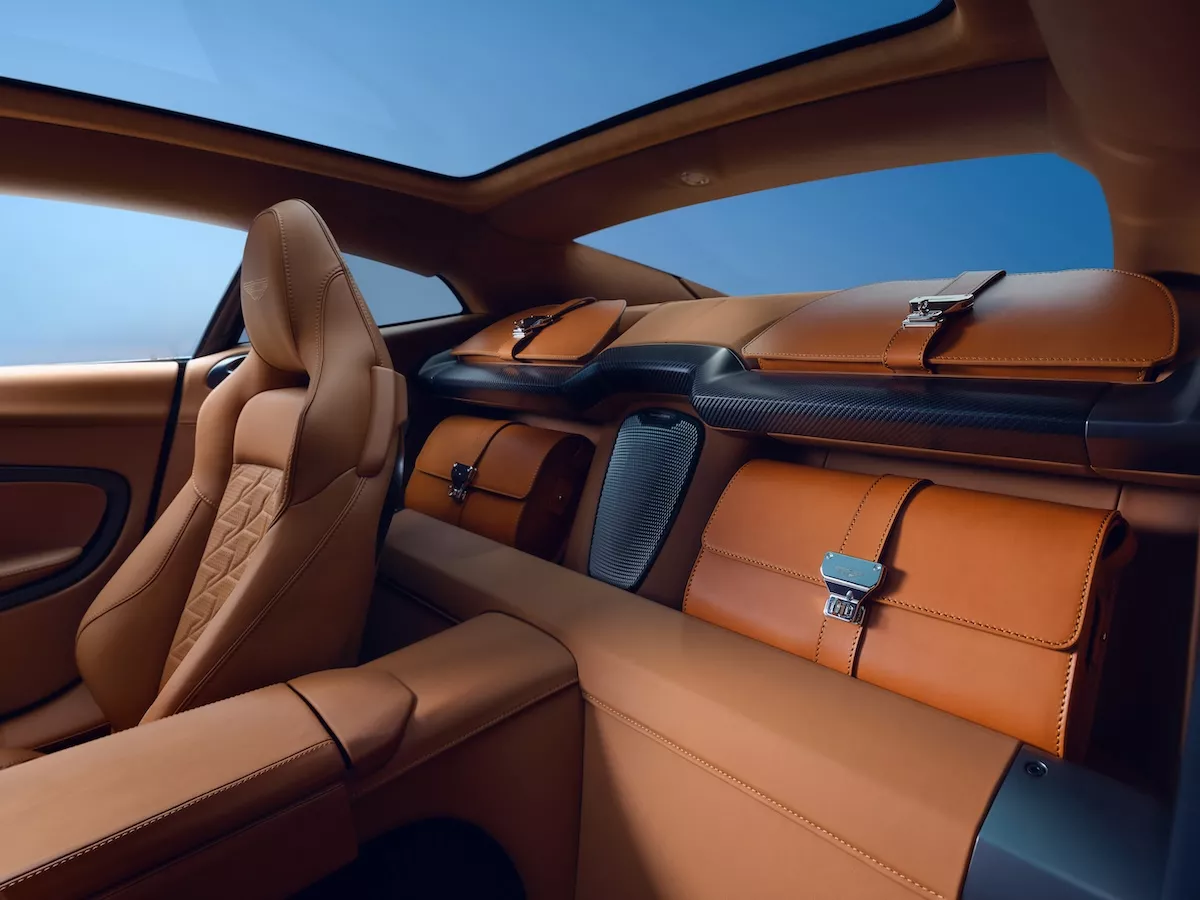
Inside, there are some design elements that really set the Vanquish apart from the competition. The huge glass roof that stretches down to the rear window adds a whole new dimension in a sports car that might otherwise be rather dark inside due to its low, sleek shape. There are beautiful rotary dials on the centre console that are a pleasure to behold, plenty of actual buttons to press and a glass starter button to fire up the V12. These elements act as a compliment to the modern touchscreen interface but they also create a classy combination of modern and traditional design that works very well. It is almost Steampunk styling.
Photo source: Aston Martin
The Vanquish is essentially a two seater, although you can specify rear seats that would, in theory, make this a family car. In practice, there is only room for a soft bag and a small dog in those seats, whilst the boot can take a set of (Aston-Martin branded) golf clubs, allegedly. If you and your friends are all pretty short, it would be a nice option to tick as it means you get to share the thrill with more people. Alternatively, Aston will make you a beautiful bespoke luggage set to maximise the storage space behind the driver and passenger. Whatever configuration you choose, the quality of the materials and the design of the interior are right up there with the best in the world.
The pleasure doesn’t stop when you climb out of the Vanquish because you get to look at it again. The rear of the car, with its Kamm tail and seven ‘light blades’ on either side is particularly successful, whilst the sloping roofline is reminiscent of designer Ian Callum’s original DB7 of over thirty years ago. At the front, the huge bonnet is streaked with two shark-like carbon fibre ‘Thermo Louvres’ that aid cooling, whilst also managing to look very cool.
Photo source: Aston Martin
Aston Martin’s range-topping flagship is very desirable, as it manages to combine the appeal of a coupe with the performance of a hypercar and the luxury of a high end jeweller. If you are a buyer at this price level (starting at 389,000€ and probably closer to 500k€ after adding the malus and options), it means you can afford to choose from almost everything on sale today. And once you experience it, I think you’d struggle to not buy it. After all, V12 petrol engines like this might not be around for much longer. So, if you have the means, treat yourself while you still can, that’s my advice.
AS Monaco continued their excellent run in Ligue 1 with a controlled 2-0 win over Brest on Saturday night, a result that lifts the Principality club into the European places.
As Sébastien Pocognoli said at the midway point of the season, the club’s disastrous first half of the campaign left a big margin for improvement in the second. The turnaround in recent weeks has bordered on the miraculous when you consider what came before. Les Monégasques are now unbeaten in their last eight games in the league, have won their last five, and have taken 20 points from a possible 24.
These matches are the ones that have often tripped Monaco up. There was understandable euphoria last Friday when Pocognoli’s men stormed the Parc des Princes, scoring three goals and taking all three points away to reigning European champions PSG. But backing that up at the Stade Louis II against a side that they are ‘expected’ to beat has been a shortcoming for this Monaco side, not just this year.
Balogun and Monaco clinical
Perhaps that undersells Saturday night’s clash. Pocognoli sought to highlight that the game was “the headliner of the gameweek”, one contested between Ligue 1’s two most in-form sides. He was right. No teams have registered more points than Monaco and Brest over the past six gameweeks. Even if they still linger in midtable, Brest’s confidence showed in the opening exchanges. “We started the match in the way that we wanted,” reacted Eric Roy.
Consequently, it took Monaco time to play themselves into this match, but once they did, the reward was immediate. After 15 minutes of being hassled and harried into errors by a high-pressing Brest side, the Principality club built their first period of pressure and netted at the end of it. It was Balogun who continued his hot streak, netting in his fourth consecutive game in Ligue 1, after pouncing onto a loose ball inside the Brest box.
A second could have followed had Maghnes Akliouche done better with a sumptuous inswinger from Aladji Bamba, but he clumsily kneed wide. When Éric Junior Dina Ebimbe failed to convert a glorious chance moments later, it was a reminder of how fragile their lead was. It remained that way and incited Pocognoli to make attacking changes around the hour mark, despite his side defending a lead. His choice was justified when Aleksandr Golovin rifled into the roof of the net following a move involving two of Pocognoli’s substitutes, Mika Biereth and Mamadou Coulibaly.
Roy regretted that his side didn’t shoot enough, despite creating the conditions to do so, and it took until the 82nd minute for Brest to register their first shot on target. They didn’t do enough to take any points back to Brittany, quite simply, relative to a Monaco side that, even when leading, chased another goal.
“We want to climb up the table” – Faes
“In the 60th minute, we felt that there were signs that we needed to add some fresh legs,” said Pocognoli, and it was his defensive substitutions after the second goal that helped “kill all hope for Brest,” added the Monaco manager, who was once again grateful for Balogun’s contribution. “He is simply reaping the fruit of his hard work. He is ambitious, focused, professional… he has a lot to play for between now and the end of the season, and in the summer [at the World Cup],” he said.
Pocognoli repeated the “feet on the ground” mantra, despite the run. “We are coming from a long way back,” he said. “We know where we’ve come from,” added Wout Faes, who nonetheless added that Monaco can now “be ambitious.”
“We want to climb up the table; that is clear. We haven’t set ourselves an objective, but we are looking at ourselves first and foremost,” said the Belgian. With matches against direct rivals Lyon and Marseille coming up, Monaco’s fate is in their own hands, a scenario that felt improbable just a matter of weeks ago.