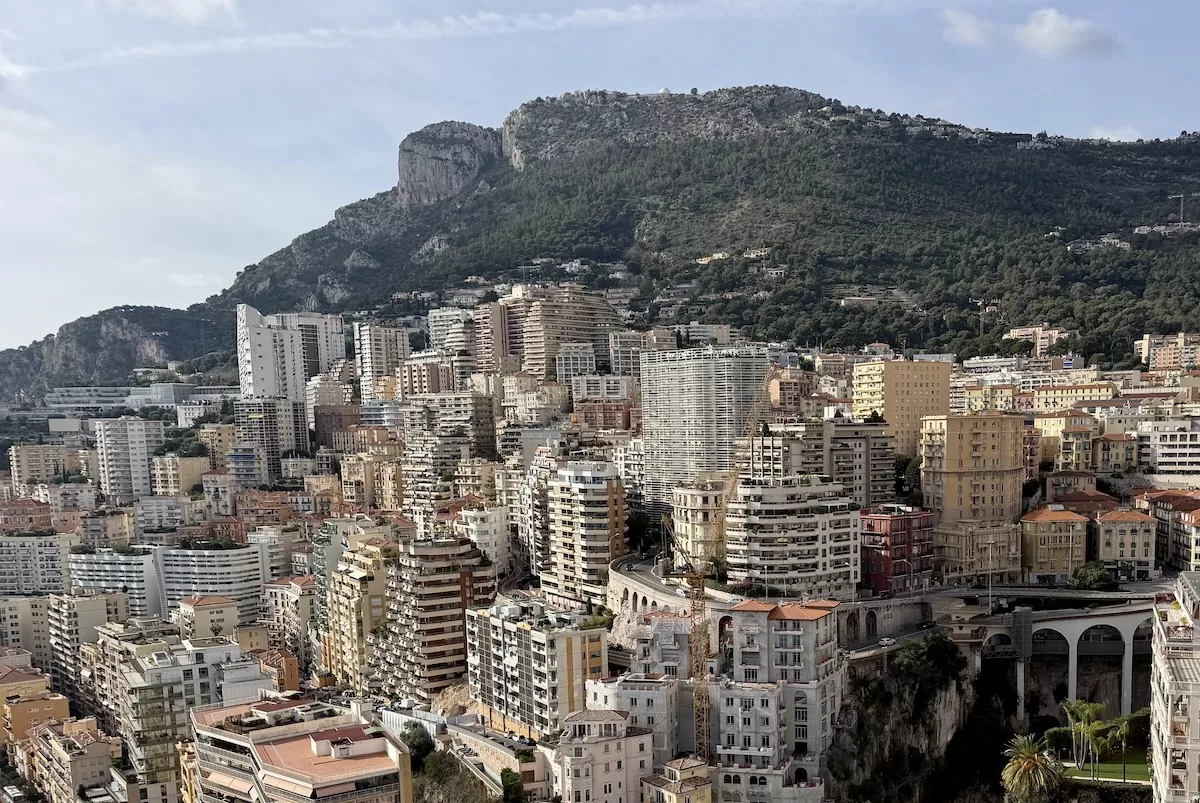
Finance sector now dominates Monaco’s tax base, annual audit report reveals

Monaco’s financial and insurance sector has become an increasingly central driver of the Principality’s corporate tax revenues, according to the 2025 Annual Public Report of the Commission Supérieure des Comptes, presented to Prince Albert II on 16 March 2026.

The report, covering the state’s budgetary and financial management for the 2024 fiscal year, shows that corporate tax receipts — known as bénéfices commerciaux — reached €334.4 million, a rise of 43.7% on the previous year and a level not seen in a decade. The financial and insurance sector accounted for close to 65% of that total, up from 55% the year before. The fifteen largest corporate taxpayers alone contributed €194.5 million, an increase of €68.8 million.

The finding points to a potential shift in Monaco’s fiscal structure. While the Principality has long relied on VAT as its primary source of revenue — it still represents 51.5% of total state receipts — the growing weight of financial sector profits is reshaping the tax base in ways the report’s authors treat with some caution.

A record surplus built on evolving revenue drivers

The 2024 budget closed with a surplus of €192.7 million on the general budget, and €310.3 million across all state operations including special treasury accounts — the strongest result in recent years. Revenues grew by 5.8% to €2.3 billion, driven by VAT receipts of €1.2 billion and the surge in corporate tax.

However, the report notes that recent years benefited from exceptional revenues linked to the Mareterra land reclamation project, which generated significant VAT income from real estate transactions. In 2024, VAT from property transactions fell by €86.4 million as these revenues wound down, marking the end of a particularly strong cycle of real estate-driven receipts.
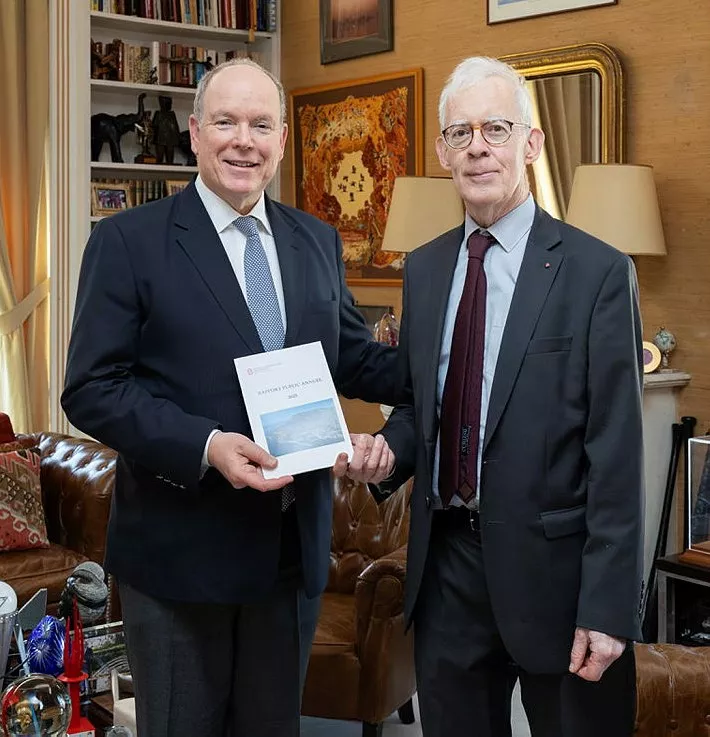
Prince Albert II was presented with the Annual Public Report 2025 this week by the Commission Superieure des Comptes Remet

VAT holds steady, customs duties fall

Beyond corporate tax, the broader tax picture is mixed. Total VAT receipts, which include both domestic collections and Monaco’s share from France under the bilateral fiscal convention, edged down by 1.3%, though non-property VAT grew by 7.6%, reflecting continued economic activity in sectors including temporary employment services, construction and retail.

Customs duties fell 14.3%, partly due to changes in collection arrangements with French authorities.

Legal transaction revenues — covering property transfer duties and other civil acts — rose 7.1% to €249 million, though property transfer duties themselves fell by 6.9% as the volume of high-value transactions declined.

Expenditure rising, retirement costs flagged

On the spending side, ordinary expenditure reached €1.26 billion, up 4.9%. Personnel costs grew by 5.2% to €412.4 million, with government headcount rising by 46 to reach 3,923.

The Commission notes that more than one in two civil servants benefited from an individual advancement measure in 2024, and raises concerns about the long-term cost trajectory of the public sector pension system.

Early retirement remains common among Monégasque civil servants, with 60% of those who retired in 2024 doing so before the standard age of 65, at an average age of 57. The report highlights that pension costs are largely financed by the state budget, with employee contributions covering only a limited share of total expenditure.

The Commission reiterates its call for further analysis of the system’s long-term sustainability.

Commission’s broader warnings

The report, compiled by the Commission Supérieure des Comptes under President Christian Descheemaeker and presented to the Sovereign Prince on 16th March, covers not only public finances but also audits of Monaco’s public car parks, the National Housing Plan for Monégasques, the new Princess Grace Hospital Centre and the Office de Protection Sociale.

See also: 

Monaco’s outstanding tax bill hits €291 million, figures reveal

Stay updated with Monaco Life: sign up for our free newsletter, catch our podcast on Spotify, and follow us across Facebook,  Instagram, LinkedIn, and Tik Tok.

Main photo credit: Cassandra Tanti
Retiring at 57: Monaco’s early retirement culture puts growing pressure on state pension system

Monaco’s generous retirement system is facing renewed scrutiny after the Principality’s latest public accounts report highlighted structural imbalances and long-term sustainability concerns.

According to the Rapport Public Annuel 2025 by the Commission Supérieure des Comptes, Monaco’s retirement framework allows for significantly earlier departures than in most European systems. While the standard retirement age is set at 65, provisions enable some civil servants to retire much earlier, with the average retirement age currently standing at 57 .

The report, presented to Prince Albert II on 16th March, notes that more than half of civil servants opt for early retirement, with 60% of departures in 2024 occurring before the standard age. In some cases, pensions can be accessed from as early as 50, depending on years of service and personal circumstances.

A growing financial imbalance

This early exit trend is directly linked to mounting financial pressure on the state. The report highlights that pension contributions remain limited compared to payouts, with revenues covering only a fraction of total expenditure.

In 2024, pension-related payments reached €107.6 million, while contributions totalled just €10.7 million, leaving the state to fund the majority of the system .

The number of retirees continues to rise steadily, driven both by demographic factors and the expansion of the public workforce. By the end of 2024, Monaco counted 2,527 pension beneficiaries, a figure that has increased consistently year on year .

Sustainability under review

The Commission Supérieure des Comptes warns that the current model raises questions about long-term viability. It notes that no comprehensive financial projections have been carried out to assess the future cost of the system .

The report also highlights that recent policy decisions have not significantly addressed the imbalance, and calls for a broader review of retirement conditions and funding mechanisms.

A system rooted in tradition

Monaco’s retirement framework reflects longstanding policy choices designed to provide favourable conditions for public sector employees. However, as the report makes clear, these advantages come with increasing fiscal implications.

The Commission concludes that further analysis is needed to evaluate whether the current structure can be sustained over time, particularly in light of rising life expectancy and continued growth in the number of beneficiaries .

Stay updated with Monaco Life: sign up for our free newsletter, catch our podcast on Spotify, and follow us across Facebook,  Instagram, LinkedIn, and Tik Tok.

Photo credit: Diane Picchiottino, Unsplash

La Table D’Antonio Salvatore opens a new chapter with its most personal spring menu yet

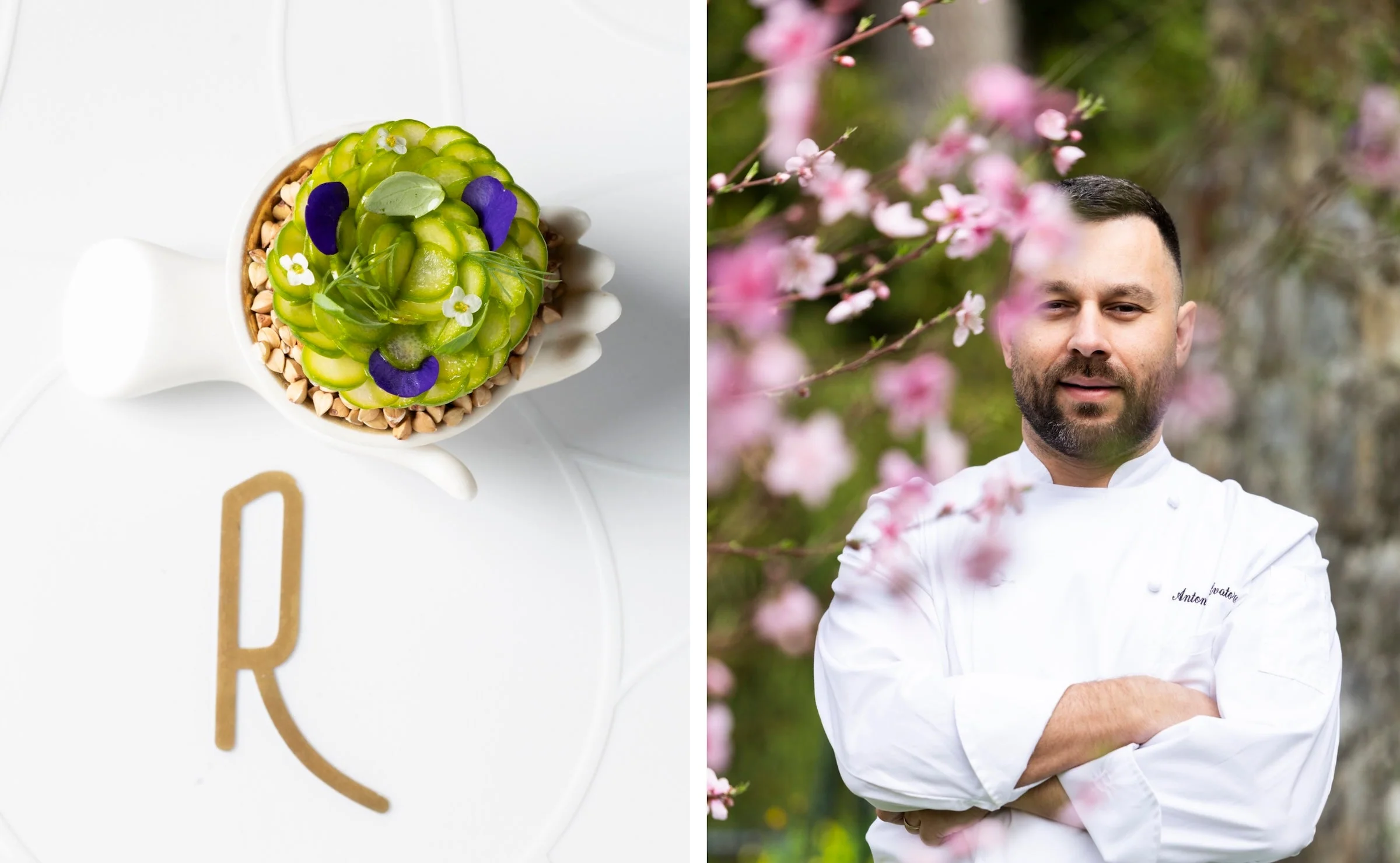
Chef Antonio Salvatore has unveiled a new spring menu at La Table D’Antonio Salvatore at Rampoldi Monaco, alongside a significant shift in how guests can experience his restaurant.

The change is straightforward: where the Michelin star restaurant previously offered a single preset tasting menu, guests can now choose how they eat. A full multi-course tasting menu of up to eight courses remains available for those who want complete immersion, but shorter options of two or three courses have been introduced alongside a full à la carte offering. The idea, Salvatore says, is that fine dining should not be a one-size-fits-all proposition.

A menu that announces itself before it begins

Even before the first course arrives, La Table D’Antonio Salvatore signals that this is something different. Each menu is hand-painted and numbered, delivered signed at the end of the meal as a keepsake — a detail that speaks to Salvatore’s deeply personal approach to hospitality. The olive oil on the table carries artwork commissioned by the chef himself, another quiet expression of a creative sensibility that runs through every element of the experience.

On the tasting menu, that creativity announces itself early. A delicate tartlette of parmesan, lemon and green asparagus sets the tone, before a theatrical Monaco egg — one of the kitchen’s signatures — raises the expectation for what’s to come.

Chef Antonio Salvatore’s signature egg makes the spring menu at his namesake Michelin star restaurant

Spring on the plate

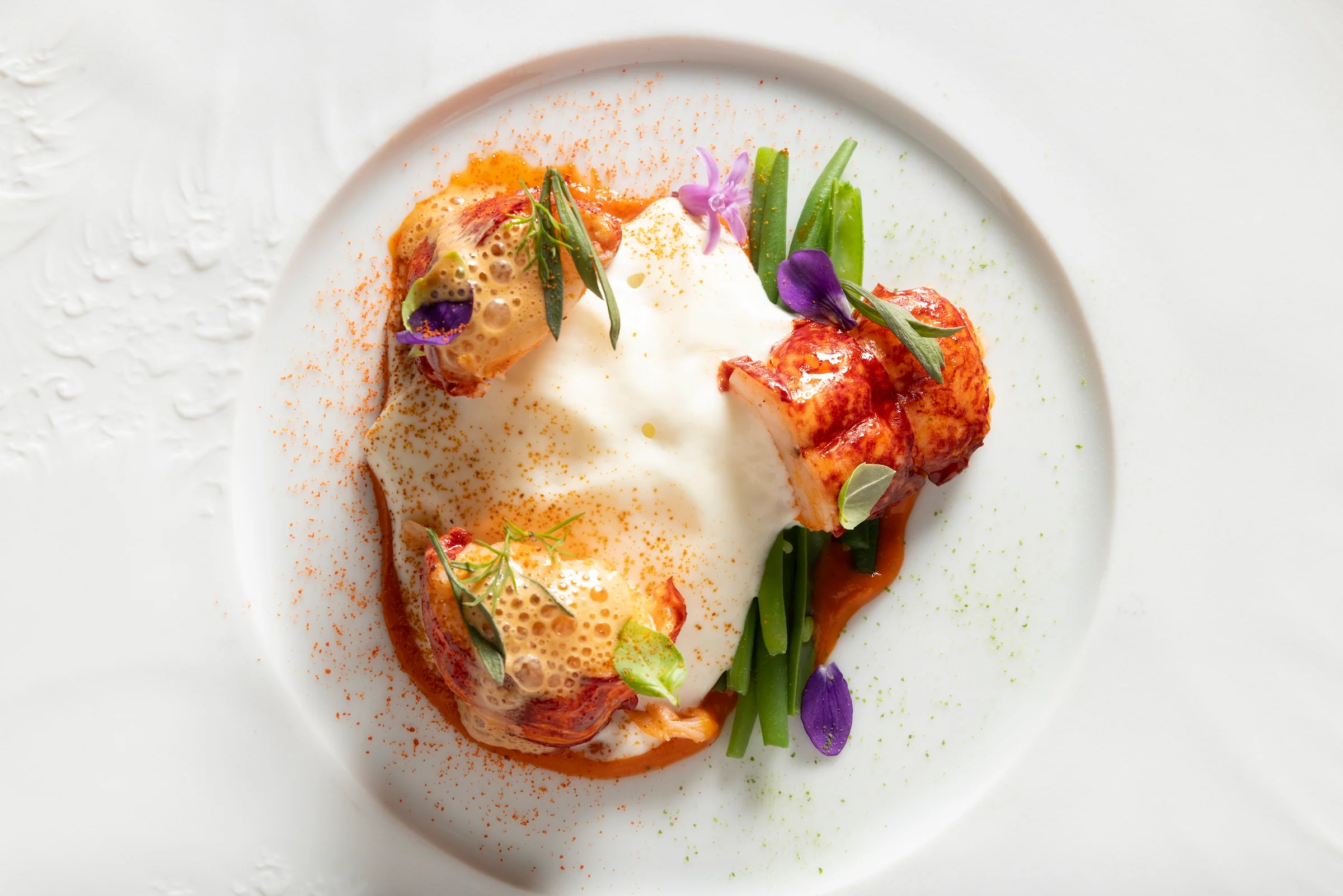
That expectation is well placed. What follows is a carefully proportioned journey through the season. Freshly churned butter arrives shaped and coloured as the Italian peninsula, divided into sections each carrying a different flavour — a playful, personal flourish that recalls the chef’s roots. Beef tartare topped with osciètre caviar gives way to ravioli filled with loup de mer, then a Breton lobster served alongside a provolone mousse, before the menu turns to a richly satisfying pigeon.

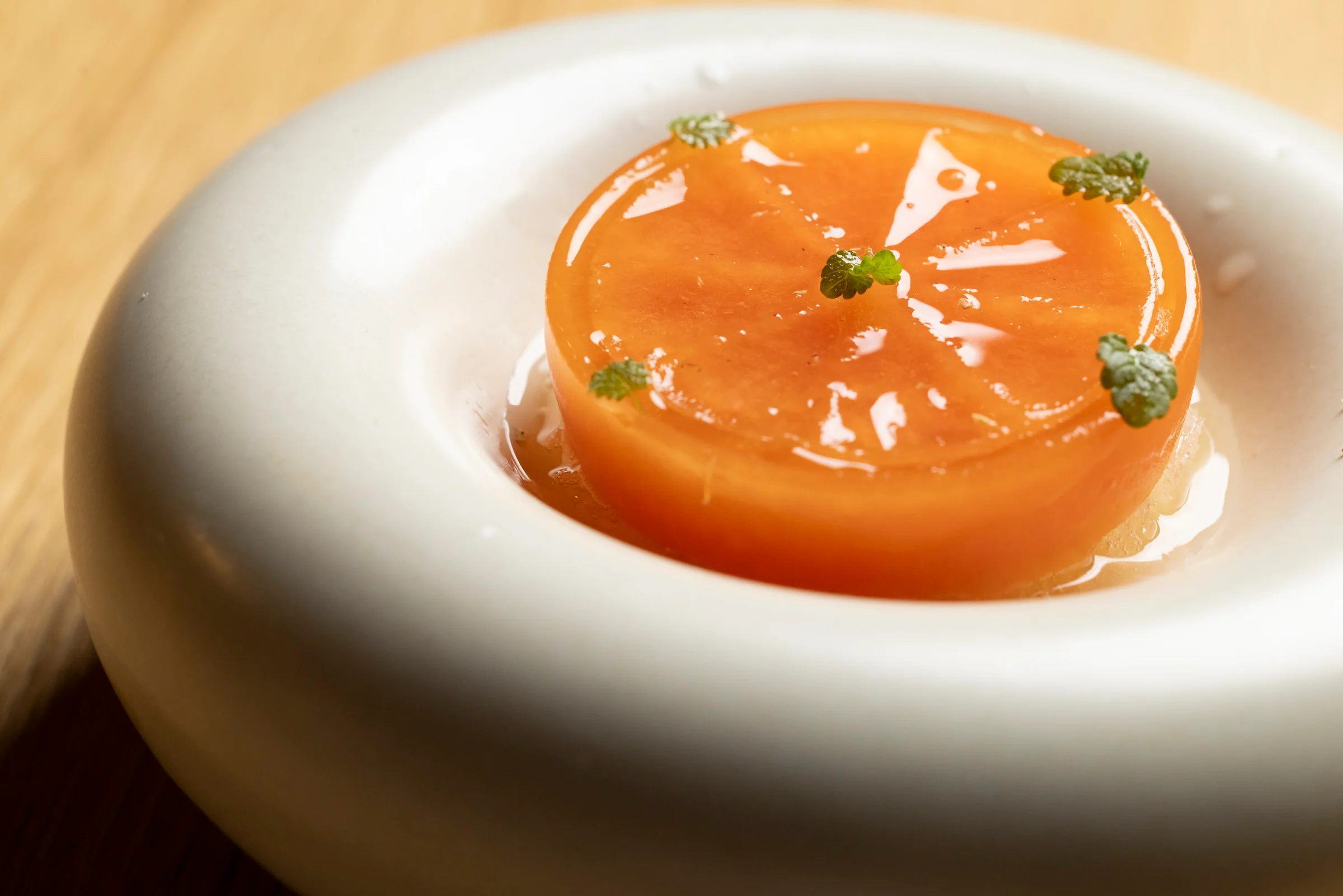
A citrus palate cleanser — lemon granita, arancia jelly and maraschino — cuts through beautifully before a final dessert of white chocolate mousse, lemon confit, citron jelly marshmallow and finger lime, delicate but unmistakably spring.

The menu’s centrepiece is a Menton lemon, which runs as a thread through multiple courses and reflects Salvatore’s broader philosophy: a contemporary Mediterranean cuisine built on absolute respect for local, seasonal produce at its peak.

The Breton lobster served alongside a provolone mousse

The signature finale

The meal ends with two of the restaurant’s most memorable flourishes. A chocolate globe arrives at the table with a small wooden hammer — guests are invited to smash it open enthusiastically.

Nearby, an all-chocolate structure styled as catacombs invites diners to reach into its crevices and retrieve an almond white chocolate surprise. Both are theatrical without being frivolous, and perfectly in keeping with a kitchen where imagination is as important as technique.

The delightful palette cleanser of arancia jelly and maraschino

A setting unlike any other in Monaco

La Table D’Antonio Salvatore occupies the basement of Rampoldi Monaco, a refined and serene space that feels entirely removed from the Principality above it. Tucked below street level, the room has a quiet intimacy that is genuinely rare in Monaco — and that, combined with Salvatore’s commitment to keeping the restaurant open almost year-round, makes it one of the most distinctive dining addresses in the Principality.

The restructured menu format — from a full eight-course tasting to shorter two or three-course options — is designed to bring that experience to a wider range of occasions and a younger, more international clientele, without compromising the standards that earned it its Michelin star.

The spring menu is now available at La Table D’Antonio Salvatore.

Stay updated with Monaco Life: sign up for our free newsletter, catch our podcast on Spotify, and follow us across Facebook,  Instagram, LinkedIn, and Tik Tok.

See also: 

Interview: Antonio Salvatore on 80 years of Rampoldi, the legend of Monte-Carlo, and why classics never die

All photo sourced from La Table d’Antonio Salvatore


Stan Wawrinka and Matteo Berrettini receive first wild cards for Rolex Monte-Carlo Masters

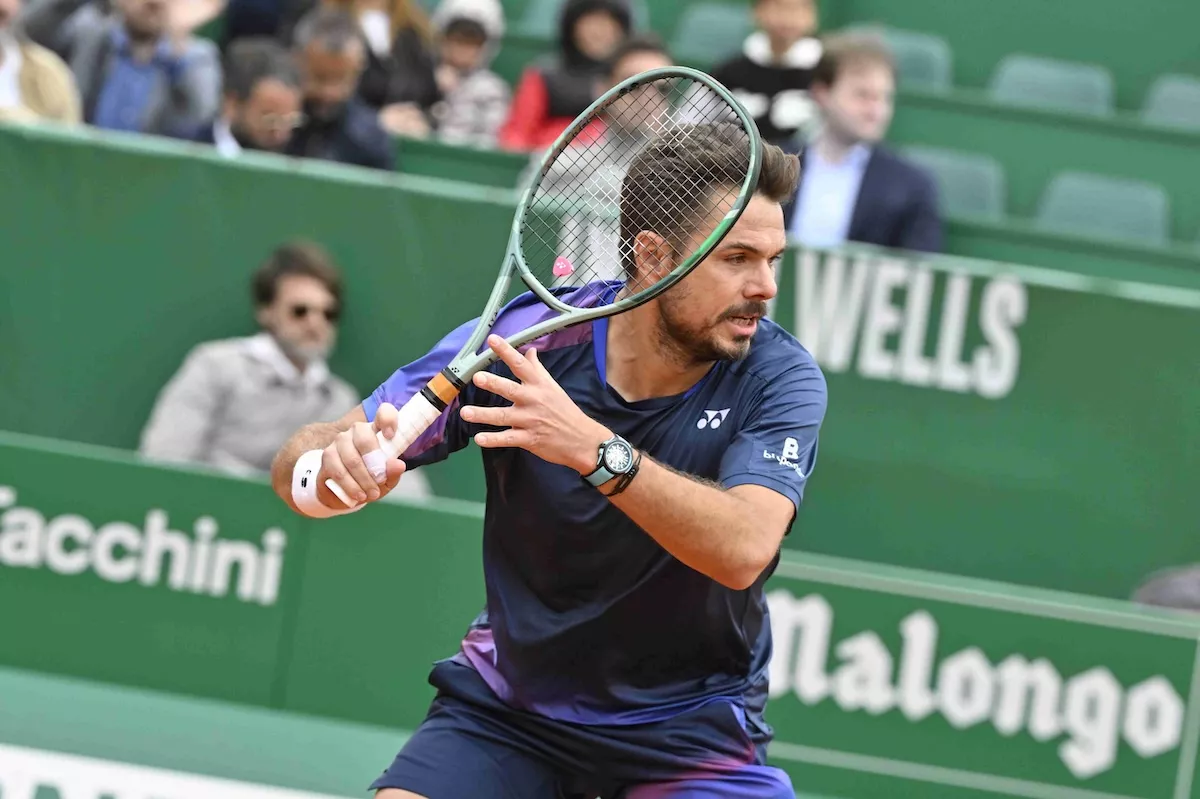
Stan Wawrinka and Matteo Berrettini have been awarded the first two wild cards for the singles main draw of the Rolex Monte-Carlo Masters, tournament organisers announced on Thursday 19th March, ahead of the 119th edition taking place from 4th to 12th April at the Monte-Carlo Country Club.

For Wawrinka, the appearance carries particular significance. The Swiss player, who turns 41 at the end of March, is playing his final season on tour having announced he will retire at the end of 2026. His return to Monte-Carlo forms part of a farewell tour that will resonate with the Monaco crowd, who watched him win the title here in 2014 with a memorable final victory over compatriot Roger Federer, 4-6, 7-6, 6-2.

A three-time Grand Slam champion, former world number three, Davis Cup winner and Olympic gold medallist in doubles, Wawrinka remains one of the most decorated players of his generation.

Berrettini eyes a return to form

Matteo Berrettini, the former Wimbledon finalist and one-time top ten player, is working his way back to his best level after a run of injury-disrupted seasons. His best result in Monte-Carlo is a round of 16 appearance, though his performance at last year’s edition stood out — defeating then world number two Alexander Zverev in the second round. Back on tour since February, the Italian will be able to count on strong support from his compatriots, who are well represented among the Monaco crowd each April.

Tournament Director David Massey said the two selections were designed to give spectators players capable of producing significant moments from the opening rounds. “Stan is an integral part of the tournament’s history, and his presence during his final season will undoubtedly be emotional. Matteo, meanwhile, represents a dynamic and exciting generation,” he said.

Two further wild cards for the singles main draw will be announced in the coming days, alongside four wild cards for the qualifying draw and three for the doubles.

Stay updated with Monaco Life: sign up for our free newsletter, catch our podcast on Spotify, and follow us across Facebook,  Instagram, LinkedIn, and Tik Tok.

Photo of Wawrinka, credit: C. Caillaud