

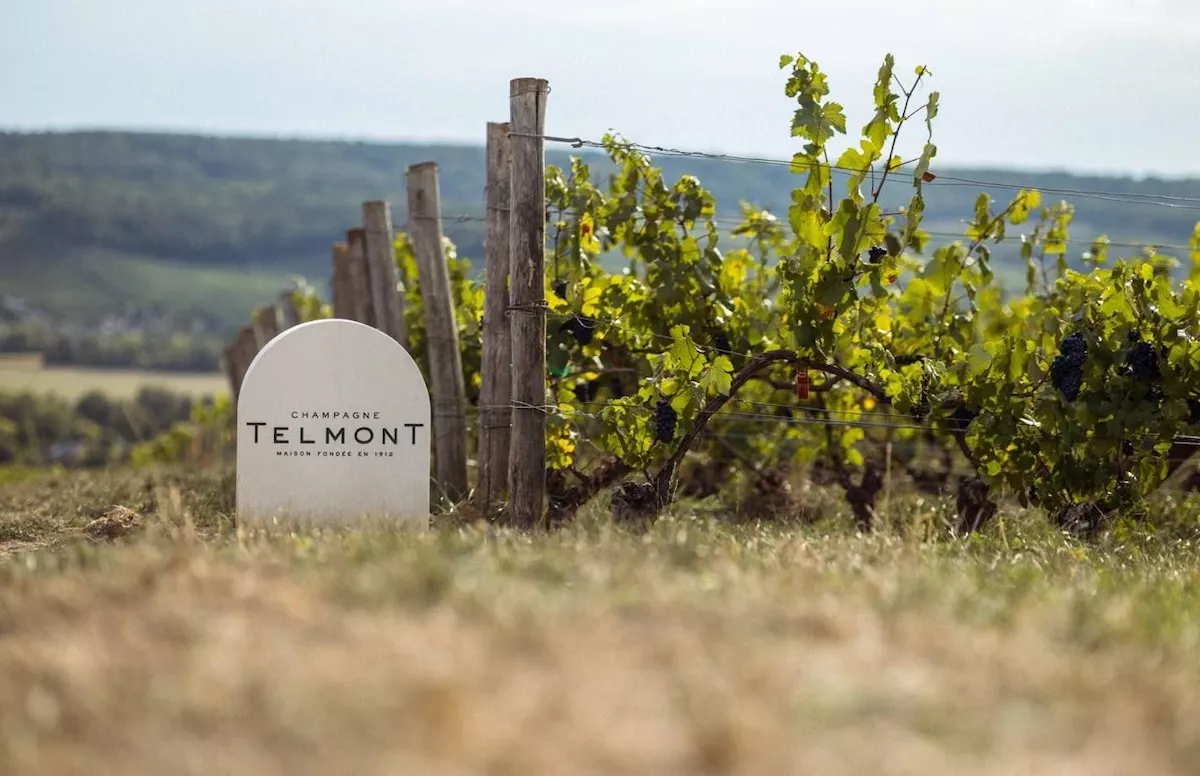
In a sector steeped in tradition, few people are asking harder questions about how Champagne should be made than Ludovic du Plessis. As president of Maison Telmont — now the first Champagne house in the world to achieve Regenerative Organic Certified (ROC) status — he has spent five years dismantling assumptions about what luxury wine can and should look like. Monaco Life’s Editor in Chief Cassandra Tanti caught up with him to understand what that journey has involved, and where it is heading.
Champagne has never been an industry in a hurry to change. Its rules, its rituals and its resistance to outside ideas are part of what gives it authority — which makes what Telmont is doing all the more striking. The ROC bronze certification, awarded after months of rigorous audits by Ecocert Environnement, places the house well outside the mainstream of a region where organic farming alone remains the exception rather than the rule. For Ludovic du Plessis, it is not simply another sustainability credential. It is part of a broader transformation designed to rethink how Champagne is grown, produced, packaged and shipped.
A sleeping beauty with a radical future
Du Plessis arrived at Telmont in 2020 after senior roles at Dom Pérignon, Moët & Chandon and Louis XIII cognac. He was looking for something specific: a luxury brand that could actively contribute to tackling climate change.
“I told myself, I really want to do business for good — to allow myself every morning, every day, every night, to do something that helps fight climate change,” he recalls.
He went looking for a house with four qualities: a compelling history, family ownership, exceptional wines, and vineyards already transitioning to organic farming. Telmont, founded shortly after the Champagne Revolution of 1912, met all four. It was also almost entirely unknown.
“This Champagne house was a sleeping beauty,” he says. “In Champagne you hear about everybody, but you never heard about this one.”
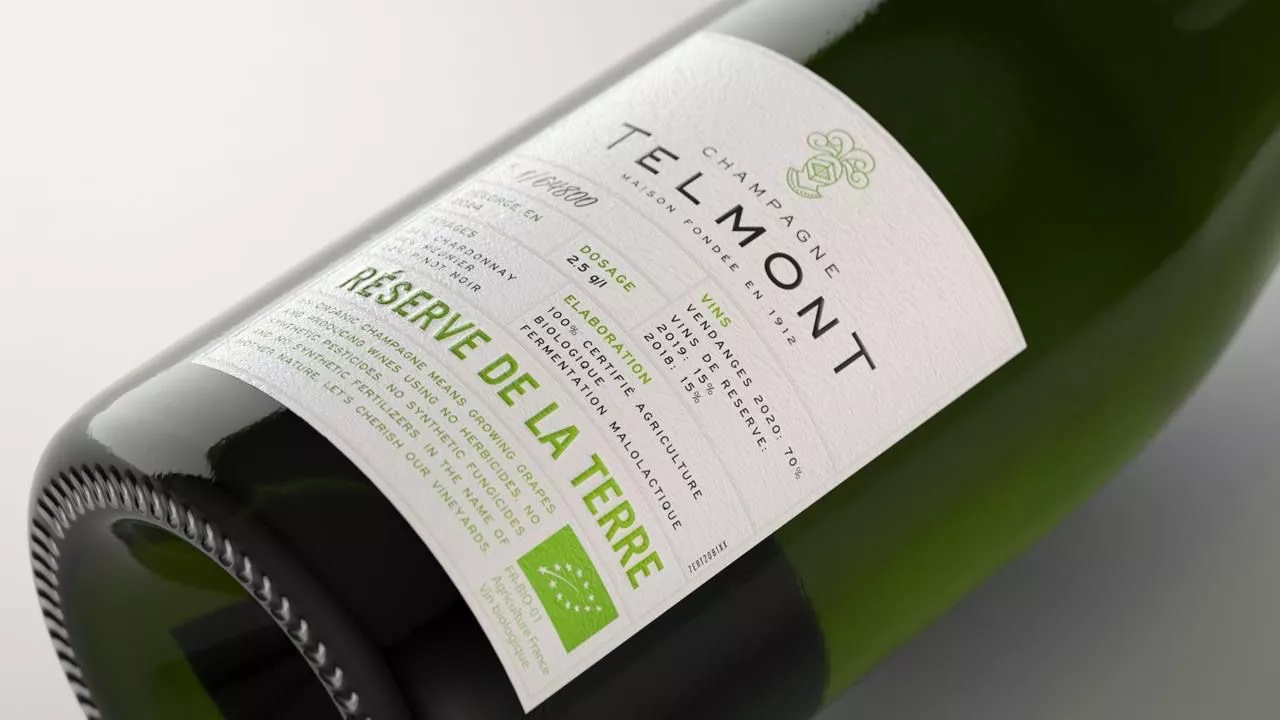
The project he launched in 2021, under the banner ‘In the Name of Mother Nature’ (Au Nom de la Terre), set out to convert 100% of the estate and partner vineyards to organic and regenerative agriculture by 2031, with net-zero emissions targeted by 2050.
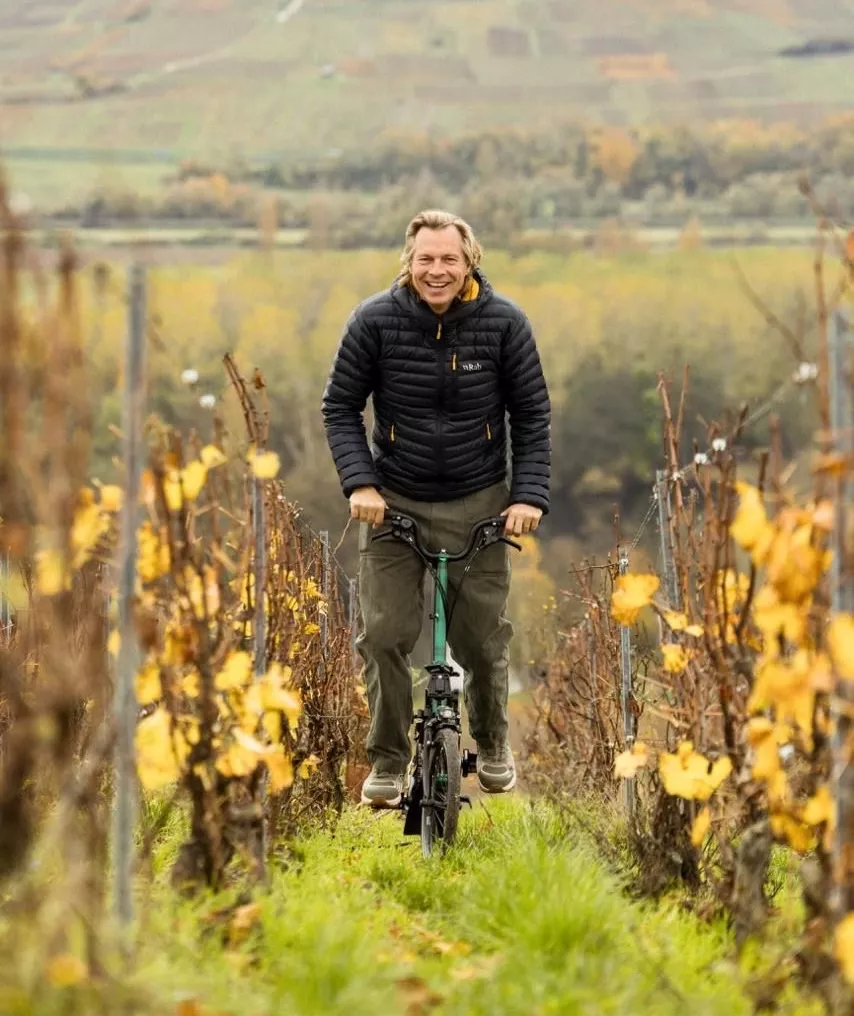
Regeneration begins with organic farming
The ROC certification — created in 2017 by the Regenerative Organic Alliance, whose founding members include the Rodale Institute, Patagonia and Dr. Bronner’s — sets organic farming as a baseline requirement and adds strict criteria for soil health, biodiversity and fair labour practices.
For du Plessis, the sequence matters. “Today, everybody talks about biodiversity and regenerative agriculture,” he says. “My view is simple: first become organic. Stop herbicides and chemical fertilisers. That is step number one.”
The reasoning is straightforward. “If you are not organic, how can you claim to be regenerative? It doesn’t make sense.”
Nearly all of Telmont’s estate vineyards are now organic, and roughly three-quarters of its partner growers have adopted the same practices — significant in Champagne, where houses depend heavily on fruit sourced from independent farmers. Telmont’s vineyards now incorporate cover crops, hedgerows and biodiversity corridors, alongside water management systems and ongoing monitoring of soil health.
The transition carries a commercial cost. Organic yields are lower, sometimes considerably so. “Some years we have 10% to 30% less quantity compared with conventional vineyards,” du Plessis says. “That’s why today we pay our winegrower partners 25–30% more for their grapes, to cover that loss when it occurs.”
Reinventing the bottle
Farming is only part of the equation. Du Plessis has gone after the carbon footprint of the bottle itself, starting with the gift box — a fixture of the luxury Champagne market that he eliminated entirely.
“The best packaging is no packaging,” he says.
Removing presentation boxes cut the carbon footprint of each bottle by around 8%. The bottle itself followed. Champagne glass is heavy by necessity — the pressure inside demands it — and glass accounts for roughly 30% of a house’s total emissions. Working with manufacturer Verallia, Telmont developed an 800-gram bottle, lighter than the 835-gram industry standard, while keeping the same geometry so existing bottling lines remain usable.
“There is no patent,” du Plessis says. “Any Champagne house can use it tomorrow morning and immediately reduce their emissions.”
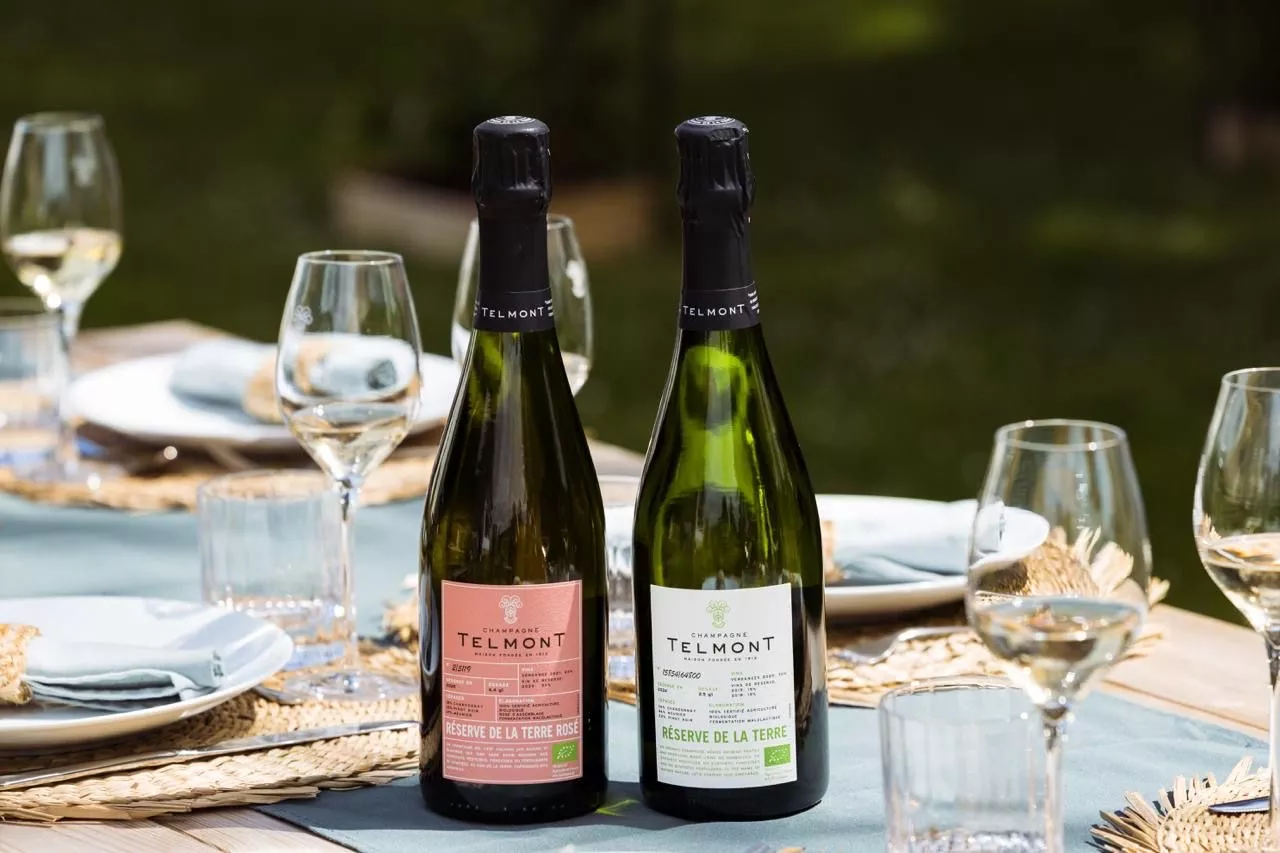
The house has also moved entirely to green glass, which contains up to 87% recycled material, abandoning the clear bottles previously used for rosé and Blanc de Blancs. A project called ‘113 Shades of Green’ allows the house to have flexibility in the precise shade used, avoiding waste when glass manufacturers change batches to adapt to each client.
“It’s just packaging,” he says. “What matters is the wine inside.”
Air freight has also been stopped, with a recent shipment to the United States travelling by sailing cargo vessel instead.
The DiCaprio factor
In 2022, Leonardo DiCaprio became an investor. Du Plessis says he approached his long-time friend specifically because of his public engagement with climate change, and describes him as someone who had already been encouraging his environmental thinking long before Telmont was discussed — recommending documentaries and climate research that eventually fed into the house’s strategy.
“I asked Leonardo to become an investor because he really is a geek when it comes to fighting climate change,” du Plessis says.
DiCaprio has described the certification as “a major achievement for Telmont and for Champagne as a whole”.
Drink less, but better
Champagne is a conservative industry, and du Plessis is under no illusion that the wider sector will move quickly. But he sees consumer behaviour already changing, particularly among younger drinkers.
“Everybody’s talking about it. Something is happening,” he says. “There’s a movement today: drink less, but better. We are not racing after volume. It’s a race after quality.”
He also makes a sensory argument, not just an ethical one. Organic viticulture, he believes, produces wines with a different quality of energy — one that shows in the glass.
“Organic grapes give energy, radiance, harmony, serenity. It’s like a wave on your palate — the wine is alive.”
He is measured about where Telmont currently stands. “The Telmont project is not perfect. We are trying things.” The 2031 conversion target and the 2050 net-zero commitment still lie ahead. Early commercial results, however, suggest the direction is right.
“At the end of the day, it will always come back to one thing,” he says, “the wine is great because the earth is beautiful.”
Stay updated with Monaco Life: sign up for our free newsletter, catch our podcast on Spotify, and follow us across Facebook, Instagram, LinkedIn, and Tik Tok.
All photos provided by Telmont