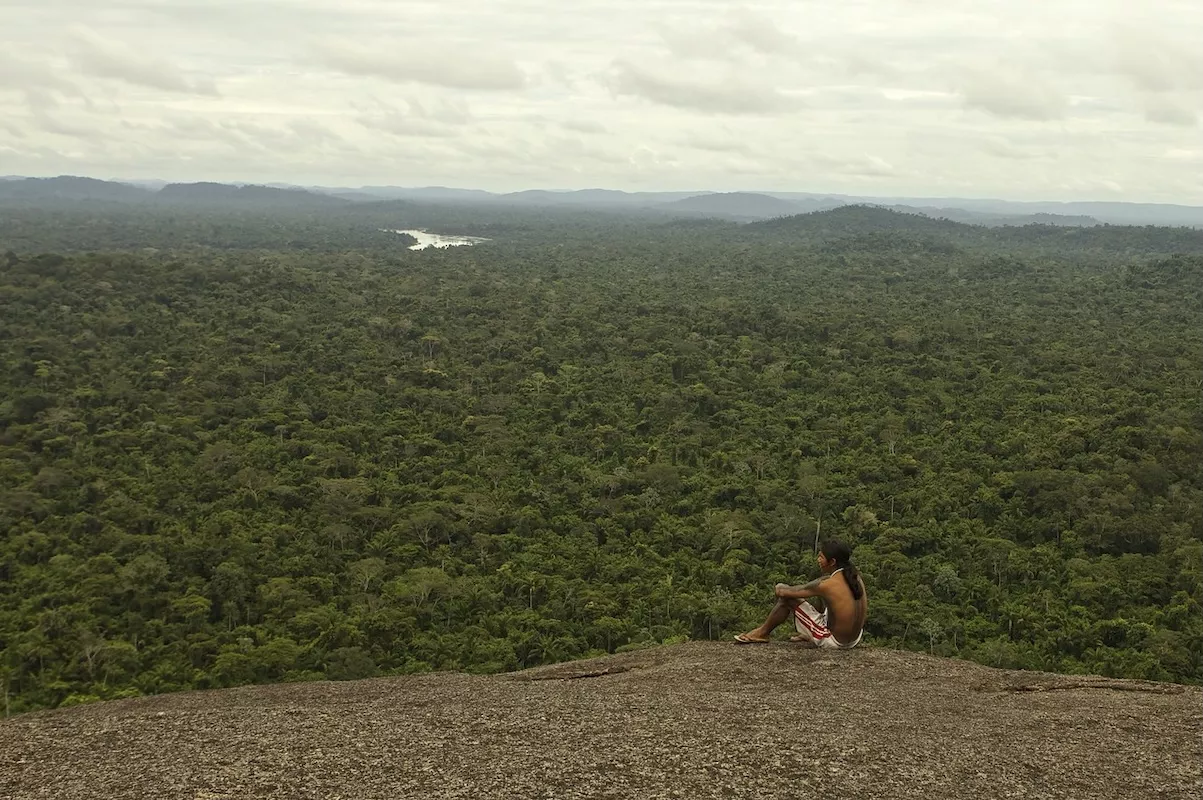
Prince Albert II Foundation launches three new forest conservation partnerships ahead of International Day of Forests

The Prince Albert II of Monaco Foundation has announced three new partnerships to support forest conservation and Indigenous communities in the Amazon, Southeast Asia and the Congo Basin, ahead of the United Nations’ International Day of Forests on 21st March.

The collaborations form part of the Foundation’s Forests and Communities Initiative (FCI), which directs support to Indigenous Peoples and Local Communities (IPLCs) as frontline guardians of forest ecosystems.

The Amazon: protecting 9.4 million hectares

In Brazil, the Foundation is partnering with the Mebêngôkre-Kayapo-led Associação Floresta Protegida to support the Kayapo Project, which safeguards 9.4 million hectares of tropical forest across six Indigenous Territories in south-central Pará and northern Mato Grosso. Running from 2026 to 2028, the partnership will strengthen the Kayapo Forest School — which trains the next generation of Indigenous leaders by combining traditional knowledge with conservation technologies — and a territorial monitoring programme supporting more than 1,500 Kayapo guardians protecting over 2,200 kilometres of territorial borders.

Patkore Kayapo, President of Associação Floresta Protegida, said the initiative would provide essential support for the protection of Kayapo culture, rivers, lands and biodiversity. “The partnership reinforces durable Indigenous governance and autonomy,” he said.

The Congo Basin: community resilience in the DRC

In the Democratic Republic of Congo, the Foundation is partnering with the Centre for Innovative Technologies and Sustainable Development to implement the PRC-PROZAC project in Equateur Province. The 2026-2028 project will support communities in Bolomba, Basankusu and Mbandaka through reforestation, sustainable agroforestry and income-generating activities designed to reduce pressure on forest ecosystems while improving local livelihoods.

TrĂ©sor Bondjembo, Executive Director of CTIDD, described the project as an opportunity to demonstrate that local communities can be placed at the heart of forest conservation and natural resource governance. “This partnership represents a significant responsibility for CTIDD: to demonstrate our commitment to sharing our expertise in support of a just cause — the fight against climate change,” he said.

Southeast Asia: flexible support for 25 community-led initiatives

In Southeast Asia, the Foundation is partnering with the Samdhana Institute to implement the CLENCHED project across the Philippines, Indonesia, Thailand and Cambodia. The initiative will provide flexible grants to 25 Indigenous and community-led projects focused on forest conservation, biodiversity protection and tenure security, with a particular emphasis on strengthening the capacity of women, youth and marginalised groups.

Erwin Quinones, Deputy Executive Director for Philippines and Mekong Operations at the Samdhana Institute, welcomed the partnership as an avenue to support community-led conservation and human rights defence across the region.

Romain Ciarlet, Vice-Chairman and CEO of the Prince Albert II of Monaco Foundation, said the initiative was grounded in the understanding that those who have protected forests for generations must be at the centre of any credible conservation response. “Indigenous peoples are not only guardians of biodiversity; they are key actors in the global response to climate and environmental challenges,” he said.

Stay updated with Monaco Life: sign up for our free newsletter, catch our podcast on Spotify, and follow us across Facebook,  Instagram, LinkedIn, and Tik Tok.

Photo: Kayapo landscape, credit: Simone Giovine
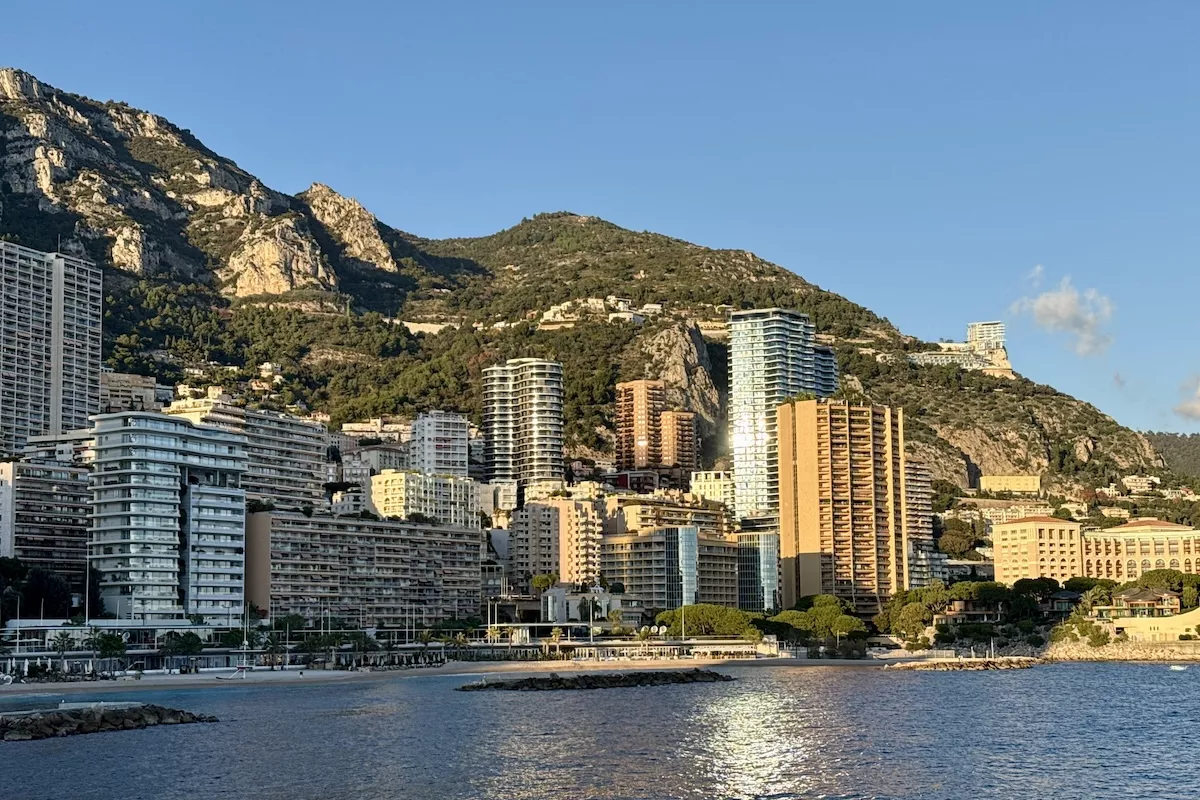
 

Monaco’s outstanding tax bill hits €291 million, figures reveal

More than €291 million in outstanding tax contributions remained uncollected at the end of 2024, according to the 2025 Annual Public Report of the Commission Supérieure des Comptes, presented to Prince Albert II on 16th March.

The figure, which represents unpaid contributions — primarily VAT and corporate tax — was described by the Commission as remaining at an elevated level, rising slightly by 1% compared to the previous year. Corporate tax arrears alone stood at €88.2 million, also up 1%, while outstanding VAT climbed 1.3% to €180.8 million. Together, these two categories account for 93.1% of the total outstanding contributions.

Forecasting methods under scrutiny

The Commission did not attribute the arrears to any single cause, but raised questions about the methods used to forecast tax revenues. While describing Monaco’s approach as prudent and broadly reliable, it noted that predictions would benefit from greater refinement — specifically through a more rigorous assessment of how tax revenues respond to changes in key economic variables. Improving what it called the “elasticity” of revenue forecasts against macroeconomic indicators would, the Commission suggested, produce more accurate budgetary planning.

Legal transaction arrears stable

Unpaid revenues from legal transactions — covering property transfers and other civil acts — remained stable at €22.4 million, representing a smaller but still notable share of outstanding receipts in that category.

A pattern of underpayment across the real estate domain

The report also flags a separate but related issue in the state’s real estate domain. Outstanding receivables from the immovable property domain — primarily unpaid rents — have been rising for eight consecutive years and exceeded €13.5 million at the end of 2024, of which €10.9 million related to rent arrears alone.

Commission’s recommendation

The Commission does not propose specific reforms to collection mechanisms, but highlights the importance of refining revenue forecasting methods. In particular, it recommends improving the assessment of how tax revenues evolve in relation to macroeconomic variables, with a view to strengthening overall budgetary accuracy and financial oversight.

Stay updated with Monaco Life: sign up for our free newsletter, catch our podcast on Spotify, and follow us across Facebook,  Instagram, LinkedIn, and Tik Tok.

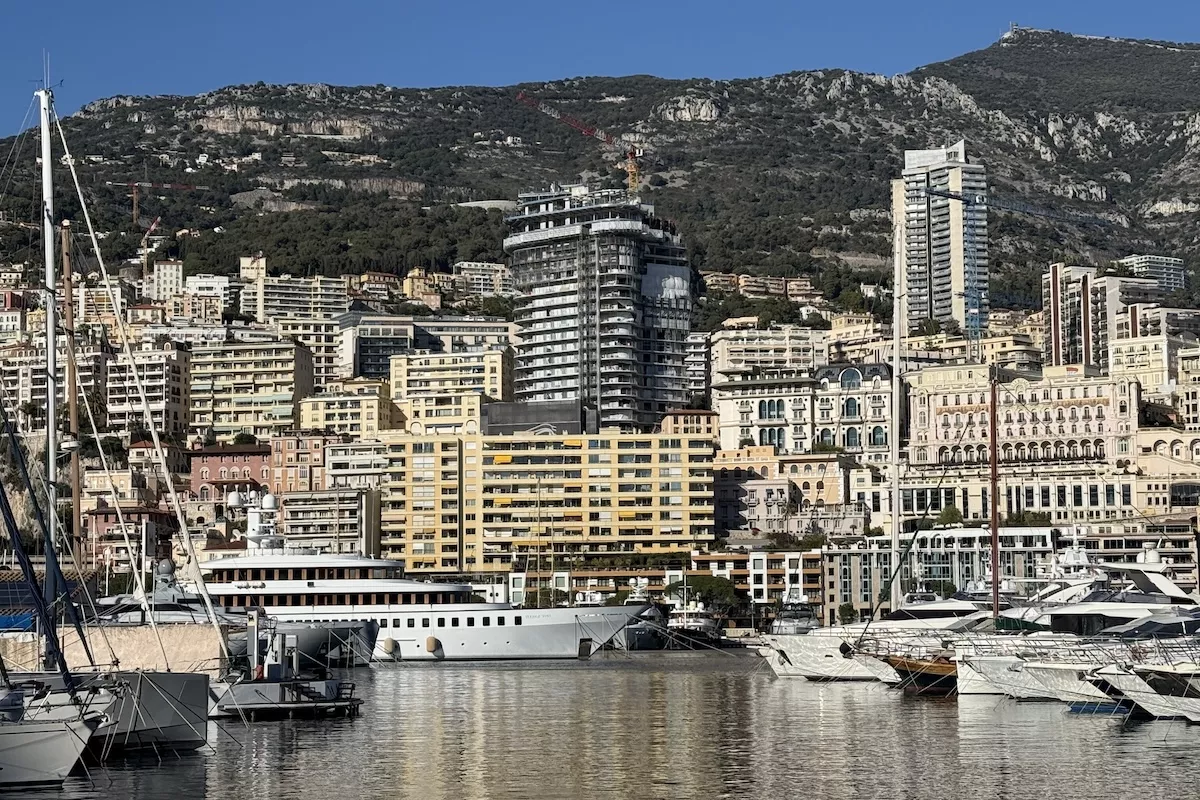
Photo credit: Cassandra Tanti


Monaco posts third best year on record despite €1.6 billion revenue drop

Monaco’s total revenue fell by €1.6 billion in 2025, a drop of 7.6% compared to the previous year, according to the latest quarterly report published by IMSEE on Wednesday 18th March. Despite the decline, the Principality’s total revenue — excluding financial and insurance activities — reached €19.9 billion, the third highest figure ever recorded.

IMSEE attributed the fall primarily to two economic sectors whose results were significantly affected by the completion of major projects.

Construction and professional services weigh on results

Construction saw the sharpest contraction, with revenue falling by nearly €1 billion, a decline of 36.1%, following three exceptional years of activity. Residential and non-residential building construction accounted for the bulk of that fall, contracting by €771.7 million.

Professional, scientific and technical activities also posted a significant decline, falling by more than €600 million, or 17.3%. Specialised consulting activities were the main drag, down €469.8 million, with quantity surveyors particularly affected. Activities of head offices declined by more than €100 million through one entity.

Wholesale trade recorded a decrease of €168.7 million, or 3.1%, driven by petroleum product traders, which fell €205.3 million, and non-specialised wholesale of food, beverages and tobacco, which dropped €111.4 million. Both industry and real estate lost nearly €60 million each compared to the previous year.

Retail, hospitality and leisure provide upside

Not all sectors moved in the same direction. Retail trade posted the strongest growth of any sector, rising by more than €140 million, or 6.1%. Cultural and leisure goods led the way, up €45.2 million, followed by motor vehicles, which grew by €37 million, and clothing, which added €24.8 million.

Arts, sports and recreation recorded growth of €86.6 million, an increase of 8.5%, while accommodation and food service activities rose by €67.6 million, or 6.3% — a result consistent with Monaco’s continued strength as a high-end hospitality destination.

IMSEE noted that despite the overall decline, the Principality’s revenue base remains at a historically elevated level, with the 2025 figure representing its third highest total on record.

Stay updated with Monaco Life: sign up for our free newsletter, catch our podcast on Spotify, and follow us across Facebook,  Instagram, LinkedIn, and Tik Tok.

Photo credit: Cassandra Tanti 

Prince Albert opens Italy-Monaco entrepreneurial forum as bilateral ties strengthen

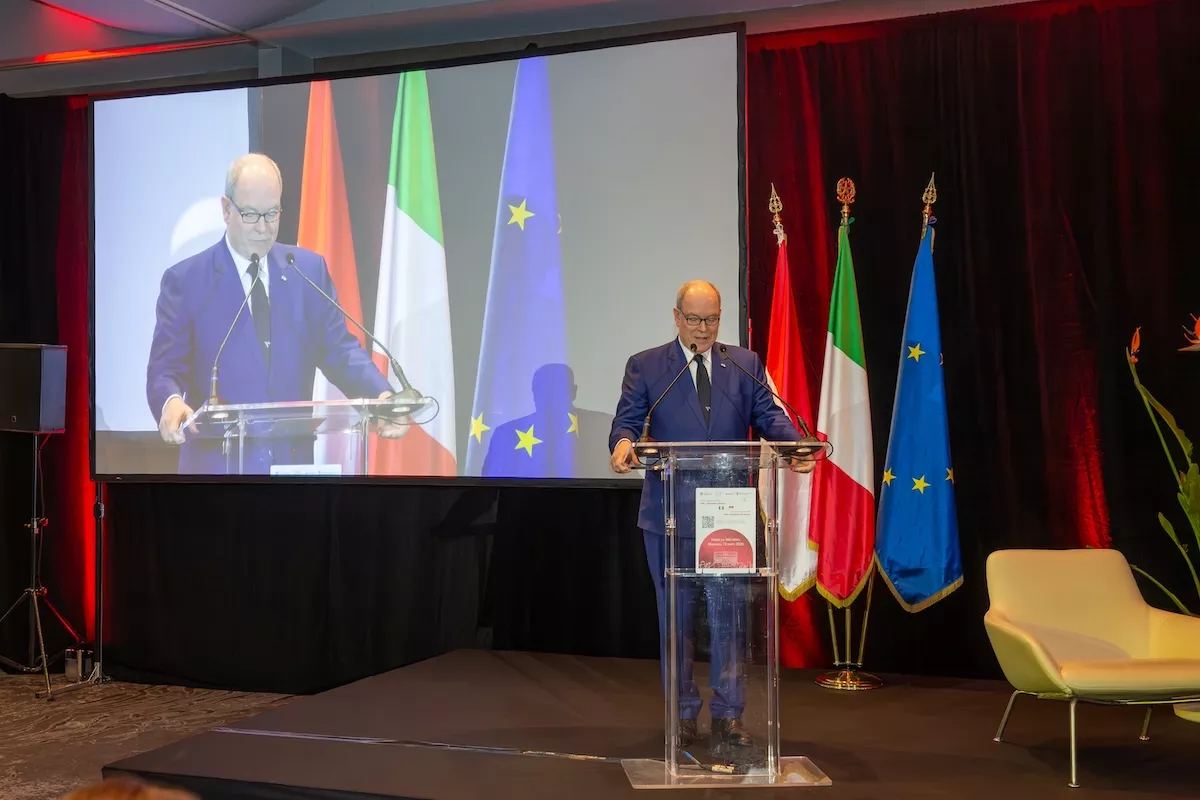
Prince Albert II joined Italian and Monégasque business leaders at the Hôtel Le Méridien Beach Plaza on Friday 13th March for the inaugural Italy-Principality of Monaco Entrepreneurial Forum, an event that drew representatives from more than 200 companies and underscored the deepening commercial ties between the two countries.

The forum was opened by Prince Albert II and Italian Deputy Prime Minister and Foreign Minister Antonio Tajani, who participated via video link from Rome after being unable to travel to Monaco following an attack on an Italian military base in Erbil, Kurdistan, on Thursday. In his address, Tajani highlighted the strength of economic integration between the two countries, pointing to Italian exports reaching €643 billion in 2025, a rise of 3.3%.

Monaco’s Minister of Finance and the Economy, Pierre-AndrĂ© Chiappori, outlined the state of the MonĂ©gasque economy, noting that GDP has reached €10.28 billion, an increase of 8.8%, and highlighted the significant flow of trade and the presence of Italian businesses and workers in the Principality. Italian Vice-Minister of Foreign Affairs Maria Tripodi described Monaco as an extraordinary international showcase, noting that around 2,500 companies linked to Italian citizens operate on MonĂ©gasque territory.

Institutional speakers

The institutional portion of the programme also featured Barbara Cimmino, Vice-President of Confindustria; Matteo Zoppas, President of the ICE Italian Trade Agency; and Manuela Ruosi, Italian Ambassador to Monaco.

The plenary session, themed around innovation and sustainability in the Italy-Monaco economic partnership, brought together Ludmilla Raconnat Le Goff, Monaco’s Delegate for Attractiveness, alongside representatives from Cassa Depositi e Prestiti, Simest and SACE.

Sector panels

The afternoon session moved into four sector panels covering areas of strategic interest to both countries. The first examined Italian luxury excellence in Monaco, with a focus on interior architecture, jewellery and fashion. A second panel addressed tourism, hotels and restaurants. The third explored the yachting economy, in which Italy and Monaco are closely intertwined, with contributions from Palumbo Superyacht and Monaco Yacht Temptation. The final panel covered the financial sector, including private equity and family office, with speakers from EFG Bank Monaco and CMB.

Working lunches and B2B meetings between attending companies followed the morning programme.

The forum was organised by the Italian Embassy in Monaco and promoted by Italy’s Ministry of Foreign Affairs in collaboration with the ITA Italian Trade Agency, the Prince’s Government and Confindustria Imperia.

Stay updated with Monaco Life: sign up for our free newsletter, catch our podcast on Spotify, and follow us across Facebook,  Instagram, LinkedIn, and Tik Tok.

Photo credit: Andrea Cabiale

Espresso Riviera night train cancelled for summer 2026

Travellers hoping to wake up to views of the Mediterranean coastline this summer have been served with disappointment.

FS Treni Turistici Italiani, the tourism arm of Italy’s state railway group, has confirmed that its popular Espresso Riviera night train will not run in 2026 — despite strong demand and a sell-out debut season just last year.

The service, which connected Rome with Marseille via Nice and Monaco, has been suspended due to that the company describes as “operational limitations at the Ventimiglia border”.

Behind the scenes, running an international train involves significant complexity. To operate in France, a train requires a locomotive compatible with the French network and drivers authorised to drive on it, conditions that have proven impossible to meet this year.

A promising start, now on hold

The Espresso Riviera first ran in 2024 as Nice-Milan service, though the debut was not without its own difficulties. Back then, the planned stop at Monaco had to be cancelled at the last minute due to concerns over diesel emissions in the station’s underground ventilation system.

However, the issue was resolved, and by 2025 the train added Monaco as part of its expanded Rome-Marseille route.

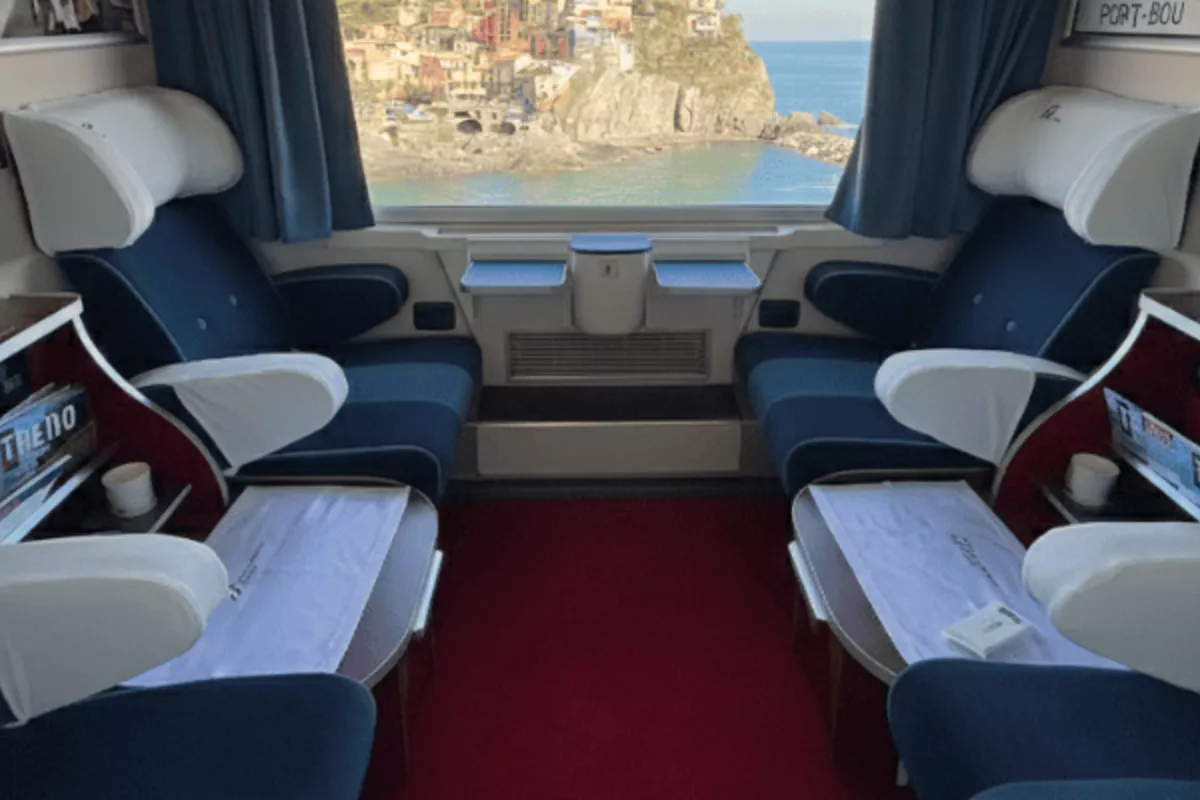
That 2025 service, which offered passengers retro-style shared couchettes and private cabins, sold out across all nine weekends it ran between July and August, carrying more than 3,500 passengers.

Until a few days ago, it has been expected to return bigger than ever, with more departures and a longer season running from June to September.

What happens now

FS Treni Turistici Italiani says it is working with partners to bring the service back, though no timeline has been given. The company has directly contacted customers who had already reached out to its service team. For now, the platforms of Nice, Monaco and Marseille will have to wait — and so will the passengers who were counting on arriving there in style

Stay updated with Monaco Life: sign up for our free newsletter, catch our podcast on Spotify, and follow us across Facebook,  Instagram, LinkedIn, and Tik Tok.

Main photo credit: FS Treni Turistici Italiani

Road closures and parking restrictions in place for Monaco’s 51st Cycling Criterium

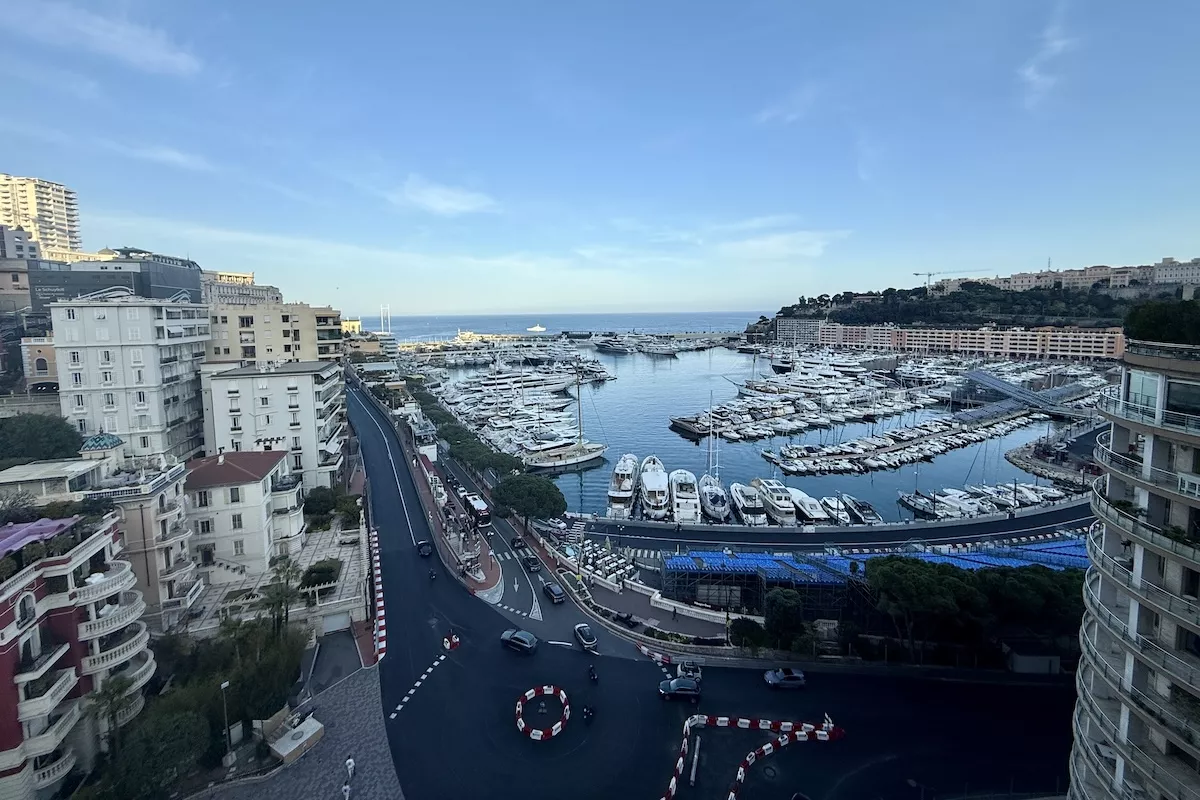
Port Hercule will host the 51st Critérium Cycliste de Monaco on Sunday 22nd March, with the race route running through route de la Piscine, avenue J.F. Kennedy and boulevard Albert Ier. A village for the event will be set up on quai Albert Ier.

The Prince’s Government has announced the following road and parking restrictions in connection with the event.

Road closures

From Saturday 21st March at 23:00 until Sunday 22nd March at 18:30, traffic on boulevard Albert Ier will be restricted to the service road only, and the uphill lanes of quai Antoine Ier between route de la Piscine and boulevard Albert Ier will be closed entirely.

On Sunday 22nd March from 06:30 to 18:30, the following roads will be closed to traffic: the darse Sud, route de la Piscine, avenue J.F. Kennedy, and quai des États-Unis between the restricted access zone and its junction with route de la Piscine. A one-way system will also be in operation from the start of quai Antoine Ier, after the Rocher Noghès tunnel, through to the esplanade des pêcheurs.

Parking restrictions

From Saturday 21st March at 23:00 until Sunday 22nd March at 18:30, parking will be prohibited on quai Antoine Ier between the Rocher-Noghès tunnel and the quai Antoine Ier car park, the entirety of boulevard Albert Ier, route de la Piscine, appontement Jules Soccal, the darse Sud, virage Louis Chiron, and quai des États-Unis between the restricted access zone and its junction with route de la Piscine.

Bus services

On Sunday 22nd March from 06:30 to 18:30, CAM urban bus services will be affected. The Stade Nautique and Princesse Antoinette stops will operate in-lane rather than at their usual positions. Line 1 will be diverted via rue Grimaldi and the Dorsale, rejoining its normal route at the Portier stop. The Kennedy and Auditorium Rainier III stops will not be served during this period.

Stay updated with Monaco Life: sign up for our free newsletter, catch our podcast on Spotify, and follow us across Facebook,  Instagram, LinkedIn, and Tik Tok.

Photo credit: Cassandra TantiÂ