From the Palace Balcony to the Stade Louis II: Pope Leo XIV makes history in Monaco

Pope Leo XIV arrived Saturday morning in the Principality, welcomed by Prince Albert II, Princess Charlène and thousands of faithful who had filled the streets of the Rock since the early hours. 

By 8am, the Palace Square and the narrow streets of the old town were already alive with anticipation. When Prince Albert and Princess Charlène departed for the heliport to receive their guest, the crowds had swelled to fill every vantage point along the route the Pontiff would later travel.

He touched down by helicopter at 9am, and as soon as he stepped onto Monegasque soil, he was greeted by the Prince and Princess as 21 cannon shots rang out from Fort Antoine.
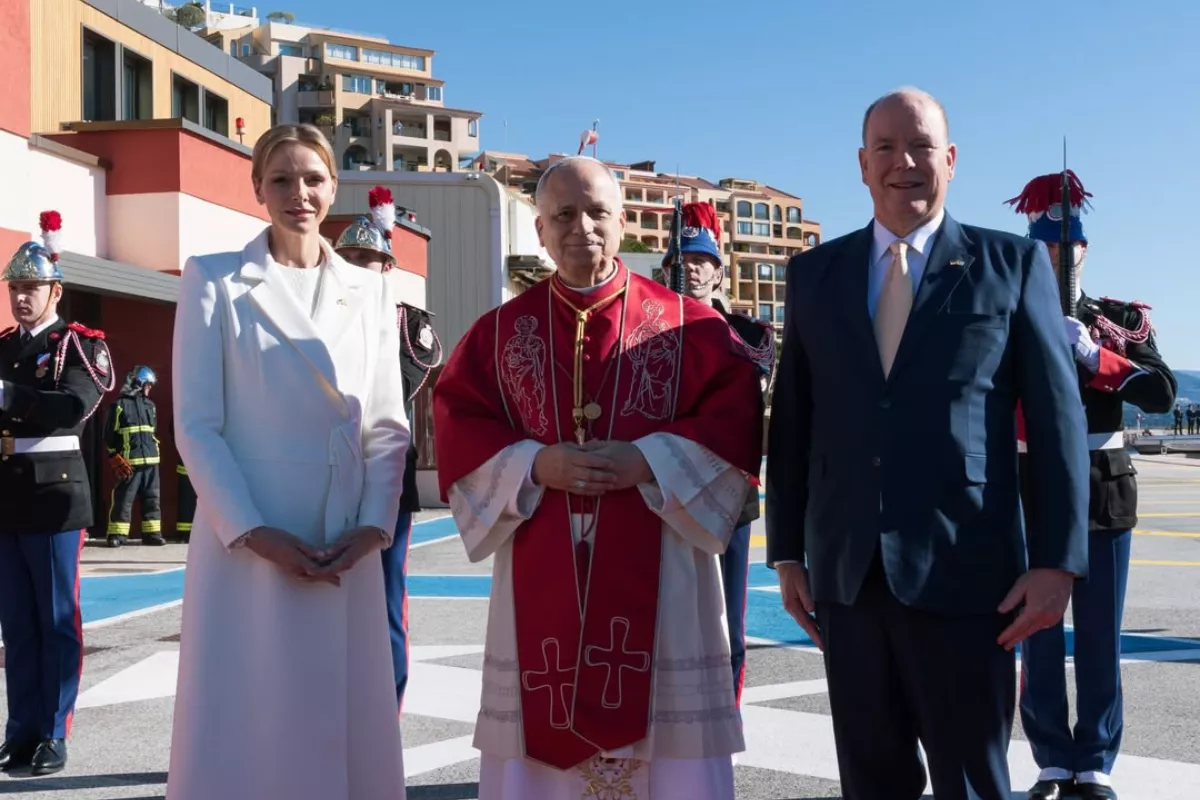
Prince Abert II and Princess Charlène receiving Pope Leo XIV after he touched down in Monaco, photo credit: Sarah Steck, Prince’s Palace

Then, the official welcome ceremony took place in the Cour d’Honneur of the Princely Palace, where Prince Albert II, Princess Charlène, Hereditary Prince Jacques and Princess Gabriella received the Holy Father.

Military honours were rendered by two sections of carabiniers, a section of firefighters and the carabiniers’ orchestra under Colonel Tony Varo, before the Prince and the Pope reviewed the detachment together.

The two heads of state then met privately in the Family Drawing Room, covering shared priorities including environmental peace and solidarity.
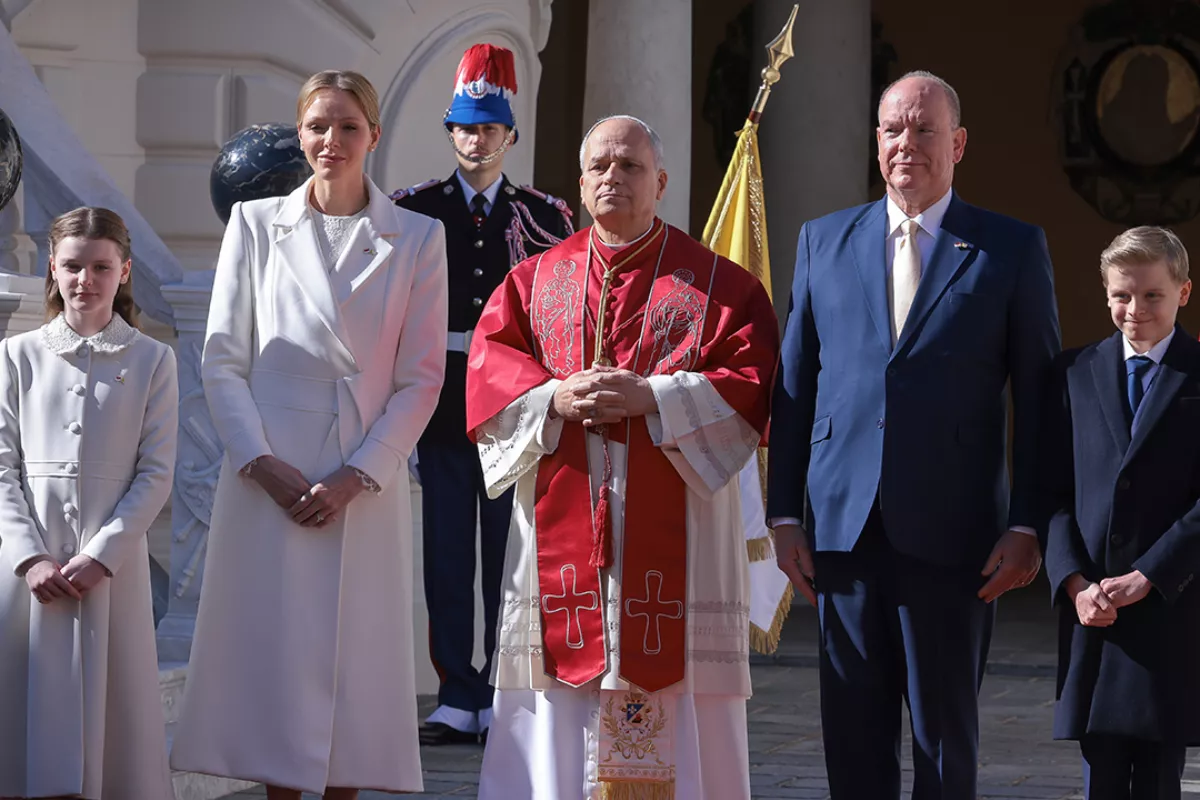
During the official ceremony at the Cour d’Honneur, photo credit: Manuel Vitali / Stéphane Danna / Philippe Fitte / Ed Wright, Communication’s Department 

The balcony appearance

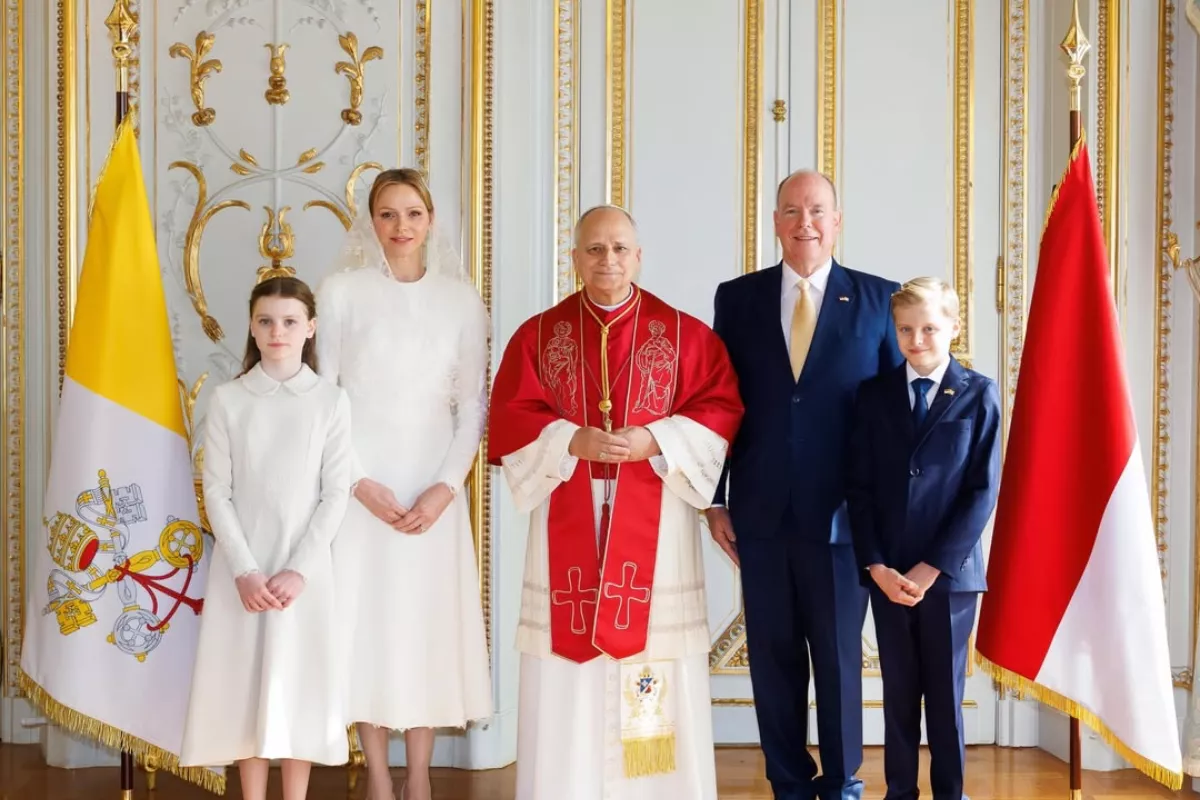
Following the private meeting, Prince Albert II and Pope Leo XIV appeared together on the Palace balcony with Princess Charlène, to enthusiastic cheering from the crowd below. The Prince took to the floor first.

“It is for me, for Princess Charlène, for our family and for the whole Monegasque community, an immense honour, a great joy and a profound emotion to welcome you today,” he began.

He traced Monaco’s bond with the Holy See across seven centuries, recalling that it was “by fidelity to the Pope” that the first Grimaldi lords left Genoa to settle on the Rock, a fidelity encoded in the Principality’s motto: Deo Juvante.

He spoke of faith as a living force — “In a time of profound upheaval and spiritual drought, our faith is our strength” — before turning to the question of peace, which he described as “disarmed and disarming,” built on “dialogue, seeking a genuine solution for all.” He closed with a personal pledge: “The history we celebrate today is only a stage on the longer road that we will continue to follow in your footsteps: the road of hope and salvation, in fidelity to Christ.”
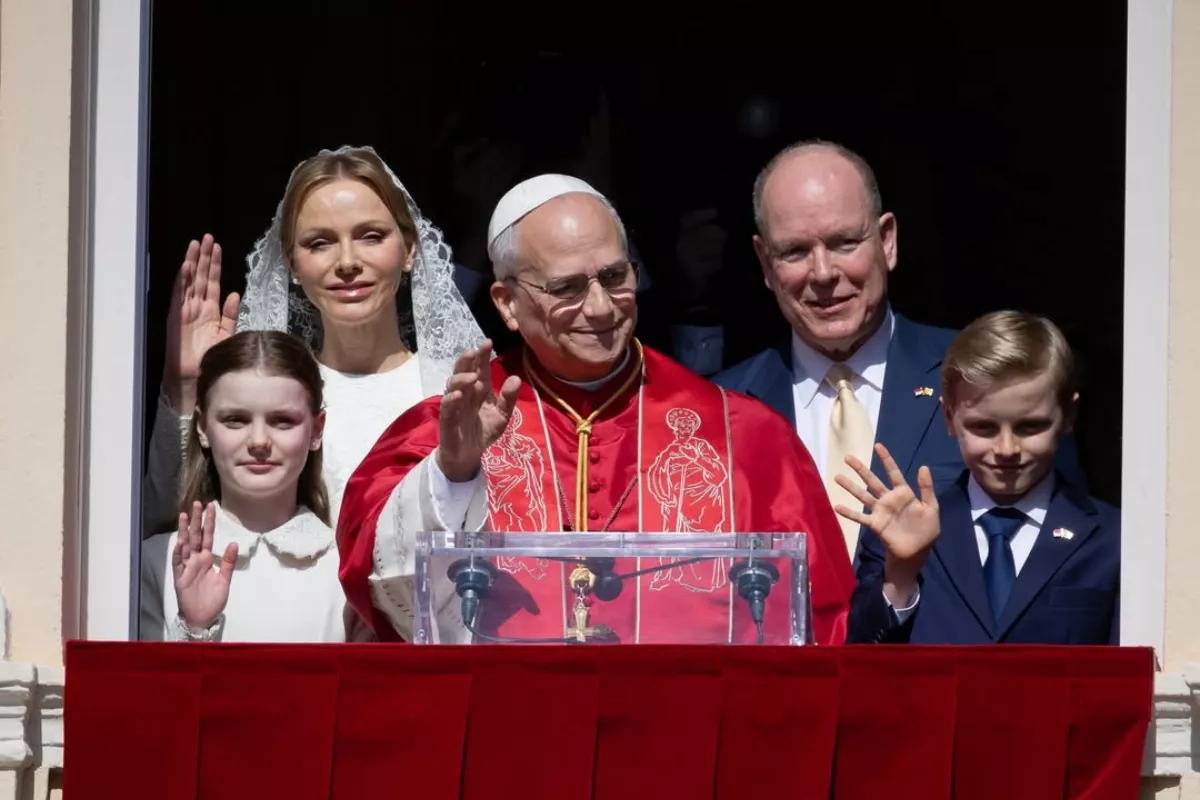
The Princely Family with Pope Leo XIV at the Palace Balcony, photo credit: Frédéric Nebinger, Prince’s Palace

The Pope then addressed the crowd, speaking of Monaco’s unique position as a small Mediterranean state and calling on the Principality, at a moment of global closure, to be a place of encounter and friendship.

“In the Bible,” he said, “it is the small ones who make history.” He reminded the audience that wealth and influence are not gifts to be hoarded but to be shared, “so that everyone’s life may be better.”

He also pointed to Monaco’s status as one of the few countries where Catholicism remains the state religion — not a ceremonial privilege, he said, but a mission: to show the world the transformative power of the Church’s social teaching.

He then closed with the ancient greeting: Pax vobis – Peace be with you. 

Prince Jacques and Princess Gabriella then joined their parents and the Holy Father on the balcony, a moment met with warm applause from the thousands below.

Through the streets and into the Cathedral

The Holy Father departed in his open-topped Popemobile along the rue Remparts toward Monaco Cathedral. Thousands pressed along the barriers, many passing their babies forward for the Pope’s blessing, a gesture he received with warmth, pausing repeatedly along the route.
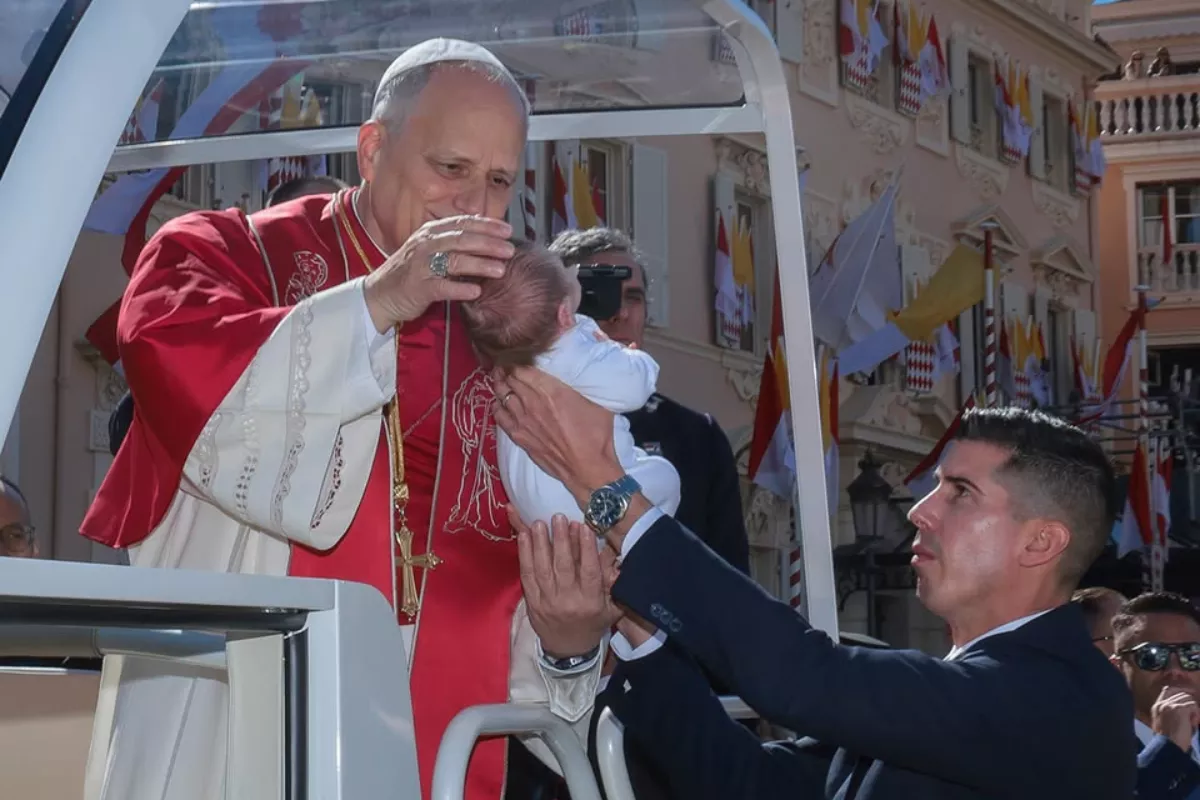
Pope Leo XIV blessing a newborn, photo credit: Manuel Vitali / Stéphane Danna / Philippe Fitte / Ed Wright, Communication’s Department 

Inside the Cathedral, the Pope presided over the Liturgy of the Hours, the Office of Sext, the ancient prayer of the sixth hour commemorating the moment Christ was nailed to the Cross, and delivered his homily in French.
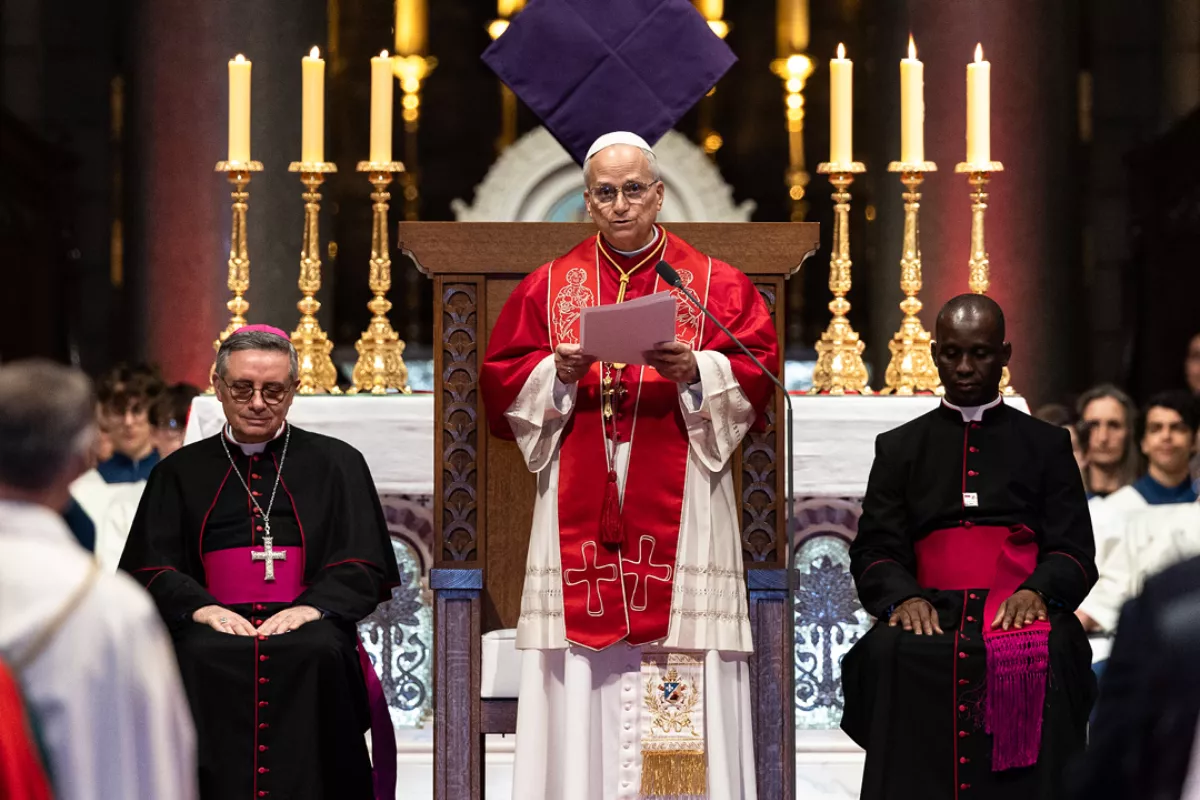
Inside Monaco’s Cathedral, photo credit: Manuel Vitali / Stéphane Danna / Philippe Fitte / Ed Wright, Communication’s Department 

As he made his way out toward the Church of Sainte-Dévote, the scenes from earlier were repeated, with crowds lining the streets and the Pope pausing once more to bless families along the way.

He paused at the Chapel of Saint-Dévote to pray before the relics of Monaco’s patron saint, before spending around 20 minutes with catechumens and young people.

He then emerged to greet the faithful gathered outside the church, a final encounter with the crowds before the day moved into its afternoon chapter.
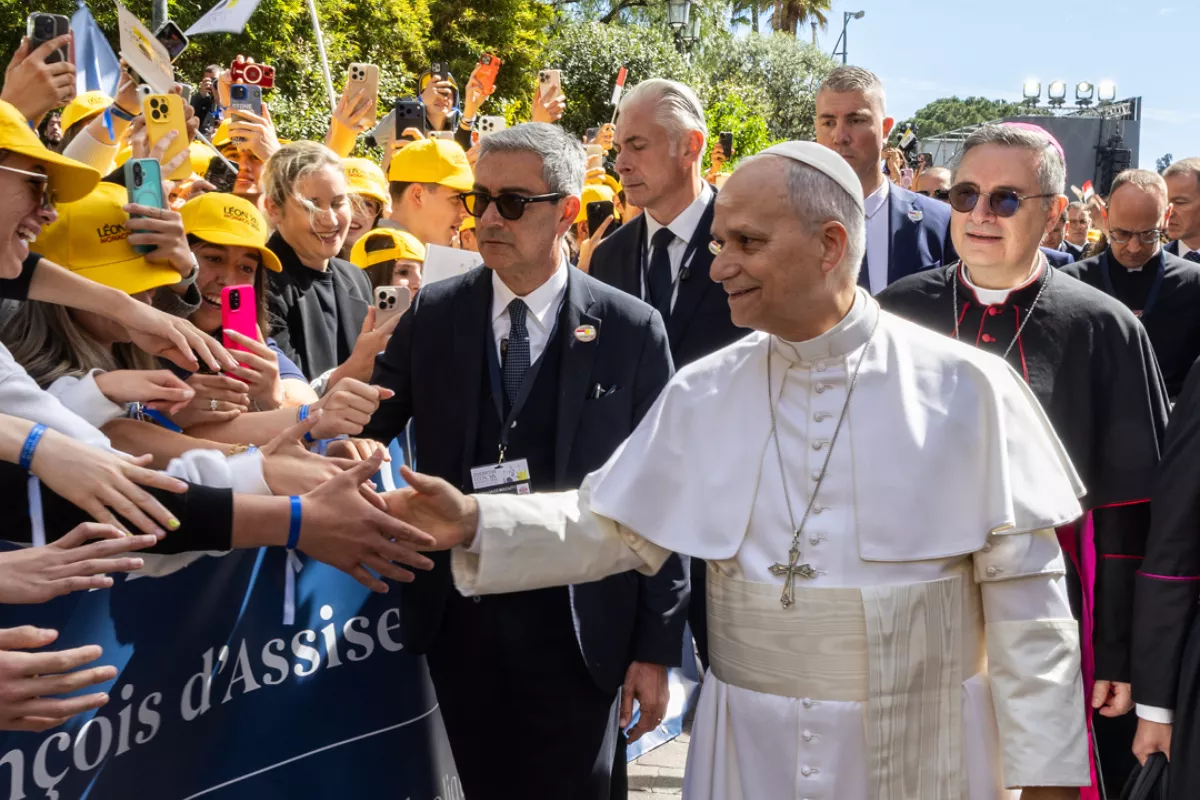
Pope Leo XIV outside the Saint-Dévote church greeting people, photo credit: Manuel Vitali / Stéphane Danna / Philippe Fitte / Ed Wright, Communication’s Department 

The Pontifical Mass at the Stade Louis II

In the afternoon, Pope Leo XIV arrived at the Stade Louis II in his Popemobile, moving slowly around the pitch to greet the crowds who had packed Monaco’s sports stadium, which had been transformed for the occasion stadium.

The Pontifical Mass followed, celebrated in French on the Saturday of the fifth week of Lent, one day before Palm Sunday, and was presided over by the Holy Father in the presence of Prince Albert II, Princess Charlène, Prince Jacques and Princess Gabriella.
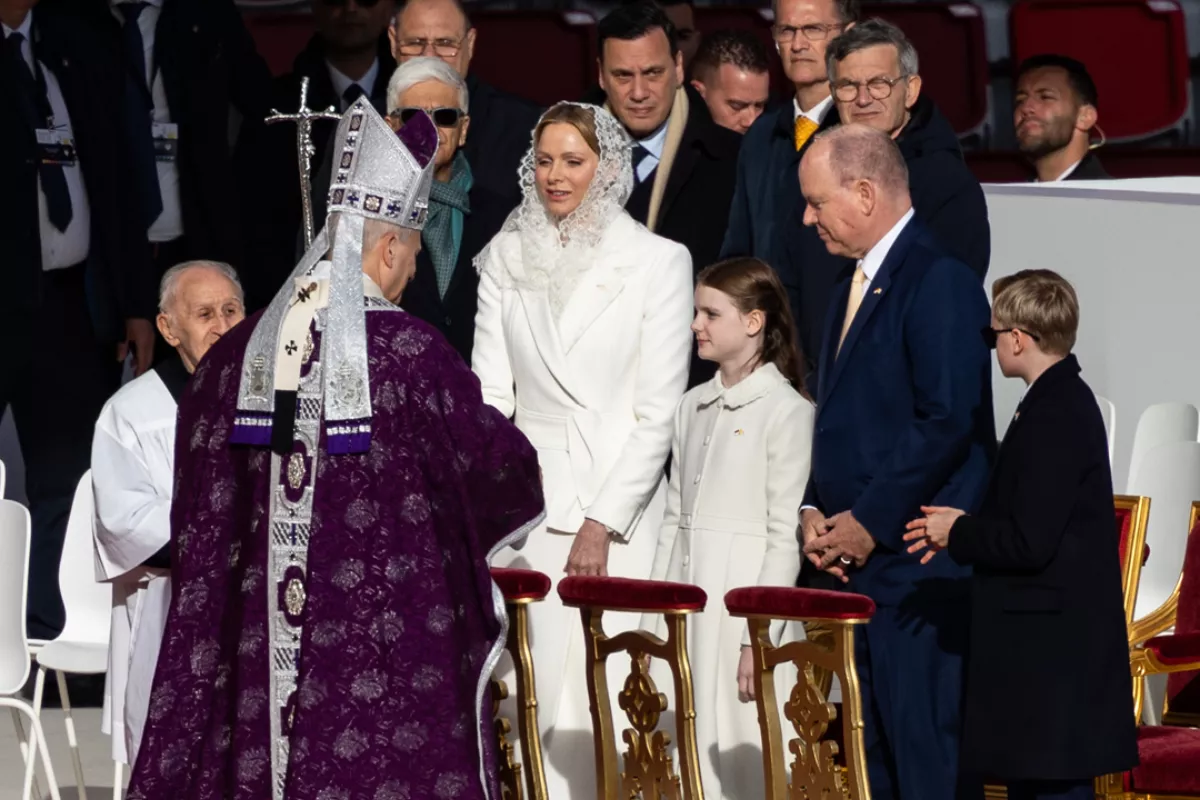
During the Pontifical Mass at Stade Louis II, photo credit: Manuel Vitali / Stéphane Danna / Philippe Fitte / Ed Wright, Communication’s Department

Following the mass, the Pope met with individuals and families supported by the Principality’s charitable associations, before he was accompanied to the heliport by the Prince and Princess for his departure.

Stay updated with Monaco Life: sign up for our free newsletter, catch our podcast on Spotify, and follow us across Facebook,  InstagramLinkedIn, and Tik Tok.

Main photo credit: Michaël Alesi, Prince’s Palace

Interview: Director Tina Landau on artistic risk, collaboration, and the enduring power of live theatre

In partnership with the Princess Grace Foundation-USA, Monaco Life proudly presents a monthly series spotlighting the lives and artistic contributions of the Foundation’s remarkable Award winners.

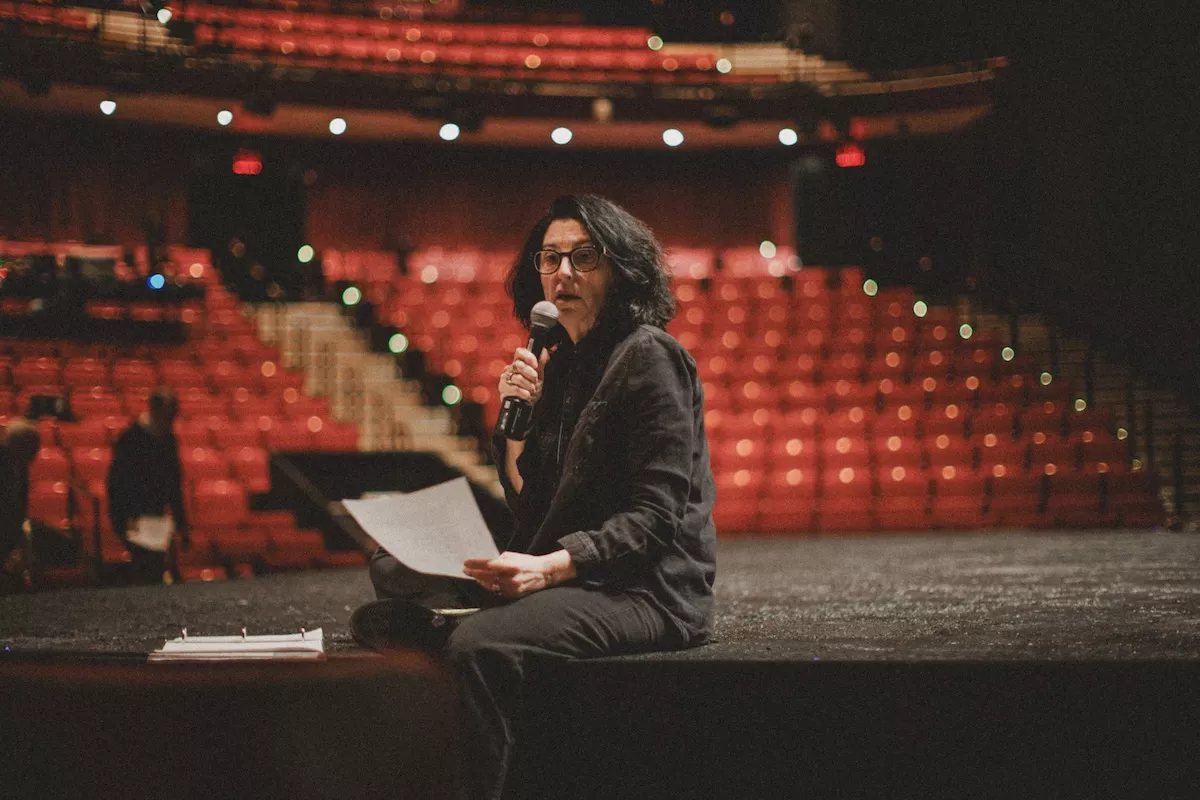
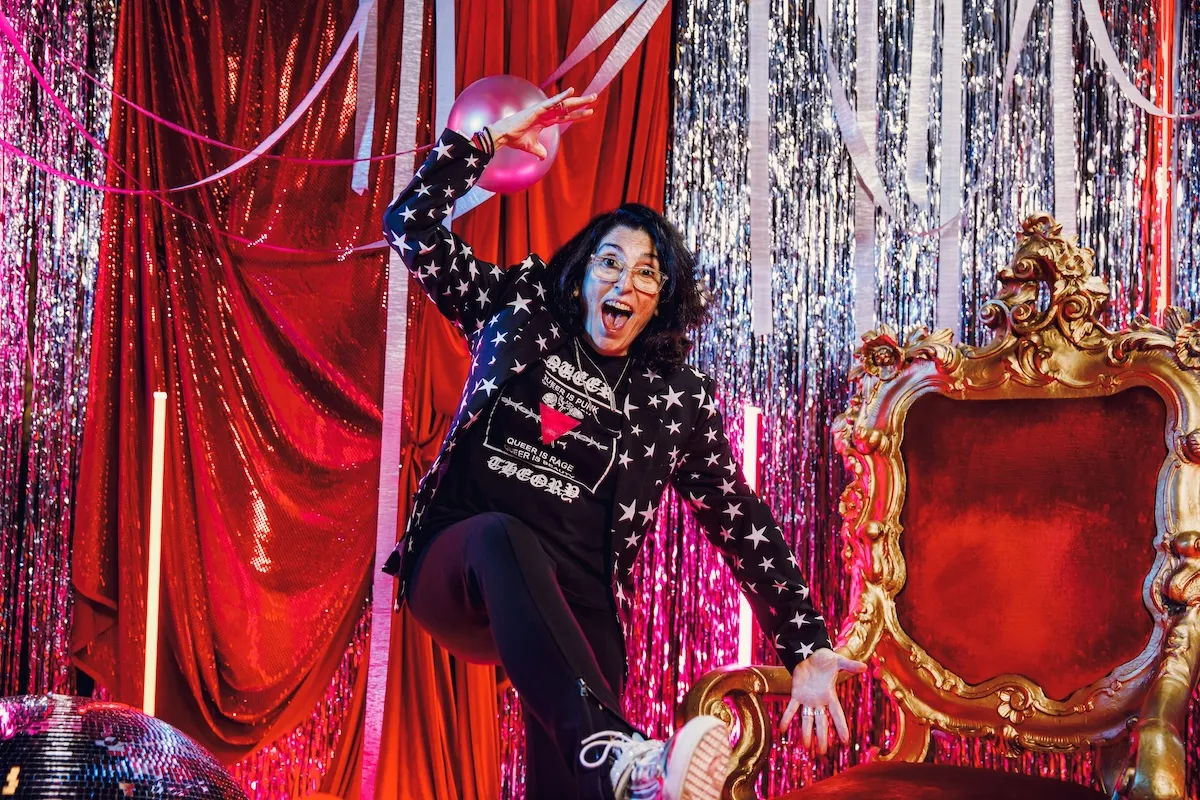
For acclaimed director, writer, and theatre-maker Tina Landau, storytelling has always been more than a craft—it’s a way of understanding the world. Known for her visionary productions that merge theatre, music, movement, and immersive staging, Landau has built a career defined by bold artistic risk and deeply collaborative creative spaces.

A Princess Grace Award winner early in her career, Landau has gone on to shape some of American theatre’s most memorable productions, including The SpongeBob Musical and Floyd Collins, while also directing celebrated plays at Chicago’s Steppenwolf Theatre Company and beyond. Her work continually pushes the boundaries of what live performance can be—blending spectacle with intimacy, experimentation with emotional truth.

In this conversation, Landau reflects on the confidence the Princess Grace Award gave her at a pivotal moment, the fearless instincts she developed during her years at Yale and Harvard’s American Repertory Theater, and why the ephemeral nature of theatre continues to draw her back again and again.

On the Princess Grace Foundation-USA

You received a Princess Grace Award early in your career — what did that recognition mean at the time?

Everything. It said to me quite simply, “Continue.” I remember thinking, “Someone somewhere thinks I merit this, so maybe I do? I guess I must. Huh. I might be okay.”

The Princess Grace Foundation is rooted in legacy — when you think of Princess Grace herself, what does she represent to you as an artist?

Someone who appreciated and championed the arts and understood their importance in the fabric of daily life. Her dedication to the arts and her philanthropy, both in her lifetime and obviously beyond, are unmatched, and I can’t tell you how much that’s meant to me, along with generations of other artists. So she represents, first, “support.” This is the primary ingredient the arts need in order to exist in a society. Then too I’d say, “taste.” The invitation to be discerning. A penchant for excellence. She represents the “crème” when we say the “crème de la crème” — and who doesn’t want a little, or aspire to be a little, “crème?”

On Her Career & Artistic Growth

When did storytelling first take hold of you — and when did directing become the way you knew you had to do it?

As early as I can remember. By age six, I was walking around telling people I was going to be a director. Like those little kids in the movie Annie Hall, who might hold a briefcase and look at the camera and say, “I’m an accountant.” That was me — so serious and intentional, but just a kid. I was so lucky that my parents were in the entertainment industry, and we lived just outside NYC, so I went to see Broadway shows before I could even remember. I started creating my own shows the way so many little kids do: by myself, with nothing but imagination, in ‘the basement.’

You trained at Yale and later at Harvard/A.R.T. How did those formative years shape your artistic instincts and sense of risk?

I was just recently going through containers of all my old, saved archives, going all the way back to high school when I began directing in earnest, and in looking at my folders from Yale College, I was astounded at how brave and audacious I was. Perhaps a bravura and wildness that can only be born of youth. You just don’t know any better, and you haven’t been told enough yet what you can’t do or aren’t supposed to do — so you just do it! I was thinking how I’d love to tap more into that original fire and instinct — and energy I had when I was in college. It fueled me long and far, that’s for sure.

Your work often blends theatre, music, movement, and ensemble — what pulls you toward that kind of storytelling?

I’ve always loved music — it’s my first language in a way. I played piano from when I was very young. I was lucky here, too, because I had a piano teacher who did not say, “Learn these scales — and now this classical piece of music.” She came in and asked me, “What’s your favorite song? Would you like to learn how to play it?” And that’s what we did. So I was enthused and stuck with it. Music has always provided a soundtrack to, and expression of, my life. I think of everything I direct as a piece of music — even if it only seems to be ‘a play’ to others. For me, theater is always potentially a “Gesamtkunstwerk,” the German word for “total work of art,” meaning when many forms of art come together to form a brand-new whole. Theater’s not a script or a set of characters or a plot. It’s a palette that holds sound, light, space, story, theme, color, time, action, movement, imagery, and so much more — and so when I ‘paint,’ why not use all that’s available to me on the palette?

What’s the hardest part of directing for you — starting, shaping, or letting go?

Starting can be exhilarating, but it’s also never less than terrifying. Not the preparation stage, but the actual beginning of rehearsals, when so many eyes are on you, expecting you to lead, to inspire, to know. Thank goodness, the older I’ve grown, the more tools I’ve acquired for navigating that first day anxiety. But still, the hardest part is actually, and almost always, letting go. Theater is an art of impermanence — and so something is always born, and then something always passes and is no more, ever.

What’s your creative process at the start of a new project? What’s the first question you ask?

I start by dreaming and free associating. I collect images. I listen to music. I start to assemble a world which feels somehow OF the piece. So by the time I meet designers, it’s less, “This is what it means, and this is what we’ll do,” and more, “Enter, immerse yourself in this collection of stuff I’m offering, find your own way in here.” And the first question I always ask is “Why?” Why do this now? What makes the time, energy, and money that a theater and our audiences will pour into this worth their while? Why is it necessary?

You’re known for building powerful rehearsal rooms. What makes a collaboration truly work for you?

Trust. Openness. Play. Willingness to make a mess. Firm and true belief that 20 hearts-and-heads can dream of and create something deeper and more surprising and more alive than what one person can alone.

You’ve directed and/or conceived major works, including The SpongeBob Musical, Floyd Collins, and significant plays at Steppenwolf. Which project felt like a true artistic turning point for you?

The Time of Your Life by William Saroyan, which I directed at Steppenwolf, then Seattle Rep, and A.C.T in San Francisco. I started that process during a low period: 9/11 had just happened, I had just turned 40, a project I had pinned all my hopes on had just gotten cancelled, and I didn’t know why doing theater mattered at all. So I had nothing to lose. I remember telling the cast on the first day that all I cared about was making something radically alive and mind-blowing and that if we didn’t aim for that I’d rather just go home — and that, in order to do that, I was saying “F – you” to the critics, to trying to please an audience, to rules, to propriety, to everything except my gut and instincts. And that’s how I worked. And that’s where and how I learned Saroyan’s words, “In the time of your life, live” — which I now have tattooed on my arm.

On Life Beyond the Stage

Since this interview will appear in Monaco Life, we love to highlight the principality’s allure. If you could bring one of your productions to Monaco, which would you choose—and why?

Maybe SpongeBob. Come on, Monaco and SpongeBob?! That’s what life is like: two things that don’t seem to go together yet do.

On What’s Next

What are you working on next, and what’s exciting you right now?

I’m gearing up to direct a play I wrote with Tarell McCraney at the Vineyard in NYC, called Ms. Blakk for President, and also a play at Steppenwolf next season, called The Comeuppance by Branden Jacobs-Jenkins. But most of my time now is devoted to a few big projects that will likely take 2-5 years to come to fruition. The theater world, and people’s interest in it, is shrinking. And so I’m intentionally heading into territory that is gigantic, ambitious, risky, event-driven, environmental or immersive, explosive, joy-filled — in the hopes that such things may actually keep “liveness” alive for a little longer.

After everything you’ve done, what still drives you back to the theatre?

Ancora imparo. Meaning, “I am still learning.” Michelangelo said this at age 87 while he was working on St. Peter’s Basilica. I aspire to that. Always learning. About how to make theater, which, of course, I still really have no idea how to do. And learning about others and the world I live in. I’ve always said the theater is my great ongoing graduate school. So I explore, I develop, I open up, I take in More and Different, I become more a part of a community, more a citizen of the world, I expand, I surrender to a reality larger than myself, I find solace in that — connection.

Follow Tina Landau on Instagram @TinaLandau and on Facebook @TinaLandauNYC.

Stay updated with Monaco Life: Sign up for our free newsletter, catch our podcast on Spotify, and follow us across Facebook,  Instagram, LinkedIn, and TikTok.

All photos provided


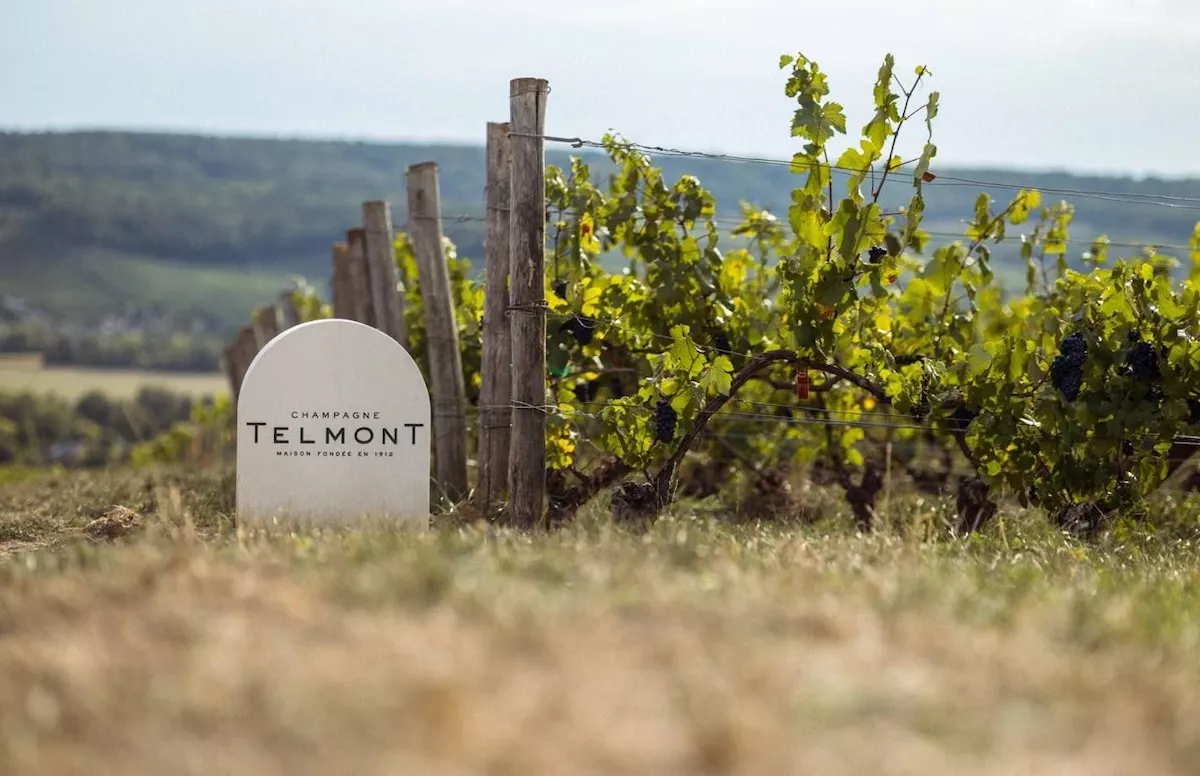
Interview: Ludovic du Plessis on why Telmont ditched gift boxes, hired DiCaprio and became Champagne’s greenest house

In a sector steeped in tradition, few people are asking harder questions about how Champagne should be made than Ludovic du Plessis. As president of Maison Telmont — now the first Champagne house in the world to achieve Regenerative Organic Certified (ROC) status — he has spent five years dismantling assumptions about what luxury wine can and should look like. Monaco Life’s Editor in Chief Cassandra Tanti caught up with him to understand what that journey has involved, and where it is heading.

Champagne has never been an industry in a hurry to change. Its rules, its rituals and its resistance to outside ideas are part of what gives it authority — which makes what Telmont is doing all the more striking. The ROC bronze certification, awarded after months of rigorous audits by Ecocert Environnement, places the house well outside the mainstream of a region where organic farming alone remains the exception rather than the rule. For Ludovic du Plessis, it is not simply another sustainability credential. It is part of a broader transformation designed to rethink how Champagne is grown, produced, packaged and shipped.

A sleeping beauty with a radical future

Du Plessis arrived at Telmont in 2020 after senior roles at Dom Pérignon, Moët & Chandon and Louis XIII cognac. He was looking for something specific: a luxury brand that could actively contribute to tackling climate change.

“I told myself, I really want to do business for good — to allow myself every morning, every day, every night, to do something that helps fight climate change,” he recalls.

He went looking for a house with four qualities: a compelling history, family ownership, exceptional wines, and vineyards already transitioning to organic farming. Telmont, founded shortly after the Champagne Revolution of 1912, met all four. It was also almost entirely unknown.

“This Champagne house was a sleeping beauty,” he says. “In Champagne you hear about everybody, but you never heard about this one.”

The project he launched in 2021, under the banner ‘In the Name of Mother Nature’ (Au Nom de la Terre), set out to convert 100% of the estate and partner vineyards to organic and regenerative agriculture by 2031, with net-zero emissions targeted by 2050.

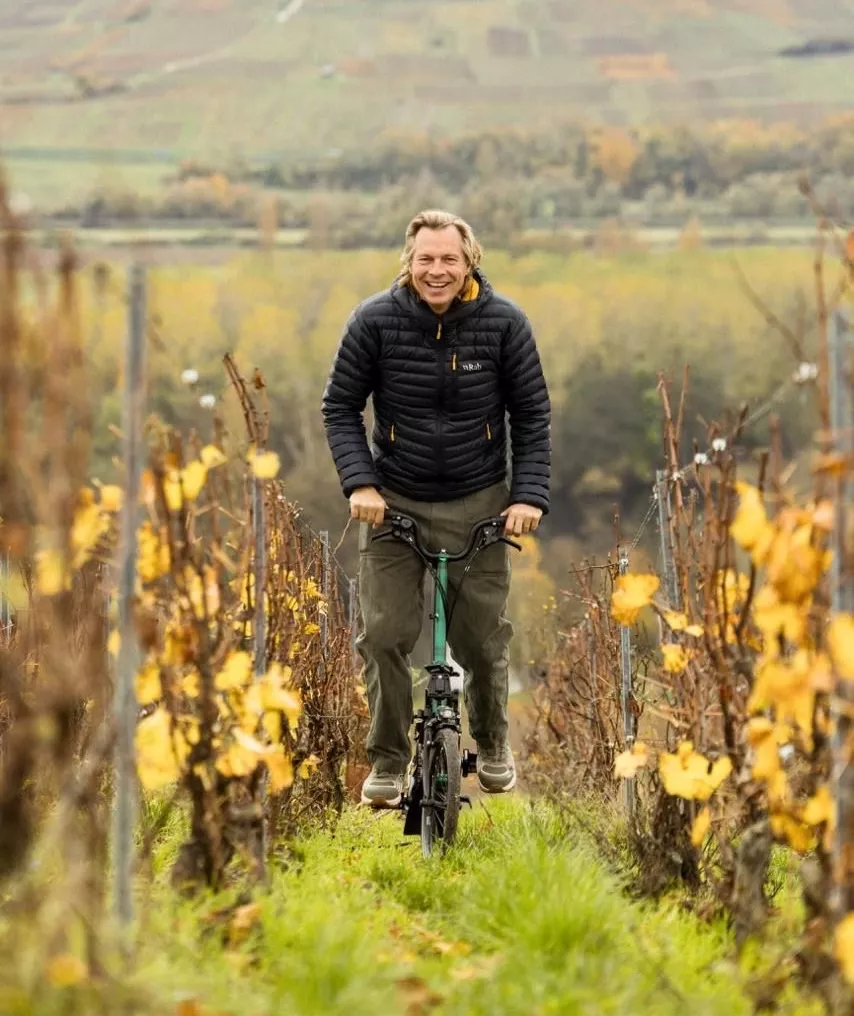
Ludovic du Plessis riding his bike through the Telmont vineyards in Damery, France

Regeneration begins with organic farming

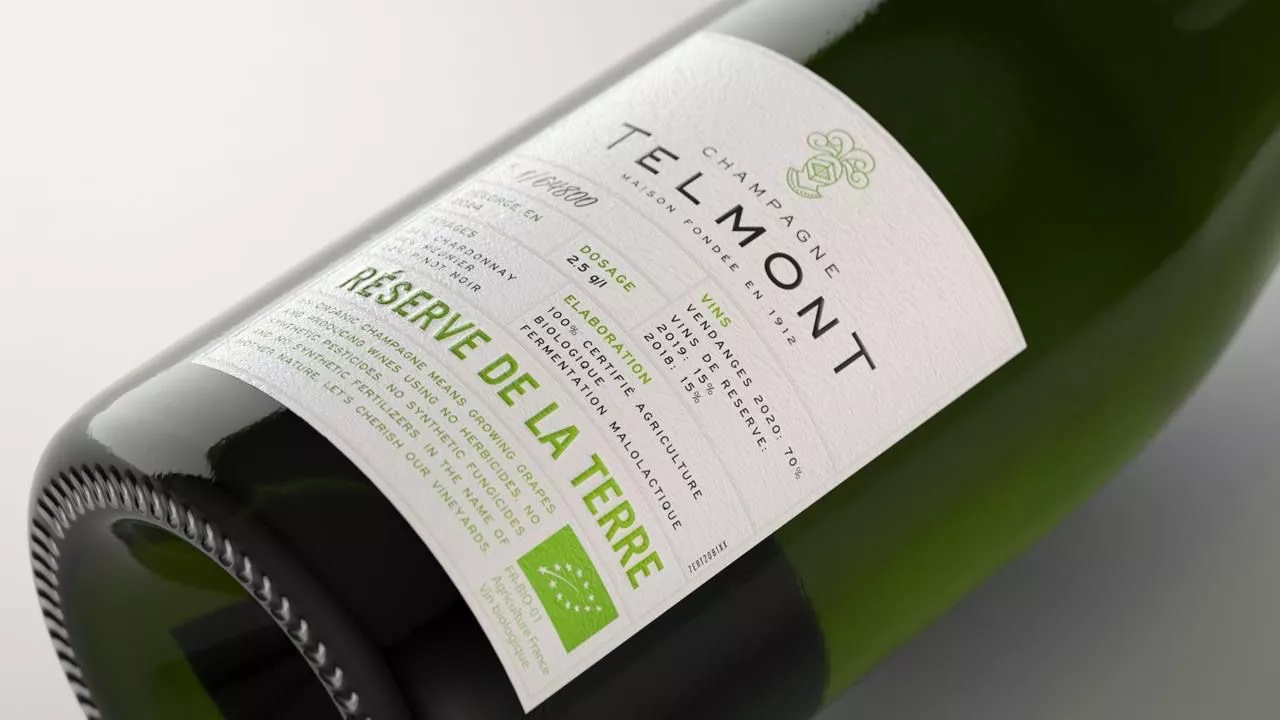
The ROC certification — created in 2017 by the Regenerative Organic Alliance, whose founding members include the Rodale Institute, Patagonia and Dr. Bronner’s — sets organic farming as a baseline requirement and adds strict criteria for soil health, biodiversity and fair labour practices.

For du Plessis, the sequence matters. “Today, everybody talks about biodiversity and regenerative agriculture,” he says. “My view is simple: first become organic. Stop herbicides and chemical fertilisers. That is step number one.”

The reasoning is straightforward. “If you are not organic, how can you claim to be regenerative? It doesn’t make sense.”

Nearly all of Telmont’s estate vineyards are now organic, and roughly three-quarters of its partner growers have adopted the same practices — significant in Champagne, where houses depend heavily on fruit sourced from independent farmers. Telmont’s vineyards now incorporate cover crops, hedgerows and biodiversity corridors, alongside water management systems and ongoing monitoring of soil health.

The transition carries a commercial cost. Organic yields are lower, sometimes considerably so. “Some years we have 10% to 30% less quantity compared with conventional vineyards,” du Plessis says. “That’s why today we pay our winegrower partners 25–30% more for their grapes, to cover that loss when it occurs.”

Reinventing the bottle

Farming is only part of the equation. Du Plessis has gone after the carbon footprint of the bottle itself, starting with the gift box — a fixture of the luxury Champagne market that he eliminated entirely.

“The best packaging is no packaging,” he says.

Removing presentation boxes cut the carbon footprint of each bottle by around 8%. The bottle itself followed. Champagne glass is heavy by necessity — the pressure inside demands it — and glass accounts for roughly 30% of a house’s total emissions. Working with manufacturer Verallia, Telmont developed an 800-gram bottle, lighter than the 835-gram industry standard, while keeping the same geometry so existing bottling lines remain usable.

“There is no patent,” du Plessis says. “Any Champagne house can use it tomorrow morning and immediately reduce their emissions.”

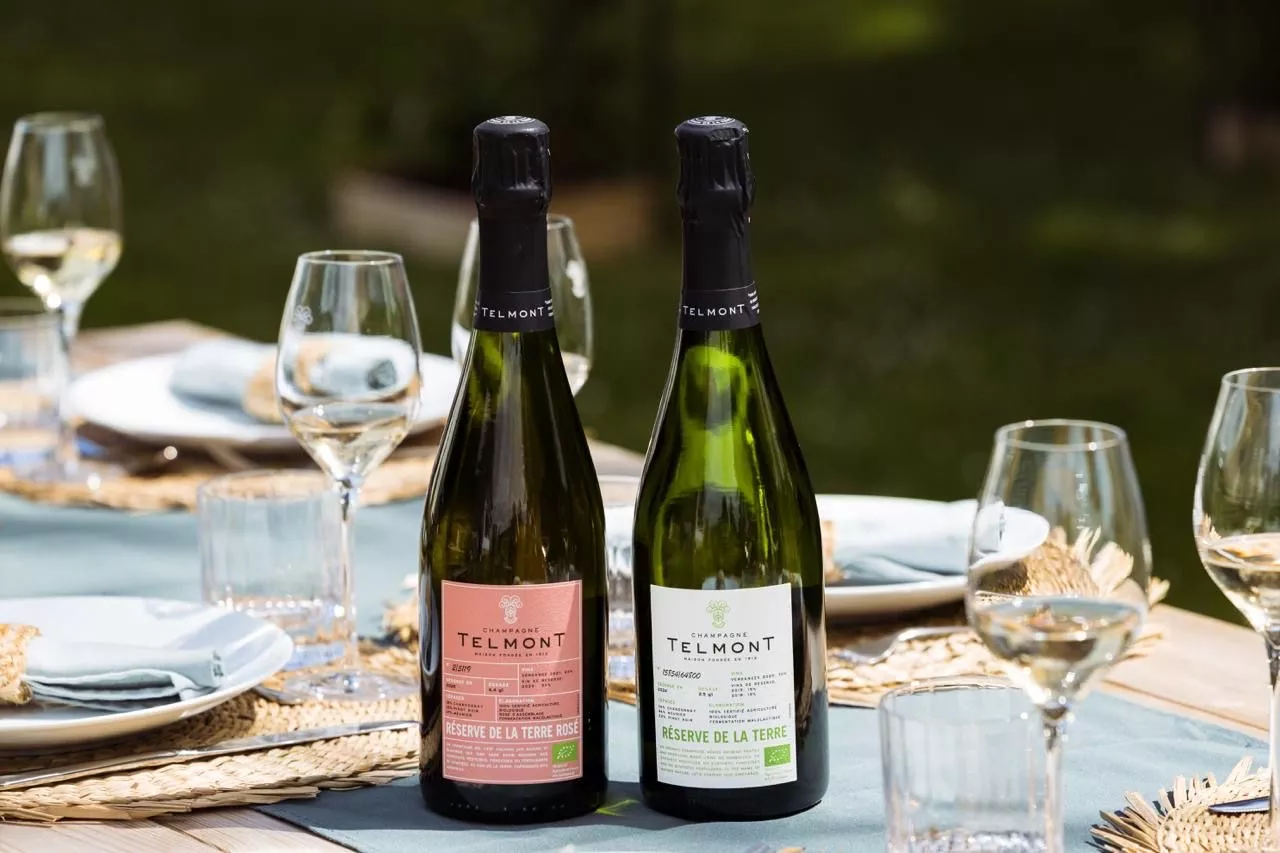
The house has also moved entirely to green glass, which contains up to 87% recycled material, abandoning the clear bottles previously used for rosé and Blanc de Blancs. A project called ‘113 Shades of Green’ allows the house to have flexibility in the precise shade used, avoiding waste when glass manufacturers change batches to adapt to each client.

“It’s just packaging,” he says. “What matters is the wine inside.”

Air freight has also been stopped, with a recent shipment to the United States travelling by sailing cargo vessel instead.

The DiCaprio factor

In 2022, Leonardo DiCaprio became an investor. Du Plessis says he approached his long-time friend specifically because of his public engagement with climate change, and describes him as someone who had already been encouraging his environmental thinking long before Telmont was discussed — recommending documentaries and climate research that eventually fed into the house’s strategy.

“I asked Leonardo to become an investor because he really is a geek when it comes to fighting climate change,” du Plessis says.

DiCaprio has described the certification as “a major achievement for Telmont and for Champagne as a whole”.

Drink less, but better

Champagne is a conservative industry, and du Plessis is under no illusion that the wider sector will move quickly. But he sees consumer behaviour already changing, particularly among younger drinkers.

“Everybody’s talking about it. Something is happening,” he says. “There’s a movement today: drink less, but better. We are not racing after volume. It’s a race after quality.”

He also makes a sensory argument, not just an ethical one. Organic viticulture, he believes, produces wines with a different quality of energy — one that shows in the glass.

“Organic grapes give energy, radiance, harmony, serenity. It’s like a wave on your palate — the wine is alive.”

He is measured about where Telmont currently stands. “The Telmont project is not perfect. We are trying things.” The 2031 conversion target and the 2050 net-zero commitment still lie ahead. Early commercial results, however, suggest the direction is right.

“At the end of the day, it will always come back to one thing,” he says, “the wine is great because the earth is beautiful.”

Stay updated with Monaco Life: sign up for our free newsletter, catch our podcast on Spotify, and follow us across Facebook,  InstagramLinkedIn, and Tik Tok.

All photos provided by Telmont


Prince Albert II and Princess Charlene inaugurate new parent-child unit at Princess Grace Hospital

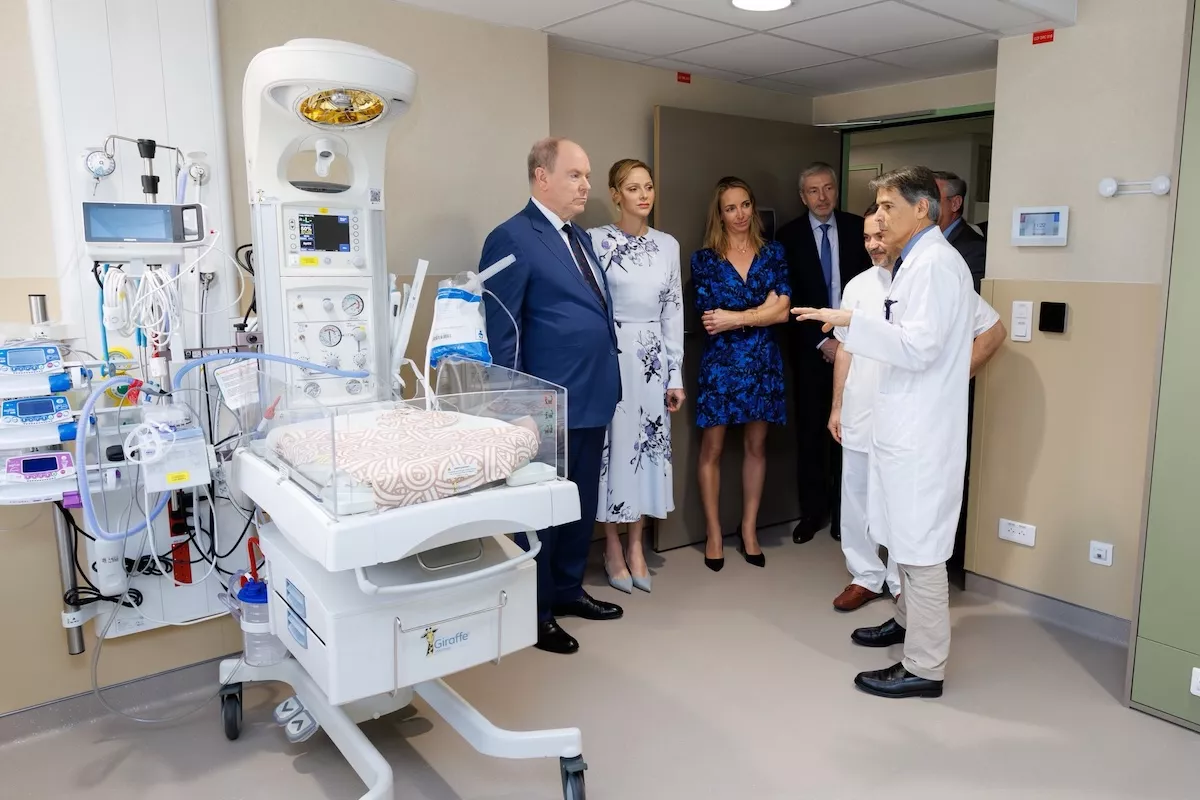
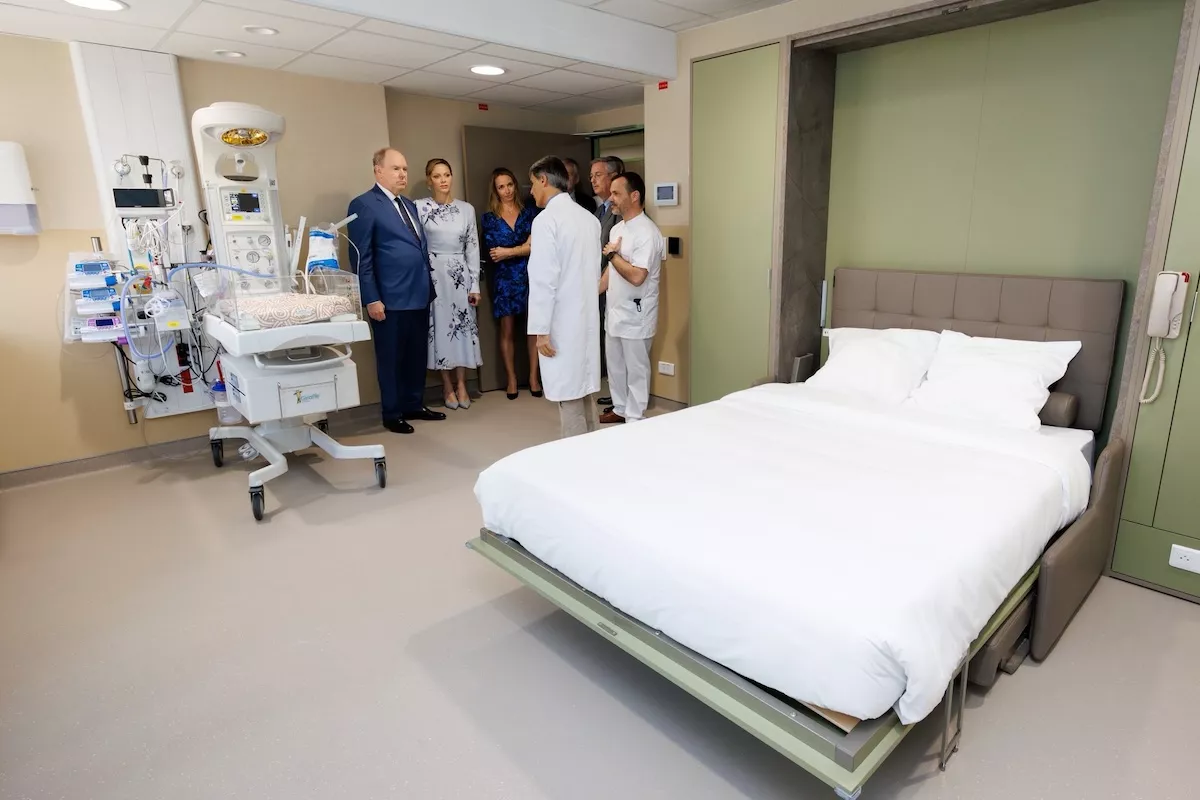
For any parent whose newborn requires hospital care, the hardest part is often not the medical reality — it is the fear of being separated from their child. A new unit inaugurated at the Centre Hospitalier Princesse Grace on Thursday 26th March is designed to ensure that separation is no longer part of the experience.

Prince Albert II and Princess Charlene opened the new parent-child unit in the presence of Christophe Robino, Minister-Counsellor for Social Affairs and Health, Benoîte Rousseau de Sevelinges, Director of the CHPG, and Dmitry Rybolovlev, whose patronage made the project possible.

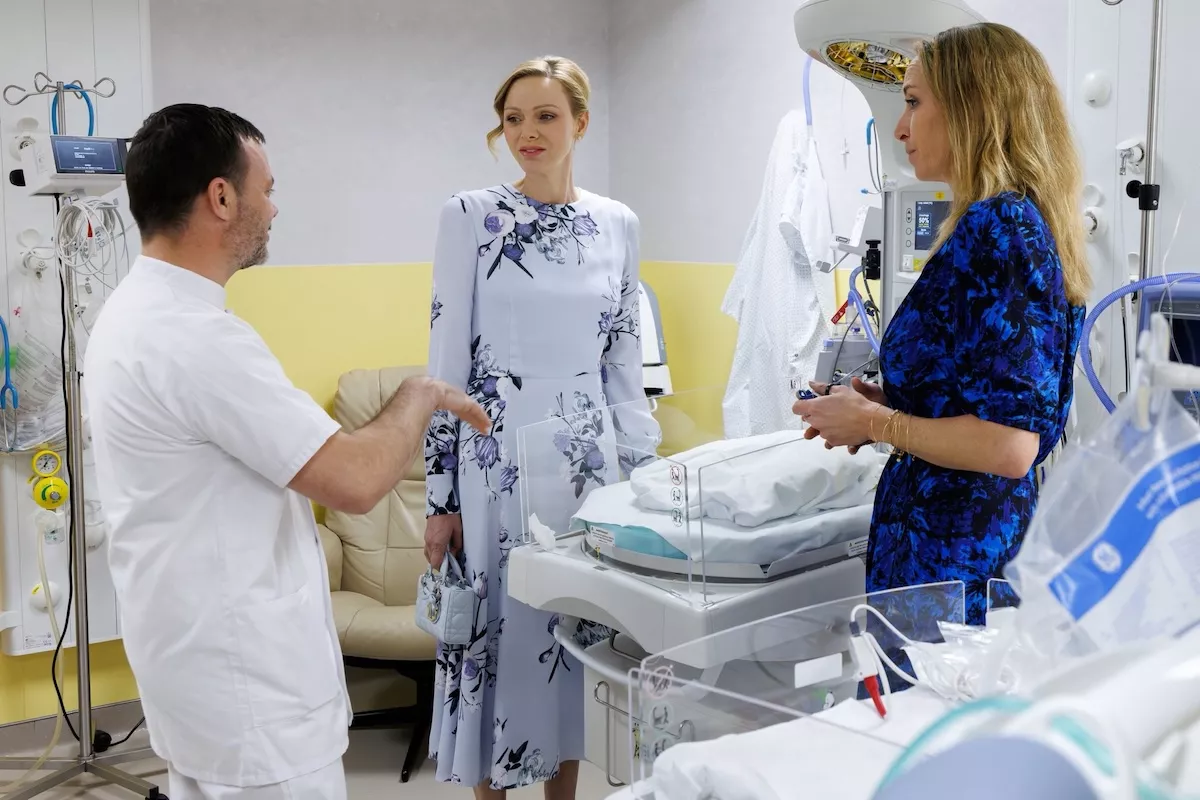
The unit comprises four rooms conceived as genuine family cocoons — spaces that feel as close to home as a hospital can offer — where parents can remain with their vulnerable or closely monitored newborns around the clock.

A multidisciplinary team of nursery nurses, midwives, childcare auxiliaries and doctors supports each family throughout their stay, combining medical excellence with an approach built on warmth and reassurance.

The unit is the latest addition to the CHPG’s mother-and-child centre, which has been expanding its family-focused care in recent years.

It follows Princess Charlene’s launch of infant first aid training workshops in September 2025, run in collaboration with the Monégasque Red Cross — part of a broader push at the hospital to place families, not just patients, at the centre of neonatal care.

The unit was made possible by a €3.5 million donation from Dmitry Rybolovlev, the philanthropist and AS Monaco football club owner who has funded a number of significant projects at the CHPG in recent years.

“I would like to thank His Serene Highness Prince Albert II, the Princess Grace Hospital Centre and its Director, Benoîte Rousseau de Sevelinges, for allowing me to contribute once again to the modernisation of the CHPG,” Rybolovlev said in a statement.

“As a physician by training, a father and a grandfather, I know that the formation of family bonds and the attachment between a newborn and their parents begins in the very first minutes of life. That is why I immediately embraced the management’s proposal to contribute to the creation of a new unit that will ensure a comfortable stay at the CHPG for parents and their newborns. I am pleased that today this project has become a reality and that it will benefit the residents of the Principality.”

Stay updated with Monaco Life: sign up for our free newsletter, catch our podcast on Spotify, and follow us across Facebook,  InstagramLinkedIn, and Tik Tok.

Photos credit: Michaël Alesi / Prince’s Palace

Prince Albert II and Princess Charlene officially re-open Monaco’s Exotic Garden

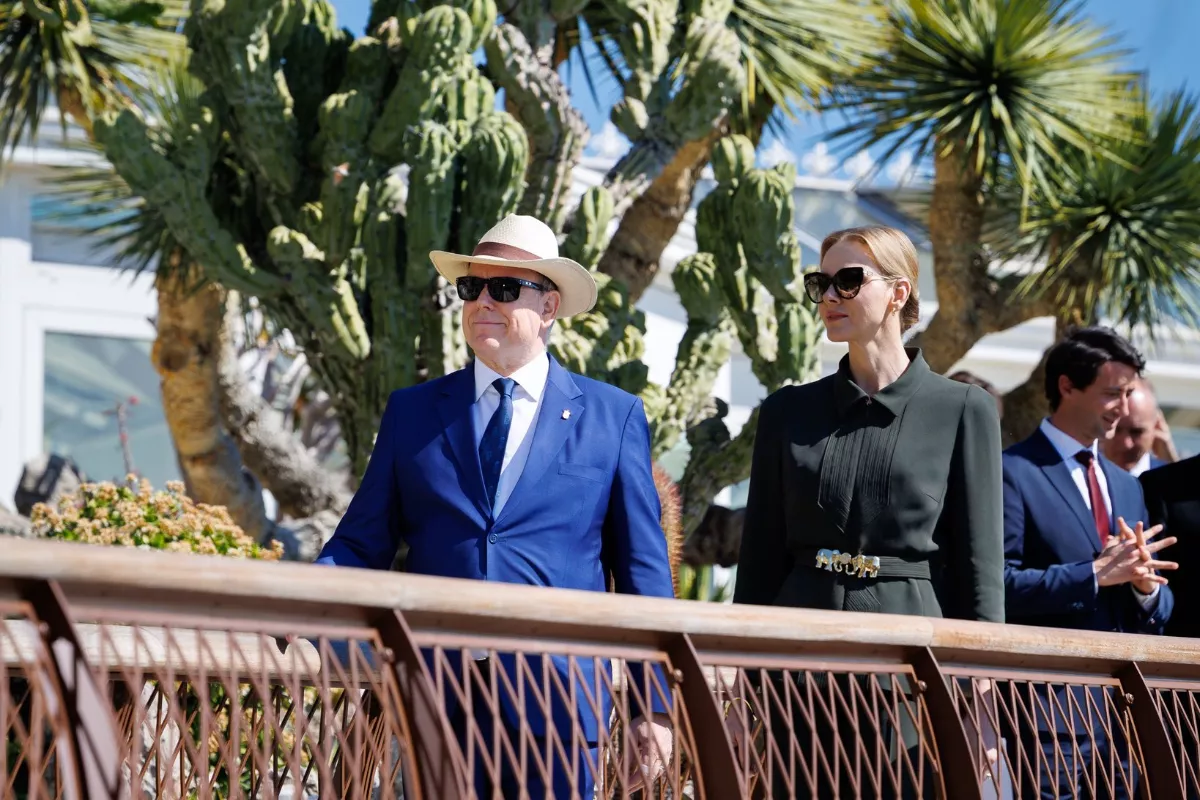
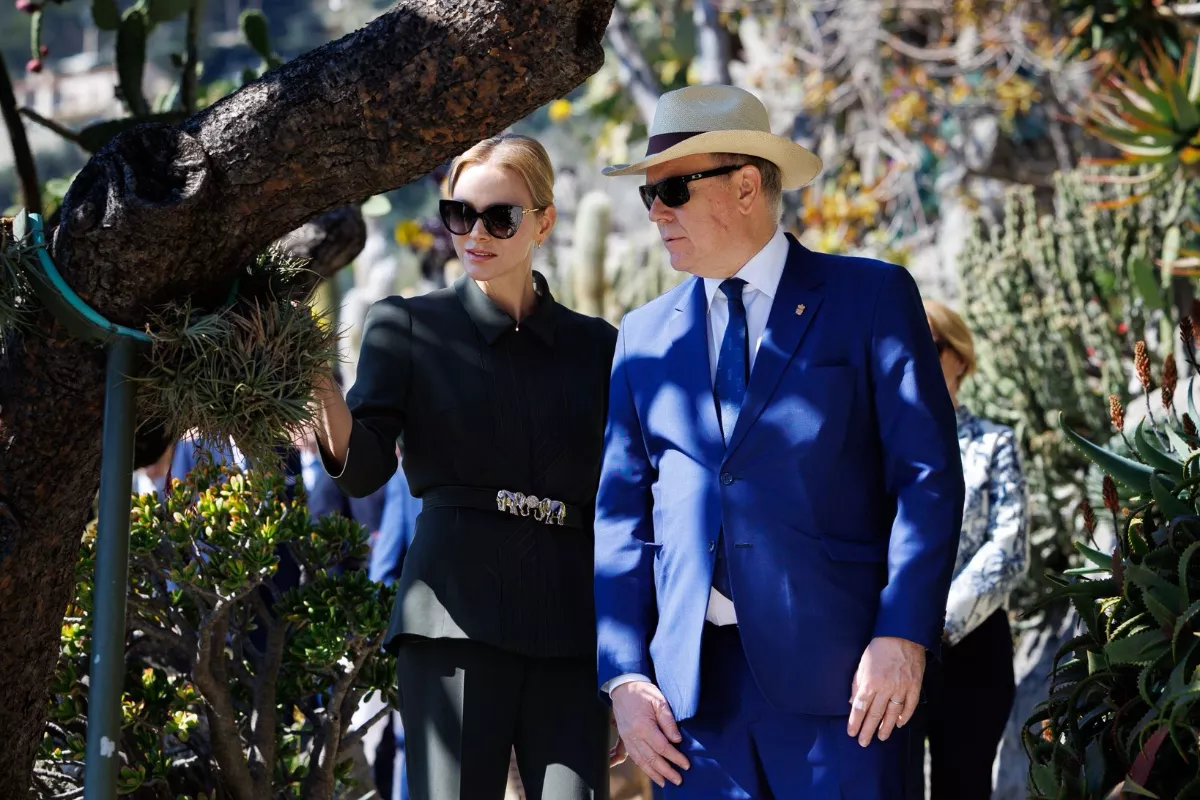
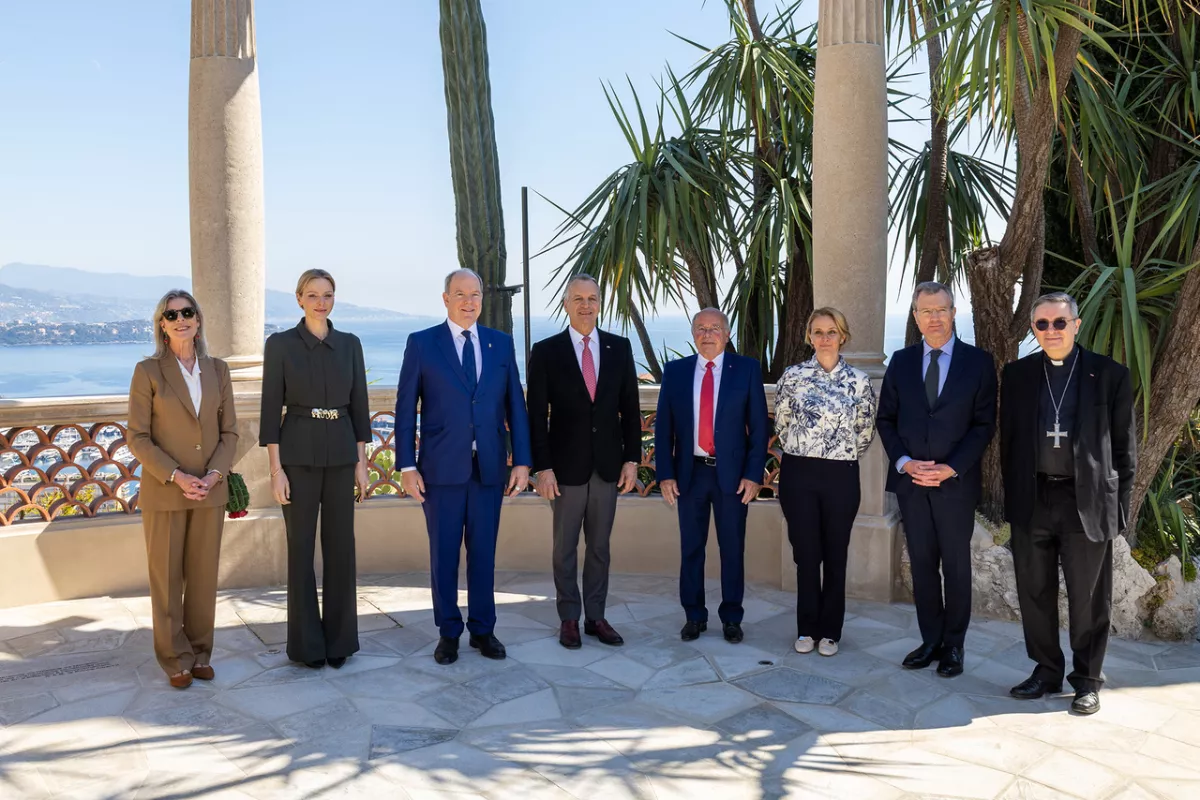
Prince Albert II and Princess Charlène, accompanied by Princess Caroline of Hanover, attended the official reopening ceremony of the Jardin Exotique on Wednesday after six years of closure. 

The ceremony included a blessing by Archbishop Dominique-Marie David and speeches by Mayor Georges Marsan, who has been closely associated with the project throughout.

Prince Albert and Princess Charlène visiting the garden, photo credit: Michaël Alesi, Prince’s Palace
The garden is now set to open to the general public on Monday March 30th, with a free preview opening scheduled for Monegasques and residents on Sunday March 29th, with a programme of animations and a fireworks display planned for the occasion.

“The Municipal Council’s ambition was to modernise the garden without stripping it of its identity,” said Mayor Marsan. “I am delighted that future generations will be able to discover it in their turn.”

During the official reopening of the garden, photo credit: Michaël Alesi, Prince’s Palace
Nearly a century in the making

The Jardin Exotique first opened in 1933 under Prince Louis II and was home to over 30,000 plants, many of them centuries old, drawn from the Americas and Africa.

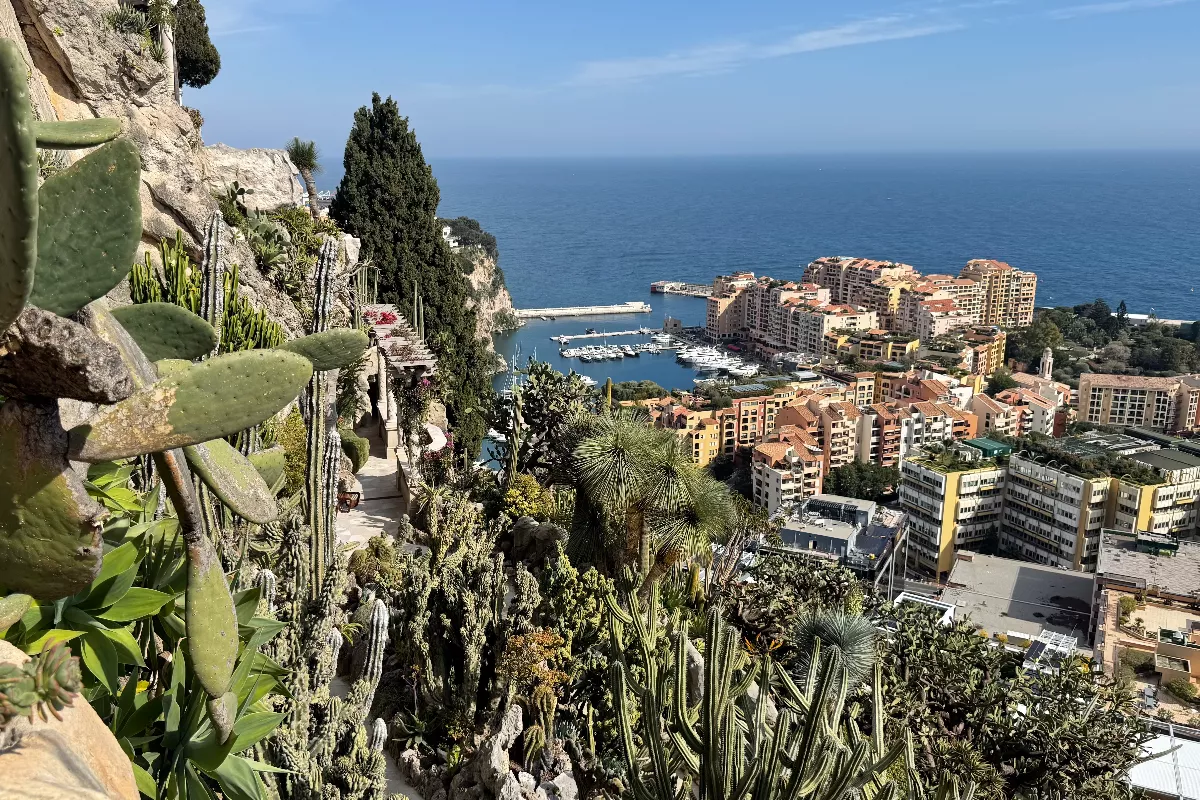
However, since 1939, no significant structural work had been carried out. Thus, after nearly a century, serious weaknesses had begun to emerge. For example, artificial rock work was at risk of detaching, pathways had deteriorated, and the cliff-face setting required urgent and technically-demanding intervention. And so, the garden closed its doors in 2020.

The garden’s cliff-facing setting, photo credit: Monaco Life

“The works were complex, vertiginous, and at times perilous given the configuration of the site,” Mayor Marsan said at the ceremony. The challenge was to make it safe without damaging a plant collection that includes specimens no longer found anywhere else in the world.

What changed

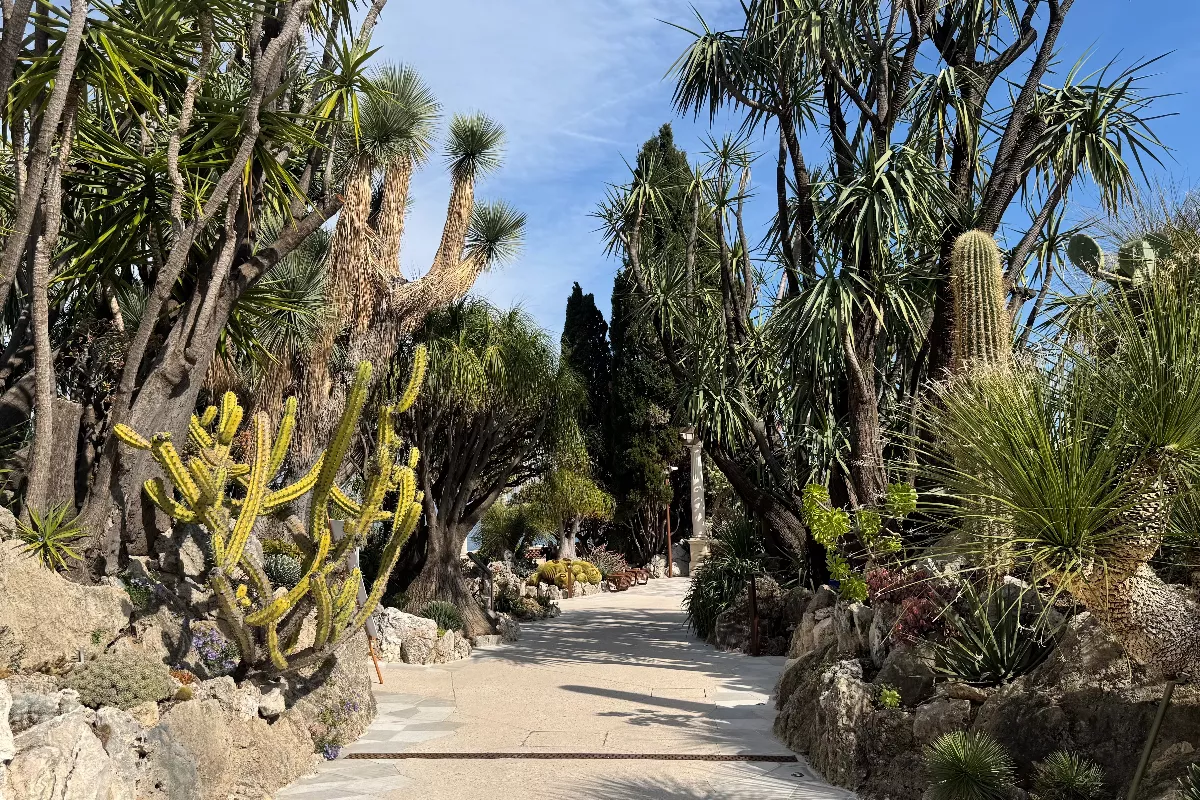
Walkways and railings have been fully rebuilt, flooring and paths resurfaced, pergolas and viewpoints renovated, and lighting upgraded throughout.

Landscape architect Hervé Meyer oversaw the botanical restoration, Monégasque architect Frédéric Genin redesigned the areas around the Observatory Cave, and architect Margaux Davenet designed the new facilities on the upper plateau.

Jardin Exotique, photo credit: Monaco Life

New additions include a children’s play area, a picnic area, a birthday room for around 3° children, and a revamped ticketing area. The garden is also being made available for private hire such as weddings, receptions, and events with rates that climb steeply during Grand Prix weekend.

The only museum in Monaco with a bar

Perhaps the most unexpected addition is a snack bar and drinks terrace on the upper plateau, open to anyone without a ticket. In a principality not known for casual, affordable public spaces, having somewhere to sit with a drink and a view over Monaco – and no entry fee required – is genuinely novel. The bar, along with the boutique and toilet facilities, is freely accessible to all.

Pricing details and tailored packages

Ticketing ranges from €12 for adults, €6 for children up to to 17 years-old for garden entry only, to €18 for adults, €10 for children for access to the garden and observatory cave and botanical centre.

Because the cliff-face layout makes full access impossible for visitors with reduced mobility, entry will be free up to the point they can comfortably reach.

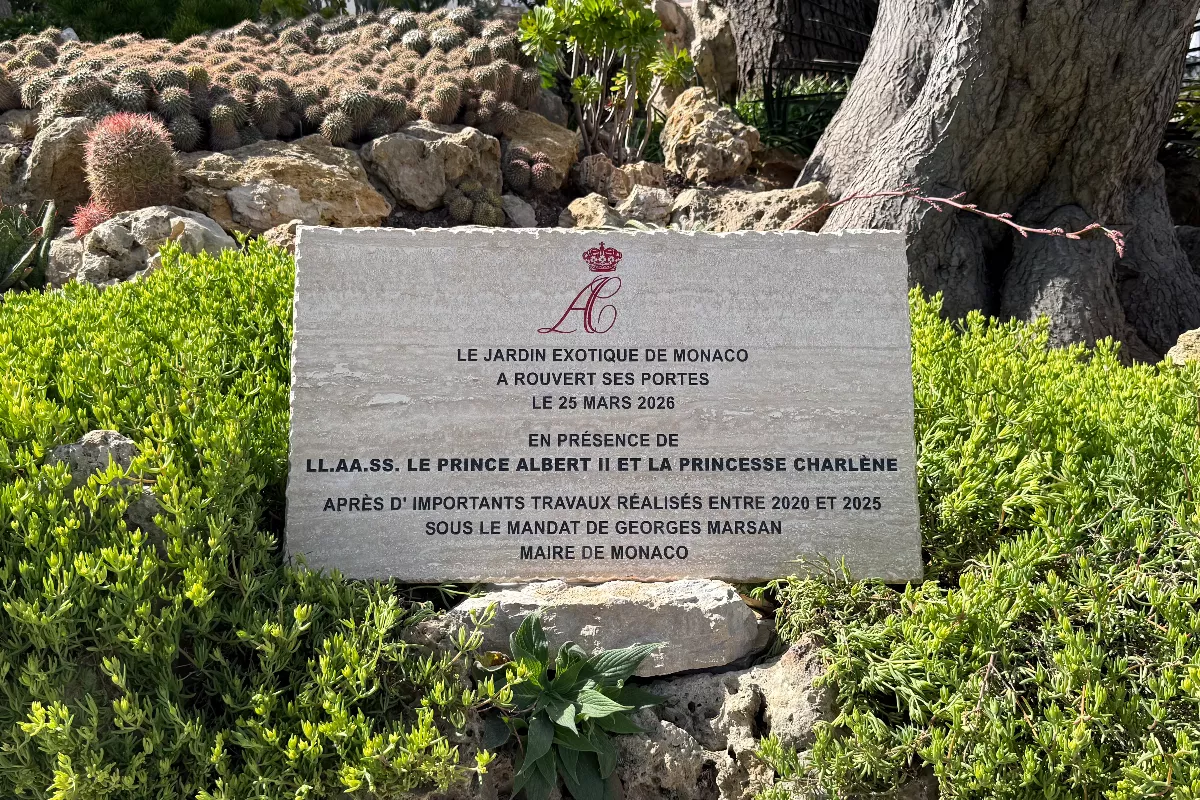
A commemorative plaque marking the reopening has also been installed on site, bearing the names of Prince Albert II and Princess Charlène in recognition of their presence at the ceremony.

The commemorative plaque marking the official reopening, photo credit: Monaco Life

Stay updated with Monaco Life: sign up for our free newsletter, catch our podcast on Spotify, and follow us across Facebook,  InstagramLinkedIn, and Tik Tok.


Main photo credit: Michaël Alesi, Prince’s Palace
Club Suisse de Monaco brings Swiss-German economic dialogue to the Principality

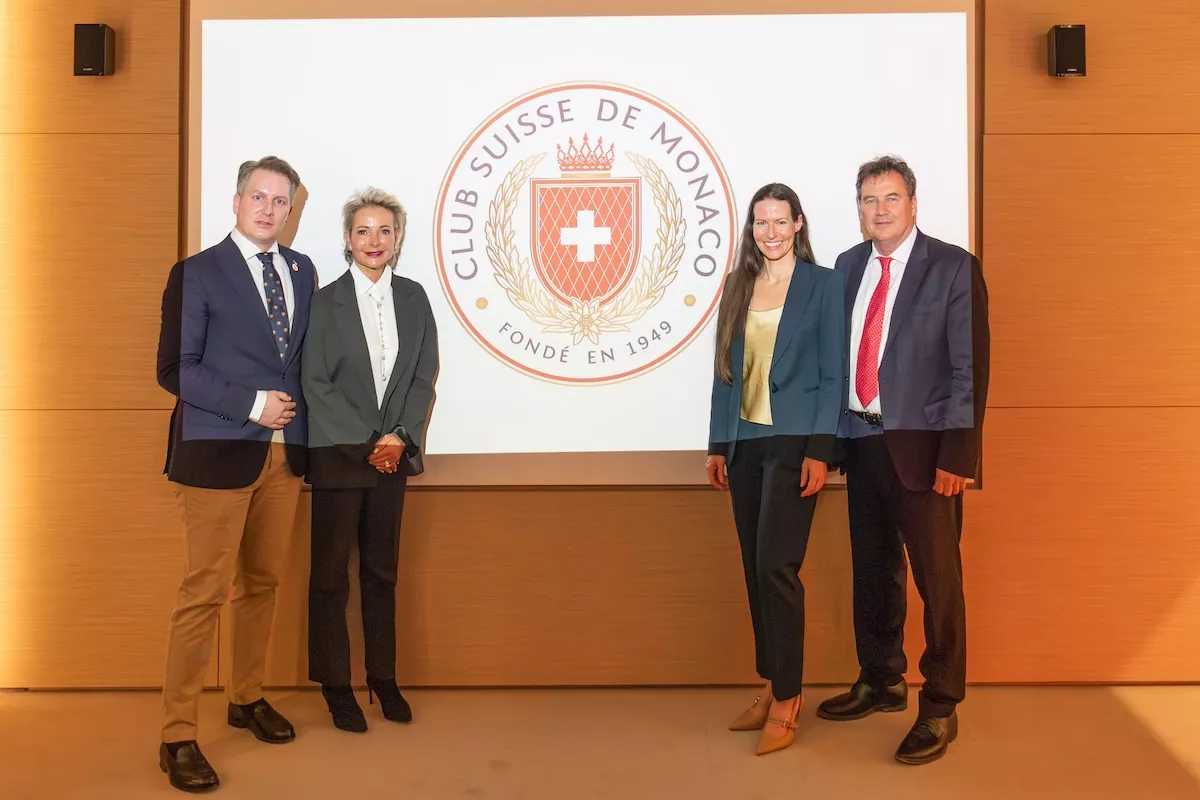
The Club Suisse de Monaco hosted an economic evening at MoNa restaurant on 20th March, bringing together members of Monaco’s Swiss, German and Austrian communities for a discussion on the challenges facing European business and policy.

At the centre of the evening was Christian Freiherr von Stetten, a Swiss citizen and long-serving member of the German Bundestag who embodies a combination rare in German politics: an active entrepreneur who has held elected office for decades. He became self-employed in 1994 in Künzelsau while still a student and today runs a medium-sized business of around 200 employees — bringing direct commercial experience to his role as Chairman of the Committee on Economic Affairs and Energy of the German Bundestag and Chairman of the SME Parliamentary Group of the CDU/CSU faction, which counts 166 of its 208 members.

His perspective, shaped by the daily realities of running a business alongside his legislative responsibilities, gave the evening’s discussion an unusual grounding. He addressed geopolitical tensions, energy policy and structural growth challenges not only as a policymaker but as someone who experiences the consequences of political decisions first-hand — a combination that, as the evening’s organisers noted, is far more common in Switzerland than in Germany.

The gathering also reflected something beyond economics. Representatives of the Club Allemand International de Monaco attended alongside Club Suisse members, and Austrian Honorary Consul Laila Schlereth was among the guests — a cross-border gathering that the organisers described as a practical expression of European cooperation and shared responsibility at a moment of growing continental uncertainty.

The Club Suisse de Monaco, one of the Principality’s most longstanding associations, has long positioned itself as a forum for exchange between politics, business and society across national boundaries.

See also: 

A Club Suisse milestone: celebrating 75 years of Swiss innovation and impact in Monaco

Stay updated with Monaco Life: sign up for our free newsletter, catch our podcast on Spotify, and follow us across Facebook,  InstagramLinkedIn, and Tik Tok.

Photo: Arik Röschke (President Club Suisse de Monaco), Laila Schlereth (Honorary Consul of Austria in Monaco), Natalie Freifrau von Stetten (Entrepreneur), Christian Freiherr von Stetten (Entrepreneur and Member of the German Bundestag)