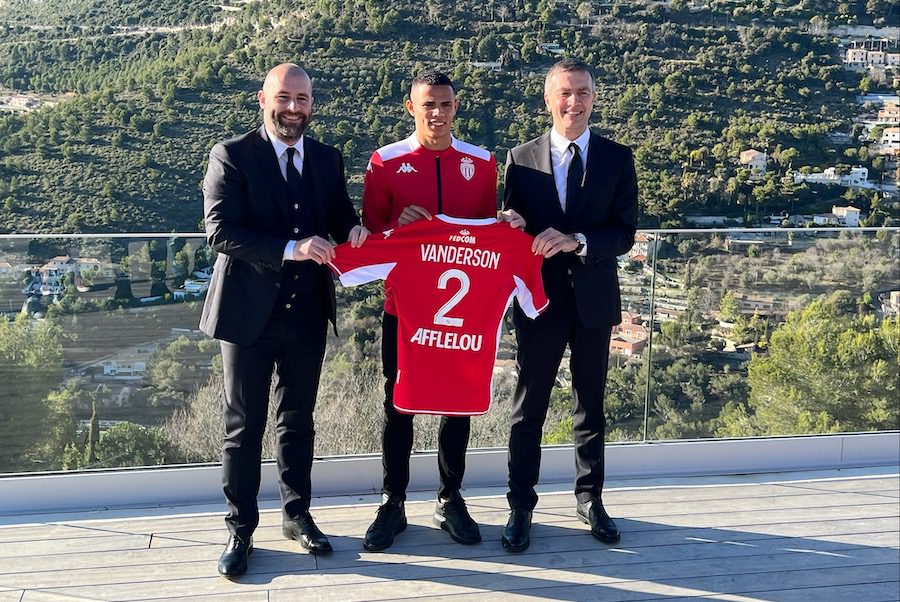
AS Monaco celebrated the start of 2022 with the signing of Brazilian right-back Vanderson on New Year’s Day and on Friday he spoke to the media for the first time.
The new signing began with Vanderson thanking Oleg Petrov and Paul Mitchell for bringing him to the Principality, before he explained his reasons for choosing the side. “Monaco is a big European club, an important club. I want to involve myself in this club, and bring as much joy as possible to our supporters.”
Vanderson will wear the Number 2 shirt previously worn by fellow Brazilian and club legend Fabinho, and the new signing admitted that he had been inspired by his compatriot. “Fabinho, in his game, is a source of inspiration because he had a big impact. He had success and progressed at Monaco.”
Sporting Director Paul Mitchell, who was also in attendance on Friday, believes that Vanderson is a great asset in the medium and long-term. However, he also believes that Vanderson will have an immediate impact at the club, stating that “We need to give him a little bit of time to settle in and integrate, but I think he can have an impact this year for sure.”
Vanderson arrives off the back of an impressive breakthrough season in the Brazilian Serie A. Despite the relegation of his former side Gremio, the Brazilian shone through, registering three goals from right-back, and exciting fans with his dynamic, direct style.
His arrival endangers the future of Djibril Sidibe, and Mitchell told Monaco Life that the Frenchman’s potential departure was factored-in when weighing up the move for Vanderson. “We know that Djibril has a clear contractual situation,” the Englishman said. “We always have to be prepared and to plan for the future.”
The strength in depth in the right-back position should allow Vanderson time to settle-in and adapt to the French league, a process that is being aided by fellow Brazilian’s Caio Henrique and Jean Lucas. “They (Henrique and Lucas) have been a big help since my arrival, for my adaptation and on a daily basis with the group.”
The context of his arrival, coupled with his undoubted talent will allow the Brazilian time to assimilate without a burgeoning pressure to immediately produce match-winning performances for Monaco. Although fans will undoubtedly be treated to glimpses of his capabilities between now and the end of the season, expectations should nevertheless be tempered in the short-term. The hope around the club is that this developing young talent will help propel Monaco to longer-term success.
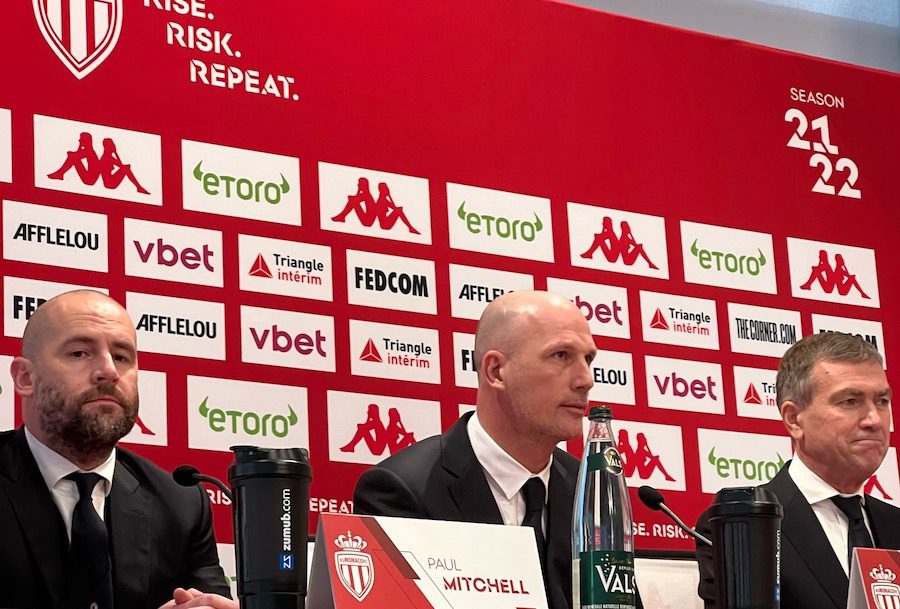
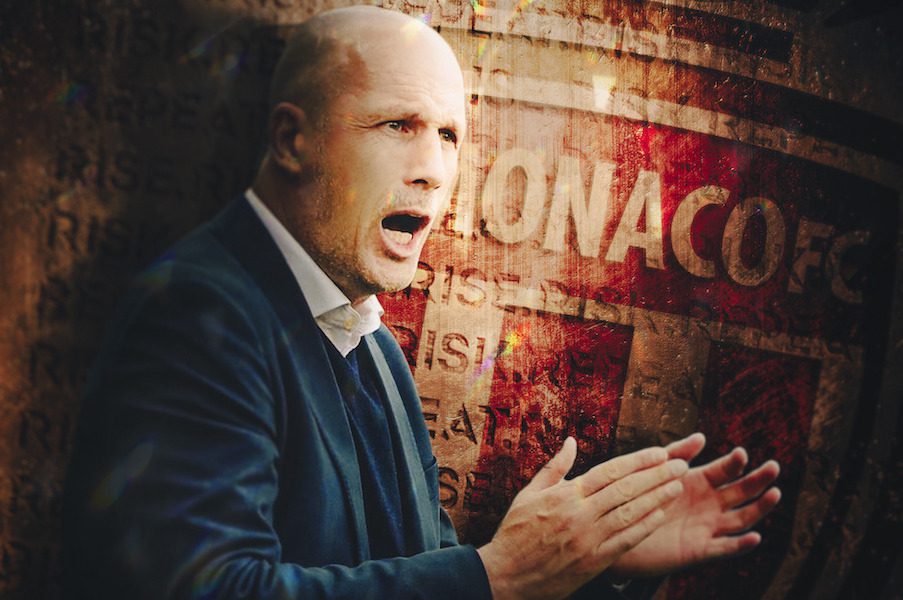
New AS Monaco coach Philippe Clement was flanked by Vice President Oleg Petrov and Sporting Director Paul Mitchell at a press conference on Wednesday as a new chapter in the club’s distinguished history got under way.
Wednesday’s press conference in a packed auditorium at Monaco’s world-class training facilities in La Turbie began with a statement from Petrov, in which he explained the decision to sack Niko Kovac. “At the mid-season break, we did a full analysis of everything that has happened, and that led us to this decision to make the change. It wasn’t an easy decision.” Petrov did, however, thank Kovac for his work. “I want to thank Niko and his technical team massively for everything that they have done. They have put in place the first phase of this sporting project.”
Mitchell sees Clement as the perfect successor to Kovac, as the project put in motion following his arrival in 2020 takes its next step. “2022 brings a new phase to our strategy here at AS Monaco,” the Englishman told the assembled press. He added, “Being a serial, three-time winner at Club Brugge and Genk, we felt he was the right profile at the right time to take this club a step forward in its ambitious project.”
In his first appearance before the press, Clement expressed his delight at having taken up the role: “I am so happy to be here in such an ambitious project. It is an honour to be in one of the top five divisions in the world, and I hope I can replicate what I did in Belgium.”
Asked by Monaco Life about his objectives for the rest of the season, the Belgian chuckled and looked at both the Vice President and the Sporting Director before saying, “Objectives? It’s always dangerous with people like this.” Without wanting to commit to a particular league standing, he continued, “I am someone who wants to win everything. That is always my objective. You have to do everything, every day to be as strong as possible. Creating a core group of winners – that is the most important thing.”
Mitchell also responded to Monaco Life, expressing his confidence in Clement’s ability to extract the club’s enormous potential. “I think the decision that we have come to is that we feel that there is more potential to be had at this moment with these great facilities, with a great team of staff that we have around the team, our constant support from our shareholder and the Principality, and now with a forward-thinking coach like Philippe – a winner, but also a manager with a great history of developing talent.”
The club hierarchy gave off an undeniably defiant, confident tone throughout the conference, as they entrust the next stage of their daring sporting project to Clement, who is champing at the bit to get started and write his own chapter in Monaco.
The luxury industry has changed dramatically thanks to a new generation of HNW consumers, digital advances and, of course, a worldwide pandemic. To understand more, we speak to IUM professor Matteo Atti.
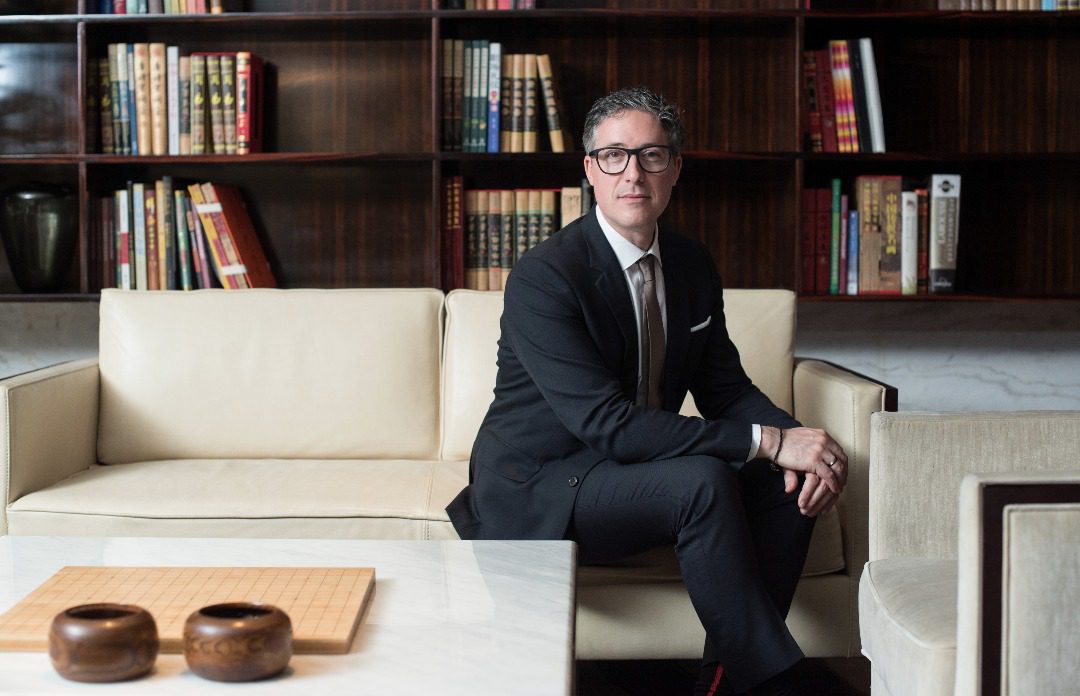
Matteo Atti began his marketing career in luxury powerhouse Gucci before spending many years marketing luxury brands for HNWIs. He is now EVP of Marketing and Innovation at private aviation company VistaJet, and academic board advisor and professor at the International University of Monaco.
Monaco Life: How has the pandemic changed the spending habits of HNWIs?
Matteo Atti: We have not been through an economic crisis, we have been through a social and health crisis, therefore the spending power of high net worth individuals (HNWIs) has not changed dramatically.
They were, however, limited in their opportunity to spend. The pandemic has had an impact on the channels used to sell luxury products, so there are less in-person experiences and more use of digital channels and tools. This means that there are new systems and flows in the power of influence to make people purchase something. The entire pre-sale part has changed dramatically.
What also changed significantly is that luxury brands had to become part of the new cycle. There have been some big headlines over the past year – politics, pandemics, natural disasters, economic shifts… and all of this meant that there was less space for brands to broadcast their story and talk about themselves.
The new way to approach the market, then, is to create a story that fits into today’s needs. But the needs of the day change every two weeks. At VistaJet, for example, we went from building stories around how we can keep people safe at every stage of travel, to offering free flights for governments and repatriations. And that proved to be an incredible success because people saw us not just as a luxury brand, but a brand that can be part of their lives.
Our strategies change with the latest news. The aim is to be part of the story in a way that doesn’t sound like you are detached from the real world.
Speaking of the real world, people’s sense of social responsibility became stronger because of Covid, and figures show that socially-aware millennials will account for 55% of all luxury brand consumers in 2025. How are luxury brands dealing with this shift in social attitude?
We see social responsibility everywhere in fashion at the moment, for example, from how they are sourcing and treating the materials to how they are sourcing workers. We’re not just talking about the environment, we are talking general ESG (Environmental, Social and Governance) factors, including workers’ rights and protection of the value chain.
We also see social responsibility in consumer habits. Luxury brands are now asking themselves how they can change the way they sell so that consumers start to look at their consumption patterns differently and reconsider the value of each purchase and the impact it will have after purchase.
So, I think the general shift is not only in the pre-sale, but also why they sell, and what happens to the product after it has been purchased.
It’s the same story in aviation. We are not only looking at how we can reduce fuel consumption, we are also trying to show our customers the benefit in flying differently. For example, say we have a client in London and a plane in Luton, but the client wants to depart from Farnborough. We offer to drive the client from London to Luton so we avoid doing that extra part of the flight. Most of our customers say ‘yes’ today, but you could never have asked this kind of thing five years ago. The answer in luxury was always, “Yes of course, we will make it happen”. Now, without looking inappropriate or cheap, we are allowed to say: “We believe what you are asking of us is not the best way to do it, can we suggest another way?”.
We are now bringing the customer into the change. We need to mature together in this new way of consuming, and that’s what’s happening across the entire luxury industry. The companies that are trying to do it alone will not have the same resonance as the ones asking customers to come along on the journey.
An engaged customer will talk to their friends about it; they will add value and suggest more ideas. Innovation becomes more of a cooperation, and there is more chance of success if a company grows an idea organically with the customer because they find a middle ground that works for both.
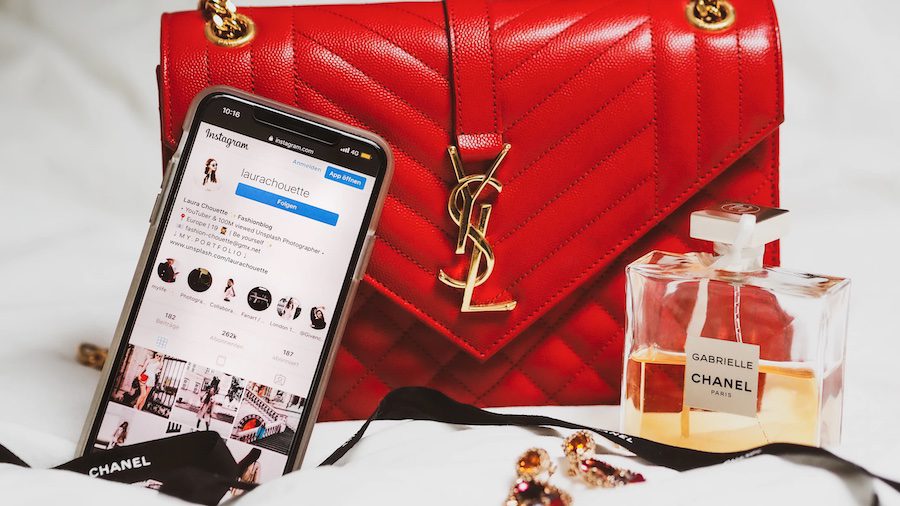
Photo by Laura Chouette on Unsplash
How has luxury marketing changed in real terms?
20 years ago, a brand would organise a big launch of a new product or concept, and everything was packaged up in one way, and one way only. Launches nowadays begin with a teaser phase followed by an engagement phase, a conversation phase, and then an initial launch for the early adopters.
Why? Because brands today understand that customers might have a better idea. They are embracing the fact that they are not in control of the entire conversation. They initiate ideas, but then millennials use various broadcasting models to exchange messages and provide commentary. They add value by giving information on how it can be done better. It’s like going back to the days when people exchanged stories around a campfire. In a way, we are doing what’s most natural to us. Of course, big brands want to guide certain conversations, but they’ve never been so open to public opinion and advice.
How important will e-commerce be to luxury sales in the future?
I think it is important to remember that you cannot force old models into new channels. With a digital channel, you gain something, but you also lose something. You gain immediacy, but you lose the personality. The big doubt in everybody’s mind about e-commerce is – ‘is it true?’, ‘is there a person or a brand behind it that I can trust?’.
We are now seeing the use of gaming and artificial intelligence in the marketing of certain luxury brands. Gucci, for example, has designed an app that offers a new user experience with live streams, virtual try-ons, and Gucci arcade games. Do you see more brands embracing this marketing approach?
We are shifting from a brand, to a brand universe. They are breaking themselves down into small shards, not trying to be the over-arching entity that they were before. Brands today are knocking at the door saying, “Can I be a part of this world? It seems fun, can we do it together?”. It’s about being humble, the opposite of what it has been before.
In terms of sales though, the market is curious about new digital experiences, but the reality is they only dip their toes in. About one in a hundred actually dig their feet in and buy this way. Gucci, for example, sold one of its bags online as an NFT for more than what it was worth in physical form in the store. That will happen once, because it is fun and easy to memorise, but it isn’t the norm.
What luxury trends do you see for the next 12 to 18 months?
We are going through a trend right now – call it revenge spending or the new normal – but there is a euphoria that is tinged with melancholia. The attitude is: ‘I used to do these things before the pandemic and I want to do them again’.
What’s exciting for me is, as people go back to consuming and buying, they are aware of the parts that they want to leave behind and the parts they want to change. It is a beautiful moment as a marketer and a product innovation professional to look at what is still important and what isn’t. There is a lot of space for brands to innovate their products by simply looking at the rebound, because people are not buying the same way. Even if they are buying from the same store or brand, they are asking differently.
There is also a re-evaluation of price-point versus value. We used to have a more traditional luxury crowd, a meatier entry crowd. This has changed completely. There is much less judgement on the price-point of what you purchase, and more about whether you like it. There’s much more acceptance of you designing your own identity or experiences in a personal way, instead of what is dictated by the masters.
Again, I think this is because consumers have an opportunity to debate things with different groups on a multitude of forums and topics of discussion.
What should luxury brands remain focussed on?
The key is the element of surprise, in the thoughtful nature. Luxury brands still need to retain excellence in every area, but they need to come down and look the customer in the eye and say: ‘And for you, I thought of this…’.
Are these the topics that you cover in your course at the International University of Monaco? What kind of students does it attract?
We always have Italian and French students, and the rest are often from mainland China, Hong Kong and surrounding areas, as well as Thailand, Malaysia, America, Africa, the Middle East and Russia. They tend to come from the biggest luxury cities in the world. They have been exposed to luxury and want to make a business of it. Most come with a very entrepreneurial spirit and want to learn the trade, not only from the shop floor.
The focus is business development for luxury, so what does luxury need for the next 10 years? Every country is in a different stage in the lifecycle of luxury adoption and luxury consumers, so each student brings a different facet and fascination with a topic, which makes every class very interesting.
My approach is highly practical. We look at case studies and what is happening in the world, we analyse it and ask how it could have been done differently or what happens next.
This year will be very interesting, looking at how the pandemic and the new distribution of wealth has changed the luxury industry. The strategies have changed, they have had to, because when everything else in a customer’s life changes, so too should the way that luxury brands communicate with them.
Nice Carnival and Menton Lemon Festival still on track
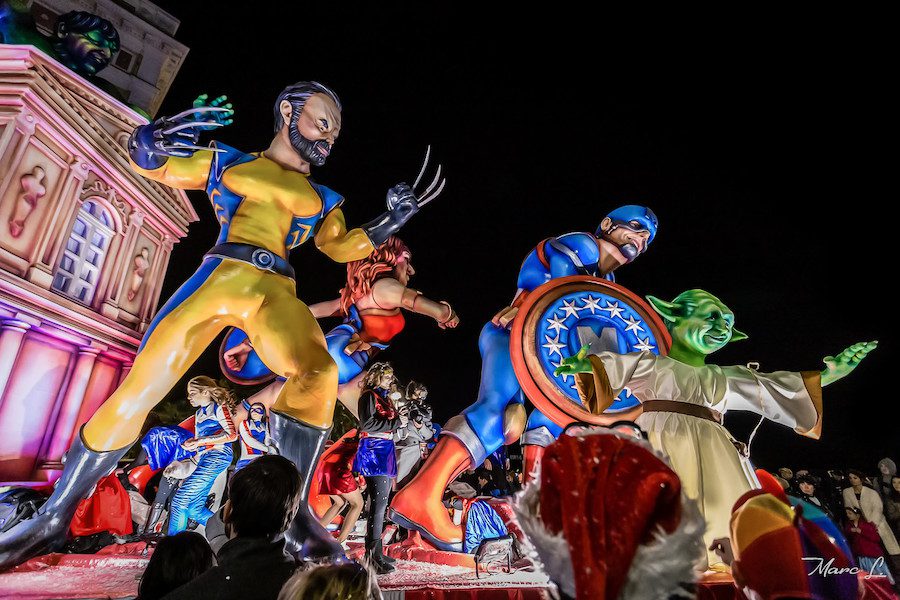
After disappointing cancellations last year, it has been confirmed that both the Nice Carnival and the Menton Lemon Festival will go ahead in February, albeit in abridged forms.
Maybe 2022 really is going to be that year, the year where things gradually begin to shift back toward normal, allowing beloved events to take place and for life to have some semblance of the way it used to be.
Tuesday’s announcements by the mayors of Nice and Menton declaring that both the Nice Carnival and Menton Lemon Festival are going ahead has brought some joy, and relief, to the masses.
Before anyone gets too overexcited, it also has been announced that both events will be held in revised ways to accommodate the health situation, though it is unclear what exactly that means at present.
Nice Mayor Christian Estrosi said on Tuesday afternoon that Carnival will take place on the scheduled dates of 11th to 27th February, but conceded that “given the health situation at the beginning of January, we will not necessarily have an edition such as in the past. We will have to show adaptation and agility, depending on the sanitary conditions of the period.”
“There will be an event-driven, reasonable, reasoned and organised policy. There will not be Carnival as you have known it before but there will be Carnival according to the constraints which will be decreed by the government. It may be that there is no parade at all,” admitted Estrosi, who optimistically followed up by saying, “But in any case, nothing would justify depriving the local economy, the people of Nice, and the people of Nice of this event.”
Mayor Estrosi now has 15 days to clarify what these adaptations will be specifically. Amongst the possibilities are limiting grandstand occupation to 5,000, holding several performances each day, holding some events at the Opera de Nice, and spreading the exhibitions out to different parts of the city to allow visitors to partake in an appropriately socially distanced way.
“Carnival has 30 million economic benefits. It is a very important financial windfall in the winter season,” said Frédéric Gintrand, Vice President of the UMIH Nice Côte d’Azur.
Jacques Joussin, who runs the Hotel Massena, told France 3 that he has 60% to 70% occupancy levels for the second half of February, including groups and tour operators from all over Europe.
“We are ready,” he told the French media station. “We want to welcome our customers in good conditions, even at a reduced level, and with the protocol we have put in place. All the hotels are playing the game on the Côte d’Azur.”
Meanwhile in Menton, Mayer Yves Juhel has said that whilst the show will still go on, it will definitely not be business as usual.
“The corsos and the gardens of lights, which are very high in attendance, are cancelled in order to avoid an excessive concentration of spectators strongly discouraged during this period of pandemic,” he said in a City of Menton press release.
The citrus exhibitions in the Bioves Garden will be on display, though, and will be accessible to all. Merchants and restaurant workers are encouraged to wear lemon yellow to show their festive spirit and solidarity.
UPDATE: It was announced late Wednesday that the other pending event, the Prom Classic, has been cancelled. The first major sporting event of the year in Nice was due to take place on 9th January. The 10km race usually sees 10,000 participants running along the Promenade des Anglais and is a highlight of the new year.
Meanwhile, the other running race which was to take place between Nice and Cap d’Ail on 30th January, the Course du Soleil, is also cancelled, it was announced on Tuesday by the organisers. Runners who are already registered will be reimbursed.
Photo of the 2019 Nice Carnival by Marc Luczak on Flickr
It has been confirmed that Belgian manager Philippe Clement will replace Niko Kovac’s as AS Monaco manager, bringing an end to days of speculation.
The club announced late Monday that Clement has signed a three-season contract with the side, which will run until June 2024. Arriving in Monaco, he brings to an end an overwhelmingly successful spell in Belgium, during which he has won three consecutive league titles as well as the Belgian Super Cup in 2021.
Like Kovac, he also has a wealth of European experience, having contested 40 matches in European competitions, including having led Club Brugge in this season’s unsuccessful Champions League campaign.
Similar to Kovac, Clement asks for intensity in the press and is a forward-thinking coach. He is also a proponent of youth development, with the average of his lineups this season at 25.8 years, slightly higher than Monaco’s average of 24.7 years.
Clement was seemingly the number one choice for Sporting Director Paul Mitchell, as Monaco moved swiftly to acquire his services after the sacking of Kovac on Saturday. By Sunday, Clement was already on the scene as he watched his new side beat Quevilly-Rouen from the stands.
Mitchell was clearly delighted with his latest appointment, saying in a club statement: “His (Clement’s) ability to combine titles with the development of youth players has made him one of the most prominent coaches in Europe in recent years.” The Englishman clearly sees Clement as the man to continue Kovac’s project, adding, “We are convinced that the solid foundations we have been building over the past 18 months, combined with Philippe’s winning experience, modern leadership and ambitious mindset, will take our sporting project to the next level.”
Clement isn’t expect to speak publicly about the appointment until a press conference on Wednesday, but he did say on Twitter: “Looking forward to starting this new adventure with AS Monaco.”
Clement will be expected to hit the ground running. His new side are four points off second place in Ligue 1, but currently sit in sixth. Any losses would therefore see Monaco lose ground in what is an incredibly tight championship, bar PSG, who are running away with the title.
Given Clement’s European experience, he will also be expected to progress in the Europa League as well as in the Coupe de France. He will take charge of his first game this Sunday at Nantes, whilst his first home game will be on 16th January against Clermont Foot.
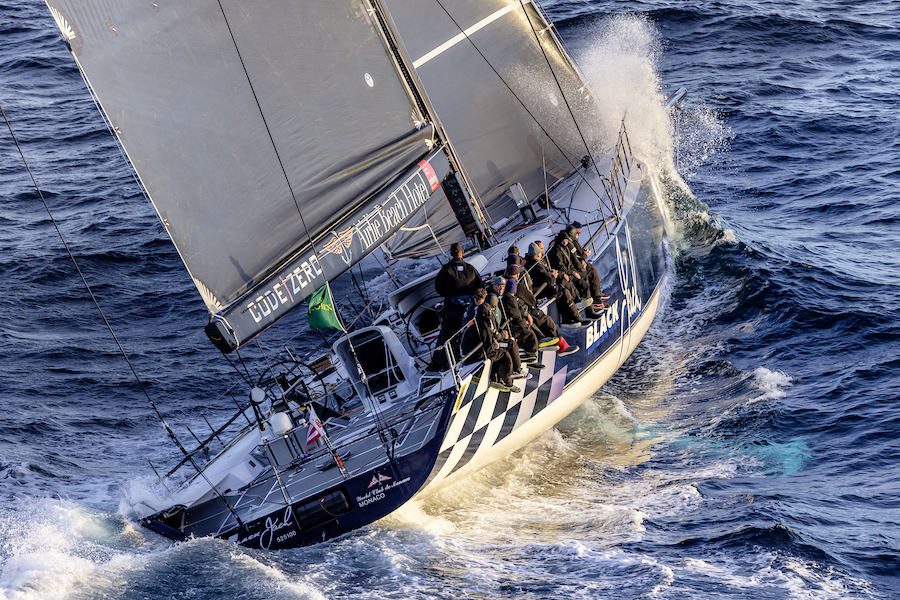
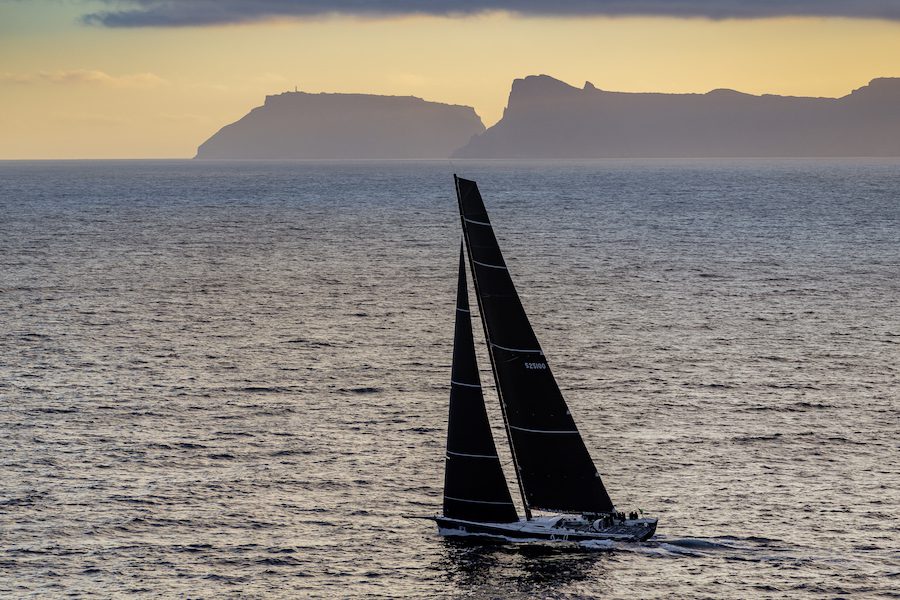
The gruelling 2021 Rolex Sydney Hobart Yacht Race was marked by strong winds and rough seas, but it was Monaco Yacht Club registered Black Jack that took home the title with a time of just over two days and 12 hours.
It wasn’t the fastest race time the Rolex Sydney Hobart Yacht Race has ever clocked, but it was good enough to awards a prize after two days of brutal conditions. With its Monaco flag, Peter Harburg’s Black Jack was the first to cross the finish line in the notoriously tough event, winning with a time of two days, 12 hours, 37 minutes and 17 seconds.
Organised by the Cruising Yacht Club of Australia since 1945, and supported by the Royal Yacht Club of Tasmania, the 2021 version put racers through their paces with relentless seas, shifting winds and strong opposing currents.
The course, which runs for 628 nautical miles (1,163 km) is traditionally hailed as one of the world’s hardest due to choppy seas, often accompanied by severe weather. This year’s race saw 36 of the 88 competitors forced to retire.
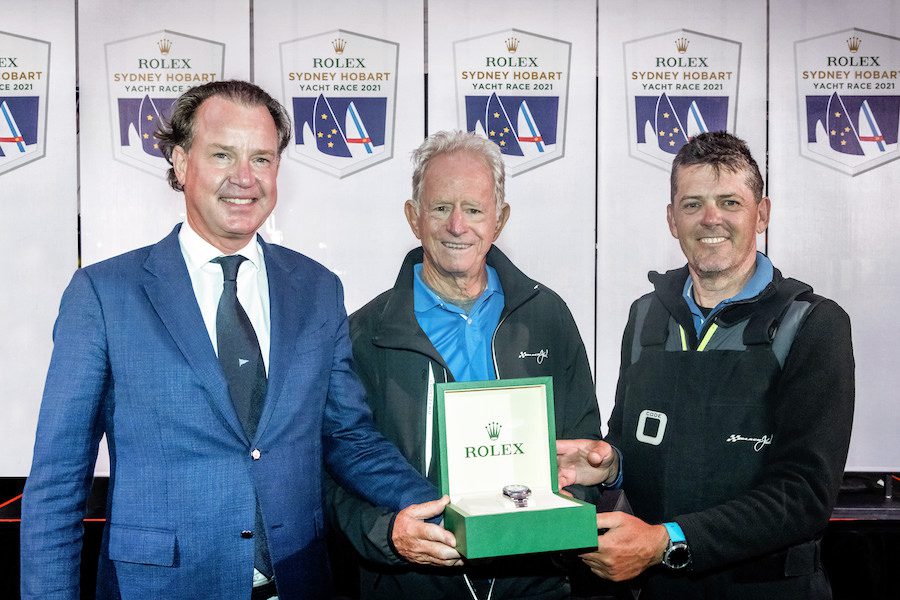
Benoit Falletti (Rolex Australia), Peter Harburg and Mark Bradford. Photo credit: Rolex/Andrea Francolini
In the slowest time since 2004, Black Jack had been in a three-way battle down Tasmania’s east coast beating out LawConnect, who came in second, and third place SHK Scallywag 100.
“It was tough in the beginning. The first 30 hours were pretty rugged,” Black Jack skipper Mark Bradford said. “We had a tough race with both the other (supermaxis). We dropped Scallywag at the end for a bit but she came back and LawConnect was right there the whole way.”
Black Jack Sail No: 525100, Owner: Peter Harburg, Skipper: Mark Bradford, Design: Reichel/Pugh 100. Photo credit: Rolex/Andrea Francolini
Black Jack claimed line honours for the Sydney to Hobart back in 2009 under the name Alfa Romeo, finished fifth in the 2019 edition of the race, and came in a close second to Wild Oats XI in 2018, missing the top spot by a mere 28 minutes.
Owner Harburg was not on the boat this year, saying he would “let the crew do what they do best”, but greeted it at Constitution Dock in Hobart after their win.
Photo credit: Rolex/Andrea Francolini
All the headlines and highlights from Monaco, direct to you every morning