MYS Series: The superyacht game changers

In 2019, shortly before the world locked up and we all thought someone had thrown away the key, two people were busy co-founding a business designed to track and trace more than 1,000 invisible pathogens by monitoring both air and surfaces.
Entrepreneur and scientist Sam Molyneux and entrepreneur and technology expert Elizabeth Caley founded Poppy in the USA along with a team of experts in the fields of infectious disease, health security, bioaerosol physics and microbiome metagenomics.
Meanwhile, on the other side of the Atlantic, Will Faimatea, Founder and Director of the technology management and consultancy firm BondTM, was looking into air quality on yachts. “I read that humidity and temperature were measured on board yachts and I figured more could be done,” says Faimatea.
One day, a mutual friend put Sam Molyneux and Will Faimatea in touch and after one phone call, they knew they were onto something. Says Molyneux, “That was a game-changing moment. We’d already thought of cruise ships but not yachts and the conversation with Will was transformative.”
Bond TM and Poppy are now partners in bringing the pathogen testing device to the Côte d’Azur and the superyacht industry. “Our presence at the Monaco Yacht Show represents our first launch outside America so it is very important for us,” explains Poppy Co-CEO Elizabeth Caley. “We’re very keen to make the invisible visible to the yachting industry.”
This year will be Will Faimatea’s eighth year at the MYS and he is pleased the show is going ahead: “We’ll just have to work around the restrictions, but it couldn’t be more topical this year with the pandemic and with Poppy. From that perspective, I’m very enthusiastic about moving forward.”
Says Molyneux, “There’s an urgent need to improve safety in indoor spaces, and Elizabeth and I are looking forward to introducing Monaco and the yacht industry to our pathogen security system and telling the story of what is possible when you bring biotechnology to indoor spaces, whether they are at sea or on land. We are also keen to learn how we can support the region and yachting in general. I’m positive there will be a lot of receptivity from yachts hoping to create safer voyages.”

Poppy, a new pathogen detecting device, will be presented during this year’s Monaco Yacht Show in partnership with BondTM

So, what is Poppy? Simply put, the aim of the Poppy device is to make the invisible visible, which the company already does for a variety of spaces such as offices, airports and large performance spaces in America.
The same technology is now available to ships and yachts at a time when it has never been more challenging to navigate airborne infection risks. The detect and monitor device can also be used to identify molds, pests, food-borne bacteria and pathogens like salmonella. “Our ultimate goal,” says Molyneux, “is to produce something that we can call infection-resistant ships that ensure safe voyages for guests, crew and vessel.”
This is done by installing a ‘collector’ device on the yacht that takes samples from the air. The device spits out a DNA tracer created by the Poppy scientists that circulates the yacht in the same way that human breath and pathogens do. “With our technology, such as genetic sequencing and computational analysis, we can map and measure how pathogens move in invisible ways throughout the indoor space,” explains Molyneux. This gives analysts a perfect image of airborne pathogens and it also reflects how ventilation and other safety measures are working onboard.
The second part of the process involves collecting samples of the air in cartridges on an ongoing basis and when the yacht comes to port a biotechnology lab will analyse the presence, identity and changes of 1,000 health related organisms.
The first lab will be based in Monaco and, in close collaboration with BondTM, will eventually role out across the Mediterranean.
A presentation of the track and trace device will take place at the Luxury Lounge next to Steak and Shake on the evening of Friday 24th September.
 

At close quarters with: Will Faimatea, Founder of BondTM

Where were you born?
Revesby, near Sydney, Australia.
If you weren’t Founder of BondTM, what would you be?
If rotation existed back when I worked on yachts, I’d still be an Electro Technical Officer on a superyacht.
What’s your advice for someone looking for a career like yours?
Be inquisitive, and do what you do better than it’s been done before.
Worst career moment?
When you start your own business, you have to get out there and do public engagements. I remember dreading the Superyacht Forum, but I’m much better now.
Most difficult part of your job?
Weaving through the business of politics. Sometimes there is a curtain, and you don’t know what’s behind it.
Best part?
Working with great partners like Elizabeth and Sam!
What are you most proud of?
I’m proud of developing BondTM to a place where a company like Poppy would consider us as a partner.
Favourite meal?
Veal milanese.
A figure you admire?
Michael Jordan and his single-mindedness.
Favourite restaurant in Monaco?
Caffé Milano or the Quai des Artistes.
 
 
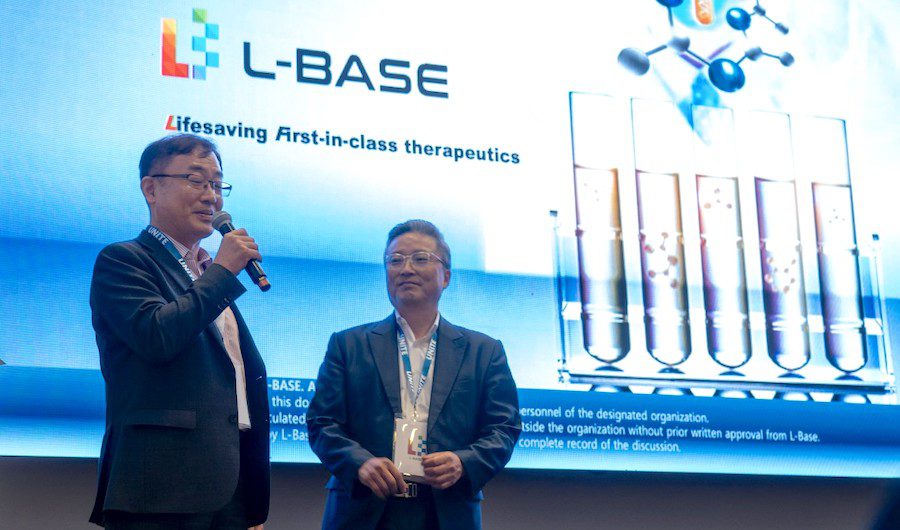
Top photo: Will Faimatea on the left, Sam Molyneux on the right


MYS to showcase yacht available to buy with bitcoin

The owner of Azteca, a 72m CRN yacht, says he will accept full payment in bitcoin. The superyacht will be paraded to potential buyers at this week’s Monaco Yacht Show, with an asking price of €65 million.
It is the first time that Azteca has been put up for sale since her delivery in 2010. Her owner, Ricardo Salinas Pliego, owns retail, banking and Mexico’s second largest TV network, TV Azteca. He is also a renowned supporter of cryptocurrencies like bitcoin.
 
The superyacht, whose most recent refit took place in 2021, is jointly listed for sale by Edmiston & Company with Camper & Nicholsons International.
“Although cryptocurrency transactions are starting to be reported in the industry, the announcement makes Azteca the largest yacht ever available to be purchased with bitcoin, it is believed,” said Camper & Nicholsons International in a statement.
Azteca will be on display at this year’s Monaco Yacht Show, taking place in the Principality between 22nd and 25th September.
 

Heavy-hitters in Nice for Transition Forum

The 4th edition of the Transition Forum is coming to the Palais de la Méditerranée in Nice and is dedicated to fostering cooperative efforts between decision makers and civil society to create eco-friendly solutions for tomorrow.
The Transition Forum will take place on 30th September and 1st October, welcoming innovators, investors, entrepreneurs, researchers and decision makers to meet with members from the business world who are looking to make the transition to more ecological ways of working – from high government officials such as France’s Minister of Economy, Finance and Recovery Bruno Le Maire and Nice Mayor Christian Estrosi, to business leaders like KLM Managing Director Anne Rigail and Deputy Governor of the Banque of France Sylvie Goulard, to members from the scientific and research world including Hervé Le Treut, Climatologist and Research Director at CNRS.
Launched in 2018 by Aqua Asset Management, the Transition Forum is “an exclusive annual gathering of global influencers and change makers in business, government and civil society, investors, startups, top researchers, and scientists who share our vision for a clean and sustainable future.”
This year’s edition, themed Time to Cooperate, is dedicated to the development of new co-operations to accelerate the ecological transition and to enable an effective implementation of the Green Deal.
The event focuses on four topics: mobility, food, housing, and production and consumption.
The mobility part will consider energy and transport alternatives, food takes a look at sustainable farming and reducing natural resource depletion, housing will address the problem of keeping up with infrastructure and basic social needs of an ever-growing world population, and production and consumption is looking at ways to modify the way we produce and consume goods and resources.
“Public-private collaboration is essential to build new economic models compatible with the ecological transition, to support the development of territories and solutions for the protection of the environment,” say the organisers of the event.
Monaco Life is proud to be a media sponsor of the event.
To register, click here: https://transitionforum-2021.vimeet.events/fr/question/209
For more information on the Transition Forum, click here: https://nice.transition-forum.org/


Blue Air ends decade-long monopoly

Nice Côte d’Azur airport has celebrated the inaugural flight of new low-cost airline Blue Air, offering a Nice to London-Heathrow direct link from €30 one way.
Blue Air is a Romanian low-cost airline which has been operating a Nice to Bucharest service at the French Riviera airport.
On Thursday 16th September, the airport celebrated the first flight of Blue Air’s new route – Nice to London/Heathrow, onboard a 189-seat 737-800.
Until 29th October, two flights will be offered weekly on Thursday and Sunday, increasing to four weekly flights from 30th October, with fares starting at €30 one way.
With this London route, Blue Air is now in competition for direct flights with British Airways.
“We are thrilled to launch today this highly demanded service between the two of Blue Air core markets – London – Heathrow and Nice Côte d’Azur, ending a nearly decade of monopoly service and adding greater and more affordable travel options to the market,” said Krassimir Tanev, Blue Air Chief Commercial Officer. “We are happy to bring our outstanding service and low fares to the benefit of our Heathrow customers and we are aiming to develop the route to a daily service in maximum six month period.”
 
 
Photo source: Nice Côte d’Azur airport


Passing through Monaco: Joblio Founder Jon Purizhansky

Jon Purizhansky is a New York lawyer with years of international experience in leveraging technology to bring transparency and efficiency into otherwise non-transparent global ecosystems.
He is also the Founder and CEO of Joblio, a digital platform that prevents fraud, protects human rights, and provides a transparent and efficient hiring process for the global labour market.
“Joblio technology brings the light into the darkest space in the world – the industry of the global relocation of human capital.”
Monaco Life: What is the backstory of how you come to be where you are today?
Jon Purizhansky: I’m a refugee myself. I was born in Belarus in the former USSR and when I was 16, my family ran away to Austria with nothing, then to Italy. I was a stateless person in Europe in my teens, before I went to law school in New York and started practising immigration law. So, my whole life I have lived with a suitcase next to my bed.
I worked in global corporate location, which is basically moving people from anywhere to anywhere, and I saw all of the inefficiencies within the space that are primarily connected to the fact that unskilled labour migrants – who make up 90% of the global labour force – are not directly connected to their prospective employer in other countries.
Then how do these workers get jobs abroad and where’s the problem?
Irrespective of whether you are an African, South East Asian, Latin American or in the former Soviet Republics, for example, if you are an unskilled person and the local economy is unable to support you, you go to an ‘agent’ who sells you an opportunity to work abroad. But what actually happens in these relationships is that the agent becomes a sales person, and the prospective labour migrant becomes a consumer of a service, so the sales person is driven to present an opportunity more favourably than it really is so he or she can charge more money.
Essentially, if you’re an engineer and you live in India, you have the sophistication that is required to find work in a developed country and hire a lawyer or a consultant to facilitate the bureaucratic process. If you are a 22-year-old farmer in Nepal, you lack the sophistication, which is why you go to an agent.
Now, what happens is they don’t actually have any money to pay these agents. More than 60% of sub-Saharan Africa lives on 50 dollars per family per month. In Caracas, Venezuela’s capital, you’re lucky if you make a dollar a day. If you go into the provinces, you make less.
So, what they do is they borrow money, say 10,000 dollars, from predatory lenders or from family, based on the agent’s promise that they are going to make 2,000 dollars per month. They figure they’ll pay back the loan in six months.
They show up with a work visa class D here in Europe, for example, and all of a sudden they have a Polish employer who has no idea how to feed them because they eat rice and he’s offering bread and lard, they’re only making 800€ per month so they’re not earning enough to service the loan which is collateralised by their loved ones back home, and they run away.
This is how the European Union gains illegal immigration, crime and all sorts of human rights violations. All this stems from the fact that unskilled labour is recruited unethically today across the world. The agents are transactional and they add zero value.

Photo by Tim Mossholder on Unsplash

How many people are we talking here?
The IOM (International Organisation for Migration) says that there are just south of three hundred million labour migrants in the world. In reality, the number is closer to a billion, because who is counting the intra-continental migration, all the people moving from Botswana to Rwanda, Bolivia to Chile, etc? Nobody knows.
How does your technology change this scenario?
Joblio is a technology-powered, social impact project, a private enterprise that connects unskilled and low-skilled prospective labour migrants with employers in the developed world.
How it works: an employer posts a job on Joblio, and the employee can go on the app, find a job, review the position, analyse the opportunity, be directly connected to the employer, and pay nothing.
As technology has walked into our lives via the smartphone, there really should be no reason why potential employees cannot be connected with their employers directly, thereby driving out the middle man.
But do all these people really have access to smartphones?
The proliferation of smartphone technology is unstoppable, it’s all over the world. Around 40% of Sub-Saharan adults have smartphones, and over 90% of south-east Asia owns a smartphone because refurbished Android phones in China cost a couple of dollars.
What’s in it for the employer?
Let’s say you are an employer with an agricultural company, a mega farm in Spain where you grow oranges. You need 5,000 people to pick oranges. Of the 5,000 workers who come, 4,500 of them were told they would make triple the money. They show up, they’re disappointed to be making a third of what they were promised, and they run away.
Now you, the employer, don’t have the people to pick your crops, thereby drastically reducing your efficiency and losing you money.
Here is another example: You are a construction company and need 100 painters to come and finish a job. All of a sudden, a bunch of guys from Nepal turn up who are promised that you are going to train them, but you actually needed trained staff. The construction industry suffers enormously from problems like this.
Why do you consider yourself a social impact project?
Our quest at Joblio is to create the most powerful impact in the world, as our total addressable market is the largest in the world and our business model evolves around the protection of human rights. The employer’s relationship with the employee does not begin when the employee commences the job, the relationship begins when the employee is recruited back home. That’s where the problem stems from. Joblio won’t get rid of child labour completely, but it will reduce it drastically; it won’t end the exploitation of women altogether, but it will reduce it drastically. For example, imagine you are a Philippine nanny and you live outside in the jungle somewhere in Cebu. You take a 20,000 dollar loan and your husband stays behind collateralising the loan, but you end up working for some weirdo who begins harassing you. Because you are unsophisticated in your thinking and lack the support, you are afraid to complain because you might lose your job and can’t pay back the loan, or you run away.
With Joblio, in every host country, we maintain three sets of legal expertise – immigration law, tax law, labour law. We advocate to those who don’t have a voice, and we protect human rights by being a private enterprise, solving a huge problem for the corporates. But we want to know that you are getting paid on time, because our fee is connected to how much you get paid.
Joblio stays with the labour migrant until they return to their home country.
Photo by Daniel Mensah Boafo on Unsplash

What impact has Covid had?
Covid has impacted labour migrants enormously. Allegations of abuse filed with the International Labour Organisation during Covid have increased 275% because of the position people have found themselves in.
What do governments stand to gain out of this?
This is the eco-system: there is the migrant, the employer, the government of the host country and the government of the originating country. In today’s environment, the government of the host country is at a loss because it gains illegal immigration, human rights violations, crime and loses tax revenues because people run away and don’t pay taxes in these relationships.
The government of the originating country is at a loss because GDP is largely dependent on people sending money home from abroad. Joblio steps into this ecosystem and rearranges the elements within it by taking out the middle man who adds no value and who creates human rights violations and inefficiencies for the government and the employers alike. We kick them out and we bring transparency, compliance and human rights into this where now everyone wins. The worker is no longer cheated, the employer gets the staff that they need thereby creating revenues and optimising efficiency, the government wins because the human rights violations and crime are reduced and it gains money from taxing these employment relationships, and the government from the originating country wins because it gets to profit from the money sent home.
Where is Joblio at now and where is it going?
We employ a number of diplomats who work with the United Nations and we deal with all the ethical recruitment initiatives based on the Montreal Recommendations on Recruitment of 2020, and the United Nations Sustainability Goals, point number four of which is the end of slavery, point number eight is fair employment. All C-level executives at Joblio are refugees.
Every day, there is a family that we are helping. We launched a business development operation in Poland and Romania, and we’re experiencing explosive growth. In the UAE, we are integrating with the Ministry of Resources.
Our objective is to become the global standard and platform for cross-border employment, utilised by corporates and governments throughout the world.


MEB Member’s Meeting reveals packed schedule

The Monaco Economic Board met on Tuesday for their 39th annual Member’s Meeting at the Yacht Club of Monaco, with over 220 entrepreneurs in attendance.

Now that summer is over, it’s back to business for the members of the Monaco Economic Board (MEB). On Tuesday 14th September, they met for their annual Member’s Meeting where Executive General Director Guillaume Rose presented the organisations upcoming events, highlighted what the MEB offers adherents, and spoke of the variety of collaborations being displayed with regard to the digital and energy transitions taking place in Monaco.

The health pass obligation and the requirement that guests stand rather than be seated did not seem to deter the assembled group who were just pleased to be carrying on a semblance of business as usual.

President Michel Dotta delivered a welcome speech followed by Mr Rose’s plan of action for the upcoming year, which included economic conferences with renowned speakers such as Jean-Pierre Petit, President of the Cahiers Verts de l’Économie on 17th September, Ludovic Subran, Chief Economist of the Allianz Group on 14th October, and a destination conference dedicated business in Singapore with Ruchdi Hajjar of SGMC Capital on 23rd September.

Michel Dotta and Guillaume Rose with the members of the Board of Directors present, from left to right: Jean-Humbert Croci, Treasurer (representative of the Order of Chartered Accountants
of Monaco) – Françoise Gamerdinger (Director of Cultural Affairs, appointed by ministerial decree) – Martin Péronnet, Secretary (DG of Monaco Télécom) – Tais Ragas (representative of the Junior Economic Chamber of Monaco) – Johanna Houdrouge (representative of the Monegasque Trade Union of Enterprises of International Trade); PhilippeOrtelli, Vice-President (Managing Director, Monegasque Construction Company).

Additionally, the MEB will be hosting a trade show on 6th October in conjunction with the Monaco Yacht Show and Monaco Business where they will formalise a partnership with the Italian Chambre of Commerce Nice, Sophia-Antipolis, Côte d’Azur.

An economic mission to Antwerp is scheduled from 28th to 30th September and several trips are being planned to go to Dubai, particularly during the Expo 2020. They will be hosting a delegation from Austria on 8th and 9th November as well as during the Ambassador’s Gala of Destination Monaco on 4th December.

The MEB will also be present at the 10th Eco Monaco Cub Trophies on 30th November.

Mr Rose ended his talk by speaking of the actions carried out with the Interministerial delegation in charge of the digital transition, such as digital workshops, as well as the MEB’s work with the Digital Transition Mission, including the popular MENinars, incentives for companies to join the National Energy Pact as part of membership registration and encouraging members to promote the Green Fund.

After the presentation, there was cocktail reception where networking opportunities took front and centre.


Photos provided by the MEB