“Ocean rights, like human rights, is about shifting our core values”

Efforts are underway to create a Declaration of Ocean Rights, similar to the concept of Human Rights and the Rights of Nature, giving the ocean legal status and the fundamental right to be protected. Michelle Bender, Founder of the Ocean Rights framework, tells us exactly how the declaration will work.

It was during Monaco Ocean Week, on Thursday 24th March at the Yacht Club of Monaco, that Relay4Nature was held, organised by the Ocean Race.

The issue on the table: Why do we need to give the ocean legal rights, and what does a Declaration of Ocean Rights actually look like?

“We have to talk about rights because of the way our western system is constructed,” says Michelle Bender, founder and creator of the Ocean Rights framework. “It’s a rights-based system and, unfortunately, if something is rightless, it is an object, a resource, property or utility. We have to shift how we value and treat nature, and rights is one way to do that.”

Bender is an environmental law and policy specialist at the Earth Law Centre in America. She also serves on the Executive Committee for the Global Alliance for the Rights of Nature, a network of organisations and individuals committed to advancing this new paradigm internationally.

According to the Rights of Nature doctrine, an ecosystem is entitled to legal personhood status and, as such, has the right to defend itself in a court of law against harms, including environmental degradation caused by a specific development project or even by climate change.

The Rights of Nature framework recognises that an ecosystem has the right to exist, flourish, regenerate its vital cycles, and naturally evolve without human-caused disruption. Furthermore, when an ecosystem is declared a “subject of rights”, it has the right to legal representation by a guardian who will act on their behalf and in their best interest.

“We are really building upon a global momentum,” says Bender. “Rights of Nature is now in over 20 countries in some shape or form – at the global level, as well as the national, constitutional, and even parts of the judicial level. It’s this understanding that human wellbeing and human rights are embedded within and dependent upon nature – the air, clean water, jobs, our livelihoods. Rights of Nature is about recognising this reality in the legal system.”

The Relay4Nature discussion panel featuring former Ambassador to the UN for the Seychelles Ronny Jumeau, Ocean Campaign Director Michelle Bender, and Marine Biologist Dr. Antonio di Natale. Photo: Monaco Life

Michelle Bender points to Ecuador, which in 2008 became the first country in the world to recognise the Rights of Nature in its constitution, and the right of its citizens to defend and protect nature.

“We are learning a lot from Ecuador because it has been over a decade since the Rights of Nature were included in its constitution. To be honest, there are some challenges with implementing this, as we see with the Universal Declaration of Human Rights. We have these aspirations, but in order to put them into practice, we have to look at how we can implement their enforcement within national policies, the judicial system… Ecuador is showing us how we can construct these standards of decision making and principals for governance.”

Bender gives an example of the precautionary principle, which she says is a staple of environmental law. “Within Ecuador’s environmental code, they have evolved this principle to ‘in dubio pro natura’, from ‘When in doubt, err on the side of caution’, to ‘When in doubt, err on the side of nature’. It’s an evolution of the principle, saying that, in the absence of scientific certainty, we have to take preventative and restrictive measures.”

The second issue to consider is the standards: What is a healthy ocean? What is significant adverse harm? “We have to look at how to define what a healthy ocean is, based upon what the ocean needs to be healthy. It must be able to restore and have integrity.”

Finally, says Bender, the ocean needs to be given a voice and a seat at the table. “More than 20 ecosystems have already been taken out of normal property and designated as legal entities subject to rights,” says Bender. “Much of this has been in Colombia – the rivers, national parks, and the Colombian Amazon, but also in New Zealand – the Whanganui River, and the Ganga and Yamuna rivers in India.”

The New Zealand case is unique because the Parliament finalised the Te Awa Tupua Act, appointing two guardians of the river: one representative of the Maori Indigenous people and one representative of the government, arguably reconciling two different worldviews.

By giving the ocean a voice, it creates new management bonds; it becomes the duty of its representatives to have respect for the intrinsic value of an ecosystem, and also to speak on behalf of that ecosystem’s interests and needs. “If we’re talking about equity for all stakeholders, representation of all to shape the future, the ocean needs to be one of those stakeholders,” says Bender.

Creating a Declaration of Ocean Rights

Using New Zealand as an example, Bender says the first step is the establishment of a scientific and technical body to review the decisions and impact assessments, and help decide what activity to allow, to what extent, and how to protect areas beyond national jurisdiction.

Indigenous peoples, small island states, and local communities who are on the frontline of the climate crisis, must be included in this group, she adds.

“The concept of ocean rights and rights of nature is something that they understand deeply,” says Bender. “They have a strong relationship with the ocean, it is a source of life for them, it is an ancestor. They have customs and customary law that recognises their responsibility to be stewards and custodians of the ocean, and this has helped guide local governance of human activity in more of a reciprocal and harmonious manner. We can learn a lot from them, but we must do it in a very ethical way, being careful not to appropriate the knowledge.”

Photo by Rishi, Unsplash

She adds, “We are really likening it to the Universal Declaration of Human Rights or the Universal Declaration of Indigenous Peoples because we have these first and foremost rights, but they are also aspirations and understandings. Focussing on rights is really about what our values are and the shifting of our core values. One way to look at that is in principles – what principles are we going to have for governance that will hold us accountable?”

Granting the ocean legal rights might help arm it against injury under the law, but how does that translate into reality? Giving legal status to ecosystems has so far been mostly symbolic, and the success of a lawsuit is largely based on how a case is framed and the interests of the claimants. But as the number of lawsuits grows, a precedent will hopefully be set for national and local governments to act on biodiversity conservation by opposing projects that might prove destructive to a particular ecosystem.

What about the Law of the Sea?

The ocean is not completely unprotected from a legal standpoint. There exists the Convention on the Law of the Sea (UNCLOS), signed in 1982 by 117 States and entered into force in 1994. However, it is restricted to the geographic jurisdictions of coastal States and the rights and duties among those States in the use and conservation of the ocean environment and its natural resources.

According Michelle Bender, UNCLOS is an outdated reference that focuses on state sovereignty, the right to exploit, and freedom of the seas.

“Article 192 creates the obligation for States to protect and preserve the marine environment, but there is no framework to implement or enforce this provision, nor really hold States accountable, especially in areas beyond national jurisdiction. The negotiations to agree on a treaty to protect biodiversity on the high seas are underway and is going in the right direction, but we still see our effort as different.”

Monaco is part of this alternative push for a new treaty on the high seas. As a member of the intergovernmental conference, it contributed to the fourth and final session this month, finalising details for an international legally binding agreement for the conservation and sustainable use of marine areas beyond national jurisdiction (BBNJ).

Still, Michelle Bender sees the Declaration of Ocean Rights as a completely separate, and fundamentally essential, set of rules.

“A Universal Declaration of Ocean Rights would create a new overarching framework rather than be integrated into existing agreements like UNCLOS,” she explains. “Earth-centred governance places human society within natural systems. It would create a fundamental change in the values and ethics that underlie our legal, governance and economic systems. In this process, we are asking ourselves what the ocean needs to be thriving and healthy, and how we can better manage human activity in a reciprocal and ecologically sustainable way.”

The next steps

In order to define the principles of the Declaration of Ocean Rights, a series of innovation workshops are being held, gathering together stakeholders and representatives, including lawyers and scientists, but also community members, indigenous peoples, government members and officials, those who are actively involved in ocean conservation. The aim is for the principles to be agreed upon by September 2023.

Then, the declaration must be ratified by States at the UN level, ideally no later than 2030. It is the year when, hopefully, a campaign to protect 30% of the oceans comes to fruition. Currently, only 2.7% of the world’s oceans are completely protected from commercial fishing, mining, oil drilling and other destructive activities.

Michelle Bender acknowledges that the implementation of the Declaration of Ocean Rights, its enforcement, and defining the commitment of individual States, will be the most difficult aspect: “Just like with human rights, it will probably take some time. But we must put the ocean at the centre of governance, and ask ourselves: how can we transform our relationship with nature?”

Discussions will continue at the United Nations Ocean Conference in Lisbon on 25th June.

Click on the video below…

https://www.instagram.com/p/Cbz4QKYDa7L/?utm_medium=copy_link


Photo by Janko Ferlič on Unsplash


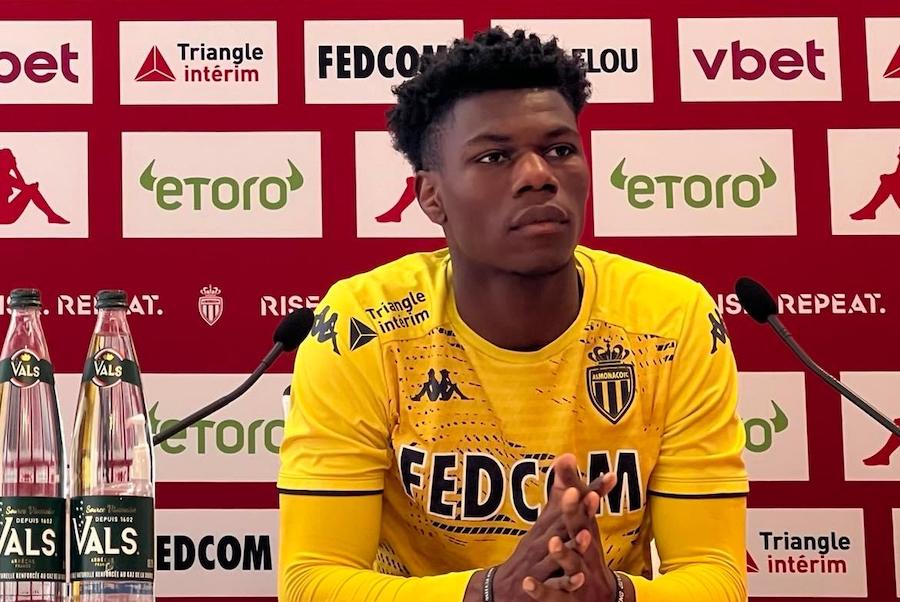
AS Monaco enters into partnership with NFT agency

AS Monaco became the first club in Ligue 1 to step into the metaverse by signing a partnership with Capital Block, a move designed to strengthen its NFT strategy.

Having dipped their feet in the NFT water back in August through their partnership with Sorare, AS Monaco have now gone a step further and, in doing so, become the first Ligue 1 club to collaborate with an NFT consulting agency. They are also one of the first to do so in European football.

Capital Block will help the club with their NFT strategy as it traverses a novel industry, which football clubs are only just starting to engage in. Principally, it will advise ASM on the creation and launch of its NFTs, as well as which NFT platforms to partner with.

The partnership will also bring something new to AS Monaco fans, or at least those engaged in the NFT community, as plans for exclusive products and experiences are already being drawn up.

In a press release from the club, Vice-President Oleg Petrov said, “We are pleased to launch the partnership with Capital Block, which will enable AS Monaco to strengthen its positioning in the field of digital innovation and improve the possibilities for fans to connect with the club.”

Petrov added that the use of NFTs will be a big part of the club’s strategy going forward, highlighting the importance of the new partnership in reaching their goals. “Each passing day confirms the growing appeal of NFTs. Capital Block’s expertise will enable us to better understand this universe, to grasp the issues related to it and define a solid and sustainable strategy,” continued Petrov.

Tim Mangnall, CEO of Capital Block added, “We are delighted to be working with AS Monaco and we are really looking forward to hitting the ground running with the club.”

Mangnall says he is confident of what his company can bring to everyone around the club: “We are really excited that football clubs across Europe are starting to realise the importance of an NFT strategy, and those that do, will benefit in many ways, as will their fans.”


ROKiT Venturi makes historic partnership with CBD innovator

Monaco-based E racing team ROKiT Venturi has broken the mould once again, this time partnering with Craft 1861, the creator of CBD-based wellness products and technology.

The deal, announced on Thursday 31st March, makes ROKiT Venturi the first ever motorsport racing team to partner with an industry from the CBD sector.

CBD, otherwise known as cannabidiol, is a natural compound found in hemp plants and promotes wellness without the intoxicating and psychoactive effects.

As the team’s Official Wellness Partner, Craft 1861 will play a supporting role in both the physical and mental wellbeing of the team, monitoring team performance throughout the 2021/22 FIA Formula E World Championship and beyond.

“Craft 1861 is an innovator in the field of CBD innovation and we are proud to be part of their global brand development journey,” said Susie Wolff, CEO of ROKiT Venturi Racing, in a statement. “Craft 1861’s focus on the creation of sustainable product innovation without compromising on quality is something we really identify with as a team and, by partnering with ROKiT Venturi Racing, Craft 1861 will be engaging with the eco-conscious dynamic and progressive Formula E audience demographic.”

Photo source: ROKiT Venturi Racing

According to Craft 1861, its products interact with the body’s metabolic and neural receptors that regulate pain, the immune system, memory, stress response and other functions, to sharpen human performance in high-pressure environments, such as in Formula E.

From the Rome E-Prix onwards, Craft 1861’s branding will appear on the front wing and headrest of the team’s new black livery as driven by Edoardo Mortara and Lucas di Grassi, on driver racing suits, and on team clothing.

“We are thrilled to partner with ROKiT Venturi Racing Formula E team,” said Eric Lujan, Founder and Chief Revenue Officer of Craft 1861. “Our company is proud to be the first CBD company in Formula E. We offer CBD hemp products to those focused on wellness and a healthy lifestyle, which is the perfect match for the rising millennial FE fan.”

In mid-February, ROKiT Venturi Racing announced that the team had partnered with alcohol brand Stoli elit Vodka as its principal sponsor.


SEE ALSO:

Stoli vodka group becomes Venturi’s major sponsor

Rokit Venturi Racing ends season with victory in Berlin


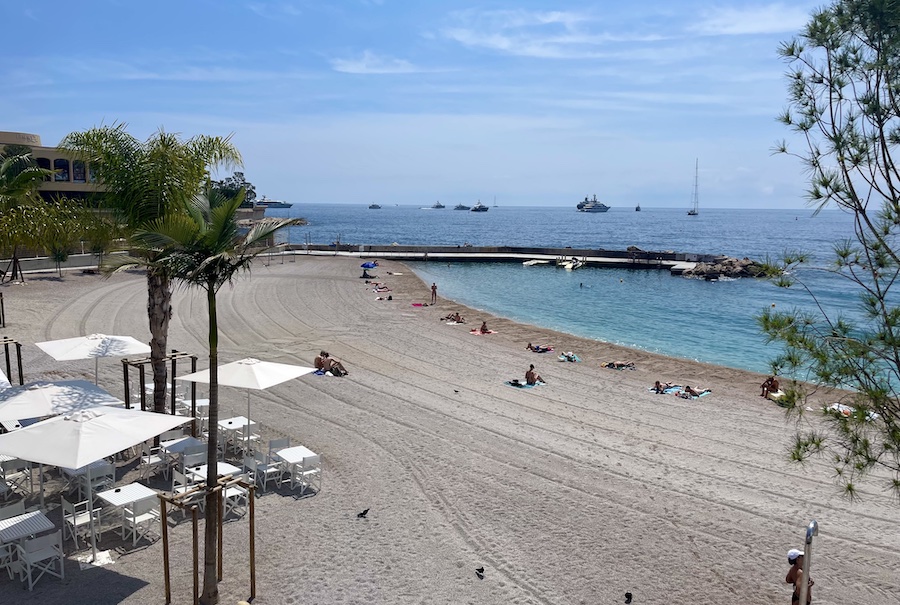
Monte-Carlo Beach rewarded for green initiatives

Monte-Carlo Beach has take out the Special Prize in the Green category of the Hotel & Lodge Awards, recognition of the establishment’s dedicated commitment to sustainability.

On Thursday 24th March, French tourism magazine Hotel & Lodge held its third ceremony of the Hotel & Lodge Awards at Pavillon Cambon in Paris. Monte-Carlo Beach claimed the Special Green Prize, a new category that is awarded, on the selection of editorial teams and a judging panel made up of tourism professionals, to a hotel resolutely committed to an eco-responsible and sustainable development approach.

The award recognises that Monte-Carlo Beach has been Green Globe certified since 2014, with Green Gold status since 2018. This approach is driven by General Manager Daniele Garcelon, who has been working for many years to achieve a zero-plastic policy, recycle waste and drastically reduce energy and water consumption.

“My teams and I accept this award with joy and humbleness,” said Daniele Garcelon. “It is a recognition and strong encouragement in the pursuit of our everyday commitment.”

The hotel has implemented a proactive policy to protect biodiversity, in particular with the creation in 2021 of a positive biodiversity reef dyke. Located under the water 100 metres from shore, this dyke has been designed to protect the beach and allow the development of marine life in a protected area.

Pointe de la Vigie and its surrounding pine forest have also been classified LPO (Ligue pour la Protection des Oiseaux) bird protection status. The latest wildlife inventory listed no fewer than 20 species of birds, including 10 nesting species and 15 protected species.

“This site at Monte-Carlo Beach is becoming an essential refuge for local biodiversity,” said Monte-Carlo Société des Bains de Mer in announcing the award for its hotel.

Keen to develop its local eco-system, Monte-Carlo Beach and the Elsa restaurant, which has been Ecocert certified since 2013 for its 100% organic and wild-caught fish, work closely with local producers to give preference to seasonal products as well as nearby estates and gardens: Jardin des Antipodes in Menton for aromatic herbs and fruit, and Domaine d’Agerbol in the heights of Roquebrune-Cap-Martin, which supplies Elsa with organic vegetables, from farm to fork.


SEE ALSO:

Manon Fleury: “This is the future of gastronomy”


Photo source: Monte-Carlo SBM


RAMOGE releases shocking plastics video  

During Monaco Ocean Week, the players of RAMOGE, an agreement between Monaco, France and Italy, released an awareness video highlighting the impact of marine pollution, called Thrill in the Abyss. 

It’s only just over four minutes long, but Thrill in the Abyss (Frisson dans les abysses) packs a big punch.

The short French film covers exploration campaigns undertaken by scientists from the three nations that make up RAMOGE, where they found in underwater canyons, along with beauty, an alarming amount of waste accumulation at depths of over 2,000 metres, roughly 30 kilometres off the coast.

The staggering amount of waste was captured on film from wire-guided underwater vehicles in September 2018, which can reach depths of 6,000 metres below sea level. It shows the extremity of the situation, with piles of rubbish sitting on the seabed that had been carried from the land and rivers to these resting places.

The jarring impact of seeing a veritable junk yard where there should be grasses and creatures puts a fine point on the problem facing the seas with regard to ocean pollution. These undersea garbage dumps are filled with plastic cups, old cans, tennis balls and a variety pack of unidentifiable detritus.

There was even a pot of yogurt from the brand Chambourcy, a French company that shut down in 1996.

“It looks light and fragile, but it has been here, in this deep area of ​​ecological interest, for several decades. Seeing is believing. And that’s only the visible part, there are also microplastics,” Anne Vissio, Executive Secretary of the RAMOGE Agreement, told Monaco Matin. “We realised that the canyons are areas of accumulation of waste. All this waste comes from the earth, has been abandoned in nature, then carried by waterways and currents.”

Screenshot from Frisson dans les abysses

“Removing them is very complicated technically and would cost a fortune,” she said. The purpose of this video, which we hope will be relayed massively, is to say ‘Stop, let’s not add more!’ Individually, we can act and stop the use of plastic. On a global scale, we must stop the production of plastic packaging.”

The footage also showed the marvels of the seas, such as fish, tiny sea crustaceans, coral and other such incredible sea flora and fauna, but these beautiful images don’t hold a candle to the mess found in their habitat.

Beyond the horror of how terrible it looks, it is also possible they are dangerous to health. As the plastics slowly break down, they release microplastics which are typically passed through the body without harm. The danger comes from the microplastics on the surface of the ocean that attach to plastic and travel long distances. The plastic actually serves as a carrier. Certain micro-organisms attached to it can be pathogenic for marine organisms, toxic or invasive.

RAMOGE is made up of delegates from France, Monaco and Italy and was formed in 1991 after an oil tanker sank off the coast, threatening the coastlines and the sea life. They work to fight against accidents such as these and establish cooperative agreements in the event of any such occurrence. Additionally, the representatives work to protect the biodiversity of the Mediterranean, which hosts between 25% and 30% of the endemic species and 10% of the marine species known to man, despite only covering 1% of the world’s ocean surface. 

See the video below…


Photo: Screenshot from Frisson dans les abysses


Finest takes over Monaco Esports in $10 million deal

Israeli sports organisation Finest has acquired Monaco Esports for $10 million, ending all Monaco Esports branding and operations after the upcoming Sim Racing event, as the bigger venture will absorb the Monaco-based company. 

The merger between Finest and Monaco Esports was announced on 14th March and is part of Finest’s plans for international expansion.

“I am really glad to welcome the Finest group in Monaco, their experience and knowledge of the esports world will help the Principality of Monaco and the Federation to improve and put Monaco in the front of the esports scene,” said Louis Ducruet, President of Monaco Esports Federation.

Finest was founded in 2019 by Rubik Milkis but is now being run by former CEO of the Israeli Football Association Rotem Kamer. Milkis still retains an active role as the company’s Chief Gaming Officer (CGO).

“It is a new era of esports we will witness in Monaco. For years we have been working to build the foundation of what would become a highly global structure. Monaco Esports merging with Finest gives that worldwide reach we’ve been expecting. We are now looking forward to the extraordinary results we are going to achieve within this new family,” said Boris Fedoroff, President and Founder of Monaco Esports.

Finest was recently taken over by media giant RadarZero when CEO Mark Klein took over the majority stake in the business in late 2020. This makes it part of a larger portfolio of gaming operations owned by Radar, such as GameSquare, Enthusiast Gaming and FaZe Clan.

In July 2021, Klein met Louis Ducruet and Boris Fedoroff and began talking about a merger, which made sense for both sides. Monaco Esports would get a money injection and a higher profile, and Finest would get access to Monaco’s market, reputation and enthusiasm.

“The Principality wants to make Monaco a gaming hub in Europe,” Klein explained to gaming site dextero.com. “They would like to see events every two months. Events made for the fans, for the pro teams, for the industry, to create best practices and bring financiers and investors in gaming companies and technology to Monaco.

“They 100 percent want to support those initiatives. They also want to subsidize the fanbase through afterschool programs for kids, for example. Their support is something that, unfortunately, I cannot say that we have here in Israel [from a government perspective].”

Finest also wants to encourage more girls to be part of this world, and already support the Valorant Girls Team. It should be noted that metrics are showing the split between boys and girls in esports is coming close to equal, so the women’s market is becoming hugely important as an untapped resource.


Image source: Finest