Voxan presents new Wattman

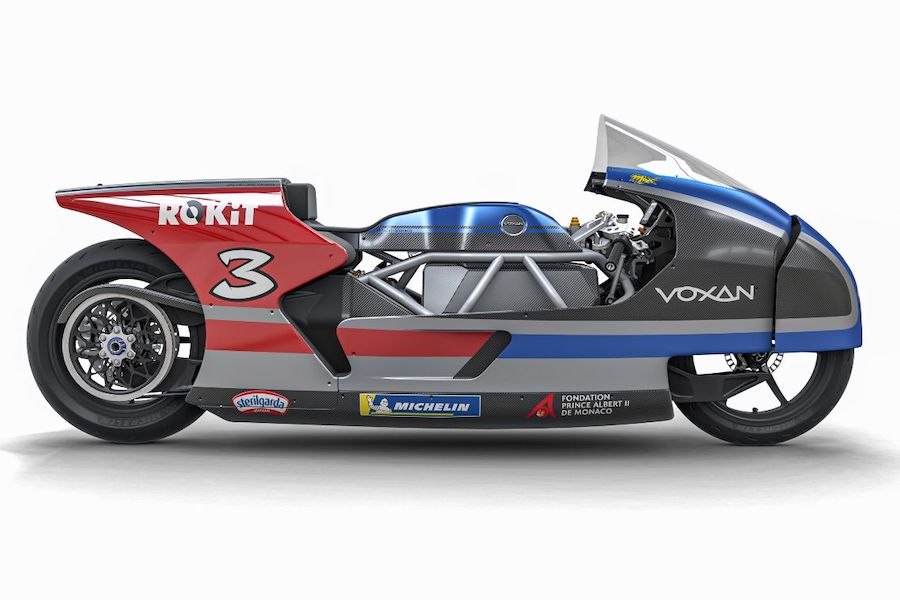
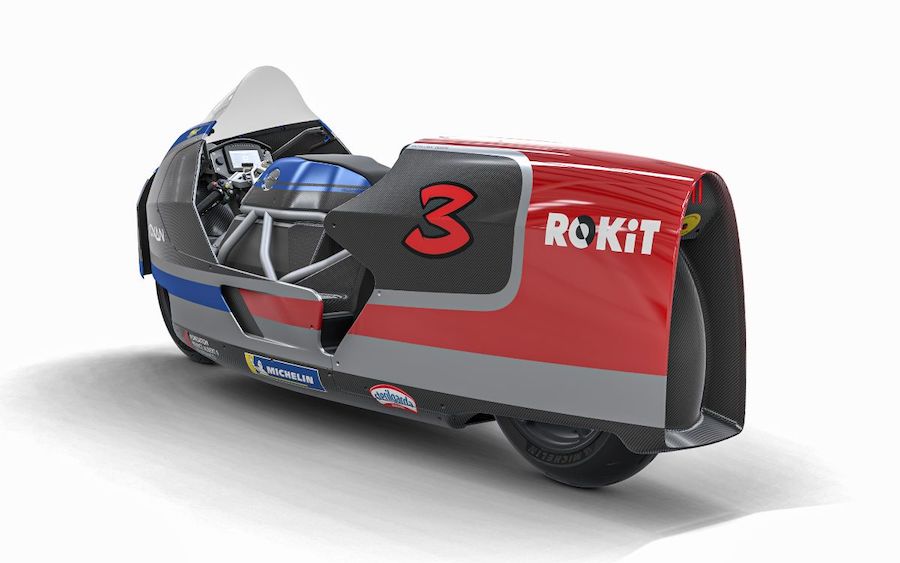
Voxan, owned by Monaco-based Venturi, has unveiled its new Wattman high-speed electric motorbike as it sets out to conquer even more world records with world champion Max Biaggi at the controls.

The Voxan Wattman was initially due to make its attempts on a Bolivian salt flat in July 2020, but the pandemic made travel impossible, and so it was on the runway at the Châteauroux airfield in France that the team broke 11 world speed records a year ago.

Asphalt proved to be an interesting surface, so the Wattman – modified accordingly – will continue its schedule on another strip. This time, the venue will be the Space Florida’s Launch and Landing Facility at the Kennedy Space Center in Florida, USA, where, on Monday 15th November, the first ultra-high-speed tests got underway.

The Wattman is now under 300 kilos in weight, allowing it to compete in this category. The weight difference is primarily down to a new Voxan-Saft battery design, which is both mechanical and electric.

Saft, the French subsidiary of TotalEnergies, specialises particularly in high-performance, very high-power batteries. The pouch cells used make it possible to increase the batteries’ power by nearly 80 times, compared with around 10 times for standard products on the market. They are assembled in modules, enabling cooling to be managed with a recently patented process, resulting in an ultra-compact construction.

Photo credit: Voxan

The bike continues to rely on the Mercedes EQ Formula E powertrain, which delivers power of 320 kW (compared with 270 kW for the previous version) and offers torque of 1,360 Nm.

Other notable differences compared with the previous Wattman include the motorcycle’s dimensions: to improve stability and air penetration, the wheelbase has been increased to 1,957 mm (from 1,800 mm previously) and the seat height is now 685 mm (up from 610 mm). In the event of significant crosswinds, the team will now have the flexibility to add a fairing that cuts wind resistance.

As for the tyres, longstanding partner Michelin has worked on designs specifically tailored to this challenge. The front 120/70-17 is a tyre from the Michelin Power GP range, which has been modified to tolerate extremely high speeds. For the rear 190/55-17, Michelin has relied on technology that has been proven in MotoGP to develop a tyre with improved grip. The challenge was to channel all of the extraordinary torque delivered by the Wattman’s electric engine, allowing the motorcycle to accelerate as fast as possible without skidding.

Once the new Wattman is ready, further world record attempts will be made within the first six months of 2022. As they did last year, Max Biaggi and Voxan will seek to beat the clock with two types of motorcycles in two separate categories: “partially streamlined” (traditional sports bike) and “naked” (roadster with no streamlined elements).

SEE ALSO:

Voxan back on the world speed record trail

Gildo Pastor’s motorcycle team makes history books


Monaco fall just short of rugby sevens glory

Monaco Rugby Sevens were comprehensively beaten by a dominant Barbarians side in the final of Inferno Super Sevens finals at the La Défense Arena, Paris. Prior to their heavy 14-40 defeat, Monaco had successfully overcome La Rochelle and, most impressively, last season’s champions – Racing 92.
Monaco kicked off proceedings in Paris with their curtain raising fixture against La Rochelle on Saturday afternoon. Having signed only a matter of days ago, Dan Norton and Cecil Afrika didn’t take long to find their feet as they scored the opening two tries for the Monegasque side, having gone behind to La Rochelle’s converted opener.
Missed conversions however meant that Monaco took only a slender lead into half-time. Afrika then extended Monaco’s lead with his second try just after the break, which was duly converted. La Rochelle then pulled one back, but Monaco held on to progress to the semi-final stage, winning 17-12.
Next up was Racing 92, the reigning French champions were hoping to retain their crown, having won the inaugural championship a year earlier. The champions quickly found themselves trailing, however, thanks to a converted Demai-Hamecher try. Racing 92 had the steely determination that saw them lift the trophy last year, and quickly responded, although the try was not converted.
Monaco Sevens extended their lead early in the second-half. McNulty, having had a try disallowed in the dying seconds of the first-half, got his reward this time, as his try was successfully converted. Racing 92 responded with a second unconverted try, but the game was put beyond the champions by Courtaud, whose converted try saw Monaco to a surprisingly comfortable 21-10 victory.
Monaco were to face the Barbarians in the headline act, a team whose imperious form in their quarter-final and semi-final fixtures saw them register a mammoth 74 points in the two fixtures.
The Barbarians wasted no time getting going here either. Without barely allowing Monaco a touch of the ball, the Barbarians scored three converted tries without reply. Dan Norton’s try just before half-time gave Monaco hope of an unlikely comeback. This hope was, however, quickly dashed, as the Barbarian’s blitzed the Monaco side early on in the second-half.
Similarly to the first-half, the Barbarians scored three unanswered tries to extend their lead to 7-40. Courtaud’s late consolation try for Monaco only served to make the final score less emphatic, but with a 14-40 victory, the Barbarians superiority was still plain for all to see.
Despite a disappointing final, Monaco Sevens centre Paulin Riva believes they can still be proud of their efforts, having only finished constructing their side earlier in the week, saying, “We are proud to have reached the final today. The Barbarians are a good, well-run team… We arrived with a week’s preparation. We tried to adapt as well as we could and to create relationships as quickly as possible.”
Monaco will be hoping to build on what, despite a difficult final, was undoubtedly a successful tournament and go one further next year.
 
 
Photo credit: David Nivière


ASM tactical analysis: profligate or creatively defunct?

The dust hadn’t even settled on Sunday’s disappointing goalless draw at Reims before the inquest into AS Monaco’s barren goal-drought began. Without a goal in three games, Benoît Badiashile had barely regathered his breath when he addressed the issue pitch-side at the Stade Auguste Delaune. 
“We aren’t too predictable, I think it’s just a lack of efficiency because we’ve had opportunities to score.” Volland’s glaring miss late-on against Reims was clearly still fresh in the memory of the France U-21 international defender, yet the late chance could mask a larger, systemic issue in Kovac’s side.
Kovac alluded to this post-match, stating that, “At the minute, we are having problems creating opportunities and converting them. We lacked a bit of determination, and we were a bit too predictable in the build-up.”
In investigating the cause of the goalless run, two diagnoses have therefore emerged. The first, posited by Badiashile, highlights ASM’s profligate form in front of goal, whilst the second, posited by Kovac, identifies their creative deficiency as the source of the problem.
Kovac’s theory of creative deficiency merits further attention and analysis given the abundance of data that highlights AS Monaco as a statistical outlier relative to their closest rivals. The use of the novel xG data metric, which analyses the quality of a goal-scoring opportunity and gives it a rating between 0-1 (1 being a certain goal and 0 being a statistically impossible chance), illustrates this disparity.
Based on the chances created over the course of the season thus far, ASM would have been expected to score 16.4 goals. Given that Kovac’s men have found the net 17 times this season, it indicates that they are scoring about as many goals as would be expected of them considering the quality of chances that they are creating.
This xG figure is, however, low compared to their most direct rivals. Lyon and PSG have xGs of 22.9 and 22.8 respectively, although PSG have significantly outperformed their xG, netting 29 times this season. Local rivals OGC Nice also have a far superior xG of 26.2, they are however, currently underperforming in front of goal this season having only netted 23 times.
Statistically, ASM’s current chance-creation is more closely comparable to a mid-table side, for example Clermont Foot, whose current xG is just below ASM’s at 16.2, or Nantes, who lie just above Kovac’s side, with 15.9. The xG metric therefore emphasises ASM’s weakness in creating high quality goal-scoring opportunities, and, if not for a robust defence, their Ligue 1 ranking would be considerably worse.
ASM’s xG metric results are therefore suggestive of an inability to work the ball into dangerous, goal-scoring areas, and this being the case, it is in the build-up play that issues lie. Specifically, a visual inspection, as well as an analysis of data highlights a lack of variation in the attacking build-up and an over-reliance on one player for creative threat.
Kovac’s attacking tactics revolve around the use of overlapping wingbacks. The wingbacks, able to bomb forward thanks to a defensive back 3, work in combination with the two narrow-sitting wingers, often Diop and Martins, allowing the wingbacks to get to the byline and cut the ball back into the centre of the goal. Over 50% of ASM’s goals in Ligue 1 have come from within the 18-yard box, and many of them have been orchestrated in this way.
Although a perfectly reliable tactic for creating chances, and one masterfully utilised by Chelsea manager Thomas Tuchel in his sides Champions League winning campaign, it is the predictability that is the problem. Kovac himself has realised and subsequently addressed this in the wake of the draw at Reims.
Specifically, it is left wing-back Caio Henrique who provides the vast majority of ASM’s attacking thrust, and it is his left-wing that is the channel for the majority of their attacks. The Brazilian wing-back has an xA (expected assist) rating of 2.6, meaning that, if the chances had been taken, he should have created over 2 goals in Ligue 1 this season. This is an impressive figure, and one that isn’t close to being matched by any teammate; Wissam Ben Yedder has the next best rating on 1.5.
In contrast, ASM’s direct rivals have multiple sources of threat. 5 Lyon players have an xA of over 1.5, Nice have 2 players with an xA of over 2.5, and PSG have 4 players with an xA of over 2. It is this abundance of attacking sources, which brings a level of unpredictability to their play, which subsequently leads to a higher xG, as well as a higher goal tally.
With too few sources of creativity, ASM risks becoming one-dimensional, or, in Kovac’s own words, ‘predictable’. Threat from the central midfield area would be a useful way of offsetting ASM’s reliance on the wide areas; however, the current options in this area are either not suited to playing such a role, or are playing too deep.
Fofana and, in particular, Tchouaméni are elite-level midfielders, yet their attributes aren’t tailored towards providing that elusive killer-ball in the final third to split through the defence. Rather, their strengths lie in shielding the defence, dispossessing, pressing and instigating counter attacks by offloading the ball to the more dynamic wingers and wingbacks. Tchouaméni is also an efficient, line-breaking dribbler; however, most of these runs come from deep and are suited to a counter-attacking game rather than against a team playing a low-block, as is often the case in Ligue 1.
Golovin, in his return from injury, is an obvious candidate to play in a more advanced midfield role. As a more traditional playmaker, he is a serial provider of key passes in the final third and his return could alleviate some of the reliance on Caio Henrique. Another option in the role is Jean Lucas, the summer signing from Lyon has had bright moments thus far, but has not yet found a level of consistency. Currently, he is playing in a deeper midfield role, but his technical ability, which allows him to excel in tight spaces, means that he could be utilised higher up the pitch, especially when playing against a tightly-packed low-block.
The deployment of a more incisive attacking option in the midfield could therefore be a way to ensure variation in ASM’s attacking build-up, and distribute the burden of chance-creation amongst more players in different attacking positions.
In spite of the creative deficiencies that the various data expose, Monaco’s profligacy in recent weeks has similarly contributed to their goal-drought. Profligacy; however, is borne out of circumstance and is itself fostered by a lack of creativity.
The last-gasp Volland miss against Reims is case-in-point; the chance constituted 0.66 of ASM’s entire 0.97 xG in this game, and was therefore the only considerable chance of the entire match. The psychological pressure of having to convert such a chance, in the context of having received so few opportunities, coupled with the fact that the recipient of the chance may not be razor sharp due having so few touches, can unsurprisingly contribute to suboptimal attacking outcomes. Creative deficiency and profligacy therefore go hand-in-hand.
Kovac will undoubtedly be working hard over the course of the international break to remedy ASM’s current creative deficiencies, and he will hope that, should that work bear fruit, his side will quickly find themselves back in European contention.
 
 
Photo by AS Monaco



GDP per employee was €106,719 in 2020

Monaco’s GDP fell by a significant 11.8% last year as Covid took its grip on the Principality, according to a new report by statistics group IMSEE.

Monaco’s gross domestic product (GDP) saw a backslide in 2020 after two years of strong growth in 2018 and 2019. GDP rose by +6% and +6.9% in each of those years respectively. But in 2020, the GDP came to €5.97 billion, compared to €6.6 billion in 2019. This amounts to a -11.8% drop adjusted for inflation.

According to the latest report by IMSEE, since the year 2011, this is only the second time the total number of employees, both public and private, has fallen. The regression amounted to -3.4% in 2020, whilst the other time was a tiny -0.5% back in 2015.

The wage bill fell by 5.5% last year as well. However, over the decade, employee compensation increased by an average of +2.7% per year. This represents nearly half, 44.3% to be exact, of the wealth created in the Principality, excluding subsidies.

Earnings before interest, taxes, depreciation, and amortisation (EBITDA) saw a dramatic drop by -7.0%. In spite of this fall, its annual growth rate is +4.9% over the decade as a whole. EDITDA represents 41.7% of GDP excluding subsidies. 

Taxes increased quite sharply by +8%. They contribute 14.0% to the wealth produced in Monaco. It is mainly higher VAT, notably real estate VAT, that explains this increase. 

GDP per employee was down -8.7% in volume to €106,719.

Subsidies stemming from the government’s support policies have had a +100.4% leap, doubling over the previous year.

The per capita GDP in the Principality is a substantial €69,380. Although this is a -10.4% fall in volume, it is far above the mean personal per capita in Europe which is €37,468. Only Luxembourg, Ireland and Norway have higher.

Three sectors are responsible for 50.1% of Monaco’s wealth. They are scientific and technical activities, administrative and support services which make up 20.3%; financial and insurance activities making up 18.3%; and construction, coming in at 11.4%, which stays on the podium since real estate activities were weaker than normal.


Photo by Rishi Jhajharia on Unsplash


Monaco Rugby Sevens ready for finals tournament in Paris

With the signing of two renowned, international rugby stars, Monaco Rugby Sevens have completed their squad in preparation for the second edition of the much-anticipated Supersevens finals in Paris on Saturday.
On Monday, the rugby sevens side announced through their social media channels the signings of the South African Cecil Afrika and Englishman Dan Norton, both of whom have international pedigree having represented their respective nations.
Norton, a dynamic winger, is the leading all-time try scorer in rugby sevens history, with over 350 tries. Afrika, meanwhile, represented his country at the 2013 Rugby World Cup Sevens, as well as at the Rio Olympics in 2016.
The Monaco side will be the subject of more intense scrutiny as well as heightened expectation in this year’s edition of the Supersevens finals as a result of their hosting of the Olympic Rugby Seven Repechage event back in June. The event, hosted at the Stade Louis II, has bolstered the profile of the sport within the Principality.


The addition of international-level squad members, coupled with their impressive performance during the third stage of qualifying in La Rochelle, means that Jérémy Aicardi’s men will go into the tournament as one of the favourites to succeed inaugural winners, Racing 92, as French Rugby Sevens champions.
The competition, which will be contested at La Défence Arena in Paris, will take place over the course of just one, packed, frenetic day, with 12 matches due to take place. Matches will last a mere 14 minutes, with the loser being immediately eliminated from the competition.
Monaco Rugby Sevens will begin the proceedings against a strong Stade Rochelais Sevens side at 14h20, when Monaco will be hoping for a repeat of their narrow 14-10 victory against the La Rochelle side back in August. Victory would see them progress to the semi-finals, with the grand final taking place at 22h07.


Welcome home Princess!

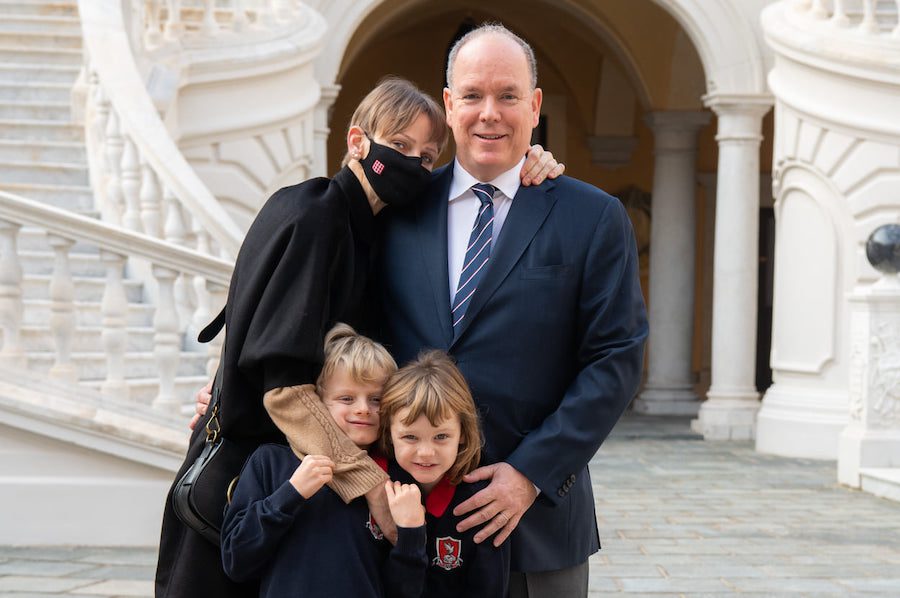
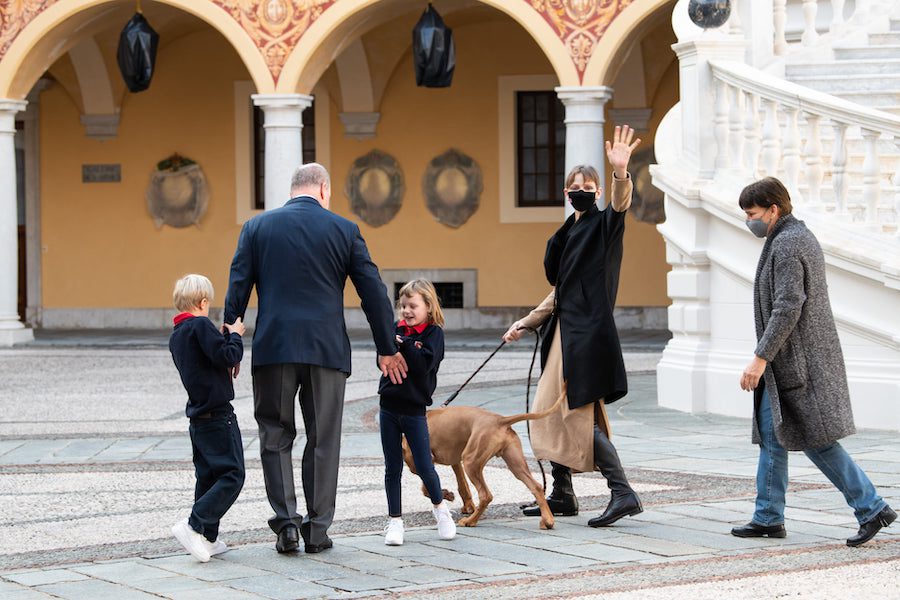
Princess Charlene has finally been reunited in Monaco with her husband Prince Albert and children Prince Jacques and Princess Gabriella, after being held-up in South Africa due to medical issues.
The 43-year-old Princess of Monaco touched down at Nice airport in a Palace jet on Monday morning after a 10-hour flight from South Africa. But she wasn’t alone. By her side was a new member of the Princely family – a Rhodesian Ridgeback called Khan.

Photo by Eric Mathon, Prince’s Palace

Pictures taken by local media Monaco Matin show an exuberant set of twins and a very happy husband embracing the Princess in the Palace Square. Khan also appears to get quite a welcome.
Princess Charlene has been in her native South Africa since March this year after contracting a serious sinus infection which made her unable to travel. While her imminent return was recently revealed by Prince Albert, the arrival of Princess Charlene on Monday morning was an unexpected surprise for Monaco.
Before leaving South Africa, the Princess said: “It has obviously been a very challenging time to be here, but at the same time it has been wonderful being in South Africa. I would like to thank the doctors in South Africa who have done a tremendous job in helping me and I am so looking forward to getting back to my children.”
See the video here: https://fb.watch/99gLXlJo6x/
The Princess is now expected to accompany her husband to Dubai on 13th November to visit the Monaco 360° Pavilion at the World Expo, before returning to the Principality for National Day celebrations on 19th November, a day which will undoubtedly hold special significance as the Principality celebrates the return of their princess.
 
 
Photo by Eric Mathon, Prince’s Palace